

imran
822 posts

Kal fir se IT lahu luhan hoga
Crazynaval@Crazynaval
The stance on IT has started becoming accommodative on news channel ;)
Faridabad, India 🇮🇳 Indonesia


Avendus fund buys PPFAS.
Avendus Future Leaders Fund lIl (an AIF) acquired ₹140 crore stake in Parag Parikh Financial Advisory Services (PPFAS). Just over 1% of the company.
Selling came from promoters Neil Parikh & President Khushboo Joshi.
Avendus holds companies like Lenskart, SBI Insurance, Licious, Juspay etc.

English
imran retweetledi


@RahatTalreja @Crazynaval Bhai aap apna AMC kab khol rahe ho. Batana! Invest karna chahunga.
हिन्दी

@Crazynaval so who exactly asks them to deploy funds into cash? their research team , fund manager or sheer lack of ideas to deploy? it's a big position they created 14% so there must be a reason to it. aap kaafi senior gyani ho shayad aapko reason pata ho.
English
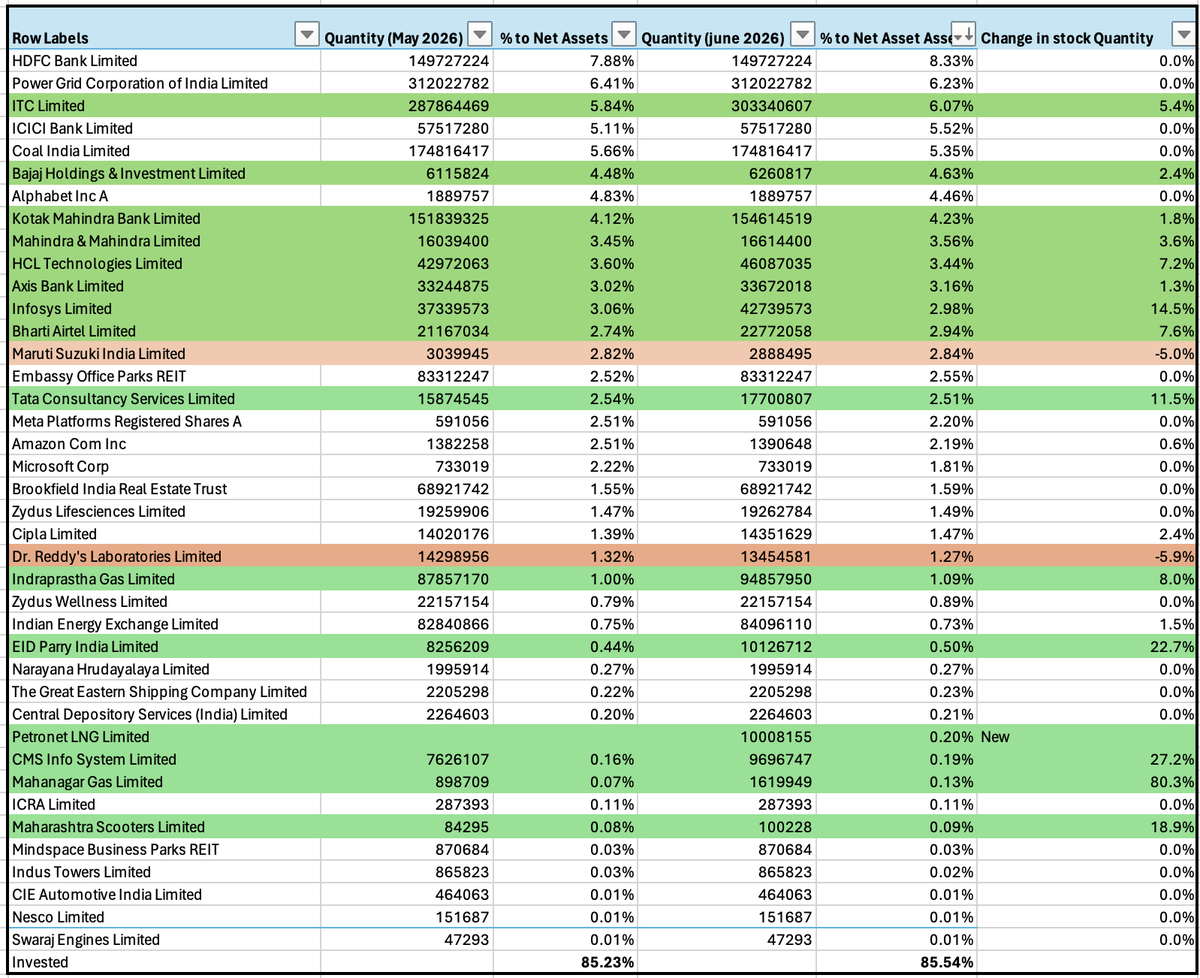
PPFAS changes for June 2026 are out.
~Cash at 14.5%
~ One tiny new position in Petronet LNG
~ Shopped more in IT, ITC, banks, Airtel
~Increasing exposure to few smallcaps (EID/ CMS/Gas stock)
~IT is 9% of portfolio (took a beating again in June but fund is buying more)
~Banks and finance hovering at 25%
#onefund
English
@ggmu4231 @WeekendInvestng Growth is linked to growth in fundamentals.
Momentum is linked to growth in price, without caring about fundamentals.
English

@WeekendInvestng Alok sir,
Had a question
How is momentum investing different to growth investing?
English

One by one. Slowly.
Rajiv Mehta@rajivmehta19
Deep value fund is changing its #strategy to #momentum However, there is another factor at Work here — #fund flows. We run open-ended funds, and you can and Increasingly have been taking #money out, we suspect mostly to join the exodus from #active to #passive, or possibly to #invest in managers who profess that they understand #quality better than we do. They may be right, or they may be closet momentum investors, which will be fine until it isn’t. However, there will be little point in being proved right @WeekendInvestng @MysticWealth11 about the dangers of passive or momentum investment after our Fund has closed. fundsmith.co.uk/media/lfhpxi1x…
English
@Crazynaval Treating it as debt part of allocation has it’s disadvantages. Low liquidity means zero rebalance possibilities
English
A good framework to see PF shall be 9.5% to 11.5% return not 8.25% tax free along with forced saving.
There exist no better instrument for debt part of your asset alloacation for salaried employees.
Archit Gupta@architgupta
India just made retirement saving optional. Back in 2014, the mandatory PF baseline was locked at Rs 15,000 of your basic salary. Twelve years of inflation later, that money today is only worth half of what it used to be. The new EPF Scheme 2026 was the perfect time to adjust this baseline. Instead, the framework kept it exactly the same, which effectively scales back your long-term retirement benefits. Legally, both sides still have to meet that minimum Rs 1,800 a month. But anything above that is now completely optional. Here is what that actually means for your pocket: -If your basic salary is Rs 50,000, the total contribution into your PF has typically been about Rs 6,000 a month. Under the strict legal mandate of the new rules, only Rs 1,800 of that is legally required from both sides. The remaining Rs 4,200 now relies on a voluntary opt-in. If a salary structure shifts to only stick to the legal minimum, the long-term impact is massive. At an 8.25% interest rate over a 25-year career, that Rs 4,200 a month adds up to a staggering Rs 41 lakh. That Rs 41 lakh used to be the default expectation. Now, it requires active, conscious planning from both employers and employees to keep it going. Giving people more flexibility with their money today is a welcome move. But we have to acknowledge the broader picture: India’s retirement system has quietly shifted from a mandatory default to an optional model. By 2050, one group retires on 25 years of compounding. The other realises the extra take-home is gone, and 60 is too late to start over..
English
@SahilKapoor Terminal value is the big overhang for most of these companies. Though at these levels margins of safety is there, but PE alone isn’t a metric to judge the future price returns for them.
English

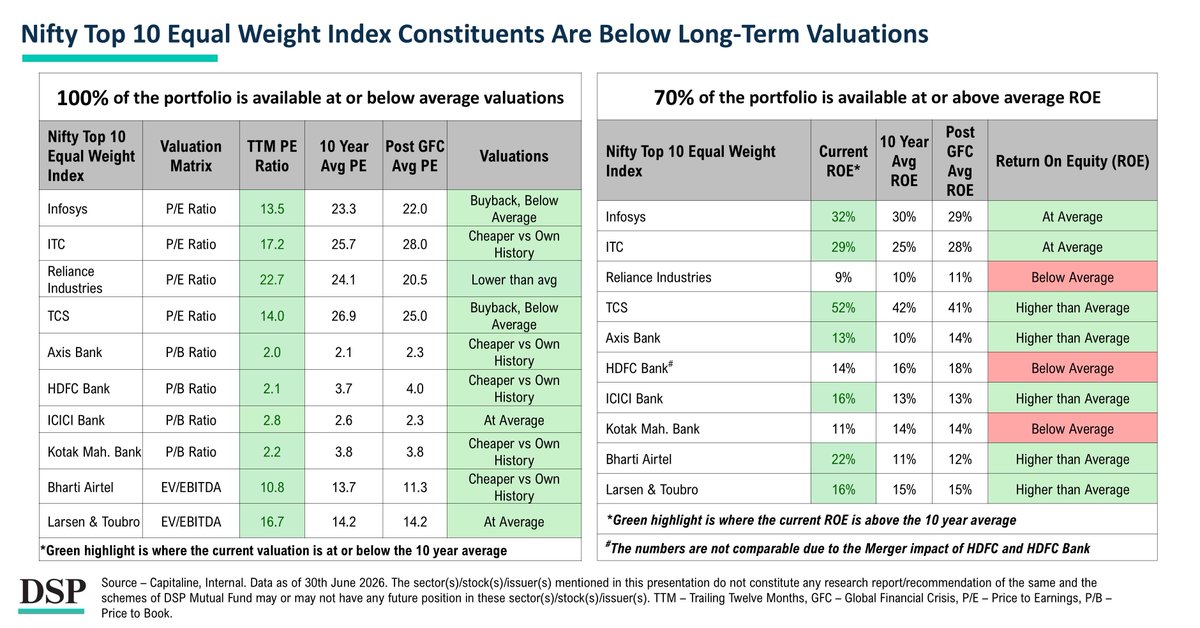
@pankajsabnani I am just saying it’s harder to beat in long term. You can gloat 15 yrs later for beating the market
English

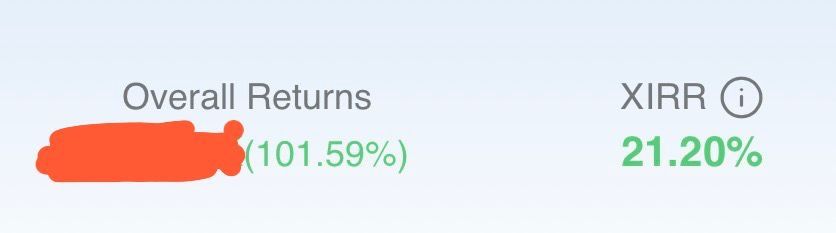
It’s a myth that you can’t time the market.
My mutual funds’ XIRR is 21.20% currently and overall returns are 101.59%.
Started investing in 2022 and only doing lumpsum.
#Investing #MutualFunds
English
@anuragsingh_as Anurag in his last post- SIPs are good for volatile assets. They might not work as Indian markets are not volatile enough.
Anurag today - Please don’t do SIPs in small cap (relatively more volatile asset)
This is how flawed the logics of the fake anti SIP prophets are!
English

@BaluGorade They don’t care about sector calls. They are a momentum based quant fund. They’ll have the sectors automatically when the quant supports.
English

Capitalmind Flexi Cap Fund was launched in August 2025 at a NAV of ₹10.
Nearly a year later, the NAV is still around ₹10.
Interestingly, it's probably the only flexi cap fund that avoided both IT stocks and HDFC Bank.
English

New AMC’s are doing good
🔥Abakkus
🔥Helios
🔥WhiteOak
🔥Trust
Many people are buying funds from these AMC instead of Traditional One
#AMC #MutualFunds
English
@BaluGorade Already equal SIPing into Old bridge and Capitalmind, along with ofcourse PPFAS. Two master fund managers and one actual quant fund.
English
Some of these AMCs have the potential to become the next big names.
Curent AUM:
WhiteOak - ₹34,000 Cr
Helios - ₹9,400 Cr
Abakkus - ₹6,000 Cr
Old Bridge - ₹3,600 Cr
Capitalmind - ₹575 Cr
More competition. More choices for investors.
Your favourite? 😍
English
@anuragsingh_as Classic example of great data crunching reaching to wrong conclusions lmao
English
@Balanced_2016 @TheClubJunto Not showing for 2000. Showing from 2003 which is, again,19.
English


Equity Returns Estimates for FY27
2000 to 2024: P/E multiples went from 11x to 22x. EPS Growth: 9% CAGR. Equity Returns: 12% CAGR. Now P/E cannot go from 22x to 44x. So, equity returns must be solely funded by EPS Growth.
PE Expansion Era Is Over
a. PPFAS Rajeev Thakkar told ET: “People must get accustomed to lower equity returns now.” Why is the seller himself saying: “My product is no longer attractive?”
b. From 2000 to 2024, Indian equities delivered 12% CAGR returns for two reasons:
(1) EPS Growth was 9% CAGR; and (2) PE multiples doubled from 11x to 22x because investors were betting on India growth story. (So, doubling of the multiple roughly added 3% CAGR on top of EPS Growth of 9% CAGR.)
c. Now that engine of PE expansion cannot run again because there is no mind-blowing India growth narrative anymore. So, going forward, equity returns must be funded almost entirely by EPS Growth (plus dividend yield) alone.
Equity Returns Formula
Total Equity Return = EPS Growth + PE Multiple Change + Dividend Yield
EPS Growth =
Corporate Earnings Growth
PE Multiple Change =
PE Expansion or Contraction
(What multiple the investors are willing to pay per rupee of earnings)
Nifty EPS Growth in FY27
FY25: Est 15%; Actual 3.4%
FY26: Est 12%; Actual 4.5%
FY27: Estimated 8.5%
Note: 8.5% is Bank of America (BofA) estimate, which is the most trusted.
Dividend Yield for Nifty 50 = 1.20% (historic low)
Total Equity Return in FY27
SCENARIO 1: BULLS ARE RIGHT
EPS Growth: 11%
(Beats BofA estimates)
PE Change: 0%
(Nifty PE stays 22x)
Dividend Yield: 1.2%
Total Equity Return = EPS Growth + PE Multiple Change + Dividend Yield
= 11% + 0% + 1.2%
= 12.2%
SCENARIO 2: BASE CASE
EPS Growth: 8.5%
(Matching BofA estimates)
PE Contraction: -1.5%
(Mild downward PE revision)
Dividend Yield: 1.2%
Total Equity Return:
= 8.5% - 1.5% + 1.2%
= 8.2%
SCENARIO 3: BEARS ARE RIGHT
EPS Growth: 4%
(Below BofA estimates)
PE Contraction: -10% (not 10x)
Dividend Yield: 1.2%
Total Equity Return =
= 4% - 10% + 1.2%
= -4.8% (Negative Return)
Equity Risk Premium (ERP)
ERP is the additional gain (compared to fixed income) for bearing the financial risk + psychological stress of investing in a volatile asset.
Is it Worth the Pain?
BULL CASE
Equity Return: 12.2%
Less LTCG: 12.5%
Net Return: 10.68%
FD return: 7%
Less Tax: 30%
Net Return: 4.9%
ERP = 10.68% – 4.9%
= 5.78%
BASE CASE
Equity Return: 8.2%
Less LTCG: 12.5%
Net Return: 7.18%
FD return: 7%
Less Tax: 30%
Net Return: 4.9%
ERP = 7.18% - 4.9%
= 2.3%
Strategy for Retail Investors
a. If you are a bull, it is worth going 100% into equities because the Risk Premium (Extra Gain) is 5.78% over & above FDs, which will strongly compound over time.
b. If you believe the base case, then a small risk premium (extra gain) of 2.3% may not be worth the pain if you are investing for less than 5 years.
Over a long period, this small premium will also compound. But for below 5 yrs horizon, the pain-reward ratio looks poor.
c. For bears and believers in the base case scenario, it may be best to diversify into gold, FDs, and selective equities.
Gold can give superior returns (than 2.3% CAGR). Cash can deliver life-changing returns if the market crashes and you are the only buyer in town.
d. Extraordinary returns can still be made in this market if you are a good stock researcher, and have the temperament to stay invested, come hell or high water. Most people overestimate their ability.
Endquote [Original]
A stock circulates on X after the money has been made. If you have found a stock on X, you have not discovered it. You have been introduced to it.
@arabicatrader
English