Julian Boardman

11.9K posts

Julian Boardman banner
Julian Boardman

Julian Boardman

@JBBoardman

Let’s join the EU ffs

Derby Katılım Nisan 2009
1.6K Takip Edilen458 Takipçiler
Julian Boardman retweetledi
-
-@AnfieldRd96·
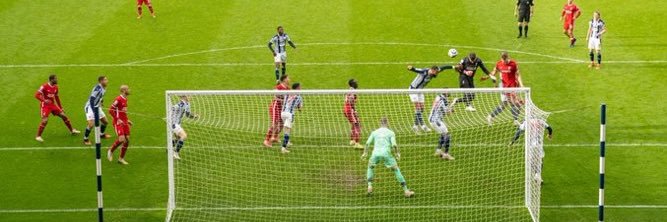
Liverpool vs Tottenham on Sunday.
English
10
519
4.9K
115.8K
Julian Boardman retweetledi
George Wallace
George Wallace@MrGeorgeWallace·
Earlier I implied that I escorted yo' momma through the Strait of Hormuz. I apologize for the misinformation. Yo' momma's too fat for such a narrow passageway and whatnot.
English
83
1.1K
13.6K
313.3K
Julian Boardman retweetledi
Matthew S. Robinson
Matthew S. Robinson@robinsonishyde·
2026 Oscar Nominations as 30 Rock jokes. 🧵 F1
Matthew S. Robinson tweet media
Français
3
93
1.3K
108.7K
Julian Boardman retweetledi
mr. joshua
mr. joshua@pants·
mr. joshua tweet media
ZXX
58
753
15.1K
137.4K
Julian Boardman retweetledi
Letters of Note
Letters of Note@LettersOfNote·
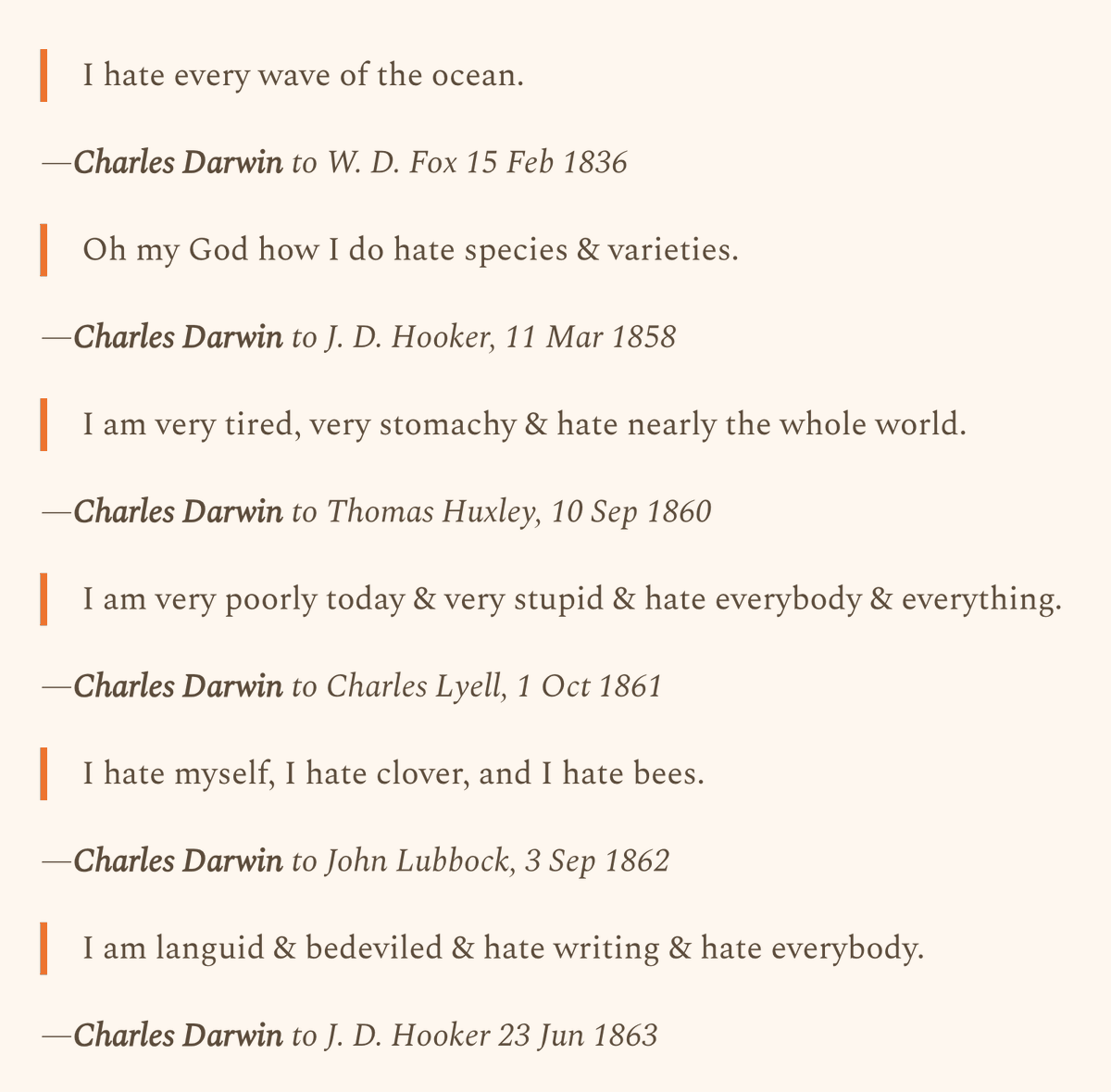
Happy birthday to my favourite of all the haters, Charles Darwin
Letters of Note tweet media
English
361
7.1K
40.1K
1.3M
Julian Boardman retweetledi
Emma 💛💙🇩🇰🇬🇧🇪🇺
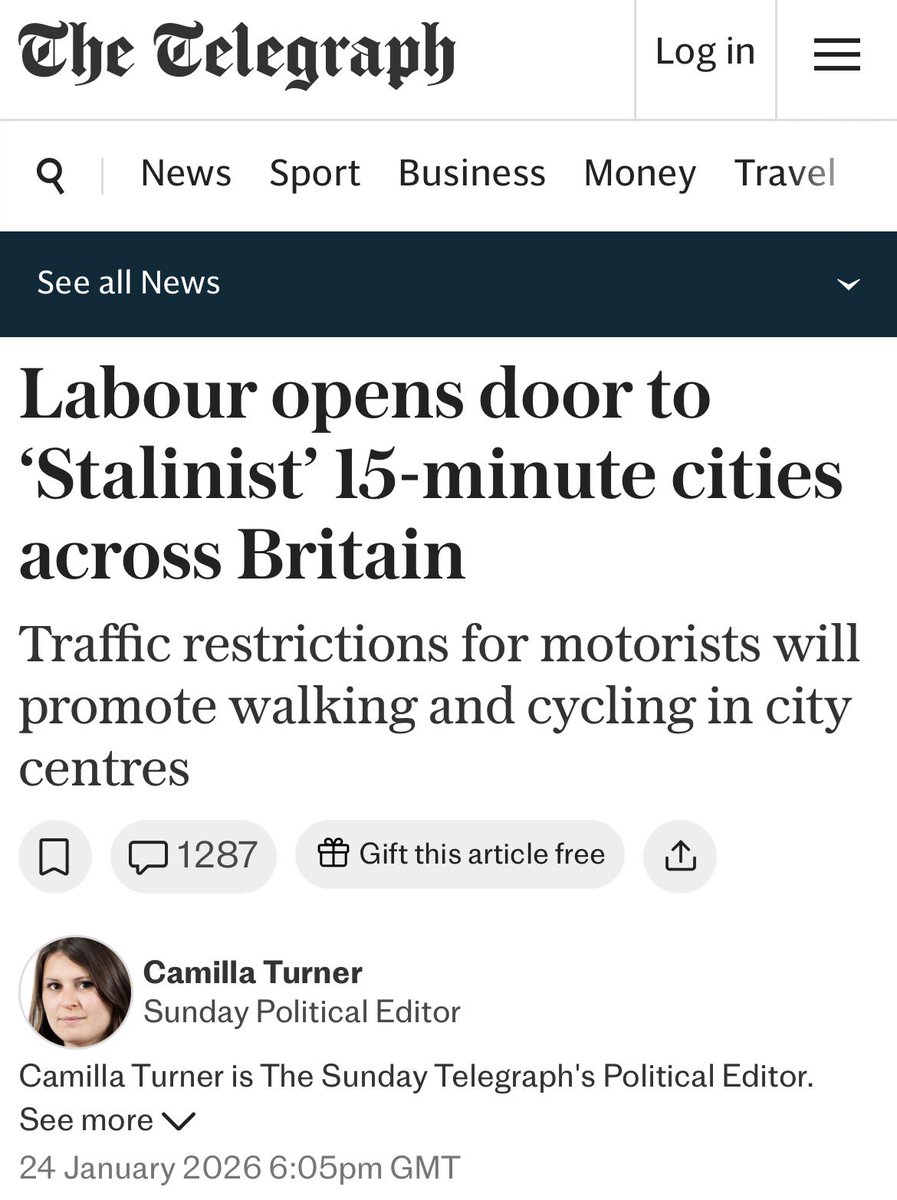
Ok, let’s do this🙄 We’ll start with an explainer covering: 🕒What is a 15-minute city 🏫What on Earth is going on with Oxford 👽Where the conspiracy theories have come from And then we’ll look at the Telegraph article 🧵 1/25
Emma 💛💙🇩🇰🇬🇧🇪🇺 tweet media
English
145
511
1.5K
194.5K
Julian Boardman retweetledi
ℳ★
ℳ★@ssilvers0ul·
who is hugo ekitike? to the blind, he is the light. to the hungry, he is bread. to the sick, he is the cure. to the lonely, he is company. to the sad, he is joy. to the prisoner, he is freedom. for the poor, he is treasure. for me, he is everything.
English
10
601
2.9K
55K
Julian Boardman retweetledi
Dudes Posting Their W’s
Dudes Posting Their W’s@DudespostingWs·
This guy got a drone shot of Broadway in NYC after the snowstorm, set to Frank Sinatra. Unreal.
English
122
2.5K
25.6K
1M
Julian Boardman retweetledi
Andrew Beasley
Andrew Beasley@BassTunedToRed·
Liverpool have faced two teams in their history whose names contain the word 'arse'. Dominik Szoboszlai has scored direct free-kick goals against both of them this season. I don't know what to do with this information, so here it is. #statoftheday #makesyouthink #arse
English
24
272
4.2K
150.7K
Julian Boardman retweetledi
Network Rail
Network Rail@networkrail·
1/12 This winter weather means #ice, #snow and questions like: “Why can’t trains just run on ice?” “Why doesn't snow cause disruption in other countries?” So; boots and gloves on, let's dig into the drift – THREAD
Network Rail tweet media
English
10
72
541
68.3K
Julian Boardman retweetledi
Cait Mercer
Cait Mercer@MercerCait·
Take care out there.
Cait Mercer tweet media
English
14
133
2.6K
33.7K
Julian Boardman retweetledi
Dr Helen Ingram
Dr Helen Ingram@drhingram·
“I am the Ghost of Christmas Future Imperfect Conditional” said the Spirit. “I bring news of what would have been going to happen, if you were not to have been going to change your ways.”
English
50
934
8.7K
237.8K
Julian Boardman retweetledi
Markos Mom
Markos Mom@Markos_mom·
Martin: Right, we've got Sarah from Basingstoke on line three. Sarah, you're on the Money Saving Expert hotline, what's your question? Sarah: Hi Martin, love the show. So I've got about £40,000 sitting in a cash ISA earning 3%, and I was thinking of moving maybe £10,000 of it into a global index tracker.... Martin: [sound of tea being spat out] Sarah. Sarah. SARAH. Can you hear yourself right now? Sarah: I just thought, for the long term.... Martin: Let me stop you there. You have got, and I want everyone listening to really absorb this, you have got a GUARANTEED three percent. Guaranteed. Do you know what that word means? It means it's in the tin. It's locked in. You could put your head on your pillow tonight knowing, with absolute mathematical certainty, that your money is growing at three percent per annum. Sarah: Right, but inflation is running at about..... Martin: And you want to throw that away, THROW IT AWAY, for what? The possibility of ten percent? The hope? The dream? Sarah: Well, historically, global trackers have..... Martin: Historically! HISTORICALLY! Do you know what else happened historically, Sarah? The South Sea Bubble. The Wall Street Crash. That time my Premium Bonds didn't win anything for six consecutive months. History is LITTERED with financial corpses, Sarah. Sarah: I was just going to leave it for twenty years and not look at it..... Martin: Oh, you're not going to look at it! Marvellous! So when the market drops thirty percent, and it WILL drop thirty percent, probably on a Tuesday, probably the Tuesday after you invest, you'll just sit there, will you? In your house? Not looking? While your £10,000 becomes £7,000? Sarah: I mean, that's paper losses, and if I don't sell..... Martin: [hyperventilating] Can someone get me my laminated flowchart? The one about risk? Sarah: Martin, I've got a stable job, no debt, six months' emergency fund..... Martin: And a DEATH WISH, apparently! Let me paint you a picture. It's 2026. The markets have crashed. Your tracker fund is DOWN eighteen percent. You're weeping into a bowl of supermarket own-brand cornflakes because you can no longer afford Kellogg's. And you know what I'm doing? I'm sitting pretty on my guaranteed three percent. THREE. PERCENT. Sarah: That doesn't even beat inflation though..... Martin: I'm going to stop you there because I am not qualified to give investment advice. I need to be very clear: I am not saying don't invest. I am not saying do invest. I am simply saying that the very concept of investing keeps me awake at night in a cold sweat and I think it should do the same for you. Sarah: So what should I..... Martin: Have you considered Premium Bonds? You won't beat inflation but you MIGHT win a million pounds, and the hope is basically free. Sarah: ... Martin: Sarah? Sarah: I think I'll just put it in the tracker. Martin: [long pause] Well. That's your choice. I want everyone to know I tried. We're going to a break. When we come back: is your broadband contract up for renewal? Because THAT'S something I can help with.
Markos Mom tweet media
Martin Lewis@MartinSLewis

For the 1st time ever in its 13yr history, tonight 8pm @itvMLshow is a beginners guide to investing. Who should invest, how much, where & how? I'm a touch nervous as its outside my usual territory, but I've a panel to answer Qs and think its a crucial topic. Got questions you want to suggest send them to the team at martinlewis@itv.com


English
118
306
4.8K
1.4M
Julian Boardman retweetledi
Henry Winter
Henry Winter@henrywinter·
Re: that statement by South Yorkshire Police Federation which represents all constables, sergeants, inspectors and chief inspectors within South Yorkshire Police. Policing of games has changed hugely, SYP has obviously changed hugely in personnel and there are doubtless conscientious people there who must be horrified at the content and tone of the Federation statement but clearly, sadly, shamefully, some of the old culture remains. A read through and reaction to the statement which begins… “South Yorkshire Police Federation is aware of today’s Independent Office for Police Conduct report into the Hillsborough disaster. The report is a significant waste of taxpayers' time and taxpayers' money.” How heartless and offensive. The Federation should have started its statement with a show of compassion and contrition to the grieving families of the 97 people who died in the Hillsborough disaster. As for "taxpayers' money", people want to know their taxes are spent on police keeping people safe, not putting them at risk. It's not a “significant waste” of money to have “fundamental failures” (IOPC words) of the police highlighted by a watchdog and naming those who failed in their duties. “It is not fair or balanced.” What’s “not fair” is that the police tried to blame the victims in 1989. What’s “not fair” is that the families have had no justice. It’s also insulting to the IOPC which spent 13 years on the 366-page report. “Former police officers - some of whom are very elderly and some who have sadly passed away - do not have any kind of due process or the ability to formally respond to the allegations made in this report.” How callous. Try repeating that line about police officers “some who have sadly passed away” to the Hillsborough families still grieving the loss of loved ones. Was similar sympathy accorded them? No. The families were treated disgracefully after Hillsborough. “These are opinions of the IOPC essentially being dressed up as statements of almost fact. We emphasise that these are just allegations. Our former colleagues do not have and have not had the right to reply to any accusations.” Stop digging. Were the Hillsborough families given the right to reply to police falsehoods? IOPC reported that 100 more police officer statements after Hillsborough were found to have been amended, making it a total of 327 police officer statements amended. Cover-up writ large. “They should not face trial by media.” Try telling that to the families who endured trial by sections of the media after Hillsborough. “It is with this context that we should rightly question the value of this much-delayed report and its multi-million pound cost to the public purse.” Again, thoughtless. Judging by this statement, the Federation focuses on time and money. The families focus on justice. “This report doesn't help anybody involved in the Hillsborough disaster.” How dare those representing the police presume they – of all people – know what would help the bereaved families? Brave relatives campaign in the memory of their lost loved ones. They are trying to ensure this country never endures a disaster like this again and that the follow-up cover-up is never repeated. Full police accountability would help the families. This report underlines the importance of the Hillsborough Law which involves “a legal duty of candour on public servants and providing legal aid for victims of state-related deaths and disaster”, the Government says. The final line of the SYPF statement reads… “Our thoughts remain with all those affected by this terrible tragedy.” Finally. If the Federation had just released this short sentence, and deleted all the preceding self-serving, offensive words, its statement wouldn’t have been so widely criticised. #LFC
English
149
574
2.7K
522.1K
Julian Boardman retweetledi
magnus
magnus@magnushambleton·
I chose the green door ninety-three days ago. At the time, it seemed obviously correct. Not even a close call. The red door offered two billion dollars immediately—a sum so large it would solve every material problem I'd ever face, fund any project I could imagine, and still leave enough to give away amounts that would meaningfully change thousands of lives. But two billion is a number. It has a fixed relationship to the economy, to the things money can buy, to the world. The green door offered one dollar that doubles every day. I remember standing there, doing the mental math. Day 30: about a billion dollars. Day 40: over a trillion. Day 50: a quadrillion. The red door would be surpassed before the first month ended, and after that, the gap would grow incomprehensibly fast. Choosing the red door would be like choosing a ham sandwich over a genie's lamp because you were hungry right now. So I walked through the green door. The first few weeks were unremarkable. I had a dollar, then two, then four. By day ten I had $512, which felt like finding money in an old jacket. By day twenty I had over a million, and I started getting calls from financial advisors I'd never contacted. By day thirty-one I had crossed the two-billion threshold—officially richer than I would have been behind the red door. I didn't understand what was happening until around day sixty. The money, you see, had to exist somewhere. Not philosophically—I mean physically. Digitally. When I checked my bank balance, a computer somewhere had to store that number. And storing the number 2^n requires n bits. One bit per day. That's it. That's the rate at which my fortune's representation grows. A linear function. Almost comically modest. But here's what I'd failed to understand about exponential growth: the value doesn't care about the representation. The bits grow linearly. The dollars they encode grow exponentially. And dollars make claims on the physical world. Day sixty. My balance: 2^60 dollars. About 1.15 quintillion. Roughly 1,000 times the entire global GDP. The number itself required only 60 bits to store—less than a tweet, less than this sentence, trivially small from an information-theoretic perspective. But money is not information. Money is a claim. The calls started coming from the Treasury Department. Polite, confused, increasingly frantic. They explained that the M2 money supply of the United States was approximately 21 trillion dollars. I now held about 15,000 times that amount. When I tried to spend any of it—even a tiny fraction—the transaction represented a claim on more goods and services than the entire human economy had ever produced in its history. "The number in your account," a Treasury official said, "is not meaningful." "It's in your computer," I replied. "The computer," she said carefully, "does not understand what the number represents." Day seventy-five. 2^75 dollars. I could purchase—in principle—roughly 350 million copies of the entire Earth's annual economic output. The representation remained elegant: 75 bits. Nine and a half bytes. I could write my net worth on a Post-it note in binary. But representations aren't wealth. Wealth is factories, farmland, human labor, time, attention, atoms arranged into useful configurations. And I had laid claim to more atoms than existed. This is where it gets strange. The global financial system is, at its core, a system of ledgers. Distributed, reconciled, audited. When the Federal Reserve's systems recorded my balance, and Chase's systems recorded my balance, and the IRS's systems recorded my balance, those numbers had to match. And they did match—trivially, easily, using a handful of bytes each. But then the systems tried to do things with the number. Calculate taxes owed. Assess systemic risk. Determine what fraction of GDP was held by a single individual. Run inflation models. Price assets in a market that now included a participant with claims exceeding the value of all other claims combined. Day eighty-two. The S&P 500 became undefined. Not zero, not infinity—undefined. My proportional ownership of the market, if I chose to exercise it, exceeded 100%. The shares I could theoretically purchase outnumbered the shares that existed. Financial models divide by market cap; market cap now included a term that broke the arithmetic. Day eighty-five. The International Monetary Fund published a paper titled "On the Representability of Post-Scarcity Claims." It concluded that exchange rates could no longer be calculated because the dollar itself had become paradoxical—simultaneously the world's reserve currency and a unit of measurement that had lost all meaning. My balance on day eighty-five: 2^85 dollars. Still just 85 bits. About ten and a half bytes. The representation remained trivial. The reality it pointed to had become impossible. Day ninety. I tried to buy a coffee. The transaction failed. Not because of insufficient funds, not because of a technical error, but because the payment system could not determine a meaningful exchange rate. My card represented a claim on approximately 10^27 dollars. The coffee cost $4.50. The ratio between these numbers—the percentage of my wealth the coffee would cost—was so small that it rounded to zero in every floating-point system on Earth. I could not pay because the act of payment required representing a number smaller than any computer could distinguish from nothing. I offered to pay in cash. I had a twenty. The barista looked at me like I'd offered to pay with a seashell. "Where did you get physical currency?" she asked. That's when I realized: I had broken cash too. The Treasury had stopped printing bills three weeks earlier. Why maintain physical currency when one account holder could—at any moment—claim more dollars than had ever been printed in human history? The symbolic relationship between paper and value had always been a polite fiction, but my existence had made the fiction impossible to maintain. Day ninety-three. Today. My balance is 2^93 dollars: approximately 10^28. About 10 billion times the estimated value of all assets on Earth. The representation requires 93 bits. Twelve bytes. Smaller than my name. The economy hasn't collapsed, exactly. People still trade, still work, still produce. But they've stopped using dollars. They've had to. A currency in which one person holds virtually infinite units is not a currency at all—it's a monopoly ticket that everyone has silently agreed to stop playing with. I keep thinking about what money actually is. It's not the bits. The bits are trivial; they always were. It's not even the paper or the gold or the entries in a ledger. Money is a shared agreement about who has claims on what. A story we tell together about value and exchange and debt. I broke the story. Not through violence, not through fraud, not through any action more dramatic than walking through a door and watching a number tick upward. Just by existing. Just by holding a claim that grew faster than the world's ability to honor it. The red door offered two billion dollars. A large but finite claim. A claim that fit within the story, that could be exchanged and spent and taxed and inherited. A claim the world could accommodate. The green door offered something else entirely: a claim that would grow until it consumed all other claims, until the very concept of claiming became incoherent. I still have the 93 bits. They're sitting on a server somewhere, humming along, doubling quietly at midnight. By next week they'll represent more dollars than there are atoms in the observable universe. And I still can't buy a coffee.
English
552
2.2K
22K
7.2M