Dr. Jayson, PhD 🌲

39.7K posts

Dr. Jayson, PhD 🌲 banner
Dr. Jayson, PhD 🌲

Dr. Jayson, PhD 🌲

@JS_StrngstSldr

Joseph Smith is a prophet of God.
Katılım Mayıs 2022
477 Takip Edilen5.8K Takipçiler
Dr. Jayson, PhD 🌲
Dr. Jayson, PhD 🌲@JS_StrngstSldr·
@jaredadairbell Basically, there is a way to read the ancient Egyptian writings that involves alternate sound values. So, what Egyptologists say the Book of Breathings (Book of Abraham) says it's only one way of reading it.
English
1
0
1
27
Dr. Jayson, PhD 🌲
Dr. Jayson, PhD 🌲@JS_StrngstSldr·
Dr. Jayson, PhD 🌲@JS_StrngstSldr

A little appetizer. The Four Sons of Horus were identified by Joseph Smith on Facsimile 1 as the gods of Elkanah, Libnah, Mahmackrah, and Korash. Egyptologists have the names of these figures as - Duatmutef, Qebhensenuef, Hapy, and Imsety. If you read the hieroglyphs in a straightforward way then you will get those names, but if you apply the principles in Ptolemaic Writing, then you get what Joseph said. Let's start with Elkanah. Kevin Barney and Hugh Nibley both surmise that "El" means God and Kenah or Kenner or Kenahi means Canaan. Barney says that in Arabic, kana'a refers to going towards the horizon, westward; actually referring to the "West" (Astour, 1965). 𓇼 (N14) is the first sign. The standard sound for this is dwꜣ meaning star or netherworld. The alternate sound value from this is nṯr, meaning god, or is can just be "n." This accomplished two things, we found "El" (god) and we have an "n" in Kanah. The next sign 𓅐, the vulture, G14. This standard sound is "m," but in the Ptolemaic Sign list Kurth (2010) gives "ḳ" a kah sound. The next sign is bread 𓏏 usually meaning t, but Kurth (2010) says it can be j, ṯ, t, ḏ, or d. Either j or t can work here. The last sign is 𓆑, the horned viper (I9). The alternate sound value here can be a vowel, " ' " like a long A sound. There can two more alternate sounds here. Via the Rebus principle, taking the actual name of the sign, snake can be ḥrrt, using ḥ, or j'rt, using r, the most primary consonant. So we have god (nṯr) or n, ḳ, j/t, and '/ḥ/r Via anagram, attested by Noegel (2022), we have: (god) ḳnjt or ḳnḥt or knjr Even if we just use the attested sounds by Kurth (2010), (god) ḳnjt works just find because the "t" in Ptolemaic writing was largely voiceless when at the end of a word. Joseph Smith said the Duamutef's name was Elkanah, and via Ptolemaic Writing, that is definitely a possibility. ---------------------------------------------------------- Libnah is the next. His standard name is Qebensenuef. 𓏁 (W15) is the libation jar. The usual sound is ḳbḥ, however Kurth (2010) says that ḥ can fit for the alternative sound value. The foot sign is next, 𓃀, D58. This standard sign value is "b," also the Rebus principle takes the actual name for foot in Egyptian, and that is rrt, making R as well. Next is the sechem scepter, 𓌂, S42. This is usually s, but Kurth (2010) states 3b' can work here. Taking B as the principle consonant. The ripple of water 𓈖 is the next sign, N35. The usual sound value is "n." The final sign is the horned viper, 𓆑, I9. It has alternative values of either a vowel, ' , or the another Rebus with j'rt meaning snake or uraeus, taking R as the primary consonant via the consonantal principle (Fairman, 1945). This anagram unsolved is ḥ r b n j or ḥ b n n r. Since Ancient Egyptian doesn't have L's, R's are used as a phonetic replacement - this is attested by Loprieno. L j b n ḥ or L b n n ḥ - Libnah ---------------------------------------------------------- Korash is next. His standard name is Imsety. Aa13, 𓐛, is the first sign with a standard sound of "g." Gardiner's book talks about how phonetically, Aa13 𓐛 and its precursor 𓎼 having k sounds. Rosmorduc also talks about how phonetic shift between k and g was common. O34 is the door bolt, 𓊃. The standard sound is s. U33, the pestle 𓍘, usually has a sound value of "t," but Kurth (2010) points to š as a possible consonant. The Reed, M17 𓇋, is usually j but Kurth (2010) gives r as an option. The anagram unsolved is k/g s š r. Krsš or Korash. ---------------------------------------------------------- The final son is Hapy, Joseph called him Mahmackrah. First are two squares, these can either be Aa5 𓐑 or two O38 - 𓊋, corner of a wall. Surprisingly, both signs have a value of n, since it is double O38, and due to phonetic shift, as per Rosmorduc, we have two m's. Second is the either the stone sign, O39 𓊌, or Q3 the stool 𓊪. Both of these signs were confused at times. Can either be ' or Q3 or ẖ (like ch in loch) for O39. Third and fourth are the M17 Reeds. Both 3 and R can be signs here. The anagram is m m ' r 3 or m m ẖ R 3 or mh ' r 3. Very clock to M(a)m(a)ch-r-3 or Mahmackrah. ---------------------------------------------------------- I did this to show that there is a connection between what Joseph Smith interpreted from the papyri and what is possible to interpret from that data as well using a interpretation method that was widespread during 300 BC to 100 AD in Egypt, during the same timeframe the papyri were copied down and put into their tomb.

QME
1
0
1
55
Dr. Jayson, PhD 🌲
Dr. Jayson, PhD 🌲@JS_StrngstSldr·
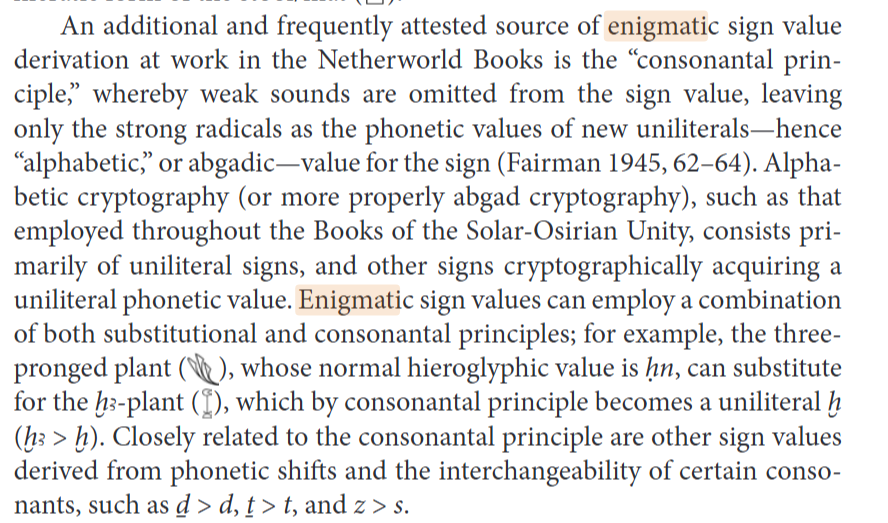
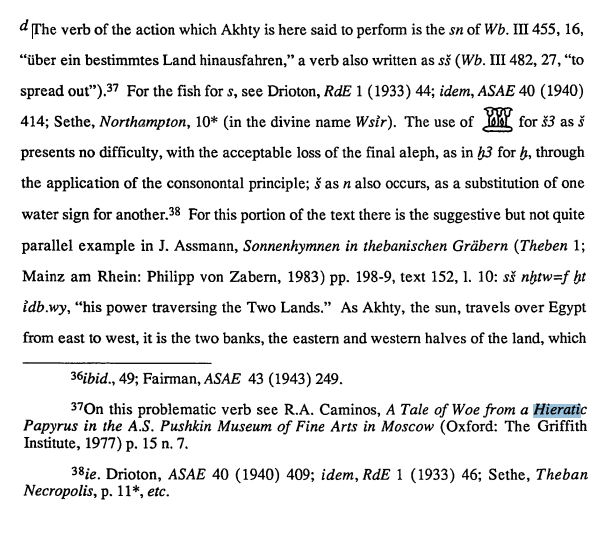
From a dissertation on Egyptian Cryptographic writing. Looks like I'm doing things correctly.
Dr. Jayson, PhD 🌲 tweet media
English
0
1
16
564
Dr. Jayson, PhD 🌲
Dr. Jayson, PhD 🌲@JS_StrngstSldr·
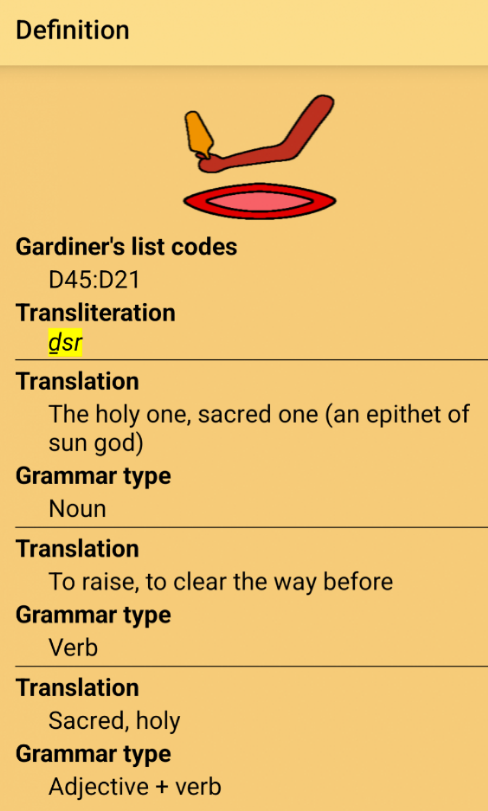
Update to this: In Kurth's book, A Ptolemaic Sign List, he notes that the dšrt, the red crown, can have the cryptographic meaning of bjt, or the honeybee. ḏsr means The holy one, to clear the way before, consecrated, set apart ḏsrt can mean "sacred ground" dšrw means "wrath" or "blood" ḏsr ' can mean "with upraised arm" dšr means slaughter dšrt also means "oil" Where in the scriptures do we find something that is using oil, blood, slaughter, sacred ground, upraised arm, set apart, holy of holies? The Jaredites were carrying a Melchizedek temple in the wilderness.
Dr. Jayson, PhD 🌲 tweet mediaDr. Jayson, PhD 🌲 tweet mediaDr. Jayson, PhD 🌲 tweet media
Dr. Jayson, PhD 🌲@JS_StrngstSldr

Deseret. Ether 2:3 - And they did carry with them deseret, which, by interpretation, is a honey bee; and thus they did carry with them swarms of bees... The text tells us the interpretation of this word plainly, a honey bee. This word is Egyptian, or at least there is a word in Ancient Egyptian that shares the phonetic elements. My guess here is Moroni is using this word to as a paronomasia, word play, to mean multiple things at once. One form of this word in Ancient Egyptian is dšrt, this can mean of course Red Land or desert, think of Southern Utah, that land is a red desert near St. George. The meaning of dšrt can also be blood, oil, or fire. What comes to mind when you think of blood, oil, and fire? Sacrifice. Temple ordinances. Another meaning is the Red Crown. Another meaning for dšrt is wrath. That word wrath occurs in the 2nd chapter of Ether five different times. Another phonetic link in Ancient Egyptian with deseret is ḏsr, or Djeser. This word mean holy, holy one, sacred, sacred one, to clear the way before, consecrated, glorious, set apart, sceptre, sanctity. The word ḏsr ' means "with upraised arm." The bee hieroglyph represented the King of Lower Egypt. Three bee hieroglyphs in succession meant "King of Kings." The Red Crown, deshret, represents Lower Egypt. My guess is that when it said they carried deseret with them, they are carrying a mobile tabernacle with them. The story in Ether 2-4 is very much a type of the Israelites in the wilderness and a new creation/flood account. My thought is that they had a Melchizedek temple with sacrifices similar to what Adam, Seth, and Noah had. The Jaredites had the priesthood.

English
0
2
11
270
Dr. Jayson, PhD 🌲
Dr. Jayson, PhD 🌲@JS_StrngstSldr·
Being active in church is more than just attending, it is attending and participating in the programs of the Church. Whether that is your calling or helping with someone else's calling. Participation is what helps you grow to be more like Jesus Christ.
Dr. Jayson, PhD 🌲 tweet media
English
0
0
28
268
Dr. Jayson, PhD 🌲
Dr. Jayson, PhD 🌲@JS_StrngstSldr·
@surskitmaxxing Research isn't done yet. I'm on verse 12. This method was made by non LDS Egyptologists going back to Champollion. I'm simply using a verified method.
English
1
0
1
12
Dr. Jayson, PhD 🌲
Dr. Jayson, PhD 🌲@JS_StrngstSldr·
My work on Ptolemaic Writing draws directly from scholarship in Egyptology.
Dr. Jayson, PhD 🌲 tweet media
English
1
2
14
341
Mark Riese
Mark Riese@MarkRiese1982·
@JS_StrngstSldr The difference is your God is the God of THIS world, but not the God of HIS Father's world.
English
1
0
0
47
Dr. Jayson, PhD 🌲
Dr. Jayson, PhD 🌲@JS_StrngstSldr·
One interesting thing in the Old Testament is God isn't defined in the Western sense. You could define God through what He does and what He says. God talks with Moses face to face. God shares a meal with Abraham, and with Moses and the 70 elders of Israel. God smells, writes with His finger, sits, etc. The issue with Trinitarianism is they transform God into a formless ethereal power, indistinguishable or at least quite similar to agnostics talking about "the Universe."
Brian Holdsworth@briankeepsworth

If I can conceive of something greater than your God, then he isn’t God. In the case of Mormonism, I can definitely conceive of something greater than their definition of God. 📽️ Watch Below👇

English
12
3
102
2.4K
Adam
Adam@adam_ebberts·
Dude, I just wanna put gas in my car.
English
2
2
10
419
Dr. Jayson, PhD 🌲
Dr. Jayson, PhD 🌲@JS_StrngstSldr·
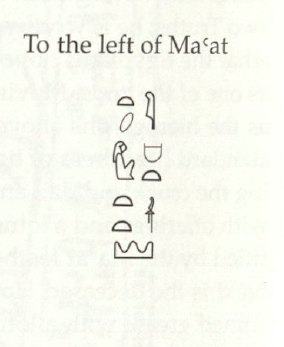
Update on this: The ending is still Amenemhat The beginning is as follows: Maat feather - it can be son (s3) Bread - j Egg - msj Water well- nfr bread - j Kneeling women - snt, beloved s3 j msj, nfrj snt Son begotten of Beloved Neferu. Amenemhat II's mother was named Neferu.
Dr. Jayson, PhD 🌲 tweet media
Dr. Jayson, PhD 🌲@JS_StrngstSldr

On to Figure 4 on Facsimile 3. Joseph Smith interprets this as: "Prince of Pharaoh, King of Egypt, as written above the hand." Ritner (vehement Anti-Mormon Egyptologist) literally translates this as: "MAa.t Hnw.t nTr.w" “Maat, mistress of the gods.” Rhodes (LDS Egyptologist) literally translates this as: "MAa.t Hm.t imnt.t" Ma‘at, Lady of the West Again, the Ptolemaic Enigmatic method uses each individual sign, and through the scholarship of Fairman, Kurth, Thiers, Noegel, and others there are alternative sound values or word values for each character. This could range from simple punning or rhyming to having an enigmatic or cryptographic text encoded in the text that is read in a different register than the literal default phonetic reading. 1. The first sign will be the Ma'at feather (H6). King Pharaoh is Sesostris and he had an Horus Name. His son is Amenemhat II, and his Horus name is ḥkn-m-mꜣꜥ.t (He who praises Ma'at). This is fitting that the Prince of Pharaoh is signified by Ma'at because that is his Horus name. Among the alternative sound values for H6 Kurth (2010) suggests, we will pick "n." Another sound value is sꜣ meaning "son," so we already have some wordplay that this is someone's son where Ma'at is related to their name. 2. The second sign is the bread loaf (X1). We are going to choose t. Putting n and t together makes nt which in Ptolemaic Enigmatic writing can be an abbreviated form of nswt meaning king or Pharaoh. 3. The egg (H8) is the next sign. This can also signify "son." That's what we'll go with. As the other figures at times had things switched around we are already seeing sꜣ nswt if we switch them, this aligned with metathesis or the anagrammatic principle used in Ptolemaic enigmatic writing. sꜣ nswt means Son of Pharaoh or Prince of Pharaoh. 4. This is the water well (N42). Kurth's alternate sound value is either nfr or ḥmt or ẖmt if we use the t from the next bread sign. ẖmt is interesting because it puns with Khemet which is Egypt's ancient name. We will use nfr. 5. The next sign is the bread sign and we'll use d. 6. The next sign is the seated god (A40). Kurth state's the value can be nb or nṯr. We'll go with nṯr. 7. The next sign is the bread sign again and we'll use d. 8. The next sign is the feather on a standard (R14). Kurth says the alternative sound value can be variations of jmnt (sometimes the t fell off the end of words in the Ptolemaic period). 9. The next the is bread sign and we'll use t. 10. the last sign is the mountain range (N25) and Kurth says an alternative word value is Ḥꜣ. Metathesis moves son and royal. nfr nṯr is the Horus name for Amenemhat's father, Sesostris. The two bread signs come together to make ḏd, signifying to say, to speak, to pronounce. Imn goes with Ḥꜣ. and the final bread goes at the end t. nswt sꜣ nfr nṯr, ḏd Imn-(m)-Ḥꜣ.t "Prince of Pharaoh, The Great God (Sesostris I), pronounced Amenemhat." Joseph guesses right again. "Prince of Pharaoh, King of Egypt, as written above the hand." The King of Egypt was "The Great God," or at leas that was Amenemhat's father's Horus name. The two bread sign can also be it which means father.

English
0
0
11
603
Dr. Jayson, PhD 🌲
Dr. Jayson, PhD 🌲@JS_StrngstSldr·
Update on this: The first six signs spell out Sjswrt or Sesostris/Senusret/Senworset/Saosis I. The last three are: Cultic Banner: N Vulture: S Bread: T If you sound it out, Nesoot, it sounds like NSWT, which is the Egyptian word for "king." Sjswrt, ns(w)t Sesostris I, king. Joseph said: Figure 2. King Pharaoh, whose name is given in the characters above his head. Can it get plainer than that?
Dr. Jayson, PhD 🌲@JS_StrngstSldr

We've completed the decoding of the Book of Abraham's Facsimile 3, specifically for Abraham/Osiris. We now move onto the first figure on the left. This figure is identified by Joseph as "Fig. 2. King Pharaoh, whose name is given in the characters above his head." Joseph is telling us this will be the king's name. Egyptologists literally read this as: ỉs.t wr.t mw.t nṯr The Great Isis, Mother of the gods. Let's see what the Ptolemaic Enigmatic Method reveals. I will be using Dr. Kurth's 2010 book "A Ptolemaic Sign-List." The first is the throne glyph, Q1. Kurth states an alternate sound value can be "s." The second sign is H8, the egg. Kurth stats this can be one of 12 different sound values and 7 different word values. We'll go with "s." The third sign is the bread glyph. Kurth states this can be either "j, t, ṯ, d, ḏ" We'll pick t. The next glyph is the swallow, G36. Kurth states an alternate sound value can be "wr." SSTWR is another anagram: "SS-WRT" vocalized as Ses-Ooret. This is a shortened contraction of Senusret. The Ptolemaic Greek would be Σέσωστρις (Sesostris) or Σεσόωσις (Sesoosis). Senusret means "Man of the Goddess Worset." Worset is a conglomeration of Isis and Hathor, the exact character depicted here in Facsimile 3, denoted by the female Isis with the sun disk and horns of Hathor. Sesostris even puns with Isis. Senusret I is also the Pharaoh traditionally associated with Abraham by biblical scholars. SS-Wrt is the first part. The next sign is the mouth glyph D21. Kurth says that n can be a possible sound value. This goes along with the consonantal principle. N is the strongest value in the work 'nḫ (ankh), meaning live. The two bread glyphs, X1, can mean j and t, this together is father (it or itf). Also, the sound values can be jt, and jt(y) can mean sovereign. They can also be ḏ and t, meaning ḏt "forever" The next glyph is the vulture G14. Read traditionally this is mwt meaning mother. In Ptolemaic Enigmatic, this can be the sound value nr according to Dr. Kurth. NR is a clipped form of nfr meaning good. Fairman's consonantal principle can make the f implied here. The flag pole sign is R8 means God or Divine, nṯr. The Good God is a common epithet for Sesostris I, it was his Horus name. The entire translation that I got is, "SS-Wrt, 'nḫ ḏt n(f)r nṯr." Sesostris I, Live Forever, (the) Good God

English
0
0
10
462
Dr. Jayson, PhD 🌲
Dr. Jayson, PhD 🌲@JS_StrngstSldr·
@InqstvMuse She was probably 50 when Jericho fell, so her story also includes the Lord most likely increasing her fertility like Sarah and Rachel.
English
1
0
1
16