James Court

3K posts

James Court

James Court

@JamesRCourt

Mainly electric vehicles. 🐙

Katılım Ocak 2009
1.1K Takip Edilen1K Takipçiler
James Court retweetledi
Clem Cowton
Clem Cowton@ClemCowton·
@jamesd_graham Shifting from bills to taxation makes energy costs more accountable. Treasury officials pay a LOT more attention to the impact of policy cost creep than DESNZ. It’s one reason the energy sector has long been split on this - subsidy beneficiaries worry about what HMT will notice.
English
2
3
15
1.1K
James Court retweetledi
Ember
Ember@ember_energy·
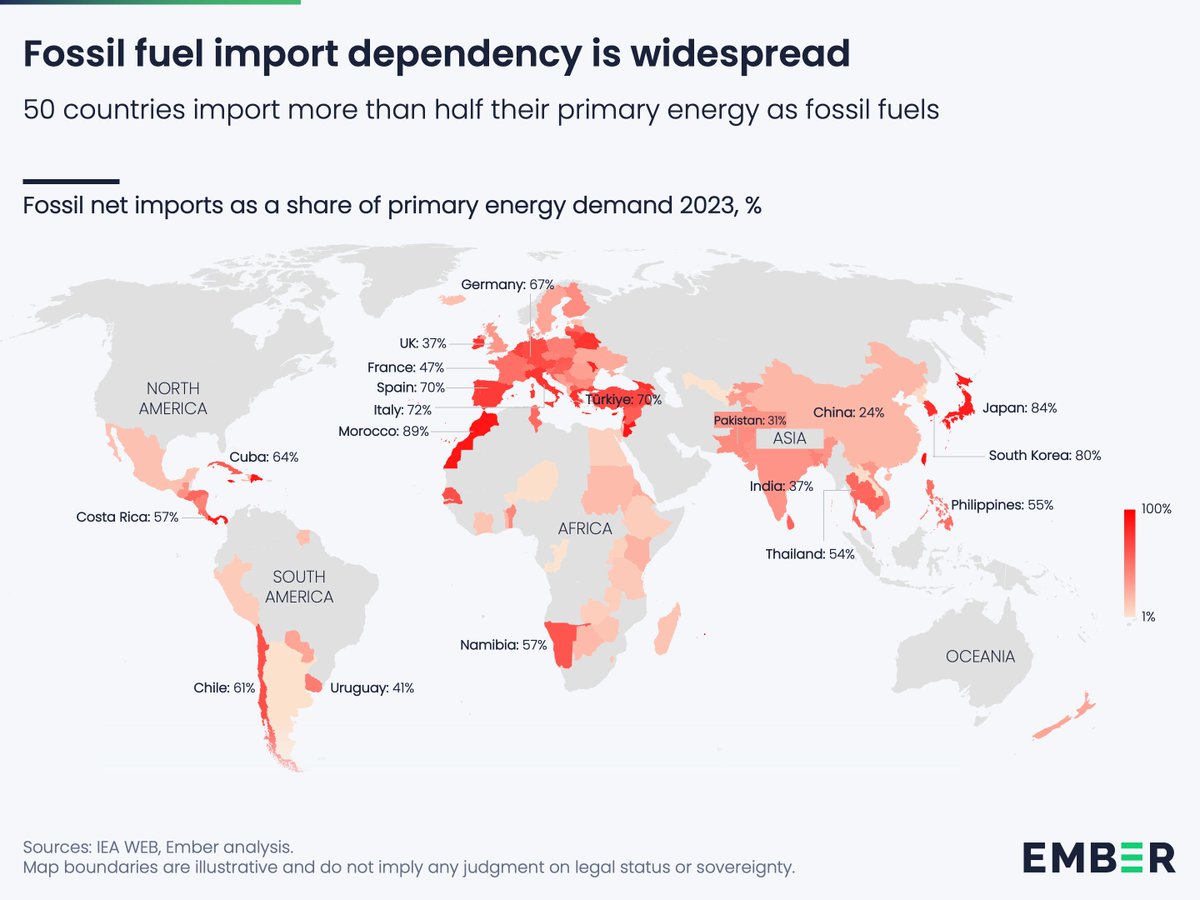
Unlike the 1970s oil crises, there are now better alternatives: 🔌 EVs + renewables + heat pumps could cut fossil fuel imports by 70% 🚗 EVs alone: $600bn/year in savings Every country has the potential to be energy independent with electrotech. 🔗ember-energy.org/latest-insight…
Ember tweet media
English
26
225
562
63.7K
James Court retweetledi
Colin Walker
Colin Walker@colinwalker79·
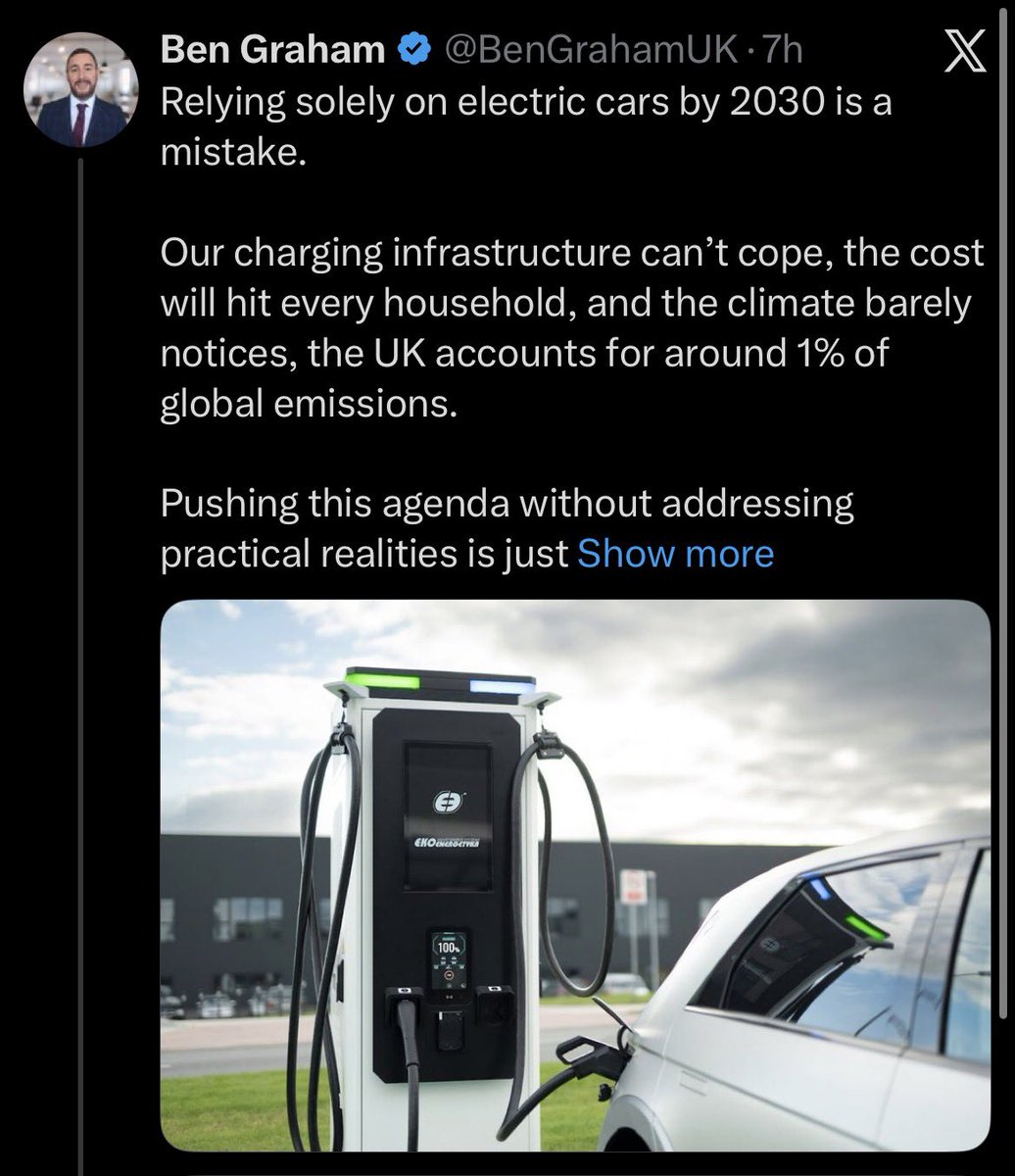
Classic EV misinfo from @BenGrahamUK here No, we will not be “relying solely on EVs by 2030” 1 - you can buy a new car with an engine in until 2035 i.e. hybrids 2 - you can buy a 2nd hand petrol car for as long as you’d like, absolutely no phase out date in place… 1/2
Colin Walker tweet media
English
13
18
87
3.6K
James Court retweetledi
Ember
Ember@ember_energy·
75% of the world lives in fossil fuel importing countries. Every $10 oil price rise adds $160bn/year to the global import bill. The single biggest fix: EVs replacing imported oil in transport could save importers $600bn/year. Read the report: 🔗ember-energy.org/latest-insight…
Ember tweet media
English
16
190
421
28K
James Court
James Court@JamesRCourt·
independent.co.uk/cars/electric-… EV pay-per-mile tax could cost fleets £260m a year in admin alone. Pay-per-mile is the wrong policy at the wrong time, and this is just the latest in a long line of unforeseen issues, govt should have a serious rethink and properly consult with industry.
English
0
0
2
40
James Court retweetledi
Octopus Electroverse ⚡️
Octopus Electroverse ⚡️@OctopusElectro·
It's time for a Plunge Pricing event in the UK! 🇬🇧🌿 Get 15% off today (25/03) at all Osprey Charging Network, @InstaVoltUK, IONITY, @RawCharging, @GeniePointEV & @BeEV_Charging locations when you start a charge using the Octopus Electroverse app or charging card (Electrocard) between 10:00 - 14:00! 🤩🔌 Want to learn more about Plunge Pricing? Head to the Electroverse blog here: bit.ly/plungepricinge… 🔗
English
1
2
10
1.5K
James Court retweetledi
Sam Coates Sky
Sam Coates Sky@SamCoatesSky·
EXC Does your council wrongly block projects, and have to pay millions in council tax when the decisions are overturned? We reveal what's going wrong. Investigation by @JoeCookJ and me, interrogating everyone planning council in England
English
42
82
409
201.8K
James Court retweetledi
Sam Richards
Sam Richards@sjarichards·
Get Fingleton Done. Full Zonal Now. Cut The Levies.
Sam Richards@sjarichards

How do you respond to an energy crisis? We'll get the Government's answer today. 4 years ago I was being asked the same question when I worked in No10. Back then, Boris Johnson deployed the secret weapon of the British state- endless Cabinet Office committees- to tackle two problems: how to shield billpayers from surging gas costs in the short term, and how to stop taxpayers footing the bill again in a future crisis. Boris would erupt with fury when civil servants explained how a few hundred kittiwakes were stopping us building vital energy infrastructure. His answer was 2022’s British Energy Security Strategy, which I helped write. Its premise was simple: speed up homegrown energy- new nuclear, renewables, and oil and gas- to insulate Britain from global price shocks. On any reasonable measure, it failed. Four years on we have the highest industrial energy costs in the world, the second highest domestic bills in Europe, and our energy system remains reliant on imported gas that spikes in global crises (and increasingly on imported turbines and panels from China). The government is again considering paying everyone's bills. What went wrong? This Government would argue we didn’t go fast enough on renewables. Their policy is to buy lots of renewables very quickly to replace gas. We can and should remove the planning barriers that slow down deployment and increase the cost of all new energy, including renewables. But the catch is that while solar and batteries work in Spain or Texas, the cost of building wind turbines, our main option, has soared. Buying lots of offshore wind in 2021 made sense at £57/MWh. But the latest deals cost nearly double that. In trying to avoid volatility, the Government has bought a record amount of the most expensive wind power in a decade. Wind farms also require more grid than a smaller number of assets like nuclear power plants, both for themselves and for the backup gas they rely on. The cost of building that grid will add £108 per year to bills by 2031 yet we’ll still pay billions to switch wind farms off when it’s too windy for the grid to handle. There are other hidden bill costs: from carbon pricing levied upstream, to subsidies for industry. It’s got so bad that energy bosses have said that even if the wholesale price fell to zero, bills would still go up. Even if we bring down the cost of wind through planning and market reform, a grid dominated by it faces a core challenge: the wind doesn’t always blow. Solving this problem leads you back to burning gas. While more wind in the mix means we burn less gas - handy when prices spike - the trade-off is the cost of building the system twice: once for wind and once for gas backup. And if gas plants run intermittently, their economics get much worse. If we’re going to burn gas anyway should we have ignored renewables and gone hell for leather on gas? Our current crisis suggests otherwise. The North Sea is not what it was, leaving us reliant on imports and exposed to global events. That doesn’t mean current policy makes sense. Banning new exploration licenses in a gas-hungry system that imports half its supply is self-defeating, and the windfall tax is clearly accelerating the North Sea's decline. But that decline is geological not political; it began well before net zero. New licenses and a better fiscal regime can extend its life, not reverse its fortunes. Could fracking have saved us? My view then and now is that the geology, geography, population density and politics of Britain make the economics of US style fracking impossible here. Would a country that struggles with objections to new homes accept thousands of fracking pads across our countryside? Lancashire’s new Reform council certainly doesn't seem to think so. The deeper problem is the 2022 Strategy, in true Johnsonian fashion, set boosterish new targets, but lacked the concrete plan for achieving them. Fortunately this Government now has practical plans it can implement today. First: radical supply side reform to make it easier to build new nuclear. Nuclear cuts the gordian knot; it reduces our reliance on both imported fossil fuels and kit from China, insulating us from price shocks. It carries fewer hidden costs because it is on whatever the weather, and it is zero carbon to boot. The challenge is that our current approach to building nuclear is ruinously expensive - but it doesn’t have to be. Korea builds them six times cheaper; in this country we used to build nuclear power stations for a quarter of current costs. The Fingleton review, which the Government has said they will deliver in full, provides a roadmap for getting costs to that level again - the Government should commit to passing the regulatory changes and legislation needed by the end of the year. Think of it as a vaccine taskforce for nuclear. Second: market reform to cut waste. We can drive down the cost of renewables and add more to the grid, but they should stand on their own two feet. If data centres want to sign a deal to build solar and batteries we shouldn’t stand in their way, but our energy system should be guided by prices not planned from Whitehall. The same applies to grid queues. Finally: cut unnecessary taxes and remove levies to slash bills now. Carbon taxes on electricity have got coal off the grid and now only serve to make all types of power more expensive. They should be removed. Government handouts to industry should not be hidden on bills but moved to general taxation or scrapped. Taken together this would cut the cost of electricity in the short and long term. Good for industry, good for households, while making the shift from the (often) imported oil and gas we use in our boilers and petrol cars more attractive for consumers. The heart of the 2022 strategy: making it easier to build energy infrastructure in Britain, remains correct. The Government now has a blueprint. They should get on with it.

English
0
5
40
7.3K
James Court retweetledi
Greg Jackson
Greg Jackson@g__j·
Octopus have long pushed for reforms to give people cheap electricity rather than *paying wind farms to switch off* so I’m pleased to see this but… trials are hugely ineffective. Permanent changes would mean you could buy an electric car, or a heat pump or batteries to use power when it’s cheap. Or build a data center, or hydrogen electrolysers or kilns or…. (Of course it’s not windy all the time but average elec costs would be much lower) These would all shift demand far more effectively than we will see in any trial. Indeed, trials could be pretty ineffective without this. The rejection of zonal was to favour generators but giving them certainty. Trials do the exact opposite for users. No certainty so consumers of electricity can’t invest. Which is a shame because an energy transition would see 6x more investment on the consumption side than the generation side, but that side bears far more uncertainty than generators, grids and networks. So - great to see all this “zonal by the back door” stuff - but why not make it permanent immediately so we can have confidence in investing in electrification, and why not go the whole hog and do zonal properly
Department for Energy Security and Net Zero@energygovuk

Sometimes there is too much wind for our outdated grid to handle, especially in Scotland and the East of England. Rather than paying wind farms to switch off we’re trialling a new system where people who live near these constrained areas get cheaper - or even free - electricity.

English
44
86
596
108.8K
James Court retweetledi
Nicolas Fulghum
Nicolas Fulghum@nicolasfulghum·
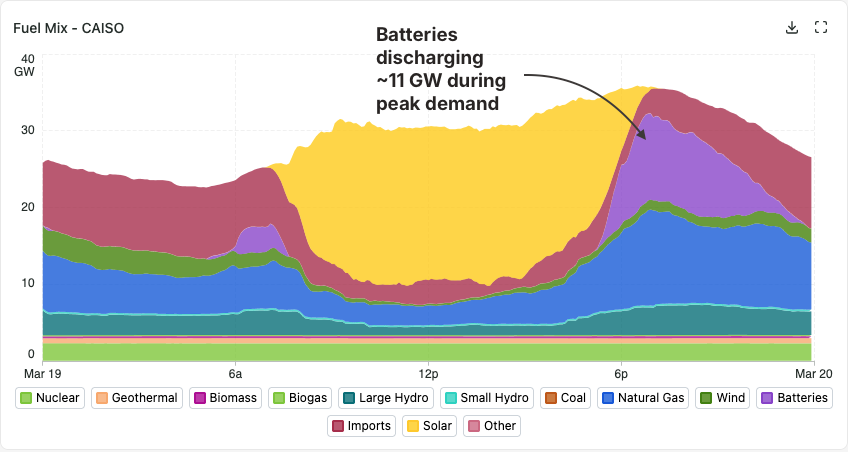
Battery storage has proven itself invaluable during California's record-breaking spring heatwave. During peak demand, grid batteries delivered ~11 GW – a third of demand. They kept power price spikes lower and short-lived. Chart for March 19
Nicolas Fulghum tweet media
English
38
299
1.5K
85.2K
James Court retweetledi
Jack Pardoe
Jack Pardoe@pardoejw·
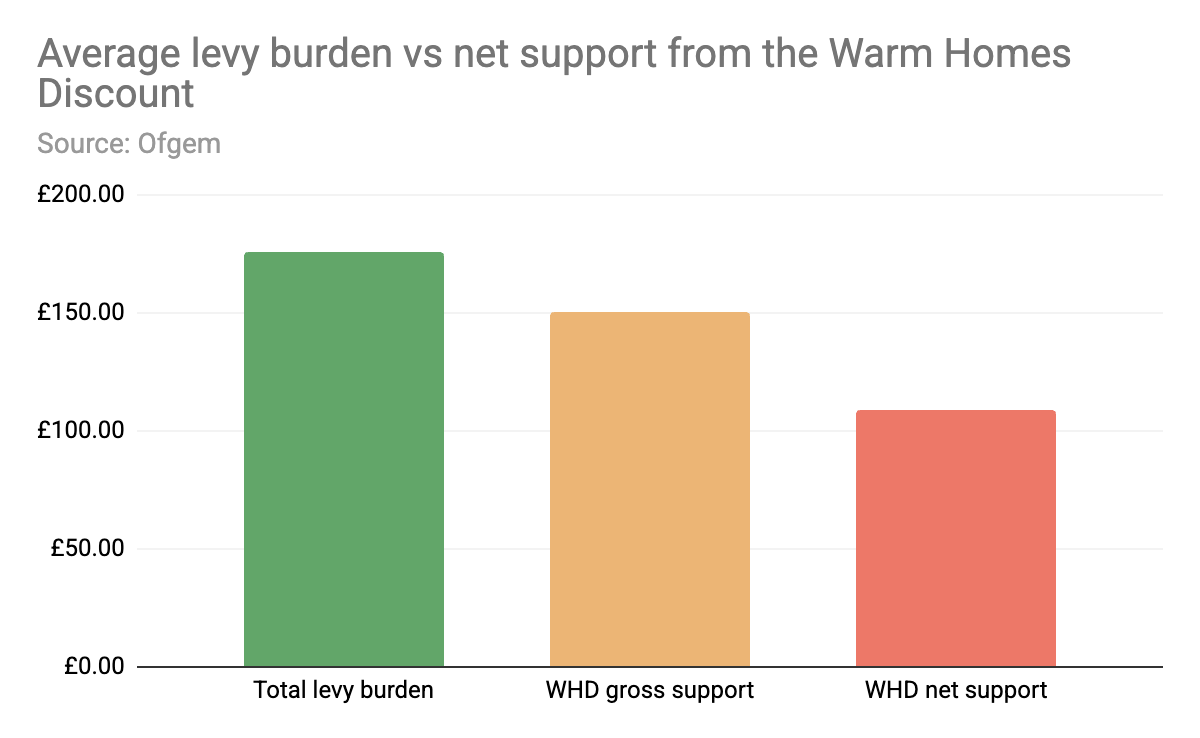
I've written part two of my two blogs on levy reform. Cutting levies is the only option left on the table for the government to really make a lasting, noticeable difference on bills, beyond more subsidies. jackpardoe.substack.com/p/the-primacy-…
Jack Pardoe tweet media
English
1
3
9
1.3K
James Court retweetledi
Dr. Andy Palmer
Dr. Andy Palmer@AndyatAuto·
Moronic observation. Nissan, Mitsubishi and Tesla gave birth to modern EVs. Early investment in Japan, UK and US gave an unassailable lead to the West in the EV technology including gigafactories in U.K. Sunderland and US. Yet poor management and poor Government support, often flic-flak regulations caused the west to waste its lead while China stayed the course and invested. Car making is all about economies of scale, and that is what China created and Europe didn’t. After that it’s about technological leadership; EVs are the future and you can’t put that genie back in the lamp!
English
19
14
132
5.7K
James Court retweetledi
Jack Pardoe
Jack Pardoe@pardoejw·
I've written the first of two posts about levy reform. We need people to use more electricity, if only to get electricity costs down. Therefore, we should stop taxing the f--k out of it. open.substack.com/pub/jackpardoe…
Jack Pardoe tweet media
English
2
4
21
2K
James Court retweetledi
Greg Jackson
Greg Jackson@g__j·
Always worth reading past headline- thanks @edking_I Key point is that we need to reduce our dependency on gas through efficiency & electrification. Wind, solar, batteries good, nukes ok. While we do use gas, I'm happy if it comes from the N Sea rather than half way round world
Ed King@edking_I

Worth reading this @g__j piece beyond the misleading headline. @OctopusEnergy boss making case for energy diversification - renewables, batteries and 'not kid ourselves' that domestic / North Sea gas will cut bills.

English
21
18
87
12K
James Court retweetledi
Greg Jackson
Greg Jackson@g__j·
Norway - sells oil & gas, but uses electricity mainly from renewables. 97% of new cars are electric and heat pumps are main source of heating. They're barely affected by what's happening in Iran. Their electricity costs going up 17%, ours going up 60% because we are so much more dependent on gas.
Greg Jackson tweet media
English
104
289
910
67.9K
James Court retweetledi
Colin Walker
Colin Walker@colinwalker79·
On @BBCr4today this morning Stellantis' UK Director said the following: "EV sales continue to grow...but not at the level demanded by the government's budget legislation. Remember, we're tasked to achieve 28% this year" This is inaccurate - here's why: bbc.co.uk/programmes/m00…
English
5
10
22
2.1K
James Court retweetledi
Matt Oliver
Matt Oliver@mattotele·
Tony Blair has a new slogan: electrification, electrification, electrification
Tone Langengen@ToneLangengen

NEW paper from @InstituteGC today. We argue Britain’s energy mission must shift - from Clean Power 2030 to Cheaper Power 2030. To cut bills, unlock growth, and secure lasting public support for net zero👇

English
1
5
9
1.4K
James Court retweetledi
ChargeUK
ChargeUK@ChargeUK_·
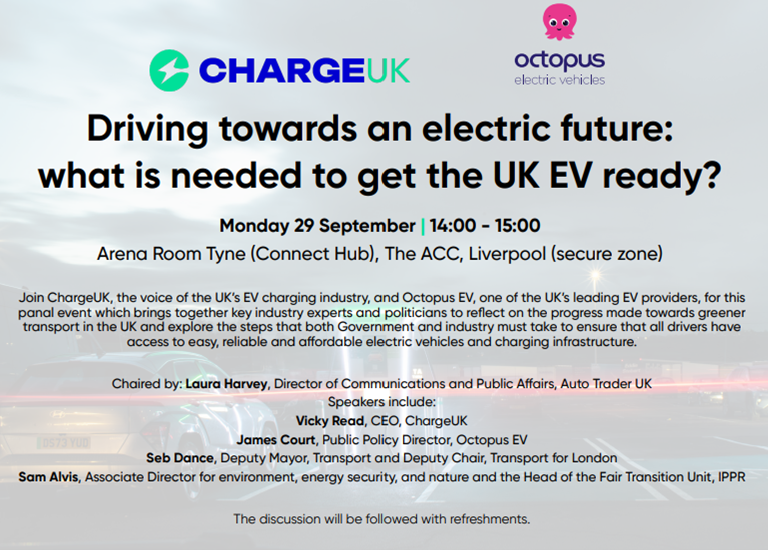
the steps that both government and industry must take to ensure all drivers have access to easy, reliable and affordable EVs and charging infrastructure. 2/2 Full details below: #ChargeUK #EVcharging #EV
ChargeUK tweet media
English
0
1
0
104
James Court retweetledi
Sam Hall
Sam Hall@samuelhall0·
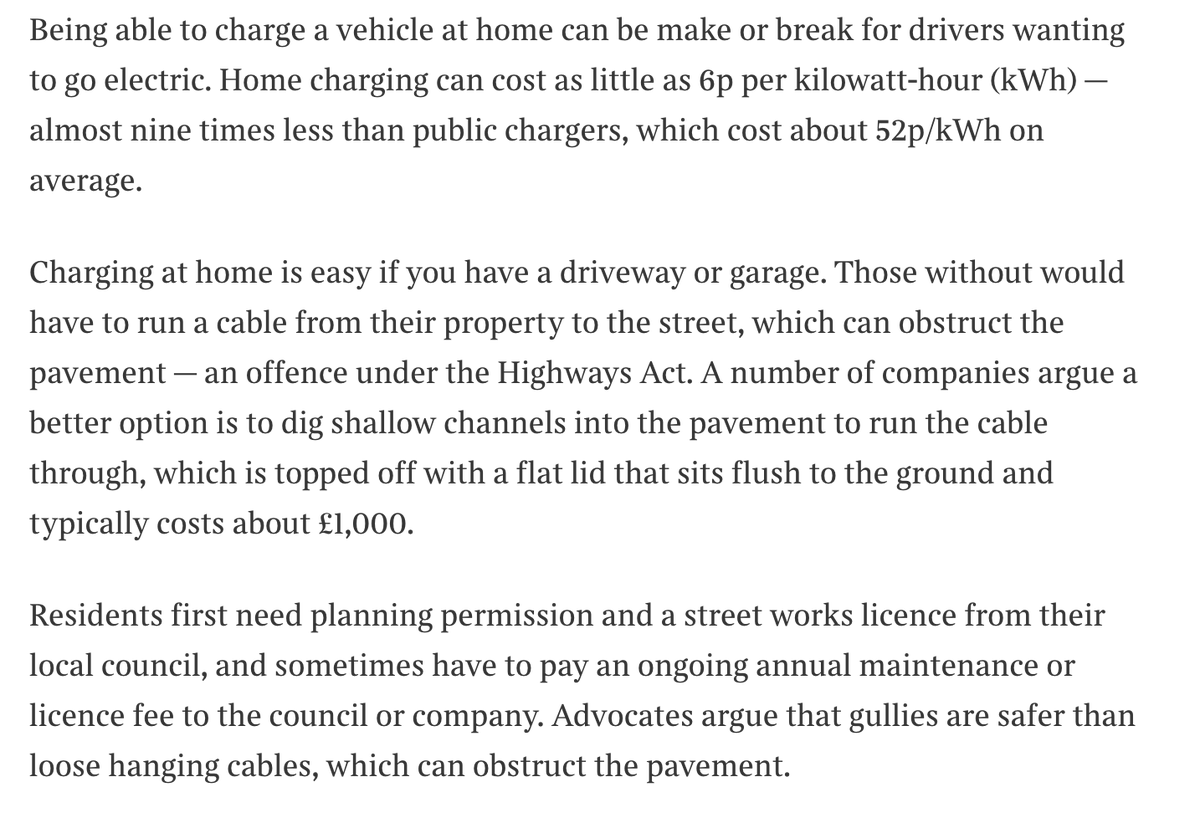
This is a great summary from @thetimes of why we need to remove the requirement for planning permission for EV charger cable gullies. Otherwise millions of households who don't have driveways will find it harder o benefit from the cheap motoring costs of EVs.
Sam Hall tweet media
English
1
4
9
508
James Court retweetledi
Simon Evans
Simon Evans@DrSimEvans·
Oops! The Times has had to issue an embarrassing correction over supposedly "sluggish" EV sales 😳 ❌ It said EV sales to private buyers fell 10.8% this yr ✅They actually GREW…by 62% Yet Times articles still claim a "big fall", "collapse" & "slide" in private EV sales 🤔 1/7
Simon Evans tweet media
English
23
150
431
24.7K