Josip Petric
413 posts
Josip Petric
@JoPetric
Senior iOS dev (14y) Building apps & games with AI (but doing it right) Moon Nest • Last Echo Thoughts on product, code & meaning
Croatia Katılım Nisan 2012
435 Takip Edilen211 Takipçiler

Yeah….this is why you engineer your codebase from the start. If you haven’t been paying close attention to every convention, every pattern, every bit of how the agent writes the code. You get this. I can step into any project and quickly figure out where it stands and find any piece of code as needed. How you may ask? I made a coding best practices file that was made from years worth of my own personal code. The agent fallows all my personal conventions. It’s like walking around in my own code. If you can’t do this you’re just making a spaghetti monster. An undefeatable dragon. I’m even training jr’s in my workflow so I can manage a team of devs pumping out code I can manage. You need to learn to be a systems thinker to be great at what’s coming
English

Am I the only one getting vibe coding fatigue?
Building landing pages in 30 seconds was fun, but maintaining a complex codebase where half the logic was “vibed” into existence is an absolute headache.
Feels like we traded 1 hour of typing for 5 hours of architectural debugging later. I’ve started manually writing core logic again so I actually know where the technical debt is hiding.
Is anyone successfully managing large production projects with AI agents, or are we all just building disposable software?
English
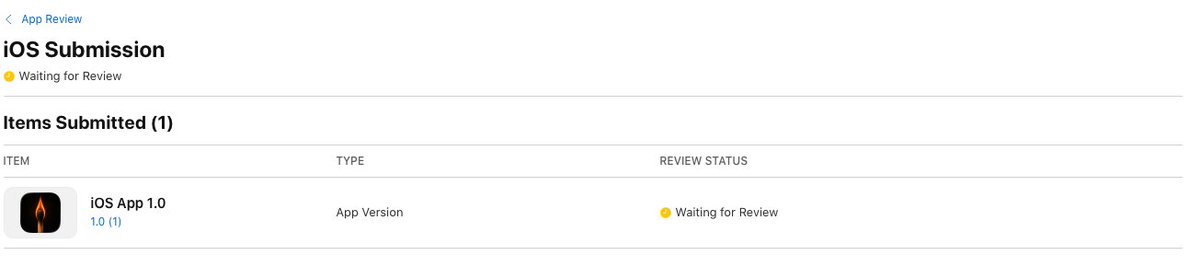
Just submitted Last Echo to App Review. A quiet, swipe-based survival game.
Where you don't die from one bad decision, you die from who you slowly become (or also, you can survive).
Hopes for a painless review. #buildinpublic
English
App Store screenshots were always the part I dreaded. The app's done, you just want to hit submit, but there's still a day or two of mockups and copy standing between you and the button.
Used @adamlyttleapps' skill this time (thanks!). Around 2 hours, including all my own tweaking. Not two days.
And I think screenshots look awesome.

English
@VechAlex Really cool idea.
But I don't understand this opsession with these huge onboardings...did someone actually proved that they increase the conversion that much?
I am the first who would never finish even half of that 61-steps onboarding.
English

a habit tracker making $250K/mo...
not a meditation app. not a fitness app. a habit tracker that plays like an RPG.
56 onboarding steps. and people love it.
- social proof before anything: "1M+ installs." account created before you even realize you're in a 50+ step questionnaire
- asks you to describe your life satisfaction. then asks WHY you want to reset. now you're emotionally invested
- "choose your character." your progress maps to RPG stats: Wisdom, Strength, Discipline
- calculates how much time you waste per day and turns it into dollars: "$43,680/year in Potential Return"
- the subscription isn't a cost. it's a "financial rescue"
- real user stories with before/after photos. proof this works
- "Vow" sequence. intense questions. ends with a sustained FINGERPRINT HOLD on screen. not a tap. a hold. physical commitment manufactured
- iOS rating prompt hits at peak inspiration. reviews farmed perfectly
- 30 min countdown + "Claim Limited Discount" screen BEFORE the paywall
- paywall: $17.99/mo as a decoy. $69.99/year shown as $5.83/mo. pre-selected
- close the paywall? retro gift card animation. drops you into $39.99/year one-time offer
56 steps and every single one is designed to make you feel like quitting isn't an option.
study this.
English
@alice_ercolani I am always amazed when I see an app with such a good idea.
In the ocean of apps (there is basically an app for everything today), there is still space for another one.
English

"Prove It" makes $100k a month
It scans any supplement and tells you what works and what's safe, backed by science.
1/25
English
@mdnlabs I am really becoming sceptical about these numbers... looks like everyone is making at least 10k a month these days on apps in the most saturated niche...
English

Another diet tracker doing $2,000,000/mo 😭
People feel guilty for not being healthy.
That's why they pay.
Onboarding
- Sex
- Height
- Weight
- Weight Goals
- Exercise Routine
- Other basic stuff on health
Paywall
> 1 Month -> $11.99/mo (NO TRAIL)
> 6 Months -> $47.99 (7.99/mo) (NO TRIAL)
> 1 Year -> $71.99 (5.99/mo) (7-DAY TRIAL)
The longer you commit, the more money you save.
People want to be committed to their health.
They are guilty to themselves and others if they're not.
That's why they pay.
Build your own tracker in Anything.
Marshall@mdnlabs
This app makes $10,000/mo by spying on your friends on Instagram 😭 People love being nosey, and these people monetize it. Onboarding: - Track your friends - Give a review to help others - Demo track anyone you want - Dynamic "searching" loader screen Paywall: - What you'll see when you pay (secrets without the other person knowing) - $5.99/week - $9.99/month - NO free trial. It's literally the CHEAPEST API call on their end for ^^^ money. Profit margin of 90% or higher. Simple solutions for high margins are such a good investment. Build your own with Anything.
English
@sherifgjini I would say that no sales kills startups.
In an ocean of startups today, I think a fairly small number is killed because of the competition.
You first need to have some sales and user base in order to even have a competition.
English


I turned these two hours into a side project that's generated millions of dollars.

English
@TTrimoreau Probably the same plan farmers had when tractors became better at plowing than humans with horses.
Learn to use the tool, produce more, and move higher up the value chain.
English

Devs,
What’s your plan B if Artificial Intelligence writes better code than you in next 5 months?
English

@launch_llama Working on an iOS choice-based survival game called Last Echo. “You don’t die from one bad decision. You die from who you slowly become.”

English

Getting pretty close to releasing Last Echo.
Still finalizing some assets, tweaking small details and trying to make everything feel coherent together.
Honestly, seeing something that lived only in my head for years slowly become a real game feels kinda surreal.



English
@sophie_launch Yes, thank you for pointing it out :)
I also have a feeling that there is a lot of lying when MRR is involved.
I currently have 2 apps on the app store, and my MRR is similar to yours :D
English

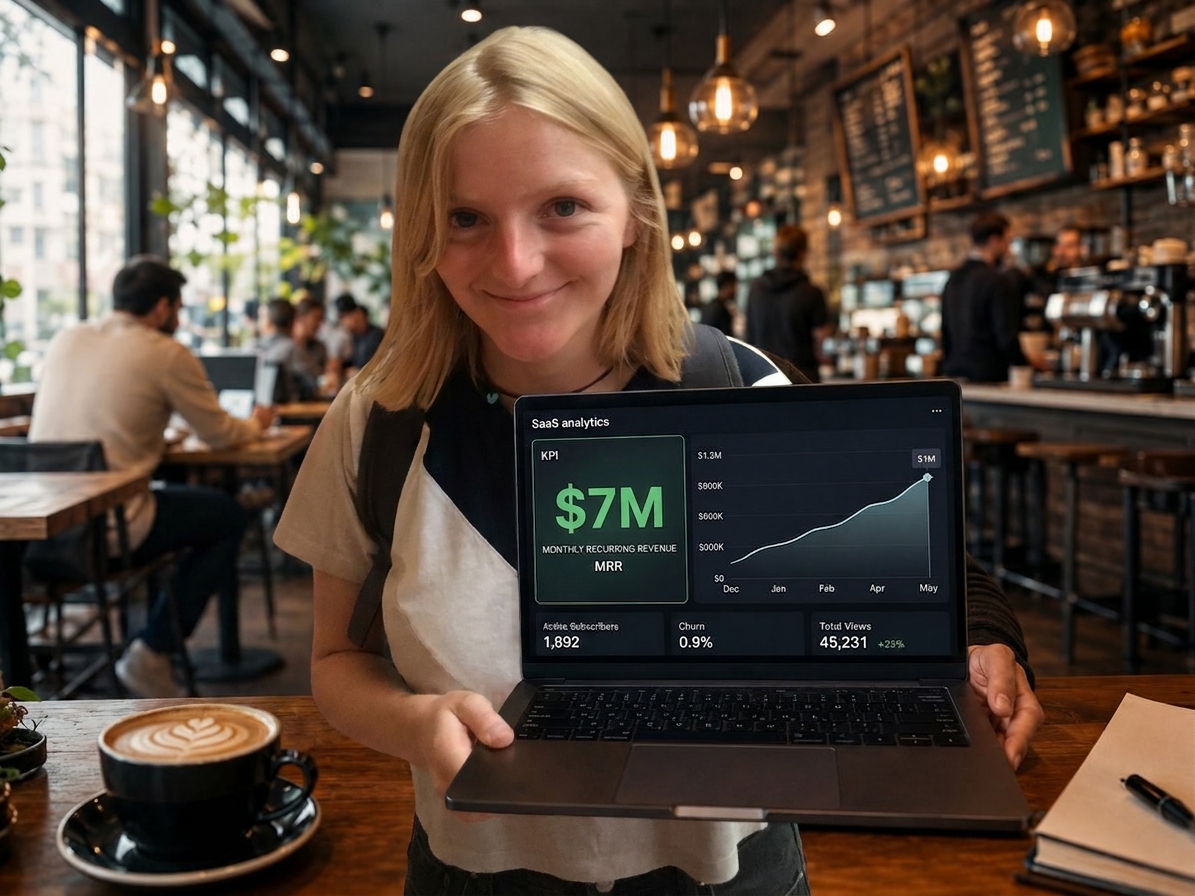
Everyone is lying about their MRR .. this is the reality ..
We hit $7 MRR at Launch Llama .. yes .. SEVEN DOLLARS
English


I am also working on something (almost) every day before my full-time job. So I know it was not easy for you. But what interests me is how did you and did you validate your business idea?
Doing this is a big sacrifice (I admire you) so how sure you were that you are doing the right thing?
English
I built a $1M business that changed my life by doing deep work for 2 hours every day (before my full time job) for 365 days in a row.
AMA

English
Interesting, just yesterday I have stumbled upon "The Engineer-Founder Failure Pattern" and figured that I do this in all my projects.
Overthinking, overengineering, adding features your users actually don't need...for me it was a safe zone. And exiting the safe-zone is hard, but necessarry to suceed.
English

Friendly reminder for startup founders:
Stop overthinking everything.
Your job in the beginning is just to launch the thing and learn.
Not make it perfect.
English
Recently I stumbled upon “The Engineer-Founder Failure Pattern” and honestly it describes me a bit too well.
Spending too much time building, thinking about architecture, scalability, maintainability, edge cases... and not enough time validating whether people actually want the thing you are building.
I think a lot of engineers fall into this trap because we genuinely enjoy building and optimizing systems. It feels productive. Honestly, even a little bit safe.
But at the end of the day, users don’t care how elegant your architecture is if the product itself does not solve a real problem for them. I am not saying you should create an unmaintainable mess, but probably spend less time overthinking everything upfront.
The good thing is that realizing this feels kinda liberating because now I know what I should focus on less (and also release faster).
Did anyone else go through something similar?
English
After around 14 years of writing code, it felt strange at first. I was honestly afraid that my job is going to be obsolete in the near future.
But as I started to use AI more, it started to feel more like a shift in my job description itself.
Now I can spend less time typing boilerplate (and some not-so boilerplate) and have to think more about architecture, tradeoffs, maintainability, scalability and making sure generated code actually fits in the existing system (making sure that the app is not a mess in 6+ months). I think that seniors and experienced engineers have big advantage here.
I think that AI is the future and there is no going back now. We have to adapt, incorporate it in our workflow or we'll be left behind.
And who is better at adapting to new things than developers? :D
English