Jose Cadavid

493 posts

Jose Cadavid

Jose Cadavid

@JoseLCadavid

Chemical engineer messing with systems biology and tissue engineering. Postdoc @MITdeptofBE Lauffenburger/Griffith lab. Dark beer, bass guitar, 3D printing.

Cambridge, Massachusetts Katılım Nisan 2018
541 Takip Edilen289 Takipçiler
Sabitlenmiş Tweet
Jose Cadavid
Jose Cadavid@JoseLCadavid·
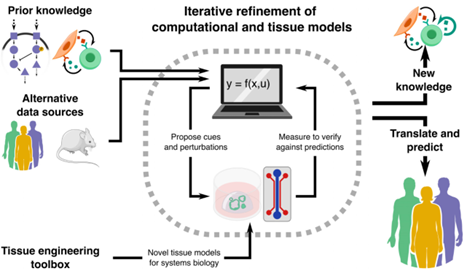
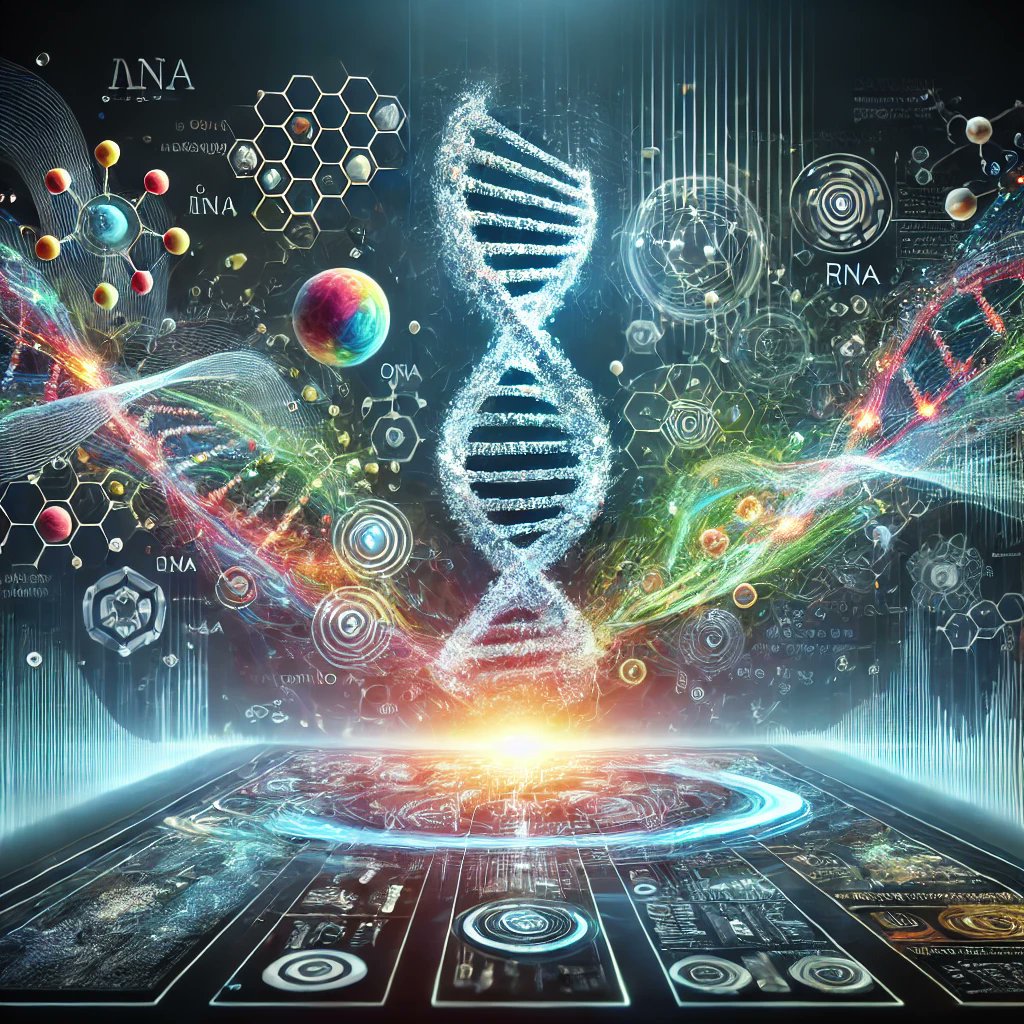
I am thrilled to finally share the last piece of my PhD work @mcguiganlab, where we (@thenancyli and @alisonmcguigan) review how systems biology and engineered tissue models can complement each other (A LOT!). Check out this #Scilight about out work twitter.com/BiophysRev/sta… (1/3)
Jose Cadavid tweet media
Biophysics Reviews@BiophysRev

In the pursuit of a better understanding of biological systems and processes, researchers have built increasingly sophisticated physical models to study. #Scilight Learn more 👇 aippub.org/43U9jXO

English
3
4
24
1.3K
Jose Cadavid
Jose Cadavid@JoseLCadavid·
@deniswirtz @jdpereira @BarteltLab Sure, but how detailed does the map need to be? If you are using organoids to make mini-tissues, by definition you need to follow a good map. If you are using them to predict drug responses, I am not so sure...maybe we should distinguish predictive vs descriptive in vitro models
English
1
0
0
51
Denis Wirtz
Denis Wirtz@deniswirtz·
@JoseLCadavid @jdpereira @BarteltLab Without 3D maps, we are all flying blind. How can one determine if an organoid is any good? Since one cannot test for all its functions (the kidney has 8 of them!), only architecture is a good proxy. There are good ways to compare architectures.
English
1
0
0
47
Denis Wirtz
Denis Wirtz@deniswirtz·
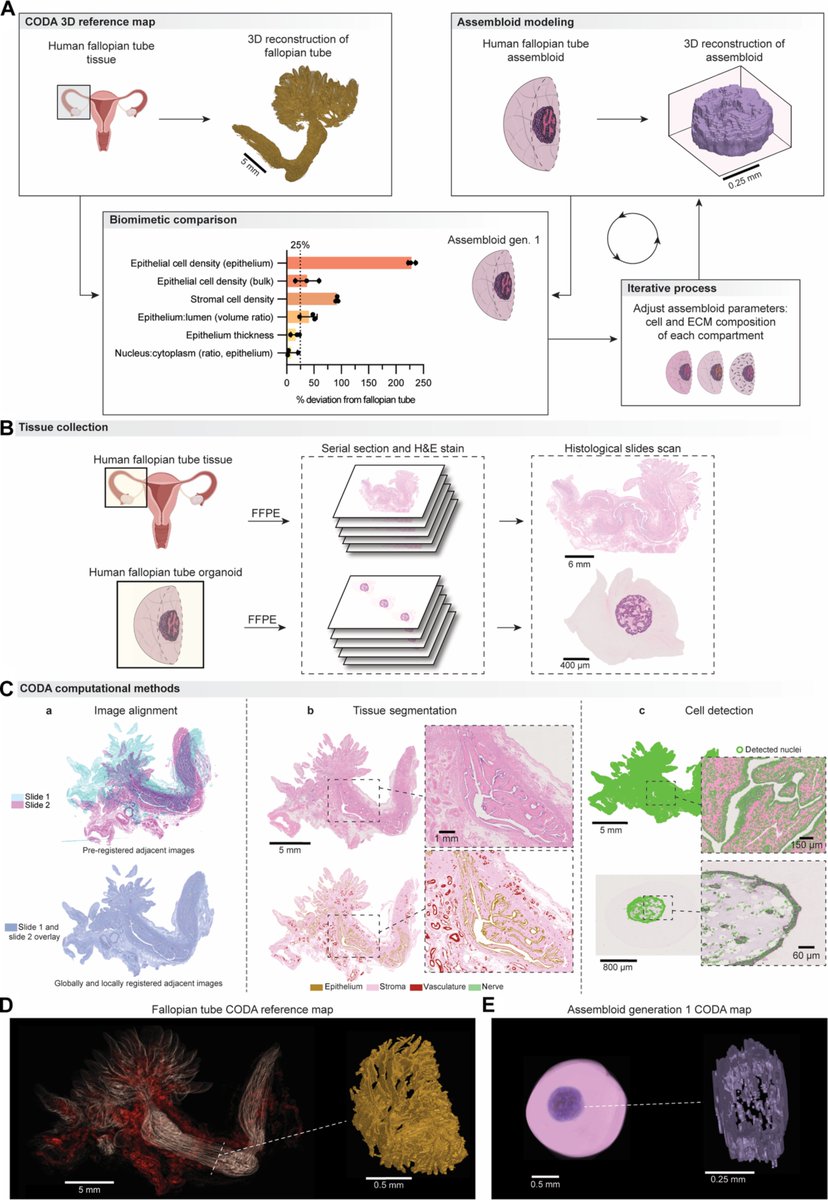
I think there is a need for a complete re-think for organoid modeling. As long as the architecture of organoids that you produce is not directly compared to a 3D map of the organ (say, fallopian tube) or disease to be modeled, it will be approximate Here: science.org/doi/full/10.11…
Denis Wirtz tweet media
English
8
38
233
30.4K
Jose Cadavid
Jose Cadavid@JoseLCadavid·
@deniswirtz @jdpereira @BarteltLab I've read it and I am a big fan of CODA! However, without defining how complex a 3D model needs to be for a specific question, I fear that perfect might be the enemy of good. We are working on systems bio approaches to address this problem.
English
1
0
0
57
Denis Wirtz
Denis Wirtz@deniswirtz·
@JoseLCadavid @jdpereira @BarteltLab Our paper in the link is a first attempt at this. Please read it, and you'll see how we systematically compare many architectural features of a series 3D maps of organoids that we compare directly to a 3D map of a fallopian tube.
English
1
0
0
63
Jose Cadavid
Jose Cadavid@JoseLCadavid·
@deniswirtz @jdpereira @BarteltLab Maybe, but has anyone actually tested this or do we just assume it must be true? Maybe not all functions, whatever that means, need "perfect" architecture
English
1
0
0
58
Denis Wirtz
Denis Wirtz@deniswirtz·
@jdpereira @BarteltLab These 3D maps can serve both as a blueprint (input) to organoid models and for validation. If the form (architecture) of the organoid is right, its multiple functions are likely to be right. The reverse is also true...
English
2
0
2
556
Michal Tal, PhD
Michal Tal, PhD@ImmunoFever·
Now can we PLEASE consider the impact of temperature on protein function? Starting with fever but then quickly advancing to how the use of temperature modulation could totally change drug development and therapeutic design!!!
Biology+AI Daily@BiologyAIDaily

Leveraging Unified Sequence-Structure Representations for Enhanced Protein Stability Prediction 1. A new deep learning framework named ProStab-Former has been introduced to predict protein thermal stability with high accuracy. This model integrates sequence and structure information in a unified representation space, overcoming limitations of previous multi-modal approaches that struggled with indirect information fusion and incomplete capture of sequence-structure interactions. 2. ProStab-Former leverages a pre-trained, multi-modal protein foundation encoder for robust feature extraction at the residue level. It includes Stability-Aware Attention Layers (SAAL) with a structural prior bias and mutation-aware gating, enabling precise capture of local and global stability perturbations induced by mutations. 3. The model incorporates an Epistatic Interaction Module to explicitly model non-additive effects in multi-point mutations. This allows ProStab-Former to efficiently predict the stability changes for numerous single-point mutations in a single pass, significantly accelerating mutation landscape analysis. 4. Experimental evaluations show that ProStab-Former achieves superior performance, with a median Spearman correlation coefficient of 0.84 on the Megascale Test set, surpassing state-of-the-art models like SPURS. It also demonstrates strong generalization across diverse tasks, including melting temperature prediction and pathogenic mutation classification. 5. ProStab-Former's design prioritizes computational efficiency, enabling rapid inference for comprehensive mutation scanning. This makes it highly practical for high-throughput protein engineering and variant effect analysis, positioning it as a valuable tool for both research and industrial applications. 📜Paper: biorxiv.org/content/10.648… #ProteinStability #DeepLearning #ProteinEngineering #Bioinformatics

English
1
2
15
1.7K
Jose Cadavid retweetledi
Sam Rodriques
Sam Rodriques@SGRodriques·
One of the remarkable things for me about NeurIPS this year was how quickly the entire AI for Biology community has gone all-in on biological foundation models. Virtual cell models will enable us to predict how cell states will change in response to chemical perturbations. Protein language models will enable us to identify better enzymes for degrading plastics, and so on. Everyone wants bigger data on more things to throw into bigger models. These models are going to be awesome, but real biology discoveries look somewhat different. Contrast these dreams of foundation models with the latest table of contents from Science or Nature: --“A long noncoding eRNA forms R-loops to shape emotional experience–induced behavioral adaptation” — The authors identified a lncRNA in mice that is expressed in response to neuronal activity that modulates the 3D structure of chromatin, thereby activating genes that are involved in neuronal plasticity. The authors further identified that this lncRNA is essential for certain forms of learning. --“Cancer cells impair monocyte-mediated T cell stimulation to evade immunity” — The authors identified that mouse melanoma cells secrete a lipid metabolite that prevents monocytes from activating CD8+ T cells. --“Postsynaptic competition between calcineurin and PKA regulates mammalian sleep–wake cycles” — By generating mouse knockout lines, the authors identified phosphatases and kinases that are critical for regulating the sleep-wake cycle, and showed that they act through regulation of proteins at excitatory postsynaptic sites. I struggle to imagine how any of these discoveries could fall out of a multimodal biology foundation model. This is not intended to be a straw man argument. Surely, a foundation model could potentially identify the lncRNA from the first paper, but I am not sure how such a foundation model would associate it with chromatin remodeling. A multimodal foundation model with enough data could also potentially identify metabolic changes associated with melanoma cells subjected to certain kinds of treatments, but I don’t see how that foundation model could identify the effect of those metabolites in preventing CD8+ T cell activation. Indeed, I do not think that any of the foundation models that are being developed today would be capable of generating rich new biological insights of the kind described in these papers. And yet, these are the kinds of insights that new therapies are made from. The issue, I think, is that machine learning models work extremely well on structured data, and so all the foundation models that are being built are highly structured. Take a protein sequence as input and produce a protein sequence as output. Take a cell state and a chemical perturbation as input and produce a new cell state as output. Biology, however, is poorly structured. The lncRNA insight is case in point: what structured representation can we use for the action of the lncRNA in modulating chromatin architecture? Protein models cannot represent it; DNA models cannot represent it; virtual cell models cannot represent it. Perhaps a model that incorporates RNA expression and 3D genome state could represent it, but then how would that model represent the lipid modulation of the monocytes? I worry that every discovery may need its own representation space. Indeed, the nature of biology is such that there likely is no representation, short of an atomic-resolution real-space model of the entire organism, that is sufficient to represent the diversity of biological phenomena that are relevant for disease. Except, of course, for natural language, which is evolved to represent all concepts that humans are capable of contemplating. Indeed, I think natural language has an essential role to play in representing biology, and is ultimately unavoidable, insofar as it is the only medium we know of that is sufficiently structured for machine learning and sufficiently flexible to represent the full diversity of biological concepts. At FutureHouse, we work on language agents, which is one way of combining language and biology, but this is not the only way. Models that combine natural language with protein, DNA, transcriptomics, and so on will also be extremely productive, provided the addition of the structured datatypes does not restrict their ability to represent unstructured concepts. However we do it, I think this essential role of natural language in representing biology is currently largely underappreciated. The history of biology is built on tools that we have found in nature to study biological phenomena. As all biologists know, trying to engineer things from scratch (almost) never works; what works is finding things in nature and repurposing them. It will be aesthetically pleasing if it turns out that our engineered representations are yet again insufficient for studying biology, and that natural language is simply another such tool that we have found in nature that must be applied instead.
Sam Rodriques tweet media
English
30
112
691
268.4K
Daniel Zhu
Daniel Zhu@DanielYZhu·
Check out our work on embryo-scale spatiotemporal modeling!
evo-devo@Xiaojie_Qiu

We are thrilled to share that our first paper from my new lab, Spateo (github.com/aristoteleo/sp…) for spatiotemporal modeling of molecular holograms, is now online in Cell: cell.com/cell/fulltext/…. Spateo is a comprehensive analytical framework for 3D whole-embryo spatiotemporal modeling. Its advanced features include: • 3D alignment and reconstruction at the whole-mouse-embryo scale (see the animation). • 3D spatial domain digitization and cell-cell communication analysis to understand spatial gene expression gradients and both inter- and intracellular communication. • 3D morphometric and volumetric analyses along with 3D morphogenesis vector field modeling to quantify dynamics such as surface area, volume, and cell density across organs, and to dissect the interplay between morphogenesis factors and cell migration. • A “Google Earth”-like browser, Spateo-viewer (viewer.spateo.aristoteleo.com and github.com/aristoteleo/sp…), for interactive and intuitive exploration of 3D spatial data. • Additional features, such as RNA signal-based single-cell segmentation. We are also honored that Nature “News and Views” has highlighted this work as well: nature.com/articles/d4158…. This is really an amazing outcome after two years' heroic revision process that rewrite the entire paper using a new data (doi.org/10.1101/2024.0…) for whole mouse embryos.

English
1
0
4
534
Alex Vlahos (he/him)
Alex Vlahos (he/him)@AlexVlahos·
I am excited to share that I will be starting as a tenure track Assistant Professor in @CoulterBME at @GeorgiaTech in the upcoming year. I am very grateful of the unwavering support of my postdoctoral mentor, @SynBioGaoLab , and my PhD supervisor, Michael Sefton.
Alex Vlahos (he/him) tweet media
English
35
19
247
22.4K
Jeffrey West
Jeffrey West@mathoncbro·
This paper has my vote for Most Interesting & Provocative new ideas in "philosophy of modeling" in the last several years: frontiersin.org/journals/immun… My summary: 🧵🧵🧵
Jeffrey West tweet media
English
3
16
76
6K
Jose Cadavid
Jose Cadavid@JoseLCadavid·
@pcr_guy Desafortunadamente no voy a estar en la ciudad, pero mucha suerte y felicidades! Tenemos una conversacion pendiente!
Español
0
0
0
124
Jose Cadavid
Jose Cadavid@JoseLCadavid·
Thanks to everyone who contributed to the huge body of work that we had the pleasure of distilling. Convergence science is hard, but by showing success stories we can hopefully make a stronger case for it (shoutout to @FertigLab). Full article here shorturl.at/cuwBP (3/3)
English
0
0
5
653
Jose Cadavid
Jose Cadavid@JoseLCadavid·
This article is special to me because it helped me gather my thoughts about my career and ultimately inspired me to join the great pioneers @LindaGGriffith1 and Doug Lauffenburger @MITdeptofBE for my postdoc (2/3)
English
1
0
5
106
Jose Cadavid
Jose Cadavid@JoseLCadavid·
I am thrilled to finally share the last piece of my PhD work @mcguiganlab, where we (@thenancyli and @alisonmcguigan) review how systems biology and engineered tissue models can complement each other (A LOT!). Check out this #Scilight about out work twitter.com/BiophysRev/sta… (1/3)
Jose Cadavid tweet media
Biophysics Reviews@BiophysRev

In the pursuit of a better understanding of biological systems and processes, researchers have built increasingly sophisticated physical models to study. #Scilight Learn more 👇 aippub.org/43U9jXO

English
3
4
24
1.3K
Jose Cadavid retweetledi
University of Toronto Engineering
University of Toronto Engineering@UofTEngineering·
#UofTEngineering professor Alison McGuigan has been named the Canada Research Chair in Tissue Engineering and Disease Modelling. She is advancing research into building artificial tumours to help researchers better understand cell behaviour. Read more: uofteng.ca/kc0Rdd
University of Toronto Engineering tweet media
English
4
6
33
4.3K
Jose Cadavid retweetledi
Chris Tape
Chris Tape@christophertape·
Very excited to share our new pre-print ‘SIGNAL-seq: Multimodal Single-cell Inter- and Intra-cellular Signalling Analysis’ led by @j_opzoomer. (1/11) biorxiv.org/content/10.110…
Chris Tape tweet media
English
5
35
145
26.7K
Jose Cadavid
Jose Cadavid@JoseLCadavid·
@mathoncbro Also nice to see complex in vitro models get some love! "This foundation includes complex lab-based systems like cells and tissues grown on chips and 3D cultures of cells that can replicate some features of organs"
English
0
0
0
41
Jeffrey West
Jeffrey West@mathoncbro·
"These so called “novel alternative methods” or NAMs, which include computational modeling and predictive technologies, cell-free methods and assays and cell-based culture models, hold tremendous promise when applied to the appropriate scientific inquiry." very nice initiative!
English
1
2
4
996
Jose Cadavid retweetledi
Itai Yanai
Itai Yanai@ItaiYanai·
THE epic debate throughout science's existence has been: does discovery come from data or hypothesis? The answer is both, of course! I’ve made a career out of working mostly hypothesis-free so – contrary to what some say – this is absolutely possible, not boring, nor cheating🧵⬇️
Itai Yanai tweet media
English
6
28
170
57.1K
Jose Cadavid
Jose Cadavid@JoseLCadavid·
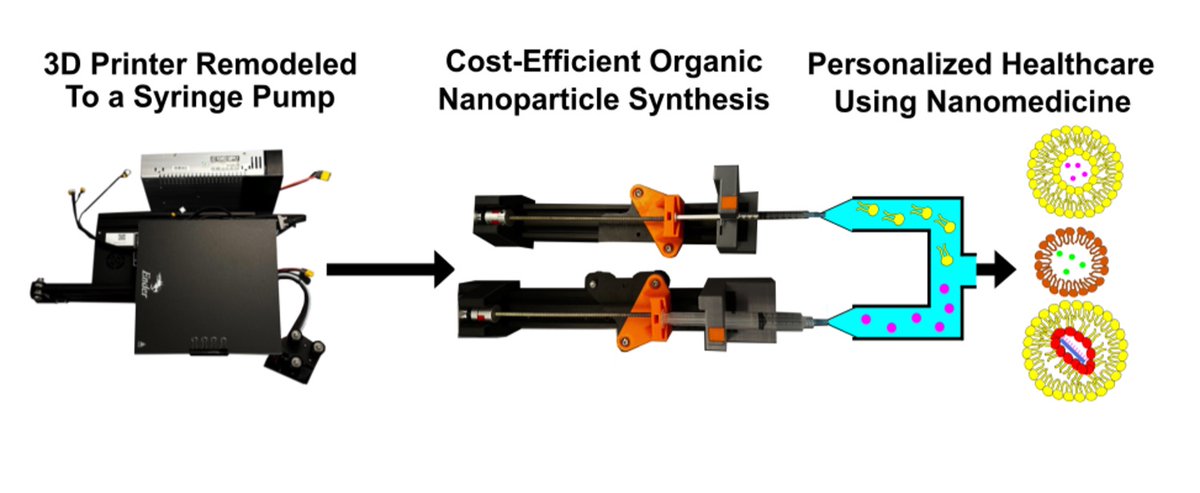
@V_Saggiomo Might not be fancy, but it's useful, ingenious, and accessible. That should count for something!
English
1
0
4
447
Vittorio Saggiomo (@Vsaggiomo@bsky.social)
We made Open Technology microfluidics with 25-micron features using a cheap consumer 3D printer, and used them to detect zooplankton, parasite eggs, and microplastics onsite, you just need a syringe........ 1/3
Vittorio Saggiomo (@Vsaggiomo@bsky.social) tweet mediaVittorio Saggiomo (@Vsaggiomo@bsky.social) tweet mediaVittorio Saggiomo (@Vsaggiomo@bsky.social) tweet mediaVittorio Saggiomo (@Vsaggiomo@bsky.social) tweet media
English
8
31
215
44.9K