Cern Basher@CernBasher
When Long-Term Investing Becomes Short-Term
"A lot of long-term Tesla investors didn't buy the stock because Tesla made good cars. The bigger vision was always the autonomy play." - @bradsferguson
But now there's an even bigger vision that just Robotaxi.
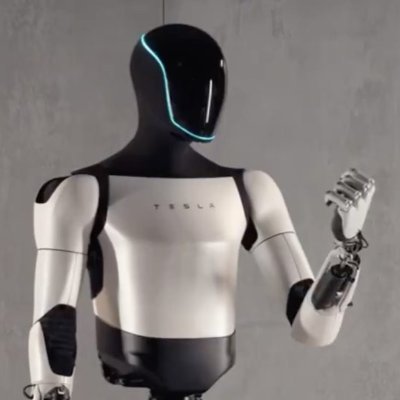
The vision includes autonomous humanoid robots (Optimus). Now add Digital Optimus and TERAFAB, and just recently the prospect of merging with SpaceX.
On it's surface, this sentiment sounds entirely reasonable: "We've been waiting all these years and I want to get the return I've been waiting for. Don't dilute me!"
However, while this viewpoint appeals to a sense of fairness and "we earned this" after years of pain, but it confuses emotional entitlement with economic reality.
1) Markets are forward-looking - In theory, Tesla's current market capitalization already prices in the market's best estimate of Robotaxi's future cash flows, probability-weighted and discounted. (I happen to think that the market's current estimate of the value is way too low, but the market doesn't agree with me). The stock has traded at massive premiums to traditional auto multiples for years precisely because of that bet.
The idea that you must wait for some discrete "re-rating" event (e.g., robotaxi profits suddenly exploding) before merging assumes the market is completely asleep right now and will magically wake up later. Perhaps.
2) Mergers aren't priced off today's market cap alone - In any real deal, the exchange ratio is negotiated using forward-looking projections and DCF models for both companies (where Robotaxi upside is explicitly modeled). Tesla's board should not agree to an exchange that leaves robotaxi value on the table. Waiting for "the market to recognize it" first doesn't protect anyone extra - it just delays potential synergies that could create more total value.
3) Sunk-cost reasoning - The "we funded the hard part through drawdowns and ridicule" narrative is emotionally compelling but economically irrelevant to future capital allocation. Tesla's autonomy R&D was funded by car sales profits - not just "long-suffering shareholders holding the bag."
Every current Tesla shareholder bought at a price that already reflected (some version of) the autonomy premium. Past volatility is a sunk cost; it doesn't create a special entitlement to capture 100% of the upside before any structural change.
By the way, SpaceX investors also funded their hard parts (many explosions!). A merger would give Tesla shareholders exposure to that upside they didn't fund either.
4) Zero-sum framing ignores value creation - In the video, Bradford treats the merger as purely dilutive to Tesla holders. In reality, combining the companies earlier could accelerate AI/robotics progress, reduce duplicate costs, and unlock synergies that make the pie bigger for everyone. Delaying purely to chase a higher standalone Tesla price risks missing that.
5) Companies should always focus on the long-term - Just because there are some investors who invested five years ago and are waiting for their payoff, their needs shouldn't take priority over all other shareholders.
What about the long suffering investors who bought Tesla as just a car company - who don't want an AI play and are waiting for Tesla to produce 20 million vehicles a year - do they no longer matter?
What about the people who bought the stock right after the TERAFAB announcement - who are excited about Tesla becoming a major semiconductor maker - do their wishes somehow matter less?
The stock market doesn't reward shareholders who have "suffered" - meaning that the NYSE doesn't give people who purchased the stock at $400 five year ago more gains than those who purchase the stock at $400 today. From here the upside is the same, whether you've suffered or not.
When you purchase the stock and at what price is on you. It's not Elon's responsibility to somehow find a way to reward your patience in the short-term over the long-term interests of other shareholders.
It is Elon's responsibility to maximize the long-term value of Tesla - at all times.
Note: I'm not singling out Bradford here - he's drawing attention to an important topic and I appreciate that.