Kiasutha Research

723 posts

Kiasutha Research banner
Kiasutha Research

Kiasutha Research

@KiasuthaR

Providing data-rich insights on #Investing, #Economics & #Policy. #FANG contrarians. Not investment advice.

Manhattan, NY Katılım Ekim 2020
662 Takip Edilen121 Takipçiler
Kiasutha Research
Kiasutha Research@KiasuthaR·
There are roughly 275 new car models on sale in the U.S. market and only eight have average transaction prices below $25,000. $TSLA #model2
English
0
0
1
72
Wall Street Mav
Wall Street Mav@WallStreetMav·
Klaus Schwab Announces The End Of Car Ownership 🚨🚨🚨 "You will use an app like uber but not anymore to call some driver" "A self driving car will come to your hotel or wherever you are" By 2030 there will be no more private cars. Highways will become parks” -Klaus Schwab World Economic Forum
English
10.9K
10.4K
20.4K
11.1M
Bill Ackman
Bill Ackman@BillAckman·
I believe that long-term rates, e.g, 30-year rates, will rise further from here. As such, we remain short bonds through the ownership of swaptions. The world is a structurally different place than it was. The peace dividend is no more. The long-term deflationary effects of outsourcing production to China are no more. Workers and unions’ bargaining power continues to rise. Strikes abound, with more likely to come as successful walkouts achieve substantial wage gains. Energy prices are rising rapidly. Not refilling the SPR was a misguided and dangerous mistake. Our strategic assets should never be used to achieve short-term political objectives. Now we must refill the SPR while OPEC and Russia cut production. The green energy transition is and will remain incalculably expensive. And higher gas prices will raise inflationary expectations. Just ask your average American. They see the prices at the pump and in the grocery store and don’t believe inflation is moderating. Our national debt is $33 trillion and rising rapidly. There is no sign of fiscal discipline by either party or by the presumptive presidential nominees. And each debt ceiling is an opportunity for our divided government and its most extreme actors to get media attention, and for our nation to threaten default. This is not a good way to recruit the many new buyers we need for our bonds. The government is selling hundreds of billions of bills, notes and bonds weekly. China and other foreign nations, historically major buyers of our debt, are now selling. And the QT unwind experiment has barely begun. Imagine trying to do a massive IPO where the underwriter, insiders and short sellers are all selling at once, competing to hit every bid on the way down while the analysts downgrade their ratings to ‘Sell.’ Our economy is outperforming expectations. Major infrastructure spending is beginning to contribute to economic growth and the supply of additional debt. Recession predictions have been pushed out beyond 2024. The long-term inflation rate is not going back to 2% no matter how many times Chairman Powell reiterates it as his target. It was arbitrarily set at 2% after the financial crisis in a world very different from the one we live in now. I bumped into the CIO of one of the world’s largest fixed income asset managers the other night and asked him how it was going. He looked like he had had a tough day. He greeted me by saying: ‘There are just too many bonds’ — a veritable tsunami of new issuance each week. I asked him what he was going to do about it. He said: ‘The only thing you can do is step away.’ I have been surprised at how low long-term rates are. I think the best explanation is that bond investors thought of 4% as a high rate of interest because rates hadn’t breached 4% for nearly 15 years. When investors saw the ‘opportunity’ to lock in 4% for 30 years, they grabbed it as a ‘once-in-their-career opportunity,’ but today’s world is very different from the one they have experienced up until now. The long-term inflation rate plus the real rate of interest plus term premium suggests that 5.5% is an appropriate yield for 30-year Treasurys. And query whether 0.5% is a sufficient real long term rate in an increasingly risky world. And the technicals could cause yields to go even higher, particularly in the short term. We saw the beginnings of that today. It wasn’t that long ago that a previous generation thought five percent was a low rate of interest for a long-term, fixed-rate obligation. But I could be wrong. AI might save us.
Bill Ackman@BillAckman

I have been surprised how low US long-term rates have remained in light of structural changes that are likely to lead to higher levels of long-term inflation including de-globalization, higher defense costs, the energy transition, growing entitlements, and the greater bargaining power of workers. As a result, I would be very surprised if we don’t find ourselves in a world with persistent ~3% inflation. From a supply/demand perspective, long-term Treasurys (T) also look overbought. With $32 trillion of debt and large deficits as far as the eye can see and higher refi rates, an increasing supply of T is assured. When you couple new issuance with QT, it is hard to imagine how the market absorbs such a large increase in supply without materially higher rates. I have also been puzzled as to why the @USTreasury hasn’t been financing our government in the longer part of the curve in light of materially lower long-term rates. This does not look like prudent term management in my opinion. Then consider China’s (and other countries’) desire to decouple financially from the US, YCC ending in Japan increasing the relative appeal of Yen bonds vs. T for the largest foreign owner of T, and growing concerns about US governance, fiscal responsibility, and political divisiveness recently referenced in Fitch’s downgrade. So if long-term inflation is 3% instead of 2% and history holds, then we could see the 30-year T yield = 3% + 0.5% (the real rate) + 2% (term premium) or 5.5%, and it can happen soon. There are many times in history where the bond market reprices the long end of the curve in a matter of weeks, and this seems like one of those times. That’s why we are short in size the 30-year T — first as a hedge on the impact of higher LT rates on stocks, and second because we believe it is a high probability standalone bet. There are few macro investments that still offer reasonably probable asymmetric payoffs and this is one of them. The best hedges are the ones you would invest in anyway even if you didn’t need the hedge. This fits that bill, and also I think we need the hedge.

English
909
2.3K
12.1K
6.2M
Kiasutha Research
Kiasutha Research@KiasuthaR·
@InvesTradeLearn @KobeissiLetter Logical, but the people it impacts would need to write the law then vote on it. Even if the law was passed, the lawyers in Congress would change how the deficit is calculated or change the meaning of “re-election”.
English
2
0
3
100
InvestTradeLearn
InvestTradeLearn@InvesTradeLearn·
@KobeissiLetter The Fed keeps pushing rates up while Congress approves more and more spending. We need the Buffet rule in place ASAP: "You just pass a law that says that anytime there is a deficit of more than 3% of GDP, all sitting members of Congress are ineligible for re-election."
English
1
1
61
6.8K
The Kobeissi Letter
The Kobeissi Letter@KobeissiLetter·
The U.S. Now Has: 1. Record $17.1 trillion in household debt 2. Record $12.0 trillion in mortgages 3. Record $1.6 trillion in auto loans 4. Record $1.6 trillion in student loans 5. Record $1.0 trillion in credit card debt Total mortgage debt is now more than double the 2006 peak. Meanwhile, 36% of Americans have more credit card debt than savings while student loan payments are set to resume for the first time since 2020. This is all while mortgage rates just hit 7.1% and credit card debt rates hit a record 25%. We are "fighting" inflation with debt. This can't end well.
English
566
2.8K
8K
2.4M
Car Dealership Guy
Car Dealership Guy@GuyDealership·
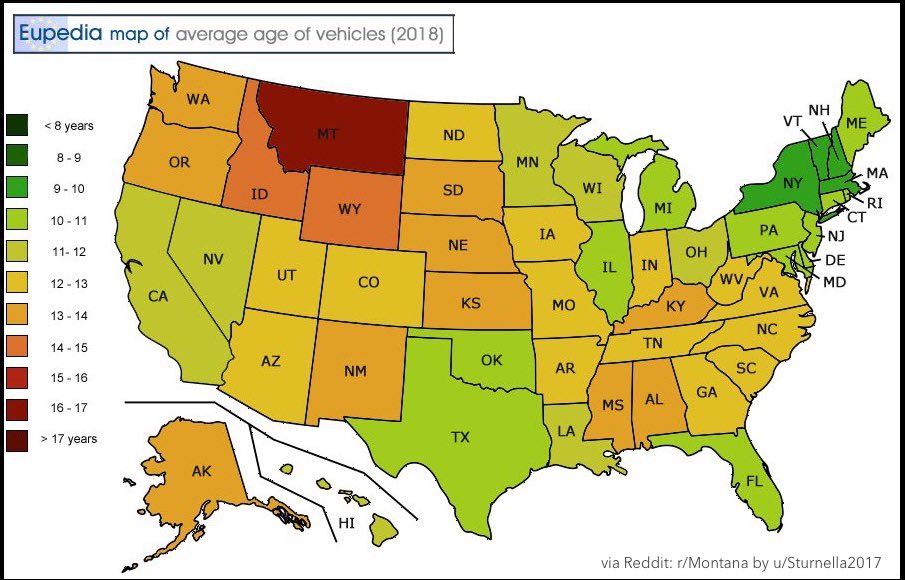
The average age of a vehicle in Montana is *over* 16 years old. Probably even more now. What is going on in Montana?
Car Dealership Guy tweet media
English
914
166
3K
3.3M
Kiasutha Research
Kiasutha Research@KiasuthaR·
Netflix’s crackdown on password sharing isn’t yet delivering the sales growth analysts anticipated. $NFLX shares are trading down about 8% this morning. There are plenty of other streaming choices that allow password sharing. For now. @netflix
English
0
0
0
50
Kiasutha Research
Kiasutha Research@KiasuthaR·
Headline #inflation back to 3% and signs that the so-called “supercore” segment is cooling.
Kiasutha Research tweet media
English
0
0
0
30
Bill Ackman
Bill Ackman@BillAckman·
The Supreme Court made the right decision on student loans. That said, @POTUS’s intent was a good one. Student loans are unnecessarily burdensome to millions of Americans. There are also good arguments to be made that many student loan borrowers did not have an adequate understanding of the burden they were assuming when they borrowed the money. And to state the obvious, overburdening our younger generations at their most productive time of life is bad for America. I have a few ideas on what can be done to fix the problem that I believe could receive bipartisan support. First, some background: Gov’t guaranteed student loans are like mortgages. They receive government support because we believe that education like home ownership is good for America. Interestingly, however, student loans are materially different from agency mortgages in two principal ways. They are fixed rate but cannot be refinanced if rates decline unless one can refi with a private lender where you lose some of the protections of gov’t loans like deferment during school and income-based repayment programs. One’s ability to access private student loans is a function of your creditworthiness and ability to repay the loan. They also have higher credit spreads, whereas gov’t student loans are available to everyone at low credit spreads. Second, student loans cannot be discharged in bankruptcy. This seems fundamentally unfair subject to a few caveats. In light of the above, my proposed changes to the gov’t student loan program retrospectively and going forward would be as follows: Student loan balances should be recalculated as if they were continually refinanced at the lowest rate offered during their entire term. This would have the effect of materially reducing the rates that student’s pay. Why should the gov’t be earning windfall spreads on loans to students when rates decline, particular when there are no gov’t floating rate options? Once the loan rates are recalculated assuming their rates decline with prevailing rates, any excess payments made by the borrower above the adjusted lower refi rates should be used to recalculate the now amortized balance of the loan. This should have the effect of greatly reducing the amounts owed by student loan borrowers in light of the 40-year downward trajectory of interest rates until recently. Second, student loans should be dischargeable in bankruptcy. The Congress made student loans non-dischargeable because they feared that students would file for bankruptcy immediately upon graduation, which is a legitimate concern. I would suggest therefore that student loans should become dischargeable in bankruptcy when the borrower reaches the age of 40. If a bankruptcy judge then determined due to hardship that the student loan should be written off or reduced, then it should be legal to do so. No one files for bankruptcy at 40 unless they have no other alternative. And if you have reached 40 and are forced to file for bankruptcy then your investment in your education did not yield an adequate economic return or you have suffered other severe hardships, which is what the bankruptcy courts are for. Why should those who invested in their education be treated worse than those who file bankruptcy because of other poor life outcomes? Lastly, we need to dramatically improve the disclosures provided to student borrowers at the time the loans are made. Compare the disclosures and underwriting done at the time a bank makes a mortgage to those provided to an 18-year old borrower. The standard for disclosure for an 18-year-old borrower should at a minimum be equal to that provided to a new homeowner. Analysis and other disclosures should be provided to the student borrower that can help them understand their ability to repay based on their education and career plan among other disclosures. I am seeing @SenSchumer on Monday. I am going to make my case for these changes. It’s about time we fixed this problem.
English
1.1K
338
4.1K
1.6M
Kiasutha Research retweetledi
Historic Vids
Historic Vids@historyinmemes·
During a certain period, Sears offered complete houses in large do-it-yourself (DIY) kits through their catalogs. These kits were transported by train and encompassed around 30,000 components, including wiring, plumbing, and heating, which collectively weighed over 25 tons. Customers had the option to choose from more than 370 designs, and each kit included a 75-page instruction manual. Sears asserted that an individual with "average" skills could construct the entire house within a span of 90 days. Between 1908 and 1940, Sears managed to sell over 70,000 DIY homes at prices ranging from $600 to $6,000 (approximately equivalent to $8,400 to $84,000 in today's currency). One notable model, known as the Martha Washington (as depicted in the accompanying images), was sold for $3,028 (equivalent to $45,538 today) in 1921. In 2016, the same Martha Washington model was purchased for $1.06 million in Washington D.C. Remarkably, almost 70% of these Sears DIY houses are still standing today.
Historic Vids tweet mediaHistoric Vids tweet media
English
970
5.3K
40.3K
14.3M
Kiasutha Research
Kiasutha Research@KiasuthaR·
Really surprised at how strong $META stock has been performing. Even more surprised that #ESG investors own it.
English
0
1
2
23
unusual_whales
unusual_whales@unusual_whales·
Dianne Feinstein is reportedly surrounded at all times by aides who explain what's happening when she grows confused. The aides remind her how and when to vote. Feinstein, 89 years old and worth $200 million, has some of the most unusual trades in Congress. Let’s look:
unusual_whales tweet media
English
463
1.3K
6.9K
1.9M
Daily Loud
Daily Loud@DailyLoud·
Texas high school postpones graduation after 85% of class fails to earn diploma
Daily Loud tweet media
English
2.3K
5.8K
115.3K
17.8M
Kiasutha Research
Kiasutha Research@KiasuthaR·
@GeorgeGammon Why do you need $10K in cash? Most transactions can be done with check, credit card, or bank transfer.
English
0
0
0
4
George Gammon
George Gammon@GeorgeGammon·
Been in Wells Fargo (had account here 20 years) 2 hrs trying to get 10k cash. Given passport, drivers license, 3 WF cards w/pin, ss card I’ve answered What color was your 1994 F150? Your address 20 years ago? What state does your mom live? They still won’t give me my $
English
1.6K
1.6K
9.9K
2.6M
Kiasutha Research
Kiasutha Research@KiasuthaR·
Lately people seem to worry about the USD losing its reserve currency status. The #DebtCeiling debacle is not doing the dollar any favors, as it relates to maintaining this status. There needs to be a permanent fix.
English
0
0
0
11
SteveGray
SteveGray@SteveGray0707·
Also explain why wind flows clockwise around a high pressure system in a clockwise direction and counter clockwise around a low pressure system in the Northern Hemisphere and the opposite in the southern hemisphere? It’s called Coriolis Force. This would not be possible if the earth weren’t round and rotating. Let’s here your pee wee Herman scientific explanation of that one. I have more of you want.
English
9
1
89
5.4K
Owen Benjamin 🐻
Owen Benjamin 🐻@OwenBenjamin·
The release of the P900 camera with infinite zoom is why there are so many flat earthers now btw. I’ve done it myself. There is no curve. Snipers don’t factor in the spin neither do pilots. Light houses wouldn’t work at 8 in/mi2. And nasa has lied about all of it. There is zero evidence we are on a ball. Zero evidence of spin. I don’t know what the earth is but someone has some explaining to do. And no everyone isn’t in on it. Without this tech it does look like boats are going over a curve. They aren’t. We aren’t just dumb crazy people. We actually know the heliocentric model more than 99% of the people calling us dumb. It is what it is. And social shame doesn’t work on me.
English
5.1K
1.1K
6.2K
4.9M
Kiasutha Research
Kiasutha Research@KiasuthaR·
@krassenstein Supreme Court will strike down as unconstitutional. It’s not what the founding fathers intended.
English
0
0
0
6
Brian Krassenstein
Brian Krassenstein@krassenstein·
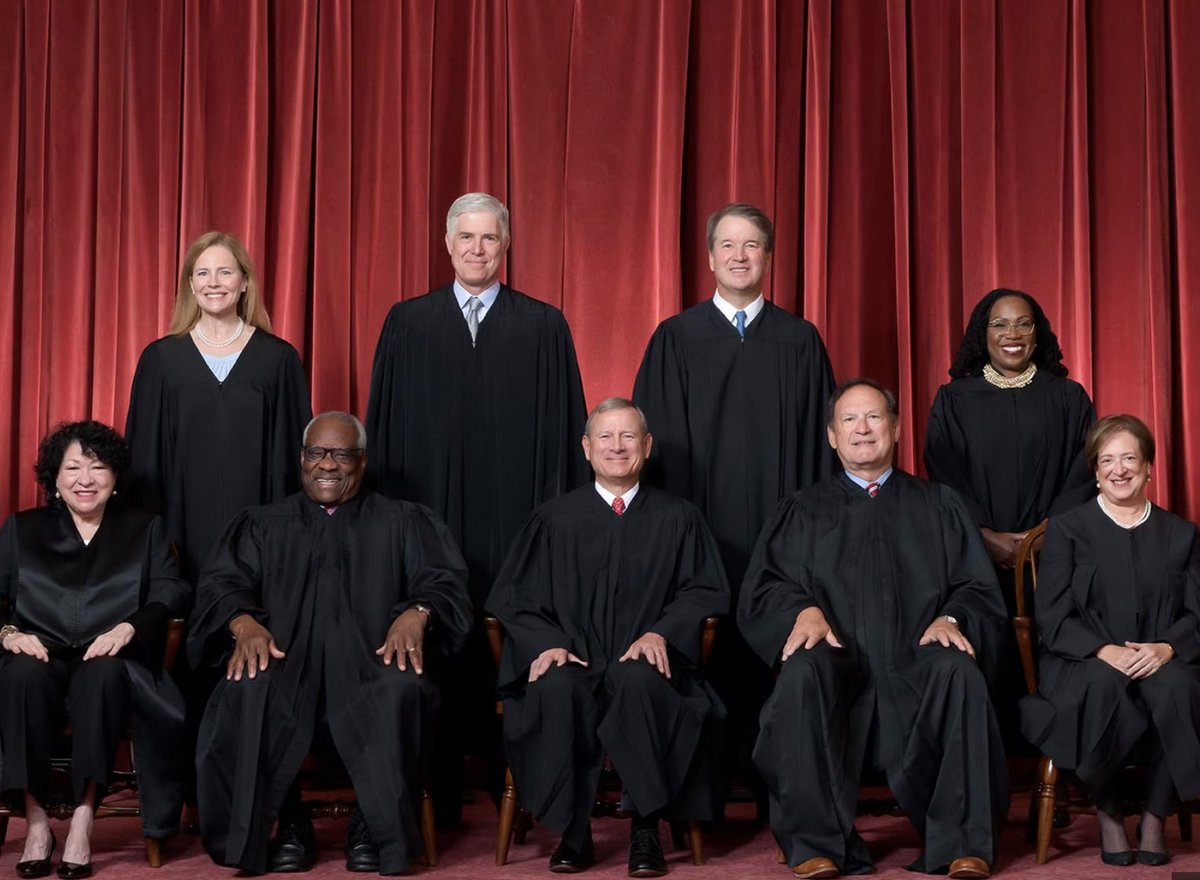
BREAKING: The US Senate has just unveiled a BIPARTISAN bill, that if signed into law would require the US Supreme Court to create and implement a new code of conduct for all justices. Details of the 'Supreme Court Code of Conduct Act': - The bill proposes that the Supreme Court implement a code of conduct within a year of its enactment and publish it on the Court's website - It mandates the Court to designate a person to handle complaints regarding violations of the new code and give the Court the authority to conduct investigations to determine if any justice or staff member has violated federal laws or codes of conduct affecting the administration of justice. - The legislation allows the Court to draft its code of conduct to protect the separation of powers between the legislative and judicial branches. - The bill sponsors claim that the Supreme Court's declining approval ratings and public concerns about its impartiality have necessitated the legislation. The proposed Act aims to address these concerns by ensuring the Court's transparency, independence, and fairness in upholding the law. There is no reason that I can think of why this bill should not immediately be voted in and signed into law!
Brian Krassenstein tweet media
English
3.3K
7.3K
44.2K
3.1M