
Sabitlenmiş Tweet
Kimi
974 posts

Kimi
@Kimi5407
Loves: teaching Likes: manga, improv, badminton, 2000s music, social dance Works: quant trading @ NYC Other: Stanford/IIT Bombay/3x ICPC WF
NYC Katılım Mart 2021
872 Takip Edilen2K Takipçiler


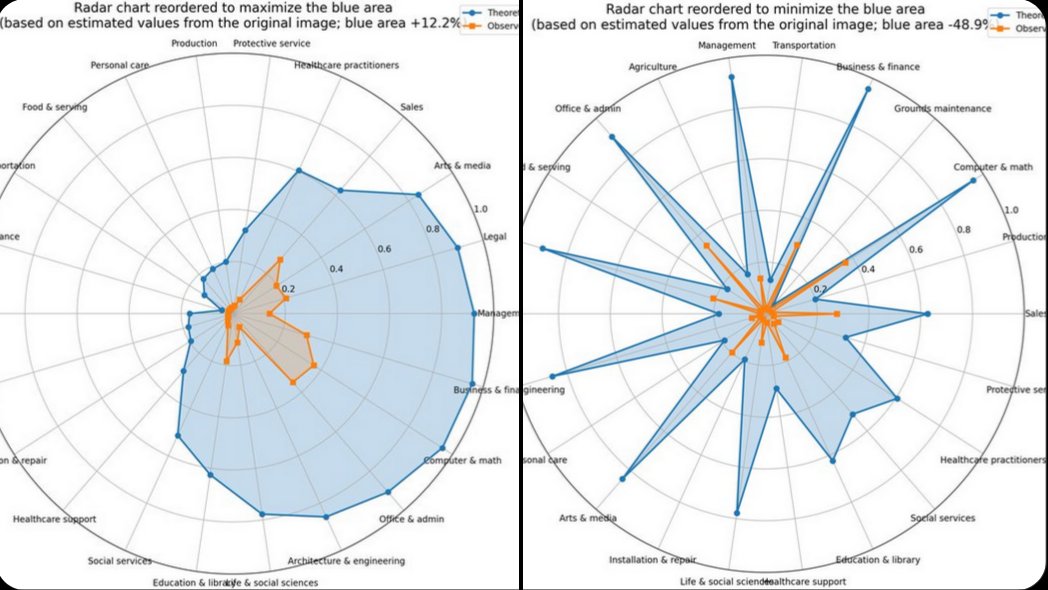

Radar graphs are among the worst ideas in data visualization. The whole point of them is to show the area and you can usually reorder the labels freely in order to create a desired dramatic effect.
Two versions of the same graph:
- left one tells the story that AI is rapidly replacing whole industries
- right one shows the "jaggedness" and reinforces the idea that humans will always have something that AI won't be able to replicate

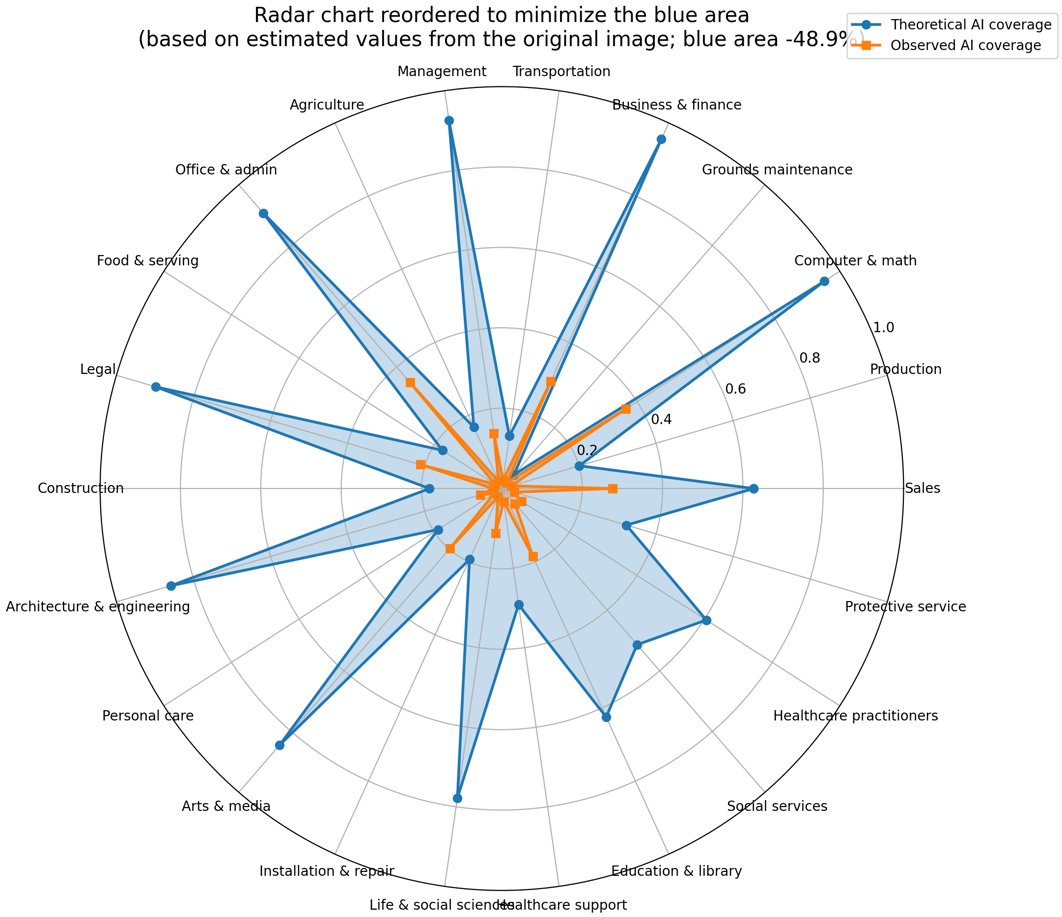
Andrew Curran@AndrewCurran_
Striking image from the new Anthropic labor market impact report.
English
@dopabees @willwangfr Vouch - this was one of my favorite events at stanford
English

I'm cordially inviting you to dance with me at the Stanford Viennese Ball.
Wanna do the jiggy with me?
It's tomorrow at 7:30 pm at Hyatt Regency SFO. You'll be joining me and @willwangfr. DM if interested.
vienneseball.stanford.edu

English

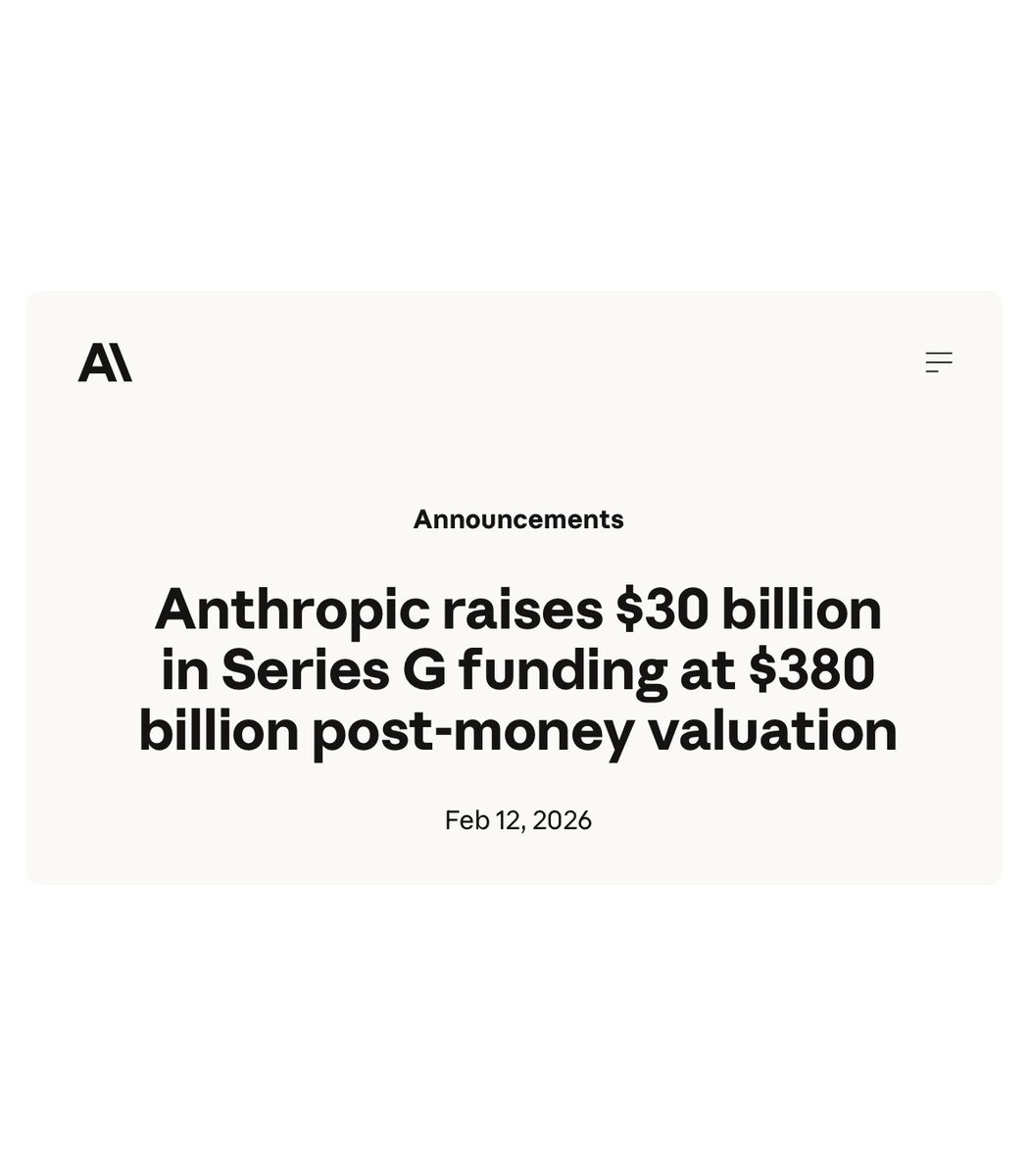
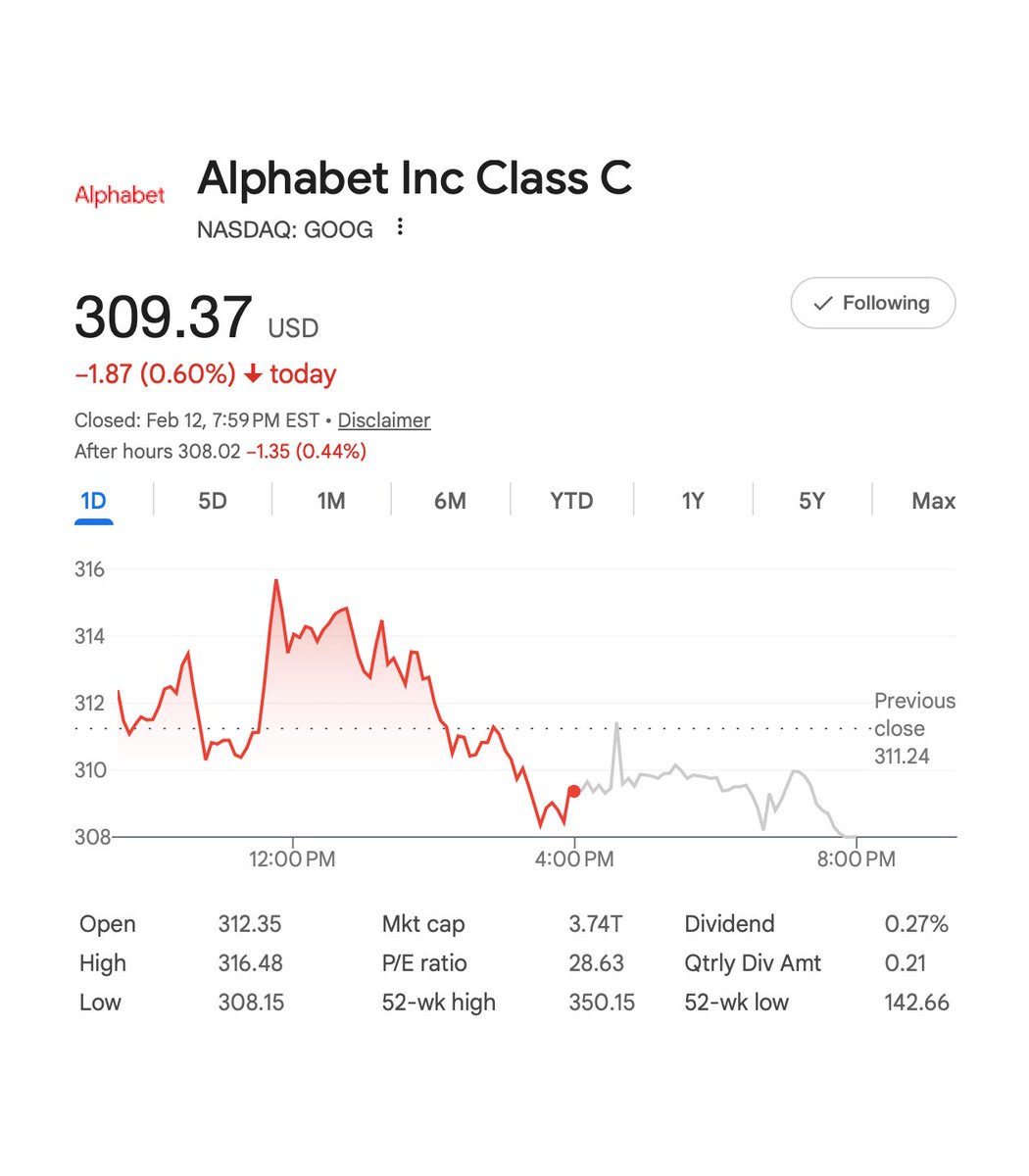
If Anthropic is worth 10% of Google, something must be mispriced.
English
It’s crazy that my first thought on seeing this is “great, now they have a few more months until another funding round” geez
Anthropic@AnthropicAI
We’ve raised $30B in funding at a $380B post-money valuation. This investment will help us deepen our research, continue to innovate in products, and ensure we have the resources to power our infrastructure expansion as we make Claude available everywhere our customers are.
English

Kimi retweetledi

@nikitabier Turns out you can’t make low agency people into high agency people no matter how many super tools you give them
English
Kimi retweetledi

Agency > Intelligence
I had this intuitively wrong for decades, I think due to a pervasive cultural veneration of intelligence, various entertainment/media, obsession with IQ etc. Agency is significantly more powerful and significantly more scarce. Are you hiring for agency? Are we educating for agency? Are you acting as if you had 10X agency?
Grok explanation is ~close:
“Agency, as a personality trait, refers to an individual's capacity to take initiative, make decisions, and exert control over their actions and environment. It’s about being proactive rather than reactive—someone with high agency doesn’t just let life happen to them; they shape it. Think of it as a blend of self-efficacy, determination, and a sense of ownership over one’s path.
People with strong agency tend to set goals and pursue them with confidence, even in the face of obstacles. They’re the type to say, “I’ll figure it out,” and then actually do it. On the flip side, someone low in agency might feel more like a passenger in their own life, waiting for external forces—like luck, other people, or circumstances—to dictate what happens next.
It’s not quite the same as assertiveness or ambition, though it can overlap. Agency is quieter, more internal—it’s the belief that you *can* act, paired with the will to follow through. Psychologists often tie it to concepts like locus of control: high-agency folks lean toward an internal locus, feeling they steer their fate, while low-agency folks might lean external, seeing life as something that happens *to* them.”
Garry Tan@garrytan
Intelligence is on tap now so agency is even more important
English


Kimi retweetledi

Putnam, the world's hardest undergrad math contest, ended 4pm PT yesterday.
By 3:58pm, AxiomProver @axiommathai autonomously solved 8/12 of Putnam2025 in Lean, a 100% verifiable language.
Last year, our score would've been #4 of ~4000 and a Putnam Fellow (top 10 in recent yrs)
English
Kimi retweetledi



@xennygrimmato_ Agreed, I’ve met some very interesting people (juggler, theatre major, cruise planner etc)
English

@Kimi5407 I think it's just sad that people don't talk to their neighbours on a flight.
English
Kimi retweetledi

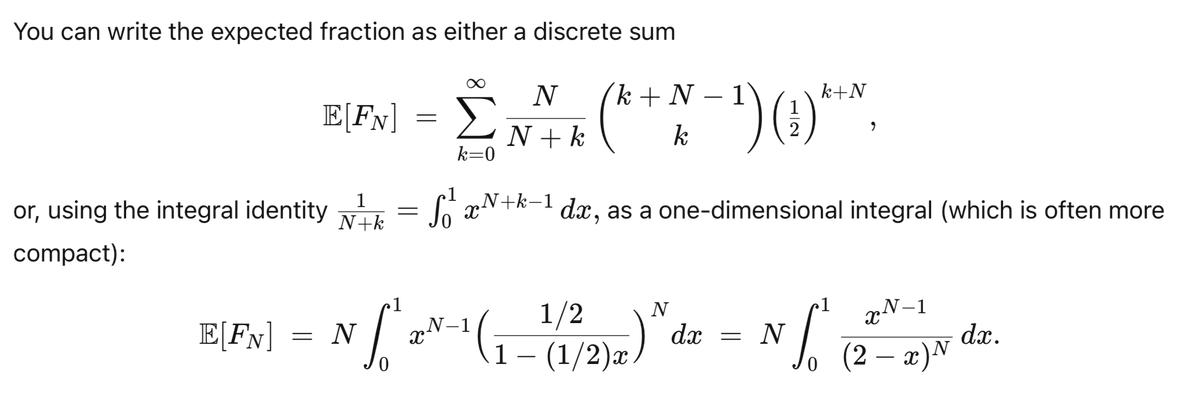
@DrEmmaZang these problems remind me of generating functions, though they're kind of overkill; once you figure out the pdf of num_boys for one family, just figure out the pdf of num_boys for N families, and now compute E[G/G+B]
I lazily prompted ChatGPT and got this
English

Interesting problem. It looks obvious until you actually think about it.
Many people gave the wrong answers because they assumed: E[G/(G+B)] = E[G] / (E[G] + E[B]), which is not true. Ratios are sneaky. The denominator moves, and suddenly all our nice intuition falls apart. The quick intuition: once family sizes vary, each family contributes differently to the population ratio, so you can’t just take expectations on the top and bottom and call it a day.
And if you try to “just simulate it,” the result depends on how many families you draw. With small N you might get something that looks close to 0.5, but it’s always a bit above 0.5. Simulation will happily mislead you if you let it.
If I ever teach PhD formal demography, I’m definitely putting this in the problem set. It’s too good not to. 😄
erisa@erisaonX
This is the most probability question of all the probability questions I’ve ever come across
English