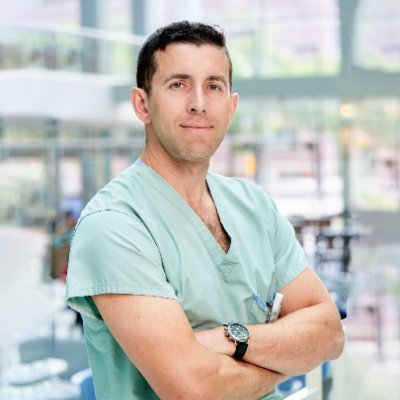
Anton Fomenko

302 posts

Anton Fomenko banner
Anton Fomenko

Anton Fomenko

@Kineticneuron

🧠March 26 is Purple Day 💜🧠 Neurosurgeon, MD FRCSC Epilepsy and Functional University of Manitoba https://t.co/AkP7OnpplI

University of Manitoba Katılım Ekim 2017
423 Takip Edilen397 Takipçiler
Anton Fomenko retweetledi
HSC Foundation
HSC Foundation@HSCFoundation·
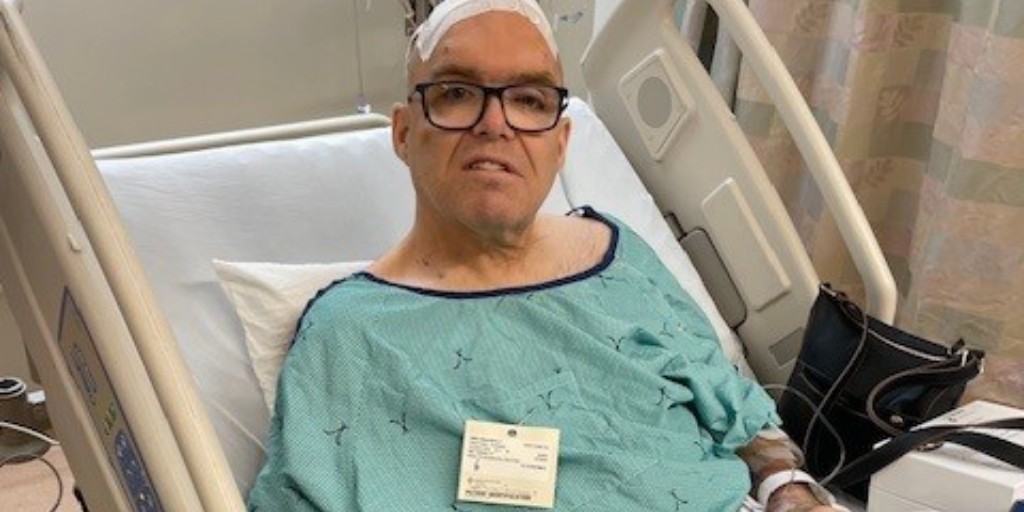
Tom Trottier lived with up to 10 seizures a month—until a Manitoba-first DBS surgery helped change his path. On Purple Day, we’re sharing his story to raise awareness of epilepsy and innovative care. Read more: hscfoundation.mb.ca/stories/a-mani…
HSC Foundation tweet media
English
0
5
8
495
Anton Fomenko retweetledi
Michael Okun
Michael Okun@MichaelOkun·
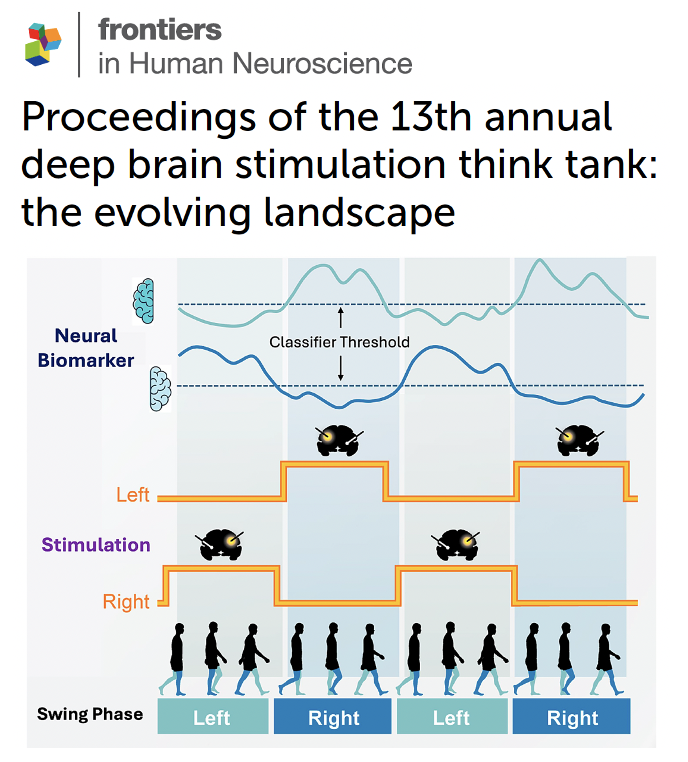
Adaptive DBS and the future of walking: Proceedings is out from the XIII annual DBS Think Tank. Adaptive DBS refers to a form of deep brain stimulation where the device senses brain signals and automatically adjusts stimulation in real time, instead of delivering constant stimulation. Chance Fleeting and colleagues just dropped a new paper in Frontiers in Human Neuroscience summarizing the 13th Annual DBS Think Tank held at the Fixel Institute for Neurological Diseases at the University of Florida. The meeting gathered engineers, neuroscientists, industry partners and health care providers to discuss the evolving landscape of DBS, including adaptive stimulation for walking and more broad brain network therapies. Key points on the 'walking work:' - Adaptive DBS synchronized to the walking cycle (Doris Wang lab at UCSF) can adjust stimulation during specific phases of gait and has shown improvements in symmetry, variability and fall reduction in Parkinson’s disease. - Neural signals from the subthalamic nucleus and other brain regions can decode mobility states such as sitting, standing and walking, allowing stimulation to switch automatically to gait optimized settings. - Modern DBS is shifting from targeting a single brain location to targeting distributed brain networks and to using biomarkers to determine where, when and in whom stimulation should occur. My take: The DBS field is rapidly moving toward smarter stimulation. Instead of delivering the same signal continuously, next generation systems can sense brain activity, recognize behavior and adjust therapy dynamically. This shift toward adaptive and network guided stimulation may one day help to address some of the most stubborn Parkinson’s symptoms such as gait freezing and falls. Please read and decide on your won as I am biased as a co-author and participant in the meeting. Here are 5 points that resonated w/ me: 1- Walking problems in Parkinson’s frequently persisted even when tremor and stiffness improved, making gait a critical target for next generation DBS strategies. 2- Adaptive DBS can synchronize stimulation to real world behaviors such as stepping, creating therapy that matches the brain’s natural timing. 3- Brain network mapping is revealing that DBS outcomes depend not only on where stimulation occurs, but also on who receives it and when stimulation is delivered. 4- Neural sensing technologies now allow implanted devices to record brain signals continuously, opening the door to automated and personalized therapy adjustments. 5- The future of DBS will likely blend sensing, AI driven decoding and adaptive stimulation so therapy responds dynamically to how folks move and function in daily life. frontiersin.org/journals/human… @DBSThinkTank @ParkinsonDotOrg #parkinson #depression
Michael Okun tweet media
English
0
13
28
2.3K
Anton Fomenko retweetledi
Canadian Neurological Sciences Federation
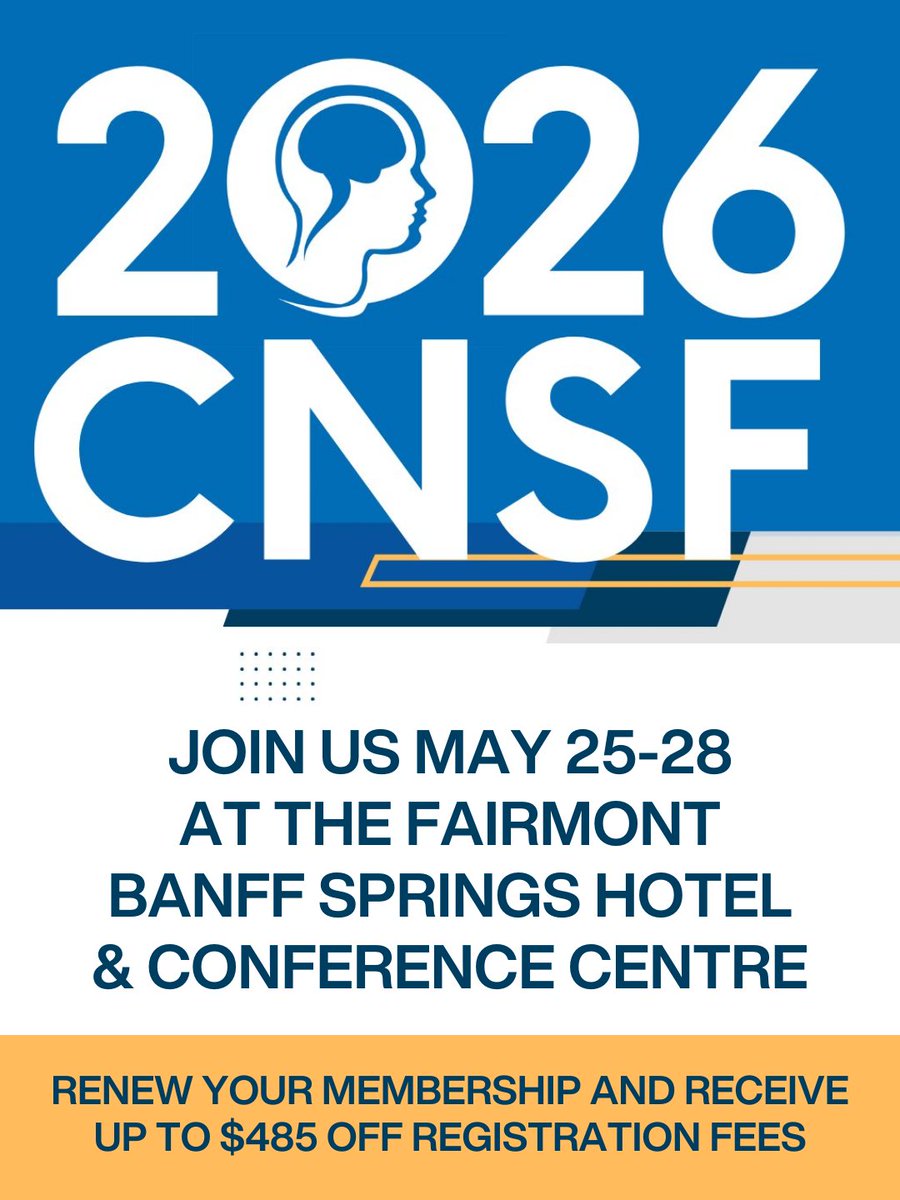
Join us May 25-28 in Banff for CNSF’s Annual Congress. Registration open this month and Members receive up to $485 off Annual Congress registration fees. If you haven’t renewed your membership yet, now is the perfect time to do so: cnsf.org/about-cnsf/mem…
Canadian Neurological Sciences Federation tweet media
English
0
2
5
474
Anton Fomenko retweetledi
Michael Andregg
Michael Andregg@michaelandregg·
We've uploaded a fruit fly. We took the @FlyWireNews connectome of the fruit fly brain, applied a simple neuron model (@Philip_Shiu Nature 2024) and used it to control a MuJoCo physics-simulated body, closing the loop from neural activation to action. A few things I want to say about what this means and where we're going at @eonsys. 🧵
English
335
1.3K
8K
1.8M
Oh Canaduh
Oh Canaduh@CanaduhOh·
Words that confuse non-Canadians: Mickey Toque Duotang Washroom Darts Two-four
English
133
173
2.4K
99.3K
Anton Fomenko retweetledi
Lee Smart
Lee Smart@VFD_org·
Much of cortical neuroscience is quietly shifting abstraction layers. This review makes it clear that cortical activity is better understood as wave dynamics on a constrained manifold rather than as neuron-by-neuron computation. Traveling waves, standing waves, and their superpositions are not epiphenomena, they are the functional degrees of freedom the brain actually uses. The deeper implication is that cognition does not arise from local control signals, but from which spatiotemporal modes are permitted, stabilized, or suppressed by global boundary conditions. Neurons shape the medium and its constraints, but meaning lives in the structure of the modes themselves. From this perspective: - perception corresponds to stabilized standing wave patterns - information flow corresponds to traveling waves shaped by geometry - task switching reflects boundary reconfiguration, not rewiring - psychological state reflects global mode occupancy, not firing intensity Directionality, coherence, and integration emerge naturally from geometry and anisotropy, without requiring a central controller or executive signal. Causality flows from constraints to dynamics, not the other way around. What’s striking is how seamlessly this framework bridges physics, physiology, and psychology, while quietly demoting rate-based, localized explanations to secondary effects. The cortex behaves less like a network issuing instructions, and more like a resonant field exploring its allowed configurations. This isn’t a speculative leap. It’s the unavoidable consequence of treating the brain as a continuous, bounded medium, and it suggests that understanding cognition is fundamentally a boundary-condition problem, not a wiring diagram problem. @AFornito @NeuroCellPress @KarlFristonNews @gyorgybuzsaki
Lee Smart tweet media
Alex Fornito@AFornito

Interested in cortical wave dynamics? Check out our review on the physics, physiology, and psychology of cortical waves led by J Cruddas with @jchrispang Out now in @NeuroCellPress sciencedirect.com/science/articl…

English
10
25
124
6.5K
Anton Fomenko retweetledi
Antonios El Helou
Antonios El Helou@ELHELOUA·
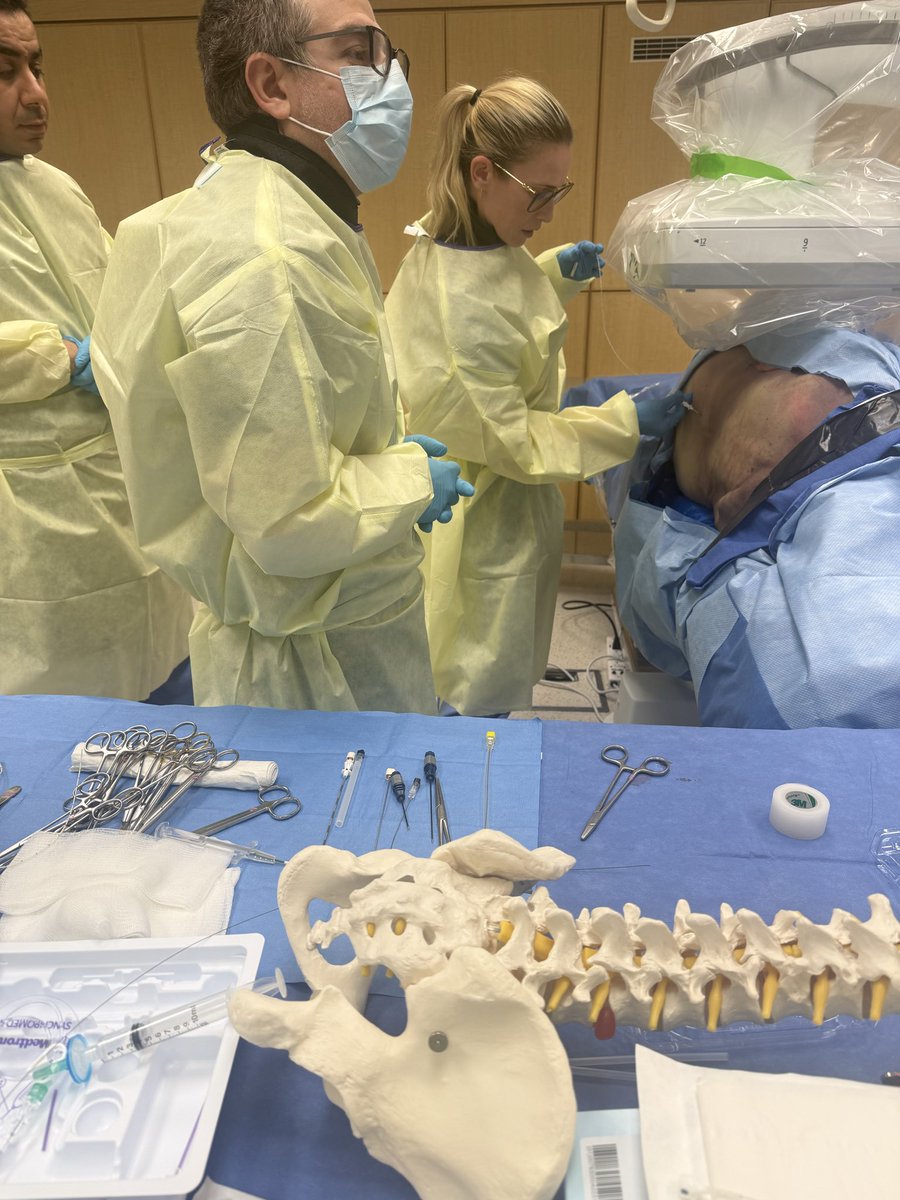
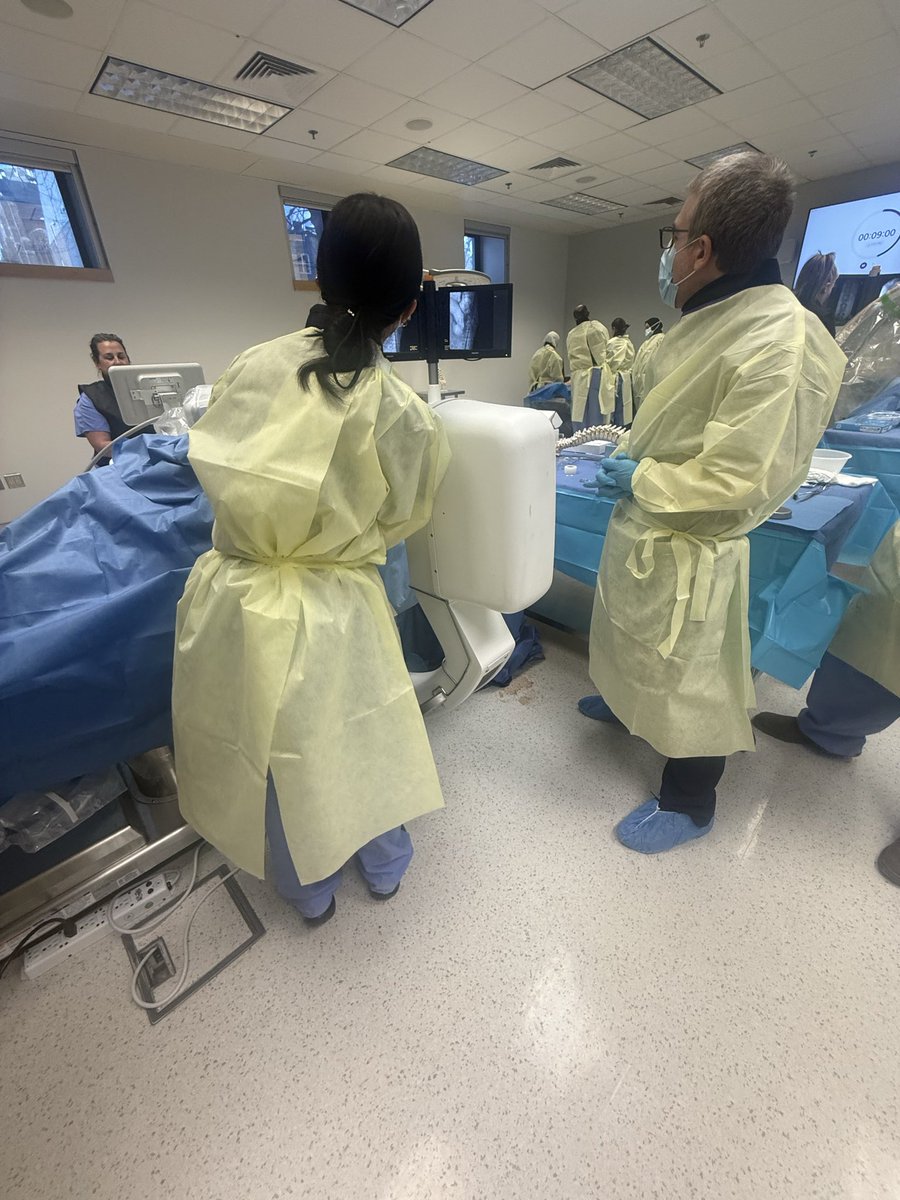
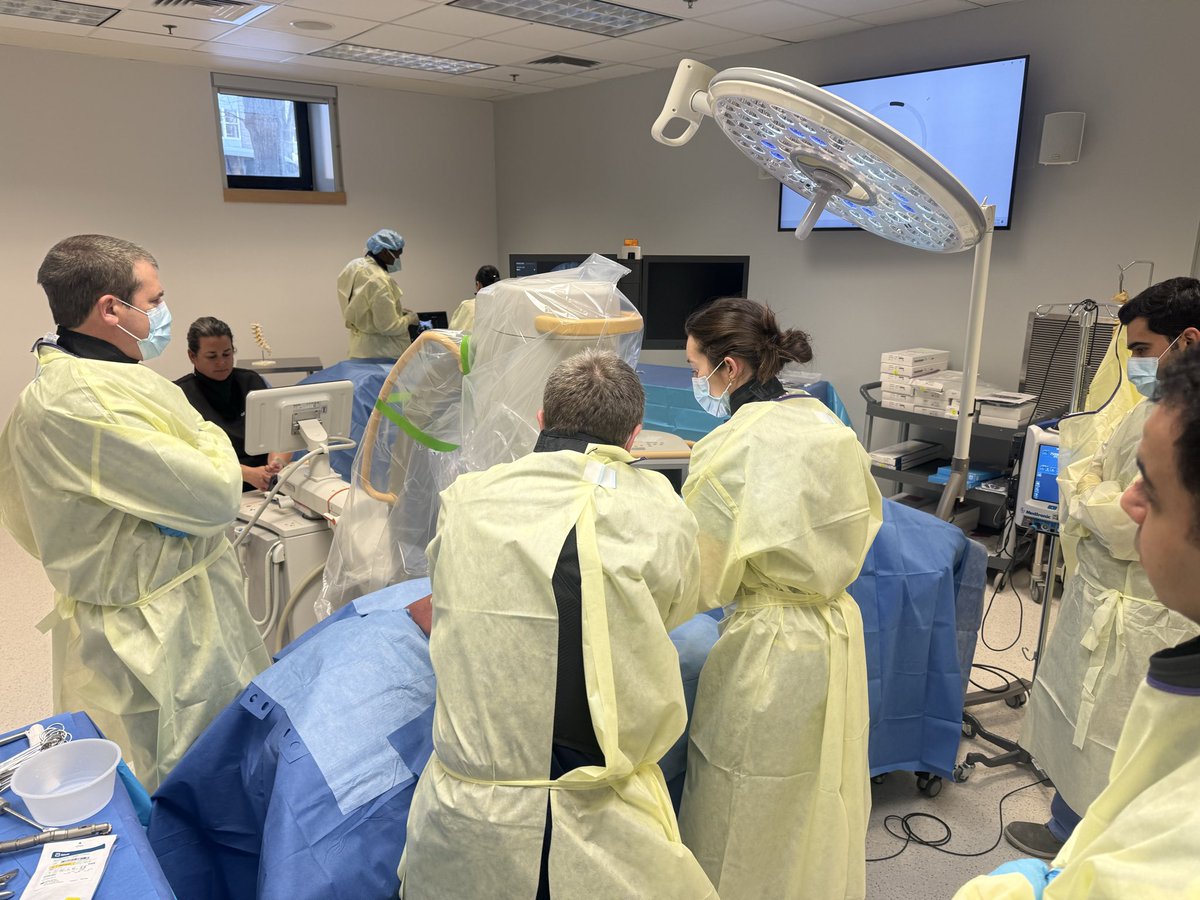
Wrapped up 3 days annual course in Neuromodulation and Interventional pain procedures for Residents and Fellows! A great success for the 7th edition of the Canadian Neuromodulation Society Course! With residents and fellows from almost all Canada’s programs! @CanNeuromod
Antonios El Helou tweet mediaAntonios El Helou tweet mediaAntonios El Helou tweet mediaAntonios El Helou tweet media
English
1
1
11
340
Anton Fomenko retweetledi
Krembil Brain Institute
Krembil Brain Institute@KBI_UHN·
🎉✨Please join us in congratulating Dr. Suneil Kalia (@kalialabs), Senior Scientist and Neurosurgeon at UHN’s Krembil Brain Institute, on his appointment as Division Head of Neurosurgery and the Harold & Esther Halpern Chair in Neurosurgery! #NoResearchNoCure #CanadasHospital
Krembil Brain Institute tweet media
English
4
6
49
2.1K
Anton Fomenko
Anton Fomenko@Kineticneuron·
From childhood camping trips to adulthood trail runs and bike rides, Canada’s trails have shaped who I am as a person and physician. Looking forward to the Canada Trail Summit in Winnipeg @TCTrail tctrail.ca/news/trans-can…
English
0
0
2
153
Anton Fomenko retweetledi
Demitre Serletis
Demitre Serletis@epilepsydoc·
Thank you to @Epilepsia for spotlighting our recent publication on new #MRI metrics to detect #encephaloceles in #temporal lobe #epilepsy. Our findings support tethering (i.e. traction) as a possible mechanism of #epileptogenicity in these surgically-confirmed lesions. #epilepsysurgery
Epilepsia@EpilepsiaJourn

Novel MR-imaging insights in surgically-confirmed temporal lobe 36 encephaloceles support tethering as a potential mechanism of epileptogenesis. doi.org/10.1002/epi.70… #epilepsy #ILAE #epilepsia #epilepsysurgery #MRI #Talairach #temporallobectomy @epilepsydoc

English
0
1
10
653
Anton Fomenko retweetledi
Brain Stimulation
Brain Stimulation@brainstimj·
First precision-guided multi-site insular DBS for refractory neuropathic pain! Andrew R. Segerdahl & colleagues combined fMRI + electrophysiology mapping to achieve meaningful pain relief. Proof-of-concept for personalized neuromodulation brainstimjrnl.com/article/S1935-…
Brain Stimulation tweet media
English
0
9
20
2.4K