Eggie B.

151 posts

Eggie B. banner
Eggie B.

Eggie B.

@KoanEggie

Semiotician & Maker of Kōans. Kōans aim to exhaust conceptual thinking, generate doubt, shatter dualistic patterns, and provoke direct insights.

somewhere in EurAsia Katılım Mayıs 2013
999 Takip Edilen1.6K Takipçiler
Sabitlenmiş Tweet
Eggie B.
Eggie B.@KoanEggie·
𝗠𝗮𝗹 𝗲𝗶𝗻 𝗮𝗻𝗱𝗲𝗿𝗲𝗿 𝗕𝗹𝗶𝗰𝗸 𝗮𝘂𝗳 𝗖𝗵𝗶𝗻𝗮. Dr. Christof Niederwieser (Volkswirt & Astrologe – ja, beides). · „Sieg ohne Krieg“ · Ein flächendeckendes „Social Credit System“ gibt es nicht · Budget-Prioritäten im Vergleich:🇩🇪 - 🇨🇳  youtu.be/TpJihqtFlrk
YouTube video
YouTube
Deutsch
1
0
0
330
Eggie B.
Eggie B.@KoanEggie·
@AMoehnle @l_ewig Orientierung? Der wollte Kanzler werden. Undassbar wie dieses Hirn funktioniert.
Deutsch
0
0
0
114
alexander moehnle
alexander moehnle@AMoehnle·
Bizarr. Ex-Wirtschaftsminister Robert Habeck im rührseligen Kuscheltalk bei Giovanni Di Lorenzo - dass Deutschland auf eine gewaltige Massenarbeitslosigkeit zusteuert und Habeck dafür womöglich eine Mitverantwortung hat? Irrelevant.
Deutsch
24
55
377
11.5K
Eddie Graf
Eddie Graf@Eddie_1412·
Autor Rocco Burggraf: "Amann unframed“ Kaum hatte Benjamin Berndt mit der schlichten Idee, den „faschistischen“ Klumpfuß Deutschlands mal ein paar Stunden teuflischen „Hass" verbreiten zu lassen, satte fünf Millionen interessierte Zuschauer erreicht, saß mit Melanie Amann die selbsterklärte Königin der bunten Medienrepublik (Titel: „Chefredakteurin der FUNKE Zentralredaktion“) vorm SPIEGEL und fragte sich mit bebenden Nüstern, wer denn hier nun das schönste und beliebteste Gesicht im Medienreich sei. Schon tags darauf hatte sie sich beim besagten Herrn Berndt ins Studio eingeladen und erkundigte sich mit mühsam gespielter Gelassenheit, was der denn so „mit Höcke verdient“ habe. Das folgende Gespräch war dann inhaltlich in etwa so ergiebig wie eine Dr. Oetker Backmischung für Rührkuchen. Immerhin hatte die getriggerte Dampfplauderin offenbar schon beim Verlassen der neutralen Diskurszone den Beschluss gefasst, nun selbst im Podcast-Goldregen der neuen Zeit zu stehen. Da ihr nichts Eigenes einfiel, kopierte ihre Redaktion kurzerhand das mysteriöse Geschäftsmodell. Aus „ @benungeskriptet (Anglizismen sind ohnehin ein bedeutungsheischender Fetisch der @MelAmann) wurde nun „Amann unframed“. Damit auch wirklich die Quoten stimmen, lädt man sich zum Opener gleich nochmal beim Role Model auf die fertige Bühne. Natürlich sind jetzt die Rollen vertauscht und Frau Amann darf endlich wie gewohnt das Gespräch allein lenken. Als nächste "Gäste" avisiert sind dann natürlich auch keine ausgewiesenen Oppositionellen, die ihr womöglich das Zepter aus der Hand reißen könnten, sondern weichgespülte Gelegenheitskritiker, die in der Wagenburg noch als einigermaßen harmlos und kompatibel gelten: Berndt, Martenstein, Mansour. Der Verlauf der Pilotfolge mit dem gelernten „E-Commerce-Rookie für Babytragen“ ist dann auch so belustigend wie bezeichnend. Frau Amann fragt natürlich nur gelegentlich etwas und dann der Form halber. Stattdessen doziert sie von der ersten Sekunde an und hört vor allem sich selbst zu. Nochmal wird aufgewärmt, was ihr auf der linken Seele brennt. Es geht um Clicks, ums „knallharte“ Geschäftemachen, um Reichweiten, um Kohle. Alles platzt aus ihr heraus, wie Faulgase aus dem Timmy-Kadaver: Wieso denn gottverdammt, Leute wie Ben Berndt und Julian Reichelt so ungeheuer erfolgreich sein können? Dem schweren Herzens gescripteten Lippenbekenntnis, sie wäre „die letzte, die anderen sagt, was sie zu denken hätten“ und "der Zuschauer wäre weniger doof als man meint", folgen atemlose Darlegungen, die klarstellen, was andere zu denken haben, und dass sie ohne das Navigationsgerät Amann verloren sind, wie Hänsel und Gretel im Wald. Natürlich hat Frau Amann nicht verstanden, dass der durchschlagende Erfolg nicht im arroganten Referieren besteht, sondern im Zuhören. Keine Chance! Keine dreißig Sekunden muss man warten, bis Frau Amann immer wieder beginnt, ihre apodiktischen Einordnungen ins Mikro zu tackern. Sie unterbricht, belehrt, korrigiert, stellt Suggestivfragen, beantwortet diese, ehe da irgendetwas „Ungescriptetes“ auftaucht, zumeist gleich selbst und feiert ihre eigenen „überaus intelligenten“ Einwürfe mit verräterischem Gelächter. Am Ende hat sie als "Gastgeberin" 80% der Redezeit beschlagnahmt. Der Versuch, aus einer arroganten Betonideologin eine interessierte, fragende, offene Journalistin zu framen, darf als gescheitert betrachtet werden, bevor er begonnen hat.
Eddie Graf tweet media
Deutsch
42
93
604
15.1K
Eggie B.
Eggie B.@KoanEggie·
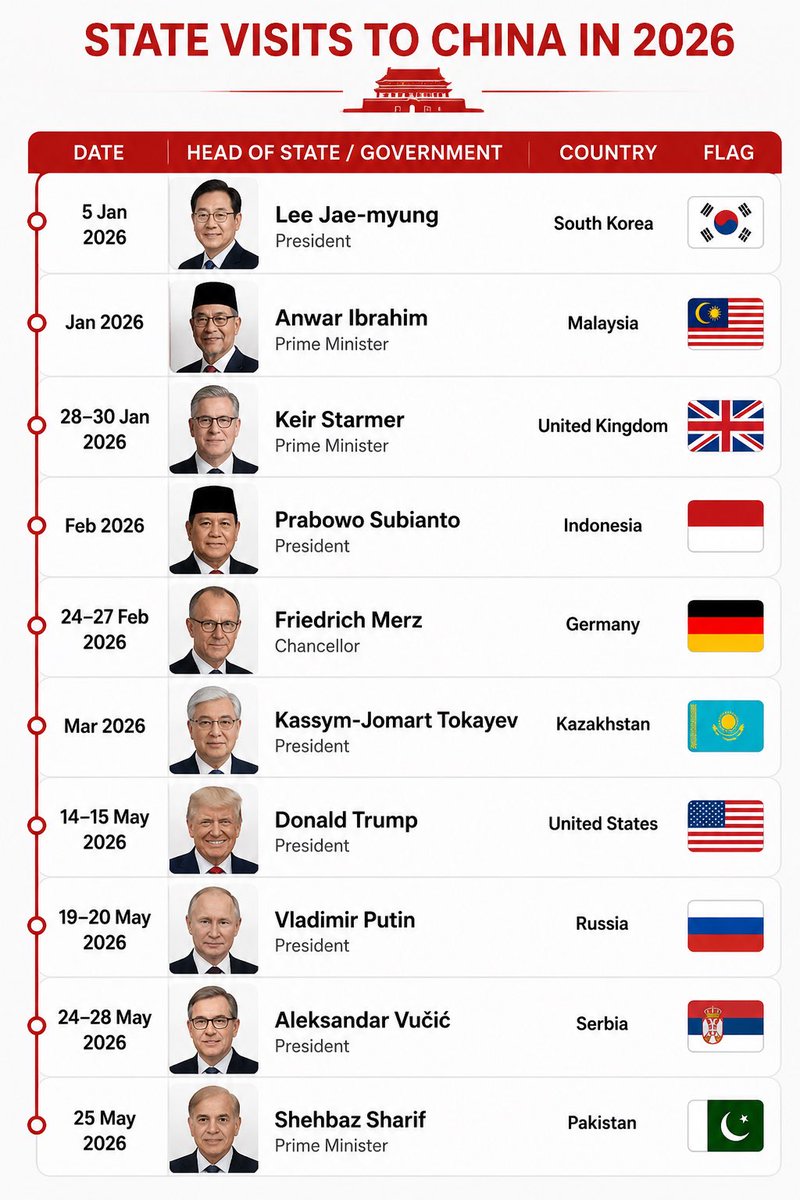
Die Grafik zeigt die bisherigen Besuche ausländischer Regierungschefs in China in 2026. 🇩🇪 besuchten bislang Macron, Meloni, Zelensky und Montenegro. Deutschland ist international IRRELEVANT geworden! 👀 … und redet ablenkend nur noch von der „Flutung“ chinesischer Autos.
Eggie B. tweet media
Deutsch
0
0
2
33
Jack Prandelli
Jack Prandelli@jackprandelli·
What the US buys from China? → Smartphones: $51.5B 45% of all US imports → Computers: $36.7B 26% → Batteries: $18.1B 56% → Toys: $14.4B 76% → Video game consoles: $7.2B 78% What China buys from the US: → Petroleum gases: $14.0B 16% → Soybeans: $12.0B 23% → Semiconductors: $11.8B 3% → Jet engines & gas turbines: $6.6B 54% → Aircraft & spacecraft: $5.3B 58% The energy number is the one that matters most right now. China buys $14B of US petroleum gases annually 16% of its total gas imports The asymmetry is stark. China sells the US consumer electronics it can't quickly source elsewhere. The US sells China the energy, food, and aerospace technology it needs to keep its economy running.
Jack Prandelli tweet media
English
36
157
306
45.9K
Eggie B.
Eggie B.@KoanEggie·
@kolbalexander @lawen4cer Lustigerweise heisst VW in China: 大众汽车. Die ersten zwei Zeichen bedeuten „Volk“, die zweiten „Auto/Wagen“ 👀
Deutsch
0
0
0
38
Alexander Kolb
Alexander Kolb@kolbalexander·
@lawen4cer @KoanEggie Klar. Volkswagen hat noch nie für den deutschen Markt gebaut. Daher auch dieser eigenwillige Name 😎
Deutsch
3
0
0
96
Eggie B.
Eggie B.@KoanEggie·
Solange deutsche Autobauer Autos für den Deutschen Markt und die Autobahn bauten, waren sie weltweit auf Erfolgskurs. Dann meinten sie, der chinesische Kunde sei wichtiger, und bemerkten nicht, dass sie weder Chinesen sind noch irgendeine Ahnung vom chin Markt haben. Deutsche
Deutsch
26
10
302
22.1K
Eggie B.
Eggie B.@KoanEggie·
@pmarca Start with the 1st one. Martin Luther and the 30yr war.
English
0
0
0
99
Marc Andreessen 🇺🇸
1 Start new audiobook about the Third Reich. 2 “Hitler wanted to [pause a beat] make Germany great again.” 3 Hurl phone against tree.
English
351
200
7.7K
527.4K
Arnaud Bertrand
Arnaud Bertrand@RnaudBertrand·
Someone obviously got triggered big time by my post 👇😅 x.com/UnderSecE/stat… And his reply, is unsurprisingly a pack of lies, some of them really funny ones. First: "we never said our goal was diplomatic immunity." Really? The WSJ piece reported this based on a source named... Jacob Helberg, which - as far as I understand - is YOU! Also when the BCDA chief said publicly "that's [the US's] request, but we did not agree," are you saying the Philippines government is lying? Second, you use TSMC as your example of why being in America's supply chain isn't subservience. Small problem: Taiwan is NOT a Pax Silica signatory due to its diplomatic status. And your own president keeps accusing Taiwan - and TSMC specifically - of "stealing" its chipmaking technology from the US (finance.yahoo.com/sectors/techno…). Furthermore the U.S. has been running a years-long initiative to strong-arm TSMC into transferring some of its fabrication to the US (specifically to Arizona), using CHIPS Act subsidies and national security threats as leverage. Not because the free market demanded it, but because you believe that depending on a Taiwanese company for cutting-edge chips was a vulnerability to be eliminated Which all proves the exact contrary of what you're saying: when a "partner" has real capabilities, it's unbearable to you. You don't reward it, you call them "thieves" and try to take their industry away from them. So thanks for proving my point on that one. Lastly, and that's the really hilarious part. Calling Pax Silica a "capitalist project" is the height of irony: it's literally a government program that overrides market competition by telling sovereign countries which suppliers they're allowed to buy from and which competitors to ban - regardless of quality or price. Sorry but if Huawei offers a better AI chip at half the cost and you're contractually barred from buying it, that's not even remotely capitalism. Since you don't seem to be aware (understandable as someone, like you, who spent their entire career at the intersection of government power and corporate interests): capitalism, in its most basic form, means letting markets decide - you buy from whoever offers the best product/service at the best price. Pax Silica is the precise opposite, it's all about preventing this from happening.
Under Secretary of State Jacob S. Helberg@UnderSecE

You have absolutely no idea of what you’re talking about. The whole point of Pax Silica is to partner with countries who are good at doing different things because everyone wins from a secure supply chain. It’s also a fundamentally a capitalist project (this might be foreign to you) that’s a lot more about partnerships between private companies than it is about government programs. We never said our goal was to maintain diplomatic immunity. Our position has always been that markets and investors need certainty and predictability in order to deploy large pools of capital over a 5-10 year time horizon. Any half decent investor will happily validate this. That viewpoint was taken out of context and turned on its head by the press to suggest we were seeking diplomatic immunity which is patently untrue. Oh and by the way, the agreement is posted online for anyone to look up and read for themselves. The U.S. is home to the world’s largest technology companies—a fact I’m sure deeply irritates you. The idea that being part of their supply chain is “subservience” is an ignorant loser mentality. Is TSMC a subservient company?? Anyone who knows anything about tech understands they are one of the world’s most important (and valuable) companies—and also an integral part of America’s (and the world’s) supply chains.

English
59
435
1.9K
65.8K
Arnaud Bertrand
Arnaud Bertrand@RnaudBertrand·
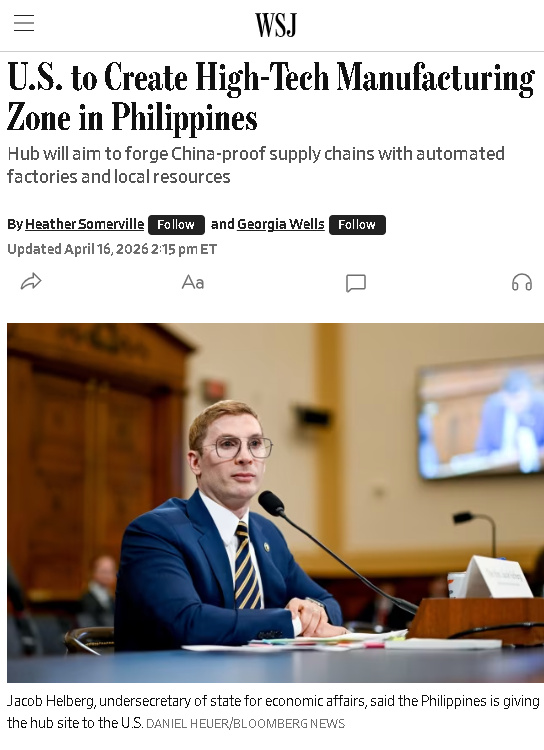
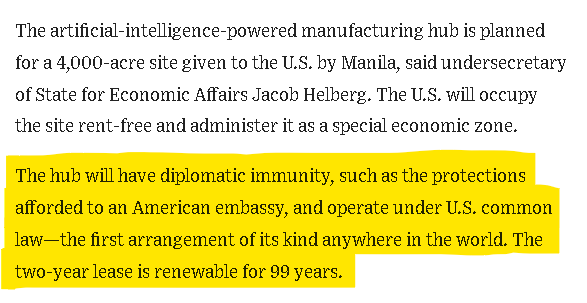
This is pretty insane: the U.S. just tried to literally re-colonize part of the Philippines. They did so under the so-called "Pax Silica" initiative, the brainchild of - surprise, surprise - an ex-Palantir guy named Jacob Helberg who now runs U.S. economic "diplomacy" from the State Department. It's causing a big outcry in the Philippines, which is quite a feat given this is by far the most US-friendly country in Southeast Asia. If you're the US and you're getting the Marcos administration - of all governments - to push back on sovereignty, you've really overplayed your hand. What is the "Pax Silica" initiative? In a nutshell it's about the US getting other countries to commit to restructuring their AI tech infrastructure around a US-led stack. It's basically vendor lock-in: you hand over your critical minerals, align your export controls with Washington's, regulate AI the way America wants, and in return you get to be a US "trusted partner," whatever that means these days. In essence, let's not kid ourselves, it's all about China: this is the US's initiative to "win the AI race" by getting other countries to contractually commit to keeping China out of their tech supply chains. When you can't preserve your lead through innovation, you seek to lock countries in contractually. For instance as a country, this would mean telling Huawei they can't sell you AI chips, and telling Chinese firms they can't invest in your data centers - even if they're better and cheaper. It's not about choosing the best technology, it's about choosing the right flag. But in this instance, the US went much further still: they literally tried to carve out 4,000 acres of Philippine territory (in New Clark City, 60 miles north of Manila) to be governed under US common law with diplomatic immunity - the first arrangement of its kind anywhere in the modern world. This is according to the WSJ who ran the story last month (wsj.com/world/asia/u-s…) as if it was a done deal (it wasn't). Heard about the "French concession" or "British concession" in China during the century of humiliation? Same thing: the US basically asked for an "American concession" in the Philippines. Unsurprisingly, there was quite a bit of backlash in the country with for instance the Peasant Movement of the Philippines (KMP) calling it a “massive sellout” of the country’s land, minerals, and sovereignty (punto.com.ph/us-led-pax-sil…). So much so that the Philippines' government - namely Joshua Bingcang, president and chief executive of the Bases Conversion and Development Authority (BCDA) - issued a statement saying that the Philippines had rejected US proposals that would place the project beyond local jurisdiction (asianews.network/philippines-re…). Note, by the way, this delicious irony: the BCDA is the government agency that was created in 1992 specifically to convert former US military bases at Clark and Subic Bay after the Philippines spent decades negotiating their closure. New Clark City - where the Pax Silica's hub would go - is built on the old Clark Air Base. So the agency whose entire reason for existing is to turn former American colonial territory (i.e. US military bases) into sovereign Philippine land is the one now being asked to hand part of that very same land back under US jurisdiction (and, apparently, declined). Of course though, blocking this specific jurisdiction grab doesn't change the bigger picture. The Philippines is still a Pax Silica signatory, and Pax Silica itself is structurally neocolonial: you supply the cheap labor and raw materials, align your export controls and regulations with Washington's, cut yourself off from the world's rising technological powerhouse - and in exchange you get assembly jobs and the privilege of getting a pat on the head and being called a "trusted partner." They dropped the most cartoonishly colonial demand - governing Philippine soil under US law - but the underlying architecture is the same: you serve America's supply chain, on America's terms, and you relinquish your sovereign right to trade with whoever offers the best deal.
Arnaud Bertrand tweet mediaArnaud Bertrand tweet media
English
243
2.9K
6.6K
516.7K
Eggie B.
Eggie B.@KoanEggie·
@lawen4cer Was verstehen Sie an „weltweit“ nicht. Alles gut. 😎
Eggie B. tweet media
Deutsch
0
0
0
33
Eggie B.
Eggie B.@KoanEggie·
@Defektchef Die kulturelle Nähe ist irreführend. Dann würden Chinesen keine Japaner kaufen und die fahren hier überall herum. Was sich geändert hat: Schnellzüge! Man fährt heute kaum noch Langstrecke mit dem Auto sondern innerh der Stadt. Langsam, aber dafür bequem und in Vollaustattung.
Deutsch
1
0
0
49
Martin Schmidt
Martin Schmidt@Defektchef·
@KoanEggie Sie ignorieren, daß sich der chinesische Markt mit der Zeit gewandelt hat: früher galten westliche Produkte als technisch führend und wurden bevorzugt gekauft, aber seitdem die heimische Produkte als gleichwertig empfunden werden, macht sich die kulturelle Nähe eben bemerkbar…
Deutsch
2
0
5
636
Eggie B.
Eggie B.@KoanEggie·
@bukodersahnige Sie missverstehen mich: „Solange …waren sie weltweit auf Erfolgskurs“.
Deutsch
0
0
0
3
Buko der Sahnige 🪠
Buko der Sahnige 🪠@bukodersahnige·
@KoanEggie In welcher beschränkten Welt lebst du denn? Von deutschen Markt alleine kann kein Hersteller überleben.
Deutsch
1
0
0
10
Eggie B.
Eggie B.@KoanEggie·
@insomnia40000 Sie missverstehen mich: „Solange …waren sie weltweit auf Erfolgskurs“.
Deutsch
1
0
0
7
insomnia40000⬅️🫀
insomnia40000⬅️🫀@insomnia40000·
@KoanEggie Deine Analyse kannste in die Tonne werfen, weil komplett falsch. Den deutschen Autofirmen ging es deshalb so gut,weil sie international verkauft haben. Deutschland war noch nie Volumenmarkt, wie auch bei 80 Mill Einwohner. Die meisten Autos der letzten 25 Jahre waren für die Welt
Deutsch
1
0
0
13
Eggie B.
Eggie B.@KoanEggie·
@KnonTolo Sie missverstehen mich: „Solange …waren sie weltweit auf Erfolgskurs“.
Deutsch
0
0
1
46
🇮🇱🇺🇸🇺🇦🇮🇷 Western unapologetic
@KoanEggie Vom Deutschland Markt können die deutschen Autobauer nicht leben. Würde man für Deutschland produzieren, würde ein Fünftel der Produktionskapazität reichen. Gründe für den Niedergang der deutschen Autoindustrie sind andere.
Deutsch
1
0
14
622
Eggie B.
Eggie B.@KoanEggie·
@lawen4cer Sie missverstehen mich: „Solange …waren sie weltweit auf Erfolgskurs“.
Deutsch
1
0
0
83
Eggie B.
Eggie B.@KoanEggie·
@ASkrobar Weil die Chinesen Top-Talente aus Europa anheuerten, die keinen Bock mehr auf Woke and Bling hatten.
Deutsch
2
0
10
1K
alex skrobar
alex skrobar@ASkrobar·
@KoanEggie Währenddessen bauen Chinesen Autos mit Ambiente, schlicht und elegant, wogegen der Mercedes so billig aussieht wie ein thailändischer Puff.
Deutsch
4
0
21
1.8K
Eggie B.
Eggie B.@KoanEggie·
@drumheadberlin Woran man Transatlantiker erkennt? Sie erzählen Märchengeschichten, meist im Auftrag fremder Auftraggeber. Das Motiv? Hass auf das eigene Land, meistens geldwerte Zuwendungen … was immer sie antreibt. They are bad people. Ignore. x.com/koaneggie/stat…
Eggie B.@KoanEggie

@ntvde 2025 Deutsche Autobauer verkauften 3.900.000 Autos in China. Chinesische Autobauer verkauften 63.000 Autos in Deutschland. Wer hat hier Überkapazitäten und wer flutet wen? 👀

Deutsch
0
0
0
68
Eggie B.
Eggie B.@KoanEggie·
@E_Boeminghaus Und das war alles absehbar und deswegen schreien sie jetzt alle Krieg.
Deutsch
1
0
32
764
Emanuel Boeminghaus
Emanuel Boeminghaus@E_Boeminghaus·
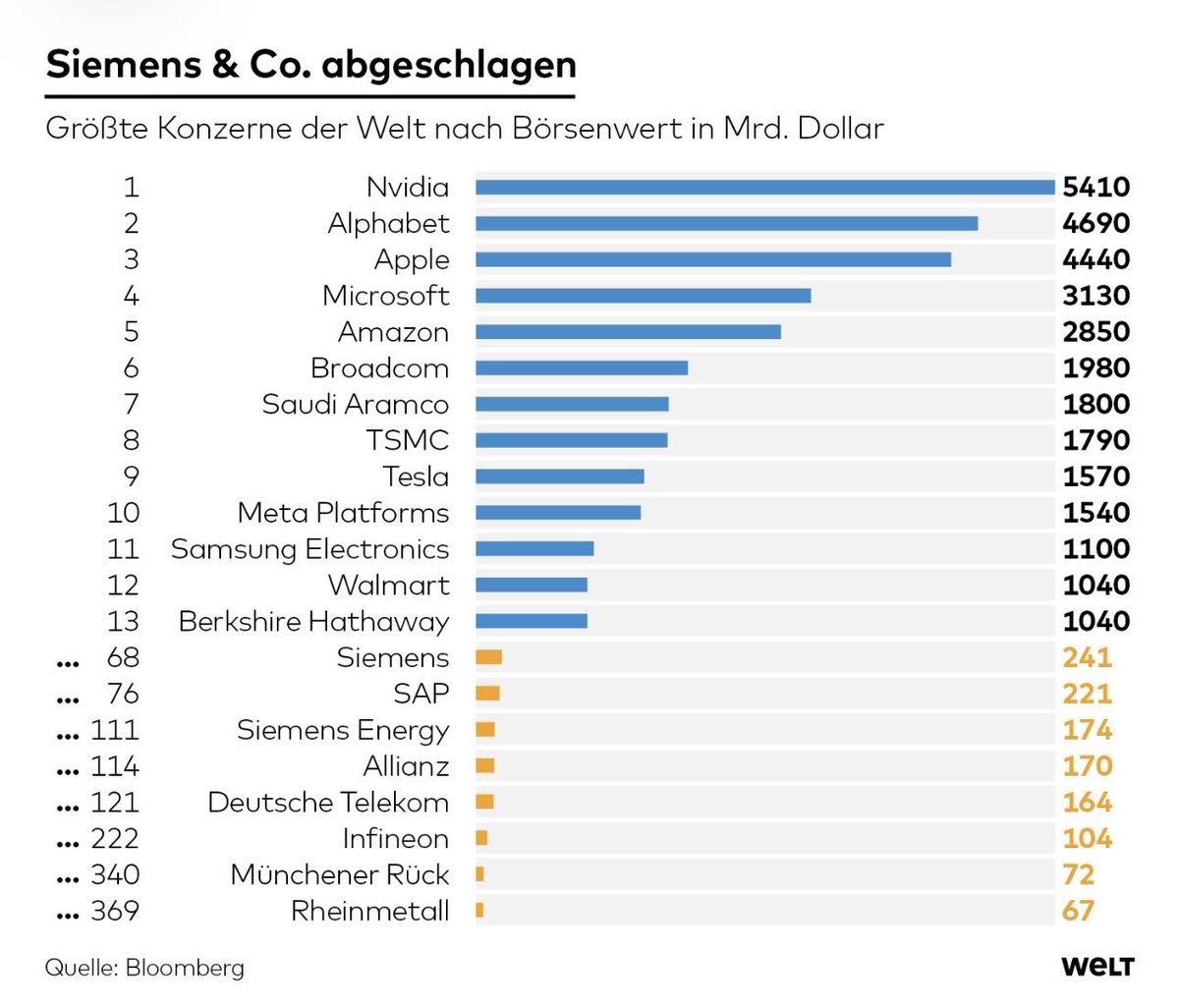
Der Anschluss ist endgültig verloren! Nicht nur Deutschland fällt zurück, ganz Europa wird abgehängt! Und selbst SAP, die letzte große Hoffnung, kann nicht mehr mithalten!
Emanuel Boeminghaus tweet media
Deutsch
101
398
1.5K
27.2K
Eggie B.
Eggie B.@KoanEggie·
@scientificecon Deswg braucht man sich auch nicht über Politiker aufregen; alles nur bezahlte Statisten.
Deutsch
0
0
2
153
Richard Werner
Richard Werner@scientificecon·
Japan is in the same situation as Germany. What look like self-inflicted bad policy choices actually are due to politicians spinelessly doing what their US Deep State minders had instructed them, in line with Kissinger's dictum that the US exploits and sacrifices its allies.
James Wood 武杰士@commiepommie

🇯🇵 Tokyo Bet Everything on Taiwan Hardline: Trump Flipped the Table in Beijing and the Gamble Just Blew Up 🇨🇳🇺🇸 What happens when you ignore Beijing’s red lines is a lesson Tokyo’s foreign policy experts are learning firsthand, as they panic over the “Trump Shock.” The Beijing summit between Trump and Xi came to an end on May 14. The Great Hall of the People’s photos revealed the two leaders appearing at ease, with Trump appearing particularly respectful. Tokyo read the body language and lost the plot. They’re calling it Nixon Shock 2.0: Washington and Beijing quietly resetting the board in G-2 terms while Japan gets the same cold shoulder it got in 1971. Prime Minister Takaichi’s entire image was cultivated by taking the firmest stance on Taiwan, reminiscent of Abe. She told the Diet last November that a Chinese move on Taiwan would trigger Japan’s “survival-threatening situation” clause. Beijing responded to that as it should have, viewing it as a direct challenge to its fundamental interests. Airlines have reduced flights, Japanese seafood imports are on hold, and controls on rare earth materials have been strengthened. Takaichi’s gamble was simple: America will always have our back, but Trump just pulled the rug out from under her. Prior to his trip to Beijing, he voiced his doubts about Japan’s “too forward-leaning” stance on Taiwan. He downplayed any real risk of cross-strait conflict. He told reporters he’d discuss future U.S. arms sales to Taiwan with Xi and later confirmed they covered it “in great detail.” This silently dismantles the previous Six Assurances framework, which had excluded Beijing for decades. A quick call to Takaichi to manage the situation on the flight back was ineffective. In blunt terms, Japanese analysts state the support has been removed. Believing in unwavering U.S. support, Japan adopted a tougher approach, but Washington ultimately sought a stable, deal-based relationship with China. From China’s perspective, this is purely the result of strategic maneuvering. Beijing has never concealed its stance on Taiwan; it is an internal matter and not subject to negotiation. Japan’s geographical location means it is not a co-owner of that issue. At the same time, Washington is managing issues with Iran, Russia, trade disputes, and energy costs. Beijing holds leverage on all of them. Why keep poking the dragon when you can deal directly with Xi? Here’s the pattern Tokyo misses: improved U.S.-China relations often correspond with a cooling of Sino-Japanese relations. “Japan passing” is not paranoia; it’s the intersection of geography, power, and reality. Japan’s economy still needs China and its security still needs America. Getting both relationships wrong at the same time is a self-inflicted trap. Takaichi now faces a choice with no good options: swallow the reversal and look weak at home, or double down and risk strategic isolation. Neither ends well. Instead of gloating, Beijing is monitoring the outcomes of crossing a line that was set in the past. When will Tokyo learn that provoking its biggest trading partner, as its security guarantor makes separate deals, is not a sound strategy?

English
53
663
2.1K
119.3K