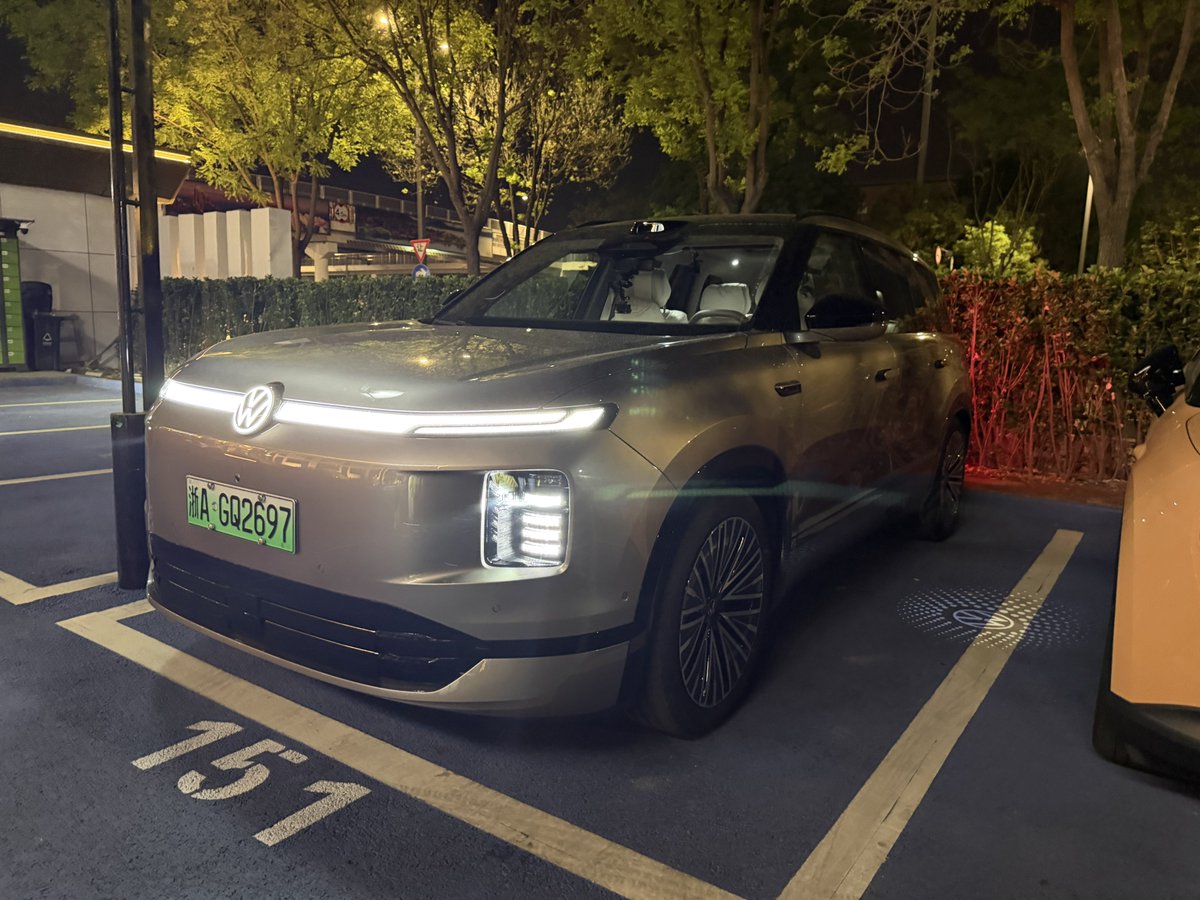
Perhaps the most shocking automotive experience I’ve ever had
This isn’t just a new VW
This will change the entire Volkswagen Group
ID. Era 9X - videos coming
@jsaez1981@cglezv No, regulators in Europe are too conservative that some techs and affiliated facilities most Chinese users get used to are still under debate in Europe. The gap will still be there for a long time.
@668kms@joequant@kyleichan The logic isn't the same. Shanghai secretary role is a ticket to Politburo SC, not to the top. Yongzheng was a politics machine, but Chen's not a conventional politician.
@joequant@kyleichan Yes, if you know anything about Qing Dynasty history, you'll know that the famous Kangxi Emperor had nine sons vying for the throne. Ultimately, the throne passed to his fourth son, Yongzheng, who, while seemingly the least ambitious, genuinely served the country.
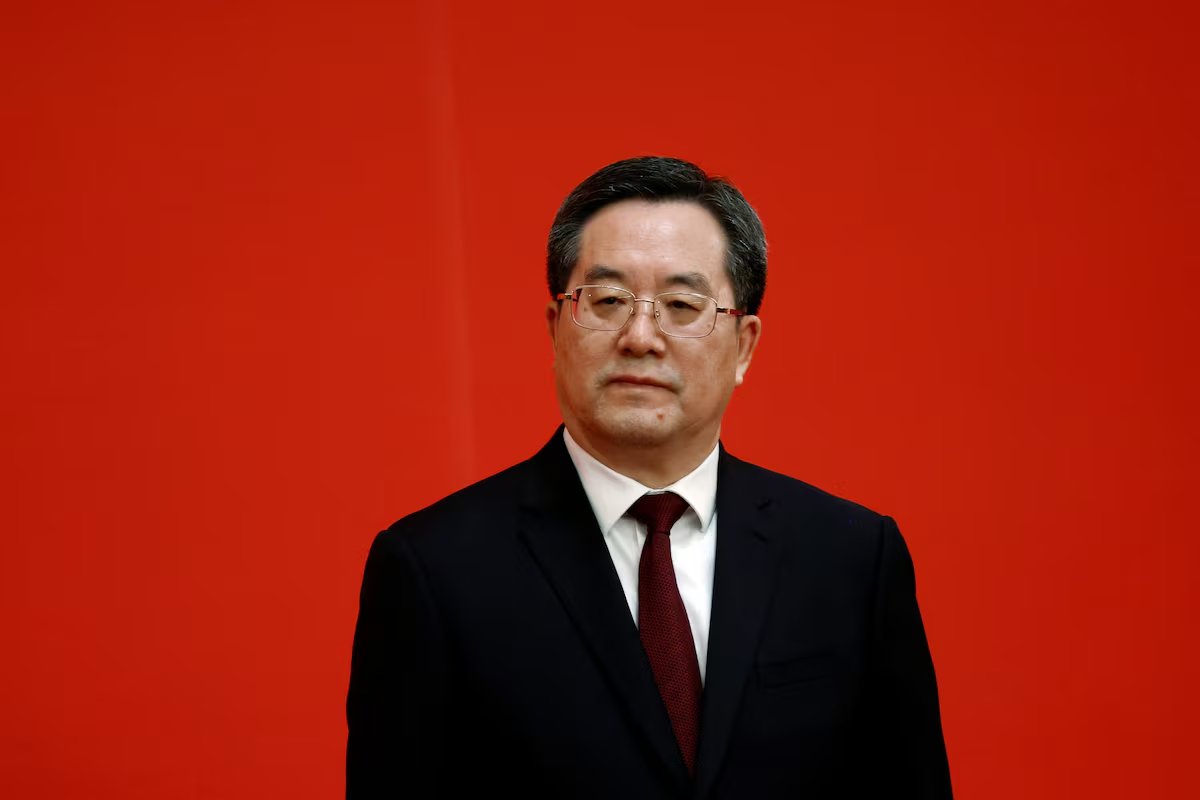
Ding Xuexiang丁薛祥 is the most important Chinese official you’ve never heard of.
He’s the head of China’s Central Science & Technology Commission 中央科技委员会as well as Vice Premier and Politburo Standing Committee member. He’s an engineer by training and was brought on by Xi Jinping as a close aide from their Shanghai days to oversee China’s tech-industrial strategy. His job and the goal of the CSTC more broadly is to help coordinate efforts across China’s fragmented S&T ecosystem, including ministries (NDRC, MOST, MIIT), SOEs, private firms, national labs, and other S&T organizations. The CSTC, a Party rather than a state institution, was established in 2023 and represents an elevation of China’s overall S&T efforts to the highest level of the Party-state system, particularly given China’s urgent push for tech self-reliance in the face of US-led tech controls.
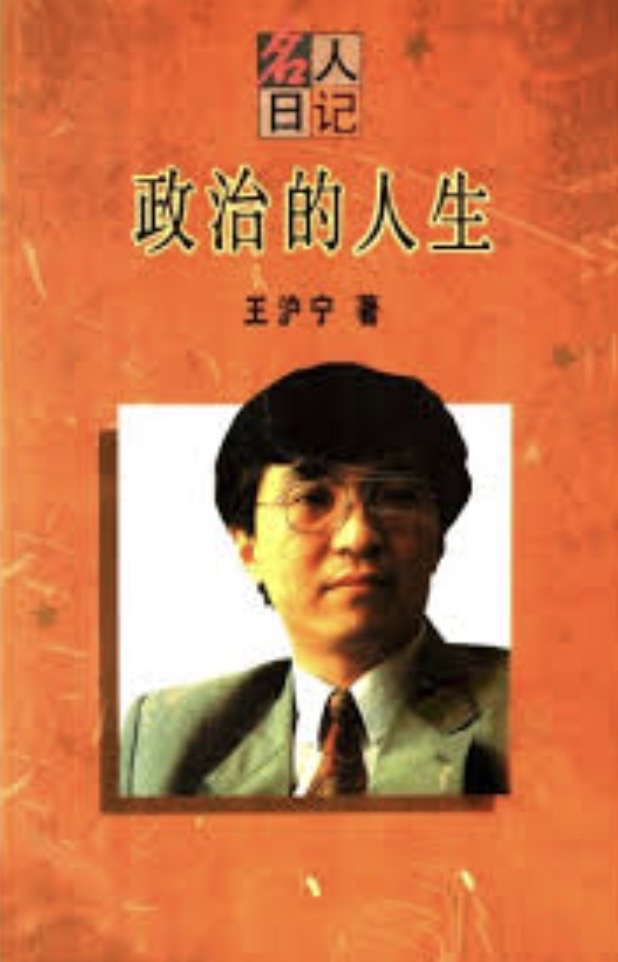
@rishi841312@yangdongqing913@JohnF_Sullivan He was FudanU’s youngest law prof, then was quickly moved to CPC Central Policy Research Office directly in ’95. Working as a theorist behind the scenes since then, he’s never a politician.
Wang Huning (1994): "People living in this world: some are weak; some are strong; some need others to set goals for them; some set goals for others; some need emotional support to live; some need willpower to live. I probably choose the latter in every pair of concepts."
🇨🇳 A year ago, humanoid robots were struggling with basic movements.
At China's 2026 Spring Festival Gala this week, they were doing backflips, parkour, and full kung fu routines with nunchucks.
Physical intelligence is moving faster than almost anyone expected.
Source: CGTN
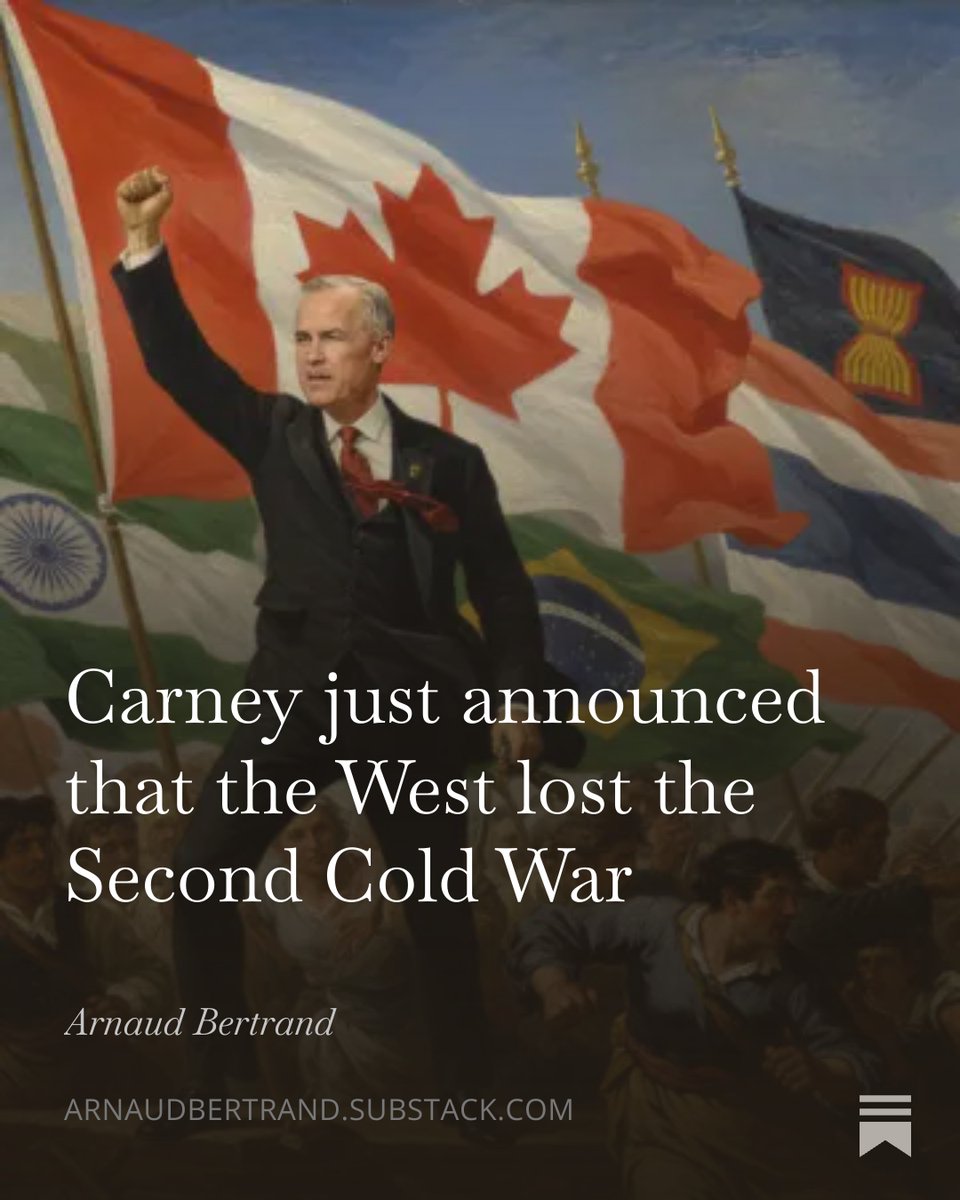
Who could have expected Mark Carney, a liberal establishment figure if there ever was one, to be the flag-bearer for the end of the US-led order? And from a podium at Davos, of all places?
The more you think about it, though, the more it makes sense.
Carney is, at heart, a central banker. As such he understands the power of words and beliefs better than anyone: when you strip things down to their core, a world order - like trust in a currency or a financial system - fundamentally relies on the maintenance of belief. Systems of power exist because participants act as if they exist. That's pretty much it: perception is reality.
Once participants acknowledge the fiction as Carney just did (he literally started his speech announcing he'd "end the pleasant fiction" of the US-led order), the system itself unravels. This is incidentally a formal concept in game theory: the shift from private knowledge to common knowledge is what triggers cascades.
Carney, with his background, ought to have known this was his most potent weapon facing Trump's America: "Trump has the economic and military might. But I have something his power rests upon: I can shatter the collective belief that sustains it."
He's even explicit about this being his thinking: his entire speech revolves around Vaclav Havel’s famous shopkeeper analogy and the fact that the power of the Soviet Union rested on "everyone’s willingness to perform as if it were true," on "living within a lie."
As Carney puts it, "when even one person stops performing, the illusion begins to crack" and the entire "system’s power" starts to crumble.
Today, that "one person" was him.
Make no mistake, Carney’s speech at Davos may prove to be one of THE most important speeches made by any global leader over the past 30 years. This is genuinely epochal stuff.
More than anything, what it means is that, to the extent it even existed at all, the West irremediably lost the Second Cold War: a Cold War requires two competing systems. Carney just announced that one of them simply no longer exists.
This is the topic of my latest article: an in-depth analysis of Carney's speech and its immensely consequential implications for what comes next.
Enjoy the read here: open.substack.com/pub/arnaudbert…