Jessica Lampert

679 posts

Jessica Lampert

Jessica Lampert

@LampertJessica

math teacher, puzzler, competitive family gamer, celestial object gazer, weather watcher, she/her

Katılım Kasım 2019
228 Takip Edilen76 Takipçiler
Jessica Lampert retweetledi
Math Files
Math Files@Math_files·
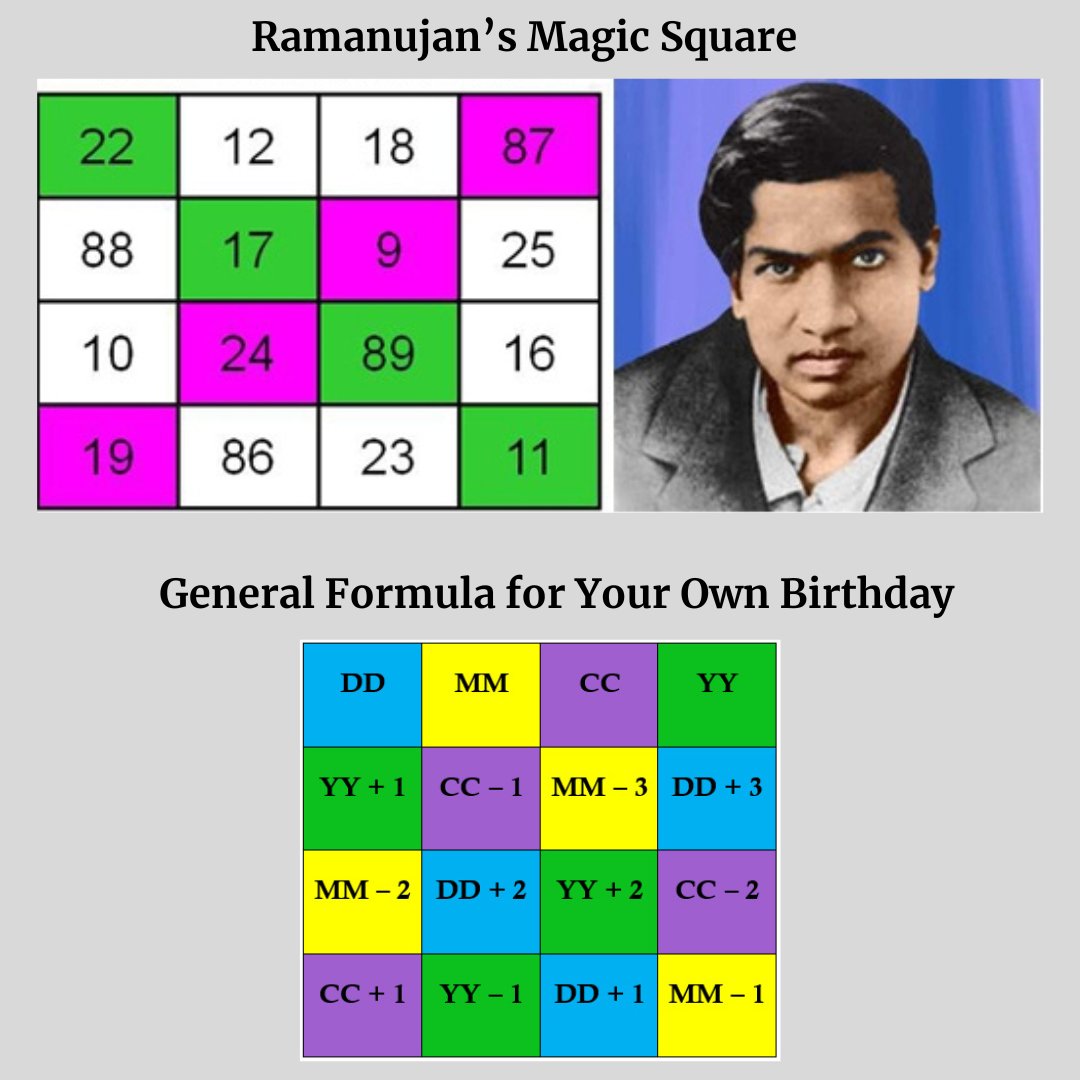
The first row 22 12 18 87 is special because it's Ramanujan's Birth date 22/12/1887. The sum of any column is 139 The sum of any row is 139 The sum of diagonal elements is 139. The sum of any 2x2 box is 139 Now Try for your Birthday with the given formula.
Math Files tweet media
English
19
265
1.4K
46.3K
Howie Hua
Howie Hua@howie_hua·
If chicken nuggets only came in boxes of 6 and 7, what's the largest order not possible?
English
5
15
104
5.7K
Jessica Lampert retweetledi
Mind Dynamo
Mind Dynamo@MindDynamo·
The Rules of Chess
Mind Dynamo tweet media
English
6
247
1.6K
185.3K
Jessica Lampert retweetledi
Steve Hare
Steve Hare@sharemath·
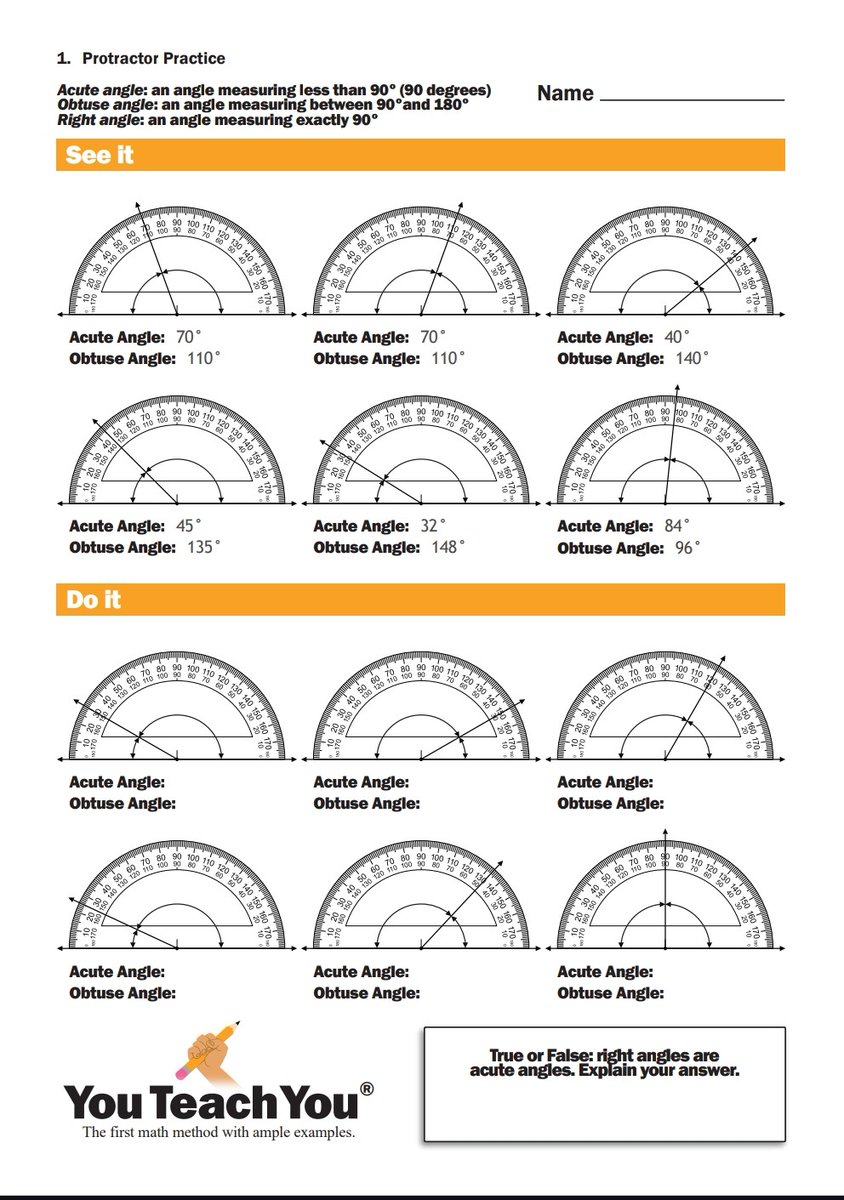
Many years ago, as a new teacher, I had to teach 5th graders how to use protractors. Piece of cake, I thought: I would demonstrate first on the overhead projector, then pass out angle worksheets and protractors for the students to try along with me. It blew up in my face. Some of the students had the clear plastic protractors flipped, with the numbers backwards. Some couldn’t figure out which of the two sets of numbers to use, even though we had gone over acute and obtuse angle measurements. Many had their protractors lined up incorrectly, or crooked, or both - despite my demonstration. And every time I managed to get a student’s protractor lined up correctly, another’s would go out of whack. It was like trying to teach during an earthquake. It took me many years and many more agonizingly unsuccessful attempts to figure out what was wrong with that protractor lesson, but when I did, it revolutionized my teaching. What had I missed? I had neglected to apply Murphy’s Law to the classroom: the more that can go wrong with a lesson, the more that will go wrong. The protractor lesson had more possible points of failure than I had realized. Not only could students position the protractor incorrectly and read the wrong set of numbers, they could also use it as a toy, projectile, or weapon when I was trying to help another student. The chances of all of them using the protractor precisely as I needed them to were far slimmer than I had imagined. (And using the protractor precisely was the whole point!) The chances of all of them using it correctly in a large group loaded with peer pressure were even worse. (I had 29 students that year.) So what’s the solution to this problem? The corollary to Murphy’s Law: reduce the number of things that can go wrong to increase the chances of things going right. The activity below illustrates what I mean. Rather than requiring students to use a protractor correctly right away, it only requires them to read one - a protractor that’s right-side-up and already lined up for them. More than this, the completed examples at the top immediately show them how to read the protractor. By eliminating the extraneous variables - all of the possible ways of positioning or otherwise using a protractor incorrectly - students are at once steered toward the point of the lesson: how to read angle measurements correctly on a protractor. (Or to put it in cognitive science terms, extraneous cognitive load is reduced to free up mental resources for the germane load required by the lesson.) And that’s just the beginning. Once the students have successfully navigated the lesson, they’re ready to use real protractors correctly, with the visual examples to guide them as they line them up. I got goosebumps the first time I used the lesson below with my students. They completed it as if it was the easiest thing in the world - and then went on to use protractors correctly in a short classroom project. No crookedness. No reading the wrong numbers. A few “You have it upside down!”s, which were quickly corrected. No horseplay. No using them as weaponry. By eliminating what could go wrong, the lesson had gone right. “Wow,” I said as I watched them. “Look at you all using protractors correctly!” “What’s so hard about using a protractor?” one of them said, incredulously. “Oh, nothing,” I said, smiling to myself. “Nothing at all.”
Steve Hare tweet media
English
21
30
270
17.5K
Jessica Lampert
Jessica Lampert@LampertJessica·
@desmosclassroom Need a litttle help with this one. I couldn’t peek ahead at student work without moving the projector along with me. What am I missing? 🙏🏻
English
0
0
0
23
Jessica Lampert retweetledi
Jonathan Hall
Jonathan Hall@StudyMaths·
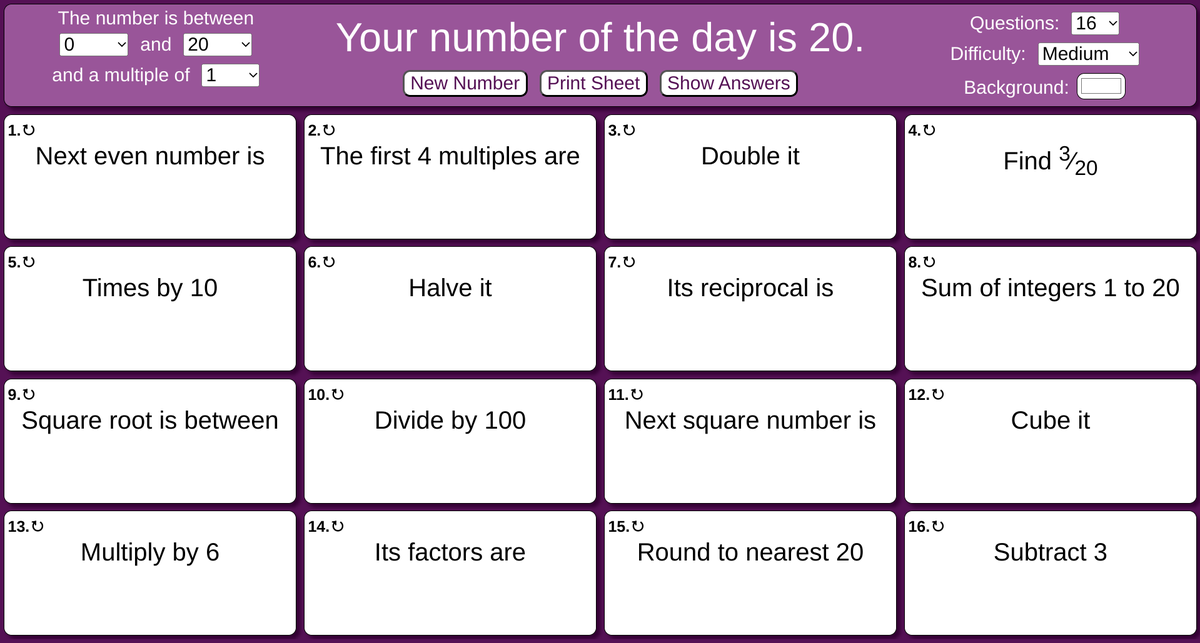
Number of the Day. It's been around for a few years now, but still one of the most popular starters on the site. mathsbot.com/starters/numbe…
Jonathan Hall tweet media
English
0
2
3
818
Jessica Lampert
Jessica Lampert@LampertJessica·
@MrCorleyMath Learnzillion has added a nice video in unit 2 called, “A New Perspective.” It does a nice job showing linear perspective in art with the vanishing point and the vanishing lines. I wish our students did this in art class before we explored this in math with dilations.
English
1
0
1
25
Nick Corley
Nick Corley@MrCorleyMath·
PSA: To all math publishers. You need to make a connection between math and art! As I'm reviewing 8th grade math resources so many miss the opportunity to connect rigid transformations to tessellations. It's sad!
English
10
2
61
3.2K
Jessica Lampert retweetledi
MindShift
MindShift@MindShiftKQED·
Five Ways of Well-Being - Connect, build relationships - Be Active, move. - Take Notice, savor the moment - Give, share your gifts - Keep Learning Sketchnote by Tanmay Vora @tnvora
MindShift tweet media
English
3
95
220
37.6K
Jessica Lampert retweetledi
Amanda Austin
Amanda Austin@draustinmaths·
Some new resources on straight lines ready for Year 9 lessons coming up this week: ✨Gradients of Straight Lines Match-Up ✨Drawing Line Segments with a Given Gradient ✨Plotting Straight Lines then finding Area and Perimeter draustinmaths.com #mathschat #mathsresources
Amanda Austin tweet mediaAmanda Austin tweet mediaAmanda Austin tweet media
English
6
26
135
13.3K
Jessica Lampert retweetledi
Jonathan Hall
Jonathan Hall@StudyMaths·
Shade any diagonal on a multiplication square. What's the nth term of the sequence you just created? What about diagonals going the other way? They seem to be a little harder... mathsbot.com/tools/timesTab…
Jonathan Hall tweet media
English
3
7
22
2.1K
Rajeev Raizada
Rajeev Raizada@raj_raizada·
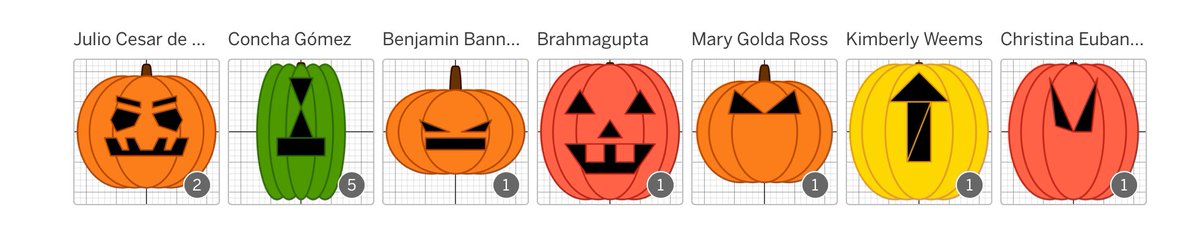
Maybe useful for a classroom activity today? Halloween witch hat transformations, in Desmos. The first set of transformations use the geometry tools, and the next set are functions of the x- and y-coords in the Graphing Calculator. #iteachmath #MTBoS teacher.desmos.com/activitybuilde…
Rajeev Raizada tweet media
English
2
2
13
542
Jessica Lampert retweetledi
edutopia
edutopia@edutopia·
Elementary teachers, do you have students that love to draw? They’re likely to fall in love with the new Animated Drawings tool from Meta AI, which can turn their sketches into animated GIFs in seconds. Check out this quick demo from Edutopia’s @dalorleon. 👇
English
2
29
112
38.4K
Jessica Lampert retweetledi
Howie Hua
Howie Hua@howie_hua·
Introducing one-step and two-step linear equations with bar models (Part 1)
English
9
66
364
26.4K
Jessica Lampert retweetledi
edutopia
edutopia@edutopia·
“Math problems are flying!” A healthy dose of chaos and competition inspires students to solve problems—fast. 🏃
English
0
27
108
17.3K
Jessica Lampert retweetledi
Massimo
Massimo@Rainmaker1973·
A book that lets you build solids by simply pulling a string. [📹あきとんとん] twitter.com/i/status/18035…
日本語
24
516
3K
345.5K
Jessica Lampert
Jessica Lampert@LampertJessica·
@pattystephens @desmosclassroom I tried to use this check in that I added to an old lesson that I used today. I swear that students used to be able to click and drag the eyes and the mouth to move them. Am I crazy?
English
1
0
1
65
Jessica Lampert
Jessica Lampert@LampertJessica·
@TheMathGuru @MathforLove @MathTherapy Have you played Ticket to Ride? This game is amazing for developing diverse ways about thinking about adding and using number lines without thinking you are doing math.
English
0
0
3
48
vanessa vakharia
vanessa vakharia@TheMathGuru·
I was today years old when @MathforLove taught me that Snakes & Ladders is lowkey an intro to NUMBER LINES🤯
English
2
6
23
2.6K