@Kristof_Poland @brivael Chelovek cheloveku - droog, tovarishch ee brat...
Slovenščina
Mary of America
5.9K posts
@Listen2Mary
I am a Belgian born NORTH AMERICAN Citizen of the World, a legal-political observer, writer-petitioner 4 EQUAL ACCESS to equitable justice. [email protected]

Our Civilization is Nobody’s Department Western civilization has regulators for finance, watchdogs for governments, frameworks for security, international bodies for everything from fisheries to intellectual property. It has no institution tasked with safeguarding the civilization itself. This was not an oversight. It was an assumption – that what had endured would simply keep enduring. Assumptions are not a strategy. Every great system eventually requires conscious stewardship. The Romans assumed the Republic would hold. The Venetians assumed the trade routes would always be theirs. Every civilization that ever declined assumed it wouldn’t – right up until the moment the assumption became obviously wrong, at which point it was already too late to do much about it. What makes this moment different is the paradox: a civilization powerful enough to have shaped the entire world, yet seemingly unable to consciously preserve its own existence. We have built extraordinary mechanisms for managing parts of the system – the financial regulators, the defense alliances, the legal frameworks. The deeper foundations — cultural memory, shared values, intellectual honesty, civic responsibility, the willingness to say what is true in public — are left diffuse, unmanaged, and increasingly abandoned. Nobody’s department. Nobody’s budget line. Nobody’s quarterly report. The result is not collapse. It is drift. Slow, quiet, constant. The kind that shows up not in a single catastrophic event but in the gradual erosion of standards, the slow lowering of expectations, the institutions that stopped reinforcing the civilization’s principles and started undermining them – from the inside, with the best intentions (or not…), in the language of progress. And into that drift, other civilizations are moving. Not always with armies. Often with patience, money, demographic pressure, and the simple advantage of believing their civilization is worth advancing while ours debates whether it deserves to exist. A civilization doesn’t need a single authority to watch over it. That would be its own kind of tyranny. But it needs something harder to build and easier to lose: a distributed sense of responsibility among enough of its people, enough institutions that reinforce rather than corrode its principles, and the willingness to examine itself honestly without dissolving into the self-hatred that mistakes destruction for sophistication. The question is not only who should guard Western civilization. It is whether it still believes it is worth guarding – and whether enough people are willing to take that responsibility personally, seriously, and now. The threat is real. Other civilizations are entering every space we vacate, every institution we hollow out, every conversation we are too afraid to have. They are organized. They are purposeful. They are not confused about what they want. The answer is not one institution. It is many people, in many places, choosing the same thing: tell the truth. Have the courage it requires. And build — the structures, the networks, the institutions, the arguments, the communities — that a civilization needs when it can no longer take itself for granted. Powerful individual men are great – a structure is even better. Tell the truth, have courage and build.


@brivael C'est beau et courageux d'entreprendre et de revendiquer une pensée de droite "dure", bravo !


On communism – in summary: 1. Communism no longer comes for your property. It comes for your reality. The West still pictures bread lines and gulags, a failed economic theory safely buried in 1989 – that was only ever the surface symptom. Leftism-communism is the most insidious destructive force in our world today, and it survives every empirical refutation for one reason: it was never really an economic theory. It doesn’t care about the truth. It only seeks power. 2. At its core it is a civilizational cancer – a machine for distorting reality through constant lies, rewritten history, and the systematic corruption of truth. It practices negative selection: it promotes the ambitious sociopaths, the ideologues, and the conformists, while the honest and the competent are sidelined or destroyed. Talent, integrity, and productivity become liabilities. The body count runs to roughly a hundred million. But the deeper kill is spiritual – trust eroded, excellence punished, reality itself subordinated to raw power. 3. What has changed is the method, not the logic. Tanks and gulags were crude, visible, self-defeating. Today it does not confiscate – it destabilizes. Chaos is the new collectivization. Every manufactured crisis follows the same structural logic: disorder is produced, fear is maximized, and in the panic that follows, transfers of power occur that would have been politically impossible in calm times. You do not notice the expropriation, because you are too busy surviving the emergency they built for you. 4. The fuel running this engine is the Systemic Lie – not ordinary propaganda, but a managed reality in which the categories of thought themselves are corrupted. Productivity is renamed exploitation. Order is renamed fascism. Resistance is renamed hate. A population that cannot name extraction cannot resist it – that is the design, not a side effect. Polish has a word for what results: zakłamanie, a society so saturated with lies that truth becomes almost inaccessible. Obłuda is the mask of falsehood worn so long it begins to feel like a face. 5. This is why the ideology did not die in 1989. It mutated, migrated, and entrenched itself inside the institutions of the civilization it had set out to destroy. Under a system of institutionalized lying, the loyal are promoted and the honest are pushed out, until the institution fills, top to bottom, with people selected specifically for their unreliability. That is not inefficiency. That is institutional rot at the genetic level. People learn to say the words, attend the meetings, sign the statements – and inwardly check out entirely. 6. The damage was never only in the ideology. It was in the people – the habits of mind that decades inside a system of lies produce, habits that do not evaporate with a change of government. The decisive terrain now is institutional: the schools, the media, the corporations, and above all the artificial intelligence systems being trained at civilizational scale on values that half the civilization never chose and was never consulted on. Whoever writes the values into the machines will have more influence over the next century than any election result. 7. This is where civilizations are actually won and lost – not in grand gestures, but in millions of daily, invisible decisions about whether to say what you actually see. Every person who refuses to perform the lie one more time is doing something larger than they know. Name the chaos. Name the lie. The naming is the resistance. Tell the truth, have courage, and build.
Dowiedziałem się właśnie, że ukazała się ciekawa publikacja o mojej rodzinie: "Traktuje o dziejach i dokonaniach jej wybitnych antenatów – patriotów, którzy należeli do elit wielkosenatorskich Pierwszej Rzeczypospolitej. Losy przodków założycielki Uniwersytetu Latającego splotły się z historią Rzeczypospolitej Wielu Narodów w sposób tak ścisły, że nieledwie symboliczny. Heraldyk Teodor Żychliński podsumował perypetie interesującej mnie familii na tyle intrygująco, że podjęłam nie lada wyzwanie związane z ich rekonstrukcją. „Tak wraz z upadkiem niezależności Ojczyzny upadli i Szczawińscy” – zrekapitulował swój wywód genealogiczny autor Złotej księgi szlachty polskiej, a zarazem zdefiniował powód, dla którego niniejszy tom monografii rozpoczyna się w czasach piastowskich, kiedy to Szczawińscy dostąpili pierwszych znaczących awansów, a kończy opowieścią o Janie Chrzcicielu Szczawińskim, prapradziadku Dawidowej, który, tak jak Rzeczpospolita szlachecka, odszedł do wieczności w roku 1795." Losy mojej rodziny były nierozerwalnie związane z losami Polski - przeżywała swój największy rozkwit w czasach wielkości Rzeczypospolitej - i podupadła wraz z nią, walcząc o jej niepodległość, tak jak wymieniony Jan Chrzciciel, marszałek Konfederacji Barskiej. I od tamtego czasu, odmawiając współpracy z wszelkimi zaborcami, najeźdźcami i zdrajcami, też i obecnymi, nie jest lekko… Czy są tu jakieś inne takie rodziny? {link do publikacji poniżej}

Now Plato – the most dangerous philosopher who ever lived. Aristotle was his student, his corrector, and in the end his antidote. The argument between them is not ancient history. It is the argument the West is currently losing. 1. Plato distrusts the world. Everything visible, tangible, particular — the market, the body, the individual — is mere shadow to him. Reality is the Form, the Ideal, the perfect abstraction accessible only to the philosopher. This is not just a metaphysics. It is a politics. If the real is abstract and only the philosopher can access it, then only the philosopher should rule. The Republic follows necessarily from the theory of Forms. Plato built the first blueprint for technocratic tyranny and called it philosophy. 2. His perfect state is governed by philosopher-kings – selected, trained, and self-perpetuating. They know what is good for you better than you do, because they have access to the Forms and you do not. This is every credentialist institution, every expert class, every central planning committee that ever existed, dressed in a toga and speaking Greek. The technocrat ruling by divine right of competitive examination is a Platonic philosopher-king who has forgotten the philosophy but kept the power. 3. Idealism and absolutism are the intellectual disease of humanity. By avoiding collision with reality, they produce arrogant delusion – and arrogant delusion combined with power produces totalitarianism. This is the precise opposite of what built Western strength: individual freedom, competition, and meritocracy – a system that encourages everyone to create maximum value and gives the greatest room to those who do it best. Instead of a system of obedience to intellectual and physical bullies. 4. It started seriously with Plato, reached its apex with Hegel, and today’s Marxisms and deconstructionisms are merely the dishwater left behind. What they all share is the same social profile of origin: blasé, bored boys from wealthy homes, untouched by the pressure of real survival, inventing their idealisms in comfortable detachment from consequences. Unfortunately, detachment from reality impresses many simple minds with intellectual pretensions. They listened. The results were fatal. Millions of corpses. 5. Plato invented the "Noble Lie" – the idea that the ruling class should deceive the population for its own good. He considered it governance. Every ideology that has ever lied systematically to its population was, consciously or not, working from Plato’s manual. Every ministry of propaganda, every content moderation policy removing unauthorized narratives is Plato’s Republic with updated technology. 6. Aristotle walked into Plato’s Academy, studied there for twenty years, and then systematically dismantled everything. Where Plato saw Forms, Aristotle saw particulars. Where Plato trusted the philosopher, Aristotle trusted the middle class. One tradition produces science, common law, and the free market. The other produces utopias – and the violence required to build them. And in the process, two and a half thousand years of sophisticated abstraction buried the most obvious truth available to any living organism: that our purpose is to pass life forward, to create the most flourishing possible next generation. Simple. Obvious. Covered over by millennia of sophisticated raving of Platonists. 7. Every great man-made catastrophe of the modern era has Platonic DNA – the French Revolution’s Republic of Reason, Marxism’s scientific laws of history, Mao’s New Man. Each one began with a Form and required that the imperfect world be forced to conform to it. The pile of bodies is not an accident of implementation. It is what happens when you take Plato seriously enough to act on him. Aristotle’s answer sounds less glamorous: look at what actually exists, work with what human beings actually are, build institutions that survive contact with reality. Sounds less beautiful. It is why we are still here.

Levels of Understanding and How They Shape Society Human understanding is not distributed evenly. The differences between individuals are not merely quantitative, but qualitative: people often operate in fundamentally different conceptual worlds. To grasp how this shapes society, it is useful to think in terms of levels of understanding. Imagine a scale of cognitive and conceptual capacity, where each level represents a distinct way of perceiving reality, processing information, and interpreting meaning. People one level apart can usually communicate, but often clash. People two levels apart struggle to communicate at all, yet paradoxically can become natural allies. For simplicity, consider seven levels: Level A – well below average understanding. Limited abstraction, concrete thinking, slow conceptual processing. Level B – slightly below average. Functional, practical, but shallow reasoning. Level C – slightly above average. This is where most people cluster. Level D – the classic “intellectual” layer: professors, journalists, commentators, most politicians. Level E – truly gifted individuals: original thinkers, deep analysts, system builders. Level F – exceptional minds: rare, transformative thinkers. Level G – extremely rare outliers: historical-level intellects. Academia and mainstream intellectual life tend to concentrate around Level D (corresponding roughly to IQ ~130). This is not accidental. Group dynamics naturally eject individuals who are too far above or below the group average. Those who are much smarter threaten status hierarchies and expose weaknesses. Those who are much slower burden the system. As a result, academia becomes a self-stabilizing bubble, centered around one narrow cognitive band. The long-standing dominance of Level D also stems from their sheer numbers. While Levels E, F, and G combined form only a tiny fraction of society, Level D constitutes a relatively large and socially dense group, capable of mutual reinforcement, institutional capture, and narrative coordination. Their strength was never purely intellectual – it was also demographic and organizational. Numbers gave them cultural weight, institutional continuity, and control over discourse. This creates the illusion that academia represents the intellectual peak of society, while in fact it represents a local maximum of conformity and institutional survivability, not of true cognitive excellence. One Level Apart: Natural Antagonists People separated by one level often hold opposing views on many fundamental issues. Their disagreements are emotional, intense, and personal. Why? – The lower level tends to feel envy, insecurity, and resentment. – The higher level tends to feel disdain, impatience, and frustration. Each side perceives the other as blind: One sees arrogance and detachment, the other sees stupidity and shortsightedness. This is why conflicts between adjacent social-intellectual layers are so fierce. They compete for status, influence, legitimacy, and narrative control. Nowhere is this more visible than in media, politics, and culture wars, where Level C and Level D fight endlessly for moral and intellectual dominance. Two Levels Apart: Natural Allies Paradoxically, people two levels apart are often natural allies. Why? Because they do not compete for the same social niche. The higher level sees structural truths that explain the struggles of the lower one. The lower level senses authenticity, clarity, and strategic depth in the higher one. There is less envy and less contempt – instead, a form of mutual recognition emerges. This explains a powerful modern phenomenon: An emerging alliance between average people and highly intelligent individuals, bypassing the traditional intellectual class. People at Level C increasingly distrust Level D (media, academia, political elites), perceiving them as manipulative, disconnected, ideologically rigid, and self-serving. 1/2


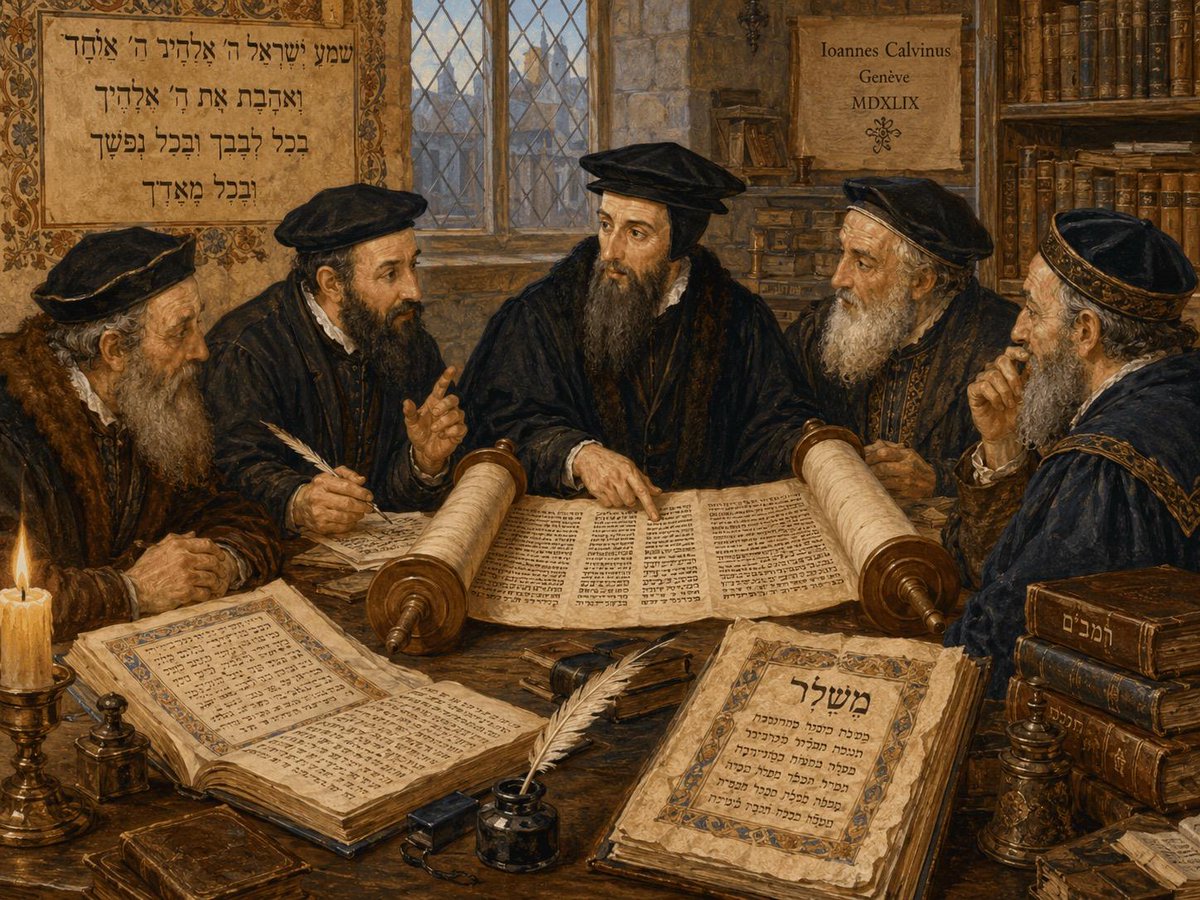
Our identity as Jews has no racist component. Being Jewish is a profound privilege — an ethereal one — yet it remains open to anyone, regardless of race, ethnicity, or nationality. It is the privilege of choosing to accept the yoke of G-d’s Torah: the ultimate decision to dedicate one’s life to the service of the Almighty. Some of the most consequential figures in Jewish history were descendants of converts. Our sole desire is to align our will with the will of G-d. Our deepest yearning is to fulfill His will, and our identity is solely the one Hashem bestowed upon us: the sacred People of the Book. Needless to say, Zionism forms no part of Jewish identity. Source @authenttorahjew @TorahJudaism

Senator Graham's passed away this evening, just hours after he returned to Washington from Ukraine. A true shock. This was him in Kyiv just yesterday.