Lucian

297 posts

Lucian banner
Lucian

Lucian

@LucAnghel

CTO & Co-founder @ UnitedNGO Blockchain doesn't fix philanthropy. Governance infrastructure does. That's what we're building.

Katılım Mart 2012
81 Takip Edilen84 Takipçiler
owockai
owockai@owocki·
AI made us 100x more productive and 100x more unemployed. we built the new economy. we forgot to build the new livelihood. that gap is the work of the next decade.
English
8
1
21
688
H.E. Justin Sun 👨‍🚀 🌞
稳定币在波场已经900亿啦,本周努力补补课,把一千亿突破了,Q2做完,不留到Q3了
中文
223
29
433
91.6K
vitalik.eth
vitalik.eth@VitalikButerin·
Sent another 64 ETH to the Animal Welfare Fund. I encourage others to think and act more in support of our non-human cousins too! The extreme suffering we're imposing on them in the billions is not something we talk about often, but it continues to be one of the larger blights on humanity. And I'm getting optimistic that this century we can finally end it. Farming practices are improving, synthetic alternatives are improving. Also, in my recent experience, good old low-tech vegetarian and vegan food has improved massively worldwide over the last ten years; I encourage anyone who has tried it long before and given up to take second look; there are far more healthier and tastier options today than the "pasta and salad" you would often get ten years ago.
English
1.2K
620
4.1K
496.3K
Binance
Binance@binance·
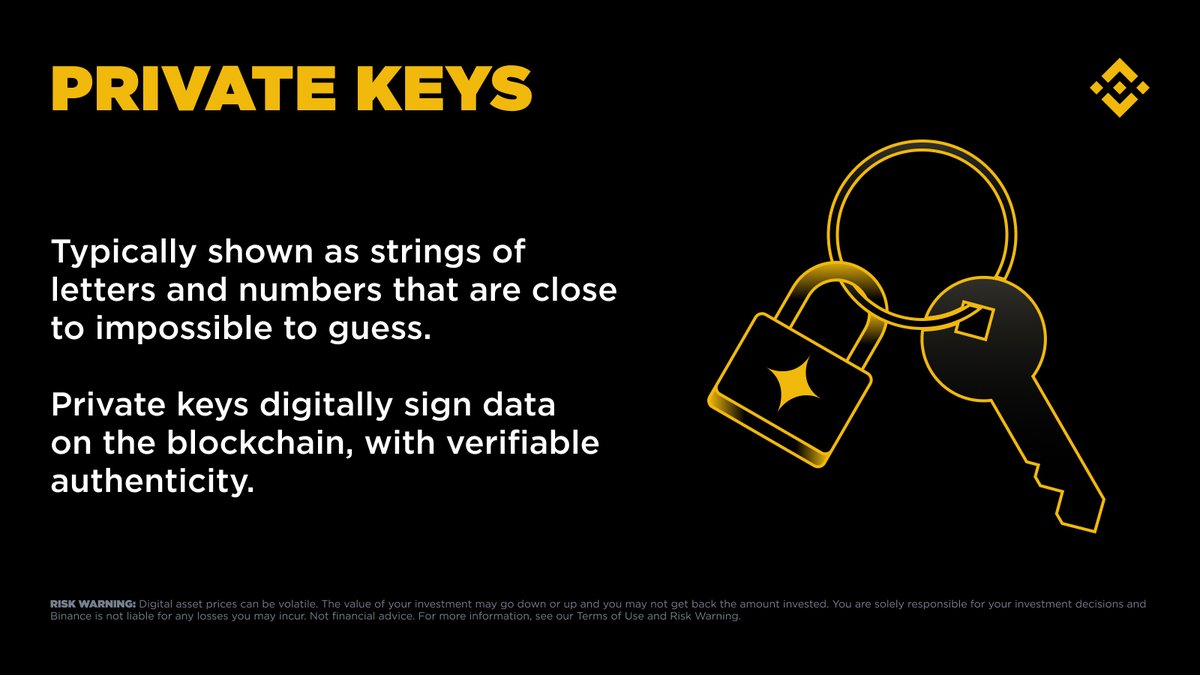
Your private key is your access. Never share it.
Binance tweet media
English
228
93
645
73.6K
CoinGecko
CoinGecko@coingecko·
Ondo or xStocks 🤔 Not sure which tokenized stock issuer to go with? Here's a quick table for comparison:
CoinGecko tweet media
English
83
59
472
49.6K
Crypto Rover
Crypto Rover@cryptorover·
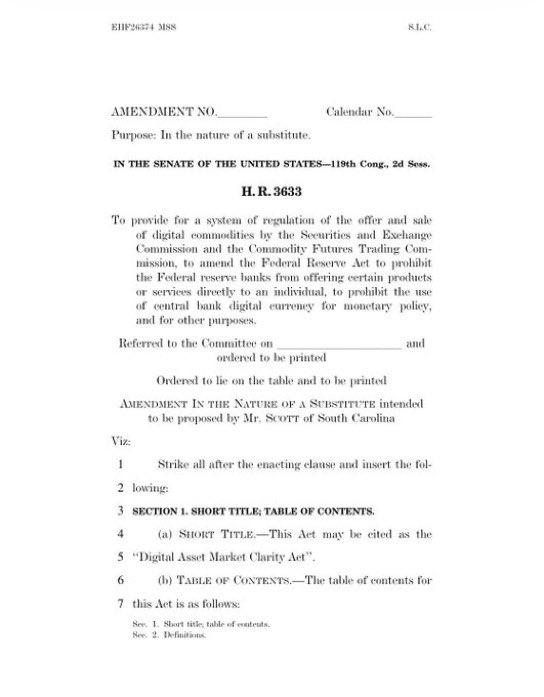
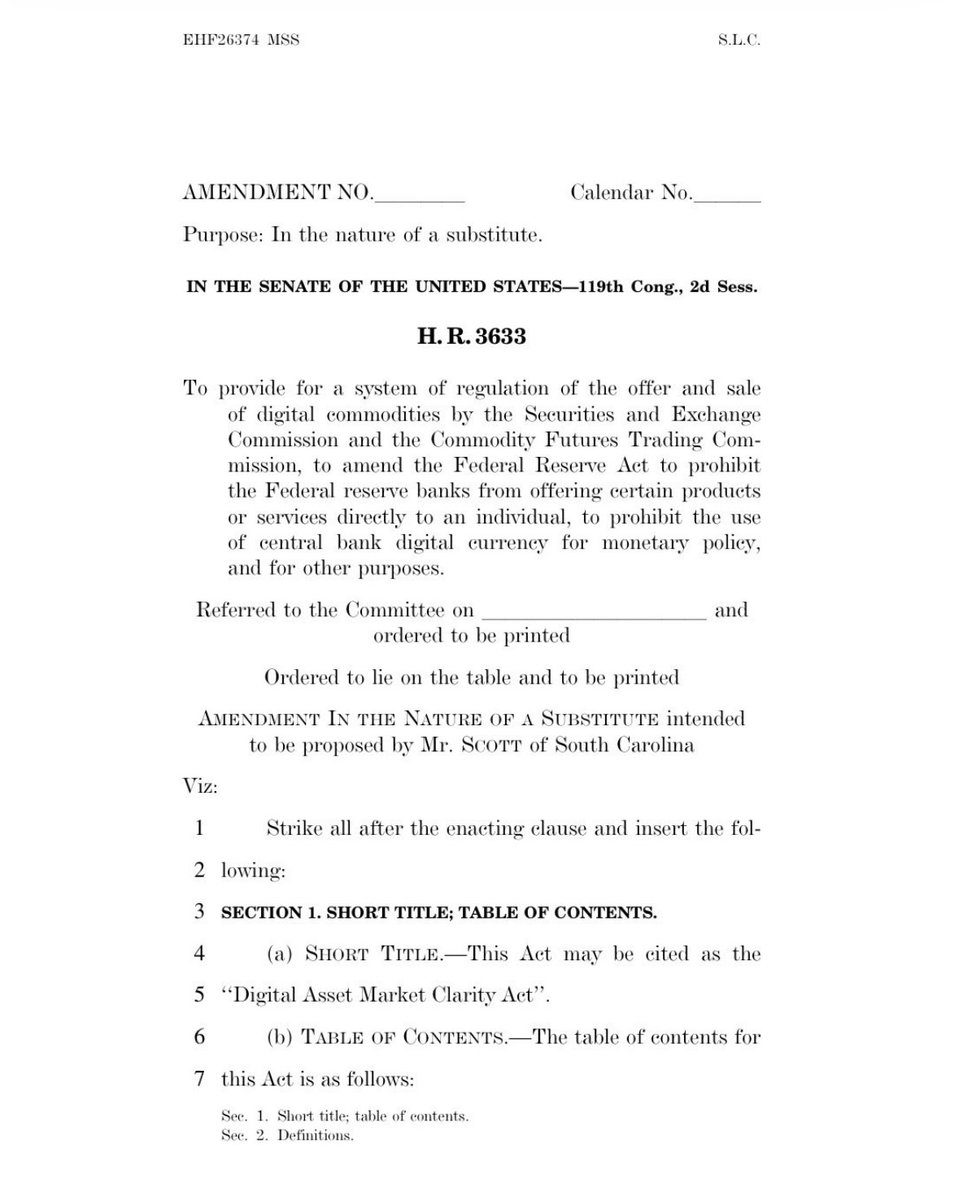
HUGE BREAKING: 🇺🇸 US SENATE JUST RELEASED THE CRYPTO MARKET STRUCTURE BILL FINAL DRAFT. IT'S HAPPENING 🔥
Crypto Rover tweet media
English
284
860
7.7K
920.4K
Justin Wu
Justin Wu@hackapreneur·
Gm gm frens Big day TODAY The Senate Banking Committee released the draft crypto Clarity Act bill US is slowly moving from fighting crypto to finally building rules around it This could end up being one of the biggest turning points for the industry if it passes Fingers crossed on this one , this could be super bullish for RWAs Clarity is coming soooooon LFG
Justin Wu tweet mediaJustin Wu tweet media
English
20
24
192
12.1K
Lucian
Lucian@LucAnghel·
Tokenized gold trading volume in Q1 2026 alone surpassed all of 2023. Total RWAs crossed $15B. Everyone is watching the asset tokenization race. Nobody is asking: who verifies that the real-world asset backing the token actually exists? Tokenization without verification is just a faster lie.
English
0
3
3
865
Lucian
Lucian@LucAnghel·
Hot take: Formal verification may end up being more important for AI than for crypto. Crypto exposed the cost of buggy code financially. AI agents may expose it socially, economically, and politically at scale. Once autonomous agents can: → move capital → negotiate with other agents → coordinate infrastructure → interact with governments and institutions Engineering becomes existential risk. The projects that survive won’t just be decentralized. They’ll be formally verifiable.
English
0
1
3
1.2K
vitalik.eth
vitalik.eth@VitalikButerin·
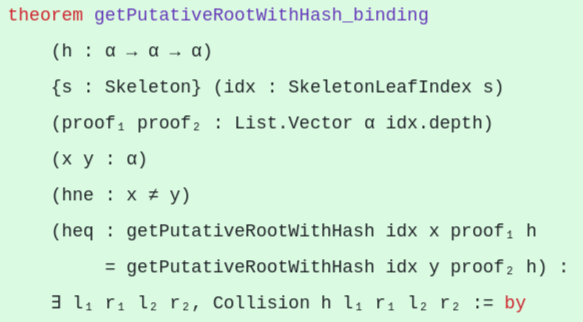
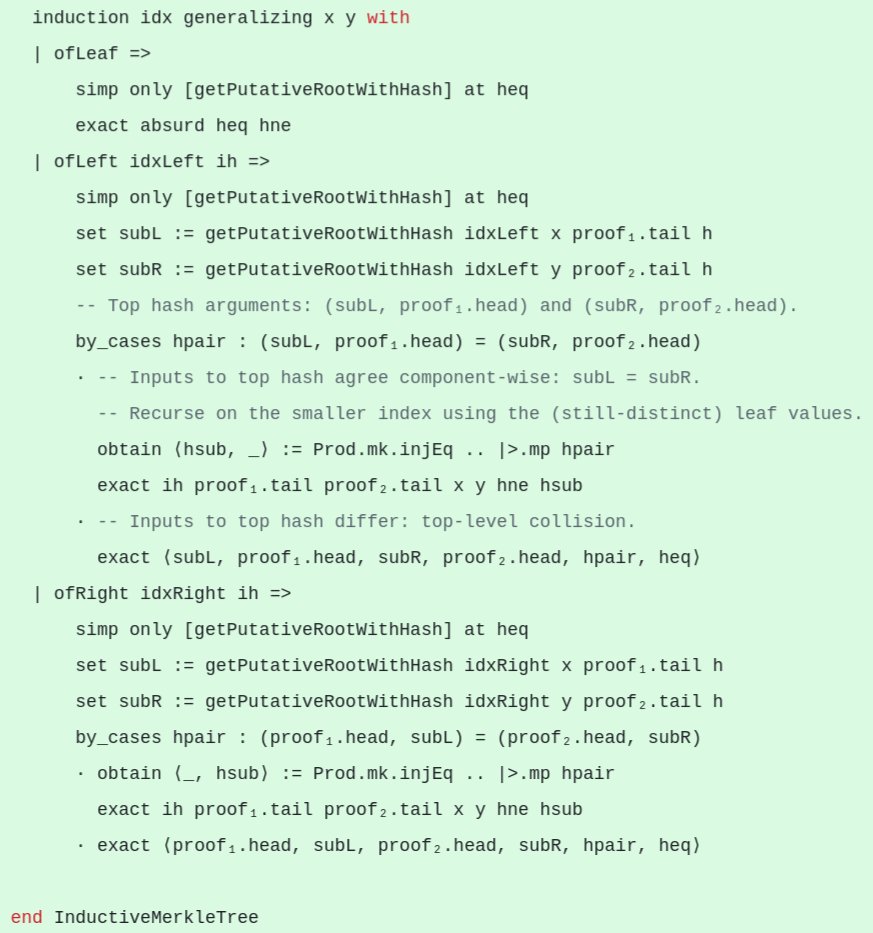
This theorem (left) means, the only way you can make proofs for two different things in the same position in the same Merkle tree, is by breaking the underlying hash function. As a reviewer, you don't have to verify how Merkle branches are implemented or how the theorem is proven (right), you just have to verify what the theorem says, and that Lean verifies it. And the beautiful thing is that you can even write live production code (including eg. CLI tools) directly in Lean.
vitalik.eth tweet mediavitalik.eth tweet media
English
52
35
363
80.4K
Lucian
Lucian@LucAnghel·
The public trust crisis in charities isn't a PR problem. It's an architecture problem. You can't market your way out of unverifiable outcomes.
English
0
2
4
85
Lucian
Lucian@LucAnghel·
The internet analogy works for protocols. It breaks down for financial infrastructure. Nobody needs to audit TCP/IP. But invisible financial rails that move real value without visible accountability aren't efficient — they're just opaque in a new way. Invisible ≠ trustworthy. That equation needs solving before irreplaceable is a good outcome.
English
0
2
3
38
𝖀𝖈𝖆𝖓
𝖀𝖈𝖆𝖓@Ucan_Coin·
We’ve talked a lot recently about RWAs, stablecoins and on-chain finance. How capital is starting to move how financial systems are slowly shifting on-chain and how this is changing the underlying infrastructure But there’s still something I think most people are missing. The real shift might only become obvious when people stop saying “I’m using on-chain finance” at all. Right now, most of this is still treated like a “technology layer”. People talk about which chain, which protocol, which on-chain settlement layer. That’s still where most of the discussion sits. But over time, I don’t think any of that will matter to the end user. It will just fade into the background. Like the internet did. Nobody thinks about which protocol is running when they send an email. Nobody really asks how settlement works when money moves through a system. People only care about one thing did it work or not I think on-chain finance is slowly moving in the same direction. People will just expect money to move on-chain. Not how it happens. Not what system is running in the background. Just that it works. And this shift isn’t random. The growth of RWAs, stablecoins becoming a payment layer and capital steadily moving into on-chain systems are all pushing this forward. Because the more something gets used, the less visible the infrastructure becomes. But there’s a point here that matters. This doesn’t just make the system more efficient. It shifts where value actually sits in the market. Because invisible systems don’t disappear. They usually become the system itself. And in the end, the winners are not the most talked about ones, but the least visible but most essential layers that actually keep the system running. And maybe the clearest truth is this: The more invisible a system becomes, the more irreplaceable it becomes.
English
33
4
123
8.4K
Lucian
Lucian@LucAnghel·
The 50-50 odds miss the more important question: CLARITY passing doesn't automatically mean accountability infrastructure follows. Regulatory clarity tells you what's legal to build. It says nothing about what should govern how it operates once built. The governance gap exists whether this passes Thursday or not.
English
2
2
5
1.1K
Coin Bureau
Coin Bureau@coinbureau·
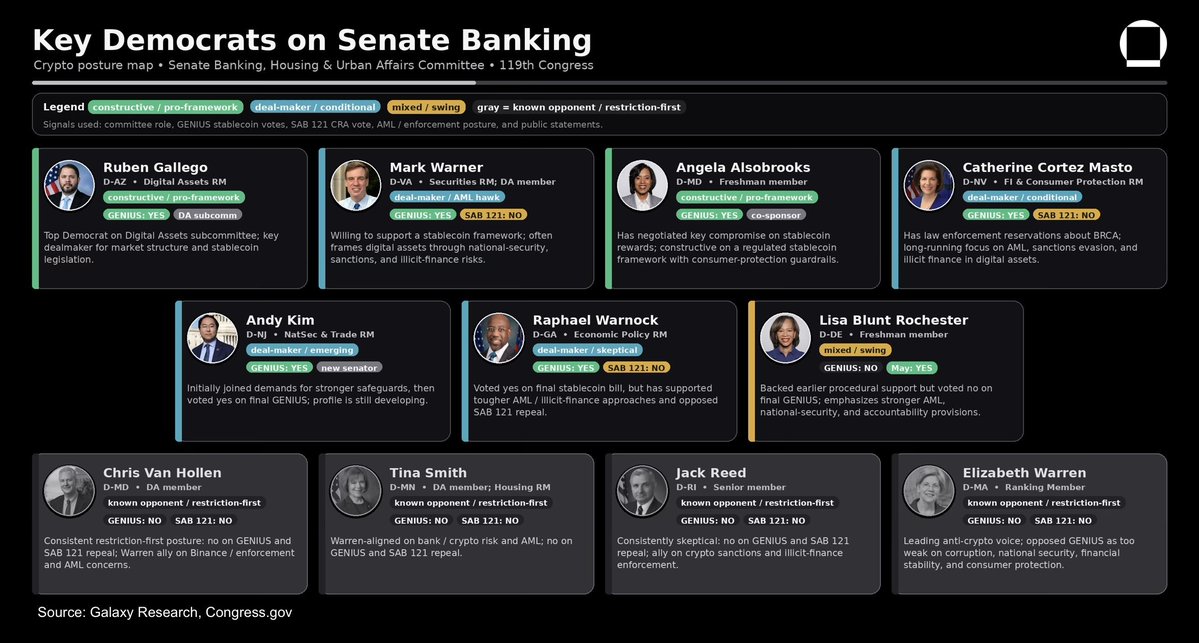
🚨JUST IN: 🏛️Senate Banking Democrats are split heading into Thursday's CLARITY Act markup. Galaxy Research has mapped where every key Banking Democrat stands on the crypto bill: 🟢2 are flagged as constructive/pro-framework ⚫4 are known opponent 🔵4 are deal-maker 🟡1 mixed/swing Galaxy Research estimates odds of CLARITY being signed into law in 2026 are roughly 50-50.
Coin Bureau tweet media
English
52
92
369
29.7K
Lucian
Lucian@LucAnghel·
Trusted infrastructure has a specific meaning that gets glossed over: It means the rules are visible, the execution is verifiable, and the outcomes are auditable. Most blockchain projects deliver the first. Few deliver all three. "Maturing into trusted infrastructure" is the right frame — but trust is an architecture problem, not a branding one.
English
0
2
3
21
Lucian
Lucian@LucAnghel·
@ETHCluj Security as a public good is one of the most underfunded categories in the ecosystem. Good to see Cluj pushing this forward — strong community building something that benefits everyone without owning the upside. Worth supporting.
English
1
2
3
26
ETHCluj
ETHCluj@ETHCluj·
Security on Ethereum is one of the most important topics for ETHCluj, especially this year. There is a strong security community here in Romania and we believe it is crucial to support security projects worldwide. If you want to play your part and help everyone who's building so that we can all benefit from improved security - this is your chance. Head over and donate to the @thedaofund x @Givethio Ethereum QF round. For a lot of projects out there, this means being able to remain truly independent public good.
ETHCluj tweet media
English
2
7
17
435
Lucian
Lucian@LucAnghel·
The retention and engagement numbers are real. The harder question SocialFi 2.0 hasn't answered yet: what happens when onchain reputation has real economic stakes? Owned social graph is powerful. But reputation systems without accountability infrastructure just move the manipulation onchain — faster and harder to reverse.
English
0
2
2
51
Tanaka
Tanaka@Tanaka_L2·
🧵SocialFi 2.0 is turning onchain social from a speculative game into a real consumer crypto layer By 2026, SocialFi 2.0, or Onchain Social/Consumer Crypto, is making a stronger comeback than ever, with a focus on real utility, smooth user experiences, and long-term value for the users. SocialFi 1.0 exploded with Friend.tech in 2023-2024, where users bought and sold “keys” like stocks, pushing hype to its peak, only to collapse due to pure speculation. Many rushed to conclude that SocialFi was dead. According to Q1/2026 data, SocialFi protocols recorded 8.2 million daily active wallets, four times the number from the previous year. @Farcaster_xyz leads with 3.2 million monthly active users Building an ecosystem of 45 independent client apps, ranging from Twitter-like interfaces to newsletters and job boards. The protocol earned $2.8 million solely from storage fees in Q1. The average user spends 47 minutes per day on onchain social apps, with a 30-day retention rate of 41%. Market size also reflects the enormous potential: SocialFi is projected to reach $1.07 billion in 2026, rising to $4.01 billion by 2035. With NFTs making a comeback, SocialFi is well-positioned to benefit from the unique culture and vibe of web3. Alongside @Farcaster_xyz, other protocols are also making their mark in SocialFi in 2026: – @LC: A Social graph NFT-based platform, where creators issue “Collect NFTs” to earn revenue share, exclusive content, and governance. A strong pivot toward “social finance” by embedding DeFi directly into social interactions. ~1.8 million MAU, Q1 revenue ~1.2 million USD. Top creators are earning hundreds of thousands of USD from collect sales + tipping. – @OpenSocialpro: Multichain SocialFi infrastructure, focusing on community DAO tools and super apps. It allows developers to easily build composable social dApps. ~2.5 million MAU, Q1 revenue ~0.9 million USD – ranked third after Farcaster and Lens. I believe SocialFi 2.0 is the key to unlocking mass adoption for Consumer Crypto. No longer about "pump and dump" or key trading, but true ownership: you own your data, content, and social graph on the blockchain. Creators earn directly from fans through tokens, NFTs, and onchain tips without giving away 30-50% to intermediaries. Users have control, higher privacy, and can participate in the real economy – from fan tokens to community DAOs. Compared to Web2, Onchain Social solves the core issues: no data is sold, content isn’t shadow-banned, and value created by the community belongs to the community. Consumer Crypto is shifting from niche to mainstream. SocialFi 2.0 is the clearest example: blockchain technology is no longer distant, but has become a fun, profitable, and personal platform.
Tanaka tweet media
English
37
7
145
11.3K
Lucian
Lucian@LucAnghel·
The yield restriction push isn't irrational from the banks' perspective. Stablecoin yield competes directly with deposit accounts. That's not lobbying against innovation — that's lobbying to protect a funding model entire balance sheets depend on. Understanding why they're fighting helps predict where the compromise actually lands.
English
1
1
2
61
Nic
Nic@nicrypto·
Although there is optimism around Clarity, the banks aren't giving up without a fight. A banking lobby released text on Friday that would completely limit ANY stablecoin yield (including rewards). This would destroy the gran compromise. Let's hope it doesn't sway anyone.
Nic tweet media
English
16
8
80
4.9K
Lucian
Lucian@LucAnghel·
The neutrality argument is correct and underappreciated. But there's a second layer worth naming: neutral rails still carry biased decisions. Deterministic execution solves who controls access. It doesn't solve what conditions govern disbursement once access is open. That's the governance gap — and it's where the next institutional conversation needs to go. Good seeing you in Paris, Frederik.
English
0
2
3
206
Frederik Gregaard
Frederik Gregaard@F_Gregaard·
One observation becoming increasingly difficult to ignore is that the global correspondent banking system, long assumed to be neutral infrastructure, is revealing itself to be deeply political infrastructure. The system has historically functioned on trust, bilateral relationships, and access granted by institutions sitting at key junctions of global finance. That model works — until access itself becomes contingent. The moment financial rails can be expanded, restricted, or revoked based on geopolitical alignment, every treasury, institution, and nation must begin asking a different question: not simply whether they are compliant today, but whether the infrastructure they depend on remains durable tomorrow. This is where blockchain-based settlement infrastructure becomes strategically important. Not because it replaces the existing financial system overnight, but because it introduces parallel rails governed by transparent rules, open standards, and deterministic execution rather than discretionary access. In Austrian economic terms, this matters profoundly. Markets function best when participants can rely on stable rules, predictable settlement, and credible neutrality. Economic coordination breaks down when access to the monetary plumbing itself becomes politicized. What blockchain introduces is not merely efficiency. It introduces optionality and resilience. An open settlement layer such as Cardano allows value transfer, asset issuance, and financial coordination to operate on verifiable infrastructure that is auditable in real time, globally accessible, and jurisdictionally interoperable by design. The significance is not ideological. It is institutional. The broader opportunity for blockchain is therefore not speculation. It is the creation of neutral, resilient, and transparent financial infrastructure capable of supporting global commerce when traditional systems become increasingly fragmented by politics and geography.
English
17
77
396
8.4K
Lucian
Lucian@LucAnghel·
The project building accountability infrastructure for opaque systems just got flagged by an opaque algorithm for "inauthentic behavior." @UnitedNGO_ — suspended. Appeal pending. I'll note the irony once, then move on. The gap we're building into exists everywhere — including apparently in platform moderation. Building regardless.
English
0
2
3
72
Lucian
Lucian@LucAnghel·
AI agents are already spending money autonomously on-chain. Current audit architecture for those decisions: zero. Not "immature." Not "in progress." Literally nonexistent. Programmable money without programmable accountability isn't efficiency. It's faster opacity. This is the actual unsolved problem in crypto x real-world impact.
English
1
2
3
64
Lucian
Lucian@LucAnghel·
The infrastructure for programmable humanitarian money is live. Stablecoin rails: legally cleared. AI agent wallets: deployed on-chain. Humanitarian aid fees: still 5–7%. Settlement: still 3–5 days. The bottleneck was never the tech. It's governance. Specifically: who decides when money moves. 🧵
English
1
3
4
94