M KS retweetledi

Why have Yemeni governments failed to manage the country’s economy?
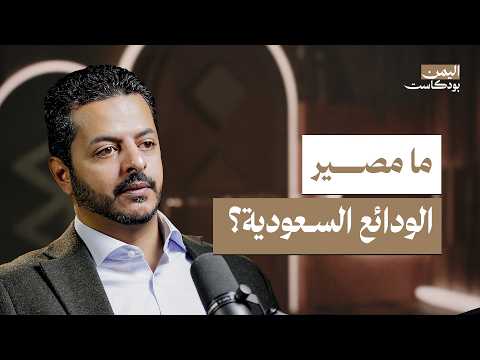
This was the core question of the Yemen podcast episode hosted by @osamaalqutaibi with Rafat Al-Akhali @ymnraf, who is affiliated with @deeprootyemen, @HikmaFellowship, and @ResonateYemen. Rafat is the former Youth and Sports Minister for the @KhaledBahah government. The conversation lasted almost three hours, but it gave a clear, grounded answer to that question.
Rafat’s perspective was shaped early by his education and career choices. He studied in Canada first, specializing in information technology and later earning an MBA. His original plan was not politics. He intended to return to Yemen and work professionally, but the events of 2011 forced a rethink. Rafat became convinced that change from outside the state through civil society alone was not enough, and that real impact required working from inside government institutions.
That thinking led him to @UniofOxford's @BlavatnikSchool, where he studied public policy at the School of Government. He described Oxford not as a place that teaches one ideal model, but a place that exposes you to many systems and forces you to understand context. “There is no single model,” he said. What mattered was learning how policies are designed, negotiated, implemented, and evaluated, and how political economy shapes every decision. Just as important was the network. He spoke about being exposed to senior decision makers, former prime ministers, ministers, and practitioners from fragile states, and how that changed how he understood power, institutions, and reform.
That background directly influenced how he worked once he returned to Yemen. He walked through his experience before the war inside the Executive Bureau @ExecutiveBureau that was created after the 2012 donor conference with the backing of @worldbankgroup. After recruitment was completed and the team was finalized toward the end of 2013, the bureau was divided into teams. He first worked on policy, then became head of the reforms support team. He made a key point. The bureau was never meant to implement reforms itself. Its role was to support ministries that were responsible for implementation.
Rafat also spoke about his experience with the @wto and why it failed to deliver benefits for Yemen. He explained that joining the WTO could have helped a poor country like Yemen if it had been timed right and managed carefully. Access to global markets, technical support, and integration into the world economy were all possible gains.
What actually happened was the opposite. Yemen entered the WTO just as the war began. The country opened its markets but lost the ability to protect or support its own producers. Domestic industries were already weak, then they were hit by conflict, supply disruptions, and a flood of cheap imports. There was no capacity to export, no quality control, and no state able to manage the transition.
In his words, it became a one sided opening. Yemen took on the obligations, but could not use the benefits. Local industries were hurt more than they were helped, not because WTO membership is always bad, but because the timing was wrong and the war destroyed any chance to adjust or compete.
He gave a concrete example with the public private partnership law. When the bureau started, there was a draft law that faced strong resistance. The private sector rejected it. The Chamber of Commerce publicly refused it. The @IFC_org said it did not reflect international best practice. At the same time, government entities insisted the draft was sufficient. The bureau brought all sides together, involved international experts, and held long working sessions. The law was rewritten entirely until a consensus version was reached. Only one or two clauses remained disputed by the Ministry of Finance. The law was submitted to parliament in August 2014, just weeks before the September collapse.
He explained that transparency was one of the bureau’s strongest tools. Every quarter, it issued a professional report that tracked donor pledges from commitment to allocation to disbursement. For the first time, data was clear and shared. The same reports tracked government reforms using a simple traffic light system to show progress or lack of it. These reports were discussed openly in quarterly meetings with donors and government officials. This created a shared reference point. Disputes shifted from opinions to facts.
On donors, Rafat rejected the idea that all funding passes through one channel. Saudi development and economic funding goes through the @SaudiDRPY but other donors do not. The real problem, he said, is coordination. Gulf donors and Western donors operate through very different systems and priorities, and aligning them has always been difficult.
On the humanitarian side, he described a steady contraction. Organizations like the @WFP can no longer operate at the same scale. Funding has dropped. Staff and operations have been cut. Coverage has shrunk. In government areas, assistance was reduced sharply. In Houthi areas, it stopped or nearly stopped. He warned that this signals serious humanitarian risks over the long term.
He also explained why the economic track of the peace process keeps stalling. After the April 2022 truce, talks quickly narrowed to salaries and revenues. After the truce ended in October 2022, demands escalated beyond what the economy could realistically support. Attacks on oil exports turned the economic file into a pressure tool. Later roadmap discussions moved forward quietly until October 2023, when Gaza and the Red Sea escalation froze everything.
He spoke as well about sanctions. They are not precise instruments. They freeze systems first. Banks and companies avoid Yemen because compliance risk is high and the market is small. This hurts the entire economy, not just one party.
The answer to the question was consistent throughout the interview. Yemeni governments failed to manage the economy not because of a lack of ideas or capable people, but because institutions were weak, priorities were unclear, coordination was poor, and decisions rarely moved from paper to execution. Without fixing that, every political agreement will keep collapsing back into the same economic crisis. youtube.com/watch?v=ouEWyI…
YouTube

English