
Michael Smith, PT
1.4K posts

Michael Smith, PT
@MSmith_DPT
Physical therapist (Ortho, SCI). Interested in pain and promoting better treatment of it throughout the healthcare system
Boston, MA Katılım Nisan 2015
396 Takip Edilen347 Takipçiler

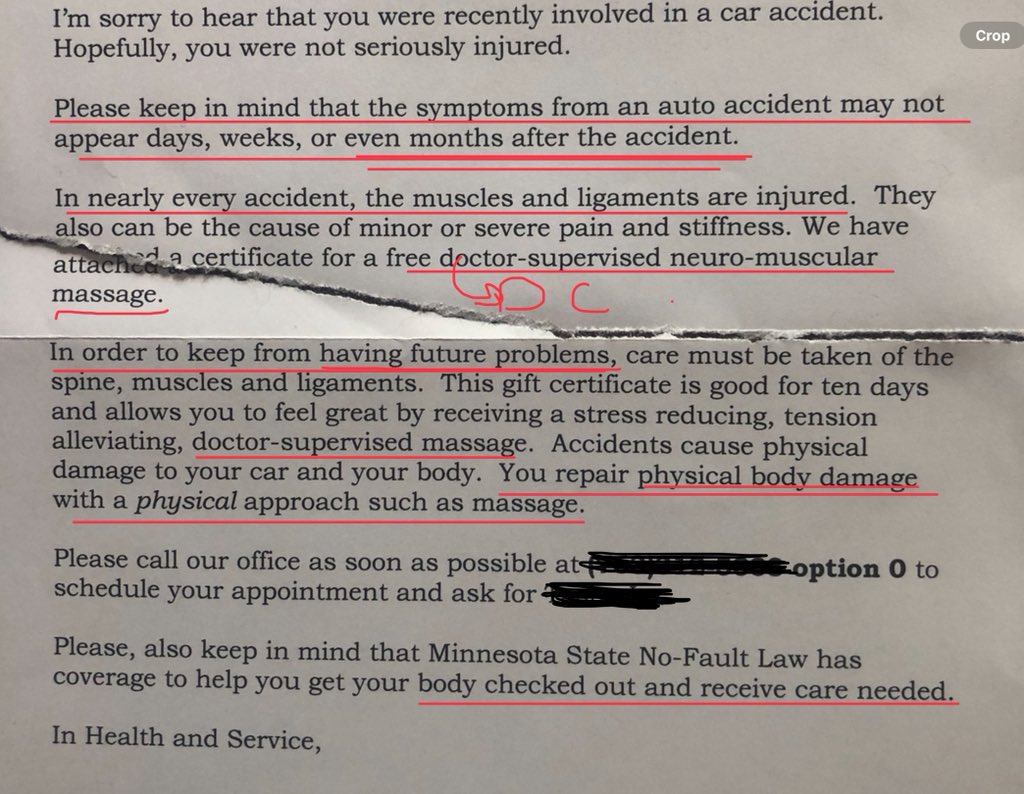
My son was hit by some running a red light 2 weeks ago, his car was totalled, thankfully he was not injured.
Today he received three letters, two from lawyers and one from a chiropractic office, all unsolicited. The accident has become public record
This is scar mongering BS
English
@sweatscience @MSSEonline The getting outside, meeting others and sense of accomplishment IS brain chemistry. BioPsychoSocial can not be separated! Its all one!
English

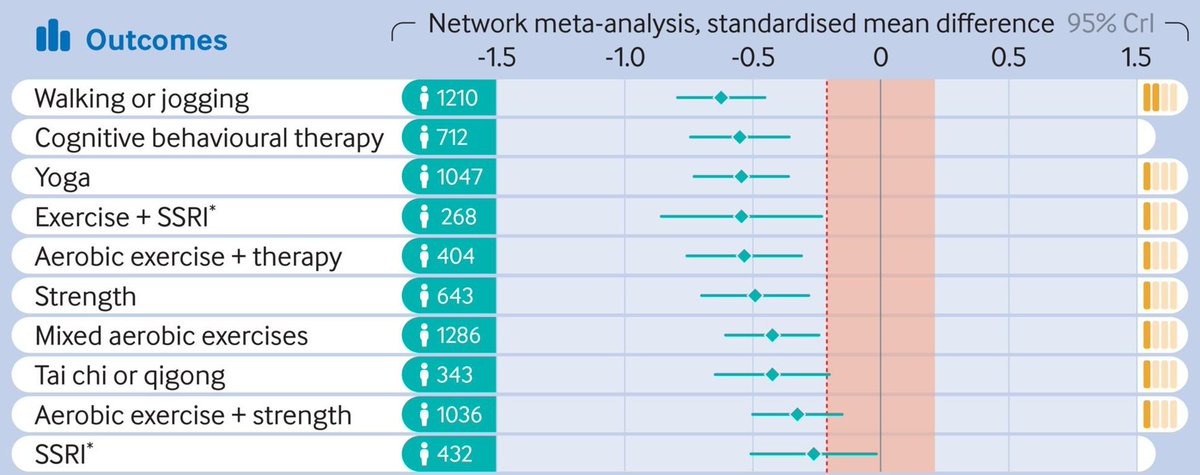
Is exercise really "as good as or better than drugs or therapy" for depression?
A new @MSSEonline paper explores context. How much is brain chemistry, and how much is getting outside, meeting others, feeling a sense of accomplishment, etc.?
Details: outsideonline.com/health/wellnes…
English
@MBourne5 @StephLaz_ But they can preferentially provoke sensitivity in the proximal hamstring
English
Contrary to popular belief, hip- and knee-based hamstring exercises do not preferentially develop the proximal or distal regions of the hamstrings! Well done @StephLaz_
Steph Lazarczuk 🇺🇦@StephLaz_
🚨New open access publication alert!🚨 Hamstring Muscle-Tendon Geometric Adaptations to Resistance Training Using the Hip Extension and Nordic Hamstring Exercises Article available here: onlinelibrary.wiley.com/doi/10.1111/sm… A short summary 🧵 below 👇🏻
English
@UltraRunner26 So frustrating. Find a PT who works with runners
English
English

“Physical therapy was successful in >70% of cases with symptomatic, traumatic full-thickness rotator cuff tears at 10 years.”
@aaos
@APTA_official
@aaompt
@aaspt_apta
@UMmedschool
@UMSOMPTRS
Eric Novack@eric_novack
As an ortho surgeon X23 years- this study is the most significant one in all of orthopedics in probably 20+ years (maybe the last one being that scoping for arthritis doesn’t work) It should be the number 1 topic among sports orthos. I have only seen silence. Why? (Link below) @orthobullets @orthotraumamd @rkh_md @drnickUSA @H2O_SportsMD @ACSMNews
English
@cremieuxrecueil @Intermarket_Dyn @tobyhardtospell Would you consider the current health insurance state a free market? Like people get to choose their health insurance and switch when they don’t like theirs?
English
@GregLehman @BillingMartin I recently sat through a PT group discussion on everyone’s techniques to fix alignment issues. It’s not worth arguing. Most people don’t have motivation to change things they’ve been doing for a while. You can’t compare success rates of tx so I have no ground to stand on anyways
English
@BillingMartin I think it’s because these approaches are part of something that is still helpful and then they confuse why the person got better.
English
We are still at a place in healthcare where "professionals" are telling people their pelvis is out of line and requires repeated work to realign
its 2024
it really isnt very good.
English
English
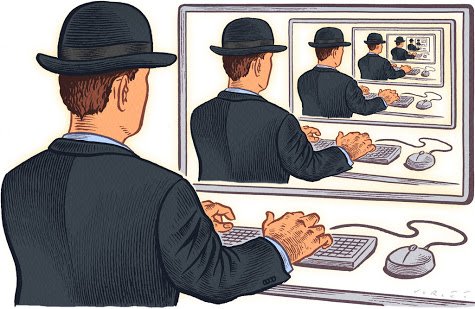
@MSmith_DPT @GregLehman @brettfischerDPT And we could also be distracting them while nature takes it’s course
English
Before saying we NEED dynamometers in practice we need to answer:
1. Does strength mediate recovery?
aka: if you don't get stronger it is much less likely your pain and function will improve 1/
English
@GregLehman @brettfischerDPT Agreed. Lots factoring in to the cause of the disability to do the movement/activity. I guess I just call it weakness to simplify but will get into deeper meanings when needed
English
@MSmith_DPT @brettfischerDPT Nah. Strength would be one manifestation of being built up. It’s everything. Tolerance, pain, fear, effort, confidence and then all the tissue stuff and neuroimmune stuff
English
@GregLehman @brettfischerDPT When you say building them up, do you mean building them up from a weakness? Maybe I just call decreased ability from pain, a weakness since the capacity to do the movement is lessened
English
@MSmith_DPT @brettfischerDPT I get it. I just don't need someone to be weak to justify an exercise. If someone has a problem with a movement then we look at desensitizing that and then building them up. Local, regional and global exercise can all play a role here
English
@GregLehman @brettfischerDPT I think finding and then improving a painful weakness is the way to go. I just don’t need an objective number on the weakness
English
@MSmith_DPT @brettfischerDPT Oh! Thats funny. I thought you were saying objective force testing was the way to go.
I'm with you. I think that is one way to do it and force testing provides nothing superior.
English
@GregLehman @brettfischerDPT I don’t! The subjective feeling of weakness/fatigue compared to the non-symptomatic side is all I use for strength testing
English
@MSmith_DPT @brettfischerDPT I get it. I don't doubt the approach helps a lot of people. Its like exercises designed to change movement. They seem to help but not necessarily because kinematics changed. Samething with strength for me.
What dyno do you use?
English
@GregLehman @brettfischerDPT It’s an approach that fits the narrative I use and I tend to think that’s more relevant. I think the embedded education that comes with the exercise prescription is more of the benefit. But that’s just my assumption
English
@MSmith_DPT @brettfischerDPT Maybe its a relevant impairment. That is possible but its not borne out by the research currently.
I think you don't need to be weak to prescribe exercise so if you are already prescribing resistance training the strength testing (with a dyno) doesn't change anything
English
@GregLehman @brettfischerDPT It's a non pathoanatomical impairment that can give them direction and self-efficacy, and when it’s the painful motion it’s also education on the safety of working into it. I’ve just found a correlation between addressing the weakness and improving the pain, why that happens… 🤷🏻♂️
English
@MSmith_DPT @brettfischerDPT Sure. And you don’t need a dyno for that. But the bigger question is whether that isolated test is something that needs specifically addressing. Is it relevant to the pain or functional problem.
English
@GregLehman @brettfischerDPT You don’t have to tell someone they’re weak, they can show themselves how quickly they get to fatigue on the symptomatic side compared to the other
English
@brettfischerDPT I think that’s the best case for it. But it’s also possible it’s wrong. You can tell someone “hey, you are weak in plantar flexion therefore you have to strengthen it to fix your tendinopathy”. That could motivate someone but isn’t necessarily true
English
@BStulberg Unless your goals are health driven and you’re exercising a few days a week. Then the murky middle is just fine
English

Keep your easy days EASY and your hard days HARD.
This is how you avoid getting stuck in the murky middle—going through the motions but not really getting anywhere.
English
@DrSeanMackey @DrKenWeber Causation or result of chronic movement patterns/muscle activation in people with pain?
English
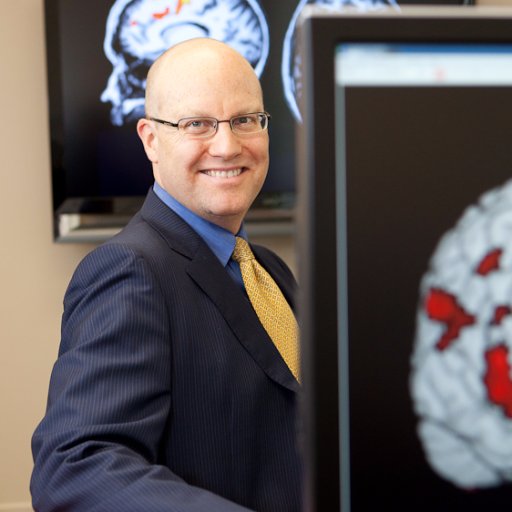
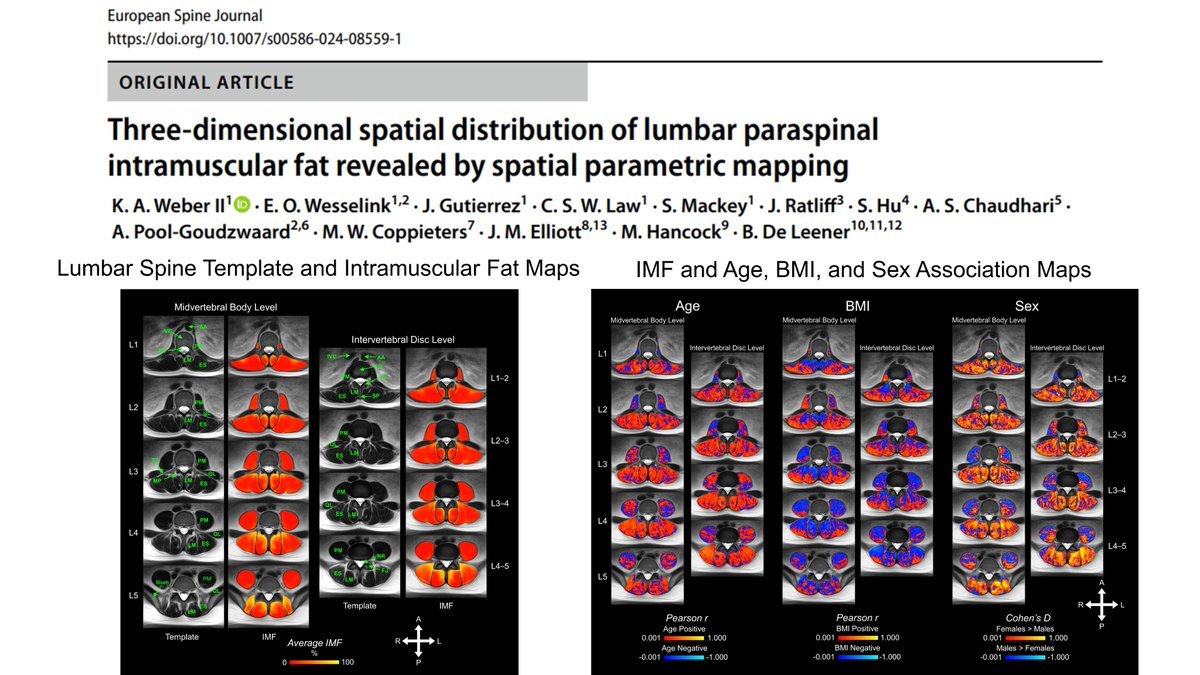
Innovative research maps lumbar muscle health in 3D led by @DrKenWeber bit.ly/3YYQeSj
🧠 Why it matters: Intramuscular fat (IMF) in lumbar paraspinal muscles plays a critical role in low back pain (LBP). This study unveils the first 3D spatial distribution of IMF, offering insights into LBP recovery and spine health.
📊 By the numbers: IMF distribution varies by muscle: Lumbar multifidus and erector spinae show higher IMF at specific regions, while psoas major is evenly distributed. Associations with age, BMI, and sex reveal spatially distinct patterns.
🔬 Key finding: Traditional muscle-wide assessments miss nuanced IMF variations. 3D mapping may enhance understanding of spine pathology and tailored treatments.
📍 What’s next: Future studies should explore diverse populations and treatment impacts to refine spatial parametric mapping in spine care.
#LowBackPain #SpineHealth #MedicalResearch
English
@hjluks And to think I’m still paying my higher premium while it’s cheaper without it!
English

If you're picking up medications or scheduling an imaging study, ask what the cash price is. There's a very good chance that it's lower than your insurance's copay/deductible.
English
@arothschildpt hopefully their explanations for the treatment wasnt too pathoanatomical. A more active approach wouldve been better if it wasnt already included, but otherwise its tough to outperform natural history with those.
English

Had a new patient yesterday who had four months of PT for obvious lumbar radicular pain consisting of “core strengthening” and hamstring stretching. He didn’t get much better. It’s 2024–what the f@&*!
English
@JOSPT ok, im really starting to wonder if we can have any effect at changing outcomes
English

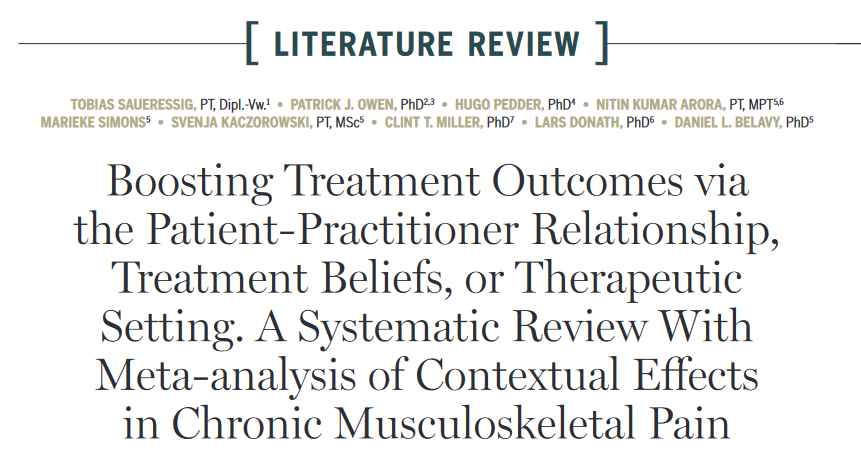
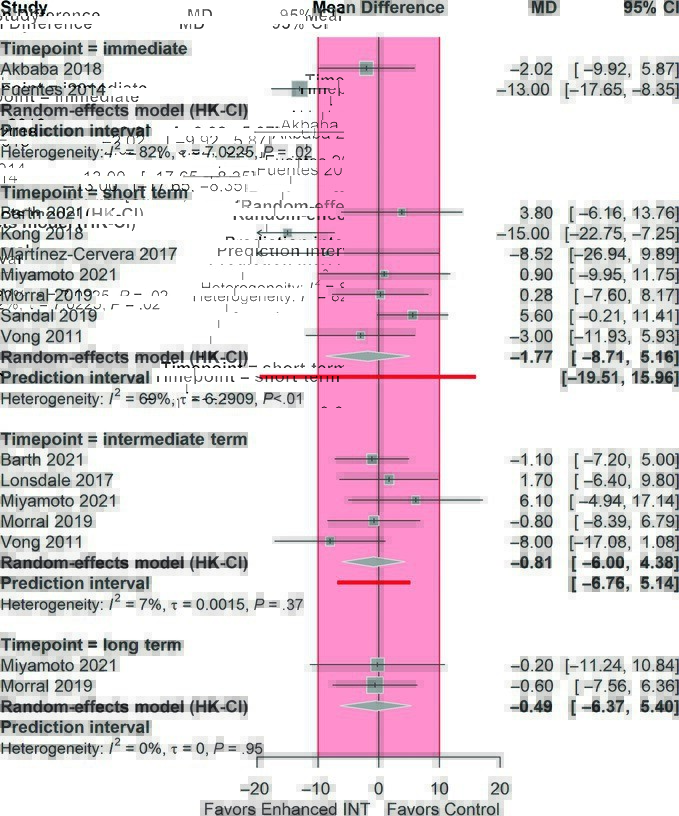
Does the context that we deliver healthcare in change the effects of treatment for chronic MSK pain?
Lots of uncertainty given the lack of high-quality trials but our July #Review tried to pick things apart ➡️ ow.ly/bOgZ50SQLe0
#yourJOSPT #ContextualEffects #Pain
English