Jared Carmel

943 posts

Jared Carmel banner
Jared Carmel

Jared Carmel

@MVPVCJared

🇺🇸🤩🇺🇸 Founder @mvpvc 🦄Tomorrow’s IPOs Today 🦾Secondary-as-a-Service 🦸🏻ED @ The MVP Foundation 👱🏼‍♀️👦🏻👧🏼Co-creator Sophia, Dean, & June

New York, NY Katılım Temmuz 2011
396 Takip Edilen695 Takipçiler
Sabitlenmiş Tweet
Jared Carmel
Jared Carmel@MVPVCJared·
I started a charity this year called ‘The MVP Foundation’ Worked w/@sunydownstate to give the childrens ward exactly what each kid asked for, no questions asked. It didn’t come from a nameless benefactor, we had their parents put it under the tree from Santa himself. One love.
Jared Carmel tweet media
English
2
4
15
0
Radiant
Radiant@RadiantNuclear·
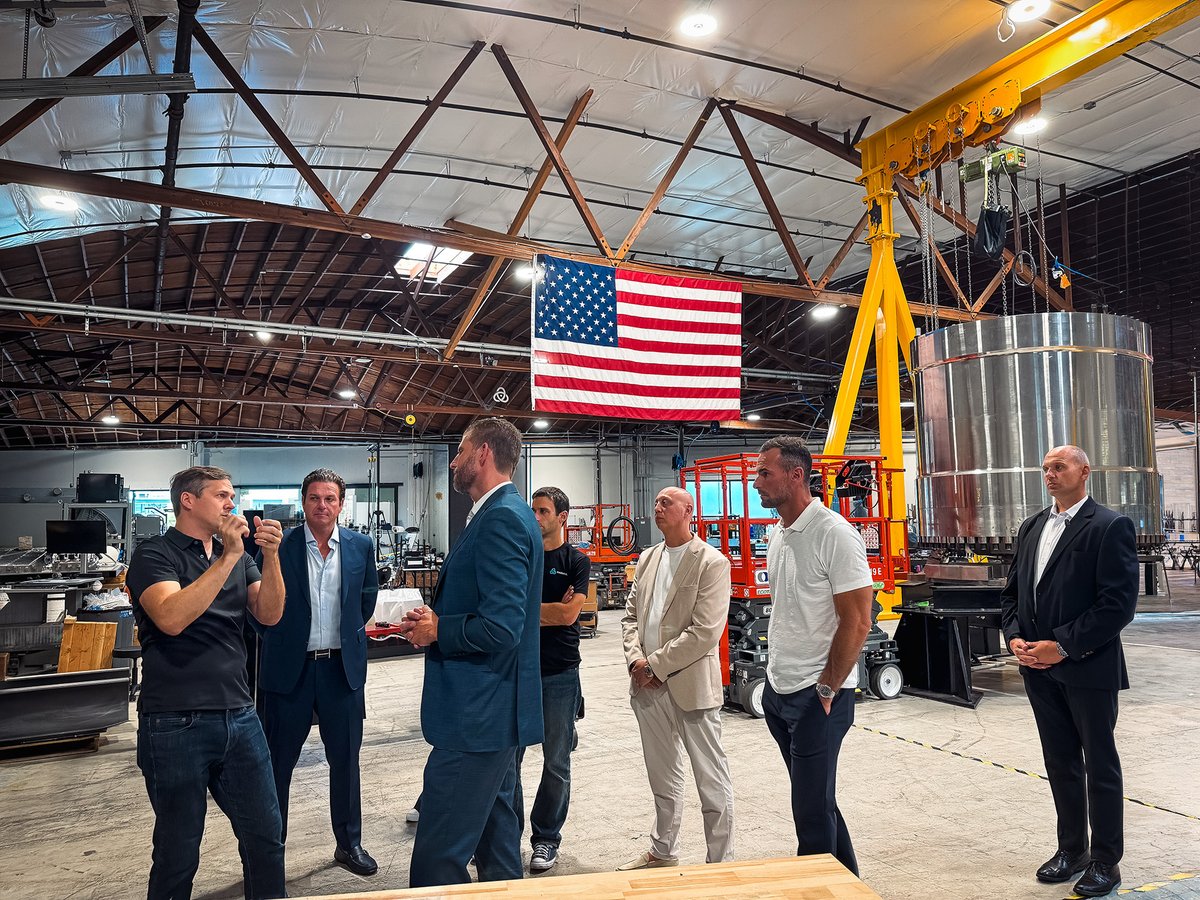
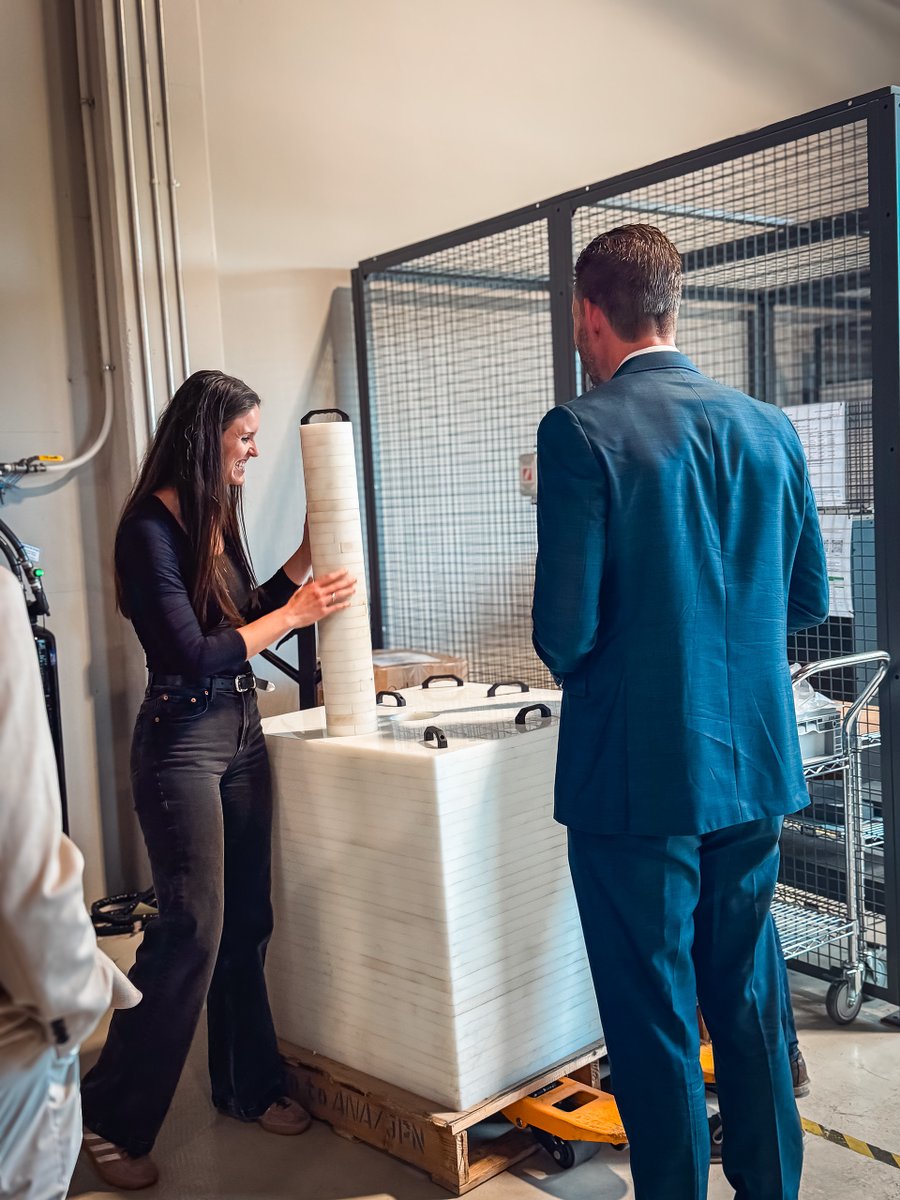
We're building the future of energy — and securing America's energy independence. Throwback: hosting @erictrump, @wool_kyle and @don_J_nitti to show our progress on Kaleidos and show that future firsthand!
Radiant tweet mediaRadiant tweet mediaRadiant tweet media
English
3
8
93
4.6K
Jared Carmel
Jared Carmel@MVPVCJared·
@nvca @MVPvc Honored to be featured by @NVCA. The thesis in one line: the best companies now take 20 years to build, and the capital stack has to evolve to meet them. Secondaries are becoming a core pillar of that. Grateful for the conversation.
English
0
0
0
29
Jared Carmel retweetledi
NVCA
NVCA@nvca·
In our latest Meet a VC feature, @MVPVCJared of @MVPvc, shares how his firm is designed to support a new generation of American founders. He dives into how a robust secondaries market is becoming central to that work. Learn more: nvca.org/jared-carmel-m…
NVCA tweet media
English
1
2
5
277
Rebecca Bellan
Rebecca Bellan@RebeccaBellan·
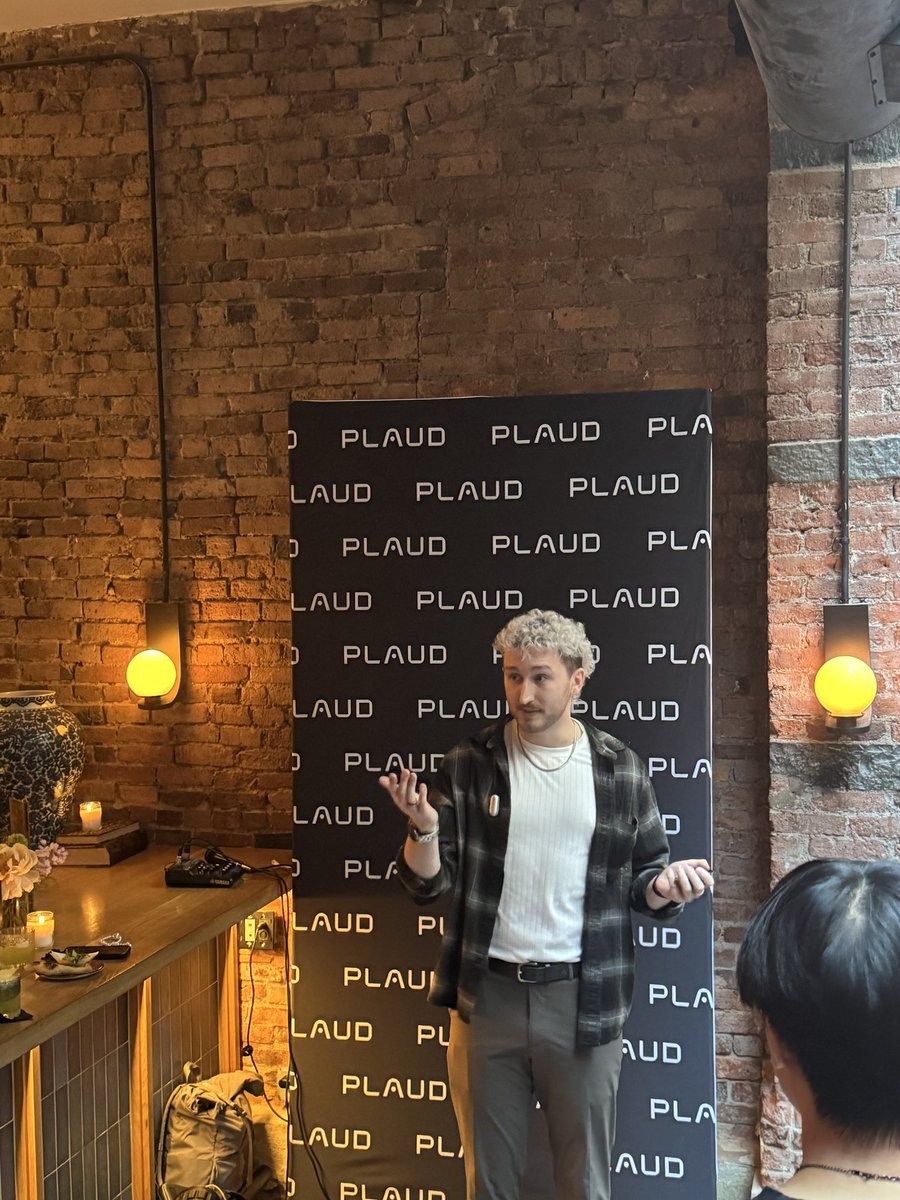
Hanging with @PLAUDAI at NYC Tech Week. If anyone uses Plaud’s device and wants to chat, my DMs are open.
Rebecca Bellan tweet media
English
3
0
4
142
Jared Carmel retweetledi
David Weisburd 🚀
David Weisburd 🚀@DWeisburd·
The CFOs of OpenAI and Anthropic are going on X saying they will not honor unauthorized secondary transactions. On top of that, some of those shares have been double, triple, quadruple sold. A reckoning is coming. "I actually think some people will go to jail." That's not a hot take – that's rehypothecation. And the retail investors left holding those bags are going to find out the hard way. The CFO of OpenAI or Anthropic is not going to spend political capital managing the fallout from a grandmother who lost her life savings. Jared Carmel of Manhattan Venture Partners saw the same thing: "$25,000 checks are going to sue you a lot quicker than your million dollar check when it doesn't hurt as much for them." 92% of secondary transactions today are already institutional. The 8% that's retail is where all the published data comes from – and where all the fraud is concentrated. When the reckoning hits, institutional capital will be there to buy. It always is.
English
2
8
66
22.9K
Jared Carmel retweetledi
Ed Ludlow
Ed Ludlow@EdLudlow·
Anthropic closes the series H. The list of investors is long and its a who’s who across VC, private growth equity, mutual funds and sovereigns. Revenue runrate accelerated to $47B The only thing that I didnt say below is for all the IPO talk, the private markets are STILL very happy to service right now. Repeat after me folks: companies are staying private for longer and their capital needs are being met.
Bloomberg TV@BloombergTV

Anthropic raised $65 billion in a funding round that valued the artificial intelligence company at $965 billion including the new investment, eclipsing rival OpenAI’s value for the first time. @EdLudlow reports on "Bloomberg The Close" bloom.bg/4wRXsrv

English
2
3
22
9.6K
Jared Carmel retweetledi
David Weisburd 🚀
David Weisburd 🚀@DWeisburd·
In 2019 I was picking a crypto fund. I expected myself to go with the best returns. Instead I found myself choosing the partner I trusted most. I thought I was more value-maximizing than that. I wasn't. Jared Carmel built Manhattan Venture Partners to nearly $3 billion. I asked him what surprised him most. His answer: "The most surprising part of going from sort of zero to, think it's 2.8 billion is the trust." He flew to Spain to meet an LP for his first fund. The LP looked him in the eyes and said, I'll give you a million dollars, kid. That same investor introduced him to his entire network. 10 years later, sovereigns are asking to work with them. "It took us 12 years to build a reputation and it would just take us five, five minutes to ruin it." The receipts you build by doing right by people – new entrants cannot replicate them. In capital markets, trust is the only asset that actually compounds.
English
0
2
9
432
Jared Carmel
Jared Carmel@MVPVCJared·
Thank you for having me on. One of the sharpest conversations I’ve had on where private markets are actually going. The quote I keep coming back to from our recording: “IRR does not pay the bills. DPI does.” That is the LP conversation right now. 92% of secondary volume is institutional, 8% is retail… and the published data is coming from the wrong 8%. The mispricing is the opportunity. The maturity gap is the thesis. Grateful for the platform and the audience. Looking forward to the next one in person. ;)
English
0
0
3
34
Jared Carmel retweetledi
David Weisburd 🚀
David Weisburd 🚀@DWeisburd·
$3 trillion is now locked inside venture funds that are more than 10 years old. At the same time, DPI hit just 9% in both 2024 and 2025 (Source: Allocator Training Institute) — the lowest levels private markets have seen in decades. And even if SpaceX, OpenAI, and Anthropic eventually go public, it likely won’t solve the underlying problem. The traditional venture model was built around a very different world: raise a fund, deploy capital, exit within ~10 years, return cash to LPs, repeat. But the best private companies no longer need the public markets. They can raise billions privately. Stay private for 15–20+ years. Provide liquidity through secondaries instead of IPOs. And continue compounding outside the public markets entirely. That changes everything: - LP liquidity - DPI expectations - fund construction - continuation vehicles - secondaries - venture fund duration - employee liquidity - portfolio concentration - even the definition of what an “exit” actually is. The most interesting part of my conversation with Jared Carmel wasn’t just the scale of the problem. It was the realization that this may not be a temporary cycle. It may be the new structure of private markets. We went deep on: - why companies are staying private longer - the rise of secondary markets - why continuation vehicles are exploding - the hidden RSU problem inside unicorns - why venture increasingly behaves like an “access class” and why the future of liquidity may look completely different than the last 20 years. Really enjoyed this conversation with Jared Carmel of Manhattan Venture Partners. We’d like to thank @AlphaSenseInc for sponsoring this episode! #VentureCapital #Secondaries #PrivateMarkets #DPI #ContinuationVehicles #InstitutionalInvesting Continue the episode using the links in the comment below 👇 youtu.be/8L3V_6w_9xM
YouTube video
YouTube
English
4
4
10
1.3K
Nicolaus Radford
Nicolaus Radford@nicolausradford·
Our Gen 1 humanoid doing some early morning stretches at Persona HQ in Houston. Crap, I also think I got some Gen 2 in the footage as well. ;) @personaaiinc
English
10
20
123
14.6K
Jared Carmel retweetledi
Manhattan Venture Partners
Secondary is Primary™ · NYC · June 4 · #NYTechWeek Now confirmed: - Kyle Stanford (PitchBook) - Tom Callahan (Nasdaq Private Market) - Kelly Rodriques (Forge) - Jared Carmel (MVP) Operators. Platforms. Data. The secondary market, live. Join the list: partiful.com/e/Qe0yJoqr1sgM…
Manhattan Venture Partners tweet media
English
0
1
4
122
Jared Carmel retweetledi
Capital Factory ⚙️
Capital Factory ⚙️@CapitalFactory·
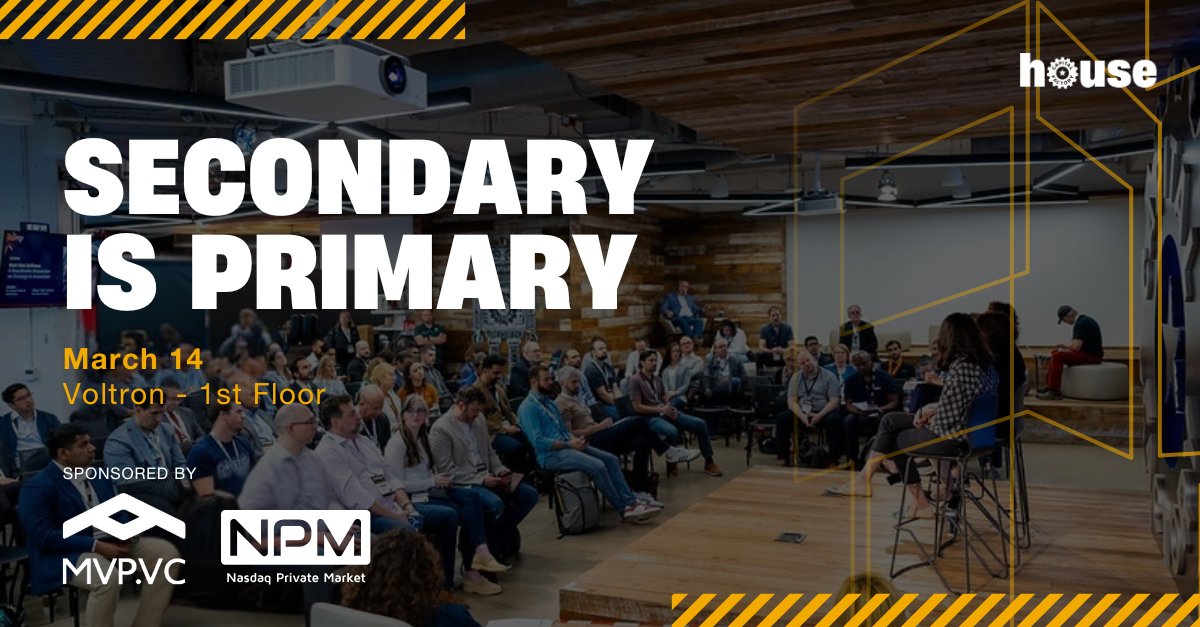
The IPO isn’t late. It’s just not the plan. On March 14 at Capital Factory House, @MVPvc and @NPM are hosting “Secondary is Primary” 💰 a straight-talk session on how liquidity actually works as companies stay private longer, and why secondary markets are quickly becoming the go-to path for founders, employees, and investors. Featuring leaders from @MVPvc, @Citi, @CBinsights and @NPM to break down what’s changing (and what to do about it). If you’re a founder thinking about equity + retention, an operator/employee trying to understand ownership outcomes, or an investor managing fund timelines, this is for you. One hour. Three perspectives. A clear look at private-market liquidity in 2026 and beyond. Don’t miss out 🎟️ hubs.ly/Q044rxTc0
Capital Factory ⚙️ tweet media
English
1
1
3
301
Jared Carmel retweetledi
Tomasz Tunguz
Tomasz Tunguz@ttunguz·
For the first time in venture history, three distinct channels share the liquidity burden roughly equally. A decade ago, secondaries barely registered. They accounted for roughly 3% of exit value in 2015. Today they claim 31% : nearly $95b in the trailing twelve months. The shift accelerated after 2021’s IPO bonanza. When public markets closed their doors in 2022, investors found alternative routes. Secondaries absorbed demand that would have flowed to traditional exits. When Goldman Sachs acquired Industry Ventures, the transaction signaled secondaries have arrived. Morgan Stanley followed with EquityZen, then Charles Schwab announced its acquisition of Forge Global. Wall Street recognized the structural change before most of venture did. This matters for founders & investors. When IPOs dominated exits, fund models assumed a small number of public offerings would generate the bulk of returns. Now liquidity arrives through multiple doors. A founder might sell secondary shares to patient capital while the company remains private. A GP might move positions through continuation vehicles. An LP might trade fund stakes on an increasingly liquid secondary market. The 830 unicorns holding $3.9t in aggregate post-money valuation cannot all exit through IPOs. The math doesn’t work. At 2025’s pace of 48 VC-backed IPOs, clearing the unicorn backlog would take seventeen years. Secondaries provide a release valve that traditional exits cannot. Companies like OpenAI have embraced this reality, running employee tender offers while voiding unauthorized secondary transfers. The largest private companies now manage their own liquidity programs rather than waiting for public markets. Today, secondary liquidity concentrates in the top 20 names. SpaceX, Stripe, OpenAI. For the founder of company #50, the secondary market remains largely theoretical. For secondaries to succeed as a broad asset class, buyers must underwrite positions in companies without household recognition. As the market grows, this coverage gap becomes opportunity. For LPs starved of distributions since 2022, the expansion of secondary channels offers hope. The $169b in cumulative negative net cash flows needs somewhere to go. More exit paths mean more opportunities to return capital. When a Series B employee asks about liquidity today, the answer isn’t “wait for the IPO.” It’s “we’re planning a tender offer next year.” A decade ago, secondaries were a footnote. Now they’re infrastructure. Liquidity flows where it can, not where tradition suggests it should. tomtunguz.com/a-third-a-thir…
Tomasz Tunguz tweet media
English
22
44
204
55.1K
Balaji
Balaji@balajis·
China is physical AI. Robots with nunchucks.
English
215
279
2.3K
559.7K
Jared Carmel
Jared Carmel@MVPVCJared·
This is the right idea at the right time. Traditional IPOs are a rigged game. The bulge brackets allocate shares to their best institutional clients. Fidelity and BlackRock get in at the offering price. Retail investors get to buy after the potential first day pop. The SPARC structure flips that completely. Tesla shareholders get the same price as Pershing Square. No roadshow theater. No underwriter fees bleeding out 7% of proceeds. No founder warrants diluting everyone. We’ve spent a decade building secondary market infrastructure because the traditional path to liquidity is broken. This proposal is just another proof point. The future of capital formation looks nothing like the past. Elon should take the call.
English
0
0
0
56
Bill Ackman
Bill Ackman@BillAckman·
.@elonmusk, what if we took @SpaceX public by merging it with Pershing Square SPARC Holdings, Ltd. (SPARC) a new form of acquisition company that was approved by the @SECGov. We could distribute SPARC special purpose acquisition rights (SPARs) to @Tesla shareholders so that all Tesla shareholders would have the right to invest in the SpaceX IPO, or they could choose to sell their SPARs to someone else. This would reward loyal Tesla shareholders with the opportunity to invest in SpaceX (or with cash for their SPARs), while totally democratizing the IPO process. In addition to receiving common stock in SpaceX, exercising SPAR holders would also receive Pershing Square SPARC Holdings II SPARs, which we could use to take @xai public at the time of your choosing. Pershing Square would due diligence on behalf of all shareholders and would commit $4 billion of capital to the IPO at a fixed price per share. SPARC has no underwriting fees, founder stock or shareholder warrants, and we would waive our right to receive SPARC sponsor warrants. The result would be an IPO without any underwriting fees or dilutive securities issued. @SpaceX would go public with a 100% common stock capital structure and it would not incur any transaction costs other than modest legal fees which SPARC would pay from its cash on hand. We could raise whatever amount of capital you would like by adjusting the exercise price of the SPARs. Assuming we issue 0.5 SPARs for each share of Tesla, there would be 1.723 billion SPARs outstanding including the 61.1 million SPARs that are already outstanding. Since one SPAR would be exercisable for two shares of SpaceX, the SPARs would be exercisable for 3.446 billion total SpaceX shares. So, if we set the SPAR exercise price at $11.03, SpaceX would raise $42.0 billion, $38 billion from the exercise of SPARs and $4 billion from Pershing Square, or if we set the SPAR exercise price at $42.0, SpaceX would raise $148.7 billion, $144.7 billion from the SPAR exercise and $4 billion from us. SPARC is indifferent to how much of the shares are primary versus secondary shares giving the company maximum flexibility. We could do due diligence and enter into a definitive agreement committing to the transaction within 45 days, at which point it would be certain that SpaceX would go public at a fixed valuation subject only to SEC approval of the merger proxy/registration statement. Our commitment to the transaction would not be subject to market conditions. We could start work right away and announce the transaction by mid- February. It only seems appropriate that the most innovative and efficient rocket company in the world should go public in the most innovative, efficient, and fairest-to-Tesla-shareholders manner possible. To Mars and beyond! What do you say?
English
2.1K
1.3K
13.4K
4.2M
Yishan
Yishan@yishan·
My AI investment thesis is that every AI application startup is likely to be crushed by rapid expansion of the foundational model providers. App functionality will be added to the foundational models' offerings, because the big players aren't slow incumbents (it is wrong to apply the analogy of "fast startup, slow incumbent" here), they are just big. Far more so than with any other prior new technology, there is a massive and fast-moving wave that obsoletes every new app almost as fast as it can be invented. There is almost no time to build a company and scale it. There are two ways AI application startup founders can make money: - Make a flash-in-the-pan app that generates a ton of cash and bank the cash (my estimate is that you have about 12-18 months cashflow generation) - Make a good enough app that you get acquired by one of the big players for sufficient equity The situation is highly unstable - we don't know if it's going to crash or go to the moon but both scenarios make it very unlikely that any AI application startup will independently become a generational supercompany (baseline odds are low to begin with). The best odds are finding an application niche in a highly specialized field with extremely unique and specific data barriers, ideally ones relating to real atoms (hardware or world-related) data and not software/finance.
English
1K
1.5K
13.3K
20.7M