Bill Gates on whether we’ll still need humans with the rise of AI:
“Not for most things. We'll decide."
Herein lies the problem with capitalism: It has resulted in a handful of billionaires controlling the entire economy and making life or death decisions that impact all of us.
Every decision billionaires make is based on what brings them the most money. They don’t make decisions based on what is best for the people or planet. They don’t care about the common good or the community. They only care about profit.
That is why their ultimate goal is to use AI to replace as many of us as they can get away with, and anyone who thinks they’re going to provide UBI is in denial. They don’t care about us now and will care about us even less when they don’t need our labor.
Humanity’s only hope is to take back the economy [the means of production and technology] from the billionaires and put it directly in the hands of the people. That is the only way to ensure decisions around AI are made to benefit all of humanity instead of a handful of rich billionaires.
🇷🇺 Putin: "By now, everyone should understand what sovereignty really means — and the price paid by those who gave it up for an easier life. The world doesn't work that way. Without sovereignty, you can't defend your core interests."
President Xi Jinping has, on many occasions, engaged in talks with youths, offering them his unwavering support and encouragement. On China's Youth Day, let's revisit some of those moments. #XiJinping
🚨 BREAKING NEWS: Putin: "I want the ordinary citizens of Western countries to hear me."
"You are being persistently told that all your current difficulties are the result of hostile actions by vicious Russia, and that you must pay for the fight against a mythical Russian threat out of your own pockets. All of this is a lie."
"The truth is that the problems you are facing now are the result of years of actions by the ruling elites of your own countries... their mistakes, short-sightedness, and ambition. They do not think about how to improve your lives; they are obsessed with their own selfish interests and excessive profits." - Vladimir Putin
Let me know what you think,
and SHARE THIS so that others may too.
THIS NEEDS TO GO VIRAL,
THE WORLD NEEDS TO HEAR THIS!
I’m coming to the conclusion that the biggest challenge for Enterprise AI, and AI in general , as of now, is that it’s still impossible to make sure that everyone gets the same answer to the same question, every time.
Which is a great response to the doomers. AI doesn’t know the consequences of its output.
Judgement and the ability to challenge AI output is becoming increasingly necessary, and valuable.
Which makes domain knowledge more valuable by the second.
Am I wrong ?
AI will create more jobs than any other technology in history.
The doomers' fundamental error isn't just the lump of labor fallacy. It's deeper than that.
They assume a finite problem space.
This is the fundamental error of AI and job doomers. They look at the economy and see a fixed amount of work to be done, a pie that can only be sliced thinner as machines take bigger bites. They see humans a competitive resource for a finite amount of work and a finite amount of problems to solve that must be eliminated.
This is fundamentally, totally and completely wrong.
The pie isn't fixed. It never was. And the reason it isn't fixed is baked into the very nature of technology itself.
Technology is nothing but abstraction stacking. And abstraction stacking is infinite. Therefore the work is infinite.
The hammer didn't reduce the amount of work. It moved the work up the stack. And the new work was more complex, more varied, and more interesting than the old work.
Complexity breeds more complexity and more variety.
Once you have houses instead of mud huts, you have a cascade of new problems that didn't exist before. Plumbing. Wiring. Insulation. Roofing materials that don't rot. Drainage systems so the foundation doesn't flood. Fire codes so your neighbor's bad wiring doesn't burn down the whole block.
Each of those problems becomes a job. A plumber. An electrician. An insulator. A roofer. A civil engineer. A building inspector. None of those jobs existed when we lived in mud huts.
They exist because we solved the mud hut problem.
Think of all of human technological development as a stack of abstraction layers, each one built on top of the ones below it.
At the bottom: raw survival. Finding food. Building shelter. Making fire. These are the base-layer problems.
Each major technology wave solved a base-layer problem and in doing so created an entirely new layer of problems above it:
Agriculture solved "how do we reliably eat?" — and created problems of land ownership, irrigation, crop rotation, storage, trade, taxation, and governance.
Writing solved "how do we remember things across generations?" — and created problems of literacy, education, record-keeping, law, bureaucracy, and literature.
The printing press solved "how do we spread knowledge at scale?" — and created problems of intellectual property, censorship, journalism, publishing, public opinion, and democratic discourse.
The steam engine solved "how do we generate mechanical power without muscles?" — and created problems of factory design, worker safety, urban planning, railroad engineering, coal mining, labor relations, and environmental pollution.
Electricity solved "how do we deliver energy anywhere?" — and created problems of grid design, power generation, appliance manufacturing, electrical safety codes, utility regulation, and an entire consumer electronics industry.
The Internet solved "how do we connect all human knowledge?" — and created problems of cybersecurity, digital privacy, online commerce, content moderation, network infrastructure, cloud computing, social media dynamics, and an entire digital economy that employs tens of millions.
Notice the pattern?
Each solution didn't just solve a problem.
It created an entirely new problem space that was larger, more complex, and more varied than the one it replaced.
The stack grows. It never shrinks.
It's turtles all the way down and all the way up.
Elon Musk explains artificial intelligence won’t just change how businesses are run, only companies that are entirely AI will be able to compete
“One laptop with a spreadsheet can outperform a skyscraper of several hundred human computers, of people doing calculations. Now, if even a few cells in that spreadsheet were done manually, you would not be able to compete with a spreadsheet that was entirely a computer.
What this means is that companies that are entirely AI will demolish companies that are not right. It won't be a contest.”
The U.S. warns China: Continue purchasing Iranian oil, and you will face sanctions.
China responds: We fear no one and will continue purchasing Iranian oil.
Sanctions ain’t scaring anyone anymore.
The World order is changing…
This guy is a software engineer with 18 years of experience.
Now, working at McDonald's.
One day, his company decided 2 AI guys could do what his team of 12 used to do.
As a result, got laid off.
He sent 100+ applications, but didn't get any jobs.
One HR rep literally told him, "CS degree is useless now".
Now he's flipping burgers while grinding through rejections.
He knows 200 developers in the same boat.
And the executives who made this call?
They are fine, they always are...
damn this will be looked back on as a terrible decision.
selling gpus to china was a great way to:
> throttle their development (sell them older models)
> keep their progress in AI predictable
> force chinese models to rely on american hardware
banning nvidia from china means china is forced to catch up with their own chip makers… and they have
deepseek, kimi, qwen are all being forced to use huawei chips, the models are just below frontier US labs
once they catch up china has everything it needs to outpace the west:
> all the energy (3X the USA)
> all the research talent (50% live in china)
> supply chain scalability
and don’t get me started on robotics.
selling china american gpus was the way for the west to stall while they brought manufacturing onshore.
@Pirat_Nation Jensen wants to dominate the world with his chips but it‘s better for China and also other nations to build their own. Same for any kind of software systems. And with AI this should be a lot easier to do than before.
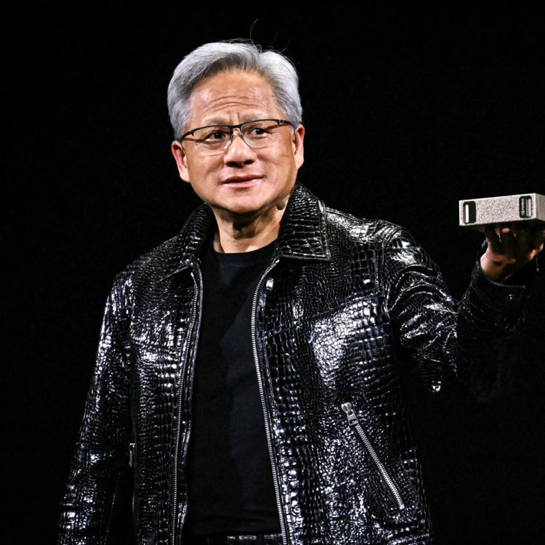
Nvidia CEO Jensen Huang has shared strong views on US rules that limit chip sales to China.
In a recent interview, he said Nvidia now has zero share of the high-end AI chip market there.
“In China, we have now dropped to zero,” he said.
Huang added that the policy has largely backfired.
“Conceding an entire market the size of China probably does not make a lot of strategic sense, so I think that has already largely backfired. Maybe it made sense at the time, but I think the policy really needs to be dynamic and needs to stay with the times.”
His words show that China is now spending a lot on its own chips, this has helped local companies grow faster and rely less on American tech.
The US rules were made to protect national security, but Huang says they create problems between short-term limits and long-term AI competition.
First, studying scans and diagnosing diseases are both tasks that can and will be fully automated. Second, you can‘t scale the number of patients in a hospital up to unlimited numbers so that the need of more radiologists keeps growing and growing and even if those would be handled by fully sutonomous AI systems ad well. And third, he compares the work of radiologists with the work of software engineers that are completely different but nevertheless will be fully automated as well.
Jensen Huang on why AI won't give workers more free time but will make them busier than ever:
He explains it by separating two ideas most people conflate: task versus purpose.
He starts by drawing a critical distinction:
"The purpose versus the task of a job has to be separated. The task of a radiologist includes studying scans, but the purpose of the job is to work with clinicians and doctors and patients to help diagnose disease."
When AI handles tasks faster, the purpose expands to fill the new capacity.
Jensen uses radiologists as a real-world example:
"The fact that these radiologists can now study scans so fast, they order more scans from more modalities. As a result, they're able to onboard patients a lot more quickly. The number of patients in a hospital can go up. The hospital is making more money taking care of more patients. Radiologists busier than ever."
He sees the exact same pattern playing out with his own engineering team:
"Our company 100% of software engineers are now supported by agents. They're busier than ever because their experimentation is coming back a lot more quickly. Every single idea expressed in the code instantaneously."
The result is greater ambition rather than less work:
"We're exploring more ideas, more software engineers are working with each other, coming up with new ideas, new problems that we never even think of solving before because we just didn't have the time to do before."
His conclusion challenges the popular narrative around AI and free time:
"I think most people have this wrong. I think that the fact that we're now so productive, we can experiment, iterate so fast, we're going to be busier than ever."
@haider1 They can't say for sure because in the future there won't be a single job that can't be taken over by AI and robots. Humans will, at most, hold supervisory roles for a limited time and then disappear completely.
sam altman:
"many current jobs will go away, but we will find a lot of new ones"
idk, but if we reach true AGI, any new jobs created will likely be done by that same AGI system
so if sam thinks humans will still have work, he needs to explain what those jobs are and why only humans can do them
because if AGI can't do it, maybe it's not true AGI
Former German Chancellor Scholz:
We were an engineers’ country. Now we’re a lawyers’ country.
Other countries… build a national railway system in 20 years.
We cannot build a commuter line in 20 years.