
Maths Ed
1.4K posts

Maths Ed
@MathsEdIdeas
Maths Teacher • School Leader • FCCT • FRSA • NPQH • Sharing ideas, curios, problems & resources to inspire the teaching and ignite the learning of mathematics.
London, UK Katılım Haziran 2017
469 Takip Edilen6.1K Takipçiler

During a hospital visit, G. H. Hardy mentioned to Ramanujan that his taxi was numbered 1729 and called it unremarkable. Ramanujan immediately replied that the number was special, noting that it is the smallest number that can be written as the sum of two cubes in two different ways.

English
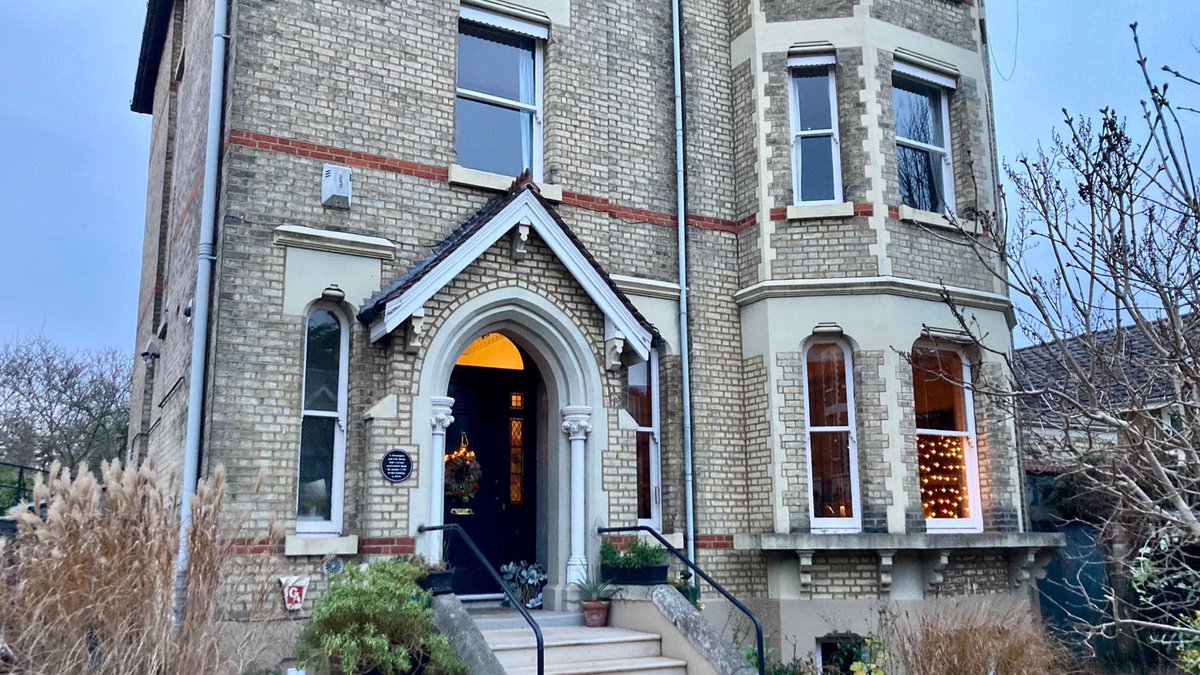
On Ramanujan’s birthday, outside 2 Colinette road Putney, the once nursing home where a convalescing #Ramanujan had THAT conversation about 1729 with Hardy • bit.ly/1k7WGBI• bit.ly/2Q3dnCB
English
#Ramanujan was born #OTD 138 years ago. He created this, his birthday magic square, where all rows, columns, diagonals, corners, corners of 3×3 squares, and 2×2 corner and centre squares sum to the sum of the digits of his birthday in the 1st row. bit.ly/3Gd2K8M

English

The 'First Equation'… a story about the evolution of the notation we use for addition (+), subtraction (–), and equality (=), which led to the first time an equation was written using the modern notation we use today, 14x + 15 = 71. mathsedideas.blogspot.com/2024/03/the-fi…
English
A daily dose of summer maths play for 42 days of the summer break ⇒ from games of Hex, Sprouts and Misère Os and Xs (with just Xs) to Lewis Caroll's Amazing Number-Guessing game, fractals and Fibonacci on the beach, and much more: bit.ly/30LFmaT
English
Maths Ed@MathsEdIdeas
Suppose not all numbers are interesting, like 20067: the first number not to appear in the OEIS because there is nothing interesting about it. But being the smallest uninteresting number is in itself interesting. ↯ Therefore all numbers are interesting. #InterestingNumberParadox
QME

Collaboration with Michael from Vsauce and Corn. @tweetsauce shares how all natural numbers are interesting.
English
By the end of today, exactly
1×2×3×4×5×6×5×4×3×2×1
seconds will have passed this year.
= 1 day
= 24 hours
= 24×60 minutes
= 24×60×60 seconds
= (2×3×4)×(5×6×2)×(5×4×3) seconds
= 1×2×3×4×5×6×5×4×3×2×1 seconds
#HappyNewYear
#HappyNewYear2025
English
Mathematics.
Shiver in ecstasy.
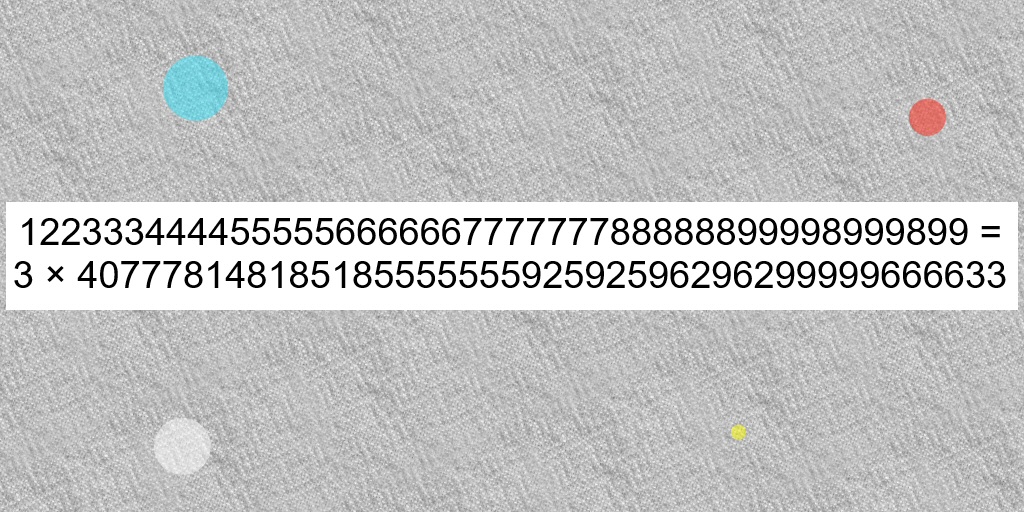
122333444455555666666777777788888899998999899 is the smallest semiprime with one 1, two 2s, three 3s, ..., nine 9s.
(A semiprime is a natural number that is the product of two prime numbers.)
English
Mathematics.
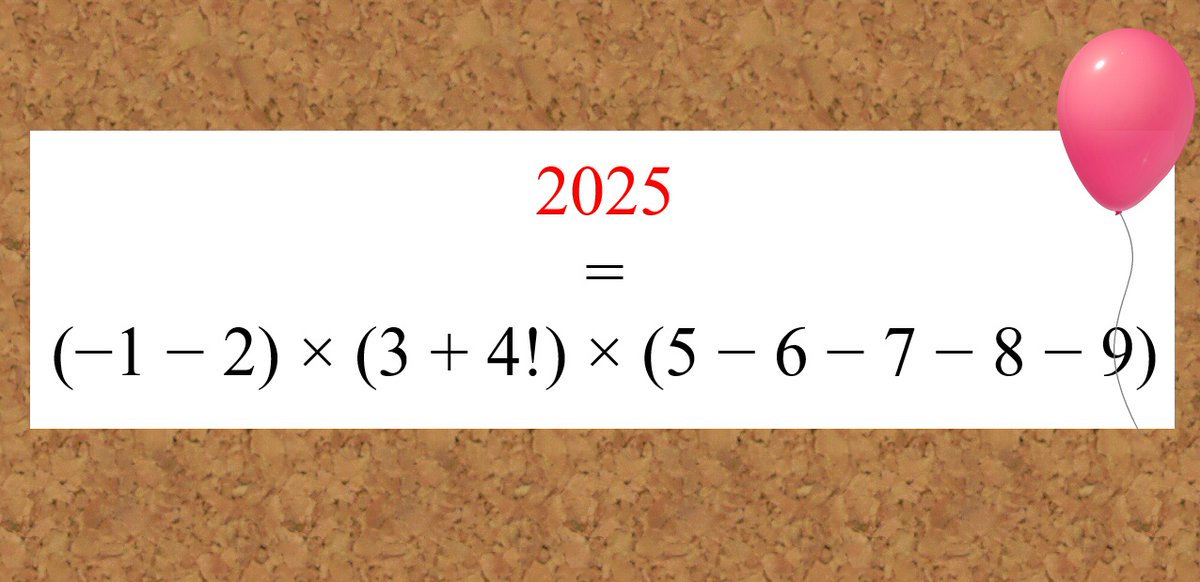
The joy of expressing "2025" with ascending digits: 1, 2, 3, 4, 5, 6, 7, 8, and 9.
By @IJTANEJA, zenodo.org/records/145331…
English
Here's a special countdown for 2025. Happy New Year 🎉
English
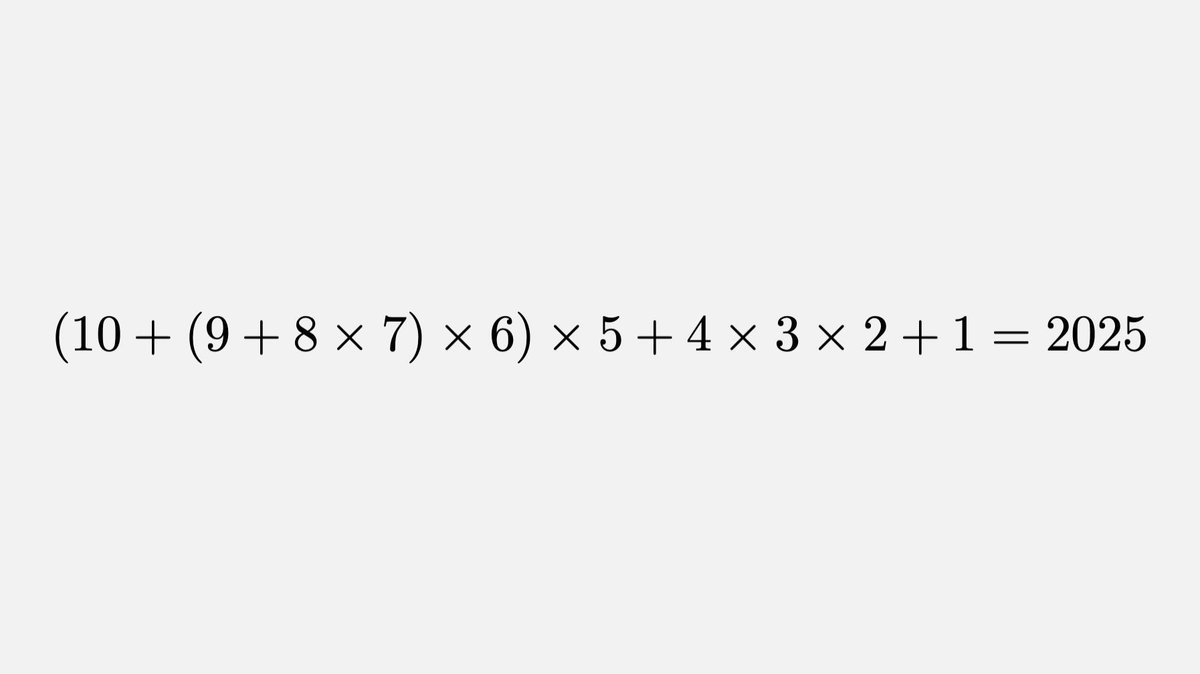
Math up your countdown to 2025…
= (10×9×8×7÷6÷5×4+3)×(2+1)
= (10+(9+8×7)×6)×5+4×3×2+1
= (10+(9×(8−(7−6×5))))×(4×3)+2-1+0!
= 10×(9+8×7−6+5!+4!)−3×2+1
= 10×9×(8+7+6)+5!+4×3+2+1
= (10+9)×(8+7+6)×5+4!+3+2+1
#HappyNewYear
#HappyNewYear2025
GIF
English
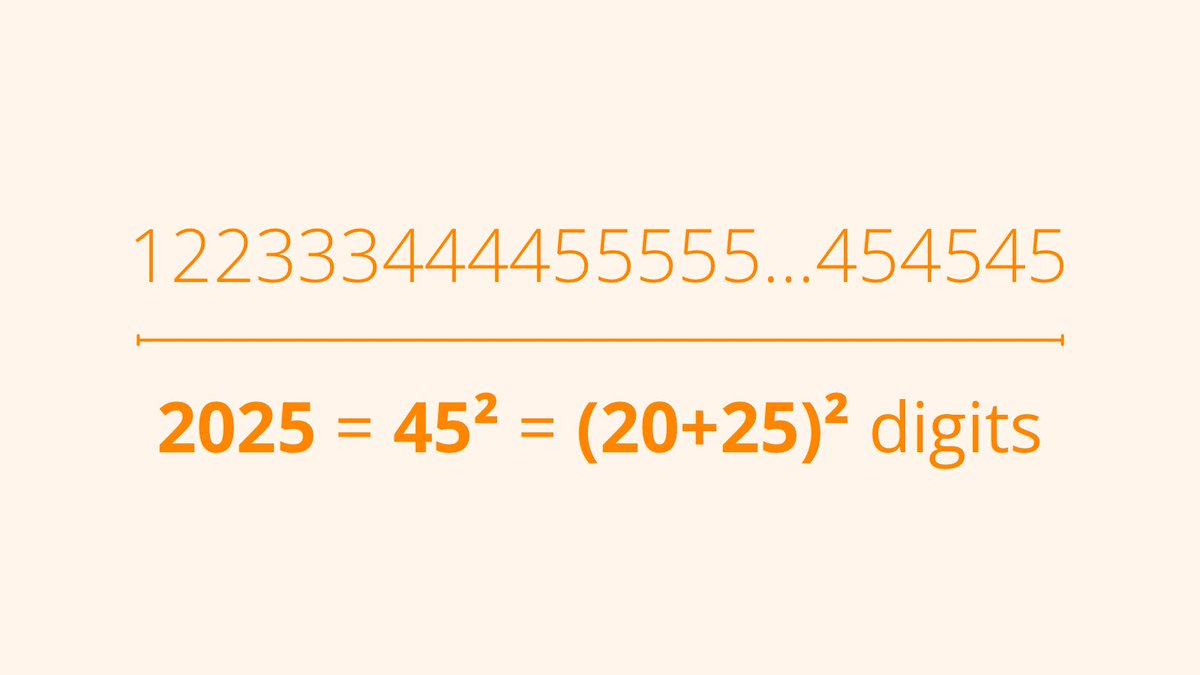
Writing 1 once, 2 twice, 3 three times, and so on, up to 45 forty-five times [or (20+25) (20+25) times], produces a string of 2025 or 45² [or (20+25)²] digits — the only number where this happens. #HappyNewYear2025 • bit.ly/40ct4JR
English
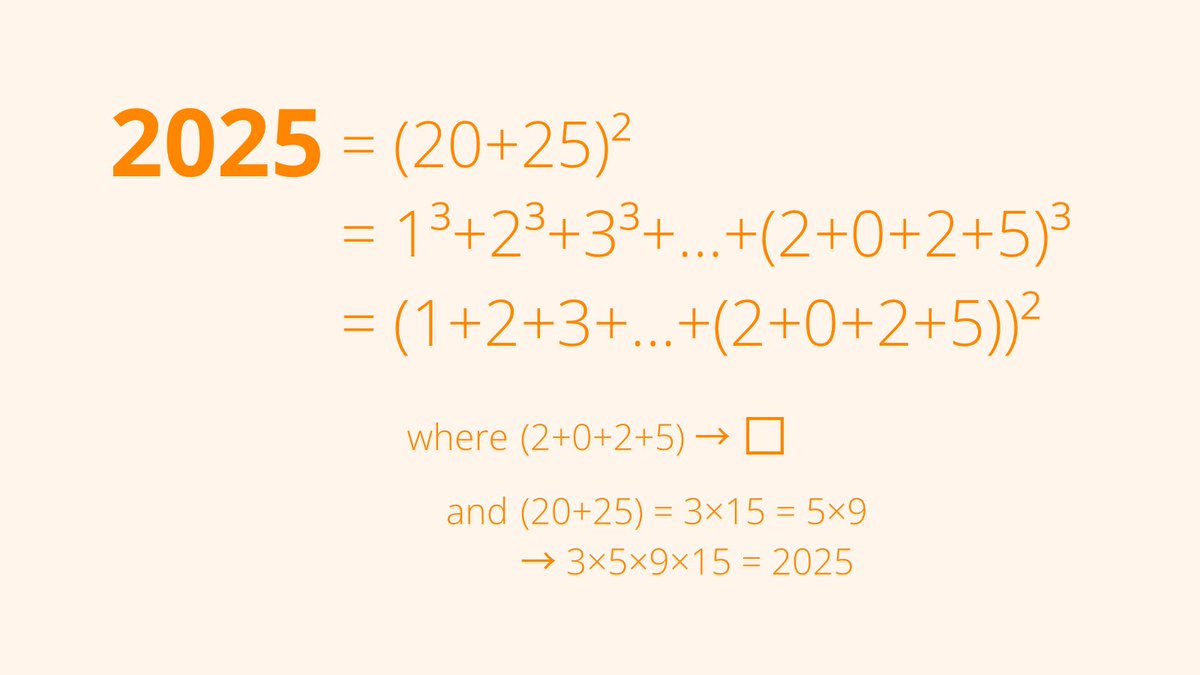
Happy 2025 — the first year to be a square (whose digits sum to a square) that is equal to the sum of the first [sum of its digits] consecutive cubes and to the square of (and the product of the proper divisors of) the sum of a split of its digits. #HappyNewYear
English
First use of Zero in Europe ✍️
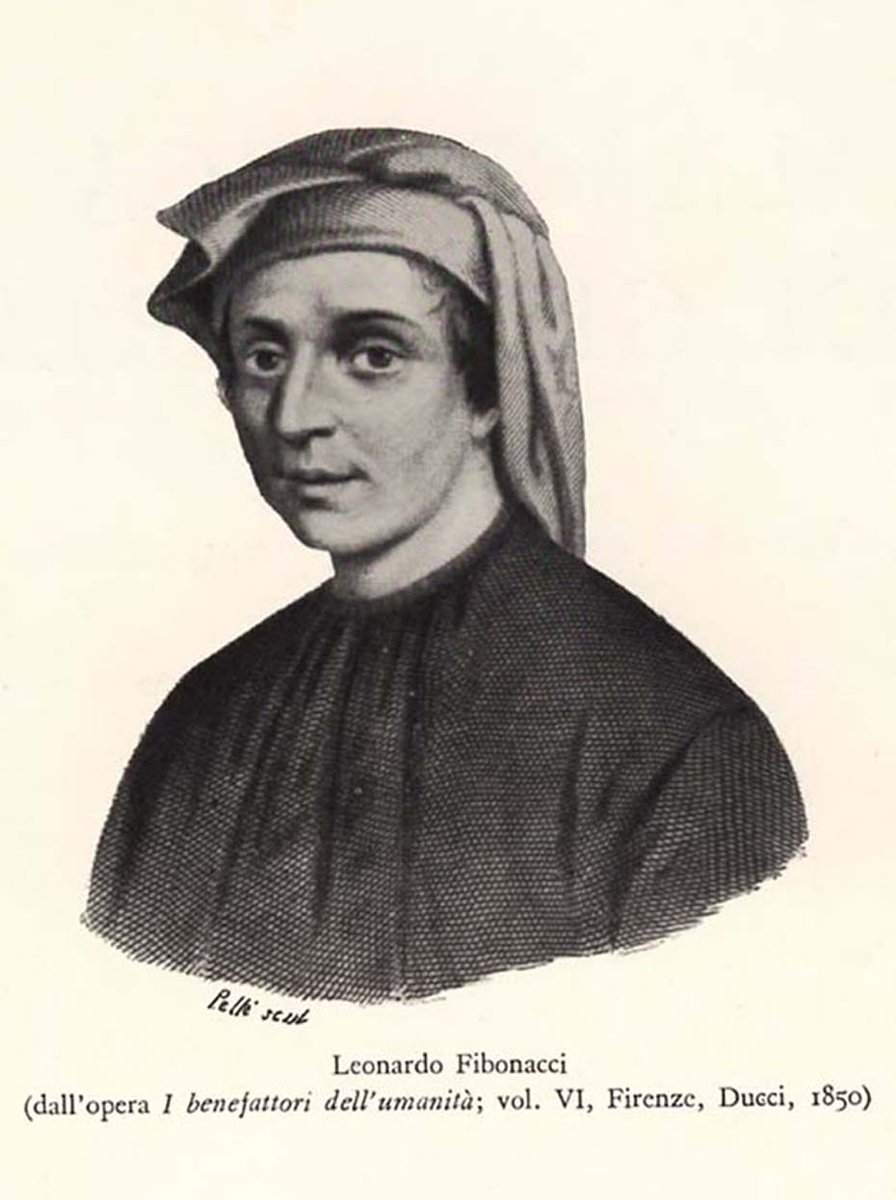
The first recorded use of zero in Europe is attributed to the Italian mathematician Leonardo of Pisa, known as Fibonacci, in his book Liber Abaci (1202). This book introduced the Hindu-Arabic numeral system, including zero, to European mathematics, replacing the cumbersome Roman numerals.
Fibonacci had learned about this system during his travels in North Africa, where he studied under Arab mathematicians. While zero had been used in Indian mathematics since the 5th century and was later transmitted to the Islamic world, Liber Abaci played a pivotal role in spreading its practical utility for commerce and calculations across medieval Europe.
English