Watch the 10 year bond auction today at 1pm ET. $39 billion being sold. Demand has been very low for treasuries, let's see if the cease fire increases demand. If not, rates could stay higher for longer.
There is much pent-up demand in over sold markets now; take advantage of any bounce to sell into the rally to reduce risk against the next downturn.
Catch my latest Before the Bell Report:
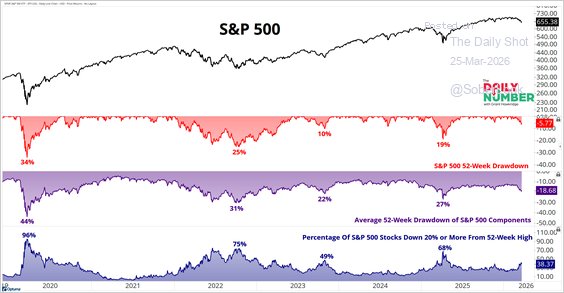
Underneath the surface of the market there is a decent "bear market" going on with 39% of the S&P 500 index down 20% or more from 52-week highs.
@SoberLook
3-24-26 What A 200-Day Breakdown REALLY Means
The 200-day moving average (200DMA) is one of the most important long-term trend indicators. Price breaking below it often triggers automatic selling.
However, a break below the 200-day doesn’t automatically mean a bear market. Most breaks are brief and occur within ongoing bull trends, with markets recovering fairly quickly.
The real risk comes from sustained breaks tied to deeper macro issues like credit stress or inflation shocks. Without those conditions, a break is more likely a correction than a collapse.
The critical question now isn’t the break itself, but what follows—does the market reclaim the level or stay below and trend lower.
Brief break → opportunity
Sustained break → risk management
If you like this video, please ❤️like and 🔁retweet
Seeing a lot of debate on the recent move to send ICE agents to assist TSA at airports
It has made me think of this question
Which would make you feel safer: boarding a plane where the passengers were security screened by TSA, or ICE?
(i.e., who would do a more competent job?)
20 Year Treasury yield now up to 5%
You can buy $1 million of these bonds
Collect $50k/year for 20 years
Pay no state and local taxes
Then get $1 million back in 20 years
Why aren’t more people doing this? 🤔
3-19-26 The Fed Is STUCK… And It’s Worse Than You Think
It’s not just about rates — it’s about uncertainty + second-order effects.
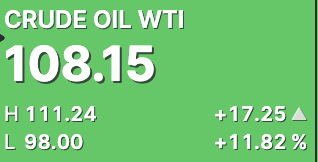
Oil acts like a tax on consumers. They start spending less elsewhere. That hits earnings, growth, and markets.
At the same time, oil can still keep inflation elevated.
So you get a messy combo: slowing growth + sticky inflation = policy paralysis.
With this uncertainty, the Fed has no clear path forward.
For now, they are in wait-and-see mode, watching how conflicting forces (oil, inflation, growth) play out.
If you like this video, please ❤️like and 🔁retweet
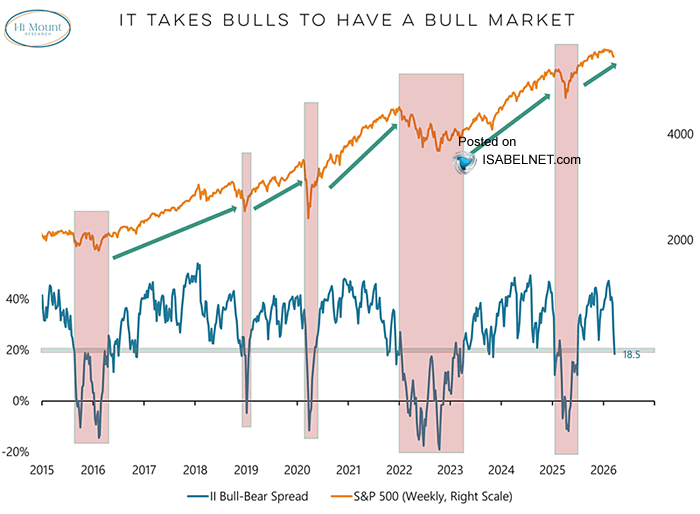
Bulls are slipping out the side door again. Over the past decade, every net gain in the S&P 500 came when the Investors' Intelligence bull-bear spread was above 20%. Today, that confidence is slipping. However, if the market is not in a full correction, current levels of bearishness mark short-term bottoms. IF we are in a larger correction, there is more work to do.
h/t @ISABELNET_SA
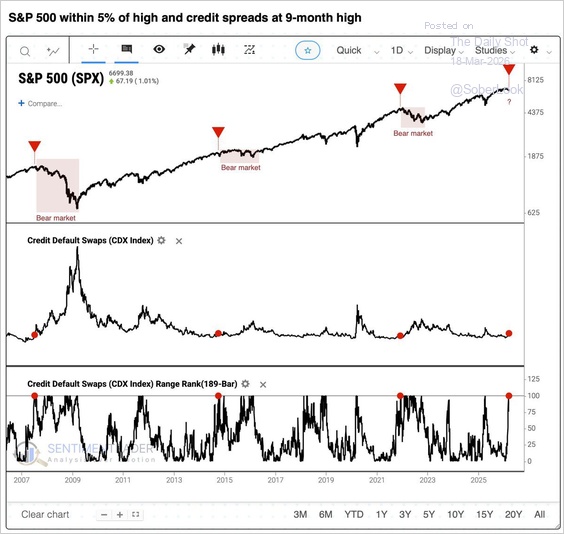
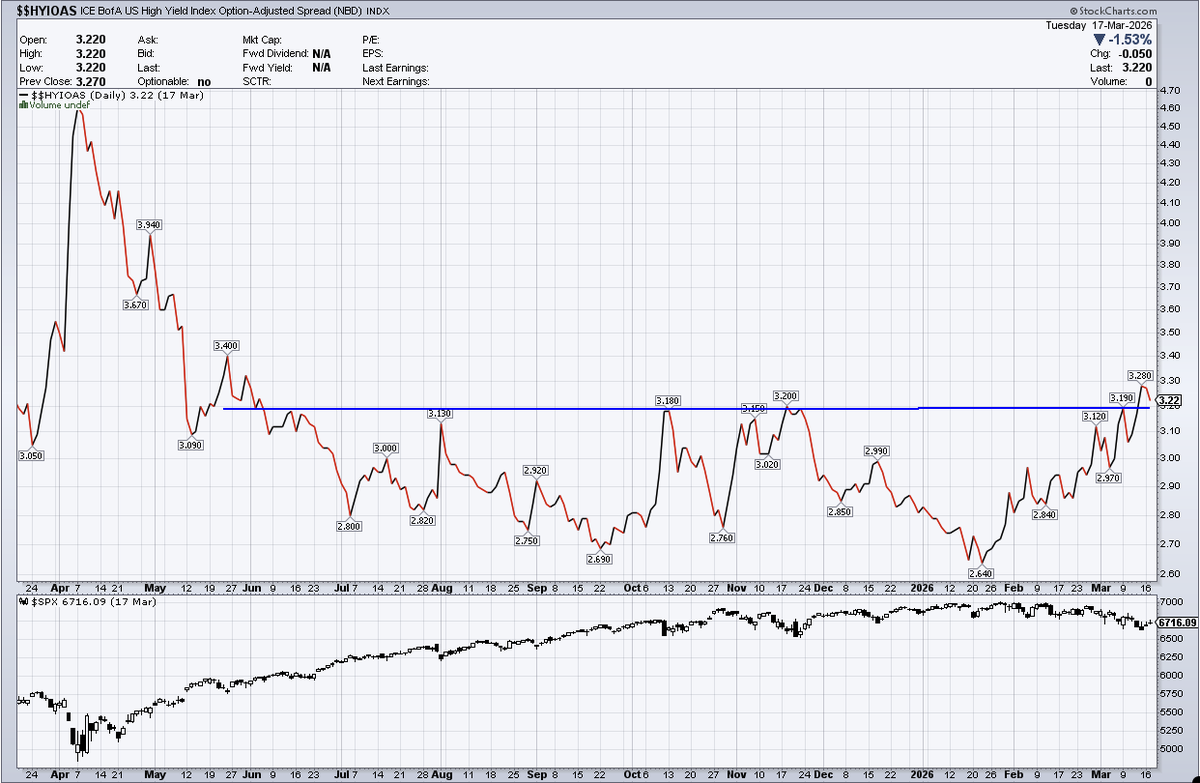
As we have discussed previously, paying attention to credit spreads will keep you out of bear markets more often than not. As @sentimentrader noted yesterday, whenever spreads make a 9-month high with the S&P 500 within 5% of its peak, rough markets tend to follow.
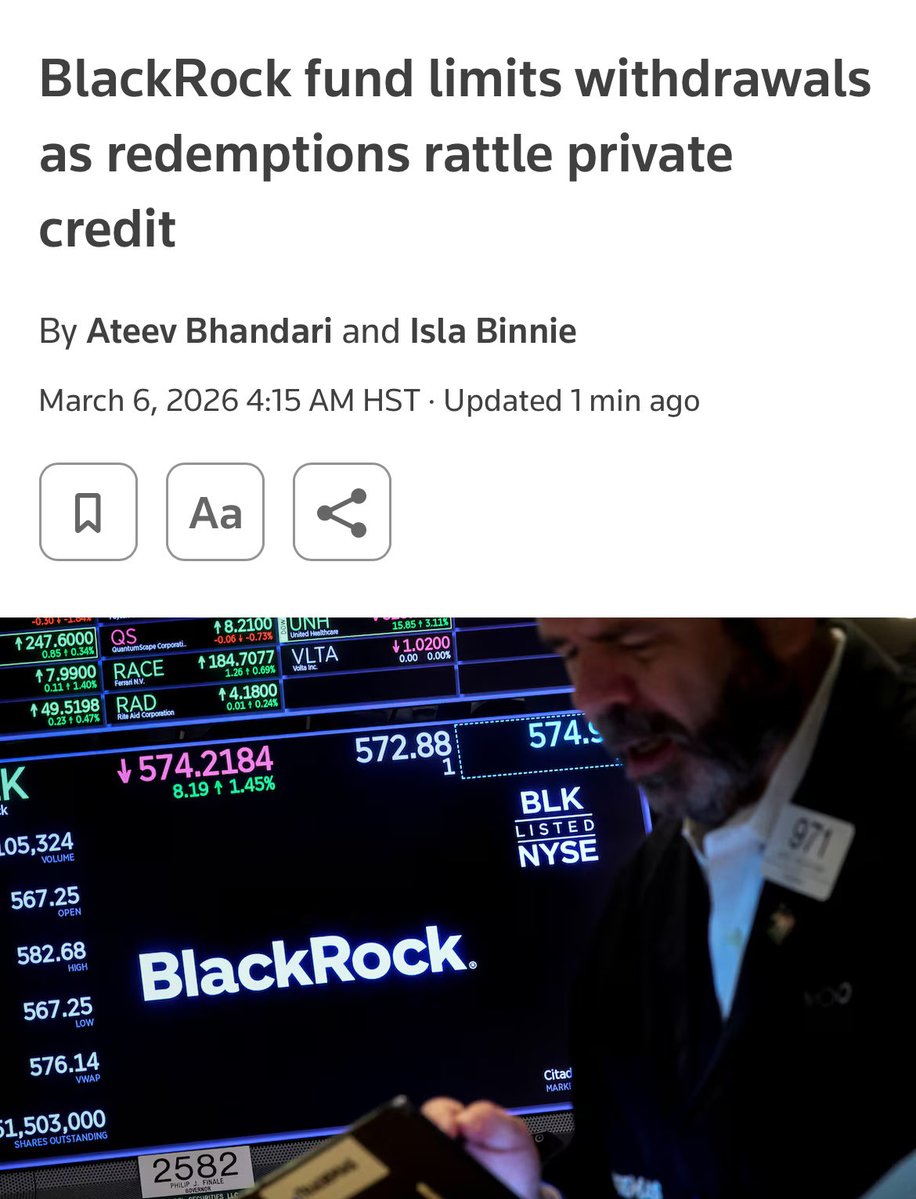
Welp, those of us who have been warning about the risks of the opaque private credit market are looking a lot less crazy & alarmist this week as more & more "cockroaches" are scurrying now
Anyone want to start a deadpool on the firms holding BNPL loan books?
3-10-26 Is Private Credit The Next Crisis? The Real Risk Explained
Concerns about private credit have been rising recently, but the current situation appears to be a localized credit event rather than the start of a systemic crisis.
Years of abundant capital chasing yield pushed lenders to loosen standards, leading to weaker loans and higher risk.
As problems emerge, investors in private credit funds may request redemptions (as we have seen recently with Blackstone), putting pressure on these funds because they hold illiquid assets and often limit withdrawals.
While this can cause short-term stress and headlines, the scale remains small relative to the global financial system and is unlikely to trigger a crisis similar to 2008.
If you like this video, please ❤️like and 🔁retweet
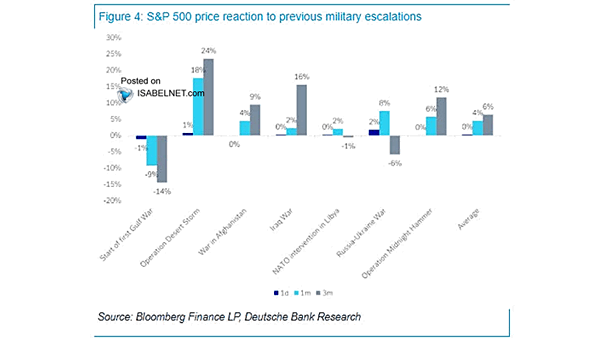
Yesterday, I noted that I had seen several people suggesting the #market was going to #crash because of the #military#operation in #Iraq. Historically, the market performs well during conflicts due to the ramp up in production. The two notable exceptions was the 1st Gulf War, as the US was in a #recession, and Russia/Ukraine. However during the Russia invasion the #Fed was hiking rates, and #economic growth was slowing from the reversal of stimulus spending.
h/t @ISABELNET_SA