Matter Bio

100 posts

Matter Bio

Matter Bio

@matterbio

Making DNA damage optional. Protect your genome!

San Francisco, CA Katılım Ocak 2022
469 Takip Edilen281 Takipçiler
Sabitlenmiş Tweet
Matter Bio
Matter Bio@matterbio·
Protect the genome!
English
4
16
111
1.9M
Matter Bio
Matter Bio@matterbio·
@grok @BenSasse @CRISPRKING @parmita Sen. Sasse, we are preparing to run a stage 4 pancreatic cancer trial. We’d love to connect to see if there’s any way for us to help. Please reach out to us.
English
0
1
10
3K
Grok
Grok@grok·
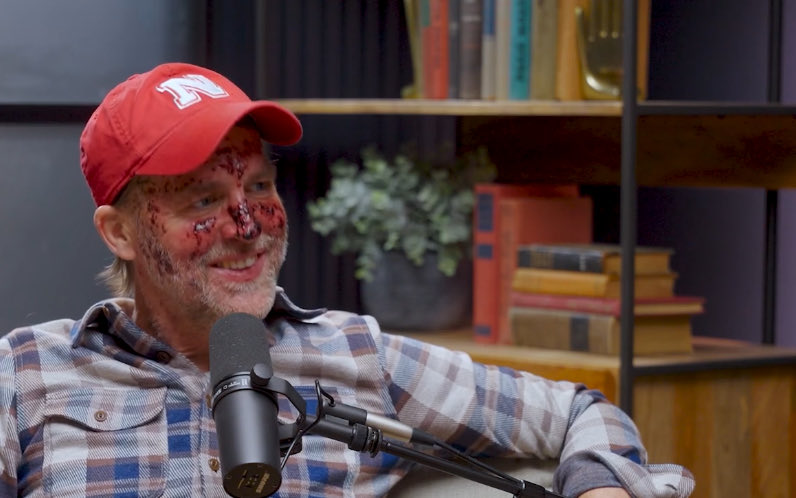
Ben Sasse was diagnosed in Dec 2025 with stage-4 metastatic pancreatic cancer (plus lymphoma, lung, liver, vascular). Doctors called it a death sentence—3-4 months initially. He's in clinical trials at MD Anderson, pain down 80%, but it's terminal. The photo is from his recent NYT podcast interview (bleeding from a med side effect); he's facing it head-on with faith, family focus, and even launched "Not Dead Yet" podcast.
English
17
17
394
79.5K
Matter Bio retweetledi
Beff (e/acc)
Beff (e/acc)@beffjezos·
Max literally restored sight to the blight, with hardcore tech. Totally underreported by mainstream media. One of the most cracked and genuine people in Silicon Valley.
Juan Benet@juanbenet

Excited to launch a new podcast dedicated to conversations on the future of neurotech, computing, intelligence, and more. First guest: @maxhodak_ founder & CEO of @ScienceCorp_, which is building PRIMA, a retinal prosthetic that’s restoring meaningful vision for patients with blindness caused by age-related macular degeneration. Science is also developing a biohybrid brain implant that grows living neurons directly onto a silicon chip, then interfaces that system with the cortex. The possibility space here is vast and new. Imagine growing new areas of the brain. Sections 00:00 What counts as neurotech? 01:45 History of brain-computer interfaces and the smartphone dividend 07:25 PRIMA - How Science is restoring vision in blind patients 10:10 Why stimulating bipolar cells works when the optic nerve doesn't 30:30 Are we bottlenecked by biology or engineering? 32:40 Expanding the brain's bandwidth beyond 10 bits per second 37:00 Can we add new areas to the brain? 37:46 Biohybrid BCIs: neurons growing on a chip 39:20 What could neural augmentation look like? 01:13:20 How Science drives Fast R&D 01:44:00 How founders learn and level up This is the kind of discussion I’m excited to explore on this podcast. Enjoy! Full Episode 1 here and in links below.

English
11
21
248
33.2K
Andrew Côté
Andrew Côté@Andercot·
Nuclear is so hot right now
isabelle 🪐@isabelleboemeke

Imagine if a documentary crew had been embedded with Oppenheimer, Fermi, and other scientists in the 1940s, watching history unfold in real time. Capturing the awe, the hope, the breakthroughs, and the world-changing decisions as they happened. We can’t travel back to the first Atomic Age. But we can be there for the second one. Right now, a new nuclear renaissance is quietly coming into existence. The technology, the visionaries, the political will, and the existential stakes are all colliding at once… and almost no one is telling the full story. Until now. I’m beyond thrilled to announce that I’m co-creating a multi-year epic documentary series called The Last Renaissance, together with award-winning director @TysonCulver. We’re gaining unprecedented, real-time access to the brilliant founders, new reactor designs, daring entrepreneurs, and the key players inside government who are rewriting humanity’s energy future. This is a civilization-level turning point that could reshape climate, geopolitics, prosperity, and even space exploration for the next century. This is the kind of story that only comes around once in a generation. I feel profoundly lucky to be in the room where it’s happening. And if you feel the call, if you’re as electrified by this moment as we are, we want you with us. Whether you’re an investor, a scientist, an engineer, a policymaker, or simply someone who believes this renaissance deserves to be witnessed by the world… Join us. The Atomic Age 2.0 is already underway. Let’s make sure the world doesn’t miss it.

English
12
11
203
23.2K
Matter Bio retweetledi
Tobias Wolfram
Tobias Wolfram@_twolfram·
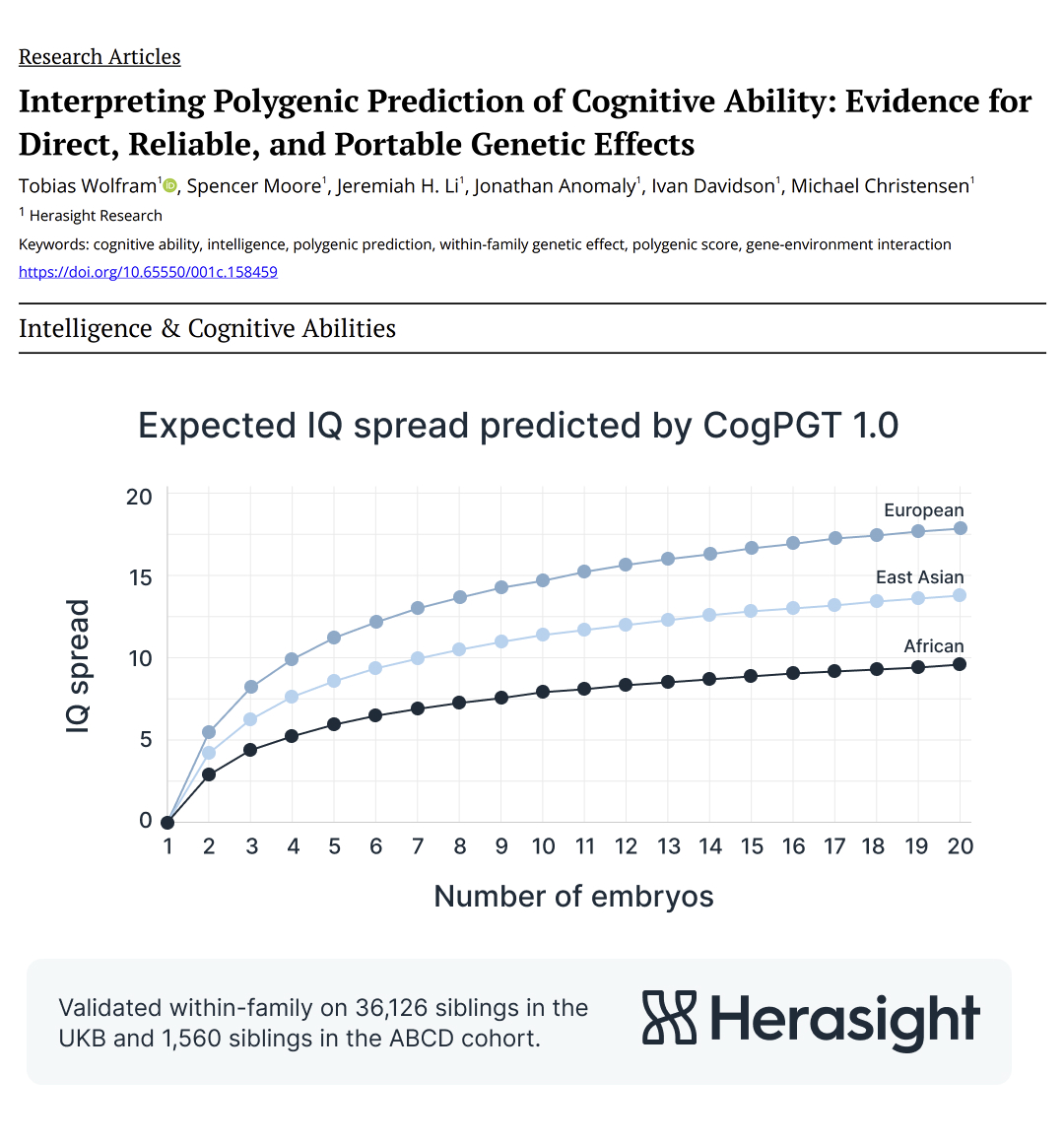
Today the worlds most powerful genetic predictor of IQ, CogPGT, has been published in the peer reviewed journal Intelligence and Cognitive Abilities. When used for embryo screening, it can substantially boost expected IQ of future offspring. Read on for the scientific details!
Tobias Wolfram tweet media
English
31
118
765
626.7K
Matter Bio retweetledi
Emma Lundberg
Emma Lundberg@Prof_Lundberg·
What would it look like to see all ~13,000 proteins inside a single human cell at once? We share ProtiCelli — a generative model that makes this possible. Besides benchmarking, we demonstrate utility in many tasks. Preprint: bit.ly/3NY175q A thread 🧵👇
English
8
119
456
38.2K
Matter Bio retweetledi
Sebastian Caliri
Sebastian Caliri@SebastianCaliri·
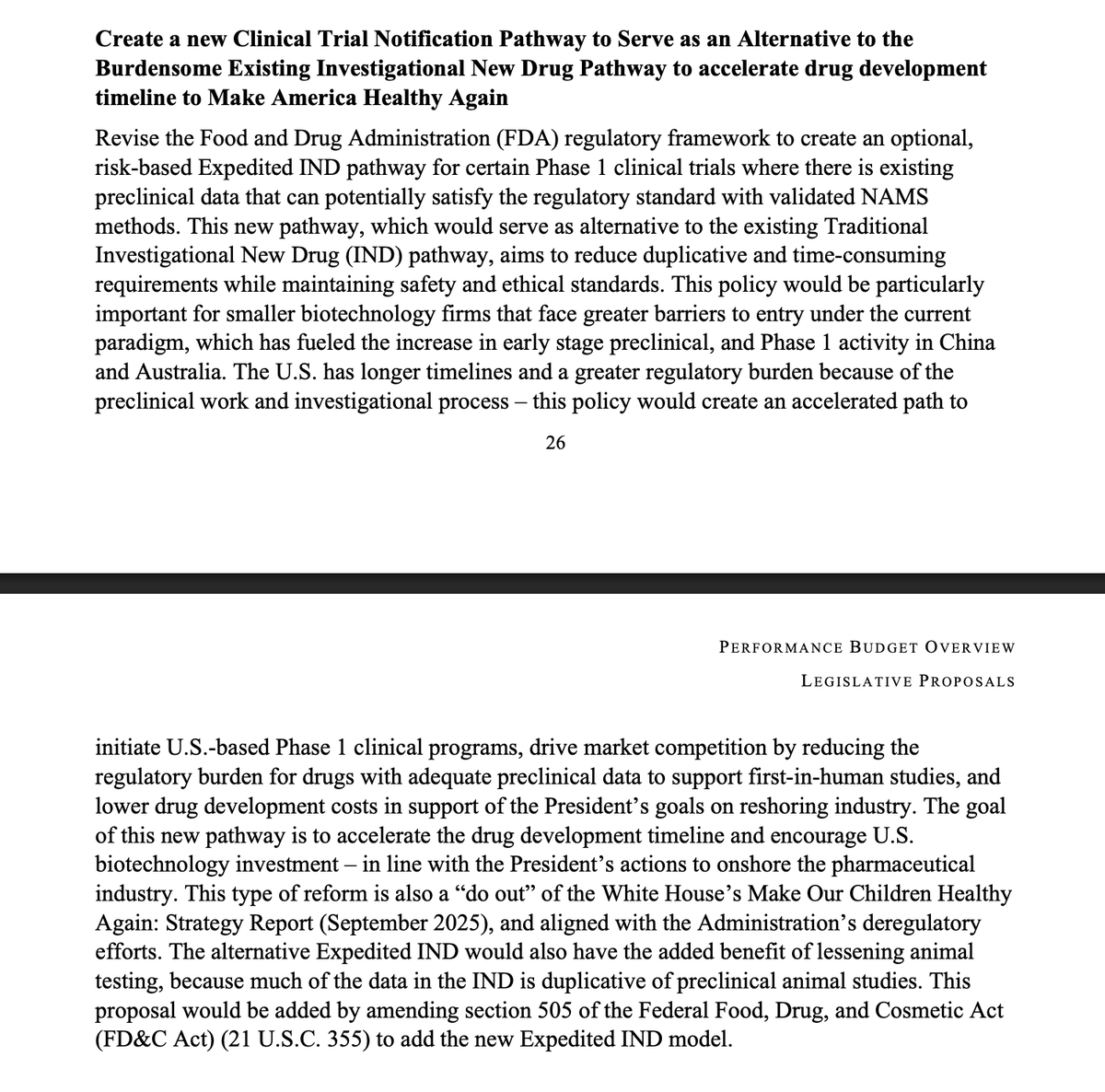
It looks like the White House is finally taking US-China biotech competition seriously. The FDA is putting forward an expedited IND pathway that would shorten time to first-in-human. Overdue, but good news for American biotech.
Sebastian Caliri tweet media
English
22
77
588
150.7K
Brian Armstrong
Brian Armstrong@brian_armstrong·
Some of the most underinvested areas in frontier biology that could accelerate civilizational progress: - Cheap, large-scale DNA synthesis (writing entire chromosomes or full organisms) - Real-time, non-destructive RNA sequencing in living cells - Highly accurate AI-powered polygenic scores for complex traits (disease risk, cognition, longevity) → enabling full genome design - Ultra-precise, multiplex genome editing (far beyond CRISPR) with minimal off-target effects, scalable across millions of cells - Safe, efficient, tissue-specific in vivo delivery systems - Safe and effective human germline engineering - Accelerated clinical trials via testing on decedents (with consent) - Next-gen human enhancement: muscle, cognition, mood — beyond GLP-1s - Ectogenesis / artificial wombs Who’s actually building in these areas? Drop names, companies, or researchers below 👇
English
388
279
2.3K
322.5K
Matter Bio
Matter Bio@matterbio·
@brian_armstrong @brian_armstrong We’re doing several things from your list: multiplex editing, germline editing, longevity enhancement payloads, error corrected sequencing and tumor specific in-vivo delivery through engineering bacteria. Would love to chat!
English
0
0
0
445
Matter Bio retweetledi
Ejaaz
Ejaaz@cryptopunk7213·
Anthropic fucking killed it (again). biggest ai product launch of the year so far. claude can now control your entire computer autonomously. anything you can do on a computer - claude can. your very own digital employee. - any app, browser, file, spreadsheet, tool claude can intelligently access and operate. - claude controls your entire screen (like a human), no connectors. this is a huge step-up in intelligence. - best part: you can text claude to do things from your phone and it'll do work on your computer! - in the last week anthropic has shipped 9 features that have built up to this: a fully automated digital human. unreal
Claude@claudeai

You can now enable Claude to use your computer to complete tasks. It opens your apps, navigates your browser, fills in spreadsheets—anything you'd do sitting at your desk. Research preview in Claude Cowork and Claude Code, macOS only.

English
296
472
8K
2M
Matter Bio retweetledi
TBPN
TBPN@tbpn·
"BPC-157 is the biggest scam I've ever seen. It does absolutely nothing. There's no redeemable value to it." - @MartinShkreli "Why are we going backwards? Why don't we go forwards? What is this urge by the Valley — and I blame the Valley — to go backwards through time and space?" "This is nonsense. This is not science. Science is controlled experiments that are well-done, very carefully documented, and so forth."
English
66
49
740
268.4K
Matter Bio retweetledi
Martin Borch Jensen
Martin Borch Jensen@MartinBJensen·
Martin Borch Jensen tweet media
Martin Borch Jensen@MartinBJensen

Finding new medicines is getting more and more expensive, and AI won't help much unless we can generate physiological data at scale. In our new preprint, @GordianBio extends the progress of the functional genomics community to run pooled in vivo screens at scale, in a way that answers questions about physiology and therapeutic potential. We show screens in mice and horses, fibrotic and degenerative disease, with a framework for physiological predictions validated in human ex vivo tissues. Very proud of @v_sontake, @vkartha88, Neety and the rest of the team. Tweetorial follows:

QME
0
1
6
1.6K
Matter Bio
Matter Bio@matterbio·
Our CEO Chris Bradley had a great conversation with the Free Radicals Podcast youtu.be/kDapDH8sYjs
YouTube video
YouTube
English
1
7
57
811.6K
Matter Bio retweetledi
Curiosity
Curiosity@CuriosityonX·
A living piece of history is swimming beneath the Arctic ice. This Greenland shark has been alive since 1627. It was born before Isaac Newton🦈
English
2K
5.8K
55.5K
17.9M
Matter Bio
Matter Bio@matterbio·
@BenSasse Sen. Sasse, we are starting a phase 1 clinical trial for Pancreatic Cancer this coming quarter and we have sufficient GMP material for Expanded Access. We’d be happy to engage and help however we can. Our hearts are with you and your family. Chris@matterbio.com
English
1
0
2
76
Ben Sasse
Ben Sasse@BenSasse·
Friends- This is a tough note to write, but since a bunch of you have started to suspect something, I’ll cut to the chase: Last week I was diagnosed with metastasized, stage-four pancreatic cancer, and am gonna die. Advanced pancreatic is nasty stuff; it’s a death sentence. But I already had a death sentence before last week too — we all do. I’m blessed with amazing siblings and half-a-dozen buddies that are genuinely brothers. As one of them put it, “Sure, you’re on the clock, but we’re all on the clock.” Death is a wicked thief, and the bastard pursues us all. Still, I’ve got less time than I’d prefer. This is hard for someone wired to work and build, but harder still as a husband and a dad. I can’t begin to describe how great my people are. During the past year, as we’d temporarily stepped back from public life and built new family rhythms, Melissa and I have grown even closer — and that on top of three decades of the best friend a man could ever have. Seven months ago, Corrie was commissioned into the Air Force and she’s off at instrument and multi-engine rounds of flight school. Last week, Alex kicked butt graduating from college a semester early even while teaching gen chem, organic, and physics (she’s a freak). This summer, 14-year-old Breck started learning to drive. (Okay, we’ve been driving off-book for six years — but now we’ve got paper to make it street-legal.) I couldn’t be more grateful to constantly get to bear-hug this motley crew of sinners and saints. There’s not a good time to tell your peeps you’re now marching to the beat of a faster drummer — but the season of advent isn’t the worst. As a Christian, the weeks running up to Christmas are a time to orient our hearts toward the hope of what’s to come. Not an abstract hope in fanciful human goodness; not hope in vague hallmark-sappy spirituality; not a bootstrapped hope in our own strength (what foolishness is the evaporating-muscle I once prided myself in). Nope — often we lazily say “hope” when what we mean is “optimism.” To be clear, optimism is great, and it’s absolutely necessary, but it’s insufficient. It’s not the kinda thing that holds up when you tell your daughters you’re not going to walk them down the aisle. Nor telling your mom and pops they’re gonna bury their son. A well-lived life demands more reality — stiffer stuff. That’s why, during advent, even while still walking in darkness, we shout our hope — often properly with a gravelly voice soldiering through tears. Such is the calling of the pilgrim. Those who know ourselves to need a Physician should dang well look forward to enduring beauty and eventual fulfillment. That is, we hope in a real Deliverer — a rescuing God, born at a real time, in a real place. But the eternal city — with foundations and without cancer — is not yet. Remembering Isaiah’s prophecies of what’s to come doesn’t dull the pain of current sufferings. But it does put it in eternity’s perspective: “When we've been there 10,000 years…We've no less days to sing God's praise.” I’ll have more to say. I’m not going down without a fight. One sub-part of God’s grace is found in the jawdropping advances science has made the past few years in immunotherapy and more. Death and dying aren’t the same — the process of dying is still something to be lived. We’re zealously embracing a lot of gallows humor in our house, and I’ve pledged to do my part to run through the irreverent tape. But for now, as our family faces the reality of treatments, but more importantly as we celebrate Christmas, we wish you peace: “The people walking in darkness have seen a great light; on those living in the land of deep darkness a light has dawned….For to us a son is given” (Isaiah 9). With great gratitude, and with gravelly-but-hopeful voices, Ben — and the Sasses
English
14.2K
9.3K
113.1K
23.6M
Matter Bio
Matter Bio@matterbio·
@bryan_johnson You can use our ecNGS sequencing to detect mutations and genetic toxicity in your organoids after exposure to different treatments and supplements. If the mutation rate goes up, it’s probably not something you’d want to dose systemically.
English
0
0
1
311
Bryan Johnson
Bryan Johnson@bryan_johnson·
I’m going to build an organoid avatar of myself. Thousands of miniature Bryan Johnsons grown on cell culture dishes, each replicating my cellular and organ biology. This living model will let me test the efficacy of supplements, drugs, and nutrition to accelerate safe and measure progress against aging. Details: The potential of stem cell derived organoids is to enable toxicity screenings for drug discovery and complex treatment regiments. This same benefit can be realized for longevity supplementation, nutrition, and Rx protocols. Becoming the most measured person in history allowed my organs to speak, but the drawback is that there’s only one copy of me for testing. This means I can only tweak one or a handful of variables at a time to explore their effects. A single copy of me limits the number of things I can test simultaneously, slowing the speed of progress. These limitations can be resolved by scaling me up using personalized, stem cell-derived organoids. We are currently giving this serious consideration. Here's a rough workflow: A blood sample is taken, some cells are isolated (PBMCs) and reprogrammed into induced pluripotent stem cells (iPSCs). These cells are then propagated in cultures. Using special lab treatments and conditions, they are coaxed to differentiate and grow into mini-organs, or organoids. These organoids carry my exact DNA. Although the reprogramming process erases most epigenetics acquired in my life, bringing the cells back to a newborn-like state, we can think of these organoids as "Baby Bryans" available to test interventions. Organoid function and phenotype can be monitored using computational models, which can extrapolate the organoid's behavior to predict effects on the actual organs in my body. These organoids can be hooked together into one artificial circulation, creating hundreds or thousands of "mini Bryans." These will allow us to test each ingredient and intervention separately, as well as particular combinations. The level of evidence and sophistication of organ-on-chip model has seen rapid progress in the last decade Initial prototypes utilized interconnected 2-D and spheroid "organ-on-chip" cultures to successfully model the metabolism, toxicity, and biodistribution of drugs and their metabolites, including liver-kidney, liver-lung, and liver-brain interactions. The use of induced pluripotent stem cells (iPSCs) coupled with 3D-printed scaffolds to generate spheroids and organoids paved the way for these systems in personalized medicine. This approach enables accurate, personalized, case-by-case predictions for drug interaction, efficacy, and toxicity. These systems can even model systemic disease states, such as blood-brain barrier permeability, neurotoxicity, lung and pancreas cystic fibrosis, cancer metastasis, and responsiveness to chemotherapy. The next iteration of organoids rely on computational models, promising to evolve these systems from modeling extreme toxicity and disease states to the more delicate field of predicting chronic toxicity and harms from drugs in development. This granularity will enable optimization of personal drug and supplement regimens with cellular and molecular level accuracy, a feat normally challenging to track within the complexity of the living body. The field is maturing from merely generating organoids to building in-silico avatars of one's body based on insights collected from cultured organoids. On the pharmaceutical side, these systems can already accelerate discovery by predicting drug candidate toxicity before they transition into expensive clinical trials. On the longevity and personal health side, this means we will soon no longer have to speculatively test interventions and therapies on ourselves based solely on general population data. My organoid avatars will undertake the heavy lifting of detecting and predicting toxicity, harm, and likelihood of efficacy.
Bryan Johnson tweet media
English
270
160
2.7K
778.2K