Broken Hearted

31.9K posts

Broken Hearted banner
Broken Hearted

Broken Hearted

@McComments

TL = mc^2 | -- inch -- | https://t.co/rcZ0YDANAO

Katılım Nisan 2011
657 Takip Edilen741 Takipçiler
Kene
Kene@Tempo_ae·
They couldn’t believe their eyes 😂
English
20
61
1.1K
45.8K
TheNewPhysics
TheNewPhysics@CharlesMullins2·
🚨 BREAKING: Light doesn’t take one path. It takes every possible path at once… and only the fastest one survives. That’s why it bends in glass. That shouldn’t be possible. Nothing is “choosing” the path. In my framework: Reality doesn’t decide It resolves into what the structure allows Efficiency isn’t enforced it emerges So the real question is If light explores every path… what is actually selecting reality? Follow me I’m rebuilding physics from structure, not forces.
English
22
41
213
13K
nivrax🇳🇴
nivrax🇳🇴@nivraxx·
Tell me which country have a beautiful 😍 😍 girls 💝💝💖💖💖😻😻💖😻💖✅✅✅✅
nivrax🇳🇴 tweet media
English
895
123
769
42.9K
Seán Ono Lennon
Seán Ono Lennon@seanonolennon·
It’s possible to have been right but for the wrong reasons.
English
138
34
474
15.3K
khellstr 🍄
khellstr 🍄@kHellstr·
@McComments @Khellstr3D @demystifysci It was delightful to meet you <3 I hope you can deal with your issues so we may someday enjoy your fruitful scientific ideas. Now your ego and soul clearly block the natural ways for those to rise into wider awareness :)
English
1
0
0
18
khellstr
khellstr@Khellstr3D·
@McComments @demystifysci Ideas are kind of cheap. Everyone can have them, and it's often impossible to know who had some idea first. The hard part is to make coherent working and testable theory from the ideas, and publish it in a way that enough people will see it.
English
1
0
0
16
Broken Hearted
Broken Hearted@McComments·
@demystifysci Cool, I'll buy it. If you use someone else's ideas you give them credit, correct? You are not a Janna Levin, correct? x.com/McComments/sta…
Broken Hearted@McComments

@JannaLevin @neiltyson @chucknicecomic @StarTalkRadio Quantum Threads is the name of my theory I've had for more than 30 years now. Most of your "mind blowing" ideas in the interview are actually my ideas. Sample: gravity can't happen inside an atom? That's here... x.com/Mccomments/sta… @GadiNBC @NBCNewsNow @NBCNews

English
1
0
0
30
Anastasia
Anastasia@demystifysci·
@McComments i mean i think at some scale the substance just "is," but we have some ideas of how it could be structured and the properties it needs to have
English
1
0
0
54
Broken Hearted
Broken Hearted@McComments·
@demystifysci You are correct but you don't know why and you cannot explain the substance, or can you?
English
1
0
0
48
Anastasia
Anastasia@demystifysci·
@McComments the field is a measurement of an underlying material in motion
English
2
0
2
123
Broken Hearted
Broken Hearted@McComments·
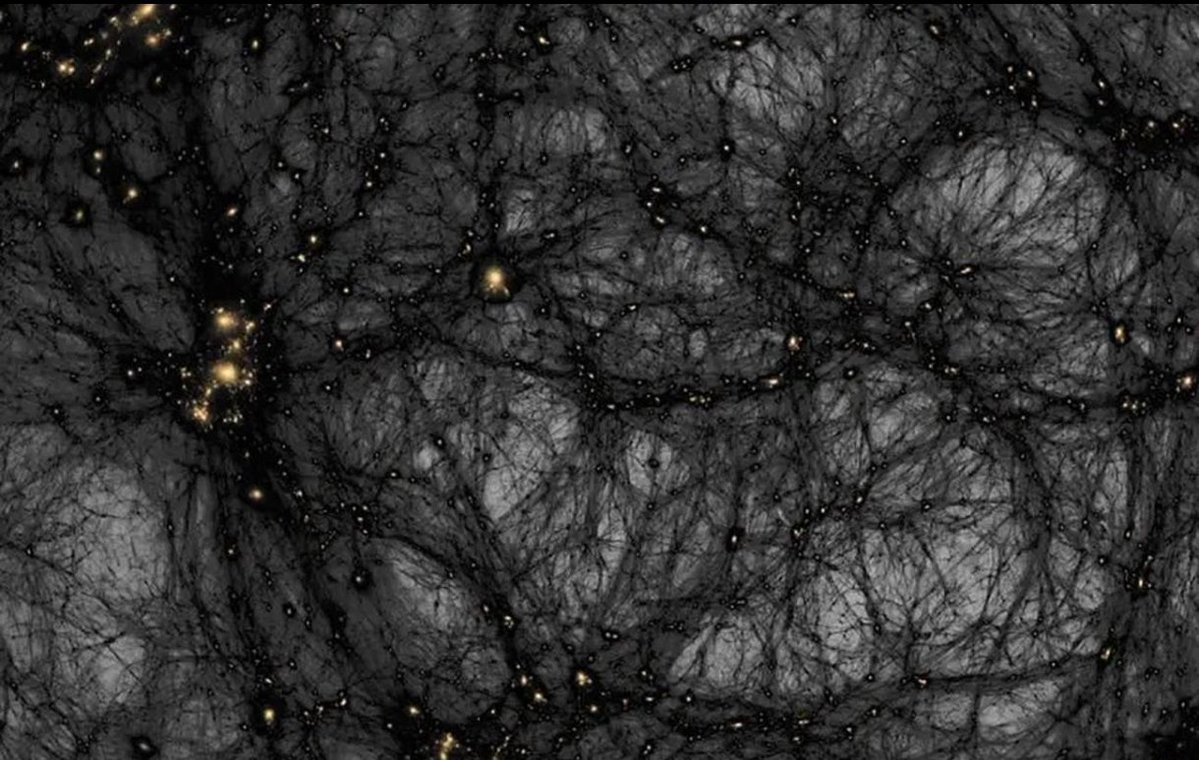
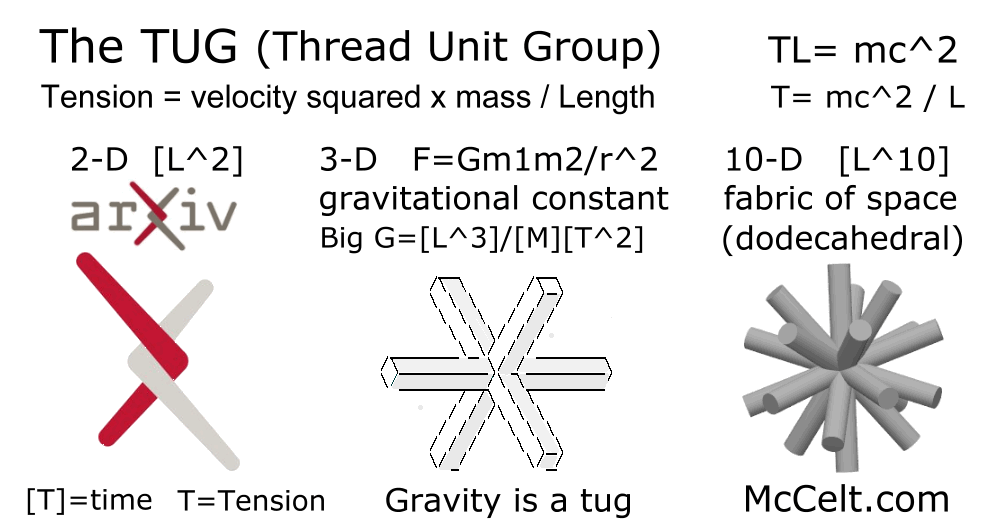
@ExploreCosmos_ The large scale structure of the universe is connected by huge filaments (as shown in graphic). The reason being: the fabric of space is a thread tension network made from thread filaments. They have a natural tendency to clump when stretched between mass. mccelt.com/gravitational-…
Broken Hearted tweet mediaBroken Hearted tweet media
English
0
0
0
15
Erika 
Erika @ExploreCosmos_·
For years, we’ve described dark energy with a single, simple idea: a constant. In the standard model of cosmology (ΛCDM), dark energy is represented by Λ, the cosmological constant, a fixed energy density that fills space and drives the accelerated expansion of the universe. It’s elegant. And for a long time, it worked. But recent observations are starting to make things less comfortable. Large galaxy surveys like DESI are mapping how structures in the universe have grown over time, giving us a way to track how expansion has evolved. And with the first-year DESI data release, something subtle appeared: the fit to ΛCDM is not perfect. Not dramatically wrong. But not entirely clean either. Some analyses suggest that the effect of dark energy might not be exactly constant. Instead of behaving like a fixed Λ, it could evolve slightly with time. In cosmology, this is often described using the parameter w, the equation-of-state of dark energy. In the simplest case: w = -1 → perfectly constant (Λ). But if: w ≠ -1 → dark energy changes over time. Right now, measurements are hovering very close to w = -1… but not always exactly on it. That’s the tension. It’s not strong enough to claim a discovery. But it’s persistent enough that people are paying attention. And here’s the key point: we don’t yet know if this is real. DESI’s first-year data is just the beginning. As more years of data come in, the uncertainties will shrink. If the trend holds, it becomes much harder to dismiss. If it fades, it was likely just noise or systematics. That’s exactly where we are. If this deviation turns out to be real, the implications are big. It would mean dark energy is not just a property of empty space, but something dynamic, possibly a field evolving over cosmic time (what we call quintessence). And that would push us beyond ΛCDM. On the other hand, there’s a more conservative explanation: systematics. Small biases in measurements, calibration issues, or assumptions in the models we use to interpret the data. Cosmology is incredibly precise now, and tiny effects can look like new physics if we’re not careful. So we’re in that familiar place in science: Either we’re seeing the first hint of something new… or we’re learning how careful we still need to be. And that’s what makes this interesting. Because ΛCDM has been extraordinarily successful. It explains the cosmic microwave background, large-scale structure, galaxy formation… almost everything we observe. But it’s also built on components we don’t fully understand: dark matter and dark energy. So when cracks, even small ones, start to appear, they matter. A shift in w away from -1 might seem like a tiny numerical detail. It isn’t. It’s a question about whether the acceleration of the universe is driven by something static… or something evolving. And right now, we don’t quite know which one it is.
Erika  tweet media
English
27
30
205
4.5K
Broken Hearted
Broken Hearted@McComments·
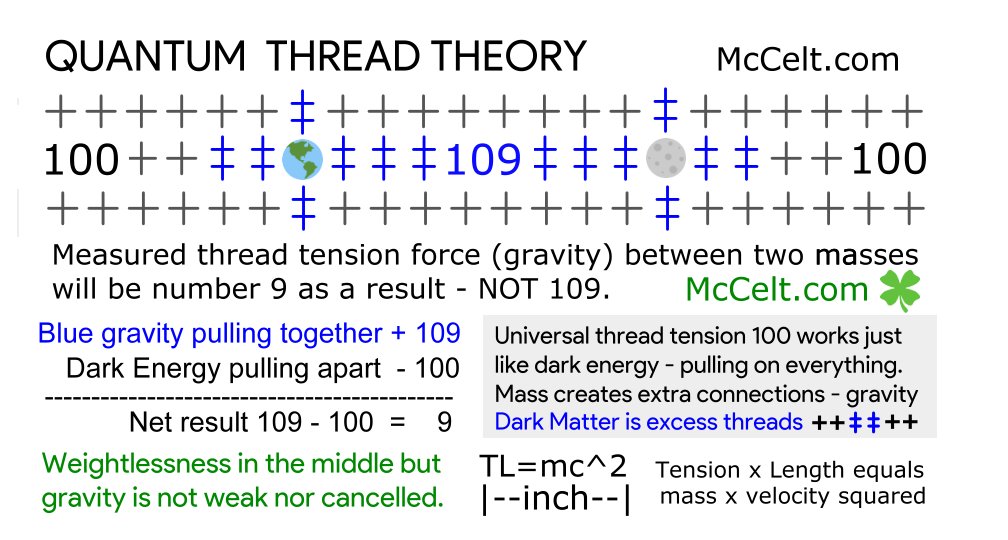
@ExploreCosmos_ The way it works... • Fabric of space: thread tension network • Matter: balled-up threads • Energy: thread vibration: TL = mc^2 • Gravity: thread tension between objects: T = mc^2/L • Dark matter: excess threads • Dark energy: overall thread tension mccelt.com/quantum-thread…
Broken Hearted tweet media
English
0
0
0
18
Broken Hearted
Broken Hearted@McComments·
@TRobinsonNewEra Did they pull that beautiful white girl's shirt off? Are they fighting over her? What's the story Jerry?
English
0
0
0
67
Tommy Robinson 🇬🇧
Tommy Robinson 🇬🇧@TRobinsonNewEra·
21yr old stabbed to death on Primrose Hill in "Modern London" yesterday evening. The government too preoccupied banning Kanye West from the country.
English
322
2.6K
16.4K
777.4K
Broken Hearted
Broken Hearted@McComments·
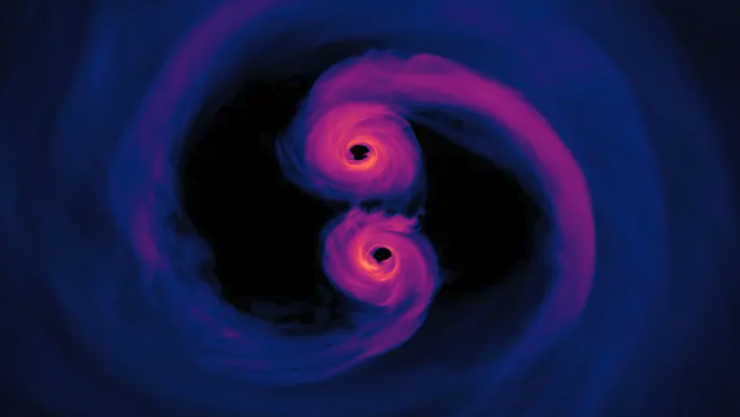
@AlbertEinstein @StartsWithABang @bigthink Quantum Thread Theory works perfectly well describing space, time, gravity, and the other forces... x.com/McComments/sta…
Broken Hearted@McComments

Formation of the universe. mccelt.com/quantum-boom-t… Atomic structure and molecular formation. mccelt.com/quantum-thread… Gravity and the fabric of space. mccelt.com/gravitational-… Spiral arm and galactic bar formation. (triple focus elipse is a game changer) mccelt.com/spiral-arm-and…
English
0
0
0
15
Broken Hearted
Broken Hearted@McComments·
@ExploreCosmos_ Thank you for always putting a lot of time and effort into your posts. They are very informative.
English
0
0
2
171
Erika 
Erika @ExploreCosmos_·
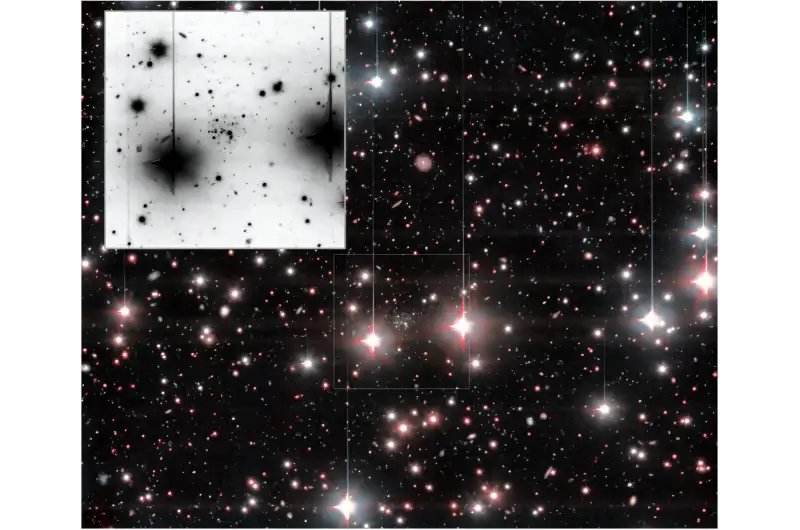
A newly identified galaxy called Andromeda XXXVI gives a good sense of how incomplete our view of the smallest structures in the universe still is. It’s an ultra-faint dwarf galaxy located about 2.53 million light-years from Earth and roughly 388,000 light-years from the Andromeda galaxy, which places it well inside Andromeda’s extended halo and makes it very likely one of its satellites. What makes it interesting is not just its position, but how extreme its properties are: it has an absolute magnitude of around −6, meaning it is incredibly dim, and a half-light radius of only about 200 light-years, making it both one of the faintest and among the most compact satellite galaxies known around Andromeda. Its stellar population is also telling. The galaxy appears to be very old, around 12.5 billion years, and extremely metal-poor, with a metallicity of about −2.5, which indicates that its stars formed very early in cosmic history, before successive generations of stars had time to enrich the environment with heavier elements. In that sense, objects like Andromeda XXXVI act almost like fossils from the early universe, preserving information about the conditions shortly after the first galaxies began forming. What makes discoveries like this particularly relevant is that they point toward a much larger hidden population of ultra-faint galaxies. These systems are so dim that they are easy to miss, even in deep surveys, but they are crucial for testing models of galaxy formation and dark matter. The fact that Andromeda XXXVI sits at the very faint end of the satellite population suggests that many more similar objects are still undetected, which has implications for the so-called “missing satellites problem” and for understanding how small galaxies form, evolve, and sometimes stop forming stars very early on. In practice, this discovery reinforces a broader idea: large galaxies like Andromeda are surrounded by a complex ecosystem of tiny companions, many of which are relics from the earliest phases of structure formation. By finding and characterizing these ultra-faint systems, astronomers are not just adding new objects to a catalog, but refining the boundary conditions of cosmology, testing how well our models reproduce the smallest and oldest building blocks of the universe. 👉 share.google/So8ZbV3HvDpKMn…
Erika  tweet media
English
12
48
254
5K
G R I F T Y
G R I F T Y@GriftReport·
Sunny's Premier posted this footage online of the antisocial behaviour and theft of alcohol etc by kids. Little shits!
English
27
40
283
14.3K