
Mehrzad Kohanrouz

6.3K posts

Mehrzad Kohanrouz banner
Mehrzad Kohanrouz

Mehrzad Kohanrouz

@MehrzadBBC

🇮🇷🇬🇧Senior Guest Producer @BBCPersian, @BBCWORLD; #IRAN is the best story in the Middle East

London Katılım Ekim 2010
1.2K Takip Edilen4.4K Takipçiler
Mehrzad Kohanrouz
Mehrzad Kohanrouz@MehrzadBBC·
Iranian delegation in Islamabad – Mohammad Baqer Qalibaf – FM Abbas Araghchi – Secretary of the Defense Council, Ali Ahmadian – Governor of Iran’s Central Bank, Abdolnaser Hemmati – Various security, political, military, economic, legal attachés – Several members of Parliament
Română

0
0
2
157
Mehrzad Kohanrouz retweetledi
The Wall Street Journal
The Pentagon is moving a Marine expeditionary unit to the Middle East, as Iran steps up its attacks on the Strait of Hormuz, according to two U.S. officials. Expeditionary units typically consist of up to 2,500 Marines. on.wsj.com/4sNYxhg
English
293
801
1.9K
1.2M
Mehrzad Kohanrouz retweetledi
Guy Laron
Guy Laron@guy_laron·
1. Is Trump planning to "Venezuelize" Iran? This analysis deviates from the mainstream media portrayal of a fickle, senile, or Bibi-led president. It assumes Trump is evil but rational. A thread. 🧵
Guy Laron tweet media
English
154
468
1.7K
1.3M
Mehrzad Kohanrouz retweetledi
Open Source Intel
Open Source Intel@Osint613·
🔴NOW Looks like direct hit to the U.S consulate in Dubai.
English
277
2.1K
10.7K
1M
Mehrzad Kohanrouz
Mehrzad Kohanrouz@MehrzadBBC·
Trump: someone from within might be more appropriate for Iran
English
0
0
0
93
Mehrzad Kohanrouz
Mehrzad Kohanrouz@MehrzadBBC·
Trump: worst case in Iran is new leader as bad as Khamenei
English
2
1
3
1K
Mehrzad Kohanrouz retweetledi
Hamidreza Azizi
Hamidreza Azizi@HamidRezaAz·
A Day 3 recap of the war (with focus on Iranian strategic narrative): 🔹CENTCOM confirms that U.S. strikes on Iranian missile bases used B-1 bombers. The U.S. is trying to dismantle Iran’s fortified underground missile facilities. 🔹Iranian reports suggest Tehran has rejected multiple mediation attempts. Tehran’s apparent assessment is that it can sustain high-intensity conflict for 60-90 days, making early ceasefire acceptance strategically disadvantageous. 🔹Ali Larijani explicitly framed the war as a contest of endurance, stating Iran – unlike the United States – is prepared for a prolonged conflict. The objective appears to be altering Washington’s cost-benefit calculations over time. 🔹Iranian strategic discourse increasingly describes the conflict as a “war without rules” or a “game without red lines,” signaling deliberate unpredictability intended to reshape deterrence dynamics after leadership decapitation failed to halt Iran’s response. 🔹A related concept emerging in Iranian messaging is operating “one level above” adversary actions, i.e., delivering escalatory responses even to indirect threats in order to redefine escalation thresholds. 🔹This logic appears reflected in Iranian strikes toward British facilities in Cyprus, interpreted domestically as retaliation for London allowing U.S. access to Diego Garcia despite not joining offensive operations. 🔹One of the most consequential developments was the loss of three U.S. F-15 aircraft, initially claimed by Iran as shootdowns but later attributed to friendly fire from Kuwaiti air defenses, highlighting the growing risks of coalition battlefield congestion. 🔹Analysts close to Iranian security circles describe a layered missile strategy: first targeting radar systems, then launching low-cost drones and missiles to exhaust air-defense interceptors before deploying advanced weapons later. 🔹Iran’s continuous missile launches therefore appear designed less for immediate damage and more for attritional depletion of U.S. and Israeli defensive systems over time. 🔹Uncertainty over the size and dispersal of Iran’s advanced missile stockpiles may explain intensified U.S. and Israeli strikes against underground facilities and missile infrastructure. 🔹President Pezeshkian expanded emergency authorities across ministries and provincial administrations to ensure continuity of governance, deepening wartime decentralization already initiated before the conflict. 🔹Israel’s targeting pattern has become clearer: strikes now heavily focus on intelligence ministries, police headquarters, IRGC district bases, and internal security institutions, suggesting systematic erosion of regime coercive capacity. 🔹Parallel strikes against western border regions and Kurdistan province have fueled Iranian fears that external actors may seek to enable insurgent infiltration as an alternative to direct ground invasion. 🔹Iran has responded by striking areas in Iraqi Kurdistan while increasing pressure along its borders, indicating concern about a potential indirect ground dimension to the war. 🔹Iran-aligned Iraqi resistance factions – including Kataib Hezbollah, Harakat al-Nujaba, and Kataib Sayyid al-Shuhada – continue their operations on a limited scale, opening another attritional front against U.S. forces. 🔹Hezbollah formally confirmed its participation, firing rockets toward Haifa, though involvement remains limited due to degraded capabilities and domestic political constraints in Lebanon. 🔹Iranian sources claim prewar coordination between the Quds Force and regional partners defined phased entry into the conflict, suggesting activation of the “axis of resistance” is proceeding gradually rather than simultaneously. 🔹The IRGC has reportedly begun enforcing a de facto closure of the Strait of Hormuz, warning commercial vessels against transit and threatening missile strikes. This is a major escalation targeting global energy flows. 🔹Simultaneous attacks on Gulf energy infrastructure, including an Aramco facility near Ras Tanura and gas infrastructure in Qatar, indicate an effort to raise global energy prices and increase economic pressure on Washington. 🔹Iranian authorities signaled zero tolerance for dissent. IRGC intelligence warned that actions undermining stability during wartime would be treated as collaboration with the enemy, implying harsh internal repression. 🔹Negotiation signals remain contradictory. While Trump suggested a potential deal was possible, Larijani publicly rejected negotiations, reinforcing Tehran’s view that talks can occur only after strategic calculations shift. 🔹Iran’s sustained missile tempo against Israel appears designed to impose psychological as well as military pressure, keeping populations under prolonged shelter conditions while conserving firepower for a longer conflict. 🔹Overall, Day 3 shows the war evolving into simultaneous military, economic, psychological, and regional escalation far beyond bilateral confrontation. 🔹The key question now is whether expanding proxy involvement and energy warfare will force external powers into deeper participation or instead accelerate pressure for negotiated containment. --- P.S: Not sure how long I can keep doing this!
English
8
1.8K
9.4K
2.7M
Mehrzad Kohanrouz retweetledi
Mehr News Agency
Mehr News Agency@MehrnewsCom·
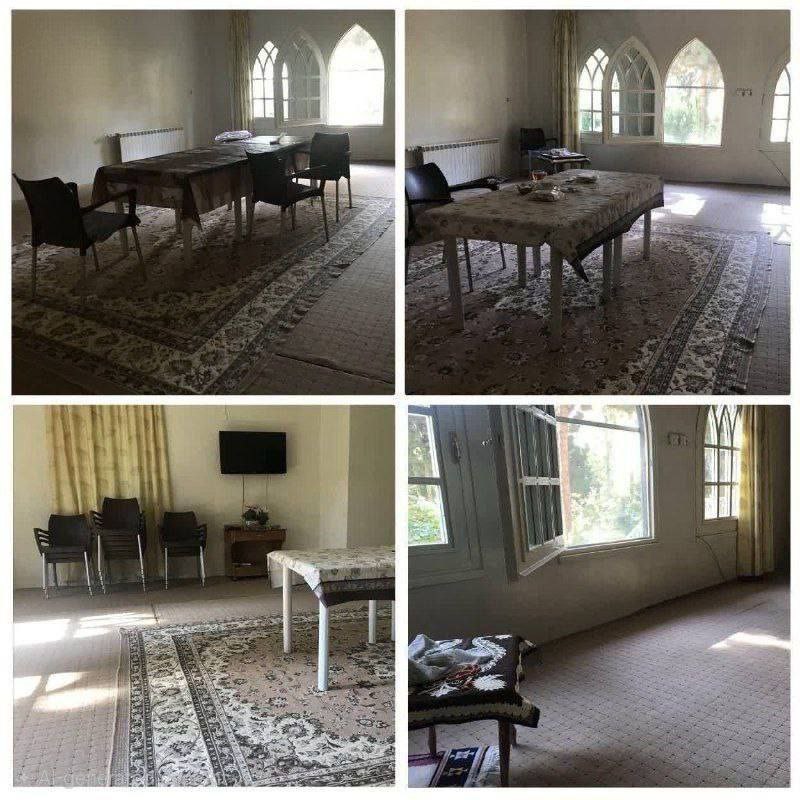
The house that Ayatollah Khamenei was assassinated in
Mehr News Agency tweet media
English
2
40
187
8.2K
Mehrzad Kohanrouz retweetledi
Michael Scherer
Michael Scherer@michaelscherer·
NEWS: Trump told me in a phone call Sunday morning he plans new talks with Iranian regime: "They want to talk, and I have agreed to talk, so I will be talking to them." GIFT LINK: theatlantic.com/national-secur…
English
51
114
340
216.4K
Mehrzad Kohanrouz retweetledi
U.S. Central Command
U.S. Central Command@CENTCOM·
CENTCOM Update TAMPA, Fla. – As of 9:30 am ET, March 1, three U.S. service members have been killed in action and five are seriously wounded as part of Operation Epic Fury. Several others sustained minor shrapnel injuries and concussions — and are in the process of being returned to duty. Major combat operations continue and our response effort is ongoing. The situation is fluid, so out of respect for the families, we will withhold additional information, including the identities of our fallen warriors, until 24 hours after next of kin have been notified.
English
13K
16.4K
87.5K
27.9M
Mehrzad Kohanrouz retweetledi
The Spectator Index
The Spectator Index@spectatorindex·
BREAKING: Body of Iran’s Supreme Leader Ayatollah Ali Khamenei has been recovered after his killing, according to Israeli media.
English
725
3.8K
29.8K
3.7M
Mehrzad Kohanrouz retweetledi
Face The Nation
Face The Nation@FaceTheNation·
WATCH: @margbrennan's full interview this morning with Iranian foreign minister Abbas Araghchi:
English
210
70
164
193.9K
Mehrzad Kohanrouz retweetledi
Danny (Dennis) Citrinowicz ,داني سيترينوفيتش
Everything ultimately comes back to one central issue: successive U.S. administrations have suffered from a deep conceptual gap in how they understand the Iranian regime. From the outset, many regional experts argued that Tehran operates with clearly defined red lines — particularly regarding regime survival, strategic deterrence capabilities, and regional influence and that it would not abandon those core interests, even at the risk of military confrontation. Those warnings were often discounted in favor of the assumption that sufficient economic or military pressure would eventually compel capitulation. Recent developments should make one thing clear: military escalation is unlikely to force Iran into surrender. On the contrary, external threats tend to reinforce the regime’s internal cohesion and validate its long-standing narrative of resistance. What makes this moment especially unusual is that both sides arguably prefer an agreement over open conflict. Yet negotiations repeatedly fail not necessarily because the objectives are irreconcilable, but because the perceptual gaps and profound mistrust prevent meaningful compromise. Washington often views Iran through a Western rationalist framework: the belief that escalating pressure inevitably produces pragmatic concessions. Tehran, however, interprets sustained pressure as proof of structural hostility, reinforcing its determination to resist. As long as U.S. policymakers continue to assess Iran primarily through a Western political lens — projecting assumptions about cost-benefit calculations that do not fully account for ideological legitimacy, revolutionary identity, and deterrence psychology then confrontation becomes less a policy choice and more a matter of time. The core issue is not whether pressure works. It is whether U.S. strategy is grounded in an accurate understanding of how this particular regime defines risk, survival, and victory.
Acyn@Acyn

Witkoff on Iran: The president is curious as to why -- I don’t want to use the word capitulated but why they haven't capitulated. Why under this pressure with the amount of naval power over there, why they haven't come to us and said we profess we don't want a weapon…

English
24
71
266
115.3K
Mehrzad Kohanrouz retweetledi
Jennifer Jacobs
Jennifer Jacobs@JenniferJJacobs·
Scoop from @CBSNews: Top national security officials have told Trump the military is ready for potential strikes on Iran as soon as this weekend, but the timeline for any action is likely to extend beyond Saturday or Sunday, sources say. Trump has not yet made a final decision. Over the next 3 days, Pentagon is moving some personnel out of the Middle East region — primarily to Europe or back to US — ahead of potential action or counterattacks by Iran. It's standard practice for the Pentagon to shift assets and troops ahead of a potential military activity and doesn’t necessarily signal an attack on Iran is imminent, one of the sources said.  Contacted by CBS News on Wednesday afternoon, a Pentagon spokesperson said they had no information to provide.  @JimLaPorta and me cbsnews.com/news/trump-pos…
English
184
563
1.5K
2M
Mehrzad Kohanrouz retweetledi
CBS News
CBS News@CBSNews·
President Trump discussed plans for strikes on Iran as soon as this weekend, but has not yet decided, sources say. cbsn.ws/46e0k6n
English
106
132
479
60.6K
Mehrzad Kohanrouz
Mehrzad Kohanrouz@MehrzadBBC·
Iran’s IRGC launches “smart control of the Straight of Hormuz” drill amid heightened US military presence in the region
English
0
0
0
187
Mehrzad Kohanrouz retweetledi
Seyed Abbas Araghchi
Seyed Abbas Araghchi@araghchi·
Nuclear talks with the United States are scheduled to be held in Muscat on about 10 am Friday. I'm grateful to our Omani brothers for making all necessary arrangements.
English
4.7K
1.7K
12.3K
3.2M
Mehrzad Kohanrouz retweetledi
Dave Lawler
Dave Lawler@DavidLawler10·
NEW: Friday’s Iran talks are off, for now at least. Snr US official to @BarakRavid: "We told them it is this or nothing, and they said, 'Ok, then nothing.’”
English
32
94
276
51.6K
Mehrzad Kohanrouz retweetledi
Amichai Stein
Amichai Stein@AmichaiStein1·
🚨🇺🇸🇮🇷 The Iranian news agency Fars reported that an Iranian drone successfully completed a "surveillance mission in international waters" after the U.S. military shot down an Iranian drone.
English
1
13
58
5.7K