Mendel Roth

924 posts

Mendel Roth banner
Mendel Roth

Mendel Roth

@MendelRoth

Katılım Temmuz 2019
867 Takip Edilen281 Takipçiler
Mendel Roth
Mendel Roth@MendelRoth·
@patrick_j_short just fanboying here: I find your Genetics podcast extremely insightful. You and your team do an incredible service.
English
0
0
0
15
Patrick Short
Patrick Short@patrick_j_short·
@MendelRoth Really interesting, thank you for flagging! Adding to my reading list for this week...!
English
1
0
1
5
Mendel Roth
Mendel Roth@MendelRoth·
@marklewismd I worked in the lab of Howard Reber at UCLA many years ago and i remember being told that he was one of the pioneers of the whipple procedure. Anyways, i come here (follow your musings) for the courage and stay for the humor.
English
0
0
1
490
Mark Lewis, MD, FASCO
Mark Lewis, MD, FASCO@marklewismd·
It’s from the day in 2017 I had the Whipple procedure because of a malignant tumor in the head of my pancreas My wonderful surgeons agreed to having the whole operation live-tweeted (archive link below) Monsters are scarier in the dark so shine a light x.com/letswinpc/stat…
Mark Lewis, MD, FASCO tweet media
English
6
24
297
34.9K
Mendel Roth retweetledi
NEJM
NEJM@NEJM·
A new review summarizes the genetics, diagnosis, and treatment of long QT syndrome, a major cause of sudden death in young people. Risk stratification and genotype-guided therapy are essential. Learn more in the Review Article “Long QT Syndrome” by Peter J. Schwartz, MD, and Lia Crotti, MD, PhD, from @TwittAuxologico and @unimib: nej.md/44cxXnN
NEJM tweet media
English
3
67
174
29.5K
Mendel Roth retweetledi
Daniel J Drucker
Daniel J Drucker@DanielJDrucker·
Here the authors reveal precise preventive and therapeutic strategies to ameliorate Insulin Resistance-related cardiometabolic health and longevity nature.com/articles/s4146…
English
0
12
29
4.8K
Mendel Roth
Mendel Roth@MendelRoth·
@doctorveera From what ive seen in the human genetic data ANGPTL3 is equally or more favorable than APOC3 for CV risk
English
0
0
0
118
Veera Rajagopal 
Veera Rajagopal @doctorveera·
In my view, people don’t give APOC3 nearly as much credit as they give PCSK9. Honestly, APOC3 inhibition might end up being far more life-transforming. Before PCSK9 inhibitors, we already had statins that revolutionized LDL-C lowering. PCSK9 added value, but its market impact was modest. For triglycerides (TGL), though, we’ve had nothing truly effective. APOC3 inhibition changes that — its impact on TGL reduction is absolutely transformative.
Pradeep Natarajan@pnatarajanmd

When I was a medical student, I vividly recall taking care of very very sick patients with acute pancreatitis in the ICU. Remarkable to see how APOC3 inhibition (here, olezarsen) is now shown to be a highly effective therapy for severe hypertriglyceridemia, esp among those with prior pancreatitis to reduce risk for acute pancreatitis (NNT 20 for all and 4 for those with prior) & yield remission (up to ~50%) for hypertriglyceridemia. Congrats @marstonMD @TIMIStudyGroup! nejm.org/doi/full/10.10… #AHA25 @NEJM


English
8
19
131
35.4K
Mendel Roth
Mendel Roth@MendelRoth·
@doctorveera Yes. This paper has unexpected findings. Also makes you wonder if GOF variants, which have been described to be associated with reduced BMI will consistently have poorer CVD outcomes. And there is an approved medication that serves as an agonist for this receptor.
English
1
0
1
110
Veera Rajagopal 
Veera Rajagopal @doctorveera·
Enjoyed reading this recent work by Farooqi, Collet and colleagues in Nature Medicine on the paradoxical reduction in cardiovascular risk in MC4R deficiency. Obesity is a major risk factor for cardiovascular disease. So, you'd expect individuals with MC4R deficiency, who often are morbidly obese, to get cardiovascular diseases more often. But it wasn't the case. In fact, it's the opposite. For a given BMI, MC4R deficient individuals seem to have better metabolic profile (lower LDL and total cholesterol) and lower cardiovascular risk compared to non-carriers. Why so? MC4R signaling is a key pathway in the brain that controls feeding behavior of humans. And this signaling sets the autonomic tone for metabolic adaptations in the periphery (gut, liver etc.). In individuals with MC4R mutations, the impaired melanocortin signaling tricks the brain in to thinking the body is in the fasting state. This impaired signaling drives increased feeding behavior (due to lack of satiety signal ) But this glitch in the brain also triggers metabolic adaptations resembling chronic caloric restriction: - Enhanced LDL clearance from circulation - Lower blood pressure (reduced sympathetic tone) - Efficient triglyceride clearance and preferential adipose storage - Reduced circulating lipids despite obesity The brain's (mis)perception of nutritional state overrides the actual peripheral metabolic state, creating a paradoxically protective lipid profile despite severe obesity. This highlights the brain as a master regulator of peripheral metabolism and reminds us that we've got so much left to learn how to fine tune the brain to treat obesity and its complications! Zorn et al. Nat Med 2025 nature.com/articles/s4159…
English
9
28
116
16.9K
Mendel Roth
Mendel Roth@MendelRoth·
I wonder if this study throws a wrench (caveats abound) into @PeterAttiaMD book's thesis that reducing risk of the major cardiometabolic diseases and cancer (AKA The 4 horsemen) will necessarily extend lifespan? nature.com/articles/s4158…
English
1
0
0
32
Mendel Roth
Mendel Roth@MendelRoth·
@panomics @GenomicsCow Its not standard of care for FH diagnosis and it will not get covered except in rare neonatal conditions
English
0
0
0
15
National Lipid Association
National Lipid Association@nationallipid·
Can genetic scores help improve outcomes for patients with FH? #CholesterolMonth This special Lipid Snippet highlights the award-winning abstract from #NLASessions 2025 in the area of FH, exploring how polygenic risk scores for coronary artery disease may enhance ASCVD prediction & management. Tune in wherever you listen to podcasts & read the abstract at lipid.org/lipidinsights. #KnowFH
English
1
0
8
515
Mendel Roth
Mendel Roth@MendelRoth·
@CMichaelGibson Why not go for a full cocktail? Add siRNA against LPA. Is there a technical limitation to adding more siRNA targets into a single cocktail?
English
0
0
2
105
C. Michael Gibson MD
C. Michael Gibson MD@CMichaelGibson·
What if there was a ONCE A YEAR subcutaneous injection to lower blood pressure and reduce cholesterol ? Drs. Maraganore,  Meanwell and I discuss an exciting new therapy that may just do that!
English
4
15
56
17.2K
Mendel Roth
Mendel Roth@MendelRoth·
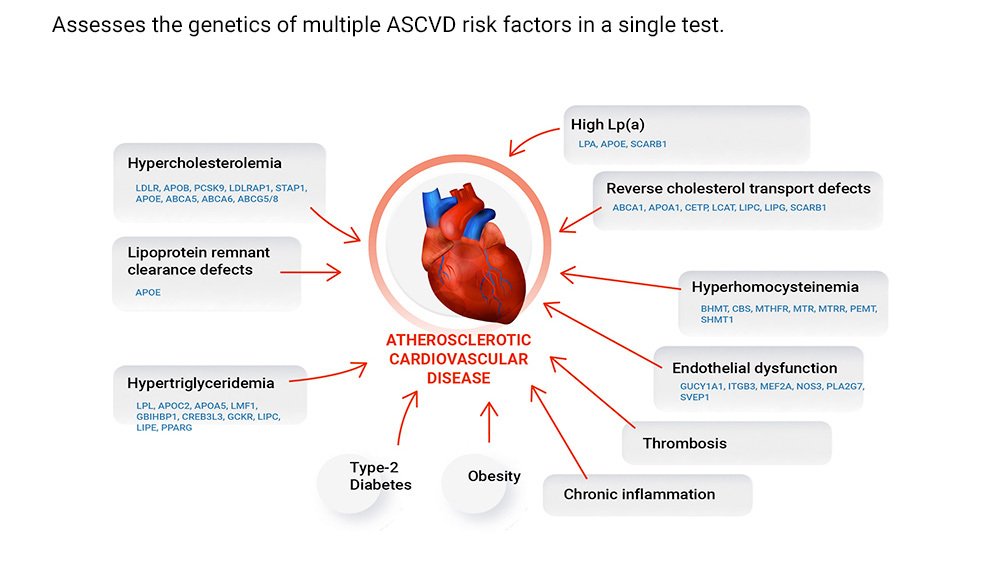
Its National Cholesterol Education Month. Raising awareness about hypercholesterolemia- an irrefutable, causal risk factor for ASCVD. We put together a free downloadable resource for clinicians on the genetics of hyperlipidemia. gbhealthwatch.com/downloads/GBin…
English
0
0
0
36
Mendel Roth
Mendel Roth@MendelRoth·
@kaia_mattioli I am just someone who serendipitously came across your tale and just wanted to let you know you are super brave for sharing this and I wish you all the best.
English
0
0
1
107
Dr. Kaia Mattioli
Dr. Kaia Mattioli@kaia_mattioli·
Earlier this year, I learned I have a pathogenic variant in BRCA2, which gives me a very high lifetime risk of breast cancer (55-69%), as well as an increased risk of ovarian cancer (12-29%) and pancreatic cancer (5-10%). 🧵1/ …
Dr. Kaia Mattioli tweet media
English
13
65
349
68.4K
Mendel Roth retweetledi
Federica Fogacci
Federica Fogacci@FedericaFogacci·
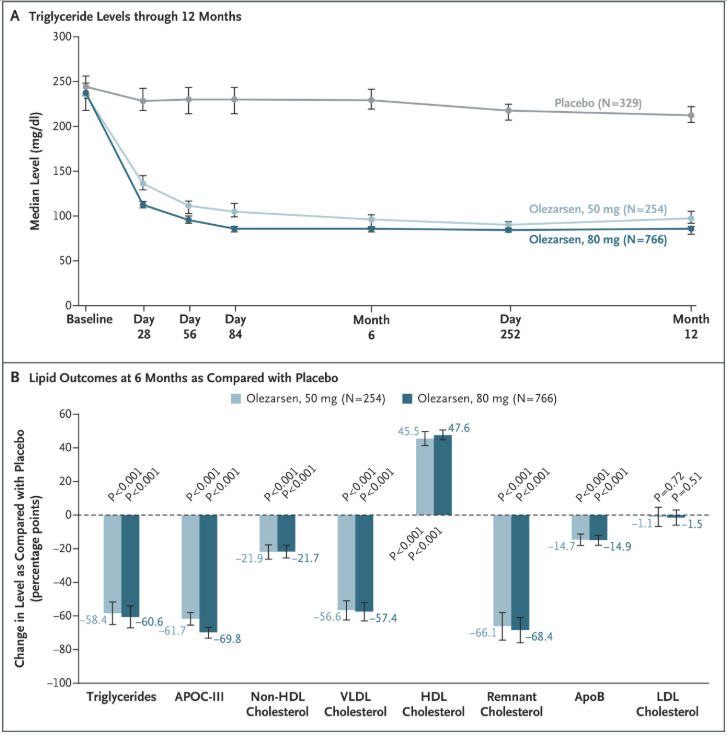
According to the #ESSENCE study, #Olezarsen 📉 TG by −58% (50 mg) and −61% (80 mg), w/ 〰️90% of 👫 reaching <150 mg/dL. Remnant chol, ApoB, and non-HDL-C also dropped, while LDL-C remained unchanged. This therapy could transform the management of ⏫TG and CV risk! #ESCCongress
Federica Fogacci tweet media
English
2
9
20
1.1K
Mendel Roth
Mendel Roth@MendelRoth·
@SashaGusevPosts The flaw here is that even though its called “gene-gene interaction” the analysis is then variantxvariant interaction. Broaden that out by performing gene burden x gene burden interactions
English
0
0
0
101
Sasha Gusev
Sasha Gusev@SashaGusevPosts·
I wrote about gene-gene interactions (epistasis) and the implications for heritability, trait definitions, natural selection, and therapeutic interventions. Biology is clearly full of causal interactions, so why don't we see them in the data? A 🧵:
Sasha Gusev tweet media
English
4
54
239
23.4K
Mendel Roth retweetledi
GBinsight Genetic Analysis
GBinsight Genetic Analysis@GBHealthWatch·
🧬 Highlighted Case Study — When very-high Lp(a) mimics familial hypercholesterolemia Read the full report ➜ champ.ly/q_Mp8-S5 A patient referred for “probable FH” had LDL-C > 190 mg/dL and a coronary-calcium score > 1000, yet GBinsight sequencing showed no pathogenic LDLR/APOB/PCSK9 variants. Instead, we found homozygous LPA rs10455872, a proxy for an ultra-short KIV-2 apo(a) isoform that drives genetically fixed Lp(a) well into the atherothrombotic range. Why this genotype changes management • Phenocopy explained: standard LDL-C includes the cholesterol mass on Lp(a); very-high Lp(a) can therefore masquerade as FH and trigger the wrong treatment ladder. • Risk is linear: UK Biobank and other cohorts link rs10455872-driven Lp(a) to higher LDL-C and stepwise ASCVD risk; clarifying the cause lets you set the true LDL-C goal and prioritise Lp(a)-targeted therapy as agents emerge. • Cascade screening made precise: a single GBinsight report identifies relatives at risk for both high Lp(a) and bona-fide FH, informing who needs statins ± PCSK9 and who may benefit from future apo(a) siRNA. ----- Every month GBinsight shares rigorously referenced, de-identified case overviews like this one to help clinicians translate genomics into cardiovascular practice. Follow GBinsight for next month’s case and keep your precision-cardiology toolkit one step ahead.
English
0
1
0
55
Mendel Roth retweetledi
NEJM
NEJM@NEJM·
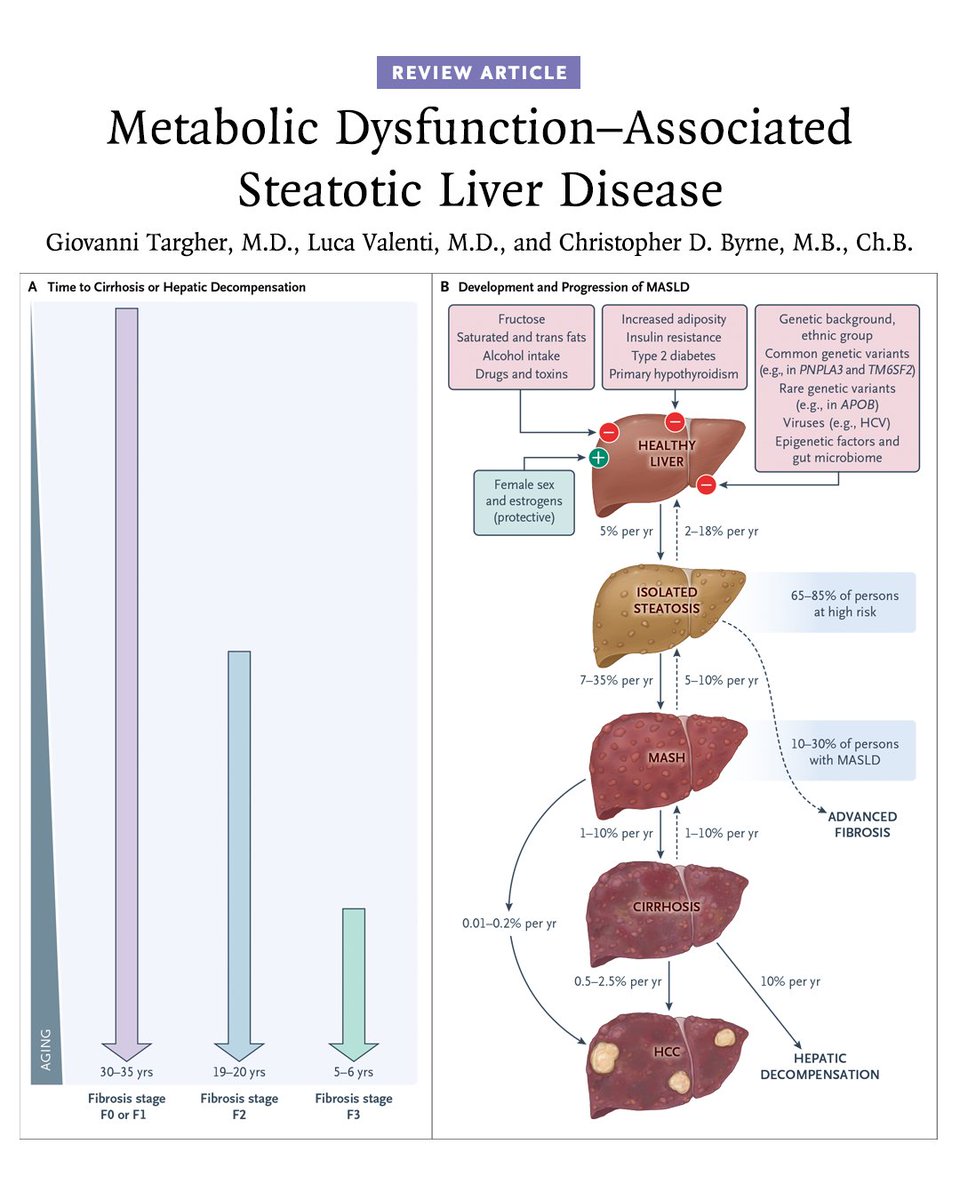
MASLD has become the most common chronic liver disease worldwide. Giovanni Targher, MD, Luca Valenti, MD (@lucavalenti75), and Christopher D. Byrne, MB, ChB, review the features of the disease as well as pharmacotherapies targeting the associated liver and cardiovascular–renal–metabolic issues. Learn more in the Review Article “Metabolic Dysfunction–Associated Steatotic Liver Disease” from @univerona, IRCCS Sacro Cuore Don Calabria Hospital, and elsewhere: nej.md/4lpS4F0
NEJM tweet media
English
4
392
1K
103.1K