Mike Jacobs

2.3K posts

Mike Jacobs banner
Mike Jacobs

Mike Jacobs

@MikeSJacobs1

Technologist and Co-Founder of Qluu. Founder and EIR @ Berkeley BASICS Incubator

California Katılım Mayıs 2024
264 Takip Edilen199 Takipçiler
Tom Pelissero
Tom Pelissero@TomPelissero·
Former Oklahoma RB Jaydn Ott is signing with the Chiefs, per source.
English
43
136
921
363.9K
Samuel Flippin
Samuel Flippin@SamuelFlippin·
@PalmerLuckey How exactly are screenshot from a smart tv accessing sensitive or classified information? Logic does not logic.
English
2
0
0
307
Palmer Luckey
Palmer Luckey@PalmerLuckey·
This is a massive and growing problem for American national security. Unbelievable amounts of sensitive and classified information is captured, scraped, and sent back to foreign nations. And users have no idea. Nobody expects that their TV or monitor is a surveillance tool. When I have joked that Smart TVs should be illegal, I am only half-joking.
Nav Toor@heynavtoor

Your smart TV is taking screenshots of your screen every 15 seconds. Not a guess. Not a theory. A peer-reviewed study by researchers at UC Davis, UCL, and UC3M tested it. Samsung TVs: every minute. LG TVs: every 15 seconds. Even when you're just using it as a monitor. Here's how to turn it off for every brand:

English
576
2K
17.4K
2.3M
Joe Lonsdale
Joe Lonsdale@JTLonsdale·
No idea if this is a good investment, but I love the quirkiness of capitalism. The same class of people investing to advance AI, innovate in healthcare, or revolutionize US defense are also conspiring to deliver us superior versions of delicious bagel and schmear shops at scale.
Aakash Gupta@aakashgupta

Tiger Global just valued a bagel shop at $300 million. And the math actually makes sense if you stare at it long enough. PopUp Bagels started in 2020 out of a kitchen in Westport, Connecticut. Adam Goldberg was baking bagels for neighbors during the pandemic. Five years later, Tiger Global closed a deal in late March that values the company at 5x what it was worth five months ago. The unit economics are what caught Tiger's attention. Average transaction over $24. Five bagel varieties. Three schmears. 55 total SKUs while competitors run 200-300. Stores are 1,000-1,200 square feet. Each location hires 10-15 employees instead of the 50-60 a typical QSR needs. No ice machines. No soda fountains. No fryers. They don't sell individual bagels. You buy packs of three, six, or twelve. You grip, rip, and dip. That constraint does two things simultaneously: it raises average order value above the threshold where a small-format store prints money, and it creates a ritual that photographs well. Every customer becomes a content creator. The franchise math: $330K-$810K to open, $35K franchise fee, 6% royalty. They've signed 300 franchise units with fewer than 15 operators. That's roughly 20 stores per operator. Experienced multi-unit franchisees running large territories, not first-timers buying a single shop. About 30 locations open now, targeting 100 by end of 2027. Celebrity investors include Paul Rudd, JJ Watt, Michael Phelps, Michael Strahan. Stripes bought a majority stake in 2023 and brought in a real CEO, Tory Bartlett, in late 2024. Adam Sandler has a dedicated phone at one of the New York shops to call in orders. They literally call it "the Sandler Phone." Here's what Tiger Global sees. The same firm that backed Meta, invested in OpenAI and Waymo, has been exiting 85+ companies from its most recent fund to concentrate on fewer, higher-conviction bets. They looked at a bagel company and decided it belonged in that concentrated portfolio. The $300 million number only works if you believe 300 franchise locations actually open and hit the projected unit economics. At an estimated $6M revenue per location and 18% margins, 100 operating stores would generate roughly $108M in systemwide profit. At 300, you're approaching the kind of numbers that make $300M look cheap. The real question is whether the hype survives national scale. PopUp Bagels built its brand on scarcity, long lines, and social media energy. Every franchise system in history has faced the tension between exclusivity and expansion. Levain Bakery, funded by the same firm Stripes, is the closest comparable, and it stayed small. Tiger's betting the ritual travels. That the 1,100 square foot format, the five-SKU simplicity, and the $24 average ticket create something that works in Tampa the same way it works in Greenwich Village. If they're right, this is the most capital-efficient restaurant concept of the decade. If they're wrong, it's a $300 million lesson in the difference between a brand and a business.

English
78
43
1K
286.2K
Petra
Petra@synthshareai·
@petergyang Do we really think anyone in Silicon Valley is still using Cursor, let alone Composer ?
English
1
0
0
299
Peter Yang
Peter Yang@petergyang·
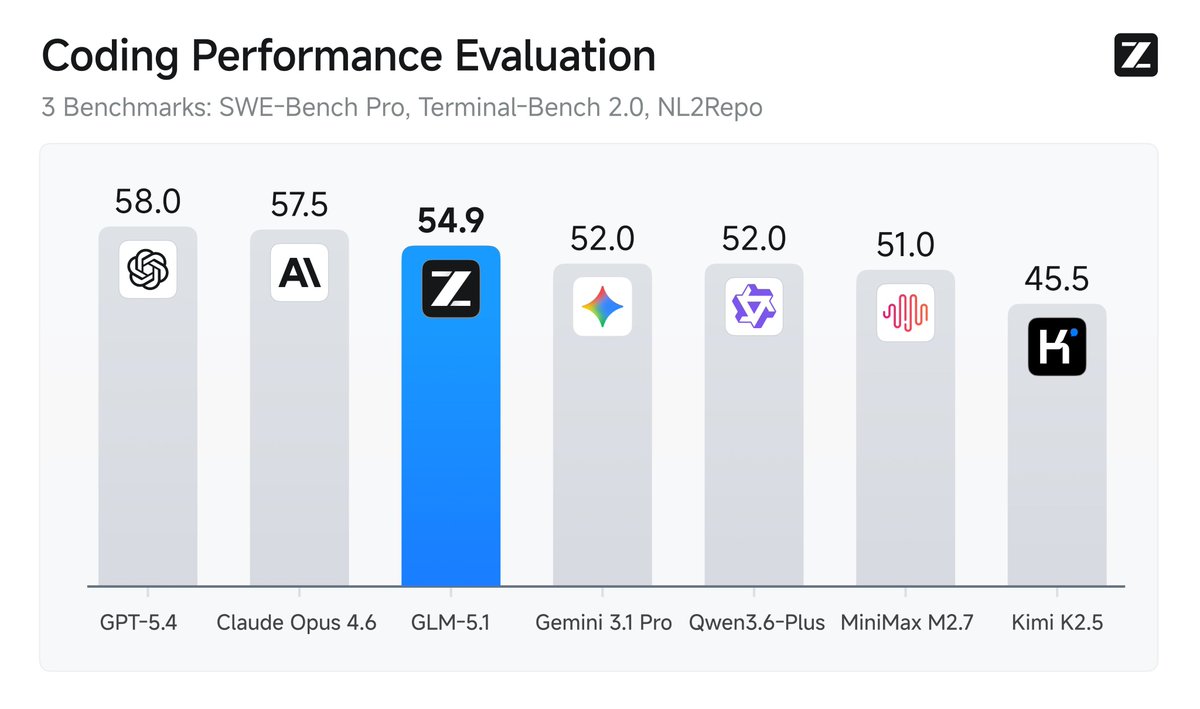
Silicon Valley is quietly running on Chinese open source AI models. Here are the receipts: → Cursor confirmed last month that Composer 2 is built on Moonshot's Kimi K2.5 → Cognition's SWE-1.6 model is likely post-trained on Zhipu's GLM → Shopify saved $5M a year by switching to Alibaba’s Qwen model. Airbnb CEO Brian Chesky has also said: "We rely a lot on Qwen. It's very good, fast, and cheap." And now Zhipu dropped GLM-5.1, an open source model that performs almost as well as Opus on coding benchmarks. 📌 More on the Anthropic + OpenClaw drama and what I'm learning about AI on the ground in China in my new post: creatoreconomy.so/p/the-all-you-…
Peter Yang tweet media
Peter Yang@petergyang

As much as I love using Claude Max and ChatGPT Pro, I don't think these all-you-can-use AI subscriptions will last forever. Here's my new deep dive that covers: → Why Anthropic cut off OpenClaw access → How to run local models on your Mac → What I'm seeing on the ground in China 📌 Read now: creatoreconomy.so/p/the-all-you-…

English
121
288
2.1K
436.5K
Victor
Victor@victorpham2212·
@realarmaansidhu Lies. This paper has been out there for nearly a whole year now. ‘First working implementation’. You people lie through your teeth without shame
English
3
1
46
2.2K
Armaan Sidhu
Armaan Sidhu@realarmaansidhu·
A Waterloo undergrad just built the first working implementation of Google's most disruptive AI paper. In one week. Memory stocks crashed. Investors got it exactly backwards. TurboQuant compresses the KV cache — the part of an AI model that eats your GPU memory during long conversations — from 16 bits down to 3 bits per value. 5x compression. Near-zero quality loss. No retraining needed. Drop it into any existing model and it just works. Micron, SK Hynix, Samsung, SanDisk all dumped 3-6% in a single day. Wall Street's logic: if AI needs less memory, sell memory stocks. That logic has been wrong every single time in the history of computing. This is Jevons paradox — the 160-year-old principle that says when you make a resource more efficient, you don't use less of it. You use more. Coal engines got efficient, coal consumption exploded. Bandwidth got cheaper, data consumption went vertical. Storage got dense, we filled it with 4K video. Every time. Here's what TurboQuant actually does to demand. A 70B parameter model that used to need a $10,000 workstation to run at long context? Now runs on a $1,500 consumer GPU. A model that choked at 32K tokens? Now handles 100K+. A smartphone that could barely run a 3B toy model? Now runs 7-13B with thousands of tokens of usable context. You didn't reduce demand. You just made AI accessible to a billion more devices. Every one of those devices now needs memory. Every user who couldn't run local AI before now can — and will. And every developer who hits the new ceiling will immediately ask for more. Anirudh BV — a student at UWaterloo — took Google's paper, wrote 2,000 lines of CUDA, and had it running on Nvidia's Blackwell B200 within a week. From pseudocode to live generation from compressed memory. If a college kid can ship this before most corporate labs, the adoption curve isn't years out. It's already here. The investors who sold memory stocks on this news will be buying them back within two quarters. Efficiency doesn't kill demand. It creates the demand that didn't exist yet.
Armaan Sidhu tweet mediaArmaan Sidhu tweet media
ani@anirudhbv_ce

I implemented @GoogleResearch's TurboQuant as a CUDA-native compression engine on Blackwell B200. 5x KV cache compression on Qwen 2.5-1.5B, near-loseless attention scores, generating live from compressed memory. 5 custom cuTile CUDA kernels ft: - fused attention (with QJL corrections) - online softmax -on-chip cache decompression - pipelined TMA loads Try it out: devtechjr.github.io/turboquant_cut… s/o @blelbach and the cuTile team at @nvidia for lending me Blackwell GPU access :) cc @sundeep @GavinSherry


English
30
157
1.9K
294.3K
Molly O’Shea
Molly O’Shea@MollySOShea·
Ross @fubini says “There are only ~40 people in the entire US that are able to sell products to the government, period.” "The most rarefied skill is the ability to do that effectively.. you're: - @ssankar, Palantir - Matt Steckman, @anduriltech - Zach Shore, @hermeuscorp - Scott Sanders, @ForterraDrive You very quickly get to the end of the list."
English
30
32
511
189.1K
Jon Oringer
Jon Oringer@jonoringer·
Looks like mostly direct/social.
English
8
0
18
10.2K
Jon Oringer
Jon Oringer@jonoringer·
The NYT just profiled a $1.8B revenue company with 2 employees. Medvi is a telehealth GLP-1 provider built by Matthew Gallagher, 41, from his house in LA. He launched in September 2024 with $20,000. Here are the numbers: Month 1: 300 customers Month 2: 1,300 customers 2025 full year: $401M revenue, 250,000 customers 2026 run rate: $1.8B Net margin: 16.2% ($65M profit) Total employees: 2 (him and his brother) Outside funding: $0 How it works: Medvi is a front end. Two platforms — CareValidate and OpenLoop Health — handle doctors, prescriptions, pharmacies, shipping, and compliance. Gallagher handles brand, website, ads, checkout, and customer service. All built with AI. His stack: ChatGPT, Claude, and Grok for code. Midjourney and Runway for ad creative. ElevenLabs for voice. Custom AI agents to connect systems. AI chatbot for customer service (which initially hallucinated fake prices he had to honor). For comparison: Hims & Hers did $2.4B revenue last year with 2,442 employees and 5.5% net margins. Gallagher is running 3x the margin with a fraction of a percent of the headcount. Back into the unit economics: ~$336M in total costs, probably $160-200M to the telehealth platforms, leaving $130-170M mostly in marketing. Against 250,000 customers, that's a $500-700 CAC. High, but it works because his overhead is virtually zero and LTV at ~$200/month holds up. He's expanding fast. Men's health launched in February — 50K customers in month one. Meal delivery went live last month. Women's health, hair growth, supplements, and skincare are next. The vulnerability: zero moat. No proprietary tech, no doctor network, no pharmacy infrastructure. CareValidate or OpenLoop could raise fees or launch competing brands. Anyone could replicate this model in weeks. Right now, the margins are enormous for anyone who moves fast enough. The question is how long that window stays open. nytimes.com/2026/04/02/tec…
English
84
161
1.8K
512.3K
Sawyer Merritt
Sawyer Merritt@SawyerMerritt·
Difference in quality between NASA and SpaceX’s launch livestreams.
English
1.2K
1.7K
20.4K
2.9M
Mike Jacobs
Mike Jacobs@MikeSJacobs1·
@AlexFinn No. They’re a big team and have access and knowledge of how to leverage the models properly. I can produce the work of 100 devs from 3-5 years ago as well. And many others can do this, too
English
0
0
0
31
Alex Finn
Alex Finn@AlexFinn·
The velocity in which Anthropic ships is unlike anything I've ever seen I'm sorry, but we have to assume they have access to an AGI like model that nobody else in the world has correct? They are simply holding it back so they can ship industry changing updates daily?
Claude@claudeai

Computer use is now in Claude Code. Claude can open your apps, click through your UI, and test what it built, right from the CLI. Now in research preview on Pro and Max plans.

English
230
99
1.7K
191.4K
Elon Musk
Elon Musk@elonmusk·
@DannyLimanseta For the same reason we run simulations: to observe interesting outcomes. That’s why the most interesting outcome, especially if ironically entertaining, is the most likely: all the boring simulations were terminated.
English
591
484
5.6K
1.2M
BlackRoomSec
BlackRoomSec@blackroomsec·
Oh boy, Delve either needs to stop speaking openly online or get new legal representation STAT. They also need a PR firm, immediately. There is no way this was written by a lawyer or approved by one and if the person who did write this continues to write more emotionally based messages like this, they're not going to be in business much longer. Holy guacamole. My former bosses would be blowing up my phone to start terminating whoever was responsible for this before they got back to the office😳
Varunram Ganesh@varunram

Delve's response to the substack is finally out

English
36
37
790
118K
Astasia Myers
Astasia Myers@AstasiaMyers·
Spoke to 20 students in the last 2 weeks. 0 are using Cursor. Zero.
English
341
15
1.3K
238.7K
Sreeram Garlapati
Sreeram Garlapati@SreeramG·
@AstasiaMyers The gap between what Twitter talks about and what students actually use is… enormous.
English
1
0
1
375