Mrray retweetledi
Mrray
641 posts

Mrray
@MilanMrray
Arguing is my passion, getting money is my hobby
Dome cfc estates Katılım Şubat 2010
1.8K Takip Edilen194 Takipçiler
Mrray retweetledi
Mrray retweetledi
Mrray retweetledi
Mrray retweetledi

South Africans have been attacking Nigerians for years. No proper actions from Nigerian officials.
South Africans confront one Ghanaian. We summoned their ambassador and we have escalated the issue to be put on AU’s agenda!
This is Ghana we deserve. 24/7!
Can we make Ablakwa Prime Minister? The Foreign Ministry is becoming too small for him la.
English
Mrray retweetledi

The curved line outside the penalty box is not decorative. It has one job. And it is more important than most people realise.
It is called the penalty arc.
That small D-shaped curve sitting just outside the top of the penalty area. A lot of fans have even looked at it thousands of times without ever stopping to ask what it actually does.
Here is the answer.
Under Law 14 of the IFAB Laws of the Game, every player except the penalty taker and the goalkeeper must be at least 9.15 metres away from the penalty spot when a penalty kick is taken.
The arc is simply how that rule is drawn onto the pitch.
The penalty spot is 11 metres from the goal line. The penalty area itself only extends 5.5 metres behind that spot toward the halfway line.
Without the arc, a defender could legally stand right on the edge of the box, just 5.5 metres from the spot, and that would violate the required distance without technically breaking any visible boundary.
The arc closes that gap. It is drawn with a 9.15-metre radius centred exactly on the penalty mark, bulging outward to guarantee that every player behind it is the correct distance away.
That is its only function. It plays no role in free kicks, corners or any other situation in open play. The moment the penalty is taken, the arc becomes irrelevant again until the next one.
Referees check it before every penalty kick. Players who step inside it before the ball is struck are penalised for encroachment.
My name is Ajoje. I am a FIFA Licensed Agent and International Sports Lawyer. I write on the Law and Business of Football, a lot. Repost and Follow if you want to read more posts like this.
Oxygen⚽️🏀@predictionsight
What exactly is the function of this semi-oval arc at the edge of the box?
English
Mrray retweetledi
Mrray retweetledi

Dumsor is back. We built a tool that tells you when your light goes off.
Type your area → see your group → know your week.
3news.com/tools/dumsor #TV3GH #3NewsGH
English
Mrray retweetledi

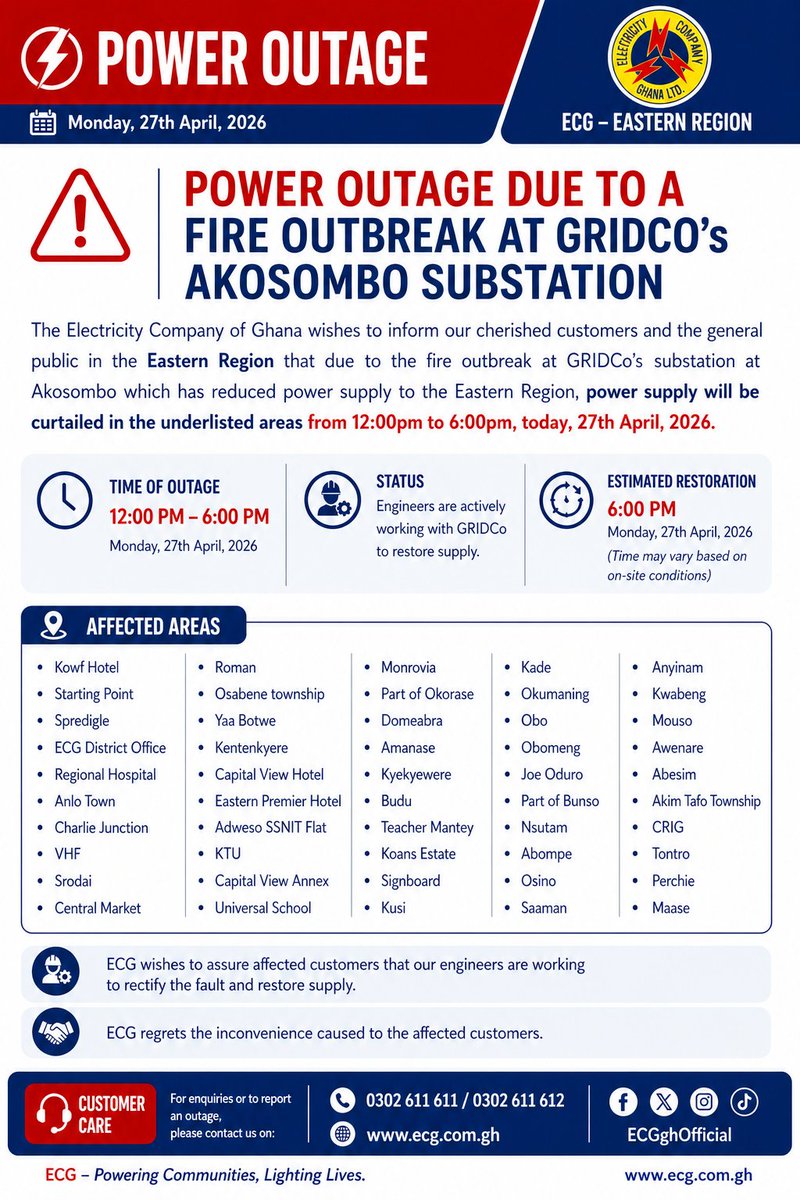
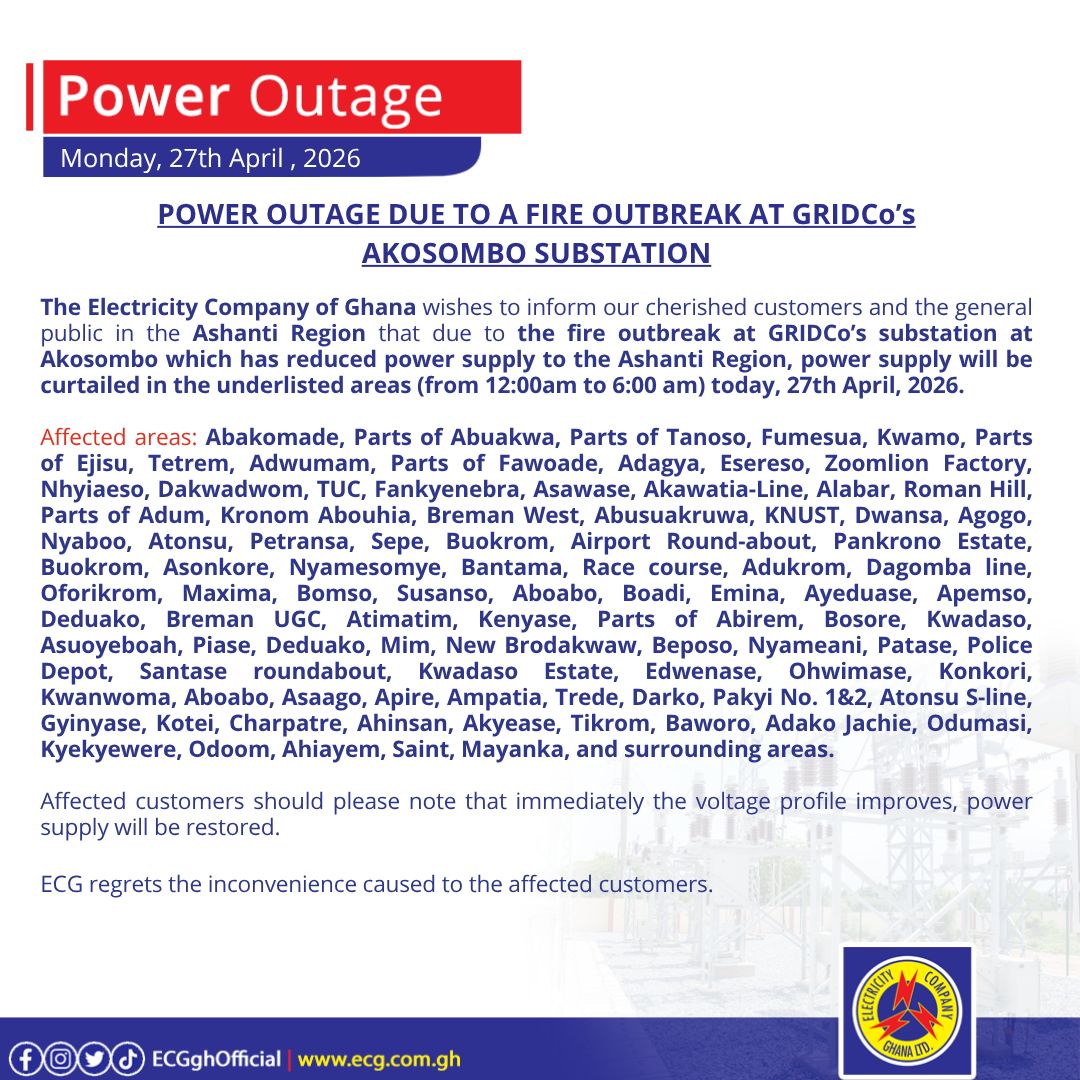
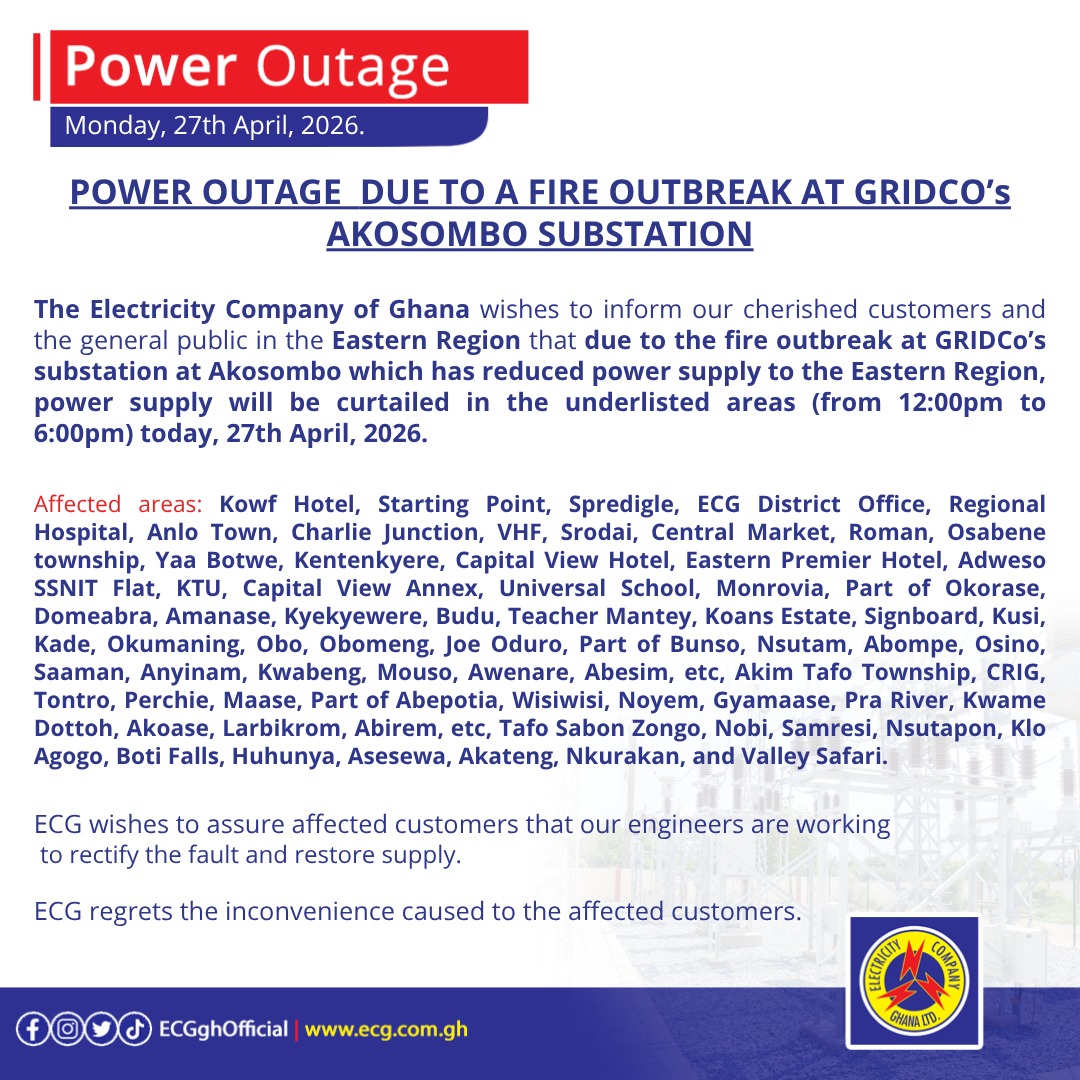
Noko nice & clean.
When all the wahala is resolved, improve on the design of your releases, okay?

Electricity Company of Ghana Ltd@ECGghOfficial
English
Mrray retweetledi
Mrray retweetledi

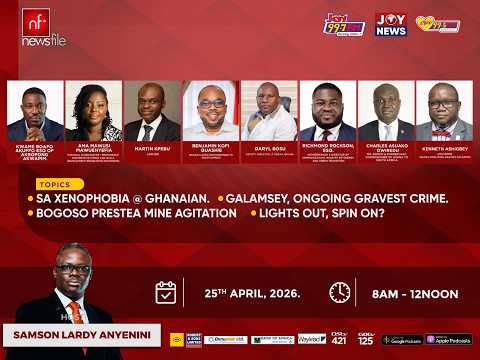
Bogoso Prestea Mine: Heath Goldfields has collateralised the mine to Trafigura for $65M without prior approval from the sector minister- Martin Kpebu, Lawyer.
Watch here: youtube.com/live/mwGssCOLY…
#Newsfile

YouTube
English
Mrray retweetledi

In November 1996, a photograph appeared in the Liverpool Echo showing an 11-year-old Everton mascot walking out for the Merseyside derby. That child was Wayne Rooney.
It is one of the earliest recorded images of the use of mascots- which has since become one of the most commercially valuable traditions in world football.
Every Premier League matchday, over 440 children walk onto pitches across England holding the hands of professional footballers. Most people assume it has always been this way. It has not. And the story of how it started is more interesting than the tradition itself.
The practice began informally in the mid-1990s with one or two children per team. It became global policy in 2002 when FIFA partnered with UNICEF on a campaign called Say Yes for Children, designed to protect children's rights worldwide.
The most visible element was simple: one child walked out with every player before every World Cup match, wearing FIFA/UNICEF t-shirts as a symbolic reminder that football had a responsibility beyond the result.
From 2002, it became commercialised. McDonalds became the primary sponsor of the Player Escort Programme at the World Cup and European Championships. At the 2006 World Cup they sent 1,408 children from 35 countries to Germany. At the 2010 World Cup, 1,408 children from 47 countries.
At the 2014 World Cup in Brazil, 1,408 children again, this time from across 70 countries. According to available estimates, McDonald's pays FIFA between $10 million and $25 million per year for its overall World Cup sponsorship, of which the Player Escort Programme is the centrepiece.
What started as a UNICEF advocacy moment is now one of the most consistently sponsored pieces of real estate in world football. The handshake before kickoff. The anthem. And eleven small children holding hands with eleven millionaires. All three have a sponsor. And it all started from somewhere.
My name is Ajoje. I am a FIFA Licensed Agent and International Sports Lawyer. I write on the Law and Business of Football, a lot. Repost and Follow if you want to read more posts like this.
HAMZZY@Hamzythacreator
Why do footballers always walk out with little kids before a match? No jokes… what’s the actual reason? 🤔
English
Mrray retweetledi

Mrray retweetledi

Attorney General vs OSP: So long as Article 88 is not amended, there’s no way the OSP can operate legally and constitutionally - Nii Ayikoi Otoo, former Attorney-General.
youtube.com/live/55sSPWL37…
#ThePulse | #JoyNews

YouTube
English
Mrray retweetledi
Mrray retweetledi
Mrray retweetledi
Mrray retweetledi
Mrray retweetledi