Mrs Bella Saunders MCCT

4.7K posts

Mrs Bella Saunders MCCT banner
Mrs Bella Saunders MCCT

Mrs Bella Saunders MCCT

@MissAVECarter

Assistant Head and former Head of RE. Advocate of Religion and Worldviews approach. PhiE enthusiast. Passionate about teaching and learning. (Née Carter).

Derbyshire Katılım Mart 2015
1.1K Takip Edilen1.4K Takipçiler
Sabitlenmiş Tweet
Mrs Bella Saunders MCCT
Mrs Bella Saunders MCCT@MissAVECarter·
Cognitive science is not just one leader’s ‘thing’ that they ‘run’ and ‘do’ in a school. It should be everyone’s ‘thing’. We need to help all have ownership of how teaching and learning happens. It is a shared endeavour @PepsMccrea @HughesHaili @C_Hendrick @Steplab_co
English

0
4
17
2K
Mrs Bella Saunders MCCT
Mrs Bella Saunders MCCT@MissAVECarter·
Here I am - embracing the fundamentals of instruction at the blackboard c.1989
Mrs Bella Saunders MCCT tweet media
English
0
0
2
219
Mrs Bella Saunders MCCT retweetledi
Andy Lewis
Andy Lewis@AndyLewis_RE·
We are so fortunate we have Dawn’s wisdom still found on here. She is the person I would have put in charge of devising a NC for RE. She would also have managed to pull together a consensus no doubt…
Miss@missdcox

#TeamRE If this was the national curriculum substantive content for KS3... How would it differ from what you already do?

English
1
5
26
3.5K
Mrs Bella Saunders MCCT retweetledi
Nikki McGee
Nikki McGee@RE_McGEE·
I’m guilty of only showing my students grand, ornate mandirs from India and implying they’re all like that. I was struck by how many simple buildings or conversions are used for worship. I’ll be adding these to my resources. This one is in Agra.#RETeacherOnTour
Nikki McGee tweet mediaNikki McGee tweet mediaNikki McGee tweet media
English
1
1
12
459
Mrs Bella Saunders MCCT retweetledi
Heritage High School
Heritage High School@HHS_School·
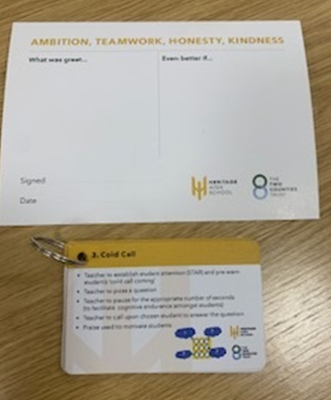
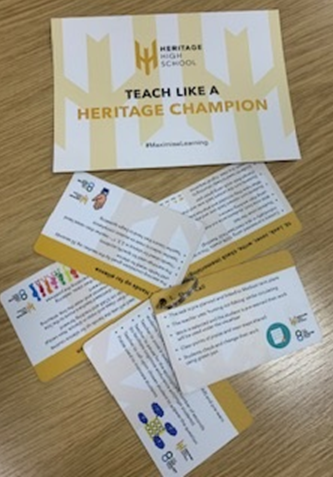
Ensuring we maximise learning through a high value curriculum and quality first teaching for all scholars.
Heritage High School tweet mediaHeritage High School tweet media
English
0
1
10
3K
Mrs Bella Saunders MCCT retweetledi
Carl Hendrick
Carl Hendrick@C_Hendrick·
The science of learning isn't about prescriptions, it's about probabilities. And this is where knowing the boundary conditions of any principle matters so much. Knowing when not to use it can be as important as knowing when to. This is my problem with every lesson starting with retrieval practice "because science". A principle applied everywhere becomes dogma; a principle applied within its limits increases the probability of it being effective, because it honours the conditions that make it work in the first place. Retrieval practice is a key driver of learning but there are a lot of contexts where retrieval might be counterproductive: introducing new concepts or when prior knowledge is insufficient to make retrieval attempts meaningful rather than random guessing. The boundary conditions matter precisely because they reveal the mechanisms underlying the effect. Retrieval practice works through the effortful reconstruction of knowledge from memory, which strengthens retrieval pathways. But if there's nothing meaningful to retrieve, or if the retrieval demands exceed working memory capacity, the mechanism breaks down. The practice becomes ritual rather than science. Interleaving benefits discrimination between similar concepts, but becomes less valuable when categories are already easily distinguishable. Spacing enhances retention through forgetting and relearning, but may hinder initial acquisition when foundational knowledge is still forming. Senior leaders saying "use retrieval practice when learners have established some initial knowledge of the material, when the cognitive demand matches their capacity, and when errors can be corrected through feedback" is less compelling than "start every lesson with retrieval practice." The nuanced version requires professional judgment; the simplified version offers algorithmic certainty. This is where we need to move away from "what does the research say" but "under what conditions does this research apply/not apply to my context and how can I apply it?"
English
27
113
341
82.6K
Mrs Bella Saunders MCCT retweetledi
Justin Baeder, PhD
Justin Baeder, PhD@eduleadership·
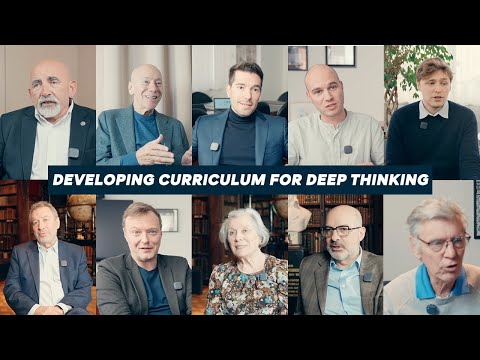
A great clip from the 30-minute video on Developing Curriculum for Deep Thinking: The Knowledge Revival @dylanwiliam has got to have the coolest speaking voice in education. youtube.com/watch?v=5X_IyU…
YouTube video
YouTube
English
3
44
152
12.5K
Mrs Bella Saunders MCCT retweetledi
Carl Hendrick
Carl Hendrick@C_Hendrick·
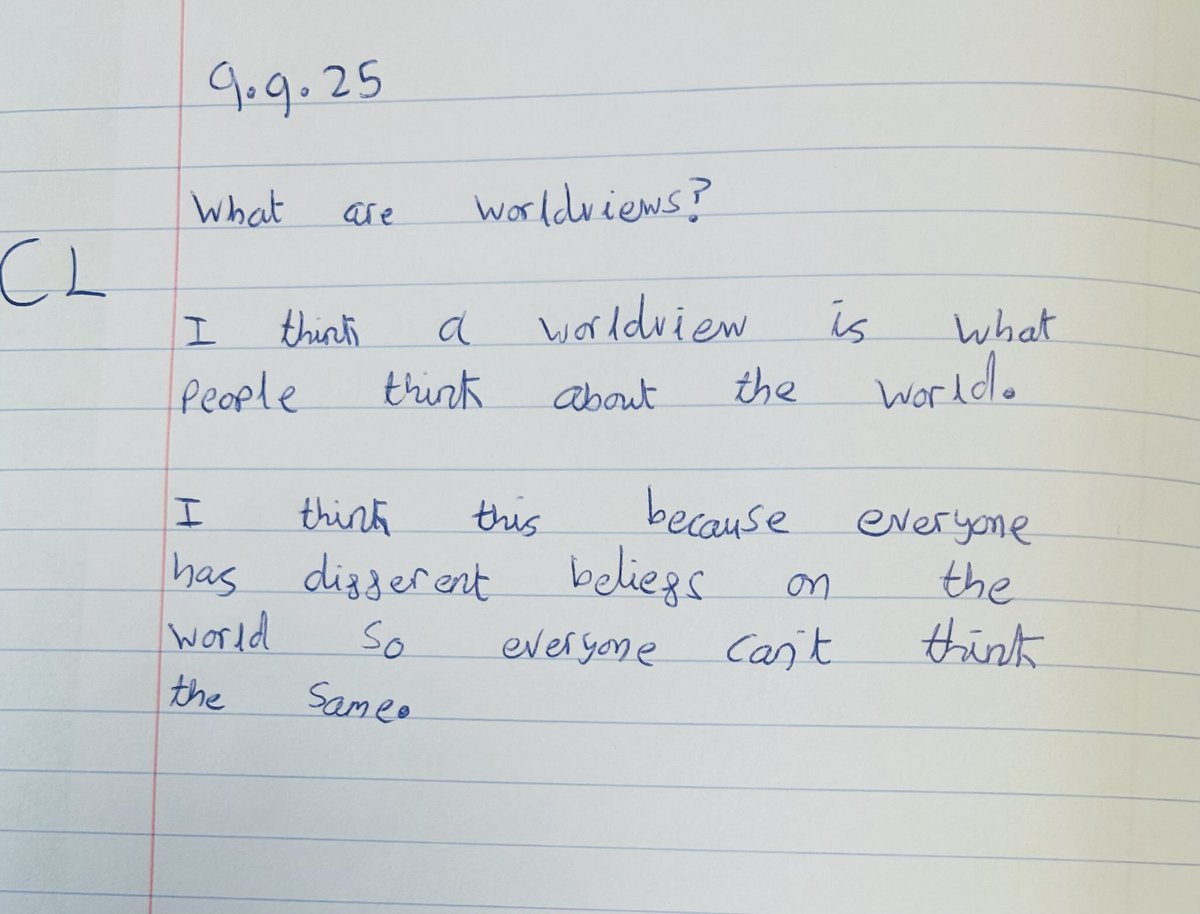
Learning is a compounding game. It’s about steady growth over time not momentary performance. This is why retrieval practice, daily review, and spacing are so powerful. They convert momentary effort into lasting advantage. We often judge students by where they are now. Their test scores, their reading level, their grade placement etc. But often we are testing the illusory gains of cramming not learning. What really matters is the trajectory: the rate at which they are learning. And learning is not additive, it’s synergistic. Knowledge doesn’t simply stack piece upon piece; it interacts. Vocabulary unlocks comprehension, comprehension fuels background knowledge, and background knowledge accelerates the acquisition of more vocabulary. The cycle feeds itself. Changing long term outcomes means designing for growth rates, not snapshots. That means prioritizing daily reading, retrieval practice, cumulative review, and structured vocabulary instruction. activities that produce small but steady gains but often don’t feel like it. It also means intervening early, because once a compounding gap opens, it is brutally hard to close. Interventions often fail when they treat outcomes, not growth rates. Daily reading habits exemplify the Matthew Effect in education where small behavioral differences compound into dramatic learning disparities. Students who read consistently encounter vastly more words than sporadic readers, creating cascading benefits in vocabulary, comprehension, and cognitive processing that extend far beyond the reading itself. Like compound interest, these modest daily choices accumulate into substantial gaps in academic achievement, transforming seemingly minor habits into powerful predictors of lifelong educational success.
Carl Hendrick tweet media
English
21
122
448
30.6K