

Bruce Lemieux
3.9K posts
Bruce Lemieux
@MoCoRealEstate
Residential real estate experts in Montgomery County, Maryland. Loves running and tries to refrain from political commentary.
North Potomac MD USA 20878 Katılım Ocak 2009
251 Takip Edilen220 Takipçiler

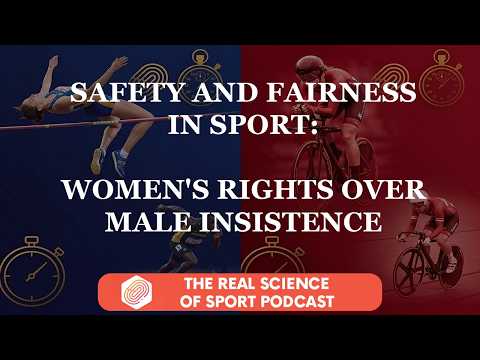
The sky is falling as women are harmed - so say various Human Rights groups & people in response to the IOC's Policy to protect women's sport. Their views are misguided, uninformed & false. In this 15 min video, I explain what they get wrong & ignore: youtube.com/watch?v=591HkK…
YouTube
English

After a long hiatus, RunWashington is getting back on track runwashington.com/2026/03/28/aft…
English

"Seven stolen village dogs in … China captured the hearts of millions … after breaking free from thieves … and embarking on a journey home together…
"A video of [the] dogs walking along a busy highway [showed them] surrounding an injured German shepherd, while a Corgi … looked back to ensure none were left behind."
amp.scmp.com/news/people-cu…

English
@hjluks Only a couple of runs in Vienna, so not an expert. My favorite was along the Donaukanal towards the Danube. That's a great urban running trail with a lot of energy.
English

Anyone from Vienna ?? From this position, where would you walk or run in the early morning?

English

Seems possible that he is making this up. Every element
Aaron Rupar@atrupar
COLLINS: You said there's many points of agreement with Iran. Can you give us a few? TRUMP: Like 15 points COLLINS: That Iran has said yes to? TRUMP: They're not gonna have a nuclear weapon. That's number 1, 2, and 3 COLLINS: They've said yes to that? TRUMP: They agreed to that
English
@ChrisMurphyCT Claw back $200B from the Trump "big beautiful bill" tax cut for the wealthy to pay for it.
English

Here's what I know.
The Iran War will cost $200B. Prices in the U.S. are spiking. The Middle East is on fire. A dozen soldiers are dead, more to come.
And for what? Iran's new leaders are worse than the old ones, and they will keep their missile, drone and nuclear programs.
English

I hope to be him someday
Dr Shawn Baker 🥩@SBakerMD
This is absolutely inspiring! 81 years old, 29 sec 200m sprint!
English
@awealthofcs Covered calls is a distraction. He has assets & life's too short to be miserable, so find an exit ramp out of the business. Figure out what to do with his time. Factor healthcare costs 42→65. Finding even part time fulling work makes the numbers a lot easier.
English
A 42-year-old small business owner has a $2 million portfolio, no debt & no dependents
But he's miserable running the business
Wants to know if he can retire now and pull $170k/year in withdrawals
Is this feasible?
From a covered call strategy?
awealthofcommonsense.com/2026/02/can-yo…

English
@JasonFitz1 Why what? One's training volume shouldn't be considered when programming Z1 training instead of Z2 or other higher intensities?
English
Great post. I’ll add for runners: it’s easier to add stationary cycling at Z1 to supplement your base training than with running. Often hard to stay in Z1 while running…
Howard Luks MD@hjluks
Yesterday, I said that if a new runner’s heart rate shoots above 150 within the first few seconds of starting, they probably shouldn’t be running. When someone who hasn’t trained consistently begins jogging, and their heart rate rapidly climbs into the 150s and stays there, that effort is not aerobic base work. It’s high-intensity work relative to their current conditioning. It may not feel “hard” in the way sprinting feels hard, but physiologically, it is well above the zone where foundational adaptations occur. True aerobic base development happens below the first lactate threshold. That’s where mitochondrial density improves, capillary networks expand, and fat oxidation becomes more efficient. That’s also where oxidative stress is manageable, and the recovery cost is low enough to repeat the effort frequently. If heart rate is immediately elevated, the body is operating in a more glycolytic state. Oxidative stress increases. Sympathetic tone rises. Recovery burden goes up. That may still improve fitness, but it’s not base building. It’s stress accumulation. There’s another layer that matters even more in midlife adults: the speed of tissue adaptation. This is my office hours every week. Many runners' injuries are training errors. The cardiovascular system adapts relatively quickly. Tendons, fascia, cartilage, and bone adapt slowly. When you combine high metabolic stress with repetitive impact load before tissues are prepared, the mismatch shows up as plantar fasciitis, Achilles pain, knee irritation, hip tendinopathy, or stress reactions. Most new runners don’t quit because they lack motivation. They quit because something starts to hurt. Brisk walking, incline walking, rucking, cycling, or structured walk-run intervals allow aerobic adaptations to occur with a lower oxidative and mechanical burden. As aerobic efficiency improves, heart rate at a given pace drops. As tissues strengthen, impact tolerance increases.... Then running becomes sustainable. Running is a phenomenal tool. But durability comes first. Base comes first. The ability to recover comes first. And yes... sprinting is fine. High HR is fine... don't come at me about this ;-). But... as @Alan_Couzens and @feelthebyrn1 and @inaki_delaparra and others will also tell you... Your base training is foundational. Take the time to build it and maintain it.
English

I’ve teamed up with @KidRock to deliver two simple messages to the American people: GET ACTIVE + EAT REAL FOOD.
English
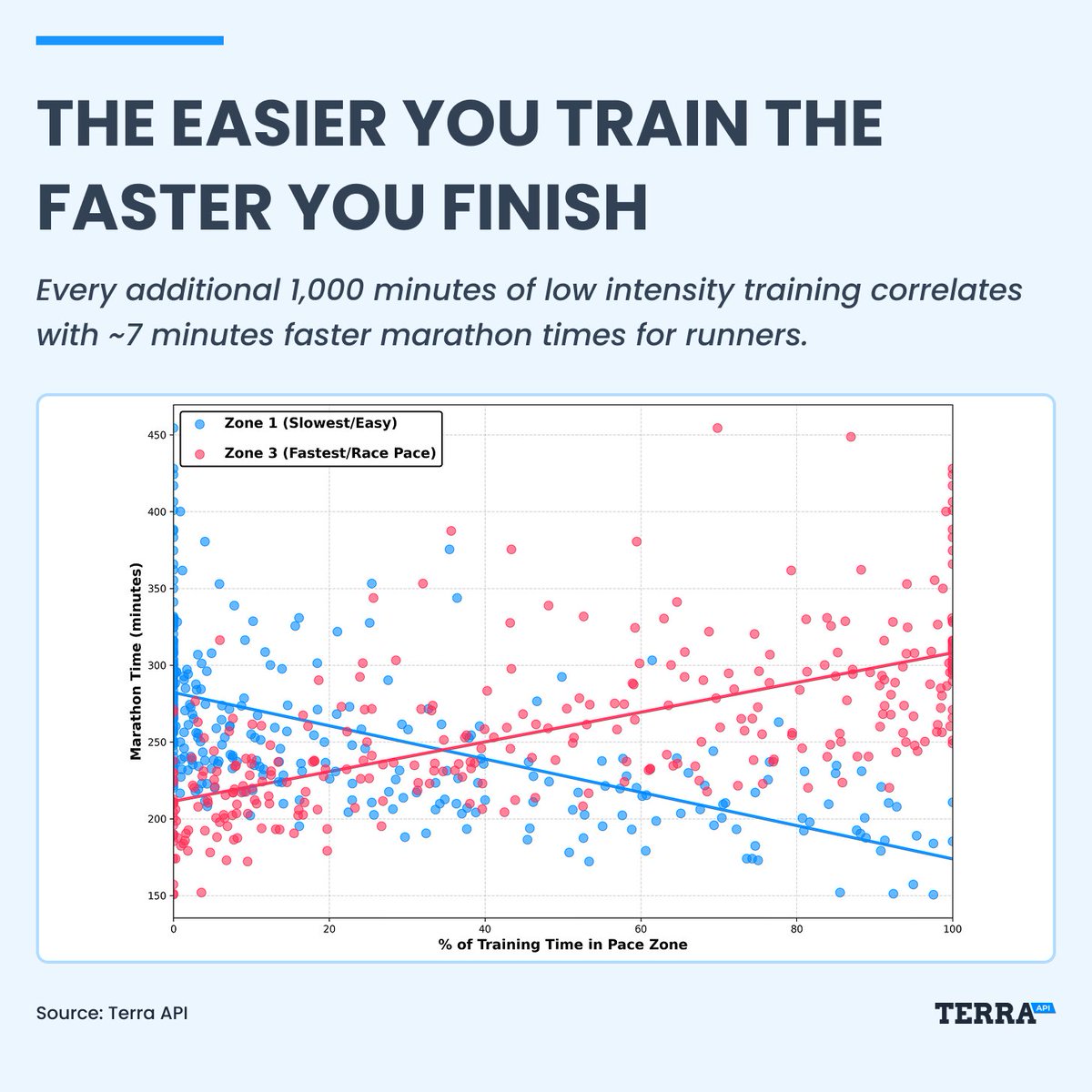
@AliBrownleetri I think Jack Daniels & Pete Pfitzinger would agree with your conclusions. Those running 0-3 days/wk vs. 4-7 is a very different cohort - separating would give cleaner datasets? "Easier" is doing some heavy lifting in this title. There's lots of hard work in your Z2 definition.
English

Praying it was fake because it’s the most racist thing I’ve seen out of this White House. The President should remove it.
AF Post@AFpost
President Trump posted a video featuring the Obamas as monkeys on Truth Social. Follow: @AFpost
English
@mrmoneymustache @BiggerPockets No - Google could not easily create a nationwide brokerage. Redfin, lots of others have tried & failed. It's not an ez tech solution. It will be interesting to see how Google monetizes this. Do they include the listing broker in the search? Or do they sell referrals ala Zillow?
English
This seems like a pretty ripe opportunity - Google could easily create a whole Google Homes division where it becomes the transaction broker on both sides and makes most of the industry obsolete.
Definitely outside of their core market but man the commissions in real estate are awfully huge at $30k+ per house sale, I've always wondered why competition doesn't bring them down.
English

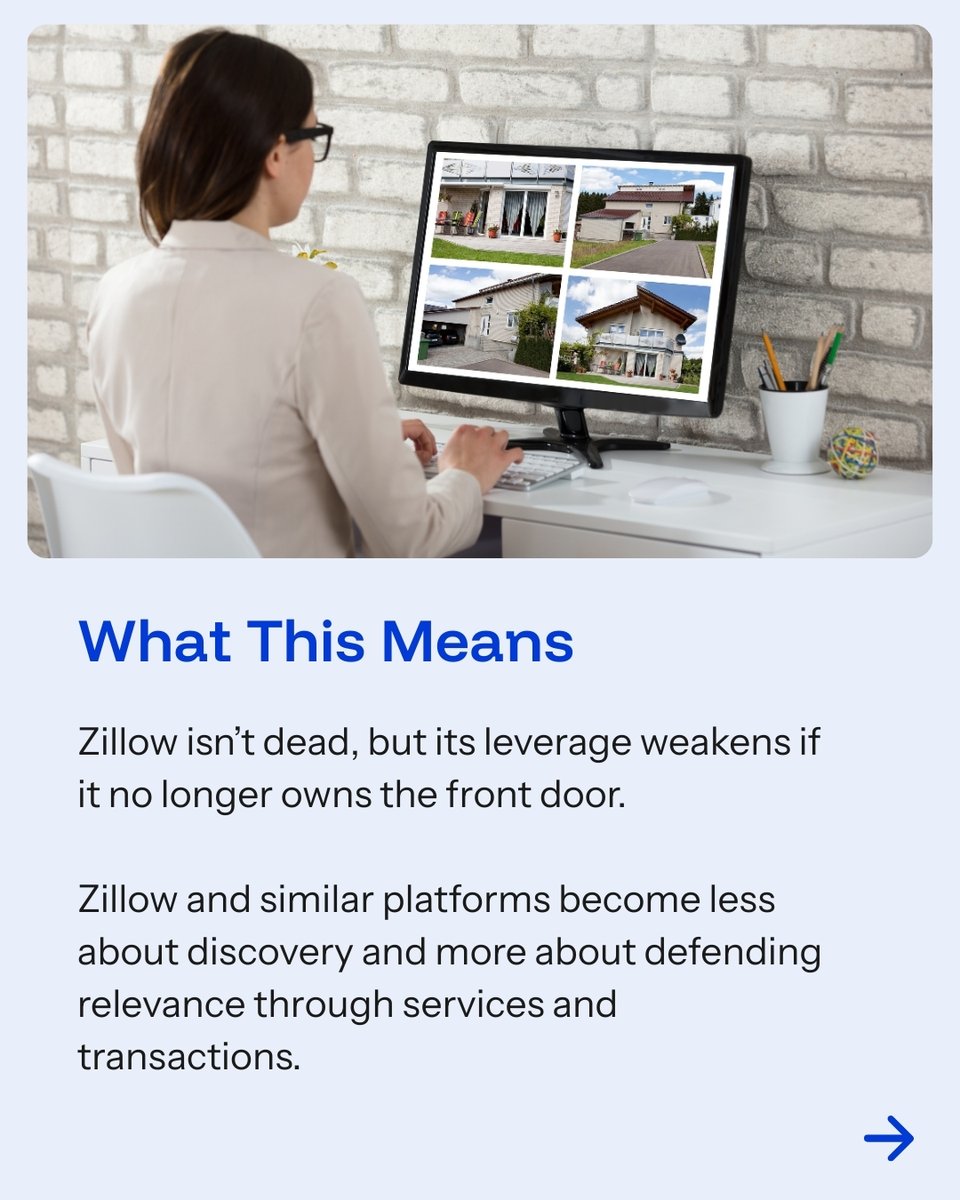
Google isn’t just indexing real estate anymore.
It’s testing what happens when listings live inside search results.
This experiment has big implications for:
• Real estate investors
• Agents + Brokerages
• Zillow, Realtor.com, and other listing portals
If Google controls discovery, it controls intent.
And intent is where deals begin.
We’ve seen this movie before with travel, flights, and shopping.
Each started as “just a test.”
Each ended with Google owning the experience.
Swipe through to see what’s changing and who’s most exposed.
👉 Good for real estate or bad for real estate? Drop your take in the comments.



English
Yes, we have seen the European model showing another snowstorm for the upcoming weekend. Obviously, it has our attention but we'd put it in the low likelihood but big impact category. We'll see how the models come in today and may need to launch briefings tomorrow. Stay tuned.
English

Actually, wait to shovel.
You'll want the sleet and freezing rain to be on top of the fallen snow, as opposed to in direct contact with the sidewalk/driveway.
Ice on top of snow can be cleared. Sleet directly on the sidewalk followed by freezing rain will be like concrete.
Capital Weather Gang@capitalweather
Repeating: NOW is a good time to shovel if you've switched from snow to sleet. 1-3" of sleet (which is multiple times heavier than snow) on top of this snow will make it MUCH harder to clear later.
English
@letsrundotcom @CitiusMag So you're going to keep this going? Productive.
English

@CitiusMag Is this sponsored or a freebie? Asking for a friend ;)
English

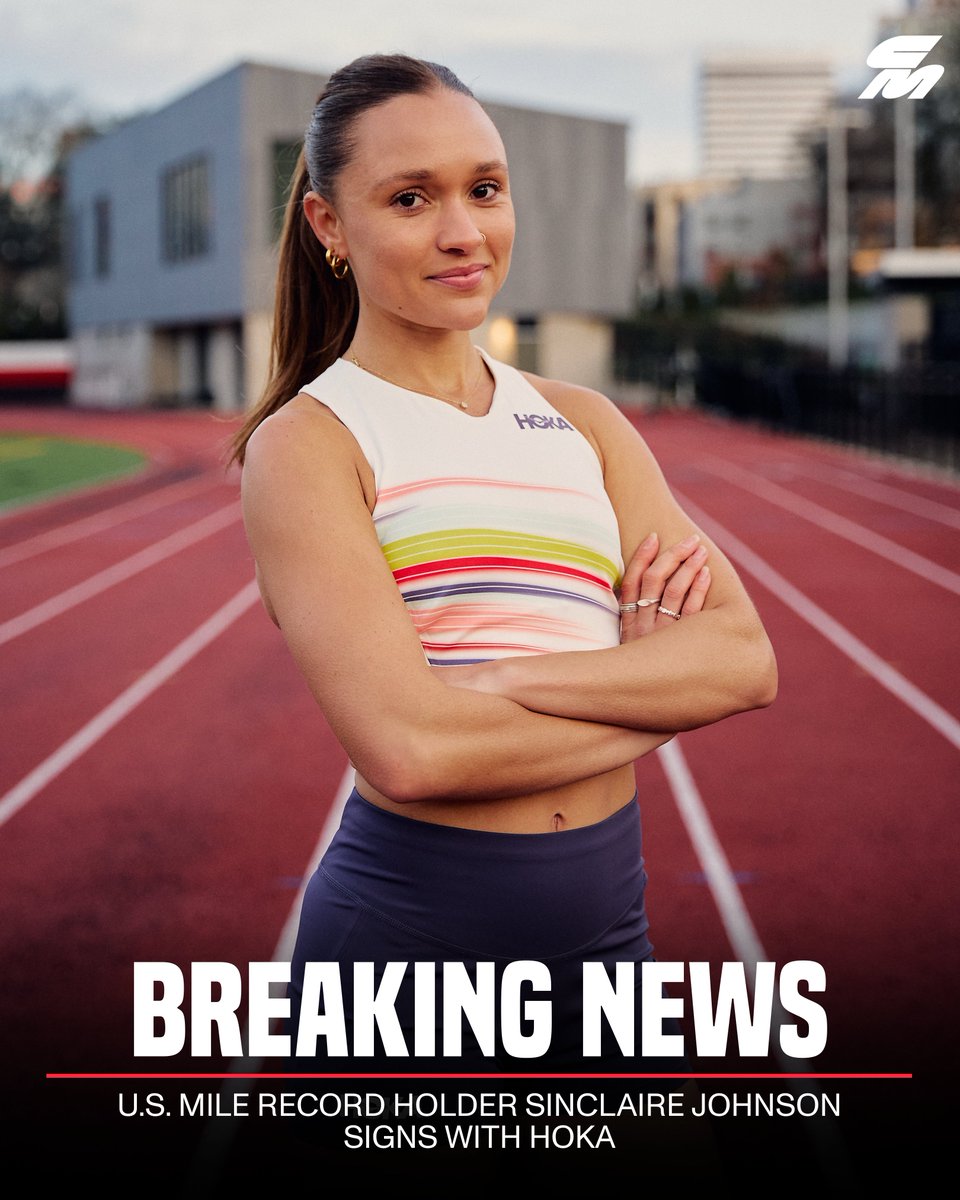
✍🏻 HOKA has signed U.S. mile record holder Sinclaire Johnson and she will make her debut in the 1500m at the New Balance Indoor Grand Prix in Boston this weekend.
🗣️ Johnson: “I’m incredibly excited to be joining the HOKA family. I’ve spent my career learning and growing through every change, and this partnership feels like the perfect fit for this next chapter. HOKA is a brand that truly puts people first, which really resonates with me. Community is everything, it keeps me grounded, motivated and supported as I chase my goals.”
Her resume:
🇺🇸 American record: 4:16.32 mile on the track (London Diamond League, 2025)
🇺🇸 American road mile record: 4:21.66 (Merrie Mile, 2025)
🕒 1500m PB: 3:56.75 (No. 6 on the U.S. all-time list)
🌎 6th at 2022 World Championships + finalist at the 2025 World Championships in the 1500m
🏆 2019 NCAA 1500m champ (Oklahoma State)
English
@sharmanian Each feature represented an aspect of Florida - sand for the beach, alligators for the alligators (duh), mud for the swamp. This blue water simulated the ocean. I was happy to run around it.
English
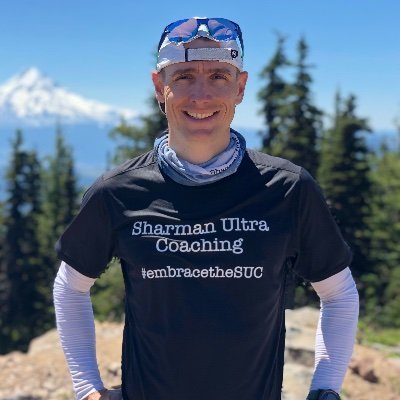
Why was the water section at the XC World Championships in Florida dyed bright blue? I think the runners could tell it was water without that. To discourage alligators???
English

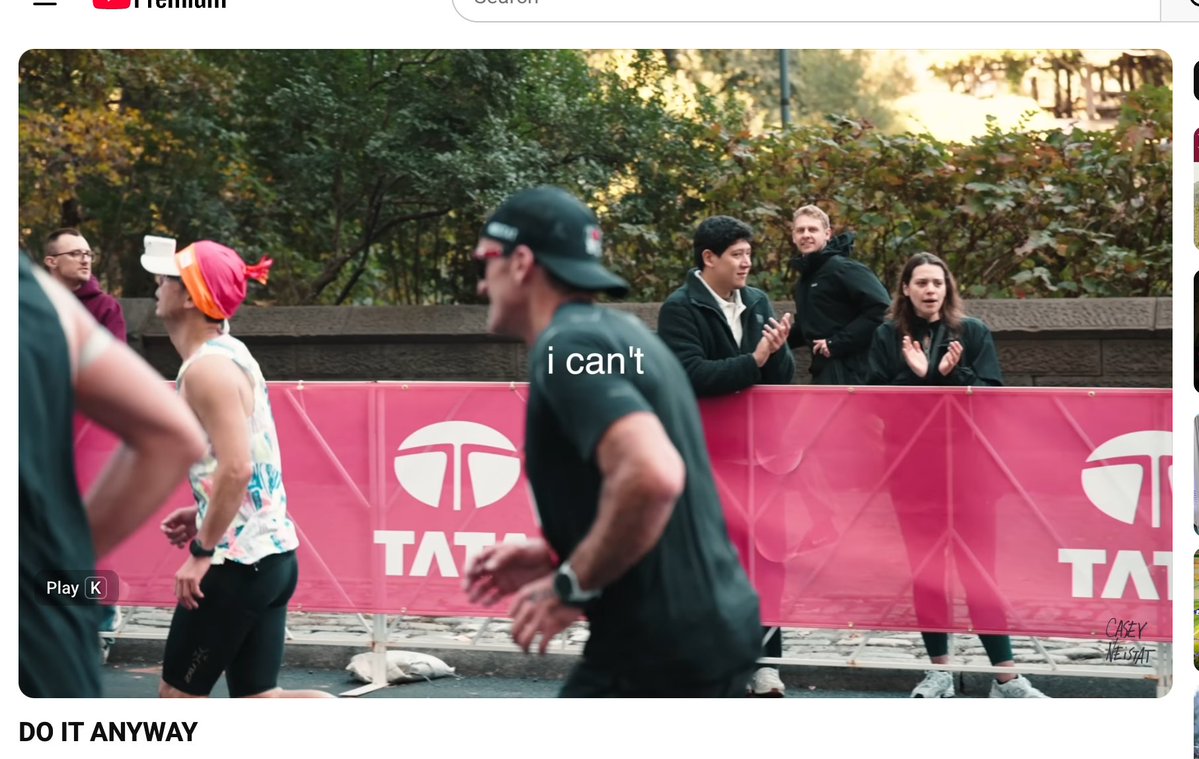
i made a movie about excuses. tbh i wasnt going to make another movie about running marathons then i realized that was an excuse. - youtube.com/watch?v=-jCQer…
YouTube
English
@RepNancyMace Shouldn't you be screaming at someone in an airport somewhere?
English
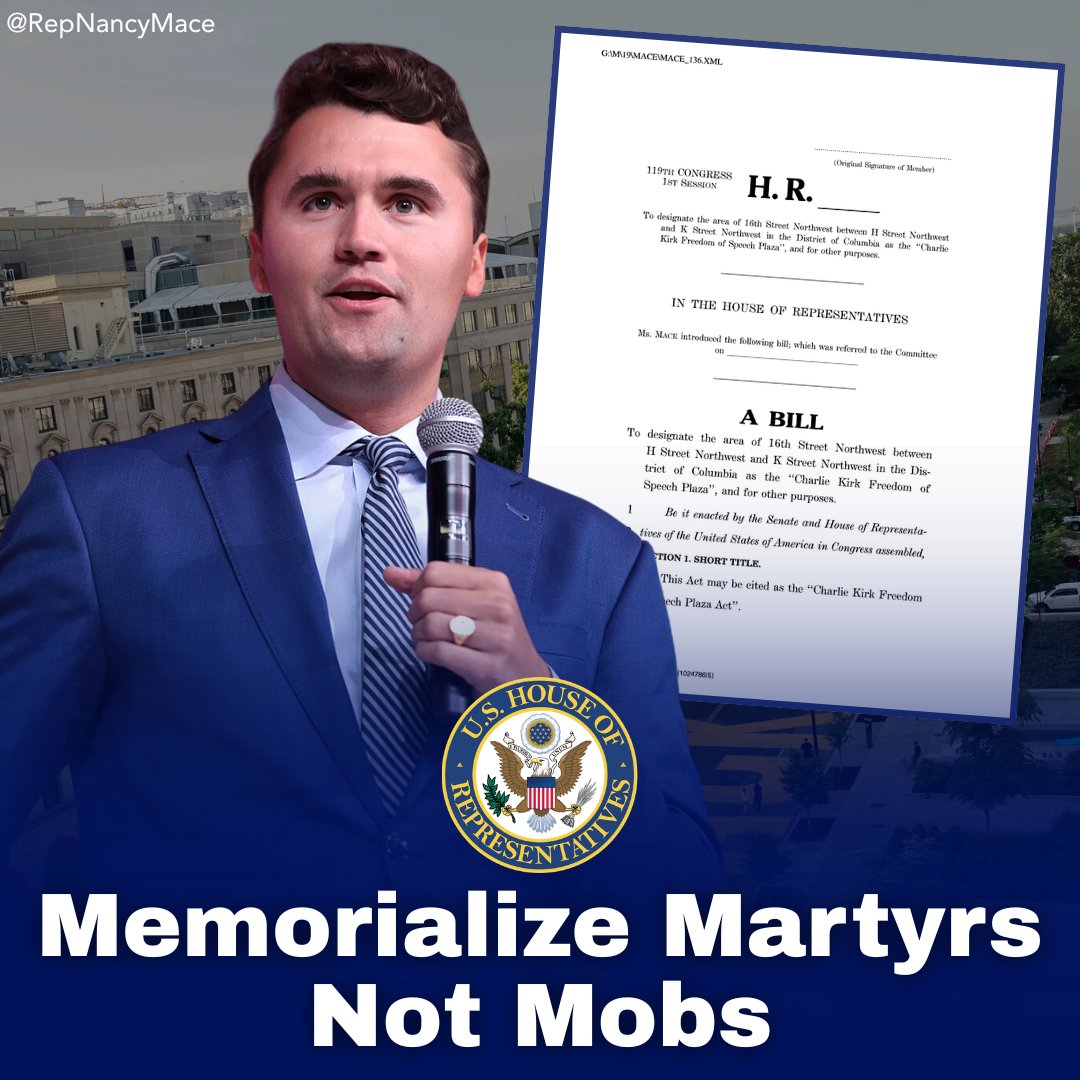
INTRODUCING: The Charlie Kirk Freedom of Speech Plaza Act to rename the designated “Black Lives Matter Plaza” in Washington DC.
Today marks three months since Charlie Kirk was assassinated in cold blood. He was a peaceful leader who stood for free speech, open conversation, faith and family values.
The BLM movement is a t*rrorist organization who targeted our law enforcement, rioted in our streets, looted and burned cities to the ground.
One deserves to have memorials and recognition. You decide which.
English