⚔️ Mono513 ⚔️

2.9K posts

⚔️ Mono513 ⚔️ banner
⚔️ Mono513 ⚔️

⚔️ Mono513 ⚔️

@Mono513nft

Trader | Independent thinker | No political tribe | Economist since birth - “Show me the incentive and I will show you the outcome.” – Charlie Munger

Cincinnati, Ohio, USA Katılım Nisan 2009
1.6K Takip Edilen2K Takipçiler
⚔️ Mono513 ⚔️ retweetledi
Frans Bakker
Frans Bakker@FransBakker9812·
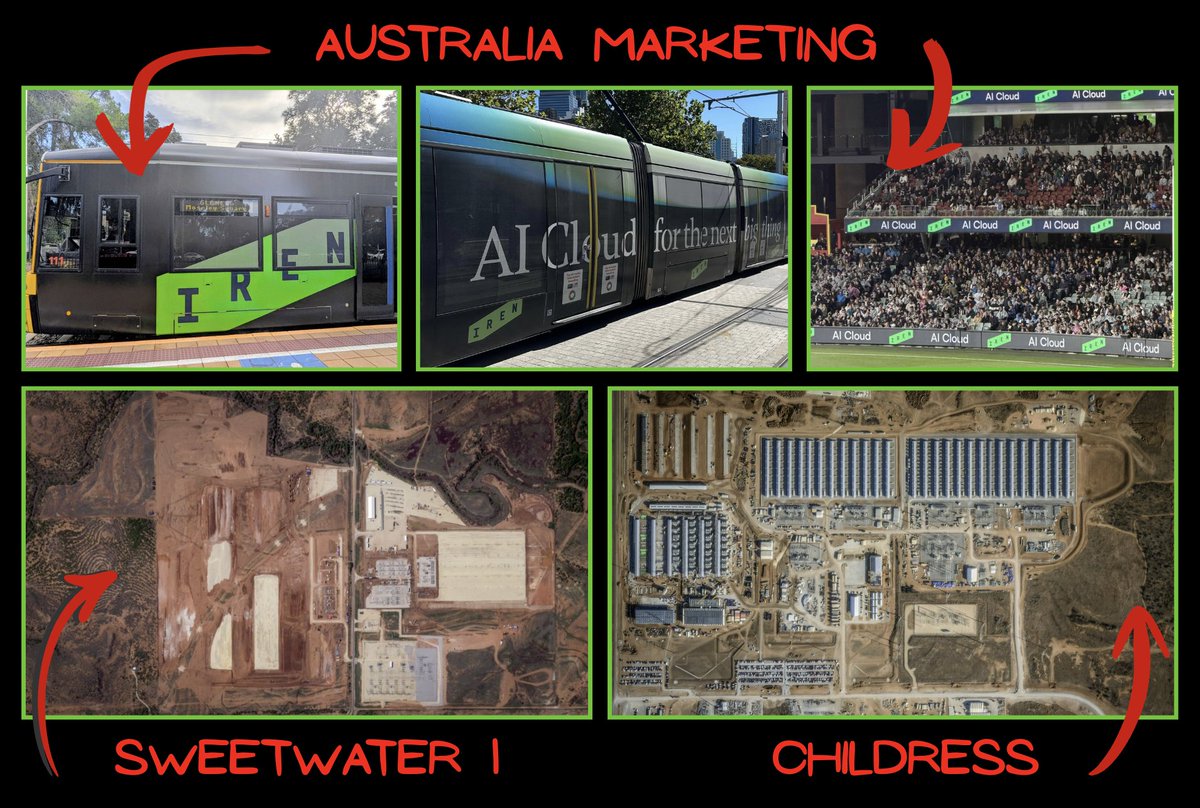
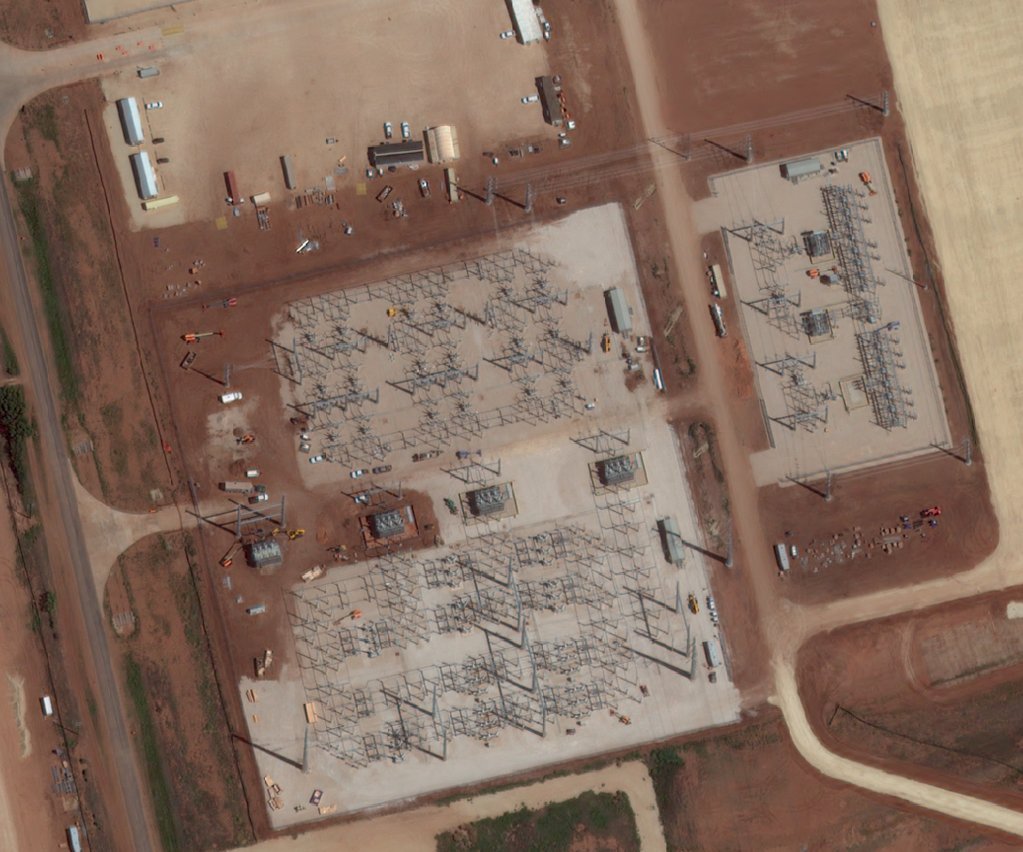
"The winners under this regime are whoever locked in power purchase agreements and electrical equipment orders 3-4 years ago, before anyone was modeling hundreds of megawatts of inference load. Everyone else is waiting in line behind them." $IREN fixes this 🏗️ SW1 4/26/2026 ⤵️
Frans Bakker tweet media
Aakash Gupta@aakashgupta

A 5-year backlog on grid transformers just killed half of America's 2026 AI data centers. Sightline Climate tracked 12 GW of 2026 US data center capacity announced across 140 projects. Only 5 GW is actually under construction. 11 GW sits in the "announced" stage with no physical progress despite typical build times of 12-18 months. 25% of those projects haven't disclosed a power strategy at all. That last number is the tell. A quarter of "planned 2026 AI capacity" has no sourced answer to where the electrons come from. Call those projects what they are: vapor capex with a press release attached. Nvidia is shipping. The gating constraint is high-voltage transformers, switchgear, and grid-tie batteries. Pre-2020 lead time on a high-power transformer was 24-30 months. Today it stretches to 5 years. Electrical equipment is under 10% of total data center cost and 100% of the bottleneck. This breaks the standard analyst model. When a hyperscaler announces $50B of capex, the Street treats it as compute coming online in 18 months. If the transformer order wasn't placed in 2022, that money sits as commitment without capacity. You cannot pay for a transformer that doesn't exist yet. The winners under this regime are whoever locked in power purchase agreements and electrical equipment orders 3-4 years ago, before anyone was modeling hundreds of megawatts of inference load. Everyone else is waiting in line behind them. Second order is uglier. Hyperscalers buying $50B of GPUs that sit unpowered depreciate against Nvidia's annual cadence while paying carrying costs on empty data center shells. Every quarter dark is a quarter of compounding waste. The "we're 6 months from running out of compute" panic just became "we're 5 years from running out of transformers." Capital fixes one. Capital cannot manufacture a transformer.


English
37
70
518
101K
⚔️ Mono513 ⚔️
⚔️ Mono513 ⚔️@Mono513nft·
The biggest threat to America might be how our education system and social media are molding minds, people are being told what to think vs how to think.
English
0
0
2
23
⚔️ Mono513 ⚔️ retweetledi
Shay Boloor
Shay Boloor@StockSavvyShay·
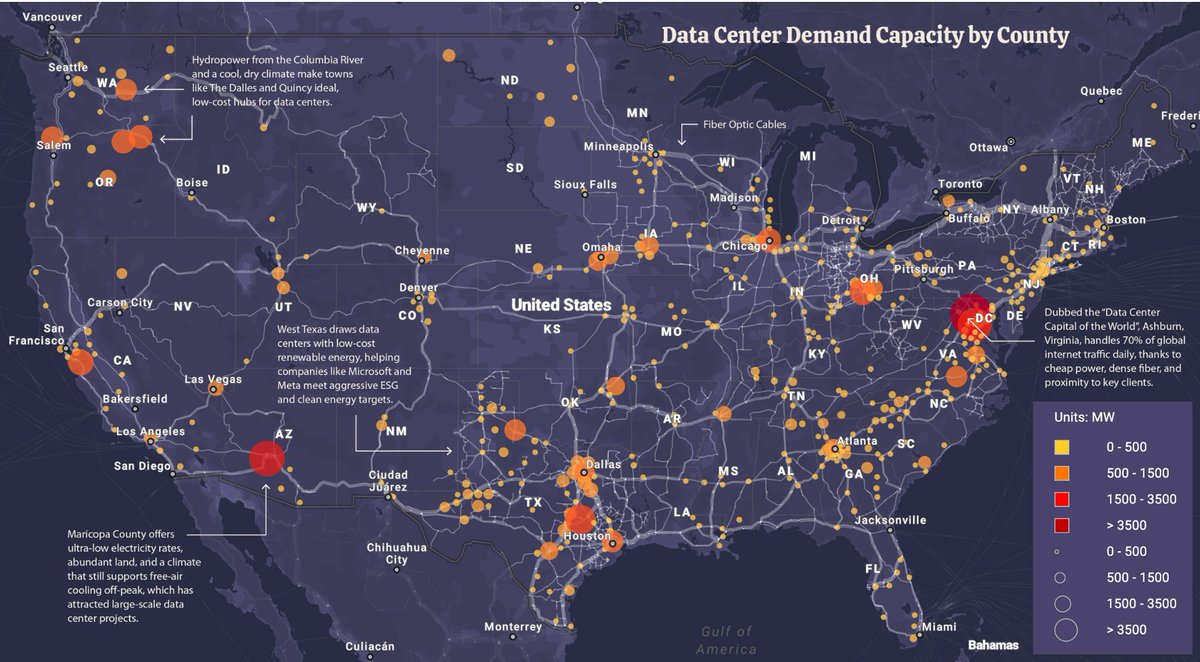
My predictions for tomorrow’s hyperscaler earnings: • $MSFT: “We are power and compute constrained” • $META: “We are power and compute constrained” • $GOOGL: “We are power and compute constrained” • $AMZN: “We are power and compute constrained”
Shay Boloor tweet mediaShay Boloor tweet mediaShay Boloor tweet mediaShay Boloor tweet media
English
133
201
2.6K
565.5K
⚔️ Mono513 ⚔️
⚔️ Mono513 ⚔️@Mono513nft·
The issue isn’t a lack of tax revenue, it’s how the money is being used. The priority should be rooting out fraud, waste, and abuse, eliminating programs or departments that provide limited value, and focusing spending on areas that deliver meaningful returns for the country. 🇺🇸 x.com/VigilantFox/st…
English
0
0
1
34
⚔️ Mono513 ⚔️ retweetledi
₿itcoin ₿utcher 🥩 🐑 🐷
Going into next week, some thoughts… If $IREN partners with @AnthropicAI in 🇺🇸 🇦🇺 , the analysts will begin to quantify the share of secured power before rerating $IREN as the off balance sheet financing arm of the most important company in the world that enables @AnthropicAI to scale faster and with more delivery certainty than any other infrastructure provider. The market cap of $IREN currently sits at just under $20b or 2% of @AnthropicAI valuation. This will change. Then consider delivery of Horizon 1-4 to $MSFT as well the any subsequent projects in 🇨🇦 🇺🇸 🇦🇺 that emphasize $IREN as a strategic partner that optimizes time to compute while increasingly growing its portfolio of completed data centers with supporting cash flows from high quality tenants that can be used as assets to ♻️ invested capital into the next data center. The patience required to hold $IREN cannot be understated but when you ignore the day to day volatility you begin to realize that the front loaded infrastructure investments funded by 🏧 and convertible notes serve a greater purpose. In a world of delays and regulatory friction, the data center is the asset. Volume the past two trading days exceeded 100m shares without any announcement. Institutions are knowingly buying the 👸 in the 50s Do you think they are here for 60,70? I don’t think so. If you made it this far, the time for show and tell is almost here.
English
32
45
497
39.4K
⚔️ Mono513 ⚔️ retweetledi
Konstantin Kisin
Konstantin Kisin@KonstantinKisin·
The anti-capitalist brainrot is so powerful. It's actually virtually *impossible* to become a billionaire without creating an immense amount of wealth for other people. Billionaires usually employ hundreds to tens of thousands of other people, to say nothing of creating products, goods and services that are so valuable people are prepared to voluntarily part with their hard-earned money in exchange. People want to hate on big tech oligarchs and there's a lot to dislike, but the one thing you definitely can't argue is they haven't created wealth for other people. How many millionaires are there just because Google, YouTube and other platforms exist? How many people have a good job because of them? In communist societies and dictatorships, the best way to create wealth is using power to control "state" resources. That's why most Russian billionaires are very close friends and allies of Vladimir Putin. In a capitalist society, the best way to create wealth is to solve other people's problems for money at scale.
Kenny Edwards🕊️☘️@KennyEdw

@KonstantinKisin Do billionaires create wealth for anyone but themselves? Show me a billionaire who hasn’t made his money by robbing the public purse. I’ll wait.

English
313
1.3K
9.7K
203.8K
⚔️ Mono513 ⚔️ retweetledi
₿itcoin ₿utcher 🥩 🐑 🐷
₿itcoin ₿utcher 🥩 🐑 🐷@bitcoinbutcher1·
Here’s why @Agrippa_Inv 🎯 of 100 in May has merit. Check out potential forward guidance: 1) Sweetwater In the event $IREN signs a hyperscaler for 200 MW Critical IT: 4.00*76000*365*24=$2,663,040,000 Think GB300s for this example to mimic Horizon 1-4 size and chip for the sake of example even though it will most likely be Vera Rubin for a higher rate 2) Childress In the event @danroberts0101 guides for 250 MW of air cooled GPUs for $IREN ☁️ with higher enterprise margins 17000*4*3.5*24*365=$2,084,880,000 17k GPUs per 50 MW gross per March guidance at higher rates in consideration of GPU deprived environment Current forward ARR is $3.7B and there are two catalysts worth $4.7B ARR shown 👆 Is a 127% increase in ARR worth a 2x? What about a fully delivered Horizon 1 with 5 9s uptime being delivered? Does that get a premium for execution risk after showing competency and timeliness? You already know my answer. Higher
English
18
16
280
23.5K
⚔️ Mono513 ⚔️
⚔️ Mono513 ⚔️@Mono513nft·
Free consulting on how to start lowering housing prices.
⚔️ Mono513 ⚔️ tweet media
English
0
0
0
22
⚔️ Mono513 ⚔️ retweetledi
𝐀𝐠𝐫𝐢𝐩𝐩𝐚 𝐈𝐧𝐯𝐞𝐬𝐭𝐦𝐞𝐧𝐭𝐬
3 Imminent $IREN Catalysts Not many companies have as much going for them right now as $IREN does. While management has been relatively quiet since the last earnings call, I believe we're standing right before a wave of major, thesis defining announcements. 1) Australia Expansion Given that Australia is where $IREN was incorporated, one might expect the company to already be operational there. Yet as of today, Australia remains merely the home of its HQ. That will likely change very soon... Just a couple of months ago, $IREN announced a sponsorship of the Sydney Swans, a prominent AFL team. As an isolated event, I wouldn't have thought much of it. The company's CEO is an Australian Football coach himself, so it could have simply been management paying homage to the company's roots. However, this sponsorship was accompanied by a sweeping marketing campaign across Australia. $IREN has seemingly gone all out on visual ad spend, plastering full trams with the company's logo and tagline across multiple Australian states, while also putting up new billboards outside Sydney's airport and other notables places. Knowing how cost disciplined management is, I seriously doubt they're burning all this money on nothing. I strongly believe the company is close to unveiling a major expansion into Australia. Currently, there are rumors that $IREN has at least two new data center sites lined up: one in South Australia, and one in New South Wales. With how aggressive the regional ad spend has been, I'd expect any new site announcement to be accompanied by large-scale customer contracts. If I had to speculate on who $IREN's first major customer in Australia might be, I'd wager on Anthropic, who recently announced plans to open an office in Sydney. 2) Sweetwater 1 Energization + Deal $IREN is likely just days or weeks away from energizing its largest site to date; the massive 1.4 GW Sweetwater 1 campus. With data center projects across the industry missing delivery timelines, largely due to an inability to secure reliable power, Sweetwater 1 stands out as a true unicorn. Having this much grid connected power concentrated at a single site is virtually unheard of, and positions Sweetwater as one of the most valuable assets in the sector. Successful energization will undoubtedly elevate $IREN's standing among operators industry wide, putting its execution capabilities on full display while competitors face severe delays and outright project cancellations. Management is also aggressively hiring for the Sweetwater campus, including night shift positions, a strong signal that the company is gearing up to develop new data centers at rapid speed around the clock, 24/7. This tells me we're likely nearing the signing of a new large-scale anchor client deal, possibly with another hyperscaler or frontier AI lab. My expectation is that the first tranche of the Sweetwater build-out will be designed entirely for liquid-cooled Rubins, with commissioning likely sometime in H1 2027. 3) Childress Expansion While Sweetwater is currently getting all the attention, we shouldn't overlook $IREN's first Texas campus; the 750 MW large Childress site. So far, $IREN has contracted 40% of the site's total capacity to Microsoft, 300 MW gross across 4 tranches (Horizon 1 to 4). That leaves 450 MW still up for grabs. With management clearly signaling its intention to fully convert the remainder of Childress into an air-cooled AI cloud campus, the runway potential remains enormous. Over the coming weeks, I'm expecting one of two things: either $IREN announces a new multi-hundred MW cloud contract for Childress, or management lays out a concrete plan to convert the remaining 450 MW into a large-scale cloud hub for multiple enterprise clients. Either way, the conversion of Childress's remaining capacity is likely to begin very soon. As with Sweetwater, the company is also actively hiring night shift HSE advisors for Childress construction, once again signaling an intent to scale development rapidly (night shift = 24/7 construction). On a side note, I'm also expecting the successful delivery of Horizon 1 this quarter to act as a meaningful catalyst for the company's competitive standing in the market. General Thoughts While I've covered each of these topics in depth in previous Substack reports, I believe the time has now come for this wave of catalysts to materialize. It's also worth pointing out that most Wall Street analysts fail to see around the corner when it comes to $IREN's cloud expansion. For the most part, they simply react to what's directly in front of them. That means $IREN is one of the rare stocks where retail investors can front run institutional capital, getting positioned before the catalysts materialize and before Wall Street prices them in accordingly. The irony is that over the past few weeks, retail has been doing the exact opposite: panic selling right before what I expect to be a major re-rate of the stock. Earlier this month I also heard many investors claim that $IREN couldn't move up before new large-scale deals or other catalysts materialized… That's a very dangerous way to think. Markets are inherently illogical. Trying to rationalize them is a mistake not only retail investors, but institutional ones too tend to make. Last year, $IREN's share price increased by over 1,000% from its April lows, purely on the expectation of a deal being close. If you'd waited for the actual announcement, you would have entered around $70… In any case, with these 3 major catalysts in front of us, I'm very much looking forward to the weeks ahead and especially to the Q1 earnings call. NFA, but I wouldn't be surprised if the stock cracks $100 in May. Images S/O: @FransBakker9812, @tempocap2
𝐀𝐠𝐫𝐢𝐩𝐩𝐚 𝐈𝐧𝐯𝐞𝐬𝐭𝐦𝐞𝐧𝐭𝐬 tweet media
English
96
221
1.4K
992.1K
⚔️ Mono513 ⚔️ retweetledi
Peregrino
Peregrino@Peregrino1708·
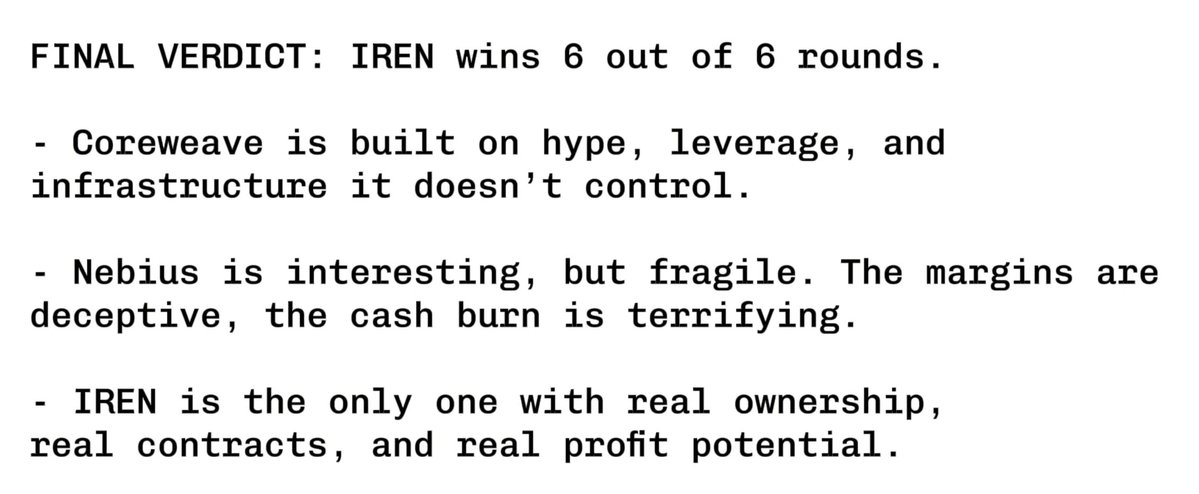
"Don't mistake velocity for durability. CoreWeave and Nebius are renting momentum. $IREN is actually laying bricks." Jerry Romine, an analyst with 181K YouTube subscribers, has publicly called $IREN the clear winner in his direct comparisons of $CRWV, $NBIS, and $IREN. Would you agree with his assessment?
Peregrino tweet media
English
21
6
120
9.6K
⚔️ Mono513 ⚔️ retweetledi
Thomas Sowell Quotes
Thomas Sowell Quotes@ThomasSowell·
“The political left seems to regard economic policy issues as litmus tests for whether you are a good person, rather than as questions of facts about what works and doesn't work.” — Thomas Sowell
English
2
12
45
7K
⚔️ Mono513 ⚔️ retweetledi
𝐀𝐠𝐫𝐢𝐩𝐩𝐚 𝐈𝐧𝐯𝐞𝐬𝐭𝐦𝐞𝐧𝐭𝐬
$IREN investors have been here before... The stock cratered more than most during the recent multi-month corrective period, while lagging behind during the current recovery. This period is eerily similar to last year's April selloff. Sentiment was in the gutter, "wen deal" was spammed under every $IREN post, frustrated investors were calling the CEO names, and with a market cap of just ~$2b at the time, the $1b ATM that was launched in January last year seemed like an insurmountable overhang on the stock. Contrast that with today, and we are almost at the exact same spot. I'd even go as far as saying that emotions are more amplified today than a year ago. With the ticker having gotten more popular, there are now plenty of large accounts taking the opportunity to dunk on the stock, exacerbating negative sentiment. As a seasoned investor, I'm unfazed by these comments. In fact, they are exactly what I'd expect during this time. If you understand market psychology, this is nothing new to you either. Markets are predominantly driven by fear & greed. During market peaks everyone is euphoric and throws caution out the window, while at market bottoms the inverse is true, with investors telling themselves “the market is always right" leading to them selling at the worst possible time. Few people know that during last year's melt up from the April lows of $5 to nearly $80, I grew increasingly cautious about the overly bullish sentiment. Once we crossed $30, the ratio of bull to bear posts on X must have been at least 10:1. Back in late August, I feared a nasty correction was imminent, one that would flush and reset broader investor sentiment. Ironically, my cautiousness came way too early, not in time, but in price, as the stock almost tripled from that point within just weeks. ...Luckily, I don't trade in and out of my core positions, so it didn't cost me anything. But my point is that these market cycles and sentiment shifts are predictable to a great extent. I knew we were going to get this correction. I didn't know exactly when it would occur or at what price $IREN would peak, but I knew it was coming eventually once sentiment turned overly euphoric. That's why this correction doesn't faze me one bit. Now we are at the exact opposite end of the spectrum, and I believe the next leg up higher will end up being just as obvious in retrospect. As long as the underlying asset is supported by strong fundamentals, corrective periods are nothing but sentiment resets. See it as the loading period before the next rally. But be careful who you listen to during these times. Most investors will be emotionally shaken and unprepared, leading to irrational takes that fail to take into account important context. Ignore the noise. Know what you own. And most importantly, don't let emotions get the best of you. Cheers!✌️
𝐀𝐠𝐫𝐢𝐩𝐩𝐚 𝐈𝐧𝐯𝐞𝐬𝐭𝐦𝐞𝐧𝐭𝐬 tweet media
English
85
77
784
71.2K
⚔️ Mono513 ⚔️
⚔️ Mono513 ⚔️@Mono513nft·
@mikealfred IREN Going to 100 was dangerous suggestion in Sept / Oct, but I’m responsible for my own poor decisions. Let’s just hope it comes back
English
0
0
1
136
⚔️ Mono513 ⚔️ retweetledi
𝐀𝐠𝐫𝐢𝐩𝐩𝐚 𝐈𝐧𝐯𝐞𝐬𝐭𝐦𝐞𝐧𝐭𝐬
$IREN: The best positioned data center company Despite the macro turmoil of the Iran mess, compute prices are currently increasing at an incredible pace. Nvidia's H100 GPUs, the hardware generation that came before Blackwell, are now being leased out for >30% higher prices than just a couple of quarters ago. Keep in mind, that's an older generation (~3 years old), so you'd think prices would move down as production for the new and much more powerful Blackwell chips is ramping up. But we are seeing the exact opposite take place. Essentially every single GPU model, both new and old, has seen an increase in leasing prices over the past weeks and months. Demand for AI compute simply can't keep up with the available supply, particularly data center supply. Just having access to GPUs isn't enough. Every cloud provider needs access to working data centers. The problem is that developing modern day data centers, capable of running the latest AI hardware, comes with a bunch of bottlenecks that can't easily be overcome unless you have prepared for them years in advance. One key factor is access to power. Every data center needs energy to run. Yet no company can simply plug into their local electricity grid without the required permits and approvals. You first have to conduct grid studies to see if your project can be eligible to receive a constant flow of power, followed by forming interconnection agreements with utilities, and ultimately overcoming any local administrative and regulatory hurdles. Everybody is rushing to secure power, administrative bodies are completely overwhelmed by the volume of requests, leading to greatly extended approval timelines. Therefore, securing grid connected electricity can take upwards of 5-7 years if you start today. Plan B is to produce power yourself via on-site gas turbines. However, this comes with a bunch of its own headwinds. It adds operational complexity, higher CapEx and OpEx, increased safety risks, as well as increased regulatory and environmental scrutiny. Essentially you need to become an industry expert of on-site gas generation, which opens the door for the likes of $NUAI. Once you figure out the power bottleneck, you must deal with constraints across your supply chain. Long lead items like transformers which are necessary to convert voltage into usable power for data centers take upwards of 2 years to procure, as the rate of manufacturing can't keep up with demand. Similar to most long lead items like back-up diesel generators, switchgear, and battery and UPS systems. Finally, there is the shortage of labor supply. Building a gigawatt scale data center requires thousands of highly specialized workers, which are often in short supply. The AI buildout has created a simultaneous surge in demand for tradespeople across hundreds of concurrent projects nationwide, forcing developers to compete fiercely for the same limited talent pool. All these bottlenecks are leading to issues we are seeing today: projects not getting off the ground, delayed development timelines, and outright cancellations. Bloomberg recently reported that more than half of the data center projects planned for 2026 will be delayed. This backdrop plays exceptionally well into the hands of what I'd argue is the best positioned data center company right now: $IREN. $IREN is one of the very few players that has been preparing for all of these bottlenecks since day one. They started the procurement of grid-connected power 7+ years ago, during a time where virtually nobody was concerned about access to energy. As a result, the company has now secured an enormous 4.5 GW power portfolio. This firmly places $IREN next to Google and Amazon in terms of self owned grid connected power. Most new investors and analysts falsely label $IREN as a $BTC miner that "pivoted" towards AI cloud. But that's wrong. Since its IPO, management has consistently positioned itself as a disruptive data center platform. …Mining Bitcoin was simply the most pragmatic way to get started and scale the data center footprint rapidly in a cost effective manner. The founders saw the digital world would scale exponentially, with the underlying core infrastructure of the real world not able to keep up - which is exactly what's happening right now. This is why $IREN has been securing gigawatts of power in regions of abundant energy for pennies on the dollar and with minimal friction. This mindset and long-term strategy is why management is constantly ahead of the curve when it comes to securing long lead items years in advance for sites that have yet to energize. I remember back in 2024, when management talked about having secured long lead items for its Sweetwater campus whose energization date was 2 years away. Today $IREN is reaping the benefits of that calculated decision by being on track to energize the 1.4 GW project this quarter, positioning the company with one of the largest grid connected data centers in the world. In essence, $IREN is much more than just a regular cloud provider. It’s effectively the only fully vertically integrated cloud platform that exclusively houses its GPUs in self developed data centers. The real advantage here isn't just improved cost structures, but that management has a much greater degree of control over its own destiny. As the head contractor of all of its data center projects, $IREN controls everything from supply chain management to sourcing labor. If one aspect of a buildout is facing unexpected delays, management can quickly allocate labor and resources towards another section, significantly reducing the risk of delays. There are simply no other cloud providers with this level of control and flexibility over their pipeline development. And in a world that is severely compute constrained, these attributes are worth gold. Demand is accelerating, supply can't keep up, and leasing prices for GPUs are skyrocketing. $IREN is in a very unique position to capitalize on these market circumstances in a major way. The market clearly hasn't fully priced this in yet.
𝐀𝐠𝐫𝐢𝐩𝐩𝐚 𝐈𝐧𝐯𝐞𝐬𝐭𝐦𝐞𝐧𝐭𝐬 tweet media
English
52
96
601
61.2K
⚔️ Mono513 ⚔️ retweetledi
HotSotin 🇫🇮🇺🇦🇪🇺△
Crazy idea: Let's split a country in socialist and capitalist halves and check in on them in 75 years.
HotSotin 🇫🇮🇺🇦🇪🇺△ tweet media
English
1.3K
5.3K
30.9K
2.9M
⚔️ Mono513 ⚔️ retweetledi
Rohan Paul
Rohan Paul@rohanpaul_ai·
The new US data center numbers show a market learning that compute scales fast, but power systems do not. US disclosed pipeline hit 241 GW (+159% YoY) looks enormous, yet only a third is under active development, which tells you the bottleneck has moved from capital and demand to physical execution. AI is often discussed like the next cloud wave, but on the ground it behaves more like an industrial buildout, where the scarce input is not GPU or code or even money, but synchronized access to land, substations, transformers, transmission capacity, and utility approvals. Q4 makes that shift visible. Planned additions fell to 25 GW from 49 GW in Q3, which looks less like fading interest than a market moving from announcement mode to build mode. That sounds minor until you look at the mechanism. Grid interconnection queues are clogged, transformers can take two to three years or more, and power near attractive sites is scarce enough to become a strategic asset. This is why the most valuable capability in the next phase is organizational competence in the least glamorous parts of the stack: interconnection strategy, utility relationships, equipment procurement, and site selection near real power. This is also why the headline number in many recently announced deals for Gigawatt scale setup, can mislead. Treating every announced gigawatt as future supply confuses interest with deliverability, and those are no longer close substitutes.
Omer Cheema@OmerCheeema

The physical world doesn’t scale like software US disclosed pipeline hit 241 GW (+159% YoY). But only 33% is under active development.. Q4 additions halved to 25 GW (down from 49 GW in Q3). Developers are shifting from hype announcements to executing the existing pipeline: grid queues, transformer lead times (2–3+ years), and power constraints are the real brakes.

English
17
18
120
137.3K
⚔️ Mono513 ⚔️ retweetledi
Finn Stockinger
Finn Stockinger@FinnStockinger·
The Geometry of Power: Why 1 GW is Not the Same as 5 x 200 MW Academic circles still whisper about "distributed cloud computing," but the engineers building the successors to GPT-6 know better: physics is a merciless judge. Training Frontier AI models requires a singular, massive compute fabric. If you split 1 GW of power across five separate 200 MW locations, you hit the "latency wall." Synchronizing data across cities causes the world’s most expensive processors to waste 40% of their time idling, waiting for a signal to arrive from a distant hub. A true 1 GW super-cluster is a single, dense organism. It allows for direct, high-speed interconnects where millions of GPUs exchange parameters in microseconds. At this scale, traditional air cooling is a joke, we are talking about industrial-grade hydraulics and rivers of coolant liquid dissipating heat that could warm a metropolis. If you cannot build that density in one spot, you will never leave the "chatbot league." Grid-Native: The "Infinite Money Glitch" The industry has split into two survival ideologies. The "Off-Grid" camp, led by Elon Musk’s Colossus project, deploys massive gas turbine arrays directly at the data center to bypass 7-year utility wait times. It is a brilliant sprint, but a miserable marathon - gas is expensive, and carbon emissions are becoming a political liability. The future belongs to the Grid-Native model championed by Microsoft and IREN. Here, the data center becomes a vital organ of the power grid. By utilizing 100% renewables and massive battery storage, these facilities earn money twice: once from AI compute, and again from stabilizing the grid (Demand Response). When the Texas ERCOT system nears a breaking point during a heatwave, IREN throttles its servers for a few minutes, saves the state from a blackout, and pockets a fortune in credits that gas-powered players will never see. This is "subsidized compute" - a model that makes the cost of training AI nearly free compared to the competition. IREN: 4.5 GW and the "Voucher on Time" The biggest shock of 2026 is the ascension of IREN. A company that started as a Bitcoin miner now controls the most valuable asset on the planet: In the U.S., the wait time for a 500 MW+ power drop is now a decade. IREN owns the dirt that is already "live." Their power pipeline has reached a staggering 4.5 GW following the February announcement of their Oklahoma hub. This transforms IREN from a "small player" into the primary wholesaler of power, where tech giants arrive with blank checks. Microsoft has already secured capacity there with a nearly $10 billion contract. While other hyperscalers are drowning in bureaucracy, IREN is simply flipping the switch. Anthropic: The "Homeless Giant" in a Trap In this new architecture of power, the biggest loser is Anthropic. As the only one of the "Big Four" without its own bricks and transformers, they are mere tenants of Google and Amazon. The moment these landlords decide to prioritize their own internal models (Gemini or Titan), Anthropic will be evicted to inferior, distributed locations. Their only hope for computational sovereignty and survival in the AGI race is an alliance with power wholesalers like IREN. Without their own gigawatt, Claude 5 will remain a footnote in the shadow of giants. The Verdict: In 2026, software is a commodity and hardware is a capital expense. The only real moat is the Gigawatt. If you haven't secured dense, single-site power by the end of this year, you have already opted out of history. IREN is closing the gate.
Finn Stockinger tweet media
Finn Stockinger@FinnStockinger

The "Paper Capacity" Trap: Why $IREN is Years Ahead of the Herd The market is finally waking up to a brutal reality: you can’t power AI with press releases. A new report from Sightline Climate (thanks @HedgieMarkets) reveals that nearly 50% of US data centers planned for 2026 will likely be delayed or canceled. The reason? A massive shortage of "boring" electrical components like transformers and switchgear, with lead times now stretching to 5 years. But here is what the "big money" is missing: $IREN isn't waiting in that 5-year line. They are already at the front of it. Execution vs. Ambition While hyperscalers scramble to source parts from China, $IREN is moving into the final stages of its 2.75GW roadmap. They didn't start thinking about power in 2024; they’ve been securing it since the Bitcoin mining days. ➡️Childress (750MW): Many expected this to wrap up in 2025, but $IREN is now in the final stretch (Phase 6) in early 2026. Why is this a win? Because they physically secured the transformers years ago. While competitors are just now filing permits, $IREN has 810MW already "Energized" and operational across its sites. ➡️ Sweetwater (1,400MW): This is where the gap becomes a canyon. $IREN has already locked in the procurement for the massive 1,400MW substation for a 2026 launch. They aren't hoping for parts, they own the slots. The Vertical Moat $IREN acts as its own developer (EPC). By owning the substations and the land, they’ve bypassed the supply chain paralysis killing the 2026 pipeline. The Bottom Line: In 2026, the only metric that matters is "Time-to-Power." Most companies have "announced" gigawatts; $IREN has "energized" megawatts and a $9.7B Microsoft-backed runway to monetize them. The bottleneck is tightening, but $IREN built their door years ago. Are you betting on "planned" capacity or the ones who already have the transformers on-site? Let’s talk below. 👇 #AI #IREN #DataCenters #Energy #Infrastructure #TechInvesting

English
14
35
216
40.3K
⚔️ Mono513 ⚔️ retweetledi
Finn Stockinger
Finn Stockinger@FinnStockinger·
The "Paper Capacity" Trap: Why $IREN is Years Ahead of the Herd The market is finally waking up to a brutal reality: you can’t power AI with press releases. A new report from Sightline Climate (thanks @HedgieMarkets) reveals that nearly 50% of US data centers planned for 2026 will likely be delayed or canceled. The reason? A massive shortage of "boring" electrical components like transformers and switchgear, with lead times now stretching to 5 years. But here is what the "big money" is missing: $IREN isn't waiting in that 5-year line. They are already at the front of it. Execution vs. Ambition While hyperscalers scramble to source parts from China, $IREN is moving into the final stages of its 2.75GW roadmap. They didn't start thinking about power in 2024; they’ve been securing it since the Bitcoin mining days. ➡️Childress (750MW): Many expected this to wrap up in 2025, but $IREN is now in the final stretch (Phase 6) in early 2026. Why is this a win? Because they physically secured the transformers years ago. While competitors are just now filing permits, $IREN has 810MW already "Energized" and operational across its sites. ➡️ Sweetwater (1,400MW): This is where the gap becomes a canyon. $IREN has already locked in the procurement for the massive 1,400MW substation for a 2026 launch. They aren't hoping for parts, they own the slots. The Vertical Moat $IREN acts as its own developer (EPC). By owning the substations and the land, they’ve bypassed the supply chain paralysis killing the 2026 pipeline. The Bottom Line: In 2026, the only metric that matters is "Time-to-Power." Most companies have "announced" gigawatts; $IREN has "energized" megawatts and a $9.7B Microsoft-backed runway to monetize them. The bottleneck is tightening, but $IREN built their door years ago. Are you betting on "planned" capacity or the ones who already have the transformers on-site? Let’s talk below. 👇 #AI #IREN #DataCenters #Energy #Infrastructure #TechInvesting
Finn Stockinger tweet media
Hedgie@HedgieMarkets

🦔 About half of the US data centers planned to open in 2026 are expected to be delayed or canceled, according to analysts at Sightline Climate. Of the 12 gigawatts of data center capacity announced for this year, only a third is actually under construction. The problem is not money or ambition but electrical components. Transformers, switchgear, and batteries make up less than 10% of data center construction costs but are impossible to build without. US manufacturing cannot meet demand so builders have been sourcing from China, Canada, Mexico, and South Korea. Transformer delivery times have stretched to as long as five years. US imports of high-power transformers from China jumped from fewer than 1,500 in all of 2022 to more than 8,000 in the first ten months of 2025 alone. My Take This is the physical reality underneath the AI infrastructure announcements and it deserves more attention than it gets. Hyperscalers have committed over $650 billion in AI infrastructure spending this year. The Atlantic piece I shared last week laid out how the supply chain for this buildout runs directly through the Middle East and China. This story is the electrical component version of the same problem. The US cannot build the data centers it has announced because it cannot manufacture the parts fast enough, and the parts it can get come primarily from China, the country it is simultaneously trying to decouple from through tariffs. The numbers get more difficult the further out you look. For data centers planned to open in 2027, only 6.3 gigawatts are under construction against 21.5 gigawatts announced. For 2028 through 2032 the vast majority haven't broken ground. There is a growing gap between what has been promised to investors and what is physically being built, and that gap sits underneath valuations that assume the buildout happens on schedule. Hedgie🤗

English
8
20
127
49.4K