

Mr Stephens
8.5K posts
Mr Stephens
@MrStephens13
Catering Manager for Empire Food Services. The food is hot- you’ll need a tray! (yes it’s parody).
Katılım Nisan 2020
187 Takip Edilen112 Takipçiler


Petrol and diesel cars fought for their lives in Norway but, as you can see, that old technology has now lost the battle to EVs forever and I love that's happening here too.
Being able to witness the end of an automotive era and the start of a new one in real time is honestly pretty cool and it's a privilege to have a front row seat.
English
Mr Stephens retweetledi

1. It couldnt be more obvious that Harborne paid for Farage to become an MP, and potentially PM, to promote his cryptocurrency interests.
2. This does not show that Farage is “just as bad as the others”. It shows he is far, far worse. No other party leader is owned like this.
Farrukh@implausibleblog
Victoria Derbyshire spend 8 minutes taking apart Nigel Farage's £5,000,000 gift "As you'd expect we asked Reform UK for an interview tonight. One Reform UK press officer asked: with who and to discuss what" "We said we'd like to talk about the local elections, the detention centres in Green areas, and £5m gift from Christopher Harborne" "We didn't receive another reply"
English
Mr Stephens retweetledi

Вдумайтесь. Посол Америки в Украине ушла в отставку и открыто обвинила Трампа в заключении союза с Путиным.
Респект Бриджет Бринк. Смелая и честная женщина

Русский
Mr Stephens retweetledi

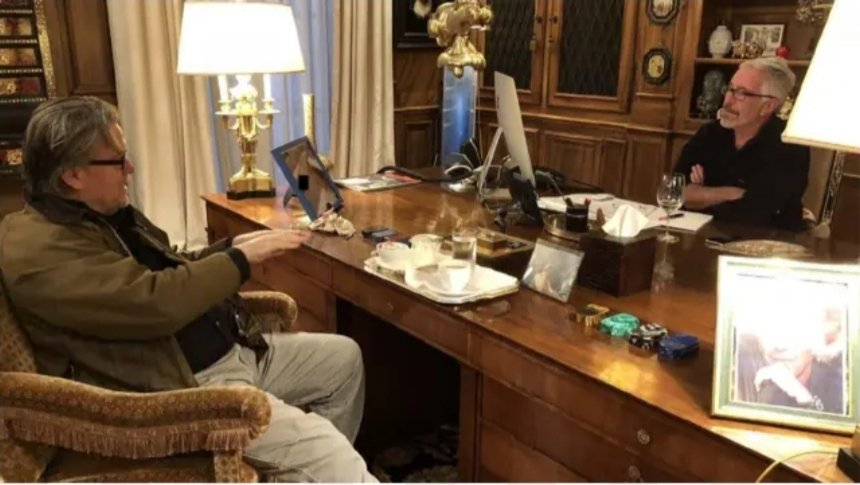
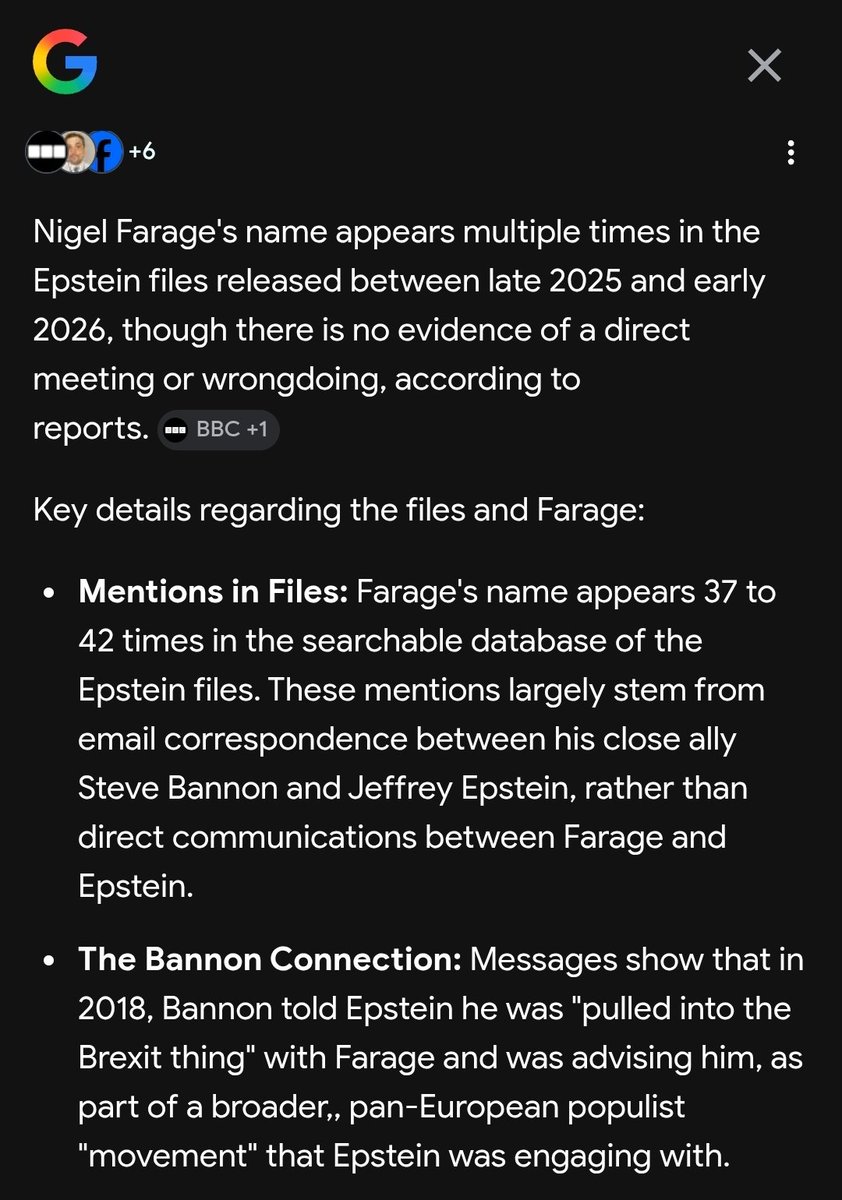
Farage's name appears about 40 times in the Epstein files. Mostly in emails between Epstein and Bannon discussing Farage in the context of Bannon's scheme to create a European fascist network.

English
Mr Stephens retweetledi

IMPORTANT: @Nigel_Farage said he would buy a house in Clacton a year ago.
He then angrily stated “I’ve just exchanged contracts on a house in Clacton, what more can I do?”.
He then stated his girlfriend Laure Ferrari had bought it.
He then said he had had an expensive weekend taking ‘tax advice’.
He the said Ferrari’s parents had given her the cash to buy it.
It was then shown they didn’t have the means to.
Today she’s refusing to say how it was purchased.
Before commenting, remember - she is not just a member of the public, she’s a political operative and has been a candidate. Shes the partner of Nigel Farage who claims to want to be Prime Minister.
He is involved, so it’s 100% public interest.
English
@bellerby1963 @eV_Newt @SKODAUK Have you spoken to an independent garage like @cleevelyev ? Franchise workshops love a good price gouge.
English

@eV_Newt Not all EV’s are created equal - or something like that. 1k miles beyond 60k warranty & my #skodaenyaq has stopped AC charging. Those not so nice people @SKODAUK want £3k to repair it 😩😩.
English


Mr Stephens retweetledi

Nigel Farage and Kemi Badenoch wanted to jump into the Iran war with both feet without thinking through the consequences.
For a party that always does what’s right for Britain, vote Labour this Thursday.
English
Mr Stephens retweetledi

In 2024, The Sun led with several stories regarding Starmer receiving clothes & spectacles from a Labour donor - even repeating accusations he’s “King of the Freebies”
In 2026, The Sun hasn’t published a *single story* about Farage receiving a £5m gift from a Reform donor
English
Mr Stephens retweetledi

Imagine a white supremacist went on a stabbing spree targeting people of colour in London, but before that, he stabbed his white friend, then jumped on public transport for an hour to head to a multicultural area of the city.
English
@prwright55 @politixintheuk A) they weren’t coming in anything like the numbers becuase the agreement is an effective deterrent.
B) if they weren’t being returned the. It was the Tories* that were responsible.
* now called Reform Ltd.
English

@politixintheuk I notice the headline said "could have been returned", however Brexit or pre-Brexit, they weren't being returned
English
Mr Stephens retweetledi

TORIES ONLY REALISED BREXIT IMPACT ON SMALL BOATS ‘JUST BEFORE’ LEAVING EU, ADMITS TORY MP PHILP!
Brexit: the biggest geopolitical catastrophe in British history.
Source: Independent

English
Mr Stephens retweetledi

A leaked recording obtained by @SkyNews reveals top Tory Chris Philp admitted the UK couldn’t return asylum seekers to Europe post-Brexit, despite promises made at the time
English
@NorbertColon61 @Tw_timerAlder And?
Fuel duty going up this year.
Remember to wear the gloves.
English

@Tw_timerAlder The cost to fuel will only get more expensive for EV owners. £24 billion is generated each year from fuel duty excise. The transition to EV dominance will see owners inheriting the burden for that taxation. Cheap now but not in the near future.
English

A favourite dig at EVs from fossil shills and energy cranks is that they don’t hold their value.
Well it looks like the tables are turning.
After all what sensible person would want an ICE car which is a dying breed, filthy, expensive to maintain and costs a fortune to fuel?
Chris Meder@EVCurveFuturist
This is a BIG signal. EVs are now holding value while ICE cars are depreciating up to 5x faster. That flips buyer behaviour. Owners hold longer, new demand weakens, automakers cut production, margins get squeezed. Meanwhile EV demand accelerates. The loop has begun. #RIPICE I’ve been warning about this one coming for a while. Oil volatility is the accelerant. When input costs swing, behaviour follows. That’s how the loop speeds up. Anyone buying a new ICE vehicle over the past two years has been stepping into a shifting market. Now it’s starting to show. Depreciation isn’t just a number. It drives behaviour. And it sets off a chain reaction. Entrenched ICE owners hold onto their cars longer to avoid losses. That chips away at new ICE demand, already under pressure from rising EV adoption. Automakers respond the only way they know how. Cut production, protect margins, avoid unsold stock. We’re already seeing this play out. The used ICE market expands. Buyers who refuse to switch delay the decision or downgrade instead of upgrading. Fewer new car sales. More pressure upstream. Then comes the squeeze. Lower volumes weaken pricing power and compress margins. That pushes even more buyers to reconsider. Meanwhile EVs keep gaining. Not just on cost, but on perception. People are finally seeing through decades of misinformation and FUD. Add fuel volatility into the mix and the equation becomes even clearer. What starts as a depreciation shift becomes a feedback loop. Demand weakens. Supply adjusts. Margins compress. Alternatives accelerate. The buyer pool narrows. This isn’t just market movement. This is how replacement begins. Cost always wins. #Bettrification accelerates. thetimes.com/business/compa…
English
Mr Stephens retweetledi

When you see the relentless attacks from other parties on the Greens across the media remember this:
They hate our plan to end Rip Off Britain.
They don't want a wealth tax.
They don't want public ownership & lower bills.
They're trying everything in their power to stop us.
English
Mr Stephens retweetledi

Actually pretty depressing but totally predictable when you remove all of the collaborative agreements to control it. Anyone who told you different either hadn’t a clue or has an Agenda… and it isn’t reducing immigration… which, incidentally , this Government has.
Simon Kuestenmacher@simongerman600
From the outside, there are indeed funny aspects to Brexit. The fact that migration went heaps up is certainly the funniest bit.
English
Mr Stephens retweetledi
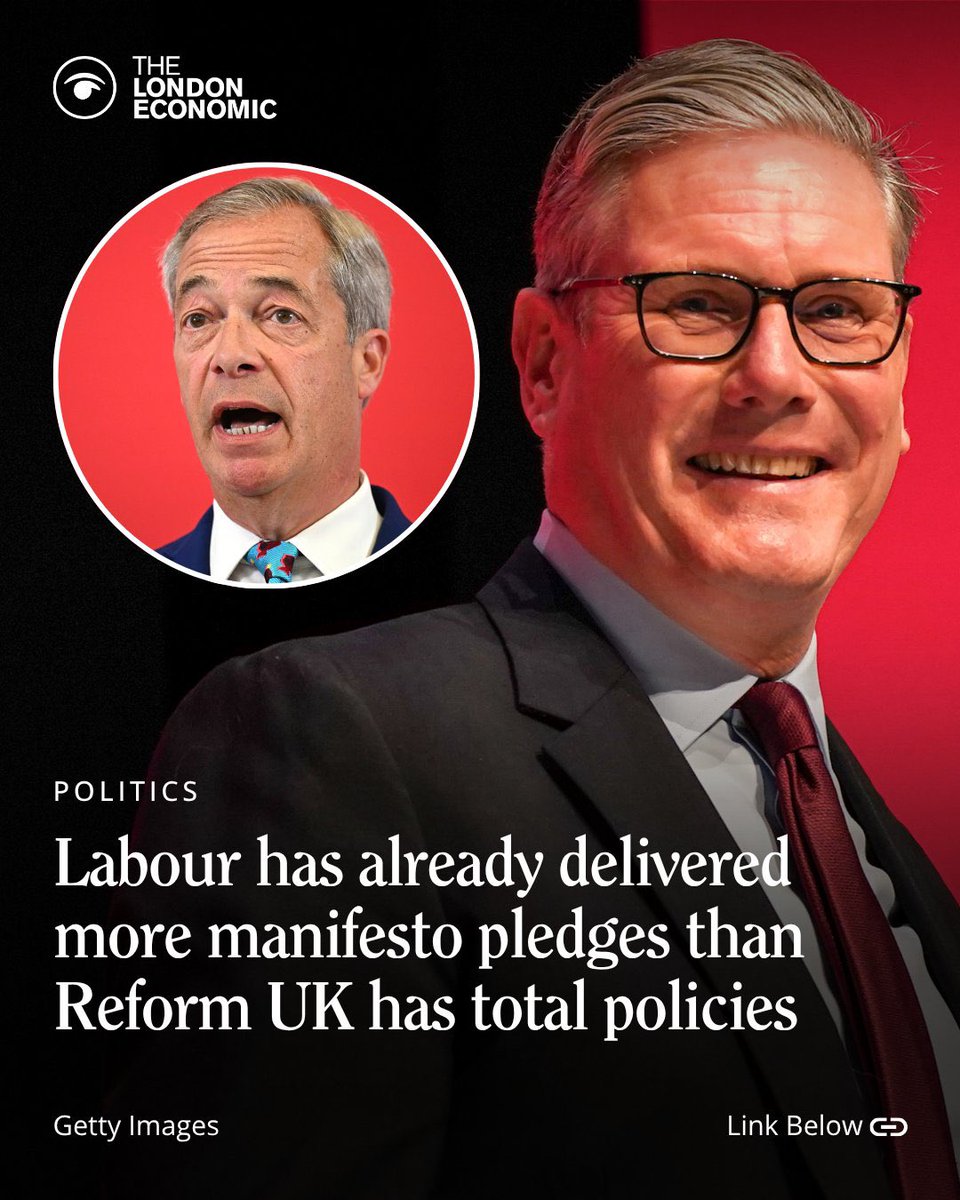
Labour has already delivered more manifesto pledges than Reform UK has total policies
@LondonEconomic
English
@ralphyellis @Tw_timerAlder The guy trying to sell gas? Nah he’s talking bollox.
English

@Tw_timerAlder You need to debate your fantasy belief in heat pumps, with Dale Vince.
RE
Dale Vince@DaleVince
This is precisely the point I’ve been trying to make. There’s a mismatch between water temperatures - produced by heat pumps and required by conventional radiators. And a mismatch between the rhetoric of those promoting heat pumps and the actuality. Heat pumps are good things, but they do not lower bills - outside exceptional circumstances. Like radiator changes, high levels of insulation, special electricity tariffs and disconnecting gas meters. That’s the magic mix for lower bills. The circled number is the COP, from a real world installation, a word away from the claims of heat pump evangelists and sellers. They claim 4 to 5 is possible, the national average is 2.8 and in this case at this time - it’s less than 1. All else being equal you need a COP of 4 to keep your bills as they are, anything less and they go up.
English
What are all the energy cranks and shills going to be doing in 5-10 years time when fossil fuels play a minimal role in electricity generation and EVs and heat pumps have sent oil and gas into long term structural decline?
What’s their next grift?

English
@robhawkes That’s so lovely. We’ve lost most of things my dad made but I at least saw them in my youth. I try my best to make things when I can and I love learning a skill.
English

This is my grandad, he built the original R2-D2 for the first Star Wars film…
Jack was a master sheet metal worker, and was roped into using his skills on an obscure project to turn the sketches for the droid into something that could be constructed out of aluminium sheets.
I always knew he'd helped make part of R2-D2. However I only found this photo in recent years and have since learned that he was actually instrumental to the construction of the entire droid, particularly with working out how to machine the complex shapes like the dome and legs out of single sheets of aluminium.
He didn't just build one either, he ended up constructing a handful of the droids for various uses in the film. I still have no idea how he did it, especially without modern software and computer-controlled machining.
Unfortunately I never got to know him as he died when I was a baby, though I have a feeling we share a lot in common.
I also have his old Dragon 32 computer that he was using to learn programming in the 1980s, with reams of hand-written code that still works on the computer.
#MayThe4th #maythefouthbewithyou #StarWars

English
@Cornishview 20% PA is a pretty good return.
What’s the return on a new kitchen?
English
people with Solar panels are very keen to tell us how much they save on electricity - but omit to say they shelled out 8 to £10K to get them in the first place.
English

@Cornishview Takes YEARS to get outlay paid back.
And if you move house......
they stay.
English