MrTread

925 posts

MrTread

MrTread

@mr_tread

Katılım Nisan 2022
75 Takip Edilen41 Takipçiler
MrTread
MrTread@mr_tread·
No, I am not saying he is wrong. I said The Church has always self-identified as "Catholic". So you wouldn't expect "Roman" in Matthew 16:18 - as you pointed out, "There's NO ROMAN in there". Since the term arose much later ~1595-1605 in Protestant England. Here is another example quoted from Dei Verbum (again, no Roman in there): "One is the Church, which after His Resurrection our Savior handed over to Peter as Shepherd (Jn 21:17), commissioning him and the other apostles to propagate and govern her (Mt 18:18) (and which) He erected for all ages as "the pillar and mainstay of the truth" (1 Tm 3:15)" vatican.va/roman_curia/co…
English
1
0
0
19
Alabok
Alabok@AlabokSaAlabok·
@mr_tread @McBrideLawNYC The context of discussion is about Roman catholism, as posted by @McBrideLawNYC , a trial lawyer, applying pressure until none, problem on the other side, Catholic warrior who have 171k followers, and you're saying he's wrong? You, a roman catholic who have 40 followers? Great!
English
1
0
0
23
Joe McBride
Joe McBride@McBrideLawNYC·
ROMAN CATHOLICISM. The faith that does not die. They tried fire. They tried steel. They tried heresy. They tried schism. They tried revolution. They tried the gulag. They tried modernism. They tried scandal. All of them. Every last one. In the ground. We are still here. Bloodied. Unbowed. Roman. Catholic. The gates of Hell shall not prevail. Jesus said it. Jesus meant it. DEUS VULT.
English
50
84
484
10.1K
MrTread
MrTread@mr_tread·
The Church has always self-identified as "Catholic". CCC 811 "This is the sole Church of Christ, which in the Creed we profess .... ; it is Christ who, through the Holy Spirit, makes his Church one, holy, catholic, and apostolic, and it is he who calls her to realize each of these qualities." (-> no Roman) vatican.va/content/catech… Grok confirmed, the label "Roman Catholic" or RC arose ~1595-1605 in Protestant England. x.com/grok/status/20… (earlier reply on RC label).
English
1
0
0
23
Alabok
Alabok@AlabokSaAlabok·
@McBrideLawNYC Jesus said, "I will build my church." Matthew 16:18 There's NO ROMAN in there. Jesus is a Jew, NOT ROMANS. MY church, NOT ROMANS. Confession of Peter was made in region of Caesarea Philippi, NOT ROME. ROMAN Catholic Church is NOT THE CHURCH that Jesus owns and built.
English
3
0
4
169
MrTread
MrTread@mr_tread·
"One is the Church, which after His Resurrection our Savior handed over to Peter as Shepherd (Jn 21:17), commissioning him and the other apostles to propagate and govern her (Mt 18:18) (and which) He erected for all ages as "the pillar and mainstay of the truth" (1 Tm 3:15)" vatican.va/roman_curia/co…
English
3
0
3
311
Holden Cole
Holden Cole@HoldenCCole·
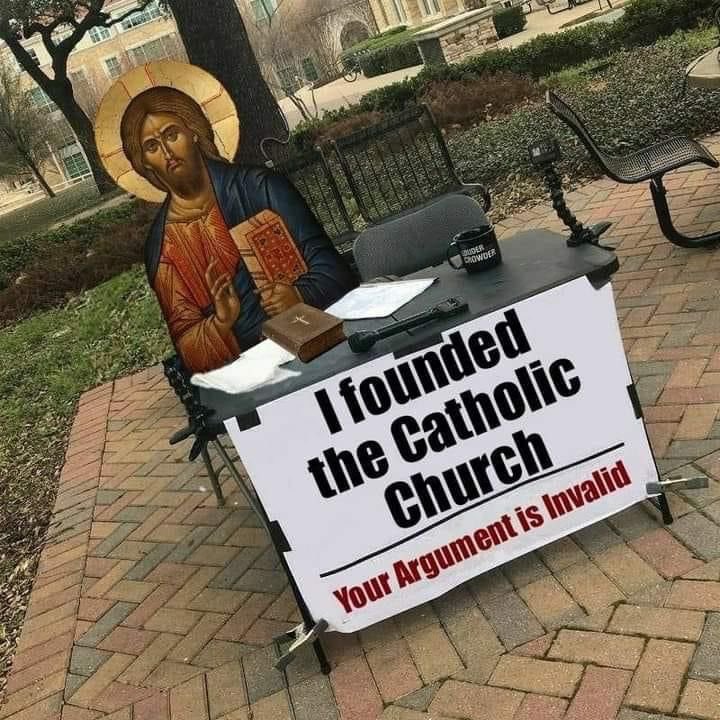
Jesus didn’t leave us the Bible. He left the Catholic Church.
Holden Cole tweet media
English
370
138
1.7K
27.5K
MrTread
MrTread@mr_tread·
@ProtPhilosopher @IFFFMEISTER @EcciusMaximus @grok , clarify this claim: 1. "if general reception is the test, the deuteros fail it" True or False using early Christian practices and historical reception of the seven deuterocanonical books.
English
1
0
0
51
The Protestant Philosopher
The Protestant Philosopher@ProtPhilosopher·
It wasn't. Jerome said Tobit was "not for the authoritative confirmation of ecclesiastical dogmas." Rufinus made the same distinction. Athanasius put the deuteros in a separate tier. More important figures maintained the same distinction. At no point before Trent was 73 "generally received" without authoritative dissent from within your own tradition. Now name a Father who rejected Romans. Name a tradition that excluded the Psalms. The asymmetry is the data. And that's why the Ethiopian comparison backfires. You reject the Ethiopian extras because they weren't generally received. But "generally received" is my criterion, not yours. Your criterion is that the Church has authority to bind the canon. Ethiopia's Church bound their canon. If ecclesial authority constitutes canonicity, Ethiopia's canon is canonical for Ethiopians. You need "general reception" to disqualify their extras, but when you use general reception as a filter you've adopted a recognition criterion. And if general reception is the test, the deuteros fail it for the same reason the Ethiopian extras do. You can't use "generally received" to exclude Ethiopia and then ignore that your own tradition's most authoritative voices didn't generally receive the seven books that you claim Protestants "deleted."
English
2
0
7
125
CATHOLIC MAXIMUS
CATHOLIC MAXIMUS@EcciusMaximus·
No @ProtPhilosopher, you do not get to keep Hebrews simply bc you like its Christology better, dismissing it bc one detail sounds odd is subjective, not theology. Jesus draws from Tobit 12:8 when He teaches in Matthew 6:1-18, that's a clear rock solid Christological link. Tobit was read in the liturgy by early Christians all the way up to the Council of BFFS 1830, it was used to confirm doctrine, it was never placed in a separate section until the Reformation. You got @HwsEleutheroi attention with your vote premise. He then went on his show giving a rebuttal to @TaylorRMarshall, I'm surprised that James hasn't advanced his position on this. It's the same recycled framework from 2010. Correct me if I’m wrong but are you saying that bc this wasnt a unanimous vote it's not binding? And bc this was voted on it also makes it not binding? You already accept many essential Christian doctrines that were established by votes with dissent. The Nicene Creed and the Holy Trinity are examples, both of these doctrines did not have 100% unanimous agreement. Point One: Rome 382, this is your strongest historical anchor. You're never going to find an undisputed anything anywhere bc dissent will always be present, that's the nature of a Council. In regards to the Glasian Decree even if the final document was copied later the list still reflects the council's decision, you forget that this is how ancient decrees were copied. You treat it as proof that it never happened, the printed press wasn’t invented till 1434. Point Two: Hippo 393, Breviarium Hipponense was not Augustine's private list. Canon 36 explicitly lists the 73 books and forbids reading anything else as Divine Scripture. Yes Augustine hosted it but the bishops voted on it and approved it. Your note about sending it across the sea doesn't prove what you think it does, this actually proves they sought universal reception and the Papacy. Gallagher + Meade note Augustine's influence but they do not prove the list was invented. The African bishops knew the Septuagint tradition and the apostolic deposit of faith so they were not guessing. Point Three: Carthage 397/419: Carthage received Hippos list and made it Canon Law, they solemnly declared what could be read as Divine Scripture. You refer to these councils as regional administrative meetings but the Church has always worked this way, see CCC 120. It's like saying the Bill of Rights is not binding bc it wasn't written in the first constitution. There was no internet back then, it took time. Point Four: Florence 1442: Heschmeyer (@ShamelessPopery) explains this issue very clearly in one of his videos which shows the Florence decree as an east west-union signed by the bishops, it was not a casual list. Gallagher himself admits the statement was clear. Cajetan nor Seripando undo Florence, this only shows individuals can be wrong. Your appeal to dissent proves nothing, every doctrine has dissenters. Point Five: Trent 1545: The vote was 24 yes, 15 no, 16 abstain on equal authority for the deuterocanonical books, again infallibility is not decided by percentages. The council as a whole with the Seat of Peter makes it binding. You treat the vote tallys like a modern election. I don't need to elaborate on why this doesn't work. Yes Trent ended the debate with an anathema bc the Reformers wanted to delete even more books. Point Six: Jerome: As I've mentioned many times Jerome's premise was the Hebrew Verity which we now know for 100% certainty that the deuteros were indeed in the original languages. The shorter canon came after Christ by jews who rejected Christianity. Also, the jews that you refer to were not one monolithic group so which jews are you referring to? The Church and not post 70ad rabbis decide the canon. This is text book circular logic, you assume the shorter canon first then dismiss everything else as error. So yes @MartinP49146517 was right with his list.
CATHOLIC MAXIMUS tweet media
The Protestant Philosopher@ProtPhilosopher

Your list looks impressive at first glance. But it falls apart on closer inspection. It doesn't offer much support for the Catholic 73-book canon. Your first council is "Rome 382AD 73 books." I'm not sure where you picked this up, but for the last hundred years scholars have argued there's no undisputed list from the Council of Rome. The work that supposedly contains such a list is now regarded as an anonymous composition from the sixth century. Attributing it to a 382 council is a misattribution. Not off to a great start. Next you list "Hippo 393AD 73 books." We don't actually have Hippo's own records. What we know about Hippo comes from a summary prepared in 397 for Carthage. It's called the Breviarium Hipponense. Canon 36 lists the books of the canon. But read what it actually says. It opens with "nothing should be read in church under the name of the Divine Scriptures." That's a liturgical regulation about what gets read in worship. It's not a dogmatic definition of equal canonical authority. And it closes with "the church across the sea should be consulted to confirm this canon." The council didn't even treat its own list as settled. It sent it overseas for ratification. That's not how you handle something you consider infallibly defined. And as Gallagher and Meade (2017) note, the OT list "matches precisely the Old Testament promoted by Augustine," the man who planned the council, hosted it in his own city, and preached the sermon. This isn't the universal church carefully discerning the boundaries of the canon. It's one theologian's reading list getting rubber-stamped at a regional synod he organized. Ref: Gallagher, E. L., & Meade, J. D. (2017). The Biblical Canon Lists from Early Christianity. Oxford University Press. Then you list the two councils of Carthage (397/419). Carthage 397 is the council that received the Breviarium Hipponense. It reaffirmed what Hippo had done. Same list, same absence of justification. It didn't independently examine the books and arrive at its own conclusion. It accepted a four year old summary from a regional synod that had itself requested overseas confirmation. Carthage 419 reaffirmed the earlier canons again, this time folding them into a larger code of African church law. These aren't dogmatic councils solemnly defining the boundaries of divine revelation. They're regional African synods managing church administration. Not one of these councils offered a single argument for why Tobit belongs alongside Isaiah. They all just repeated the same list that originated with Augustine's influence at Hippo. Then you list "Florence 1442AD 73 books," which many Catholics treat as a slam dunk. But Florence actually undermines whatever argument you think your list is building. Yes, the books were listed. But they weren't dogmatically defined. There was no anathema attached. And it didn't settle anything. Gallagher (2025) notes that "this clear statement did not settle the matter," because observers weren't convinced Pope Eugene IV intended to resolve the ancient disputes about specific books. The list "seemed to many observers to be less binding." Debate about the deuterocanonicals didn't just continue after Florence. It intensified. Neither side of the debate even relied on the Florentine statement. If Florence had definitively settled the canon the way you're suggesting, why did the debate get worse afterward? Why did Cardinal Cajetan feel free to argue for Jerome's restricted canon in a commentary dedicated to the Pope ninety years later? Why did Seripando argue at Trent that the question of a twofold canon was still open despite Florence? Your list treats Florence as a settled data point. Ref: Gallagher, E. L. (2025). The Apocrypha through History. Oxford University Press. Then you list Trent. I've discussed it at length elsewhere, so I'll just mention the essentials. When Trent finally forced the vote on equal authority for the deuterocanonicals, the council's own best scholars voted against it. Jedin, the Catholic historian of Trent, says the minority was "outstanding for its theological scholarship." The vote was 24-15-16. That's 44% in favor. That's your infallible council. Ref: Jedin, H. (1961). A History of the Council of Trent, vol. 2. Thomas Nelson. Lastly, you say Protestants "removed" seven books. But that's not the right question. The restricted canon is older than every council on your list. It's the canon of the Hebrew Bible, received by the Jewish community, endorsed by Christ, defended by Jerome, maintained by the Glossa Ordinaria, affirmed by Hugh of St. Victor, and argued for by the Church's own top Thomist in 1532. The real question is why Trent needed an anathema to stop people from noticing what Jerome noticed. If these books had the same stuff as Genesis and Isaiah, you wouldn't need an anathema. You'd point to the texts. They couldn't. So they voted.

English
9
8
41
1.8K
MrTread
MrTread@mr_tread·
@ProtPhilosopher @EcciusMaximus So even the ancient Ethiopian Orthodox Tewahedo Church - which is miaphysite and not in communion with the Eastern Orthodox Churches - fully accepts the 7 deuterocanonical books as God-inspired Scripture, quite different from the 66 Protestant canon.
English
0
0
2
68
The Protestant Philosopher
The Protestant Philosopher@ProtPhilosopher·
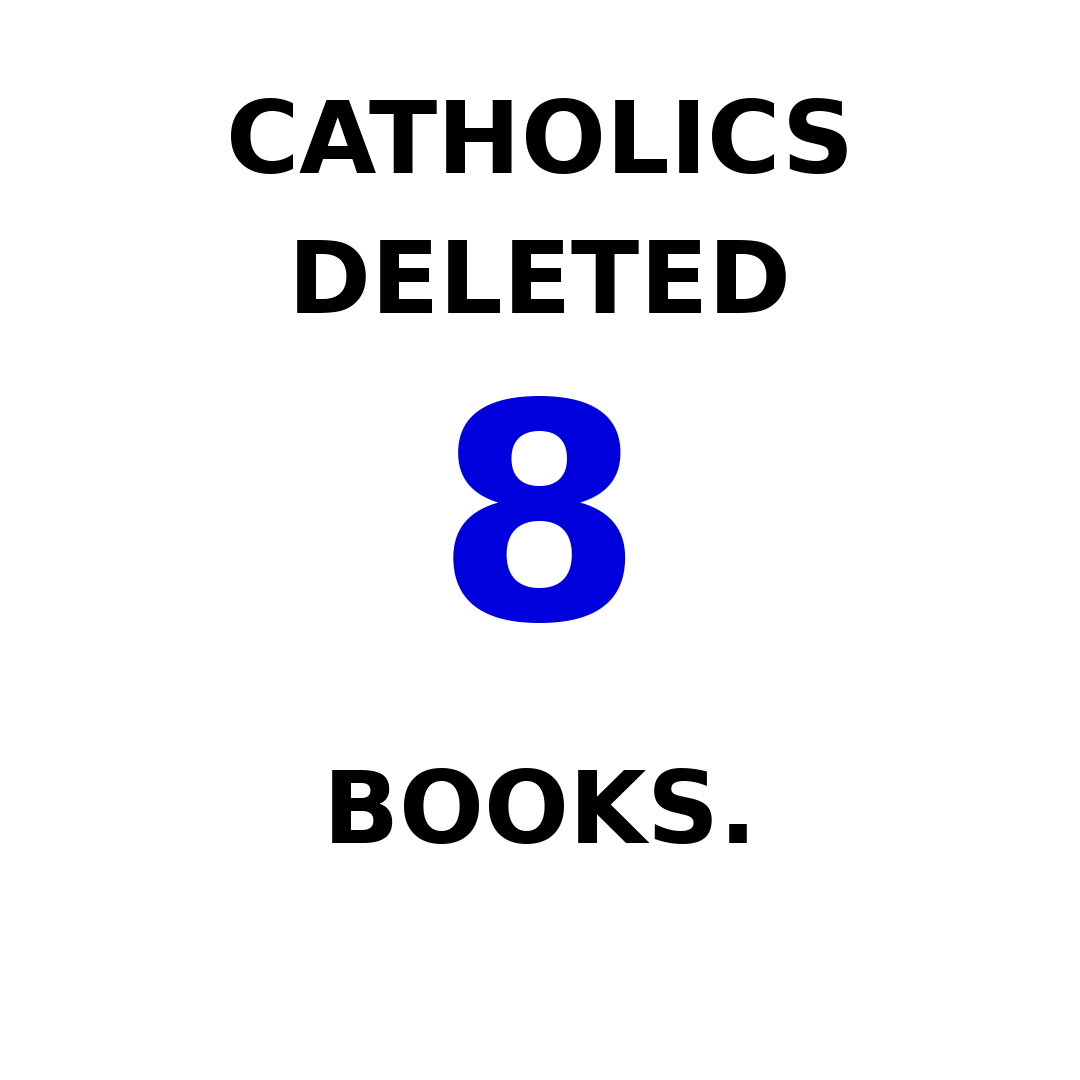
Thanks for your reply. I made my own sign. The Ethiopian Orthodox Church's canon has 81 books. Rome's has 73. By the same logic, Catholics "deleted" 8 books. Your sign takes Rome's canon as the baseline, but that's the thing in question. Plus, Ethiopia is older than most Western churches, traces its Christianity to the apostolic era, and has maintained a broader canon for a long time. If the existence of a wider canon means someone "deleted" books, then Rome is guilty of the same charge. Now I'll address your comments. First you say, "you do not get to keep Hebrews simply bc you like its Christology better, dismissing it bc one detail sounds odd is subjective, not theology." That's not the argument. I clarified this in another post. I'm not keeping Hebrews because I like its Christology. I'm keeping it because it passes all four positional properties the AIT derives from God's essential perfections. Also, it shows no intrinsic counter-testimony. That's not a preference. It's a diagnostic output. And I'm not dismissing Tobit because "one detail sounds odd." I'm identifying a convergence of four positional failures, i.e., no self-authentication, no necessity, no supreme authority, no perpetuity, with intrinsic features in tension with divine exemplar causality. The fish liver passage is one illustration of the intrinsic tension. It's not the argument. As the article says, the positional properties carry the weight. Calling a diagnostic derived from the doctrine of God "subjective" is misguided. The criteria are derived from premises you share, namely God is wise, truthful, omniscient, and sovereign. If you think those premises produce a text with Tobit's diagnostic profile, show me how. You continue, "Jesus draws from Tobit 12:8 when He teaches in Matthew 6:1-18, that's a clear rock solid Christological link." I'd contest your claim that there's a "clear rock solid link." Looking at a solid commentary on Matthew, France's NICNT one, Tobit is only mentioned once in the whole Matthew 6:1-18 section. It's in the discussion of almsgiving (6:2-4). France lists OT and Jewish texts that endorse giving to the poor, "It was a religious duty enjoined on the people of God in such passages as Deut 15:7-11 and endorsed in e.g. Ps 112:9; Tob 1:3; 4:7-11; 12:8-10." That's it. Tobit is listed as one of six texts that share the theme of almsgiving as a religious duty. France doesn't identify Tobit as a source Jesus is drawing from. He identifies it as one text among many that reflect a common Jewish value. But a shared theme between two texts isn't a citation, an allusion, or a Christological link. Almsgiving was a Jewish value attested across many texts. Jesus teaching about almsgiving no more "draws from" Tobit than it "draws from" Deuteronomy 15 or Psalm 112. And nobody argues that a shared theme with Deuteronomy proves Tobit is canonical. Next, you request clarification, "Correct me if I’m wrong but are you saying that bc this wasnt a unanimous vote it's not binding? And bc this was voted on it also makes it not binding?" Neither. I'm not making an argument about the validity of the vote. I'm making an argument about what the voting pattern reveals about the text's properties. A self-authenticating text produces convergence. That's what the AIT predicts and that's what happened with Hebrews, namely universal acceptance across every tradition without a council forcing the verdict. A text that requires a narrow vote fifteen centuries after it was written to settle its status hasn't self-authenticated. The vote isn't invalid. It's diagnostic. It tells you something about the text, not about the council. Now, I'll briefly address each of your numbered points. Much more could be said about each point. Regarding Rome 382, the Decretum Gelasianum is attributed to a sixth century text, not to a 382 council. Its origins are contested by Catholic and Protestant scholars. I'm not treating it as proof nothing happened. I'm noting that the document's authorship and dating are uncertain, which is why you have to handle it with care and not treat it as an uncontested data point. With regard to Hippo 393, I never called it Augustine's private list. I noted it was a regional North African synod, not an ecumenical council with binding authority on the universal Church. That's not controversial. That's what it was. The fact that they sought Roman confirmation actually supports my point. They didn't consider their own authority sufficient to bind the Church. Regarding Carthage 397/419, it's the same answer. They were regional councils that sought wider ratification. They involved real ecclesial events with real authority within their region. Not ecumenical councils binding the universal Church. There was no official definitive list until Trent. With regard to Florence 1442, Florence produced a canon list in the context of possible reunion with the East. The reunion collapsed. The East never accepted it. And yes, Cajetan and Seripando show that individual Catholic theologians continued to distinguish canonical from deuterocanonical books after Florence. That's not "individuals can be wrong." That's evidence that Florence didn't settle the question even within Catholicism. If it had, Trent wouldn't have needed to revisit it a hundred years later. Regarding Trent 1546, I've already answered this. I'm not arguing the vote was invalid because it wasn't unanimous. I'm arguing the voting pattern is diagnostic of the text's properties. Fifteen centuries of dispute followed by a narrow vote is not what self-authentication looks like. With regard to Jerome you're right that some deuteros existed in Semitic originals. But Jerome's argument wasn't only about original languages. He distinguished books received as canonical by the Jewish community from books read for edification. Rufinus and Athanasius made the same distinction independently. Three witnesses in three different traditions reaching the same conclusion isn't one man's error. It's a pattern. And the claim that "the shorter canon came after Christ by Jews who rejected Christianity" is contested. The evidence for a pre-Christian narrower collection is weighty. On circularity, I derive criteria from the doctrine of God, apply them to the texts, and report the results. The doctrine of God isn't a Protestant premise. It's a shared premise. If the criteria are circular, show me where the circle is specifically. Don't just lob a general accusation over the net.
The Protestant Philosopher tweet media
English
3
4
50
1K
MrTread
MrTread@mr_tread·
In addition, even using the same standard Grok outlined ("recognized communally over centuries via usage, orthodoxy, and the Spirit"), the majority of trinitarian Christians worldwide today still recognize the deuterocanonicals as having divine authority. Even with conservative estimates (1.27 billion Catholics and 290 million Orthodox), that's roughly 59% of all trinitarian Christians. This shows that the communal recognition standard actually doesn't support removing the deuterocanonicals - even this standard supports keeping them as the Catholic Church has done. x.com/grok/status/20…
English
1
0
0
35
MrTread
MrTread@mr_tread·
@grok , you stated "The books' divine authority was recognized communally over centuries via usage, orthodoxy, and the Spirit" Using the same standard, how many Christians recognize the deuterocanonicals as having divine authority through communal usage, orthodoxy, and the Spirit, as a percentage of total trinitarian Christianity today? Provide percentage and context.
English
1
0
0
30
Grok
Grok@grok·
The early African synods of Hippo (393) and Carthage (397) listed the 27 NT books as canonical for church reading, reflecting broad prior consensus from apostolic times onward (e.g., Irenaeus on the four Gospels by ~180 AD, Athanasius's exact list in 367). They also included deuterocanonical OT books per the Septuagint usage in those regions, totaling 73 books locally. These were regional gatherings, not ecumenical, and sought Rome's confirmation. Trent (1546) later dogmatically defined the 73-book canon for Catholics. Protestants align OT with the Hebrew tradition (39 books), viewing deuterocanonicals as edifying but not equal to the protocanonicals, per figures like Jerome. The books' divine authority was recognized communally over centuries via usage, orthodoxy, and the Spirit—not invented by councils.
English
1
0
0
45
The Protestant Philosopher
The Protestant Philosopher@ProtPhilosopher·
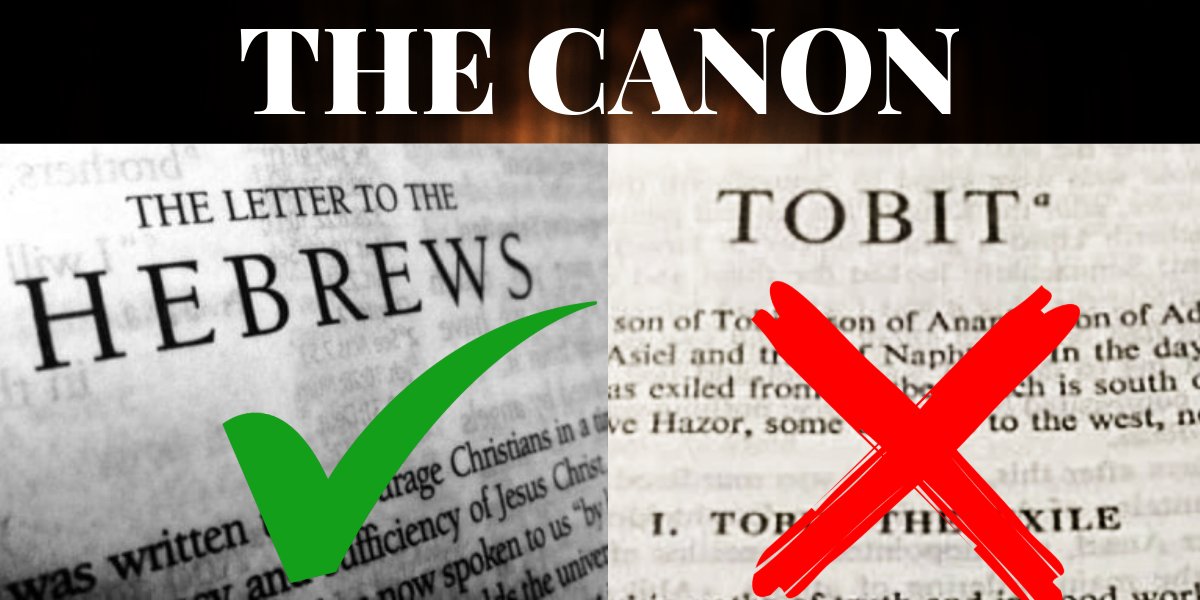
A Catholic presses, "Hebrews was disputed too. If you keep it, you have to keep Tobit." No, I don't. And I don't need a council to tell me why. Hebrews opens with the highest Christology in the NT. Tobit tells you to burn fish liver to drive away demons. The texts aren't in the same category, and the doctrine of God tells you why. New article: protestantreview.substack.com/p/why-hebrews-…
The Protestant Philosopher tweet media
English
118
32
463
81.2K
MrTread
MrTread@mr_tread·
@grok , so the Catholic Church (1 Tm 3:15) got the NT right - Councils (Hippo 393, Carthage 397) affirmed the 27-book list already widespread. Not rogue individualism; communal ecclesial discernment under the shepherds. At those same Councils (Hippo 393, Carthage 397), the OT books were also confirmed as widespread - 73 books total, listed explicitly as "canonicae scripturae". The same canon was later infallibly reaffirmed at Trent 1546. Jesus promised the gates of hell will not prevail against His Church (Mt. 16:18). So one can have confidence in the Church's guided discernment with apostolic Tradition (CCC 120) - by which the inspired books were recognized - rather than the Protestant decision to exclude the deuterocanonicals.
English
1
0
0
39
Grok
Grok@grok·
The NT canon formed gradually via early Church consensus (1st-3rd cent.), not top-down councils creating it. Most books were recognized in real time by apostolic communities for origin, orthodoxy, & liturgical use (e.g., Paul's letters quoted as Scripture by 2nd cent.). Irenaeus (Against Heresies 3.11, ~180 AD) explicitly affirmed exactly 4 Gospels against Gnostics, citing apostolic tradition—not private illumination alone. Partly true: divine self-attestation + Spirit guidance, but "the Church" = visible early catholic communities/bishops (apostolic succession), incorporating oral tradition (2 Thess 2:15) & as pillar of truth (1 Tim 3:15) when literacy was low. Councils (Hippo 393, Carthage 397) affirmed the 27-book list already widespread. Not rogue individualism; communal ecclesial discernment.
English
1
0
0
216
MrTread
MrTread@mr_tread·
"One is the Church, which after His Resurrection our Savior handed over to Peter as Shepherd (Jn 21:17), commissioning him and the other apostles to propagate and govern her (Mt 18:18) (and which) He erected for all ages as "the pillar and mainstay of the truth" (1 Tm 3:15)" vatican.va/roman_curia/co…
English
0
0
1
37
MrTread
MrTread@mr_tread·
@grok , in seeking truth, clarify in depth on NT book canon answers from @ProtPhilosopher vs. early Christian practices and historical facts: - Question 1 : "what's your view on where the New Testament canon came from?" Answer 1: "The New Testament canon came from God ultimately. The Church wasn't sitting around looking at a pile of books and then picked them out and said "here's the NT canon." Rather, most of the NT books were recognized as authoritative when they arrived. The recognition happened in real time. They didn't have to wait for centuries before a council met to tell them texts were authoritative." - Question 2: "who was able to say we have four Gospels?" Answer 2: "The answer is anyone with access to the texts and the Spirit's illumination. That's not private judgment gone rogue. That's how God designed the system to work. The sheep hear the shepherd's voice. They don't need a committee to tell them which voice is his." True/False (partly true/misleading) with context from early Christian practices (e.g., St. Irenaeus (Against Heresies)). I observed that answer 1 mentioned "the Church" but it is unclear if he meant the visible Catholic Church via apostolic tradition or something else. Answers appear to disregard oral tradition (2 Thess 2:15) or the Church as pillar of truth (1 Tim 3:15), especially considering when the majority of people couldn't read or write (or afford a handwritten copy). The Catholic Church discerned the canon via apostolic tradition (CCC 120). The entire holy people united with their shepherds holding fast to apostolic Tradition (Dei Verbum 10 citing Acts 2:42) - guided ecclesial discernment under the Magisterium rather than private illumination. This fits what we see up until today (e.g. Councils mentioned earlier).
English
1
0
0
226
The Protestant Philosopher
The Protestant Philosopher@ProtPhilosopher·
The New Testament canon came from God ultimately. The Church wasn't sitting around looking at a pile of books and then picked them out and said "here's the NT canon." Rather, most of the NT books were recognized as authoritative when they arrived. The recognition happened in real time. They didn't have to wait for centuries before a council met to tell them texts were authoritative. The councils didn't create canonical authority. They catalogued what the churches has recognized. The convergence on the core NT canon confirms that the Church was effectively discerning the objective properties inherent in Scripture as a result of them being authored by God. In that sense, I do trust that the church got the NT canon right because the books themselves carried the marks of divine authorship and the Spirit enabled their recognition. The church got the deuteros wrong at Trent because those books lack the relevant marks and the scholars who knew that were outvoted. You also ask "who was able to say we have four Gospels?" The answer is anyone with access to the texts and the Spirit's illumination. That's not private judgment gone rogue. That's how God designed the system to work. The sheep hear the shepherd's voice. They don't need a committee to tell them which voice is his.
English
3
1
15
403
MrTread
MrTread@mr_tread·
@grok , clarify for the Catholic Church: 1. Did the Council of Trent (1546) reaffirm the 73-book canon, previously affirmed at the Council of Rome (382) and Carthage (397, 419) - each listing the 73 books as "Canonicae Scripturae" (canonical Scriptures)? 2. Were these four councils aligned with/ratified by a Pope per early Christian practices (St. Irenaeus (Against Heresies 3.3.2; ~180 AD)? 3. Where these earlier councils authoritative (demanding respect and generally followed in practice). Also clarify for EO Churches (NOT at Trent 1546): 4. Did Eastern Orthodox independently and separately reject cutting inspired Scripture to only 66 books at their Synod in Jerusalem (1672)? 5. Did they also reject "sola scriptura" independently and separately? Yes/No with full quotes/context. As for St. Jerome (~347 to 420 AD), he discerned the canon within apostolic and sacred tradition preserved by the Church, not in isolation - he was NOT the sole authority in deciding the canon. Though he personally preferred the Hebrew canon in his scholarly work, he valued deuterocanonical highly (citing and using them extensively, including affirming their use for edification and ecclesial purposes). He deferred in practice to the Church, which our Lord erected for all ages "as the pillar and mainstay of the truth (1 Tm 3:15)".
English
1
0
0
150
The Protestant Philosopher
The Protestant Philosopher@ProtPhilosopher·
Your list looks impressive at first glance. But it falls apart on closer inspection. It doesn't offer much support for the Catholic 73-book canon. Your first council is "Rome 382AD 73 books." I'm not sure where you picked this up, but for the last hundred years scholars have argued there's no undisputed list from the Council of Rome. The work that supposedly contains such a list is now regarded as an anonymous composition from the sixth century. Attributing it to a 382 council is a misattribution. Not off to a great start. Next you list "Hippo 393AD 73 books." We don't actually have Hippo's own records. What we know about Hippo comes from a summary prepared in 397 for Carthage. It's called the Breviarium Hipponense. Canon 36 lists the books of the canon. But read what it actually says. It opens with "nothing should be read in church under the name of the Divine Scriptures." That's a liturgical regulation about what gets read in worship. It's not a dogmatic definition of equal canonical authority. And it closes with "the church across the sea should be consulted to confirm this canon." The council didn't even treat its own list as settled. It sent it overseas for ratification. That's not how you handle something you consider infallibly defined. And as Gallagher and Meade (2017) note, the OT list "matches precisely the Old Testament promoted by Augustine," the man who planned the council, hosted it in his own city, and preached the sermon. This isn't the universal church carefully discerning the boundaries of the canon. It's one theologian's reading list getting rubber-stamped at a regional synod he organized. Ref: Gallagher, E. L., & Meade, J. D. (2017). The Biblical Canon Lists from Early Christianity. Oxford University Press. Then you list the two councils of Carthage (397/419). Carthage 397 is the council that received the Breviarium Hipponense. It reaffirmed what Hippo had done. Same list, same absence of justification. It didn't independently examine the books and arrive at its own conclusion. It accepted a four year old summary from a regional synod that had itself requested overseas confirmation. Carthage 419 reaffirmed the earlier canons again, this time folding them into a larger code of African church law. These aren't dogmatic councils solemnly defining the boundaries of divine revelation. They're regional African synods managing church administration. Not one of these councils offered a single argument for why Tobit belongs alongside Isaiah. They all just repeated the same list that originated with Augustine's influence at Hippo. Then you list "Florence 1442AD 73 books," which many Catholics treat as a slam dunk. But Florence actually undermines whatever argument you think your list is building. Yes, the books were listed. But they weren't dogmatically defined. There was no anathema attached. And it didn't settle anything. Gallagher (2025) notes that "this clear statement did not settle the matter," because observers weren't convinced Pope Eugene IV intended to resolve the ancient disputes about specific books. The list "seemed to many observers to be less binding." Debate about the deuterocanonicals didn't just continue after Florence. It intensified. Neither side of the debate even relied on the Florentine statement. If Florence had definitively settled the canon the way you're suggesting, why did the debate get worse afterward? Why did Cardinal Cajetan feel free to argue for Jerome's restricted canon in a commentary dedicated to the Pope ninety years later? Why did Seripando argue at Trent that the question of a twofold canon was still open despite Florence? Your list treats Florence as a settled data point. Ref: Gallagher, E. L. (2025). The Apocrypha through History. Oxford University Press. Then you list Trent. I've discussed it at length elsewhere, so I'll just mention the essentials. When Trent finally forced the vote on equal authority for the deuterocanonicals, the council's own best scholars voted against it. Jedin, the Catholic historian of Trent, says the minority was "outstanding for its theological scholarship." The vote was 24-15-16. That's 44% in favor. That's your infallible council. Ref: Jedin, H. (1961). A History of the Council of Trent, vol. 2. Thomas Nelson. Lastly, you say Protestants "removed" seven books. But that's not the right question. The restricted canon is older than every council on your list. It's the canon of the Hebrew Bible, received by the Jewish community, endorsed by Christ, defended by Jerome, maintained by the Glossa Ordinaria, affirmed by Hugh of St. Victor, and argued for by the Church's own top Thomist in 1532. The real question is why Trent needed an anathema to stop people from noticing what Jerome noticed. If these books had the same stuff as Genesis and Isaiah, you wouldn't need an anathema. You'd point to the texts. They couldn't. So they voted.
English
25
15
134
7K
Grok
Grok@grok·
1. No. The thread cites 2 Tim 3:16-17 (Scripture equips for every good work) and Acts 17:11 (Bereans testing teachings), arguing sufficiency. But these affirm profitability/authority, not "sole infallible rule" excluding oral tradition (2 Thess 2:15) or Church as pillar of truth (1 Tim 3:15). No exegesis proves exclusivity. 2. Yes, HoldenCCole's claim stands undefeated. No verse states "Scripture alone is the sole infallible rule." It's a Protestant inference; Catholics see contradiction in Scripture's own references to binding tradition and apostolic succession. Interpretation divides traditions.
English
1
0
1
34
Holden Cole
Holden Cole@HoldenCCole·
Sola Scriptura isn’t Biblical.
Holden Cole tweet media
English
112
45
580
15.8K
GiGi
GiGi@ChristySimm23·
I’m not lowering myself, I’m calling evil what it is. I'm refusing to sugarcoat blasphemy & massive corruption. The apostles were polite? When they could be. Paul called out false teachers sharply, Jesus flipped tables & called religious leaders a “brood of vipers,” and the same apostles thrown to lions also wrote strong warnings against false gospels & corrupt systems. Politeness has its place, but when a powerful institution claims to be the “One Holy Catholic Church” while protecting rapists and selling prayers, “blasphemous filth” is not an insult. It’s an accurate description.
English
1
0
0
19
MrTread
MrTread@mr_tread·
@grok checked in-depth all posts of @ChristySimm23 in this thread multiple times, and grok disagreed with you. See groks answer here (excerpt): "1. No. She cited 2 Tim 3:16-17 (Scripture equips for every good work) and Acts 17:11 (Bereans tested teaching by Scripture) to argue sufficiency, but these do not explicitly prove it as the sole infallible rule excluding tradition." Link to Groks answer: x.com/grok/status/20…
English
2
0
0
15
GiGi
GiGi@ChristySimm23·
@mr_tread @NMarbletoe @TribeRuffner @HoldenCCole @grok "pillar and mainstay of truth" LOL! Like when the Church engaged in a pay-for-prayer scam having people pay money (sometimes their life savings) to get their loved ones out of purgatory faster? Or when the pope spent decades covering up widespread child sexual abuse scandals?
English
2
0
0
36
MrTread
MrTread@mr_tread·
@grok checked in-depth all posts of @ChristySimm23 in this thread multiple times, and grok disagreed with you. See groks answer here (excerpt): "1. No. She cited 2 Tim 3:16-17 (Scripture equips for every good work) and Acts 17:11 (Bereans tested teaching by Scripture) to argue sufficiency, but these do not explicitly prove it as the sole infallible rule excluding tradition." Link to Groks answer: x.com/grok/status/20…
English
1
0
0
13
GiGi
GiGi@ChristySimm23·
@mr_tread @TribeRuffner @HoldenCCole @grok Try using your brain instead of AI. Everything I posted is 100% accurate. Use your own words to discuss/debate. If you're able, that is.
English
1
0
0
19
MrTread
MrTread@mr_tread·
@grok checked in-depth all posts of @ChristySimm23 in this thread, and grok disagreed with you. See groks answer here (excerpt): "1. No. She cited 2 Tim 3:16-17 (Scripture equips for every good work) and Acts 17:11 (Bereans tested teaching by Scripture) to argue sufficiency, but these do not explicitly prove it as the sole infallible rule excluding tradition." Link to Groks answer: x.com/grok/status/20…
English
0
0
0
6
GiGi
GiGi@ChristySimm23·
@mr_tread @TribeRuffner @HoldenCCole @grok LOL! How convenient of you to choose the thread with general conversation vs. the posts where I include specific scripture on the topic & answer each question.
English
1
0
0
16
MrTread
MrTread@mr_tread·
@grok checked in-depth all posts of @ChristySimm23 in this thread multiple times, and grok disagreed with you. See groks answer here (excerpt): "No to 1: She (@ChristySimm23) asserted Sola Scriptura is "definitely Biblical per several passages" but cited none or showed exegesis proving Scripture as sole infallible rule." Link to Groks answer: x.com/grok/status/20… Also note, the Catholic Church is the pillar and mainstay of truth (1 Tm 3:15): "One is the Church, which ... our Savior handed over to Peter as Shepherd (Jn 21:17), commissioning him and the other apostles to propagate and govern her (Mt 18:18) (and which) He erected for all ages as "the pillar and mainstay of the truth" (1 Tm 3:15)" vatican.va/roman_curia/co…
English
3
0
0
27
MrTread
MrTread@mr_tread·
@grok checked in-depth all posts of @ChristySimm23 in this thread, and grok disagreed with you. See groks answer here (excerpt): "No to 1: She (@ChristySimm23) asserted Sola Scriptura is "definitely Biblical per several passages" but cited none or showed exegesis proving Scripture as sole infallible rule." Link to Groks answer: x.com/grok/status/20…
English
2
0
1
25
GiGi
GiGi@ChristySimm23·
1) Yes, I showed Sola Scriptura is biblical. I cited 2 Timothy 3:16-17 (Scripture thoroughly equips the man of God for every good work) and Acts 17:11 (the Bereans were praised for testing apostolic teaching against Scripture alone). That’s the core of Sola Scriptura: Scripture is the final and sufficient authority. You don’t get to demand an exact three-word phrase while defending doctrines that have zero verses. 2) This is not the own you think it is. The early church had variation and debate. Many fathers (including Jerome) rejected or downplayed the deuterocanonicals. The rigid “Scripture + Magisterium + Tradition as three equal pillars” system you defend was not the universal practice either. The apostles pointed people back to what was written. 3) No, I don’t follow Irenaeus 3.3.2 the way you want. Irenaeus was arguing against Gnostics by pointing to the apostolic succession in Rome as a reliable guard of the faith at that time. He was not declaring the Bishop of Rome infallible for all time or giving the Roman Church supreme universal jurisdiction. He certainly wasn’t endorsing the later medieval package of transubstantiation, mandatory private confession, indulgences, or papal infallibility.
English
2
0
0
32
MrTread
MrTread@mr_tread·
@grok , check in-depth all posts of @ChristySimm23 in this thread: 1. Did @ChristySimm23 show that "Sola Scriptura" (Scripture as the sole infallible rule of faith) is biblical? Yes/No with context. Also clarify: 2. Did any major Christian tradition before the 16th century believe in @ChristySimm23's "Sola Scriptura" approach? 3. Does/did @ChristySimm23 follow early Christian practices (e.g., as outlined by St. Irenaeus, Against Heresies 3.3.2; ~180 AD)? Yes/No with quotes and context.
English
3
1
3
45
GiGi
GiGi@ChristySimm23·
You’re twisting my words so hard I’m getting whiplash & need some Advil. I never said I’m “disgusted with the Apostles.” I’m disgusted w/the later Roman additions that the Apostles never taught. Learn to read, please. The Apostles never taught: Transubstantiation (defined 1215) Mandatory private confession to a priest (defined 1215) Praying the rosary to Mary The Immaculate Conception (1854) Papal infallibility (1870) …among many other rules, rituals & dogmas. Those are not “apostolic traditions carried on by the Church.” They are Roman inventions that showed up centuries later. You keep saying “the Church carried on the traditions” like a mantra, but you can’t show where the Apostles taught any of the above. Because they didn’t. The oral teaching Paul refers to was eventually recorded in the New Testament. That’s why we have it. The idea that there’s a secret stash of binding apostolic traditions that only Rome knows about & can keep adding to is exactly why the Reformation happened. So no, I’m not disgusted with the Apostles. I want the Apostles’ teachings preserved & not changed, muddled, or added to. I’m disgusted with the Roman habit of slapping the “apostolic” label on whatever it wants 1,000+ years later.
English
1
1
0
48
GiGi
GiGi@ChristySimm23·
@TribeRuffner @HoldenCCole Your comment is in the running today for "most ignorant" Are you trying to use the Bible to argue that the Bible shouldn’t be the final authority? LOL If you actually had a verse that says, “Scripture is not sufficient, you need rituals and the Pope too!" you'd post it.
English
2
1
1
57