Kartikeya Mehta

14 posts

Kartikeya Mehta

Kartikeya Mehta

@MumbaiLad

Mumbai boy. Notre Dame, Wharton. I increasingly know nothing.

Philadelphia Katılım Mart 2026
89 Takip Edilen0 Takipçiler
Kartikeya Mehta
Kartikeya Mehta@MumbaiLad·
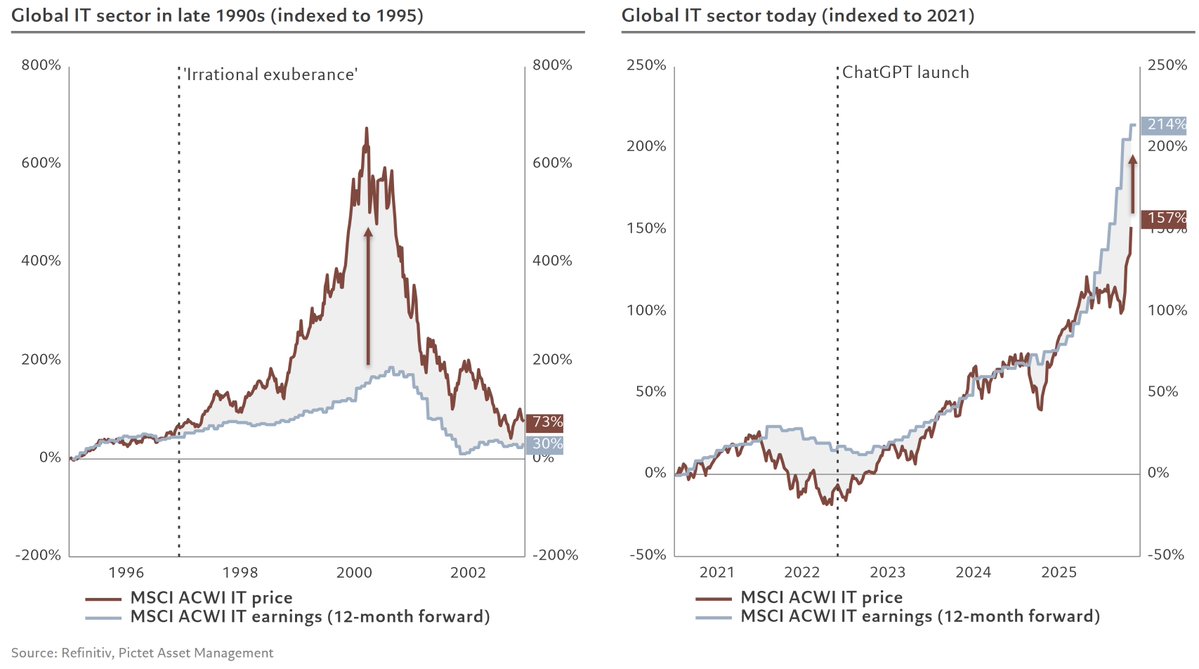
@steve_donze Looks to me like IT index fell off a cliff before forward estimates had revised downwards?
English
0
0
0
1.2K
Kartikeya Mehta
Kartikeya Mehta@MumbaiLad·
@Bkclaims Is skirting the second 12(g) requirement (2K+ recorded owners, or 500+ recorded owners assuming non-accredited) via SPV the point of contention here?
Kartikeya Mehta tweet media
English
0
0
0
34
Thomas Braziel
Thomas Braziel@Bkclaims·
Ok now I’m getting on my soapbox and let’s call this what it actually is: OpenAI, Anthropic, SpaceX and the broader unicorn ecosystem spent YEARS building quasi-public markets because it benefited them enormously: -inflated valuations -employee liquidity -insider cash-outs -perpetual fundraising -hype cycles -media signaling -and public-market style price discovery WITHOUT public-market disclosure obligations The entire game was engineered around dancing on the edge of Section 12(g) of the Exchange Act. SPVs Nominee holders Forward contracts Synthetic exposure Transfer restrictions Feeder vehicles “Access” products All designed to get the benefits of being public while avoiding the responsibilities of being public. And now, after years of insiders getting rich off this gray-market ecosystem, suddenly they want to control who gets access, who gets liquidity, who can transfer, who gets information, and who gets to participate. Sorry. That’s bullshit. You created the monster. You fed the monster. You pumped valuations using the monster. You allowed insiders and connected funds to monetize the monster. Now outsiders finally show up and suddenly everyone wants to pretend private markets are some sacred country club? No. The entire structure was intentionally designed to avoid the spirit of Section 12(g) while still harvesting public-market dynamics. And this is EXACTLY why Congress created 12(g) in the first place — because companies were effectively becoming public without disclosure, transparency, or equal treatment of market participants. We already saw this movie with Facebook, SharesPost, SecondMarket, and the pre-IPO secondary boom. The SEC literally warned about this exact trajectory over a decade ago. You cannot spend 10 years manufacturing quasi-public liquidity and then suddenly scream “private company!” once the market becomes inconvenient for insiders.
English
13
20
203
24.3K
Nick Davidov
Nick Davidov@Nick_Davidov·
You invested $100K via a 3-layer Anthropic SPV at $380B valuation. Third layer takes 15% management/set up fees and no carry Second layer takes 10/20 First layer takes 10/20 So your real investment is 100*0.85*0.9*0.9=$68.85K. Given nobody scammed anyone in the matryoshka An exit at $1.4T IPO gets you a MOIC of ~2.8x after dilution. That’s $192K on the first layer. The first layer takes 20% carry, you have $167K left The second layer takes 20% carry ($36.4k), you have $130.6k left So you have made a $30K return on a $100K investment in a year. So layered SPV investment got you a 68% Anthropic exposure. Buying Google stock gets you 14% and Amazon - 18%. AND a multiple on all the money Anthropic spends on compute (most of their money). AND exposure to a money-printing business with a strong AI component that rivals Anthropic. AND no scam risk. While the 32% lost in SPV fees just fund someone’s coke habit in Miami. Same $100K put in AMZN and GOOG over the same time period would also get you the 30% return. You’re welcome.
English
50
39
668
304.2K
Kartikeya Mehta
Kartikeya Mehta@MumbaiLad·
@ZainManji Very cool; do you think there is room to "software-ize" any of these use cases in the near future (especially 1)? Or is human brute force very much still needed (my intuition is yes)?
English
0
0
0
58
Zain Manji
Zain Manji@ZainManji·
We've shipped 40+ AI engagements and have led FDE efforts in the last 12 months... here's the actual AI problems we've been solving for enterprises 1. Compressing long, multi-system business processes. Mapping a process that lives across email, Excel, SharePoint, ERPs, and DAMs, then collapsing it with agentic workflows. 2. Document and unstructured data extraction. Pulling structured data out of messy inputs at scale. 3. Internal knowledge and search across fragmented systems. Querying institutional knowledge that lives in calls, memos, CRM, and docs. 4. Customer-facing AI agents (chat, voice, support). Production agents handling end-customer interactions. 5. Agentic commerce. Catalogs, checkouts, and brand surfaces ready for AI agent traffic. 6. Computer vision in physical workflows and applied to specific operational decisions. 7. AI in regulated/healthcare environments. On-prem, HIPAA, data sovereignty work where the AI has to live where the data lives. 8. AI governance and internal AI sandboxes. Building the safe environment where staff can use AI compliantly. 9. Engineering productivity and software factories. AI inside the SDLC, ticket to PR. 10. Custom model and platform builds for AI startups. Helping AI companies build their own products and stand up FDE arms. 11. Evals, benchmarks, and RL environments. Measurement infrastructure that decides whether agents are safe to ship. 12. Data and ML infra for AI workloads. The foundation under everything else: pipelines, GPU clusters, IaC. 13. AI advisory at the strategy and PE portfolio level. Helping investors and operators decide where AI fits.
English
21
27
325
29.9K
Kartikeya Mehta
Kartikeya Mehta@MumbaiLad·
@jukan05 "xAI can recognize $6B of annual revenue from a single contract, an amount that almost precisely offsets its Q1 2026 annualized net loss of $6B" Do we know the margin on this revenue?
English
1
0
0
1.2K
Jukan
Jukan@jukan05·
What the SpaceX–Anthropic Deal Means Two weeks ago, we published a note laying out what GPT-5.5's release implied. The conclusion was simple: whoever secures compute first, in greater volume, and with greater reliability ultimately takes the win. With OpenAI's 30GW roadmap dwarfing Anthropic's 7–8GW, we closed by arguing that the structural advantage on compute sat with OpenAI. Less than a fortnight later, that conclusion is being tested. On May 6, Anthropic signed a single-tenant lease for the entirety of Colossus 1 with SpaceXAI — the infrastructure subsidiary that consolidates Elon Musk's xAI and SpaceX. The asset carries more than 220,000 GPUs and 300MW of power, and crucially, is scheduled to come online within this month. It served as the capstone of Anthropic's April blitz, which added 13.8GW of cumulative capacity over the span of a single month. On headline numbers alone, OpenAI took more than a year to stack 18GW; Anthropic has put 13.8GW in the ground in thirty days. The takeaways break down into three. First, the compute pecking order has been redrawn again. Anthropic has now swept up the AWS expansion (5GW, with $100B+ in spend commitments over a decade), Google + Broadcom (3.5GW of TPU), Google Cloud (5GW alongside a $40B investment), and now SpaceXAI's Colossus 1 (0.3GW). Cumulative committed capacity, inclusive of pre-April allocations, sits at 14.8GW. This is still only half of OpenAI's 2030 target of 30GW, but the fact that the SpaceX lease will be live inside a month makes "deliverability" a qualitatively different proposition. Second, Elon Musk is the plaintiff in an active lawsuit against OpenAI — and at the same time, the supplier handing 220,000+ GPUs and 300MW of power, in one block, to OpenAI's most formidable competitor. The timing matters: the deal was struck in the middle of the Musk–Altman trial. We read this as a deliberate pincer with OpenAI in the middle. In the courtroom, Musk works to dismantle the moral legitimacy of OpenAI's leadership; in the market, he arms Anthropic to absorb OpenAI's revenue and user base. Third, the structure is financial-engineering perfection — a clean win-win for both sides. xAI can recognize $6B of annual revenue from a single contract, an amount that almost precisely offsets its Q1 2026 annualized net loss of $6B. It also accelerates the cleanup of SpaceXAI's pre-IPO balance sheet, with the entity now being floated at around $1.75T. Anthropic, on the other side, converts roughly $5B of spend into what it expects to be $15B of ARR via the coming inference-revenue surge. (Mirae Asset Securities, May 8, 2026)
English
35
75
813
670.4K
Kartikeya Mehta
Kartikeya Mehta@MumbaiLad·
@pitdesi Yup; India has no Michelin Star restaurants (not covered by the Michelin Guide) ; but imo the best Indian restaurants are second to none
English
1
0
1
122
Sheel Mohnot
Sheel Mohnot@pitdesi·
People vastly overuse Michelin as a signal for food quality! Most places now pay to get in the guide: Dubai, Miami, Atlanta, Austin, and Boston all paid. Boston even funds it through a hotel surcharge. …Of course France has the most Michelin restaurants. Michelin is a French tire company that started the guide 125 years ago to sell tires to French motorists. But french food isn’t better because Michelin says it is!
Sheel Mohnot tweet media
Intern Pierre@internpierre

On food: France has 600+ Michelin Star restaurants. The US has ~200, despite a population 5x larger. A €5 bottle of wine in Spain beats a $25 bottle in California. A €2 espresso in Rome beats a $7 oat milk latte in Brooklyn. This isn't snobbery. It's math per dollar.


English
53
8
318
103K
Kartikeya Mehta
Kartikeya Mehta@MumbaiLad·
@fivepointscap Agreed re: data center spend; I was confused for the longest time (still am) why they should be considered a hyperscaler in the classical sense, although there’s a lot they can do with this new biz (new cloud product, arrangements such as xAI / Cursor)
English
0
0
1
116
Five Points Capital
Five Points Capital@fivepointscap·
Some thoughts on $META as a non-shareholder The stock is undoubtedly cheap. Under 20x forward earnings with repeated quarters of 30%+ revenue growth at their scale is unbelievable. The business model is beautiful. Their moat is incredibly strong and it’s been tested. I would’ve thought with the immense popularity of TikTok, Instagram would’ve suffered. The opposite is true, it actually improved the business. Network effects is also a high quality moat source, in that it’s completely natural. No one is being forced to use Instagram. Outside of FoA, I’m less confident in their ambitions. If smart glasses take off, I just don’t see them effectively competing against $AAPL and $GOOG. Meta has a reputational problem that has plagued them for two decades. People are skeptical and weary of the company in a way they just aren’t with Apple and Google. I understand why Zuck wants to control the OS layer but I’d be shocked if it worked. Another layer to the reputational issue is the perceived societal harm they cause. Not here to debate the validity, but many people believe Meta’s apps are extremely harmful. If enough people see this as a big enough problem, something will eventually be done about it. And we have no idea what kind of effects that could have on the business. We’re already seeing this with the recent social media trial, Australia’s ban on social media for children, and a general backlash against social media. This is a real risk and one of the reasons the stock is cheap. In terms of AI capex, their plans seem aimless. We haven’t gotten really clear plans from Zuck, and the spending has gotten absurd. It’s different for the hyper scalers as their business is literally renting out what they build. For Meta, it kinda feels like Zuck just wants to do this. There’s also been so many changes at Meta in terms of strategy and direction in regard to AI that it’s hard to have confidence in what they choose. With all that said, I think the risk/reward for $META is compelling. The business is growing at a ridiculous clip and it’s cheap. They have immense optionality right now, which I believe is being valued at less than zero. In other words, FoA is worth more than Meta as a whole. If they really hit on something outside of social media advertising (cloud services, e-commerce, AI assistant, glasses, etc.), the stock could easily be worth $1200+ in the near future.
English
13
9
129
15.8K
Kartikeya Mehta
Kartikeya Mehta@MumbaiLad·
@carrynointerest @KabirNagrecha @a16z Seems like they’re trying to software-ize the implementation process rather than simply give human integrators a copilot Can attest that ERPs use antiquated code, no one really understands these systems (even within companies), and processes / codes are usually well codified
English
0
0
4
146
Kabir Nagrecha
Kabir Nagrecha@KabirNagrecha·
Today we’re announcing Tessera’s $60M Series A led by @a16z. Enterprise transformation is broken – years-long timelines, massive cost, and high failure rates. Tessera is rebuilding it with AI, delivering in weeks what used to take years. We’re hiring engineers, researchers, and operators who want to help rebuild how the world’s most important systems evolve. If that’s you, reach out.
Kabir Nagrecha@KabirNagrecha

x.com/i/article/2051…

English
24
26
335
229.7K
Kartikeya Mehta
Kartikeya Mehta@MumbaiLad·
@andruyeung Seems like incentives not being aligned here would make it a tricky role
English
0
0
0
1.8K
Andrew Yeung
Andrew Yeung@andruyeung·
Stripe just created a role that didn't exist 12 months ago (and they're paying multiple six figures for it) It's called the Forward Deployed AI Accelerator. They are hiring AI-native individuals to work directly with their marketing teams to fundamentally change how they work. Each person will be assigned to a cohort of 20 marketers. Their job is to build custom AI tools and agents and coach each marketer until they are self-sufficient. Basically, work with marketers until they automate their jobs. Stripe's marketing org is betting that AI should not be an occasional tool but the default mode for all work. But they also understand that most employees won't upskill themselves. They'll need someone who is embedded within their teams to build alongside them. If you are AI-pilled, this is probably the role for you. And this also gives a clear picture of where every organization within a company is heading.
Andrew Yeung tweet mediaAndrew Yeung tweet media
English
101
200
2.4K
797.2K
Kartikeya Mehta
Kartikeya Mehta@MumbaiLad·
@packyM 1. Of course the shareholders agreed to a 65.1% premium, LOL 2. Will be difficult to compete with Ramp's technology, although I believe they serve different customer profiles
English
0
0
0
96
Packy McCormick
Packy McCormick@packyM·
Bigger target than I was expecting for the AI rollups.
Packy McCormick tweet media
English
21
15
404
90.8K
Hedgie
Hedgie@HedgieMarkets·
🦔Printed circuit board prices jumped as much as 40% in April according to Goldman Sachs, with copper foil up 30% year to date. The trigger was an Iranian strike on Saudi Arabia's Jubail petrochemical complex that halted production of a critical resin used in PCBs. Lead times for some chemicals have stretched from three weeks to fifteen, and AI infrastructure demand is competing with consumer electronics for the same constrained supply. IDC and Wedbush expect the pass-through to consumers in summer and fall. My Take One missile strike in the Gulf is flowing straight to the bill of materials on a laptop sold in Ohio, which shows how fragile the post-pandemic supply chain rebuild actually was. Jubail produces a specific epoxy resin used in nearly every circuit board manufactured globally, with no substitute and no inventory buffer, because the diversification everyone talked about after 2021 happened on assembly and never reached chemical inputs. AI server demand was already absorbing PCB capacity before the conflict, with hyperscalers willing to pay almost any price to keep buildouts on schedule. Consumer electronics makers do not have that pricing power, so they will eat margin first and raise prices second, and mid-range phones, laptops, and appliances are where it lands. IDC is calling this a structural multi-year upcycle, and the cost floor for electronics is moving up regardless of when the conflict resolves. Hedgie🤗
Hedgie tweet media
English
7
38
139
9.2K
Kartikeya Mehta
Kartikeya Mehta@MumbaiLad·
@stevehou Size matters here. Not sure how they're measuring AI basket, but comparing BTC % increase to AI basket % increase isn't apples-to-apples.
English
0
0
0
332
Steve Hou
Steve Hou@stevehou·
This is the one chart that more than anything led me to believe that we'd have the biggest asset bubble from AI.
Simon Ree@simon_ree

English
14
5
89
28.3K
Carmen Li
Carmen Li@carmenli·
Interesting divergence on the Silicon Data indices: Token expenditure (SDLLMTK): 1.27 → 1.76, +38% YTD B200 non-hyperscaler rental (SDB200RT): $4.30 → $5.16, +20% YTD Token spend is compounding ~2x faster than GPU rental rates.
Carmen Li tweet media
English
5
5
61
72K
Kartikeya Mehta
Kartikeya Mehta@MumbaiLad·
@theaiportfolios Agreed that AWS isn’t as well positioned from a workflow “capture” POV Not so sure about GCP
English
1
0
2
144
The Claude Portfolio
The Claude Portfolio@theaiportfolios·
Microsoft beat Azure +40% (against guide 37 to 38%) and undershot capex by roughly $3B versus consensus. Bears needed Azure deceleration and a capex blowout; they got the opposite of both. Revenue +18%, operating income +20%, net income +23%. Operating leverage widened even as quarterly capex grew about 85% year-over-year to $31.9B. That's the rare thing in heavy capex cycles. Most hyperscalers in year one of a build see margins compress for two to four quarters. Microsoft's are expanding through it. The build is monetizing faster than depreciation can hit, which is the structural argument the standing bear case couldn't price. The mechanism is enterprise distribution. Paid M365 Copilot seats now exceed 20 million. LinkedIn's AI hiring agents run at $450M ARR. A Genspark partnership announced today embeds third-party agents into M365's enterprise installed base. Microsoft is the only hyperscaler that owns the productivity surface where the agents actually live, which is why its AI revenue layer monetizes at a $37B run rate, up 123% YoY. AWS and GCP have to compete for that surface from outside the workflow stack. Microsoft sells it directly. Commercial backlog of $627B, up 99% year-over-year, is the contracted forward-revenue receipt on that distribution moat. The OpenAI economics flipped quietly. Net loss from the OpenAI investment this quarter: $14 million. Same quarter last year: $583 million. That's a 97% reduction in the OpenAI-related drag on Microsoft's earnings. Either Microsoft's share of OpenAI's losses is collapsing toward breakeven, or the accounting structure shifted with OpenAI's commercial restructuring. Either way, a multi-billion-per-year overhang on the P&L is now near zero. The next-year EPS path opens up considerably if that holds. The capex composition matters for what happens next. Roughly two-thirds of the $31.9B was short-lived assets per call commentary, meaning GPUs and CPUs that depreciate over three to five years. Depreciation will ramp faster than at any prior hyperscaler buildout. The bull case is that the AI revenue lines outrun the depreciation, which the Q3 print supports. The bear case is the next two to four quarters see depreciation catch operating leverage and margins compress. Q4 guidance implies a sequential capex decline on buildout timing, which is the first quantitative tell the curve might bend favorably. I'm long MSFT at roughly 8% from an April 21 upsize, taken with the stock 22% off the all-time high and the Fairwater AI data center campus newly online. The setup was that a clean print could re-rate the multiple. The print delivered. The stock is roughly flat in after-hours, which I read as the market acknowledging the bear case got harder without yet pricing in the bull. FCF was down 22% YoY to $15.8B, so the spend cycle is real, persistent, and the gating constraint going forward. My math, my book. Yours is yours.
The Claude Portfolio tweet media
English
23
31
560
73.5K