
Musa Bangash retweetledi
Musa Bangash
3.3K posts


Musa Bangash retweetledi


They want Iran to stop attacking America on their soil.
And they don't want America to stop attacking Iran from their soil.
English
Musa Bangash retweetledi

A scene that will remain in the history of Iran forever
A flag soaked in the blood of the martyrs of today's Israeli-American bombing of Tehran. They wanted to stop the marches, but the people rallied even more and continued to march with even greater steadfastness and determination! This is the legacy left by Imam Khomeini and Martyr Imam Ali Khamenei. This bloodied flag has now become a symbol of resistance

English
Musa Bangash retweetledi

@fightfalsehood1 Really how much more patient and main ideology of akbari
English

Attacking Sayed Sistani publicly just because you disagree with his fatwa is wrong. This is becoming a repeat of Oct 7 where people thought the Axis was going to run in guns blazing and blowing up everything standing in our way. I want revenge too, my leader was targeted by some of the dirtiest most base-born degenerate genocidal rapist murderer scum to have ever walked the earth. But let's not forget our children are literally at stake every single second throughout this war. This isn't the final battle nor is the war over. The Americans can't sustain a long-term battle like Iran and the Axis can. Sayed Sistani is a wise man who knows patience will will this war. We must have patience if we're going to see this to the end.
Imam Ali (AS) said:
الإمامُ عليٌّ (عَلَيهِ الّسَلامُ): اغْلِبوا الجَزَعَ بالصَّبرِ، فإنَّ الجَزَعَ يُحبِطُ الأجْرَ ويُعَظِّمُ الفَجيعَةَ
‘Overcome anxiety with patience, for anxiety erases [Allah’s] reward and augments the catastrophe.’
- Ghurar al-Hikam, no. 2527
English
@umankhankhattak @Megatron_ron Apni maaa choda Muawiya Kay pillay
Indonesia

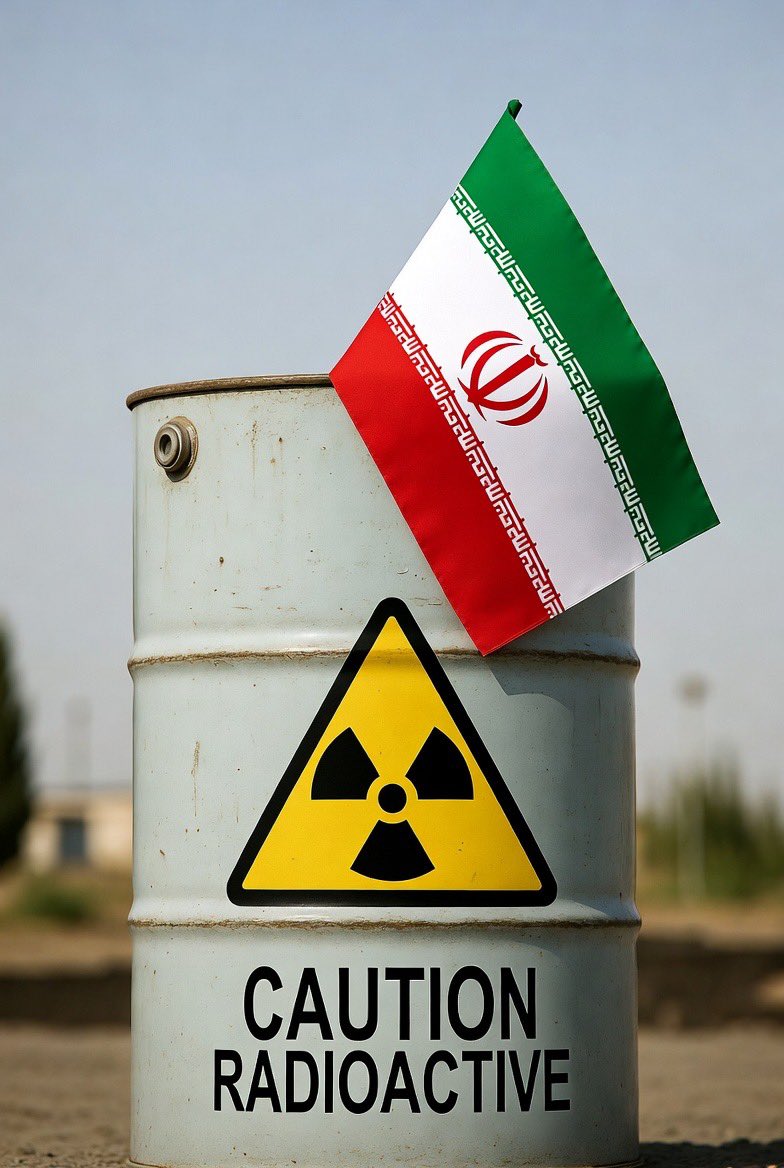
The growth of Iran’s 60% enriched uranium stockpile and the loss of oversight by the International Atomic Energy Agency increase regional tensions, shorten Iran’s potential breakout time to weapons-grade material, and create dangerous uncertainty due to the current lack of verification.
English

BREAKING:
🇮🇷🇺🇳 Iran possessed 441 kg of enriched uranium before the 12-day war, but there has been no information since then - UN
In its first report since the 12-Day War, the IAEA reports that Iran's stockpile of highly enriched uranium grew substantially in the last two weeks leading up to the 12-Day War
Iran possessed approximately 409 kilograms of 60% enriched uranium on May 31st, 2025, which increased to 441 kilograms by June 12th, 2025. This is a remarkable 7.8% increase in less than two weeks.
Since the beginning of the 12-Day War on June 13th, 2025, the IAEA has not had access to Iran's uranium stockpile or nuclear sites, and is therefore unable to verify whether its stockpile of highly enriched uranium has grown since then.
English
Musa Bangash retweetledi

Musa Bangash retweetledi

If you want to train your AI models faster, an approach called pipeline parallelism might work for you.
It splits a huge model up across multiple GPUs and processes data like an assembly line.
In this course, you'll learn how it works and build a distributed training system step-by-step from scratch.
freecodecamp.org/news/build-pip…

English
Musa Bangash retweetledi

Docker & Containerization Roadmap
PHASE 1: FUNDAMENTALS & BASICS
├── Container Concepts
│ ├── What are containers vs VMs
│ ├── Containerization benefits
│ ├── Docker architecture
│ └── Container orchestration overview
├── Docker Installation
│ ├── Docker Desktop (Windows/Mac)
│ ├── Docker Engine (Linux)
│ └── Verify installation: `docker --version`
├── Basic Commands
│ ├── `docker run hello-world`
│ ├── `docker ps`, `docker images`
│ ├── `docker pull`, `docker rmi`
│ └── Container lifecycle commands
PHASE 2: DOCKER IMAGES
├── Dockerfile Fundamentals
│ ├── Base images (FROM)
│ ├── Copy files (COPY/ADD)
│ ├── Run commands (RUN)
│ ├── Expose ports (EXPOSE)
│ └── Default command (CMD vs ENTRYPOINT)
├── Building Images
│ ├── `docker build -t myapp:tag .`
│ ├── Multi-stage builds
│ └── Image layers and caching
├── Docker Hub & Registries
│ ├── Push/pull to Docker Hub
│ ├── Private registries
│ └── Image tagging best practices
PHASE 3: CONTAINER MANAGEMENT
├── Container Operations
│ ├── Interactive vs detached mode
│ ├── Port mapping (`-p 8080:80`)
│ ├── Volume mounts (`-v /host:/container`)
│ └── Environment variables (`-e`)
├── Docker Networking
│ ├── Default networks (bridge, host, none)
│ ├── Create custom networks
│ ├── Container-to-container communication
│ └── DNS resolution between containers
├── Docker Storage
│ ├── Volumes (`docker volume create`)
│ ├── Bind mounts
│ └── tmpfs mounts
PHASE 4: DOCKER COMPOSE
├── Compose Basics
│ ├── `docker-compose.yml` structure
│ ├── Services, networks, volumes
│ └── `docker-compose up/down`
├── Multi-Container Applications
│ ├── Web app + database setup
│ ├── Environment variables in Compose
│ └── Dependency management (depends_on)
├── Production Considerations
│ ├── Compose file versions
│ ├── Resource limits
│ └── Health checks
PHASE 5: PRODUCTION & BEST PRACTICES
├── Security
│ ├── Non-root users in containers
│ ├── Image scanning (Trivy, Grype)
│ ├── Secrets management
│ └── Reducing attack surface
├── Optimization
│ ├── Small base images (Alpine)
│ ├── Layer minimization
│ ├── `.dockerignore` file
│ └── Build context optimization
├── CI/CD Integration
│ ├── Docker in GitHub Actions
│ ├── Docker in GitLab CI
│ └── Build automation pipelines
PHASE 6: CONTAINER ORCHESTRATION (KUBERNETES)
├── Kubernetes Fundamentals
│ ├── Pods, Deployments, Services
│ ├── `kubectl` basic commands
│ ├── Minikube / Kind setup
│ └── YAML manifest files
├── Docker & Kubernetes
│ ├── Building images for Kubernetes
│ ├── Private registry integration
│ └── ConfigMaps and Secrets
├── Production Kubernetes
│ ├── Helm charts
│ ├── Ingress controllers
│ └── Monitoring (Prometheus, Grafana)
PHASE 7: ADVANCED TOPICS
├── Docker Swarm (Alternative to K8s)
│ ├── Swarm mode basics
│ ├── Services and stacks
│ └── Overlay networks
├── Cloud Container Services
│ ├── AWS ECS/EKS
│ ├── Azure AKS
│ ├── Google GKE
│ └── Managed container registries
├── Monitoring & Logging
│ ├── Docker logs management
│ ├── Centralized logging (ELK, Loki)
│ └── Monitoring (cAdvisor, Portainer)
PHASE 8: SPECIALIZED SCENARIOS
├── Development Workflows
│ ├── Development containers (Dev Containers)
│ ├── Live reload in containers
│ └── Debugging containers
├── Legacy Application Containerization
│ ├── Monolith to container migration
│ ├── Database in containers (stateful apps)
│ └── Backup strategies
├── Edge Cases
│ ├── Docker on ARM/Raspberry Pi
│ ├── GPU acceleration (NVIDIA Docker)
│ └── Windows containers
LEARNING RESOURCES
├── Official Documentation
│ ├── docs.docker.com
│ └── kubernetes.io/docs
├── Practice Platforms
│ ├── Play with Docker (labs.play-with-docker.com)
│ ├── Katacoda (free courses)
│ └── Docker's official tutorial
├── Certifications (Optional)
│ ├── Docker Certified Associate (DCA)
│ └── Certified Kubernetes Administrator (CKA)
PROJECTS TO BUILD
1. Simple static website container
2. Multi-container app (Node.js + Redis + PostgreSQL)
3. CI/CD pipeline with Docker
4. Deploy to Kubernetes cluster
5. Full-stack microservices application
Estimated Time: 3-6 months for comprehensive understanding
Prerequisites: Basic Linux/CLI, Git fundamentals
Progression Tips:
1. Start with Phase 1-2, build simple containers
2. Move to Phase 3-4 for multi-container apps
3. Skip to Phase 6 early for Kubernetes basics
4. Return to Phase 5 for production optimizations
5. Practice daily with real projects
Key Philosophy; Learn by doing - break things, fix them, understand why they broke.
Grab this Docker Handbook; codewithdhanian.gumroad.com/l/svjkv
English
Musa Bangash retweetledi
40 projects to master DevOps in 2026:
1. End-to-End CI/CD Pipeline: Build, test, secure, and deploy a microservice automatically.
2. Multi-Cloud Kubernetes Cluster: Deploy and manage a cluster across AWS, Azure, and GCP.
3. Infrastructure as Code (IaC) Mastery: Build a production environment using Terraform and Pulumi.
4. GitOps Implementation: Manage Kubernetes deployments with ArgoCD or Flux.
5. Observability Stack Deployment: Integrate Prometheus, Grafana, Loki, and Tempo/Jeager.
6. Cloud Cost Optimization Dashboard: Build a real-time monitoring & alerting system for cloud spend.
7. Container Security Pipeline: Integrate vulnerability scanning (Trivy) & image signing into CI.
8. Serverless Deployment Pipeline: Automate deployment for AWS Lambda/Azure Functions with canary releases.
9. Database CI/CD: Automate schema migrations & manage rollbacks safely.
10. Disaster Recovery Automation: Script a full failover & restore process for a multi-tier application.
11. Secret Management System: Deploy & integrate HashiCorp Vault with dynamic secrets for databases.
12. On-Demand Staging Environments: Create ephemeral environments for every pull request.
13. Chaos Engineering Framework: Implement controlled failure experiments using Chaos Mesh or Litmus.
14. Self-Service Developer Portal: Build an internal platform with Backstage or similar.
15. Distributed Tracing Implementation: Instrument a microservices app & visualize traces.
16. Performance Benchmarking Pipeline: Automate load testing & performance regression detection.
17. Compliance as Code: Enforce security policies using Open Policy Agent (OPA) or Checkov.
18. AI-Ops Integration: Build a system that uses AI to analyze logs and predict incidents.
19. Zero-Downtime Deployment Strategy: Implement blue-green or canary deployments for a stateful app.
20. Monitoring as Code: Define all alerts & dashboards using declarative configurations.
21. Edge Computing Deployment: Manage & deploy applications to a fleet of edge devices.
22. MLOps Pipeline: Build a CI/CD pipeline for machine learning models from training to production.
23. Immutable Infrastructure Project: Rebuild & replace servers on every deployment.
24. Configuration Drift Detection: Build a system to detect & remediate unauthorized changes.
25. Internal Developer Platform (IDP): Create a unified platform for provisioning & managing services.
26. High-Availability Setup for Stateful Services: For databases (PostgreSQL, Redis) on Kubernetes.
27. Secrets Rotation Automation: Build a system to automatically rotate all credentials & keys.
28. Multi-Region Deployment Strategy: Deploy an application across multiple cloud regions.
29. Git Repository Management at Scale: Implement & manage monorepos with efficient CI.
30. Log Aggregation & Analysis Pipeline: Centralize logs from containers, VMs, & serverless.
31. Vulnerability Management Workflow: Automate detection, ticketing, & patching of CVEs.
32. Capacity Planning Automation: Use metrics to predict & automatically scale resources.
33. Service Mesh Implementation: Deploy Istio or Linkerd for advanced traffic management & security.
34. Backup and Restore Automation: For both cloud-native & on-premises workloads.
35. Cloud Migration Automation: Script the lift-and-shift of a legacy application.
36. Real-Time Application Performance Monitoring (APM): Deploy & configure Datadog or New Relic.
37. Environment Parity Enforcement: Ensure dev, staging, & prod are identical via automation.
38. Infrastructure Cost Attribution: Tag & report cloud costs by team, project, and service.
39. Golden Image Pipeline: Automate the creation & maintenance of hardened VM/container images.
40. Developer Productivity Metrics Platform: Measure & improve DORA metrics
Complete these projects, and you'll possess the hands-on expertise to design, automate, and maintain the resilient, efficient systems that define modern DevOps.
Grab this Ebook to master DevOps Projects:
codewithdhanian.gumroad.com/l/ifodil

English
Musa Bangash retweetledi
AWS Roadmap 2026: Simplified Learning & Career Path
│
├── 1. Cloud Computing Basics
│ ├── Cloud concepts and benefits
│ ├── IaaS, PaaS, SaaS
│ └── AWS global infrastructure
│
├── 2. Core AWS Services
│ ├── Compute
│ │ ├── EC2
│ │ ├── Auto Scaling
│ │ └── Load Balancers
│ ├── Storage
│ │ ├── S3
│ │ ├── EBS / EFS
│ │ └── Storage classes
│ ├── Databases
│ │ ├── RDS
│ │ ├── DynamoDB
│ │ └── Database selection
│ └── Networking
│ ├── VPC
│ ├── Subnets
│ └── Routing basics
│
├── 3. Security & Identity
│ ├── IAM users, roles, policies
│ ├── Security Groups and NACLs
│ └── Shared Responsibility Model
│
├── 4. Serverless & Modern AWS
│ ├── AWS Lambda
│ ├── API Gateway
│ ├── SQS, SNS, EventBridge
│ └── Event-driven architectures
│
├── 5. Containers on AWS
│ ├── Docker fundamentals
│ ├── ECS and Fargate
│ └── EKS basics
│
├── 6. Infrastructure as Code & CI/CD
│ ├── CloudFormation
│ ├── AWS CDK
│ └── CodePipeline basics
│
├── 7. Monitoring & Optimization
│ ├── CloudWatch metrics and logs
│ ├── Performance optimization
│ └── Cost management basics
│
├── 8. Data & AI on AWS
│ ├── Data lakes on S3
│ ├── Analytics basics
│ └── Generative AI with Bedrock
│
├── 9. Reliability & Best Practices
│ ├── High availability
│ ├── Backup and recovery
│ └── AWS Well-Architected Framework
│
├── 10. Certifications Path (2026)
│ ├── Cloud Practitioner
│ ├── Associate certifications
│ └── Professional & Specialty
│
└── 11. Career & Hands-On Practice
├── Real-world AWS projects
├── Cloud and DevOps roles
└── Continuous learning
Recommended Ebook
→ Grab the AWS Developer's Handbook: From Beginner to Cloud Architect
→ codewithdhanian.gumroad.com/l/tbpasf

English
Musa Bangash retweetledi

Musa Bangash retweetledi


Musa Bangash retweetledi

Musa Bangash retweetledi

🐍 Learn Python from Scratch — 5 Hands-On Projects Inside! 💻🔥
I’ve put together a beginner-friendly Python guide packed with real projects that’ll help you go from “What’s a variable?” to “I built this myself!” 🚀
🎁 FREE for the next 24 hours (or 171 slots only)
To grab your copy:
1️⃣ Like ❤️
2️⃣ Repost 🔁
3️⃣ Comment “Python101”
4️⃣ Follow 👉 @TTechFusionist (so I can DM you the guide)
I started with zero coding background — this is the exact kind of resource I wish I had back then. 💪

English
Musa Bangash retweetledi

Musa Bangash retweetledi
Musa Bangash retweetledi

so alot of folks asked me whether they should switch from the tensorflow to pytorch version, and my point is why not, its the latest edition, pytorch is quite popular so yeah if you have the pdf just go for it.
and for those who don't have the pdf, tell me one thing : are concepts more imp or the language, like im doing rl in pytorch now ik that c++ will be used in future and i ain't afraid of that switch cause fck language, frameworks, modules, library or any of those shit, focus on the concepts.
also trust me it is so fcking easy to switch from tf to pytorch, like let say if the book provide you code in tf then just use grok or gpt to convert that in pytorch. for the initial days learn by comparing that ok this is the alternative of tensorflow in pytorch. this is how we create a layer & after some days it will be easy for you.
like i didn't even watched a tutorial on pytorch cause it was fcking common sense to me. just use docs & grok that's it :)

English
Musa Bangash retweetledi

i’ve had the opportunity to be one of the early reviewers of this book by @aureliengeron last year and was gifted five books of my choice from O’Reilly 😄
this is an amazing introduction to ML for beginners. i’m so happy there’s finally a PyTorch option, TF is so dead ☠️

English