
Jodie Naim-Feil
97 posts


Dear Stanford undergrads,
It is better to grind, struggle and fail during your formative years
Than to take short cuts
It doesn’t matter where you are at 22
What matters is how your abilities compound over the next decade
Optimize for slope not intercept
Good luck
Owen Gregorian@OwenGregorian
Nearly 40% of Stanford undergraduates claim they’re disabled. I’m one of them | Elsa Johnson, The Times In 2023, one month into my freshman year at Stanford University, an upperclassman was showing me her dorm room — a prized single in one of the nicest buildings on campus. As she took me around her space, which included a private bathroom, a walk-in shower and a great view of Hoover Tower, she casually mentioned that she had lived in a single all four years she had attended Stanford. I was surprised. Most people don’t get the privilege of a single room until they reach their senior year. That’s when my friend gave me a tip: Stanford had granted her “a disability accommodation”. She, of course, didn’t have a disability. She knew it. I knew it. But she had figured out early what most Stanford students eventually learn: the Office of Accessible Education will give students a single room, extra time on tests and even exemptions from academic requirements if they qualify as “disabled”. Everyone was doing it. I could do it, too, if I just knew how to ask. A recent article in The Atlantic reported that an increasing number of students at elite universities were claiming they had disabilities to get benefits or exemptions, which can also include copies of lecture notes, excused absences and access to private testing rooms. Those who suffer from “social anxiety” can even get out of participating in class discussions. But the most common disability accommodation students ask for — and receive — is the best housing on campus. At Stanford University in Palo Alto, California, where competition for the best dorm rooms is fierce, this practice is particularly rife. The Atlantic reported that 38 percent of undergraduates at my college were registered as having a disability — that’s 2,850 students out of a class of 7,500 — and 24 per cent of undergrads received academic or housing accommodations in the fall quarter. At the Ivy League colleges Brown and Harvard, more than 20 per cent of undergrads are registered as disabled. Contrast these numbers with America’s community colleges, where only 3 to 4 per cent of students receive disability accommodations. Bizarrely, the schools that boast the most academically successful students are the ones with the largest number who claim disabilities — disabilities that you’d think would deter academic success. The truth is, the system is there to be gamed, and most students feel that if you’re not gaming it, you’re putting yourself at a disadvantage. That’s why I decided to claim my legitimate illness — endometriosis — as a disability at Stanford. When I arrived on campus two and a half years ago, I would have assumed that special allowances were made for a small number of students who genuinely needed them. But I quickly discovered that wasn’t true. Some diagnoses are real and serious, of course, such as epilepsy, anaphylactic allergies, sleep apnea or severe physical disabilities. But most students, in my experience, claim less severe ailments, such as ADHD or anxiety. And some “disabilities” are just downright silly. Students claim “night terrors”; others say they “get easily distracted” or they “can’t live with others”. I know a guy who was granted a single room because he needs to wear contacts at night. I’ve heard of a girl who got a single because she was gluten intolerant. That’s why I felt justified in claiming endometriosis as a disability. It is a painful condition in which cells from the uterus grow outside the womb. I’m often doubled over in agony from the problem, for which there is no known cure, so I decided to ask for a single room in a campus dorm where I could endure those moments in private. The application process was very easy. I registered my condition on the Stanford Office of Accessible Education website and made an appointment to meet an adviser later that week. The system is staffed largely by empathetic women who want to help students. As I explained my diagnosis and symptoms over Zoom to one woman, she listened, nodded sympathetically, related my problems to her own life and asked a few basic questions. Within 30 minutes, I was registered as a student with a disability, entitled to more accommodations than I asked for. In addition to a single housing assignment, I was granted extra absences from class, some late days on assignments and a 15-minute tardiness allowance for all of my classes. I was met with so little scepticism or questioning, I probably didn’t even need a doctor’s note to get these exemptions. Had I been pushier, I am sure I could have received almost any accommodation I asked for. While I feel entitled to my single room, I would feel guilty about some of the perks I have — except that so many of my fellow students have gamed the system. Take Callie, a recent Stanford grad with ADHD and Asperger’s who agreed to be quoted under a pseudonym. Callie was diagnosed with her conditions in elementary school; in return, Stanford granted her a single room for all four years, plus extra time on tests — and a few more perks. “In college, I haven’t had that many ‘in real life’ tests as opposed to take-home essays,” Callie told me. “When I did use the extra time, I felt guilty, because I probably didn’t deserve the accommodations, given the fact I got into Stanford and could compete at a high academic level. Extra time on tests — some students even get double time — seems unfair to me.” But at Stanford, almost no one talks about the system with shame. Rather, we openly discuss, strategise and even joke about it. At a university of savvy optimisers, the feeling is that if you aren’t getting accommodations, you haven’t tried hard enough. Another student told me that special “accommodations are so prevalent that they effectively only punish the honest”. Academic accommodations, they added, help “students get ahead … which puts a huge proportion of the class on an unfair playing ground”. The gaming even extends to our meals. Stanford requires most undergraduates living on campus to purchase a meal plan, which costs $7,944 for the 2025-26 academic year. But students can get exempted if they claim a religious dietary restriction that the college kitchens cannot accommodate. And so, some students I know claim to be devout members of the Jain faith, which rejects any food that may cause harm to all living creatures — including small insects and root vegetables. The students I know who claim to be Jain (but aren’t) spend their meal money at Whole Foods instead and enjoy freshly made salads and other yummy dishes, while the rest of us are stuck with college meals, like burgers made partly from “mushroom mix”. Administrators seem powerless to reform the system and frankly don’t seem to care. How do you prove someone doesn’t have anxiety? How do you verify they don’t need extra time on a test? How do you challenge a religious dietary claim without risking a discrimination lawsuit? I often think back to that conversation with my upperclassman friend. She wasn’t proud of gaming the system and she wasn’t ashamed either. She was simply rational. The university had created a set of incentives and she had simply responded to them. That’s what strikes me most about the accommodation explosion at Stanford and similar schools. The students aren’t exactly cheating and if they are, can you blame them? Stanford has made gaming the system the logical choice. When accommodations mean the difference between a cramped triple and your own room, when extra test time can boost your grade point average, opting out feels like self-sabotage. Who would make their lives harder when the easiest option is just a 30-minute Zoom call away? thetimes.com/us/news-today/…
English
@OdedRechavi Interesting idea @OdedRechavi I will def log in and have a look!!
English

BIG ANNOUNCEMENT📣: I haven’t been this excited to be part of something new in 15 years… Thrilled to reveal the passion project I’ve been working on for the past year and a half!🙀🥳 It started from my frustration with the depressing effect that the current publishing system has on the well-being of myself, my team, and pretty much every scientist I know (maybe you’ve noticed from my stupid jokes… :) I was exhausted of dealing with the huge delays, reviewers that can be abusive, and how arbitrary it all is. Unfortunately, the most important factors are often WHO your reviewers are and who YOU are... It’s clear we need alternatives or at least ways to improve the situation. So, together with a really special and talented team we worked to develop this idea into “qed” a platform where you can get CONSTRUCTIVE feedback on your own work or CRITICALLY assess other people’s papers. It can be a real difference maker if many of you join us (thousands have tried it already, but today we release a NEW and much stronger version ;) Let’s harness qed to put the power back in the scientists’ hands, to do, to read & to publish science on our own terms. I’m dying for you to TRY IT, and it’s very simple - just drop a paper (the link to the website is in the replies👇) - it’s completely secure, private, and free, and you get results fast. Please show your support, SHARE, tell your friends, and let’s be the revolution 🫵!

English
Jodie Naim-Feil retweetledi
Wow what a whirlwind mix of science & brain mapping @OHBM2025 in Brisbane OZ 🦘 Just now taking a breath and a moment to start posting about the wonderful events hosted by the fabulous @OHBMWomenPI 🧠Starting with the packed room @ our Symposium: Sex, Gender and the Brain.

English
@KordingLab Really great initiative! An excellent tool for PhD students (& possibly research units). As you asked for feedback, I think possibly emphasising how this model is optimised for research relative to other integrated models/AI systems would be interesting.
English

I have seen folks waste so much time by not properly planning research. Missed literature, missing controls, ignored hypotheses, etc. Lack of planning also produces bad science (e.g. analysis until significant). So I am writing an app. Looking for feedback. …entific-paper-planner-test.vercel.app
English

Excited to share our new study revealing the intricate dynamics of pregnancy & postpartum physiology! We analyzed 40M lab tests from 300K pregnancies and 160K women (cross-sectional),
we mapped week-by-week changes starting from preconception to months-long postpartum recovery.

English
I'm thrilled and grateful we have received the EXIST Forschungstransfer grant for commercialization of our DNA-nanotech-powered cell culture material platform DyNAtrix.
ipfdd.de/de/kommunikati…

English
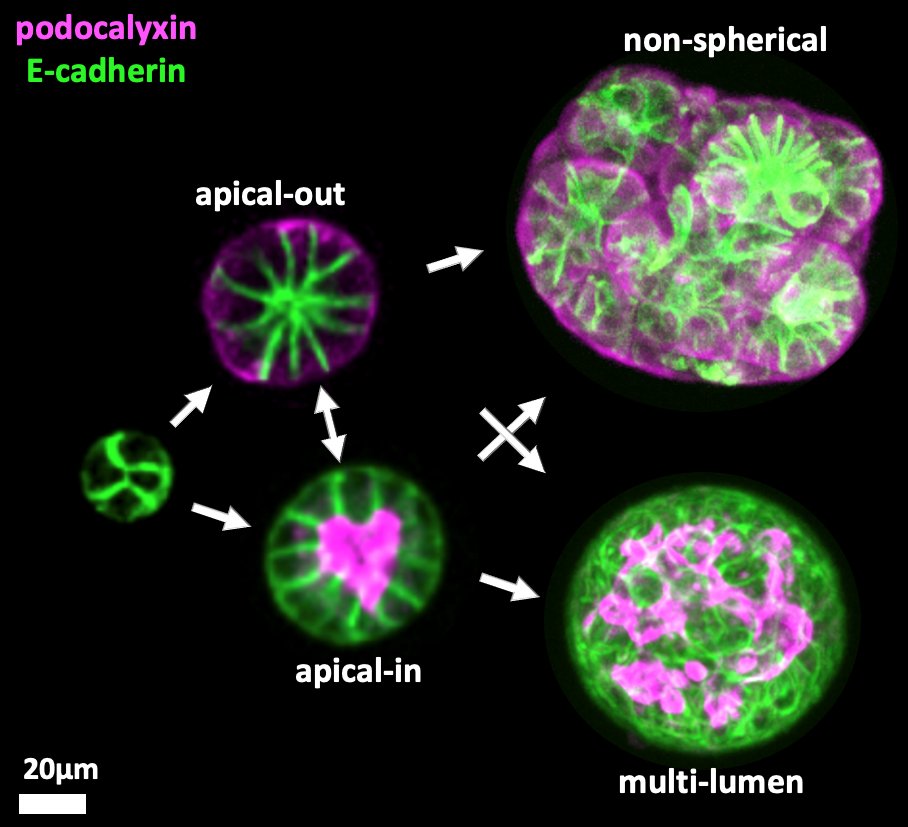
Just out: "Programmable viscoelastic #hydrogels uncover #mechanosensing timescales and direct cell polarity"
biorxiv.org/content/10.110…
We used a #DNA-based nanomaterial—#DyNAtrix—to study and guide the polarization of epithelial cells.
🧬 #nanotechnology #materials #cell_culture
English
@Rachelhalliwel5 @LozzaFox @clare_halliwell @LeeAndersonMP_ @leeharris @alexarmstrong That is absolutely heartbreaking. I am sorry and devastated for you and your family. This is all so wrong and sickening. I am so sorry for your loss.
English

This is Semina my daughter. The first picture is 10 months between the last. Semina was groomed online raped and beaten 3 times before she took her own life aged 12. Tomorrow is the start of her inquest.
@LozzaFox @clare_halliwell @LeeAndersonMP_ @leeharris @alexarmstrong @ThatAlexWoman @TRobinsonNewEra @Satah477618 @MaggieOliverUK @danwootton @WorldByWolf @AllisonPearson @PatrickChristys @HoodedClaw1974 @GBNEWS @TalkTV @BackBrexitBen @Belstaffie @benhaslm @BGatesIsaPyscho @thereclaimparty @Inevitablewest @darrengrimes @EssexPR @ActivePatriotUK @MaggieOliverUK @CDP1882 @CharlieSansom @elonmusk @leeharris @Cobratate @basilthegreat @sammywoodhouse1 @SamanthaTaghoy @RWTaylors

English
English

Our new paper comparing how ants and people solve problems alone ot in groups just came out in PNAS!
pnas.org/doi/10.1073/pn…
Thank you to Tabea Dryer, @AmirHaluts, Amos Korman, Nir Gov, and Ehud Fonio!
English
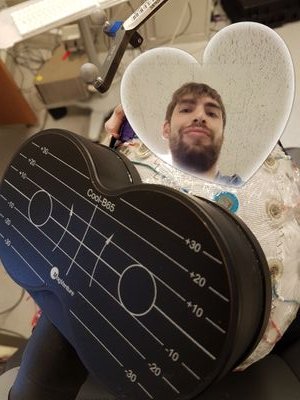
Today I inaugurated the school I dreamed of 3 years ago and created the Basketball academy.
Walking into a classroom, I saw kids who last year had 0 future. It hit me, I actually changed lives (beyond helping ppl reach the top shelf items)
Thanks everyone
#FreeEducation
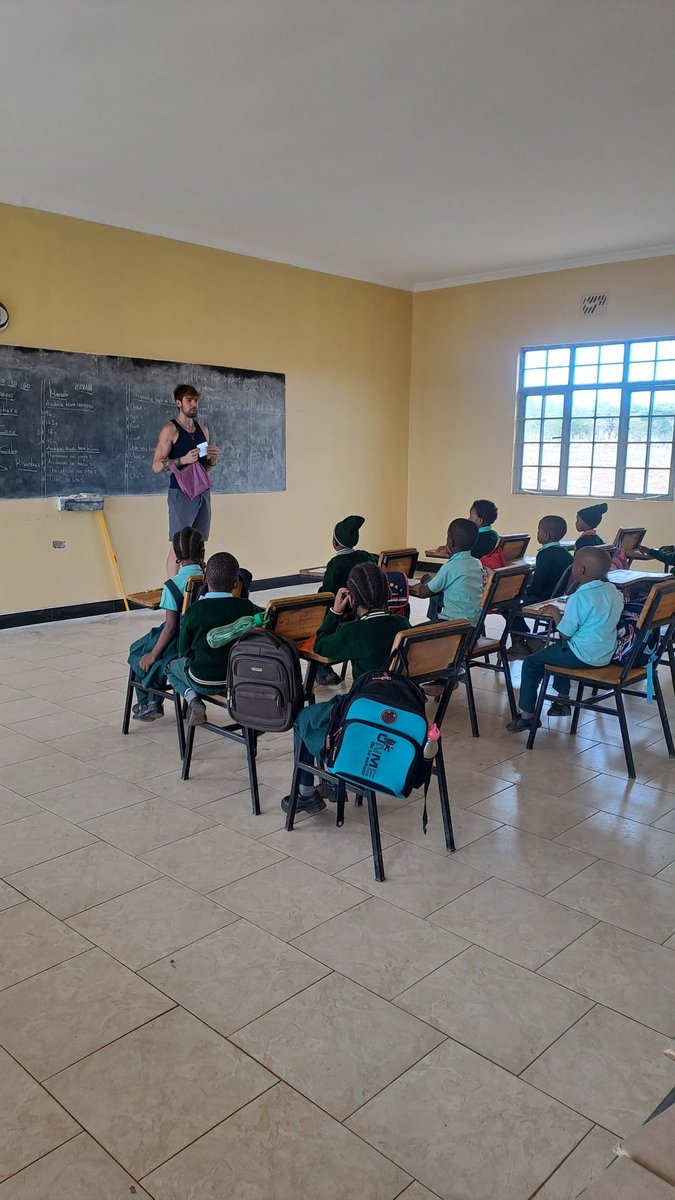
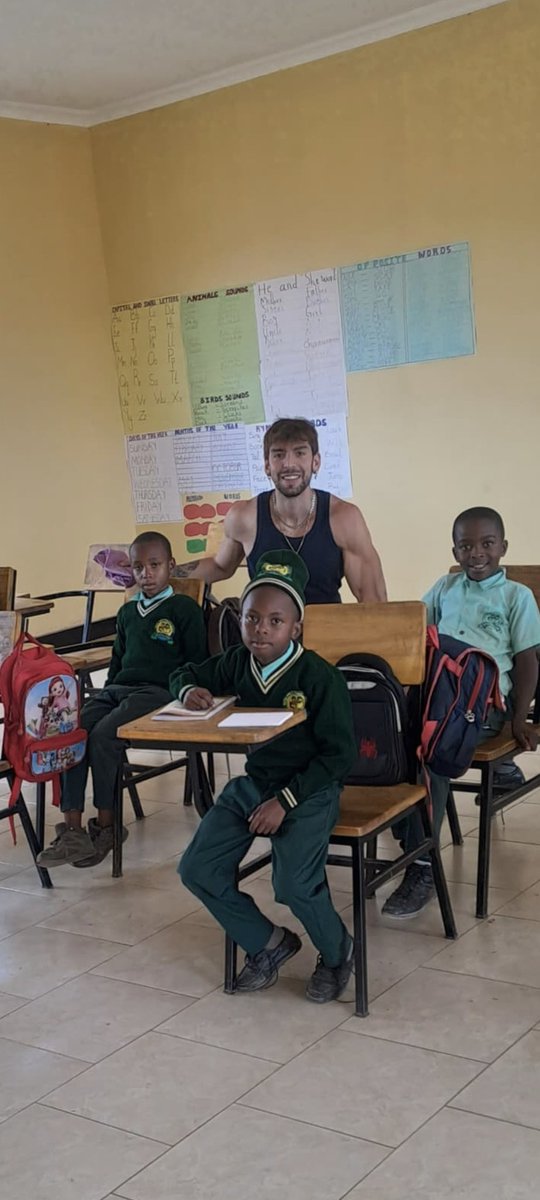
Arusha, Tanzania 🇹🇿 English
@AshleaSegal @TrendsCognSci @AFornito @JegTiego @LindenParkes @AvramHolmes @amarquand Fantastic research @AshleaSegal !!
English
Our latest in @TrendsCognSci on embracing, rather than mitigating, variability in the search for biological mechanisms of psychiatric disorders
Available here: authors.elsevier.com/a/1k32t4sIRvTB…
Thanks to the dream team (@AFornito, @JegTiego, @LindenParkes, @AvramHolmes, @amarquand)!
Alex Fornito@AFornito
Concerned about standard case-control studies in psychiatry? Check our our latest on embracing variability in biological studies led by @AshleaSegal, with @AvramHolmes @amarquand @LindenParkes & J Tiego now out in @TrendsCognSci: cell.com/trends/cogniti…
English
Jodie Naim-Feil retweetledi
We're looking for a Clinical Trial Coordinator to oversee a multi-site trial on fMRI-personalised TMS for depression, led by @cashmachine15
Great opportunity to be at the forefront of clinical research!
Details:
jobs.unimelb.edu.au/caw/en/job/918…
Our group: sysneuro.org
English
@diegocandiar Thanks @diegocandiar really thought-provoking thread! Also tricky working across multidisciplinary fields.
English

1/n After a few years working in the niche field of brain-heart physiology, the main (pure) academic challenge I face is to be reviewed by people from extremely different backgrounds. This is because the heart is conceived very different in every field. Just a few points:
English
English
English
English
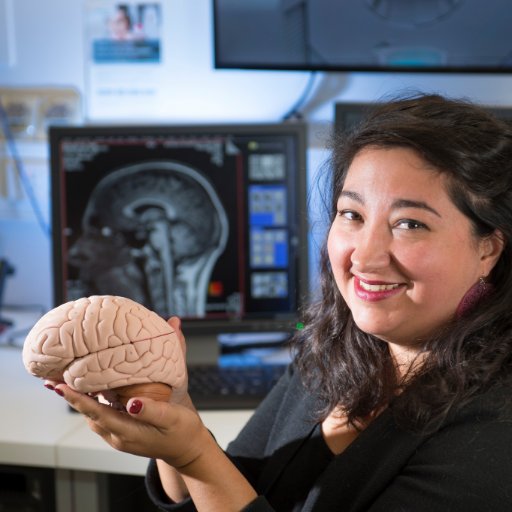
Excited to share this - I've been featured in an @WomenInSTEMAu educational campaign! If you've got kids interested in #Neuroscience, perhaps they'd like a colouring book featuring 👇😊. shorturl.at/pKL0t Huge thanks for inviting me! @MonashPsych @Mon_Bio_Imaging

English
Wherever you are on political spectrum, if allegations of filtered algorithms by Google are true, this represents, I imagine, the implementation of one of the largest mass influencing strategies of our time. The power, reach & psychological implications are huge. Thesocialdilemma
English
Jodie Naim-Feil retweetledi

Do you want to have a smooth introduction to network science? Attend our 2-week online course in June, sponsored by the Network Science Society! Spread the word! @netscisociety @netsci2024 @GirvanMichelle
sites.google.com/view/netsci-co…
English
Jodie Naim-Feil retweetledi
You have until tomorrow to register for Spectrum’s 2024 conference! Don’t miss this opportunity to hear leaders in the field discuss generalist treatment approaches for personality disorders and complex trauma.
eventbrite.com.au/e/spectrum-ann…
#Spectrum2024 #conference #bpd

English
Join us as a PhD candidate! Explore how brain patterns follow intrinsic biological cycles using brain stimulation, cognitive paradigms & neuroimaging. Join our multidisciplinary team with @pjkaroly @NaimFeil @cashmachine15 @AndrewZalesky More details at: findanexpert.unimelb.edu.au/opportunity/12…
English
@VerdejoGAntonio Interesting computational approach! @VerdejoGAntonio
English
Choices, choices .. people w methamphetamine use problems make less use of the outcomes of prior decisions in subsequent ones, indicated by both behaviour and computational models Model‐based and model‐free mechanisms in methamphetamine use disorder - onlinelibrary.wiley.com/doi/10.1111/ad…
English