Sabitlenmiş Tweet

Is DePIN Dying? No, No, No. You Should Check Out the Most Unmissable DePIN Industry Opportunities in 2026. @arkreen_network
arkreen@arkreen_network
English
Nami Pieces
2.9K posts

@Nami3piece
Green DePIN & AI & ReFi & BoAT( Blockchain of AI Things) 🌎https://t.co/c5cA0rStV8



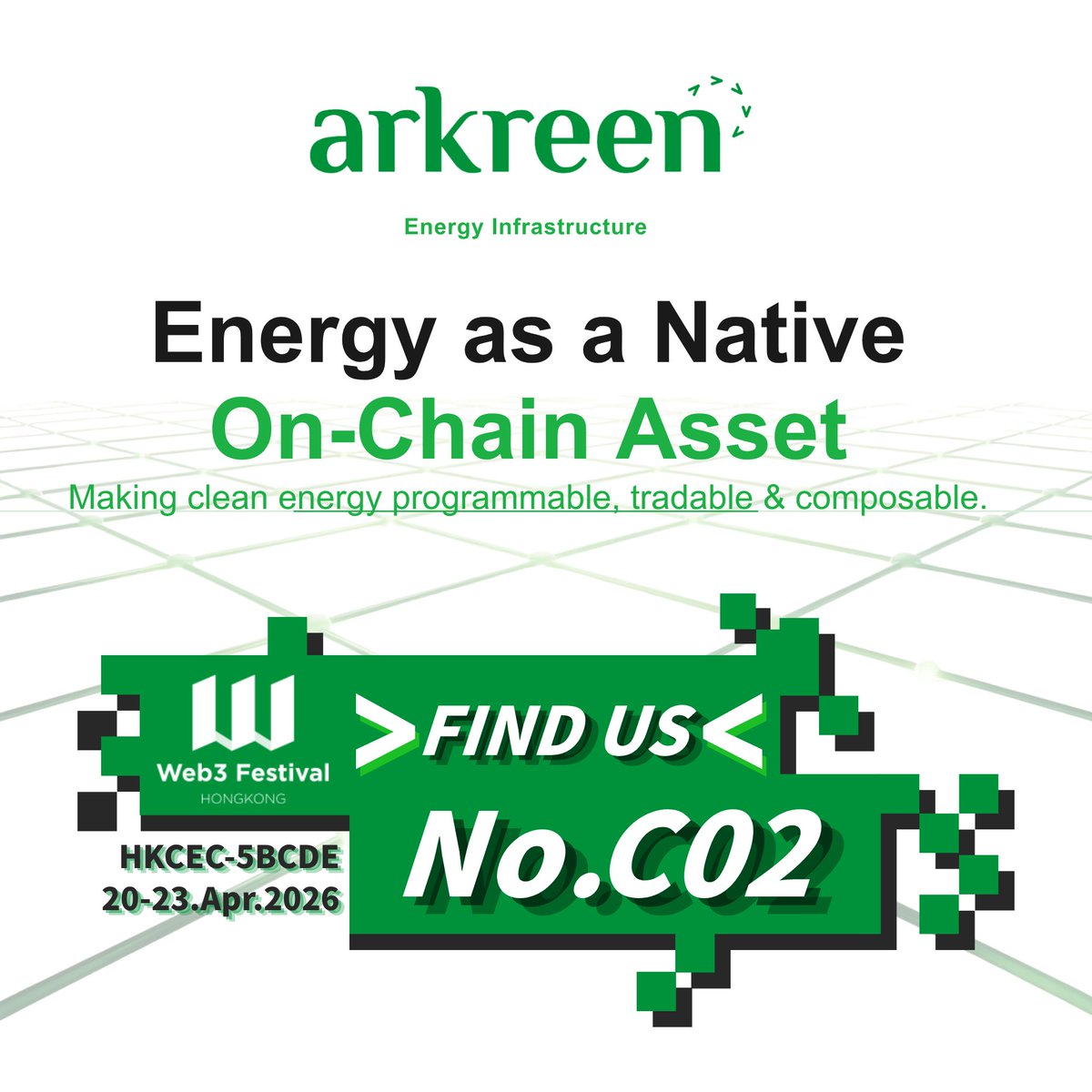

@arkreen_network participates as Co-organizer at the upcoming Hong Kong Web3 Festival 2026. Arkreen is a DePIN-powered global energy network that digitizes and connects distributed renewable assets like residential solar PV systems. More: arkreen.com 🗓️20-23, April | HKCEC - 5BCDE Tickets: web3festival.org/hongkong2026/#… #Web3Festival #cryptocurrencies #RWAs




1/8 We actually ran it: a real Bitaxe (ESP32-class) device paying 0.001 USDC every 2 minutes to submit verifiable telemetry — using TLAY BoAT x x402 x Circle Gateway + Nanopayments.
DePIN is reimagining physical infrastructure, including telecom and transportation networks, energy grids, and more. The opportunity is huge: The World Economic Forum projects the DePIN category will grow to $3.5 trillion by 2028. The Helium network is the best-known example. The grassroots wireless network now provides 5G cellular coverage to 1.4 million daily active users across more than 111,000 user-operated hotspots.
Cheap Solar Is Rewriting Africa’s Energy Story In Cape Town, solar is rapidly becoming the energy of choice. Falling prices, especially for panels and batteries, are allowing households and businesses to sidestep unreliable grids, slash energy costs, and reclaim control over their power supply. This is what a bottom-up energy transition looks like. But while affordable solar is improving lives and resilience, it exposes deep failures in state utilities, highlights the absence of strong industrial policy, and raises urgent questions about who captures the economic value of the transition. Panels may be cheap, but jobs, manufacturing, and long-term energy sovereignty are still being exported elsewhere. Furthermore, access remains unequal. Millions of people, especially in low-income communities, are still locked out of this transition because upfront costs remain out of reach. This is the crossroads Africa now faces. Read more in the New York Times. nytimes.com/2025/12/30/cli…