Neerav Mehta
855 posts


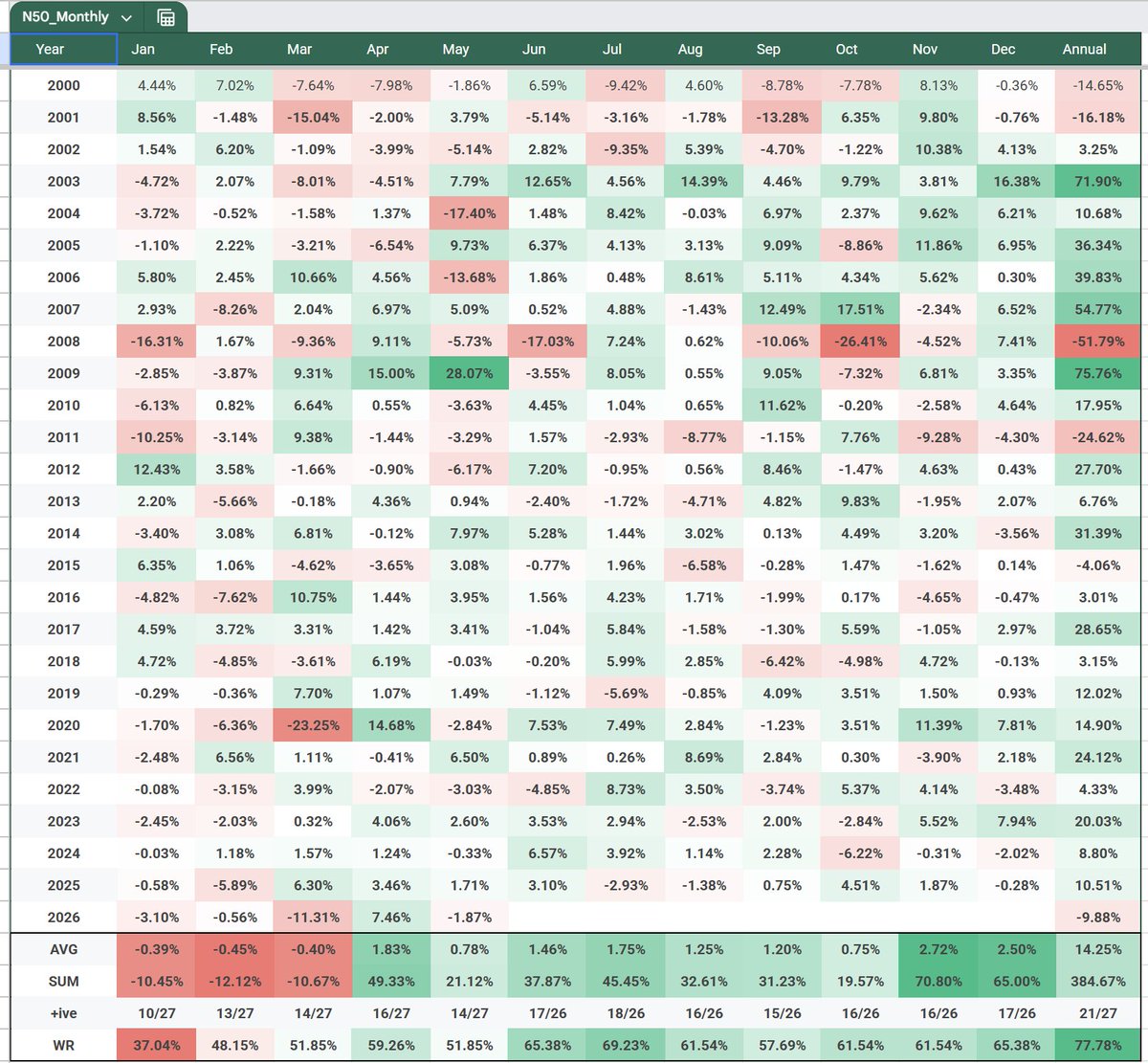
@KalpenParekh @SahilKapoor Yes, the same principle applies to India and other markets. Flat return periods follow major bull runs. That's why booking some profits after abnormal gains is important. And then asset allocation is key to preserving gains and generating alpha.
English

What are long term returns from stocks ?
Across different countries in last many decades
Generally, its inflation + (0 to 6%) pa
Many countries markets barely beat inflation
The ones closer to +6% till a year back were 🇺🇸 and 🇮🇳
India has since then slowed down
Best to know that 🇺🇸 markets can / have earned 0 returns for many years in the past - now when they are booming - than after they slow down

English

@KalpenParekh One interesting point: the flat-return periods you mentioned were preceded by massive bull runs, nearly 5-6x gains at index level during both 1988–93 and 2003–08. Post-COVID, the index is only about 1.5x from its lows. Is that really comparable?
English

@InvestorOfJAMMU Largecap stocks are relatively cheaper than midcaps and smallcaps, yet midcaps and smallcaps may still outperform them in terms of returns.
English

@sathyashrii You didn't get it. He is actually comparing UK with India.
English

@TheClubJunto It's good news, ifyou understand markets very well.
English

SIP Stoppage Ratio Breaches 100%
1. “SIPs Discontinued” exceed “New SIPs Registered” in Mar/Apr
2. A prolonged flat-to-negative Time Correction can exhaust SIP investor patience
3. Unique MF Investor additions hit 3-yr low
4. SIP is the single load-bearing pillar
RISK WATCH:
Early Sign of SIP Fatigue
a. For the first time in 11 months, SIP stoppage ratio crossed 100% in both March and April 2026.
MARCH:
SIPs Discontinued: 53.38L
New SIPs Registered: 52.82L
SIP Stoppage Ratio: 101.06%
APRIL:
SIPs Discontinued: 51.29L
New SIPs Registered: 50.71L
SIP Stoppage Ratio: 101.1%
Before this, the SIP Stoppage Ratio was in the range of 75% for a whole year. So, about 15 to 20 lakh net SIP additions were happening every month.
b. In April 2026, less than 3 lakh new unique investors entered the MF industry (both debt & equity combined). The average run rate for the last 3 years was 5 to 10 lakh additions per month. April number has hit a 3-year low.
c. These figures may indicate an early sign of exhaustion in New Retail Momentum. But importantly, net equity inflows via SIP and lump-sum MF investments have remained resilient till now.
This means: Some small new SIP investors are pulling out after a prolonged phase of zero to negative returns. But seasoned, high-ticket investors are not worried. They are buying the dip in the belief that this market correction is temporary.
Risks to Consider
RISK # 1
SIP investor in India does not need a massive 30% overnight market crash to stop SIP. A simple, boring, flat-to-negative 18-to-24 month time correction may be psychologically sufficient to exhaust his patience.
The most risky group is the young SIP investors who entered the market during the post-Covid secular bull run. They were sold SIP plans on the narrative of 12% to 15% annualized returns.
This group’s tolerance of zero to negative returns may break at some point. Unlike long-term investors, their portfolios don’t have a cushion of past compounded profits.
They have to add fresh capital every month, and it causes heavy psychological fatigue when they see zero returns, while someone who is invested in FDs is doing better than them.
RISK # 2
In investing, you must assume the worst-case scenarios and then decide your investing strategy, rather than assuming best-case scenarios.
Assume that persistent inflationary conditions or continued rupee depreciation or Balance of Payments deficit forces the RBI to increase interest rates at some point.
The moment FD rates go to 7.5% or 8%, while SIPs continue to deliver zero returns, the same retail investors who mass-migrated from FDs to MFs post-Covid (because MFs promised dream returns) – may migrate back to safe havens.
Risk-Adjust Your Portfolio
The real risk to Indian equities is non-linear. Think of the market as a single-engine aircraft solely dependent on SIP flows, and not earnings growth.
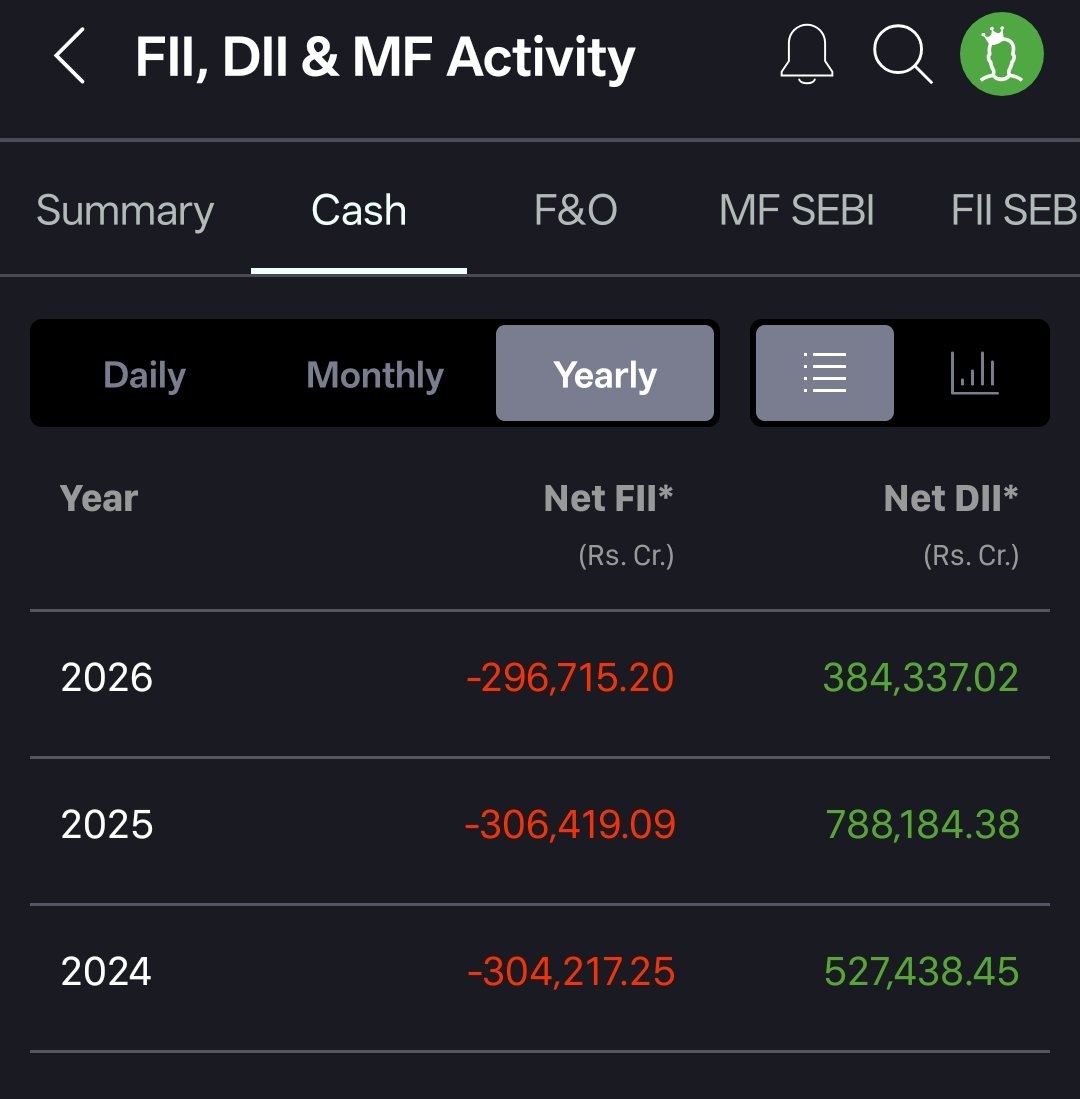
If the SIP stoppage ratio escalates and monthly inflows fall from ₹30,000 crore to ₹20,000 crore, domestic fund managers may no longer have the ability to absorb FII selling.
That is when liquidity disappears, and forced equity selling begins to meet redemption pressure.
For retail investors, a risk-adjusted strategy in these times might be:
30% FDs
20% Gold
30% Indian MFs
20% S&P 500 ETF
ENDPIECE: Respect Risk
Legendary investor Howard Marks tells the story of a gambler who always lost money in the race course. One day the gambler hears about a race with only one horse in it. He sells his house and bets the entire money on the horse.
Halfway through the race, the horse jumps over the fence and runs away.
@arabicatrader
English

Last tweet before I sleep...
A conversation with my uncle this morning left me thinking.
He recently retired from a PSU. Did all the right things, built a decent corpus, one child married, another still studying, invested part of his savings in mutual funds and parked some in FDs for regular income.
Over the last two years, he feels his household expenses have gone up by 20–25%.
His biggest concern isn't returns. It's whether the retirement plans he made over decades will still hold up if real-life inflation continues at this pace...
Not the inflation on paper.
The inflation people feel when they pay medical bills, rent, groceries, electricity, travel, and everything else - this is going up like crazy
The worry is real.
Almost everything feels more expensive today than it did just a few years ago.
English

@contrarianEPS It was bubble in large caps since long. Market is getting broad based which is good.
English


@ValueWithPrem Your tweet itself doesn't make sense at all. Removal of LTCG will be applicable for future investments.
English

Everyone thinks removing LTCG will spark the biggest bull run in Indian history.
An NRI investor just told me the exact opposite and it’s a massive wake up call.
I asked him: If the govt removes LTCG, will you buy more Indian stocks?
His reply shocked me: No. I will immediately book massive existing profits and exit. If a policy can flip overnight to remove it, it can flip to bring it back. I won't miss the window to cash out tax free.
If the government removes LTCG without a long term assurance that it’s gone for good, we aren't getting an influx... we might be looking at booking profits first.
What are your views on this?
English

@Keval_IM So, is it time for those forgotten stocks so called HRITHIK to make a comeback?
English

In 6 year
Many so called high Quality Stock delivered 0 return
While many power/Defense stocks turn multibagger
Never bet on past winner.
There used to be term «HRITHIK» Stock pre covid where HDFC , RIL , ICICI , TCS , HDFC Ltd , Infy , Kotak
HRITHIK Stocks were darling of market and now most of them fall under mediocre performance in past 5 year.
#StockNews
English

@Sachan8574 Market rules are never permanent. In the stock market, no correlation or trend lasts forever. You're simply extrapolating from historical returns. Did you know that the S&P 500 delivered only around 2% annualized returns between 2001 and 2014? That's nearly 14 years, my friend.
English

Yes — 18% CAGR is possible, but expecting it consistently for decades is where reality gets tough.
Using the Rule of 72:
�
That’s why people say money doubles in ~4 years at 18%.
But in real markets:
Some years give +40%
Some years give -20%
Average matters more than yearly returns
Historically, strong equity portfolios and good businesses have delivered around 15–20% CAGR over long periods, especially during growth phases in countries like India. But it usually comes with:
volatility,
patience,
and staying invested during crashes.
The bigger issue is psychology.
A lot of people imagine ₹30Cr portfolios, but very few can calmly hold investments during a 30–50% drawdown.
So:
Possible? Yes.
Guaranteed? No.
Easy? Definitely not.
More realistic than “get rich quick”? Absolutely.
English

@KalpenParekh Apparently, gold has also delivered returns comparable to equities over the past decade.
English

@Sanket126934 @nsinghal211 No, no research. No rational. She is going by astrology.
English

@InvestorOfJAMMU These market rules are never permanent. In the stock market, no correlation or trend lasts forever.
English

@AjitVMurur @Iamsamirarora I disagree
The rally in renewable energy, defense, and semiconductor stocks seems to be maturing. Traditional sectors and legacy companies could be the next areas to resurface.
English

@Iamsamirarora India is doing well. It’s defined a strategic roadmap of building Infrastructure and self sufficiency in Defense, Semiconductor, Renewable Energy.
Many stocks in these sunrise sectors are doing well.
IT, Banking are becoming old economy stocks! Ones portfolio needs realignment
English

This weekend read The Halo Effect:
The core idea of the book is that when a company is performing well financially, observers- journalists, investors, analysts- tend to retroactively describe its culture, leadership, strategy and people in glowing terms. When the same company later struggles financially, every previous attribute get recast as a flaw. The underlying reality may not have changed much but our perception of the cause changes to match the outcome.
I think that India is currently suffering from a negative Halo Effect. Because the market has not done well and needs to be rationalized the observers are finding all possible flaws to try and justify the reasons in hindsight.
If we can separate the current performance from the – in this case negative- Halo, we can better understand whether this poor performance is temporary or something more permanent.
English

@saketh1998 These are just equity flows. Give data for Debt as well
English

@sahil_harriram @fkronawitter1 Exactly. What these blue legends?
English

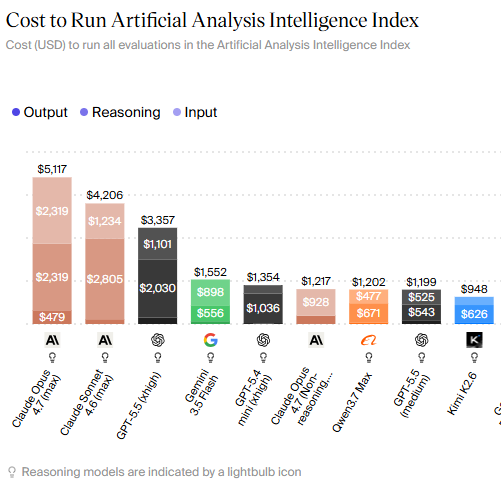
@fkronawitter1 This looks ai generated.
Whats the legend which is completely irrelevant to the chart?
English