NewLimit

87 posts

NewLimit banner
NewLimit

NewLimit

@newlimit

Working toward radical extension of human healthspan using epigenetic reprogramming.

South San Francisco, CA Katılım Ekim 2021
3 Takip Edilen30.2K Takipçiler
Sabitlenmiş Tweet
NewLimit
NewLimit@newlimit·
Thank you @ashleevance for posting this great summary of our work at @newlimit to radically extend human healthspan Visit the careers page on our website (link in follow on post) to join us on this mission
Ashlee Vance@ashleevance

Our new @corememory video on @newlimit, which is finding combinations of proteins that reverse aging across the body. It is perhaps the most exciting work in the bio-tech field. Backed by @brian_armstrong @patrickc @collision @JoshuaKushner @natfriedman and others

English
14
18
173
113K
NewLimit retweetledi
BiotechTV
BiotechTV@BiotechTV·
𝐄𝐩𝐢𝐠𝐞𝐧𝐞𝐭𝐢𝐜𝐬: BiotechTV visited @newlimit in South San Francisco and heard from Co-Founder & President @jacobkimmel how they are trying to tackle diseases of aging through epigenetic reprogramming.
English
5
6
70
78.4K
NewLimit retweetledi
Jacob Kimmel
Jacob Kimmel@jacobkimmel·
we created the first reprogramming asset @newlimit last year. we're now recruiting an executive to lead our early development efforts. this role will work closely with me, own our pipeline, & help pioneer a new class of medicines. please reach out if you know an excellent fit!
Jacob Kimmel tweet media
English
7
22
185
24.5K
NewLimit retweetledi
Jacob Kimmel
Jacob Kimmel@jacobkimmel·
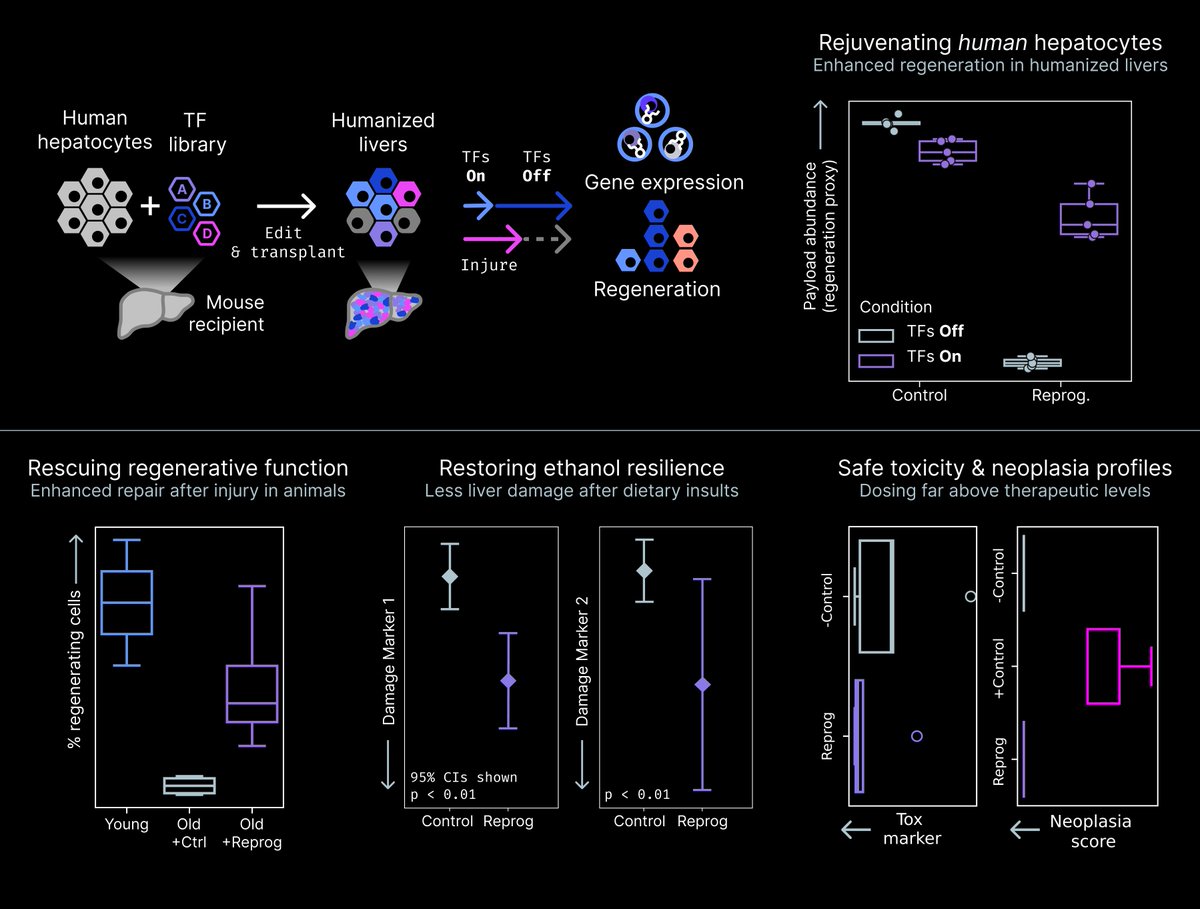
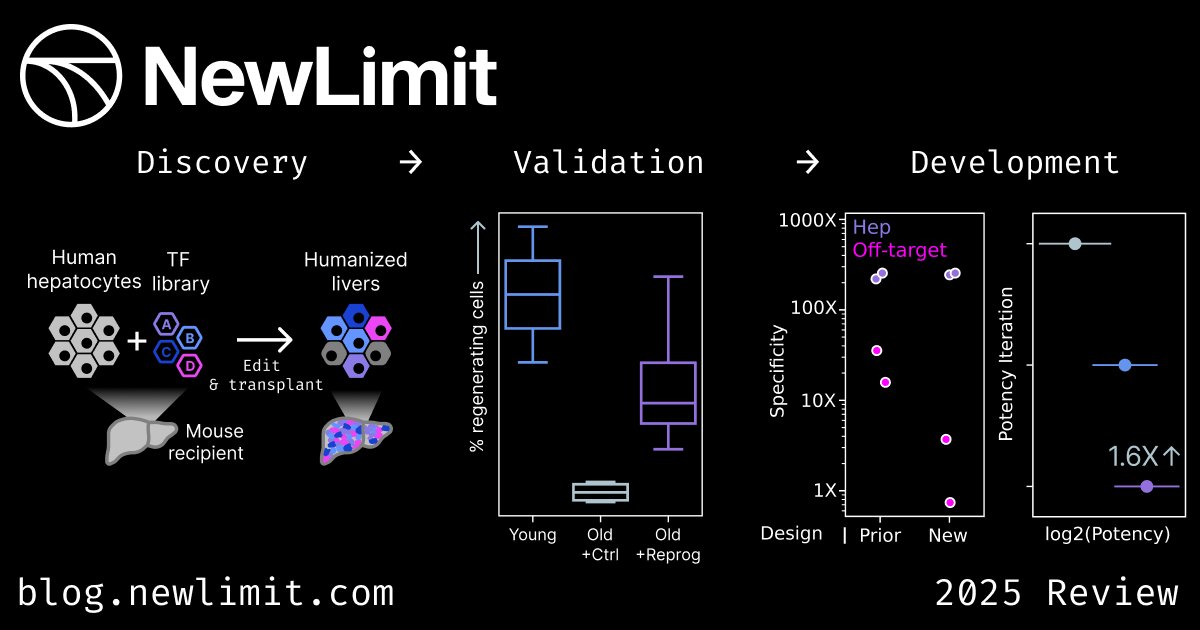
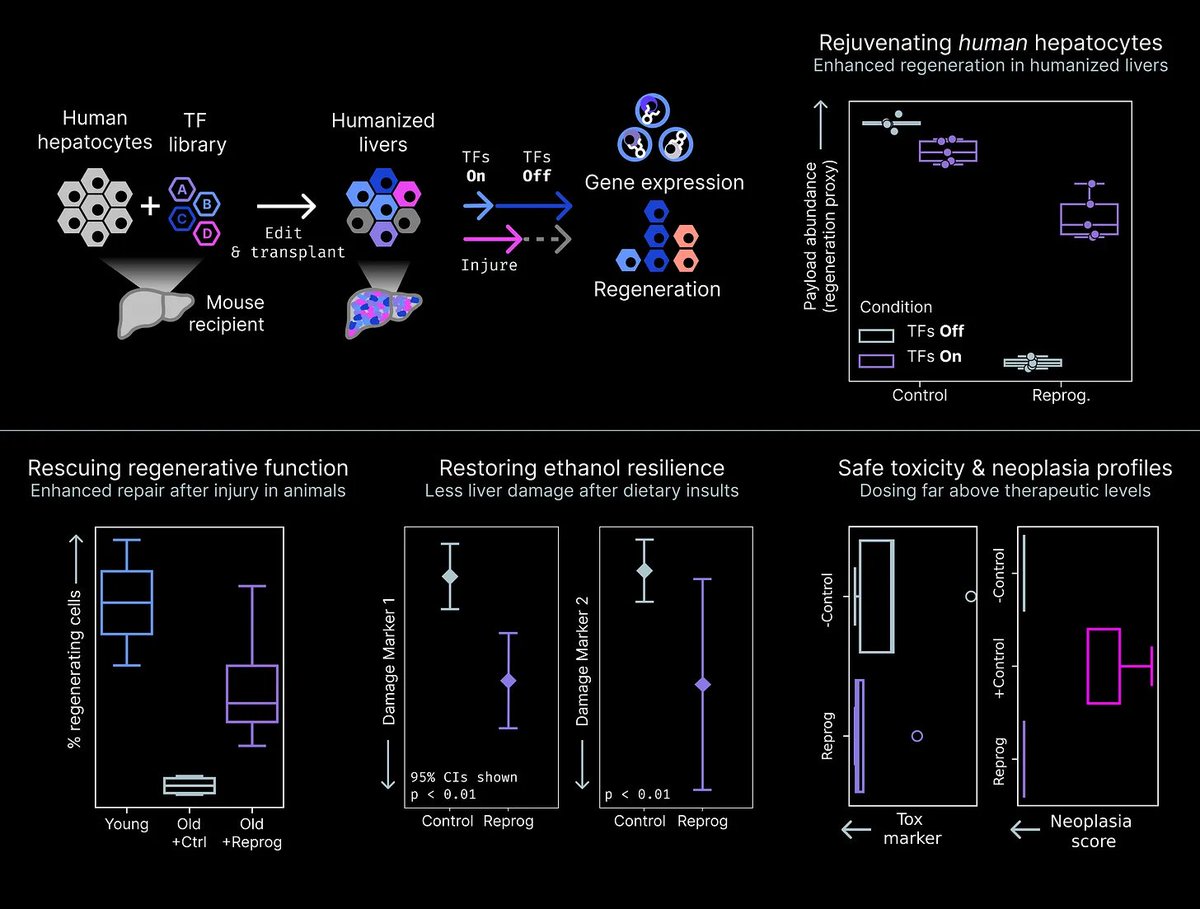
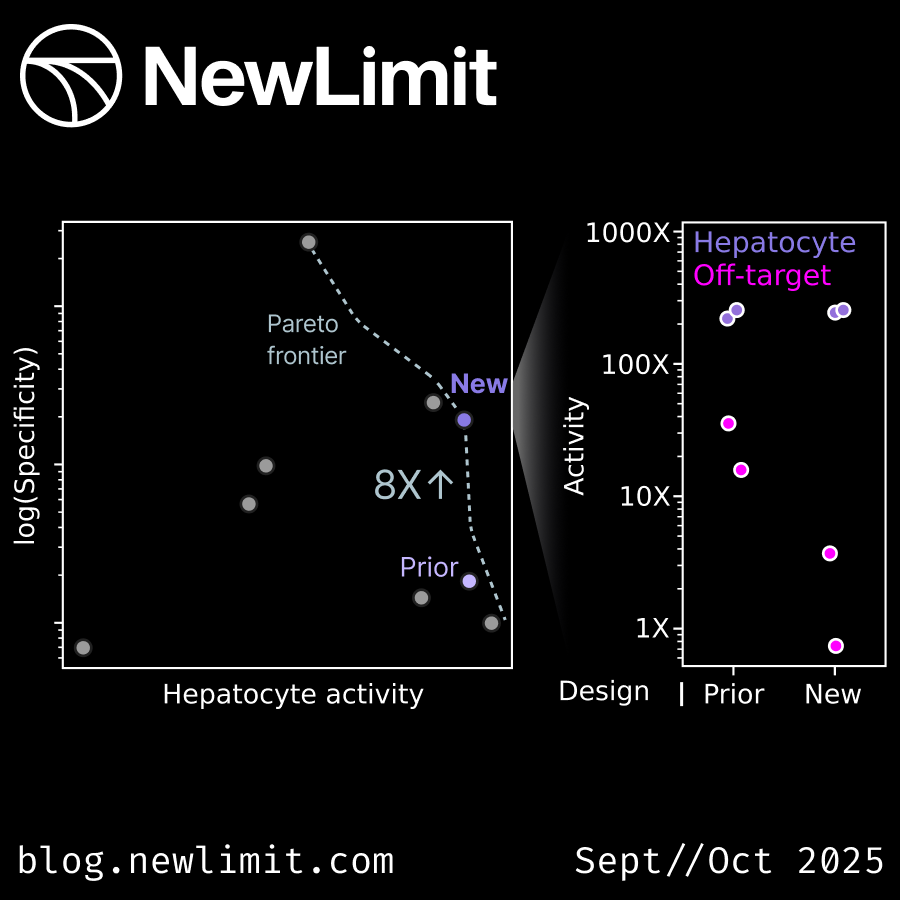
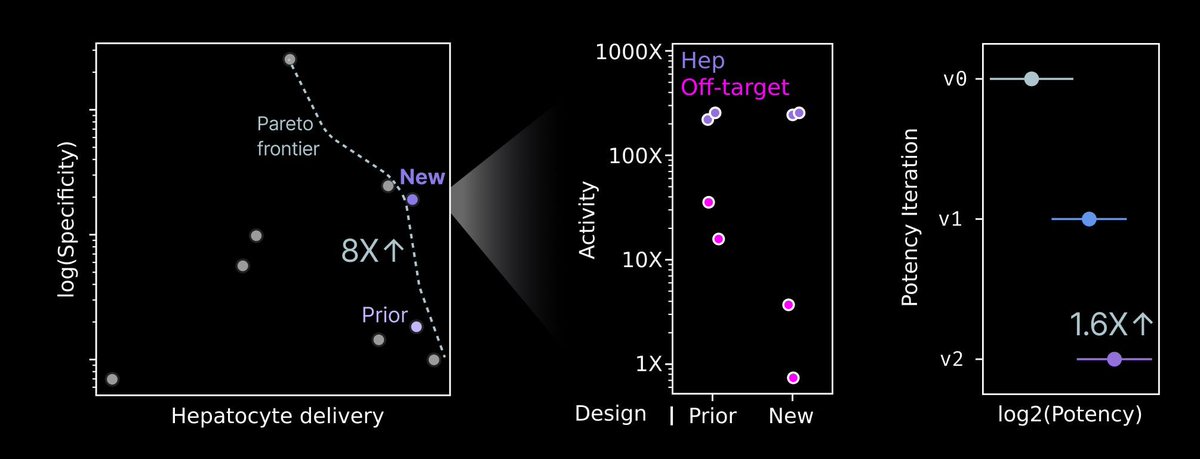
2025 @newlimit: - 0 -> 1 candidate medicine that restores multiple youthful functions in old livers - 2X discoveries/$ with our frontier AI system - >1000X more TF payloads tested vs. the field we built our 1st medicine & began development 2026: we move toward the clinic # discovery cadence @newlimit is built around a set of core technologies we call our Engine. our Engine discovers transcriptions factor (TF) payloads that make old cells look and act young. the Engine prioritizes payloads using: AI systems -> large-scale genomics screens -> functional assays -> animal models of aging & disease in 2025, we increased the scale & fidelity of the Engine many fold. key outputs: - >1000X more TF payloads tested than the field, combined - 16 payloads restore function in animal models - 36 payloads restore function in cells - 600+ make old cells look young based on gene expression - $/function hit down 17X, headcount only up 1.4X # entering early development therapeutic discovery transitions into development once an optimized prototype medicine known as a preclinical candidate is chosen for in-depth evaluation. we imagined at the founding of NewLimit that it would take 5+ years to create one. the science advanced faster than we thought, so we delivered ahead of schedule after just 3 years of operations. our first candidate is based on a payload with pleiotropic activity, making old hepatocytes both look young and act young across multiple dimensions. we discovered the candidate in a humanized liver screen, where it made old human hepatocytes look younger & regenerate like young cells too. one function in one assay isn't enough to say we truly reversed cell age, so we checked others. we found our candidate also restored regenerative function in mice after surgical injury and resilience to alcohol diet. the candidate was also safe -- the liver tolerated it well, and there were no signs of neoplasia (think, cancer). we ran our first lead optimization campaign and generated a candidate with 8X more specific expression and 1.6X the potency of our initial prototype. this became our preclinical candidate and we're moving it toward the clinic now. # AI systems accelerate therapeutic discovery there are >10^16 TF payloads we might test. no matter how many experiments we run, we'll never search the space completely. to discover an optimal reprogramming medicine, we need to effectively prioritize which hypotheses we test before ever entering the lab. only a few years ago, this problem was intractable. humans can't reason through a hypothesis space of this scale. AI systems by contrast can incorporate a plurality of prior knowledge to design experiments that maximize our rate of discovery. this year, we introduced Ambrosia, the 1st AI system that can accelerate the design of reprogramming payloads. Ambrosia builds atop knowledge captured in foundational models of molecular biology and natural language, initializing our system with a strong prior derived from both human languages and nature’s languages. our system first learns to predict the effect of arbitrary reprogramming payloads on both the state and function of old cells. given this discriminative model, Ambrosia can design reprogramming payloads that induce a target cell state or phenotype. the design process can even learn continually from sequential experiments. using Ambrosia to design our experiments, we can improve our discoveries/$ by >2X. we believe this is among the first AI systems that has been integrated effectively into a large scale target discovery process. the complexity of human pathology far exceeds the sophistication of most therapeutics. our medicines have been constrained by our intelligence. reprogramming medicines are only now entering the realm of the possible due to the advent of AI systems that remove this intelligence constraint. if successful, the design of reprogramming medicines that extend human health will represent one of the more dramatic impacts of AI on our world. # diversifying lineages @newlimit's ultimate ambition is to create reprogramming medicines to restore function across most cell types in the body. this year, our progress in hepatocytes & T cells convinced us it was time to add a 3rd type to the portfolio. in August, we launched a Vascular program focused on restoring function in endothelial cells, the cell type that lines blood vessels. endothelial cells are everywhere in the body, and their aging contributes to disease in the kidneys, heart, and even the brain. in just four months, our team - transferred our Engine tech with 0 modifications & executed discovery screens - built 2 functional assays for endothelial cell age - developed a lipid nanoparticle delivery method that delivers TFs to >60% of kidney endothelial cells we never expected this program to move so quickly. by next year, we imagine we'll be able to reprogram old endothelium back to a youthful state. # 2026 @newlimit's first 2 years were focused on a set of fundamental research and technology problems. We built a system to search for reprogramming medicines, discovered the first payloads that can reprogram cell age, and demonstrated that restoring youthful function in old cells was possible. in 2025, we created the first medicine we hope to bring to human trials and showed that it can rescue multiple youthful functions in old cells. 2026 will be the year that we transition from purely a research enterprise to an integrated research & development organization. effective execution in this next stage will allow us to bring reprogramming technology into human patients. if these medicines are successful, we believe they are among the most valuable products possible.
Jacob Kimmel tweet mediaJacob Kimmel tweet mediaJacob Kimmel tweet mediaJacob Kimmel tweet media
English
32
40
401
200.5K
NewLimit
NewLimit@newlimit·
Our fall progress update is live 📈 Full link in thread 👇
NewLimit tweet media
English
1
0
20
7.2K
NewLimit retweetledi
Jacob Kimmel
Jacob Kimmel@jacobkimmel·
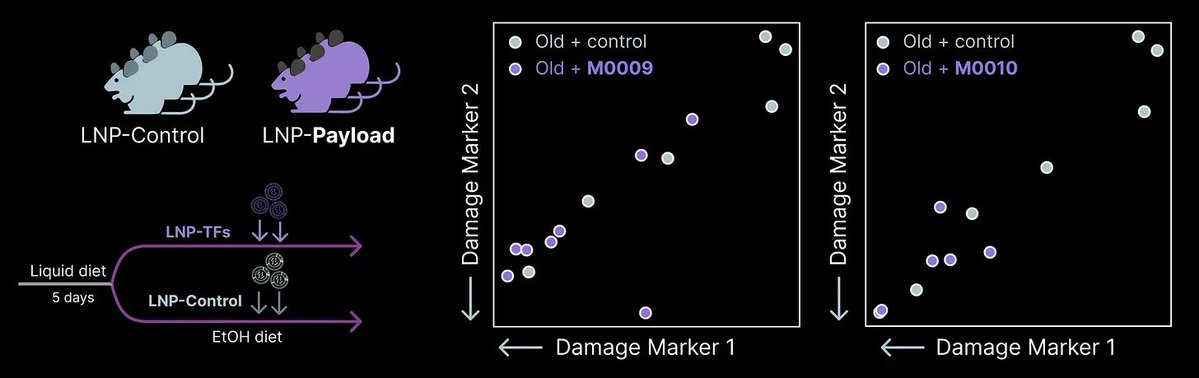
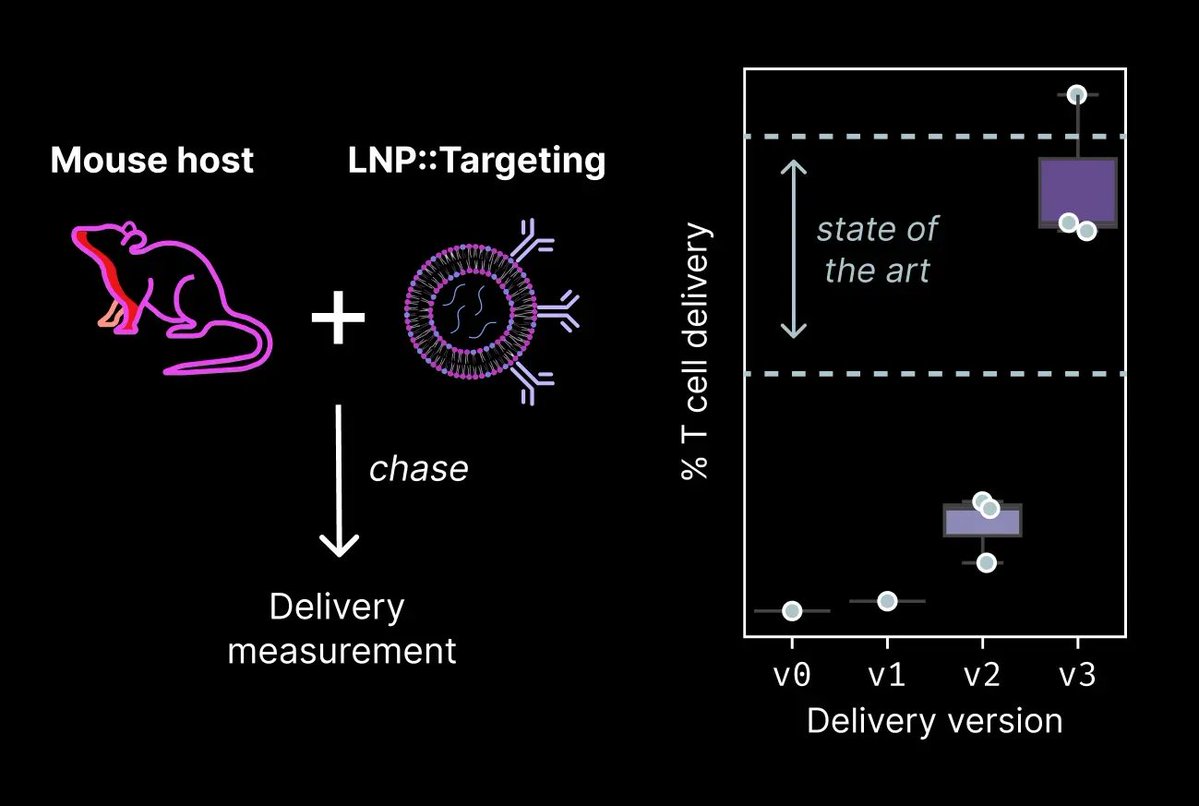
autumn @newlimit -- we've advanced our 1st reprogramming medicine through optimization highlights - 8X specificity, 1.6X potency for our lead prototype medicine - +2 TF sets that restore liver function, +20 that restore phenotype - 0 -> 1 preclinical models of endothelial age # engineering therapeutic molecules in september, we selected our first prototype medicine for liver aging to advance toward the clinic. this initiated our first lead optimization campaign to improve the potency & specificity of our prototype. our RNA medicines allow for engineering at the sequence level. RNAs are not translated into proteins equally across cell types, and we can design sequences to maximize activity in our target cells (hepatocytes) and minimize activity elsewhere. our campaign achieved an 8X increase in the specificity of our prototype & a 1.6X increase in the potency within hepatocytes. we believe these optimizations will yield a safer, more effective medicine. # restoring youthful resilience alongside progressing our first asset, we've continued to discover reprogramming payloads that restore youthful function. in october, we discovered +2 payloads that restore youthful resilience to alcohol damage in old livers. these payloads emerged from our discovery screens & validated as prototype RNA medicines. each month, more of these payloads emerge from Discovery Engine, giving us confidence that the well of potential reprogramming medicines is deep. # in vivo T cell reprogramming hepatic reprogramming is only one of several therapeutic applications we’re pursuing. we’ve previously discovered reprogramming payloads that restore youthful cytotoxic capacity and stem-like states to old human T cells. the next stage in the development of these payloads is to test whether they can rescue function in a more complex animal model. before we can test their effects directly, we need to build molecular tools to deliver reprogramming payloads to T cells in vivo. after a series of engineering iterations, we've developed a lipid chemistry that can carry our RNA medicines into T cells in animals. our chemistry is now nearly matching the current state-of-the-art. # measuring endothelial cell age our most recent therapeutic program is focused on restoring function in endothelial cells of the vasculature. we believe improving endothelial function could create renal, cardiovascular, and cognitive health. endothelial cell aging is dramatic enough that we’ve been able to discover functional impairments in just our first few experiments. human endothelial cells are less regenerative in simple in vitro systems, and endothelial injury leads to more dramatic renal damage in old animals. even these early tools allow us to start testing the effect of reprogramming on aged endothelial function, in addition to phenotypes. # join our team we're recruiting talented scientists & engineers across our therapeutic programs and technology teams. reach out if you're excited to create a new class of medicines that add healthy, happy years for ~everyone.
Jacob Kimmel tweet mediaJacob Kimmel tweet mediaJacob Kimmel tweet mediaJacob Kimmel tweet media
English
8
36
226
122K
NewLimit retweetledi
Jacob Kimmel
Jacob Kimmel@jacobkimmel·
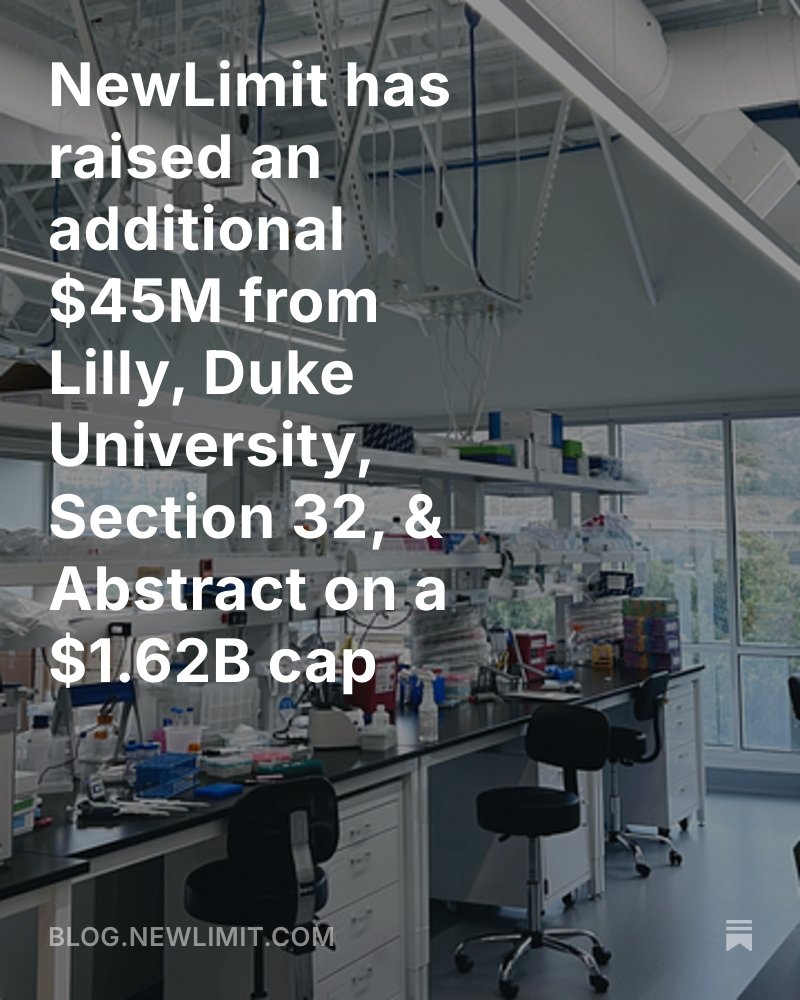
.@newlimit has raised an additional $45M from new investors including Lilly Ventures, Duke University, @S32_VC, @AbstractVC & others. Insiders including @kleinerperkins, @_DimensionCap, @humancapital, @BoostVC also participated. This round was catalyzed by technical breakthroughs since our Series B just 5 months ago. Advances in our lead program to restore youthful liver function now give us the confidence to start planning clinical studies in the next few years. We're grateful to all the new & returning capital partners for supporting our mission.
Jacob Kimmel tweet media
English
31
45
434
157.8K
NewLimit retweetledi
Jacob Kimmel
Jacob Kimmel@jacobkimmel·
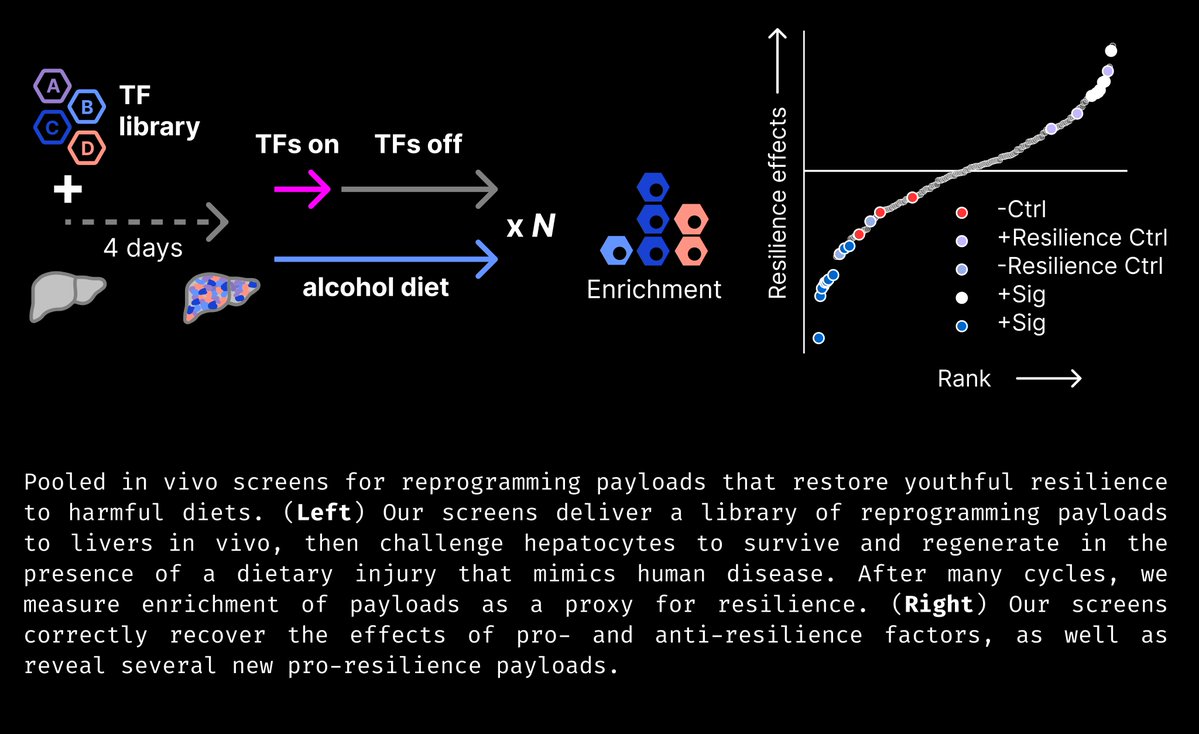
through the late summer @newlimit, we've been upgrading our 1st prototype medicines to prepare for human trials highlights - +2 prototype medicines with efficacy in liver disease models - +14 TF payloads that restore function in old T cells - +4000 TF sets tested across programs - 0 -> 1 screens in endothelial cells - 0 -> 1 prototype medicines with clinical formulations # constructing therapeutic molecules we've been building prototype medicines to restore hepatocyte function for almost a year. to prepare for clinical work, we've spent the past months upgrading our prototypes to use clinical-grade lipid & RNA chemistry. after several iterations, the new chemistry is actually superior to our prior prototypes, even for preclinical work in animals. we hope that by making these investments early we increase our chances of successfully translating into human disease. # selecting for resilience our Discovery Engine measures both phenotypes and functions of old cells treated with reprogramming interventions. phenotypic screens ask whether reprogramming makes an old cell look like a young cell & functional screens ask whether reprogramming makes an old cell act like a young cell last month, we introduced a second functional screening paradigm to measure the resilience of hepatocytes to injury from toxic diets. already, these first screens have revealed new therapeutic payloads with efficacy in animal models. # restoring function in the body's transit system in principle, we believe epigenetic reprogramming can restore youthful function in the majority of cell types within the human body. with the rapid progress of our lead program in hepatic metabolism, we believe it’s now time for us to expand the palette of cell types we study. we launched our third therapeutic program focused on restoring function in endothelial cells of the vasculature as a result. why endothelial cells? endothelial cells line the veins, arteries, & capillaries that allow blood to circulate to all the other tissues in your body. endothelial dysfunction contributes to aging pathology in the renal, cardiovascular, and cognitive systems among others. restoring youthful function in endothelial cells may therefore offer diverse benefits. our therapeutic programs begin by translating our Discovery Engine technology to the new cell type of interest. here, we found that our existing Engine tools were performant in endothelial cells with zero modifications. our approach is now quite general. # in silico reprogramming with real world feedback modern artificial intelligence systems are often trained using feedback from humans or verifiable rewards to improve the quality of generated samples. we face an analogous challenge for our in silico reprogramming models. to determine if these designs are effective, we need to verify their performance in the real world through laboratory experimentation. we recently executed the first large scale reprogramming screen with a new epistatic variant of our in silico reprogramming models. these models take as input a representation of the transcription factor genes we deliver to aged cells and predict as an output the expected effect on cell age and identity. we can then use these models to design experiments. if our models are effective, they should allow for us to make more discoveries per experiment. our improved models demonstrated just this result -- we made 12% more discoveries using this improved systems vs. our prior art. this represents a rare case where improvements in the rapidly refined world of bits lead to more value in the high latency world of atoms. # work with us there are a finite number of problems where the outcome matters on the timescale of a century. creating abundant intelligence, unlocking sources of energy too cheap to meter, and allowing humanity to explore the stars may be a few examples. we believe that expanding the number of healthy, happy years in each human life is one of these few, rare problems with enduring impact. if you’re compelled to pursue goals with deep meaning and excel to the top of your craft, please consider joining our team.
Jacob Kimmel tweet mediaJacob Kimmel tweet mediaJacob Kimmel tweet mediaJacob Kimmel tweet media
English
3
10
104
12.4K
NewLimit retweetledi
Dwarkesh Patel
Dwarkesh Patel@dwarkesh_sp·
"A good way to understand a lot of evolution—and how you're able adapt to new environments or pathogens—is that gene duplication is possible. The real problem is this: if one or two mutations break the gene, and only three mutations together fixes it again, it’s very hard for evolution to find a path. Through duplication, you can create a scenario where those first two edits are totally tolerated. You've got your backup copy." @jacobkimmel
Dwarkesh Patel@dwarkesh_sp

.@jacobkimmel thinks he can find the transcription factors necessary to reverse aging. 0:00:00 – Three reasons evolution didn't optimize for longevity 0:12:48 – Why didn't humans evolve their own antibiotics? 0:26:08 – De-aging cells via epigenetic reprogramming 0:45:24 – Viral vectors and other delivery mechanisms 1:07:03 – Synthetic transcription factors 1:10:13 – Can virtual cells break Eroom's Law? 1:32:13 – Economic models for pharma Available on Apple Podcasts, Spotify, YouTube, etc. Enjoy!

English
10
14
151
42.1K
NewLimit retweetledi
Jacob Kimmel
Jacob Kimmel@jacobkimmel·
.@dwarkesh_sp has a rare talent for traversing the tree of ideas by stepping upon only the most entropic branches it was a joy to discuss ideas around AI in bio, human evolution, the biology of aging, @newlimit, & the future of therapeutics a few weeks back
Dwarkesh Patel@dwarkesh_sp

.@jacobkimmel thinks he can find the transcription factors necessary to reverse aging. 0:00:00 – Three reasons evolution didn't optimize for longevity 0:12:48 – Why didn't humans evolve their own antibiotics? 0:26:08 – De-aging cells via epigenetic reprogramming 0:45:24 – Viral vectors and other delivery mechanisms 1:07:03 – Synthetic transcription factors 1:10:13 – Can virtual cells break Eroom's Law? 1:32:13 – Economic models for pharma Available on Apple Podcasts, Spotify, YouTube, etc. Enjoy!

English
18
39
362
52.9K
NewLimit retweetledi
Dwarkesh Patel
Dwarkesh Patel@dwarkesh_sp·
.@jacobkimmel thinks he can find the transcription factors necessary to reverse aging. 0:00:00 – Three reasons evolution didn't optimize for longevity 0:12:48 – Why didn't humans evolve their own antibiotics? 0:26:08 – De-aging cells via epigenetic reprogramming 0:45:24 – Viral vectors and other delivery mechanisms 1:07:03 – Synthetic transcription factors 1:10:13 – Can virtual cells break Eroom's Law? 1:32:13 – Economic models for pharma Available on Apple Podcasts, Spotify, YouTube, etc. Enjoy!
English
18
58
399
204.7K
NewLimit retweetledi
Jacob Kimmel
Jacob Kimmel@jacobkimmel·
improving biology that evolution has optimized is absurdly difficult. one reason for optimism in longevity is that evolution hardly selected for it. even simple interventions can restore function or extend life. it seems likely that medicines turning on just a few key genes can add healthy years to our lives. we just need to find which genes & where to deliver them!
Dwarkesh Patel@dwarkesh_sp

.@jacobkimmel thinks that the functionality to reverse aging already exists in our epigenome. But then why didn't evolution already optimize for longevity? Jacob explains that if you consider evolution as an optimizer, the gradients flow in a really surprising way. Naively, it seems like evolution should want you to live longer (more time to have babies and care for your kin). Jacob explains 3 complications on the naive picture: 1. Baseline mortality was brutal throughout most of history. Even without aging, you'd likely die from infection, predation, or accident before reaching 50. So there's no signal flowing back from 100 to the genome which incentivizes some selective process to make you live longer, even if it was easy to do. 2. There's selection against fixing just one (but not at all) causes of aging). Because then you have some grandpa who's slightly healthier but still a worse use of resources than the next generation from the gene's eye point of view. 3. Evolution is very limited as an optimizer. The step size (number of variants you can test in parallel) is limited by your step size. And through the most of history, this bandwidth was dominated by selective pressures much more urgent than de-aging (for example, building a better immune system to fight infectious diseases). Full episode with @jacobkimmel out Thursday. So excited about this one. Jacob's simple 3-point list led to more than half an hour of random digressions, from how many antibiotics were naturally evolved, to how hard evolution actually optimized for intelligence, to how we can actually detect the evidence for some deadly ancestor of HIV in our genome.

English
23
39
381
78K
NewLimit retweetledi
Blake Byers
Blake Byers@byersblake·
You will definitely want to tune into this pod with my cofounder @jacobkimmel and my favorite podcaster @dwarkesh_sp. Jacob has this rare combination of being super deep in bio and ML (he’s often technically more adept than candidates we interview for nearly every role @newlimit) and Jacob tops that off with being the most organized person I’ve ever worked with in any role.
Dwarkesh Patel@dwarkesh_sp

.@jacobkimmel thinks that the functionality to reverse aging already exists in our epigenome. But then why didn't evolution already optimize for longevity? Jacob explains that if you consider evolution as an optimizer, the gradients flow in a really surprising way. Naively, it seems like evolution should want you to live longer (more time to have babies and care for your kin). Jacob explains 3 complications on the naive picture: 1. Baseline mortality was brutal throughout most of history. Even without aging, you'd likely die from infection, predation, or accident before reaching 50. So there's no signal flowing back from 100 to the genome which incentivizes some selective process to make you live longer, even if it was easy to do. 2. There's selection against fixing just one (but not at all) causes of aging). Because then you have some grandpa who's slightly healthier but still a worse use of resources than the next generation from the gene's eye point of view. 3. Evolution is very limited as an optimizer. The step size (number of variants you can test in parallel) is limited by your step size. And through the most of history, this bandwidth was dominated by selective pressures much more urgent than de-aging (for example, building a better immune system to fight infectious diseases). Full episode with @jacobkimmel out Thursday. So excited about this one. Jacob's simple 3-point list led to more than half an hour of random digressions, from how many antibiotics were naturally evolved, to how hard evolution actually optimized for intelligence, to how we can actually detect the evidence for some deadly ancestor of HIV in our genome.

English
5
11
154
38.7K
NewLimit
NewLimit@newlimit·
Thank you @ashleevance for posting this great summary of our work at @newlimit to radically extend human healthspan Visit the careers page on our website (link in follow on post) to join us on this mission
Ashlee Vance@ashleevance

Our new @corememory video on @newlimit, which is finding combinations of proteins that reverse aging across the body. It is perhaps the most exciting work in the bio-tech field. Backed by @brian_armstrong @patrickc @collision @JoshuaKushner @natfriedman and others

English
14
18
173
113K
NewLimit retweetledi
Zavain Dar
Zavain Dar@zavaindar·
great overview of @_DimensionCap portco @newlimit, pioneering tech in epigenetic reprogramming to ̶s̶l̶o̶w̶ reverse aging in pursuit of future life saving, life extending, medicines
Ashlee Vance@ashleevance

Our new @corememory video on @newlimit, which is finding combinations of proteins that reverse aging across the body. It is perhaps the most exciting work in the bio-tech field. Backed by @brian_armstrong @patrickc @collision @JoshuaKushner @natfriedman and others

English
1
9
56
9.9K
NewLimit retweetledi
Jacob Kimmel
Jacob Kimmel@jacobkimmel·
ashlee & the @corememory team are among the best storytellers in science. we were privileged to host them for a look inside @newlimit. we hope this is only the first of many windows into our mission to add healthy years to each life.
Ashlee Vance@ashleevance

Our new @corememory video on @newlimit, which is finding combinations of proteins that reverse aging across the body. It is perhaps the most exciting work in the bio-tech field. Backed by @brian_armstrong @patrickc @collision @JoshuaKushner @natfriedman and others

English
7
9
85
13.1K
NewLimit retweetledi
Blake Byers
Blake Byers@byersblake·
NewLimit paper just dropped @icmlconf showing our SOTA AI models can predict perturbed cell states. Helps to have the largest primary cell perturbation dataset in the world. Bonus points for one of the first demonstration of active learning in bio.
Blake Byers tweet media
English
14
51
339
195.3K
NewLimit retweetledi
Jacob Kimmel
Jacob Kimmel@jacobkimmel·
reprogramming cells with transcription factors is our most expressive tool for engineering cell state traditionally, we found TFs by ~guesswork @icmlconf we're sharing @newlimit's SOTA AI models that can design reprogramming payloads by building on molecular foundation models
Jacob Kimmel tweet media
English
5
88
488
68K