NextWave EFT
5.8K posts

NextWave EFT
@NextWaveEFT
Fundamental analysis in the energy space. Not investment advice.


Matthew Smith has spent the last 18 months modeling every well, pipeline, storage facility, and power plant in the American natural gas system. His conclusion is that the US is heading toward a natural gas shortage with no precedent, beginning in 2028. By 2030, he believes we could exhaust our working natural gas storage entirely. The fuel everyone in AI is counting on, and that everyone assumes is abundant, is not there. And because gas sets the price of electricity in most of the country, he argues Americans will pay for the shortage in their power bills. Matthew has worked in energy markets for over 20 years and is the CIO of Chronometer Partners. This is his second time on the show, and he's one of my favorite people to talk to about energy. We discuss: - Why the bottleneck is moving from power to fuel - Why we can't just shut off exports - 2028 as the inflection point - Large-scale nuclear v. SMRs - Who wins, who loses, and what can still be done Enjoy! TIMESTAMPS 0:00 Intro 1:30 What Drives the Deficit 11:00 Why Supply Can’t Catch Up 20:35 The 2030 Gas Crisis 25:05 Winners and Losers 29:00 Nuclear and Solar 33:30 Consumers Pay the Bill 37:20 AI’s Next Shortage 45:25 Solutions and Global Stakes 51:15 The Coming Gas Knife Fight


Matthew Smith has spent the last 18 months modeling every well, pipeline, storage facility, and power plant in the American natural gas system. His conclusion is that the US is heading toward a natural gas shortage with no precedent, beginning in 2028. By 2030, he believes we could exhaust our working natural gas storage entirely. The fuel everyone in AI is counting on, and that everyone assumes is abundant, is not there. And because gas sets the price of electricity in most of the country, he argues Americans will pay for the shortage in their power bills. Matthew has worked in energy markets for over 20 years and is the CIO of Chronometer Partners. This is his second time on the show, and he's one of my favorite people to talk to about energy. We discuss: - Why the bottleneck is moving from power to fuel - Why we can't just shut off exports - 2028 as the inflection point - Large-scale nuclear v. SMRs - Who wins, who loses, and what can still be done Enjoy! TIMESTAMPS 0:00 Intro 1:30 What Drives the Deficit 11:00 Why Supply Can’t Catch Up 20:35 The 2030 Gas Crisis 25:05 Winners and Losers 29:00 Nuclear and Solar 33:30 Consumers Pay the Bill 37:20 AI’s Next Shortage 45:25 Solutions and Global Stakes 51:15 The Coming Gas Knife Fight


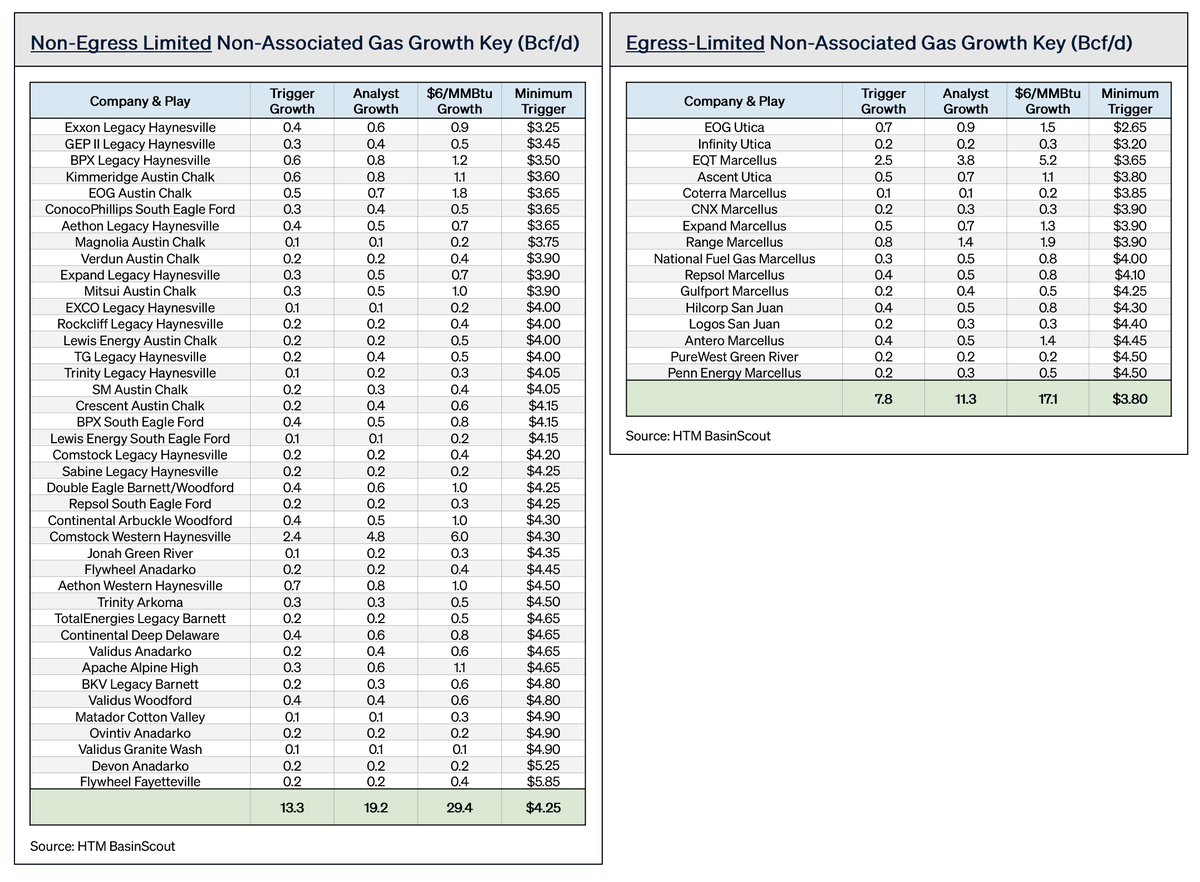
And I appreciate you are saying old designs need $4.50 but if you could also point me towards the PE group or PubCo that’s growing multiple Bcf/d on a $4 deck and underwriting full improvement and no alpha that would be good. If the old designs need $4.50 and “work” at $4 (which I still disagree with) then whoever’s buying it today is almost certainly seeking some sort of return on taking advantage of that spread. It’s like the deep Haynesville near the Nach fault zone might break even on paper at $3.22 but tell me who’s spending $200mm on a pad at $3.23. Yes I agree lots turns on at $4-ish in the spreadsheet but there’s a gap, AND there is going to be a ton of full cycle capital that also needs to be recovered.


In June, Matthew Smith wrote a letter to a small group of confidants about the U.S. natural gas market. "This will sound like heresy. Energy, power, and AI heresy." In it, he projects an unprecedented natural gas shortage beginning in late 2028. By 2030, working gas storage could be exhausted entirely. Gas is the marginal fuel for electricity in most of the country. When it becomes scarce, everyone pays. Hyperscalers, LNG buyers, and households alike. The letter was never meant to be public. We asked if we could publish it so listeners could see the full work. It includes the model, the math behind it, the winners and losers, and his rebuttals to every objection he expects. He said yes. Full, 20-page letter in the comments.


@FracSlap @nimblephatty The bar here is: Shale lowered US’s cost structure by $30/ bbl, and opened up $10tn of value to be captured by US operators over a 30 yr period. What are some examples you see of AI lowering cost/bbl produced by $30/bbl, or creating $10tn of additional value over 30 yrs?