Nic Mahaney

1.1K posts

Nic Mahaney banner
Nic Mahaney

Nic Mahaney

@NicMahaney

founder @ https://t.co/A4o5512UHc // prev @JoinAtomic @sandhill_mkts @stonks // founder @OnePager_vc⚡️ (acq) // @HoyasMLacrosse // stop asking - I am not Baby Forest Whitaker.

New York Katılım Temmuz 2020
791 Takip Edilen526 Takipçiler
Sabitlenmiş Tweet
Nic Mahaney
Nic Mahaney@NicMahaney·
Two years ago, @ajh3_ @thejackobrien & I set out to solve the pain points within early-stage fundraising. We’re excited to announce that we found a partner that shares our mission and that @OnePager_vc has been acquired by @Stonks_dot_com.

Nic Mahaney tweet media
English
5
3
35
0
Nic Mahaney
Nic Mahaney@NicMahaney·
@thenanyu We're building this at Elly.ai - happy to give you 1:1 walkthrough - AI JD, pipeline, scorecard creation - AI application review - AI interviewing - AI notetaker to auto-fill scorecards
English
1
0
0
48
Nan Yu
Nan Yu@thenanyu·
Who’s making an AI-first ATS out there
English
45
2
74
21.7K
Nic Mahaney
Nic Mahaney@NicMahaney·
Unbelievable spotting in National Treasure
Nic Mahaney tweet media
English
2
0
1
73
Jack O'Brien
Jack O'Brien@thejackobrien·
I was surprised clicking through these top apps that so many were companion apps (10/50). That's not counting the 11 chat apps like ChatGPT/Claude/Poe that tons of people use for "companions" too. Pretty insane to me that's where all the tokens are going
Jack O'Brien tweet media
Olivia Moore@omooretweets

🚨 Announcing the latest @a16z top 100 AI apps! This marks the fifth edition 🎉 of our global ranking of consumer AI websites and mobile apps by usage. And in my opinion, it was our most surprising list yet! Our top takeaways + who made it 👇

English
1
0
4
995
Nic Mahaney retweetledi
Olivia Moore
Olivia Moore@omooretweets·
AI is now better at hiring than humans 🤯 Some narrative violations here on AI vs human interview results: - 12% ⬆️ offers, 18% ⬆️ starts - 17% ⬆️ m1 job retention - 78% of candidates chose AI, w/ equal NPS (!) And, recruiters scored the AI chosen candidates higher.
Olivia Moore tweet media
Ethan Mollick@emollick

AI in HR: in an experiment with 70,000 applicants in the Philippines, an LLM voice recruiter beat humans in hiring customer service reps, with 12% more offers & 18% more starts. Also better matches (17% higher 1-month retention), less gender discrimination & equal satisfaction.

English
11
15
142
41.7K
Nic Mahaney retweetledi
Jack O'Brien
Jack O'Brien@thejackobrien·
Today we're launching Subconscious: a new platform for building agents with long-horizon reasoning and tool use, backed by MIT research. One API call. Tool use. Context beyond existing limits. If you're building agents, let's talk.
English
119
22
256
11.8K
SportsCenter
SportsCenter@SportsCenter·
Who is your favorite athlete to play for a DC sports team?
English
521
60
715
2M
Jack O'Brien
Jack O'Brien@thejackobrien·
@jackieberardo @subsysdev You're probably right for the general population clickthrough, but I wonder what's better for developers specifically
English
1
0
1
27
Jack O'Brien
Jack O'Brien@thejackobrien·
Would love your opinion. Which landing page style is more appealing to you days? pic 1 classic landing page, pic 2 simple & text heavy
Jack O'Brien tweet mediaJack O'Brien tweet media
English
3
0
1
231
Roy
Roy@im_roy_lee·
what exactly does @micro1_ai do and what’s the case for them being better than @mercor_ai ? + any case studies of top talent being sourced through either company?
English
24
6
235
95.2K
Jack O'Brien
Jack O'Brien@thejackobrien·
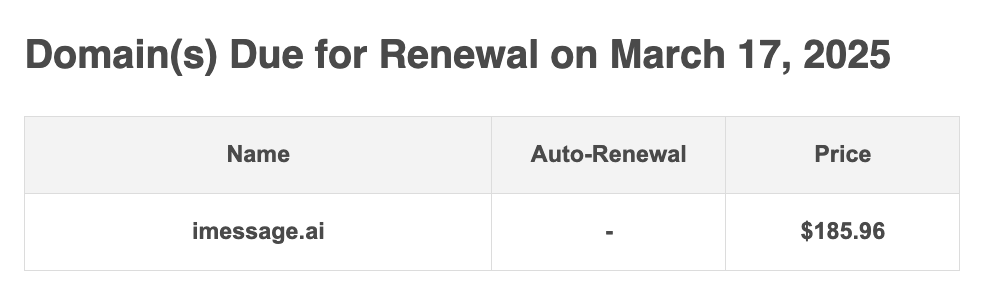
I'm not planning to renew imessage dot ai. Let me know if you want it!
Jack O'Brien tweet media
English
2
0
7
10.7K
Nic Mahaney retweetledi
Tom White
Tom White@twhite·
Note-taking…what if there was another way? We spend so much time on the phone, on video calls, interviewing candidates, chatting with hiring managers about JDs, big debrief calls, you name it, we talk a lot. We’re excellent talkers, but what if our notes were as magic as our interviewing?! That’s why I’m excited about the potential of Elly’s AI Templates! With Elly, I can now: —Tell AI exactly how I want my notes & candidate summaries —Build templates for different roles & call types (Interviews, Kickoffs, Debriefs, References) —Seamlessly push notes straight to my ATS 2 minutes and just like that, fully formed notes, in the way I want them, on my lap and in my ATS. Just like magic. Would recommend all of my recruiters to take a look. elly.ai/blog/introduci…
English
1
1
2
275
Nic Mahaney retweetledi
Jack O'Brien
Jack O'Brien@thejackobrien·
I love to see that AI infrastructure is a focus for YC after building in this space for the last few years. We need creative ways to do a ton of cheap inference, and the route I'm most excited about is building better rails for asynchronous inference
Jack O'Brien tweet media
English
1
4
13
977
Nic Mahaney
Nic Mahaney@NicMahaney·
@ajh3_ 6/10 tweet. Above average - not your best. Got on base, but had to push to beat the throw out.
English
1
0
3
156
Adam Hardej
Adam Hardej@ajh3_·
And here’s Margot Robbie to explain how quantum computation occurs in many parallel universes, in line with the idea that we live in a multiverse, a prediction first made by David Deutsch.
Adam Hardej tweet media
English
1
0
3
499
Nic Mahaney retweetledi
Jack O'Brien
Jack O'Brien@thejackobrien·
In a few short years, only two skills will matter for software engineers: Taste and Tradeoffs All meaningful code used to be written by humans, but it's not anymore. Today, somewhere between 20-50% of code is generated by AI copilots, and in just a few years virtually all new software will be created by autonomous agents. So what will happen to software engineers? Is it still worth learning how to code? I've been writing code as a Google engineer and startup CTO for over a decade, and after using (and already relying on) tools like @GitHubCopilot and @cursor_ai, it's clear to me that creating software is already fundamentally different than just a few years ago. Language models make the work faster and more enjoyable, and they'll only get better from here. However, two skills will resist automation and become crucial for future software engineers to master: the ability to decide system tradeoffs and an excellent sense of taste. Software Engineering Today Modern software engineering relies on engineers to hold a ton of information in their head and bring abstract ideas to life with code. They must be fluent in the syntax of relevant programming languages and have broad knowledge of available tools and frameworks. They must be aware of their existing codebase and understand previous implementation choices. They need to be able to coordinate with product managers, designers, and other engineers to determine what to build. Then with all of this context, they must be able to fit structure around ambiguous features and physically type it all into a computer. Assuming they nailed this translation on the first go (it rarely works that way), they then test their work and iterate until the project is complete. This all encompassing software engineering role will seem archaic and amazing a decade from now, probably similar to how I view the legendary programmer Chris Sawyer that made RollerCoaster Tycoon in assembly language (so insane). Honestly, we have it pretty good today, but the next generation of software makers won't believe the way we did things. Where We're Headed Soon, engineers will orchestrate swarms of coding agents that take ideas, map them onto a project, build it, test it, and iterate until the result works perfectly. With human directions and automated code generation, the speed of “typing” and "filling in the implementation gaps" will increase 1000x allowing for massive refactors, perfectly optimized changes, and debugging loops to happen without human intervention. The time to make software will drop to essentially zero. If you can articulate your thoughts, agents will be ready to turn your intent into code. Having the right thoughts becomes the challenge, and this skillset will become core competency of software engineers. Boiled down a step further, the differentiating directions to communicate will be around system tradeoffs and making a tasteful product. Everything else will be automated away. Let's explore each skill and how to develop them today. Tradeoffs As long as we live in a world constrained by physics, computer science, and money, software engineering will be a game of tradeoffs. For every implementation decision there’s a negative tradeoff to consider, and that's as true today as it will be in the distant future. An engineer must make decisions on platform dependence, system architecture, and key algorithms all with implications on latency, accuracy, cost, reliability, and ethics. Great software engineers know when they are making system tradeoffs, how to evaluate their decisions, and generally make the right choice. Those choices will still be relevant when agents are writing our code. Top engineers will know a wide variety of the platforms and tools at their disposal and understand their pros and cons. They'll know when to specify implementation details and when to give the agents free reign. When they sense a critical tradeoff, they'll ask the right questions and adjust the product accordingly. They'll have total system awareness, but not deep system fluency (just like I can't read assembly code but understand bottlenecks in a product today). It's worth noting that any tradeoffs related to developer productivity will no longer be relevant. All engineering teams today grapple with prioritization: should we build feature A, build feature B, or fix tech debt C. Those decisions will be a thing of the past, and you'll have free reign to build with unlimited engineering effort. With all that freedom, building the most performant, low cost, and useful system becomes all the more important. Developing intuition to make good tradeoffs today is fairly straightforward: make more product decisions. Building your own technical projects from scratch is a great way to do this, and one of the key reasons I think learning to code will still be relevant in the future. Once you start thinking of your project as a series of tradeoffs expressed through code, you’re thinking like an engineer. A software engineer who understands the innards of their system will communicate with an A agent far more effectively than someone who only knows the system at a high level. To stay relevant, my advice is to get building today, practice weighing the tradeoffs you encounter, and learn how to communicate your choices. Taste Having great taste is difficult to develop and arguably a more valuable skill in the future. Great taste leads to great design in everything from the aesthetic of a product to its user experience. It’s a skill that's as much artistry as science, and is deeply human in nature. Concerningly, I'd argue that few software engineers today truly have great taste. A top software engineer will have incredible breadth of knowledge of successful software products and know how to articulate what gives them an edge. They will have deep intuition of what looks and feels right, and they will be opinionated in a unique style that makes their products stand out. Ultimately, it's their combination of technical understanding and refined taste to build seemless products that will separate them from their peers. Developing taste takes practice that comes from using great products, launching great products, and internalizing feedback on your work. Some have a knack for taste, and others will have to work at it. But good taste for building software can certainly be earned (ex. my earliest projects were garbage in every way, now they’re not too bad). As the agents get better and require less human intervention, a less experienced maker will be able to create fancier products. But these novice creators won’t stray far from the defaults inherent in AI models and end up building indistinguishable products. Breakout from the crowd and develop good taste. How Long Do These Skills Matter? It’s hard to say how long taste and tradeoffs will be relevant as a skillset, but in my opinion they’ll certainly be the last human software skills automated away. With certainty, writing code and debugging processes will be relics of the past, and makers in the next decade will be able to think bigger because the smaller details will be handled. As a software engineer, it's going to be an incredible time if take advantage of the opportunity. To get ahead today, build something. Make a new project. Use new tools like @cursor_ai and @stackblitz. Launch what you make to users and get offensive feedback from someone anonymous online. Develop a sense of what’s good software and learn how to make it run quickly, cheaply, and reliably. I'm excited for a future where we can translate our ideas into live products faster than ever before. Embrace the change, learn taste and tradeoffs, and stay relevant with me! --- Thanks for reading, and I'd love to hear your thoughts in the comments.
English
4
4
21
2.2K
Nic Mahaney
Nic Mahaney@NicMahaney·
@ajh3_ Which one are you in the left photo?
English
0
0
2
30
Nic Mahaney retweetledi
Hunter 🌆
Hunter 🌆@rhunterh·
Chipotle Experience: - Stand in line with bugmen - Out of fajitas - Guac is extra - Employees don't make eye contact $15 Bodega Experience: - No line - Every imaginable ingredient - Add as much as you want - Get called "my guy" and "boss" $11
English
15
57
2.5K
164.3K