Sabitlenmiş Tweet
📖The book I co-authored got released! Get your free copy here. 👇 azure.microsoft.com/en-us/resource…
English
Nills Franssens 🇺🇦
5.1K posts
@NillsF
📖 Author of Hands-on Kubernetes on Azure https://t.co/fvd0UmVDyo… 🤵 Digital and App innovation specialist @Microsoft 🏃♂️ Ultrarunner

3 weeks out from the @bostonmarathon. Last long run on the course. Took the bus out to Framingham this morning. Solo effort. Last 20 miles of the marathon course. Goal was marathon pace + 30 seconds. Came in a little hot but it felt smooth and controlled aerobically the whole way. Newton hills felt honest but never broke me. Right hammy was barking from mile 3. Stayed annoying but never got worse. Ran through it. I’ll take it. 97 miles this week on 6 days. This is the fittest I’ve ever been going into a marathon. Excited to see what’s there on fresh legs.






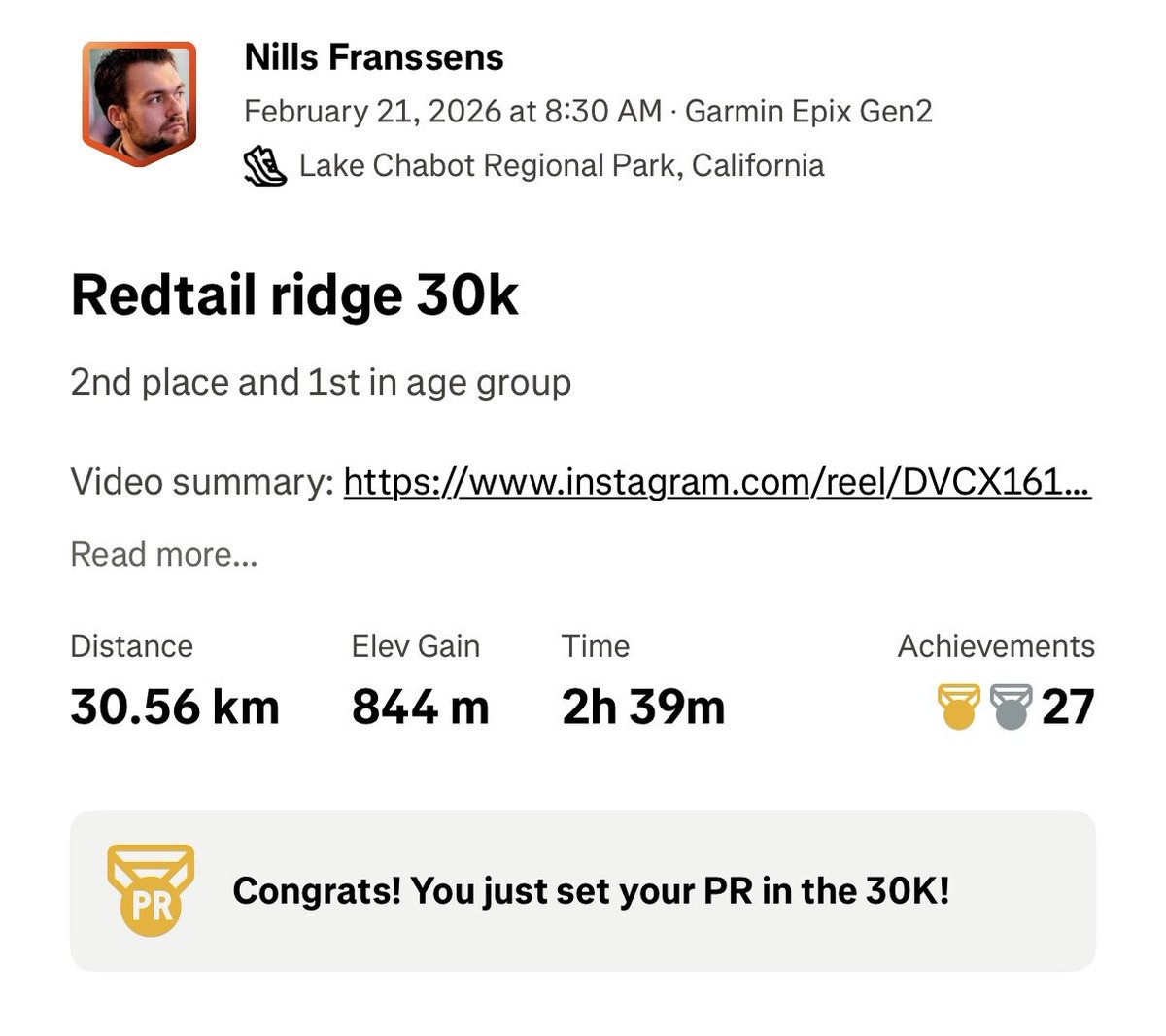
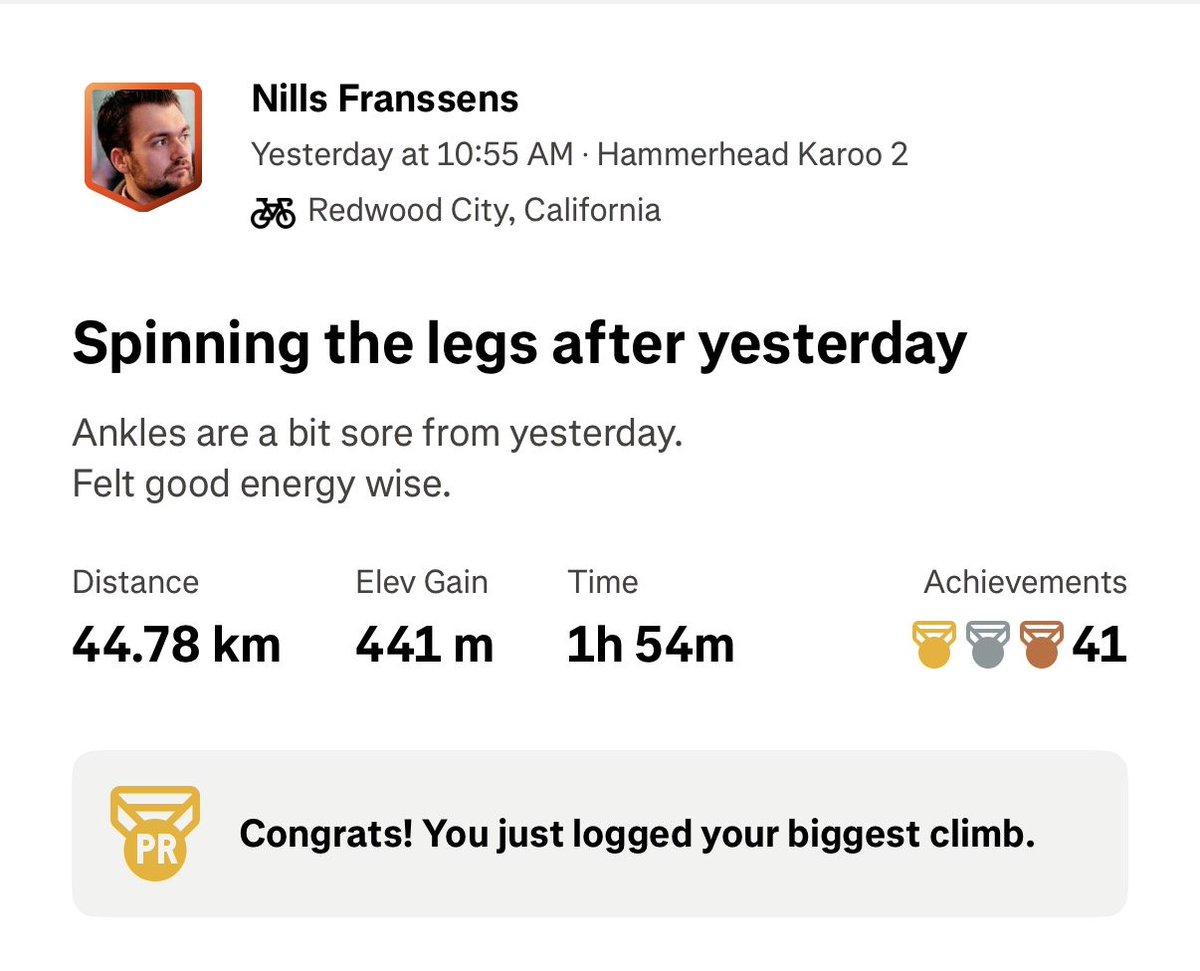
Decent weekend as we build to London. 3hr progression under/over LT1 + 2hr Z1 bike with my wife. Barely feels like #overtraining at this point, but I think it still counts @taggartvanetten
There’s a balance between training and racing. Races are fun and valuable for experience. You get better at racing by racing. But the more often you race, something has to give. You can’t expect peak performance unless you taper at least a little and allow time to recover afterward, especially from longer races. That recovery time inevitably takes away from uninterrupted training and long term development of fitness. Last year, from July to November, I did nine races in a 20 week stretch. They were all relatively short, 10k or less, but I only felt truly well rested for a couple of them. That was intentional. I wanted practice at a new distance (one mile/1500m). I also didn’t want to sacrifice too much training just to feel sharp on race day. You don’t need to go all out in every race. A weekly parkrun is a good example. There’s value in treating some races as controlled efforts. You can still gain experience, practice pacing, and become a better runner without digging too deep a recovery hole. Do as many races as you like. Running is a sport to enjoy on your own terms. Just understand that your best performances usually come after several months of mostly uninterrupted training.



An invitation to pause, breath and listen to my extraordinary conversation with ultramarathoner Kilian Jornet who literally runs up the wildest mountains for a living. His physical stamina has been studied by researchers but it’s his mind I found fascinating. This is both a soulful and inspiring interview that I very much needed. nytimes.com/2026/01/17/mag…