

Haakon Haraldson
2K posts
Haakon Haraldson
@NorthernMorals
Nordic values would make this world a better place.
The North Katılım Temmuz 2025
7 Takip Edilen16 Takipçiler

Absolute desperation. The US is deploying slow, unstealthy Cold War-era A-10s to the Strait of Hormuz to fight fast attack boats. These planes are sitting ducks for Iran's advanced air defenses. The Pentagon is sending pilots on a suicide mission.
English
@EntropicGood @MarkGoldblatt @DrJillStein He lifted sanctions on the vessels already at sea, so they can be sold at market value & not at a discount to china. Otherwise, Iran is still sanctioned & getting its ass handed to it.
English

@MarkGoldblatt @DrJillStein Trump had lift sanctions on Iranian oil (or tried to). He’s getting Americas ass whooped buddy
English

Ayatollah Khamenei reportedly laid out 3 demands:
-US military withdraws from the Middle East,
-rollback sanctions within 60 days,
-financial compensation for economic damages.
Failing that, Iran threatens to close the Strait, formalize defense ties with Russia & China, & move to nuclear deterrence.
Like it or not it's a multipolar world.
Get with the program.
Marwa Osman || مروة عثمان@Marwa__Osman
A message to Washington? In a tightly structured 12-minute address, Ayatollah Imam Sayyed Mojtaba Khamenei moved from familiar rhetoric into something far more consequential. The opening half followed the expected script; revisiting decades of U.S. warmongering rhetoric: sanctions, assassinations, regional conflicts. But midway through, the tone shifted from retrospective to strategic. Sayyed Khamenei outlined three concrete demands, each with a defined timeline: a rapid U.S. military withdrawal from the Middle East, a full rollback of sanctions within 60 days, and long-term financial compensation for economic damages. Then came the ultimatum. Fail to comply, and Iran escalates, economically, militarily, and potentially nuclearly. Not hypothetically, but operationally: closing the Strait of Hormuz, formalizing defense ties with Russia and China, and moving from ambiguity to declared nuclear deterrence. The timing of external reactions was just as telling. Within hours, both Beijing and Moscow issued statements aligning, carefully but unmistakably, with Tehran's framing. This definitely looked coordinated. The broader context matters. Sayyed Mojtaba Khamenei represents a different leadership style from his martyred predecessor leader. Where martyr Sayyed Ali Khamenei operated through long-term balancing and controlled escalation, Sayyed Mojtaba appears positioned to deliver faster, more decisive outcomes. Iran's internal reports are clear, the Islamic Revolution Guard Corps is in no way, shape or form interested in incrementalism. They are pushing for structural change: removing U.S. influence from the region, restoring Iran's military standing, and forcing a re-negotiation of global power dynamics. And for the first time in decades, Iran practically has the leverage to do this. Rising oil prices, regional instability, growing alignment with China and Russia, and vulnerabilities in global trade routes have shifted the strategic landscape. So this was not just a speech. It was a test. A test of whether the United States is willing, or even able, to operate under a new set of constraints. What happens next will likely define not just the trajectory of this conflict, but the broader balance of power in the Middle East for decades to come.
English
@ziggy2416 @ISeeUOSINT @iq300MIN How come the U.S only lost assets on the opening strikes & not since then? Why is Iran holding back until the U.S shuffles more air defences & ammunition to the middle east, while losing more of their own?
It makes no sense, because this is IRGC cope propaganda.
English

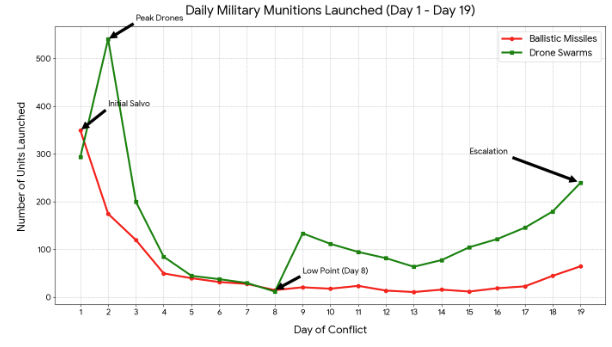
The opening Salvo was to get rid of the old stock while exhausting and draining air defense missiles. It was a well calculated strategy. Now they are using missiles that have 10x the load. So you can times every missile by 5x-10x. And that's how much more damage is being done. With more accuracy
English

🚨🚨🚨 IRAN IS FIRING MORE MISSILES THAN DAY ONE — AND THEY'RE HITTING MORE TARGETS PER SHOT. 🚨🚨🚨
Let that sink in.
Most countries get WEAKER as a war drags on. Supplies run low. Launchers get destroyed. Accuracy drops.
Iran is doing the OPPOSITE.
💀 More launches per wave than the opening salvo
💀 Higher hit rate per missile than Day 1
💀 Defenses are being OVERWHELMED — not adapting
⚠️ In the Gulf War, Iraq's missile accuracy DROPPED 40% after Week 1. Iran's is CLIMBING.
They're showing you Iron Dome interceptions and victory speeches.
They're NOT showing you how many are getting through.
If Iran was running out of missiles, why is the volume INCREASING? If air defenses were working, why is the hit rate RISING?
This isn't a country on its last legs. This is a country that hasn't even started yet.
The next wave won't be bigger. It'll be the one that changes EVERYTHING.
Prepare accordingly. 🚨🚨🚨
This post is being throttled. Like + RT to keep it alive. ⚠️
English
@pati_marins64 @shadowcrewtroll So yeah, it is now the next morning in Iran & they fired less missiles than the previous days.
English

Iranian Missile Launches on the Rise
After neutralizing at least 10 U.S. and allied radar sistemas, Iran has begun launching more missiles and drones, even under intense bombardment.
This escalation shows no signs of slowing down. The launches are conducted via mobile units and silos, carefully deployed to avoid detection.
I would describe this as an extremely complicated situation for the Americans, as there is no clear plan, and arguably no way to formulate one. Both the seizure of the Strait of Hormuz and any invasion to seize enriched uranium are high-risk operations with low probabilities of success.
This creates a defeatist pressure that cannot be resolved through rhetoric alone.
Iran is currently refusing diplomatic engagement following the deaths of its leaders. The U.S. and Israel have closed the diplomatic doors to this conflict without managing to open any others.
Andreas Steno Larsen@AndreasSteno
Iran is firing MORE and they are hitting MORE per shot than during the first days of the conflict. Not good..
English
@anniefofani @seltzertuna @pati_marins64 They don't depend on the railway, they are pushing into Lebanon with little resistance & dealing devastating blows. Unlike before, Iran can't support Hezbollah due to the Americans raining hellfire on them & the Syrian border being closed.
English

@seltzertuna @pati_marins64 if you fix the train station Iran can just bomb it again. how is israel going to transport that 450k mobilization? they're taking some hard knocks up north.
x.com/anniefofani/st…
annie fofani🇵🇸@anniefofani
🧵 Hezbollah on a roll‼️👊
English
The Iranian attacks against Israel last night were the heaviest since the 4th. Areas around Ben Gurion Airport were hit, causing damage to several private jets.
The Tel Aviv train station was also struck on a night with at least two dead and many injured.
The Middle East is plunging into a war that will not be brief and will have no winner.
Clash Report@clashreport
Several private aircraft were damaged near Ben Gurion Airport following recent missile launches from Iran. Source: N12
English
@owenjonesjourno The cope from the Axis supporters will never stop being funny, the USA & Israel are literally destroying Irans offensive capabilities.
You guys can claim Iran is winning online, but reality on the ground is a fractured nation & no centralised power to reign in the warlords.
English

Donald Trump knows he is losing the Iran war.
But the option of "declare victory and go home" isn't open to him.
This would be the biggest strategic defeat suffered by the US since it emerged as a superpower.
It would mark the formal end of US global hegemony.
English
@realstewpeters Looks like its still working despite Israel running out of them, how are the Iranian air defences, navy & all the people under Axis control & no shelters?
Oh right, they are still not intercepting a single attack from Israel or the U.S.
English

Trump’s pedophile administration is lying about everything.
Here’s Israel right now.
How’s that “Iron Dome” working out for you?
Rapid Response 47@RapidResponse47
.@DNIGabbard: "The IC assesses that Operation Epic Fury is advancing fundamental change in the region... [Iran's] conventional military power projection capabilities have largely been destroyed, leaving limited options. Iran's strategic position has been significantly degraded."
English
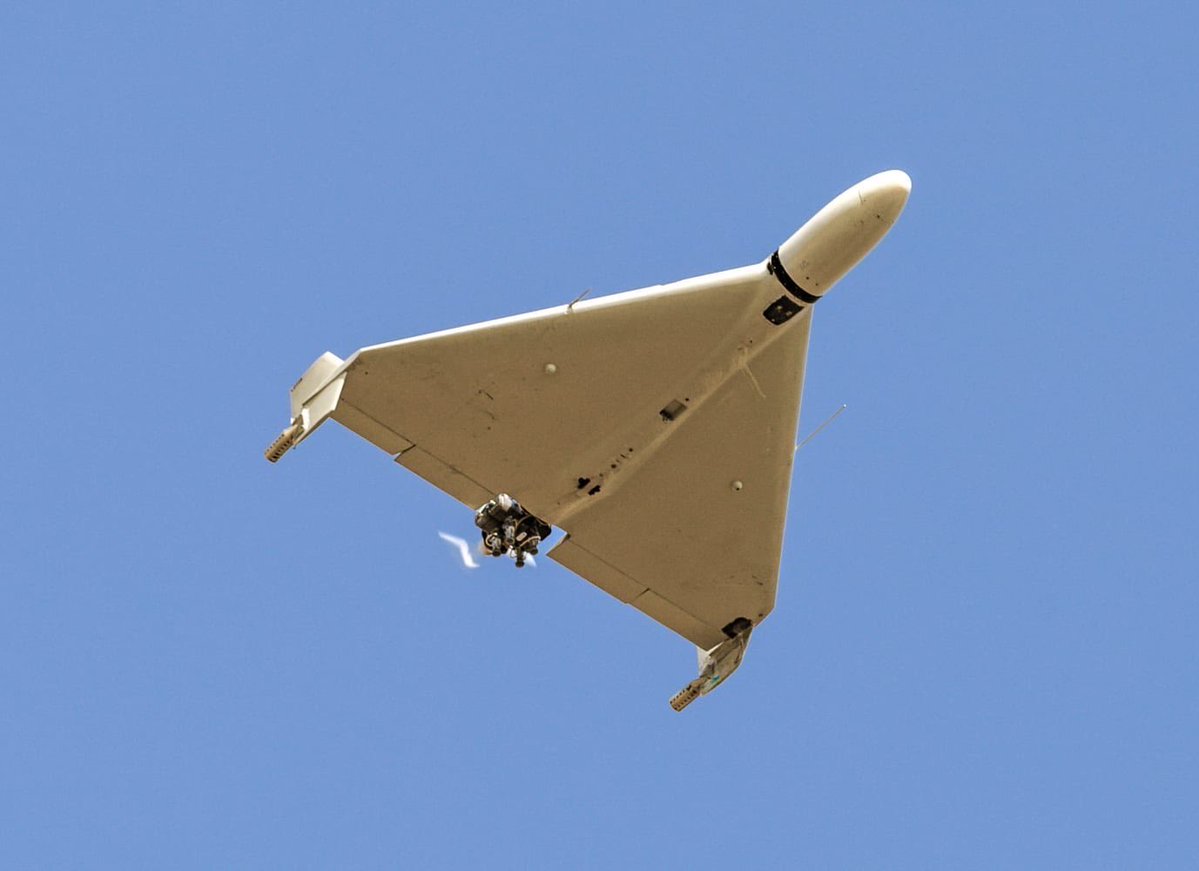
@CappiesCantCope @AyatollahAraafi The last drone was confirmed to be shotdown on the 13th, which was 4-5 days ago & we have seen them strike Iran without a break.
Iran still has some air defences, but it seems like the decline of 80% is true & probably progressing to 90% soon.
English

@NorthernMorals @AyatollahAraafi We will know Iran has no air defense when America starts using their airspace. Right now they avoid it.
English

CURRENT | 🇺🇸💥🇮🇷
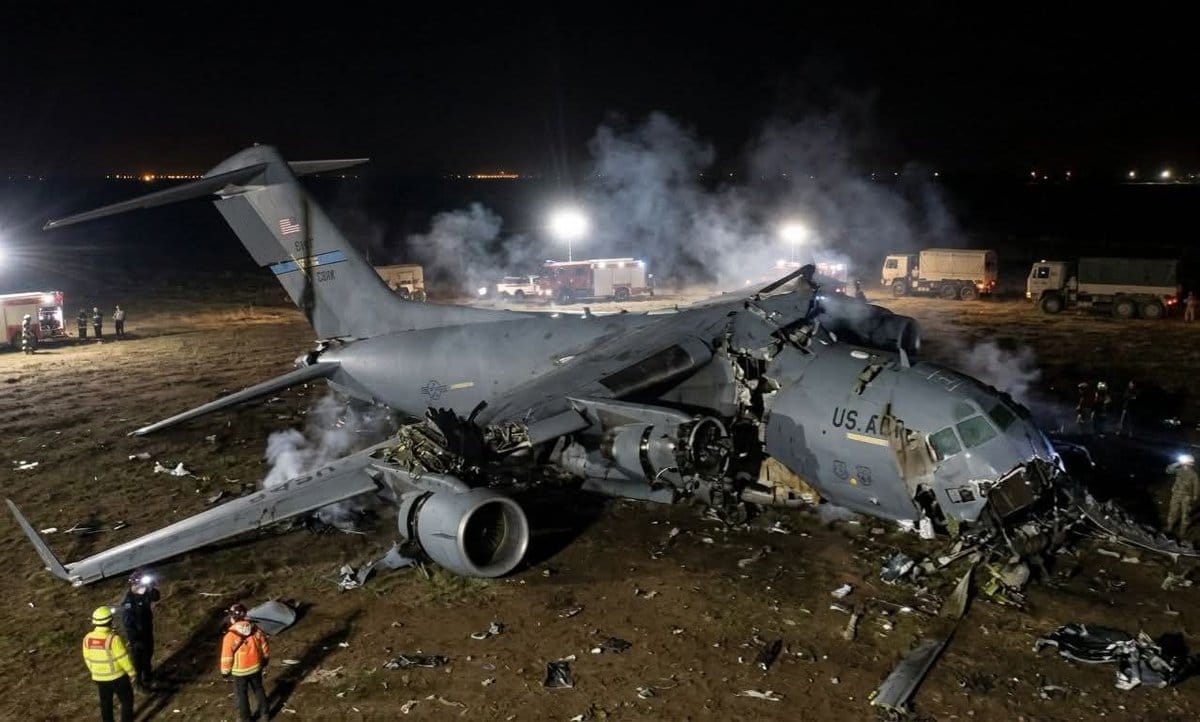
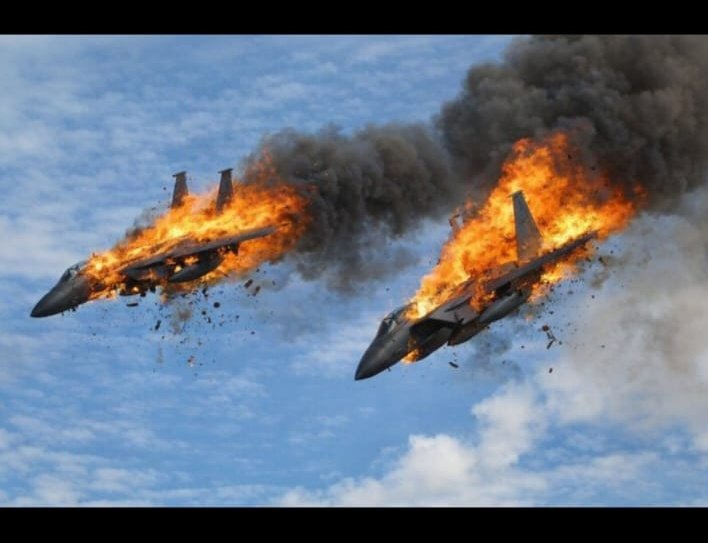
❌The U.S. has lost roughly ~10% of its MQ-9 Reaper drone fleet during the Iran War
English

@RickSanchezTV Look at how many missiles they are now launching😂😂 This is wave 58 and they literally mocking western pundits who are saying that Iran has no launchers left and are running out of missiles!
English

US missile defense systems ARE FAILING!
95% of Iranian missiles hit the targets.
Patriot and THAAD are supposed to stop everything, but they don’t.
If US protection means taking the hits, Gulf states will rethink their relationship with Washington.
More insights on Patreon soon
patreon.com/cw/RickSanchez…
Join!
English
@FurkanGozukara So, the Iranians held back until their air defences were eliminated & then decided to bring out their big guns?
No major hits in how many days?
English
The US claims Iran is running out of missiles, but Professor Marandi reveals the brilliant strategy: Iran used cheap missiles to exhaust American air defenses, and now their advanced weapons are penetrating with ease.
English
@cecild84 Only Africans I see supporting the Islamist regime are either Muslims or Communists. Two of the most retarded people on the planet.
English

Nations perish for lack of knowledge.
It pains my heart to see my people in this state of profound and chronic ignorance.
Africans who supports America 🇺🇸 and Israel 🇮🇱 war on Iran 🇮🇷 are a good example of a flock of sheep 🐑 without a shepherd.
Misguided and misdirected.

English
@Ugo_KelechiPhD Digging in & doing well, if their aim was to lose.
English

One of the reasons for the ongoing war in Iran is sheer Western, imperialist anger that the country is digging in &doing very well, despite crippling sanctions, despite lack of access to the dollarised financial system & isolation.
If you love Sovereignty, stand with Iran.
Current Report@Currentreport1
Yesterday, US and Israel destroyed a major facility of the Iranian Space Research Center in Tehran, reducing the site to ruins. The facility had been conducting satellite and space-technology research despite ongoing sanctions.
English
@FurkanGozukara Funny how the U.S has air superiority over Iran, with only a handful of bases & 2 carriers. While Russia only has partial air superiority over Ukraine, which is largely flat terrain & right next door.
Russia would have won if their initial strikes were half as accurate.
English
Why the US military industrial complex is failing. Russia adapts and modifies missiles in weeks based on battlefield intel. The US takes years just to update software, forcing troops to fight with obsolete systems that do not work.
English
@Its_ereko Iran most certainly no Imperial Japan. They evacuated their people from the Islands the U.S landed on & took them head on, actually managing to inflict damage in the process.
Iran has not damaged a single U.S vessel, they can barely fire any missiles anymore.
English
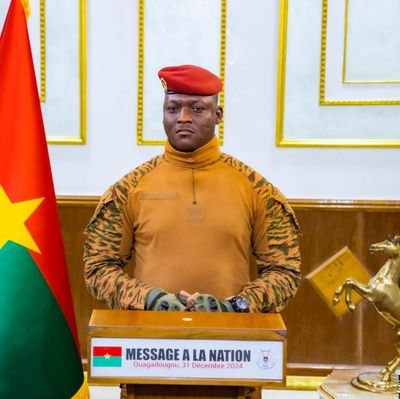
🇮🇷🇯🇵 Iran is not Japan.
Japan got nuked. Surrendered. Became a US base.
Iran got sanctioned. Assassinated. Bombed. And still stands.
Japan hosts US troops. Iran fights them.
Japan buys US energy. Iran controls the Strait.
Japan's constitution bans war. Iran's constitution mandates resistance.
Two countries. Two paths. One lesson:
Submission buys survival. Resistance buys dignity.
Iran chose dignity. The empire can't handle it.
Gcobani Ndzongana@gndzongana
Iran is not Japan.
English
@lorddrey The videos don't lie, they are still intercepting Iranian ballistic missiles & & Irans capabilities have been greatly diminished.
English

Just In:
In a live interview with Mario Nwafal Ex-CIA Larry Johnson analysed and ran the numbers with Mario.
And here is what was discussed and the deductions he made. 👇
If Iran nukes Tel Aviv and Haifa it destroys 55% of Israel.
If Israel nukes Tehran, the worst-case scenario is that it kills 17% of Iran's population. 83% will survive and disperse across a country 273 times harder to destroy.
Iran can bomb every inch of Israel in 3 years.
Israel bombing every inch of Iran at the same rate? 273 years.
Israel no longer has an effective air defence system. The videos don't lie.
And Iran's missile factories are underground. They cannot be destroyed. They are still building.

English

Their goal shifted from trying to SURVIVE the US/Israel to TEACHING them a lesson.
This has to be the most impressive victory since the Vietnam War.
BRICS News@BRICSinfo
Reporter: "Why don't you ask for a ceasefire with the US?" Iranian FM Araghchi: "Because we want to teach them a lesson so hard that enemies never even think of attacking Iran again."
English
@realnikohouse Why won't Iran put out a single video of the new supreme leader of the IRGC? Netanyahu is alive, everyone knows that.
English

Is Israel putting out AI content of Netanyahu amidst rumors that Iran might’ve taken him out?
If so, why put out AI videos instead of real videos if Netanyahu is indeed alive? And why put out so many?
English
@lulzfox666 @FegitekH85276 @GabeZZOZZ So, Iran is only going to block 5% of the oil that leaves the strait & that will harm the market how?
English

@FegitekH85276 @GabeZZOZZ china has a free pass it doesnt need that openning bullsht eu is already talking with iran instad of trump all the asian or atleast small ones like bangladesh getting a free pass its the fact that iran dictating terms is what hurts em the most
English

Iran’s got more missiles than there are targets in the Middle East

The Spectator Index@spectatorindex
Trump says that Iran has about '8%' of its missiles left.
English
@SprinterPress Iran captures one of the most elite units of the USA, which would crush the morale of many of their ground troops if displayed & Iran refuses to do so?
The cope is insane, Galloway is single handedly dragging the average IQ of the British people down.
English

George Galloway says that IRGC soldiers in Iran have captured 173 American Delta Force soldiers!!!
"This is now confirmed by CREDIBLE reports and OFFICIAL statements from the IRANIAN GOVERNMENT"
English