NukedAotearoaMouse 🐭 retweetledi

In 1907 a German chemist called Edwin Kayser walked into the offices of Procter & Gamble in Cincinnati with a patent and a proposition.
The patent described a process for taking liquid cottonseed oil, bubbling hydrogen through it under pressure in the presence of a nickel catalyst, and producing a solid white substance with a long shelf life and no particular flavour.
Procter & Gamble bought it immediately. They were not a food company. They were a soap company. Their interest in hardened cottonseed oil was that it could be turned into soap more cheaply than tallow, and tallow prices were rising.
The hardened cottonseed oil made excellent soap.
It also, the chemists noted, looked exactly like lard.
It is worth pausing to remember what cottonseed oil actually was. For most of the nineteenth century, cotton seeds were industrial waste. The oil pressed from them was dark, foul, and used primarily in the manufacture of explosives, dyes, and roofing tar. Improvements in bleaching in the 1880s made it palatable enough to use as an adulterant in olive oil. Its chief virtue was that it was nearly tasteless and very, very cheap.
Procter & Gamble looked at the hardened cottonseed oil sitting in their soap factory, looked at the lard market, and made a decision.
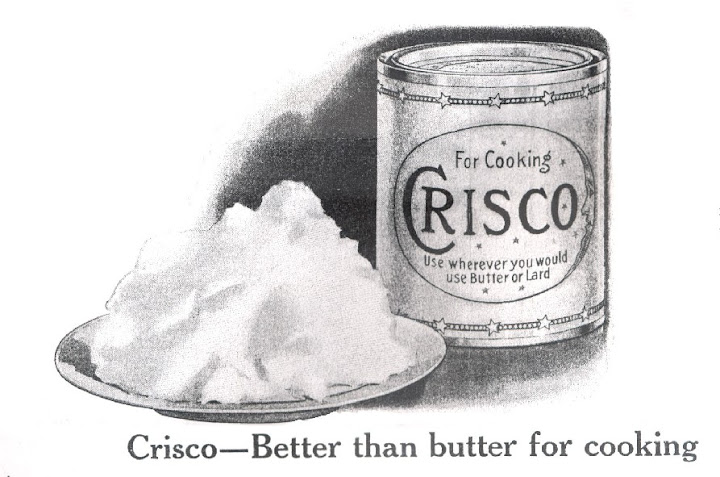
They needed a name. They tried Krispo. Trademark conflict. They tried Cryst. Someone in management noted, delicately, the religious connotations. They settled on Crisco, derived from CRYStallised Cottonseed Oil, and launched it in June 1911 with one of the first modern advertising campaigns in American history.
The campaign did not mention cottonseed. It mentioned purity. It mentioned modernity. It mentioned the marvel of factory production over the messy, old-fashioned business of rendering animal fat at home. It distributed free cookbooks containing six hundred and fifteen recipes, every single one of which called for Crisco. It paid railways to use Crisco in their dining cars. It targeted Jewish households on the basis that Crisco was kosher in a way lard could never be.
By 1916, Americans were buying sixty million cans of Crisco a year. Three cans for every family in the country. Within one generation, lard had gone from the standard cooking fat in nearly every American kitchen to an old-fashioned ingredient your grandmother used.
There was no health data driving this. There was an advertising budget and a soap company that had accidentally invented a food.
The trans fats produced by partial hydrogenation, eventually banned in 2018 after killing an unknowable number of people, would not be flagged as a problem for another seventy years.
The cottonseed oil itself, now joined on the shelf by soy and corn and canola and sunflower, is still the dominant cooking fat in the developed world. It is in your salad dressing. It is in the fryer at every restaurant you have ever eaten in that did not specifically advertise otherwise. It is the default.
It started as soap.
Then it was looking for something to do.
Now it's the most-consumed fat in the Western diet, and the lard that built the American kitchen for two hundred years before it is the thing people are nervous about putting in their pastry.
The marketing worked.
It has not stopped working.
English