Sabitlenmiş Tweet

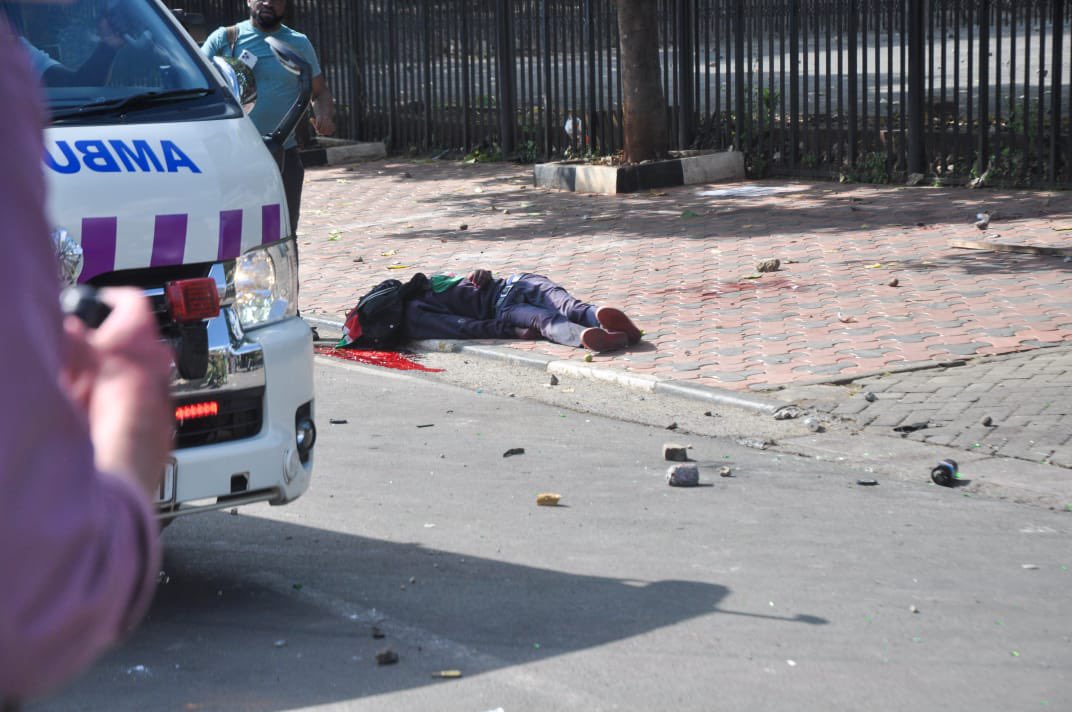
"Perhaps struggle is all we have because the god of history is an atheist, and nothing about his world is meant to be."
English
Media Nerd
132.8K posts
@ObaraBrian
Views are mine & Bob Marley's. The mission? The Universe Is Indifferent So We Have A Duty To Be Kind

⚠️ PENTAGON SENDING THOUSANDS OF ADDITIONAL MARINES TO MIDDLE EAST

National Assembly's Committee on Health says SHA is no longer sustainable zurl.co/MA7Hn
#Iran War Update No. 20 (focus on Iranian strategic narrative): 🔹The Strait of Hormuz is being increasingly framed in Tehran as a tool of Iranian leverage rather than a temporary wartime tactic. Iranian officials are openly discussing a post-war regulatory regime, including transit fees and IRGC-controlled routing. At the same time, there are reports that a “safe corridor” system is already being implemented for selected countries through Iran’s territorial waters. 🔹Meanwhile, international efforts to counter this are taking shape. Six U.S. allies U.S. allies – the United Kingdom, France, Germany, Italy, Japan, and the Netherlands – have signaled readiness to support maritime security operations in the strait, pointing toward a gradual internationalization of the waterway’s security. However, the exact form of their involvement remains unclear. 🔹Iran’s approach to escalation remains centered on vertical escalation rather than horizontal (expanding target types/categories). When Israel struck South Pars, Iran responded by targeting major energy infrastructure across the Persian Gulf. Continued strikes on U.S. bases follow the same pattern, i.e., response to attacks on Iranian military infrastructure. The focus so far has been on escalating within existing categories of targets, increasing scale and impact, rather than opening entirely new domains. 🔹This logic was reinforced by Iran’s strike on the Haifa refinery despite U.S. messaging against further energy targeting, underlining Tehran’s emphasis on enforcing its own red lines rather than accepting those imposed by the adversaries. 🔹According to Iranian expert commentaries, Iran’s current approach rests on three key elements: unpredictability, a “madman strategy,” and making threats to the enemy more credible; the latter reflected in shortened gap between warning and action, aimed at “correcting past misperceptions” caused by restraint. 🔹Energy infrastructure remains at the center of the conflict. Damage to Qatar’s Ras Laffan LNG facility has caused significant disruptions to global gas markets, with parts of the complex potentially requiring years to fully recover. 🔹At the same time, Iran continues to sustain its own exports. Oil shipments from Kharg Island remain ongoing at roughly 1.1 to 1.5 million barrels per day, while increased storage at Jask suggests preparation for prolonged disruption scenarios. 🔹The war is also driving new economic dynamics. Discussions in Washington about waivers for up to 140 million barrels of Iranian oil indicate mounting pressure to stabilize global energy markets, but Tehran signals it will continue prioritizing China as its main costumer. 🔹Militarily, the United States maintains that operations are progressing, with over 7,000 targets reportedly struck. However, Iranian assessments suggest U.S. operations are adapting under pressure, including greater reliance on stand-off strikes, regional bases, and long-range bomber missions from Europe. 🔹Israeli strikes continue to target Iran’s military-industrial base, including electronic industries in Shiraz, reflecting an ongoing effort to degrade Iran’s industrial ecosystem. 🔹At the same time, there are indications of Iranian tactical adaptation. Reports of an F-35 being hit, possibly through Surface-to-Air Missile ambush (SAMbush), have fueled discussion about improved survivability and evolving Iranian air defense tactics. 🔹Regionally, attacks on U.S. positions persist. Bases in Erbil and Bahrain have reportedly been targeted again by Iran and its Iraqi allies. 🔹Unconfirmed reports of rocket fire from Syrian territory toward the Golan Heights raise the possibility of another active front, although the scale and intent remain unclear. 🔹Tensions between Iran and the UAE have escalated sharply. Diplomatic relations are deteriorating, with visa suspensions, closures of Iranian institutions, and reports of embassy shutdowns signaling a significant breakdown in ties. 🔹Internal security pressures inside Iran remain high. Authorities continue arrests linked to “espionage” and insurgent activity, particularly in southeastern regions, reflecting ongoing concerns about internal destabilization alongside the ongoing war. 🔹Diplomatically, divisions within GCC persist. Oman continues to push for de-escalation, Qatar maintains a more balanced stance, while Saudi Arabia and especially the UAE are adopting increasingly confrontational positions toward Iran. 🔹China has maintained a cautious posture, emphasizing stability and energy security while avoiding alignment with either side. Beijing has so far refrained from calling directly on Iran to halt its attacks and instead, continues calling on all parties to end hostilities. 🔹Inside Iran, discussions about nuclear doctrine are re-emerging, including limited calls for weaponization or withdrawal from the NPT, although these remain on the margins for now. 🔹Overall, the war is increasingly being shaped by competing efforts to define the rules of escalation, with Iran attempting to formalize new realities on the ground – especially at the strait – while external responses remain fragmented and uncertain despite growing concern over maritime security.

NIKO KADI

🚨 BREAKING: WSJ CONFIRMS EARLIER REPORTS THAT PENTAGON SENDING THREE MORE WARSHIPS & THOUSANDS OF ADDITIONAL MARINES TO MIDDLE EAST.

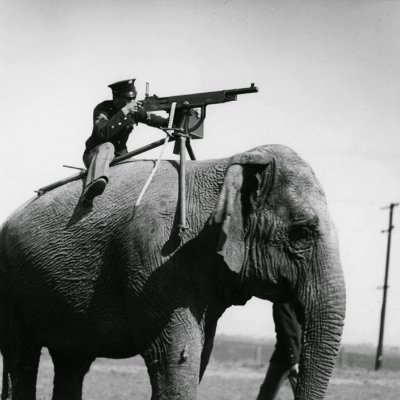


News flash from the future: Even a blockade of Kharg Island would not force Iran to reopen the Strait of Hormuz. This (yet again) reflects a persistent misunderstanding of Iran’s strategic doctrine. For Tehran, control over the Strait is not just economic leverage—it is a core component of regime survival and deterrence. Under pressure, Iran is more likely to escalate than concede. Reopening the Strait would likely require one of two extreme options: either regime change, or a large-scale military campaign to seize and secure the waterway. Such an operation would take months and still wouldn’t prevent Iran from disrupting traffic through asymmetric means. There is no silver bullet to the Iran problem. The regime will hold onto Hormuz the same way it defends every pillar of its survival—with persistence and escalation. If reopening the Strait is the strategic objective, policymakers should recognize the cost: a prolonged, high-intensity conflict, and likely retaliation against Gulf energy infrastructure. #Ira
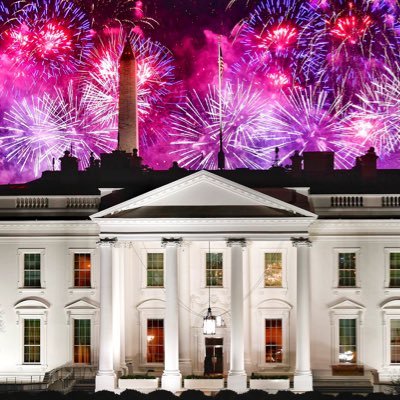
Trump: "Without the U.S.A., NATO IS A PAPER TIGER! They didn’t want to join the fight to stop a Nuclear Powered Iran. Now that fight is Militarily WON, with very little danger for them, they complain about the high oil prices they are forced to pay, but don’t want to help open the Strait of Hormuz, a simple military maneuver that is the single reason for the high oil prices. So easy for them to do, with so little risk. COWARDS, and we will REMEMBER! President DONALD J. TRUMP"

🕊️ Chuck Norris has died at 86. tmz.me/N3EVxQe

It’s giving proud son 🥹🥹

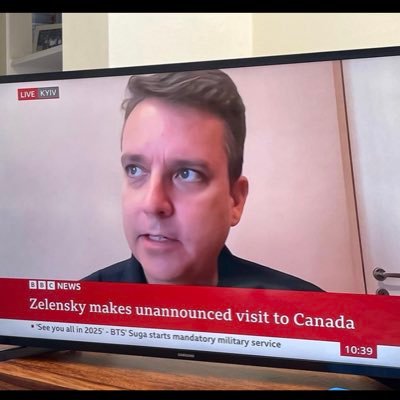
Trump lashes out at Europe and NATO this morning, calling them "cowards" for not assisting the US in opening the Strait of Hormuz.

BREAKING: 'Entire NATO mission had withdrawn' from Iraq 🔴 LIVE updates: aje.news/fs4nzb?update=…

🚨 EXCLUSIVE: Chuck Norris has been hospitalized after a medical emergency in Hawaii. What we know: tmz.me/7e8iqBd


Action movie star Chuck Norris has died aged 86, his family says bbc.in/4rCFFAx