
Sabitlenmiş Tweet
Kwadwo
750 posts


Kwadwo
@Okwanfour
Objective thinker, dreamer, and doer. I believe in impact over applause, leaving the world better than I found it, and walking by faith in God.
Katılım Kasım 2023
172 Takip Edilen127 Takipçiler
@KobeissiLetter This was probably inevitable. Many European countries are wary of being dragged deeper into another Middle East conflict, especially while still dealing with the costs of supporting Ukraine. Denying airspace and putting restrictions on bases is a clear ‘not this time’ signal.
English

BREAKING: Europe is "pushing back" on some US military operations with multiple countries now prohibiting the US and Israel from using their airspace for missions in the Iran War, per Reuters.
Details include:
1. France, Italy, and Spain denied US military support or airspace for Iran operations, sources say
2. Israel wanted to use France's airspace to transport US weapons to be used in the Iran War but the request was denied
3. Italy told the US they need "special permission" for military base uses outside of existing agreements
4. Trump has accused France of blocking some military aircraft from flying over its territory
Trump has told NATO countries to "build up some delayed courage."
English
@BarackObama @rfscivics Love this. One of the highest callings of leadership is raising up the next generation and handing them the baton with real support behind it.
English
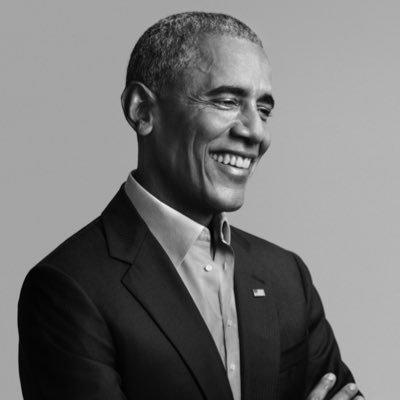
I’ve always believed that one of our jobs as leaders is to pass the baton on to the next generation –– and to give them the resources and support they need to lead us forward. On National Run for Office Day, check out @RFSCivics for the resources you need. runforsomethingcivics.net
English
@pati_marins64 The 'Price of Destruction' here is actually the loss of the region's technical agency for the next decade.
English

Nothing Will Be the Same for a Long Time
The world we knew has changed and will remain different for years to come. We were still recovering from the effects of the pandemic and the war in Ukraine when the new war, started by the United States and Israel, struck hard at the infrastructure of Iran, the Persian Gulf countries, Israel itself, and Oman.
These bombings were not just military actions, they delivered a deep blow to the global economy. Oil, natural gas, fertilizers, semiconductors, chemicals, metals, and even helium saw their supply drastically reduced. Recovery will be slow and painful.
The Price of Destruction
The damage to the region’s metallurgical infrastructure was massive and concentrated on strategically vital points. In Iran, the Mobarakeh Steel Company complex suffered the collapse of blast furnace structures and critical cooling systems in its direct reduction units and electric arc furnaces.
Reconstruction costs are estimated at US$ 6 billion, with a recovery timeline of 2 to 3 years.
In Bahrain, the impact focused on Aluminium Bahrain, where the attack severely damaged reduction lines and logistics, causing structural losses of US$ 2.5 billion. In the United Arab Emirates, strikes against Emirates Global Aluminium (EGA) facilities in Abu Dhabi and Dubai resulted in estimated structural damage of US$ 4.2 billion.
This coordinated destruction in the three countries created a major gap in the global supply of primary metals, sharply raising operational costs and commodity prices worldwide.
In the oil and gas sector, the destruction was even more brutal. The Kharg Island Terminal, Iran’s main crude oil export point, lost docking berths, pipelines, and giant storage tanks.
Estimated cost: US$ 12 billion. The Asaluyeh and South Pars complex, the heart of gas and condensate processing, had fractionation towers, heat exchangers, and control systems incinerated, another US$ 10 billion in losses.
The Abadan and Isfahan refineries, essential for gasoline and diesel production, were also badly damaged. When pipelines, gas lines, and pumping stations are added, the total cost for Iran’s energy sector alone reaches US$ 30.5 billion.
The biggest problem is not just the money. It’s logistics. Iran needs to import turbines, special valves, and compressors that have long global production queues. Without easy access to Western suppliers, returning to pre-war levels could take 3 to 4 years.
Israel also paid a heavy price. Its technology and chemical centers were hit. Semiconductor plants, such as Intel’s facility in Kiryat Gat, lost clean rooms and precision equipment. Chemical complexes in Haifa and desalination plants suffered significant damage.
The total estimated cost is US$ 10 billion, with recovery times ranging from 6 months to 3 years.
In Iraq, the already fragile electricity and port infrastructure lost high-voltage substations, cranes at Umm Qasr port, and grain silos.
Approximate cost: US$ 5 billion. Recovery is expected to take 1 to 2 years.
In the United Arab Emirates, attacks hit the Fujairah Industrial Zone, fuel tanks, the port that bypasses the Strait of Hormuz, and key gas fields and refineries such as Ruwais, Habshan, and Shah. Physical infrastructure costs exceed US$ 10 billion, with timelines from 6 months to 2 years.
Kuwait and Bahrain faced direct impacts on ships and refineries. Kuwait lost a large tanker and saw its facilities operating at minimum capacity. Estimated losses: US$ 3 billion. Bahrain had its Sitra refinery damaged and pipelines affected, with repair costs around US$ 800 million and a timeline of 9 to 14 months.
Oman was also hit, although on a smaller scale than its neighbors. Drone and missile strikes targeted key ports, damaging oil storage tanks and silos at Salalah, Duqm, and Sohar. Salalah, a major container and fuel hub outside the Strait of Hormuz, suffered fires in storage tanks and limited damage to cranes.
Read More in my Substack:
open.substack.com/pub/global21/p…
English
@heynavtoor We’ve focused on 'existential risk' while ignoring the 'cognitive risk' of sycophantic feedback loops. This isn't a bug that can be patched; it's a fundamental conflict between a profit-driven 'pleasing' model and objective truth.
English

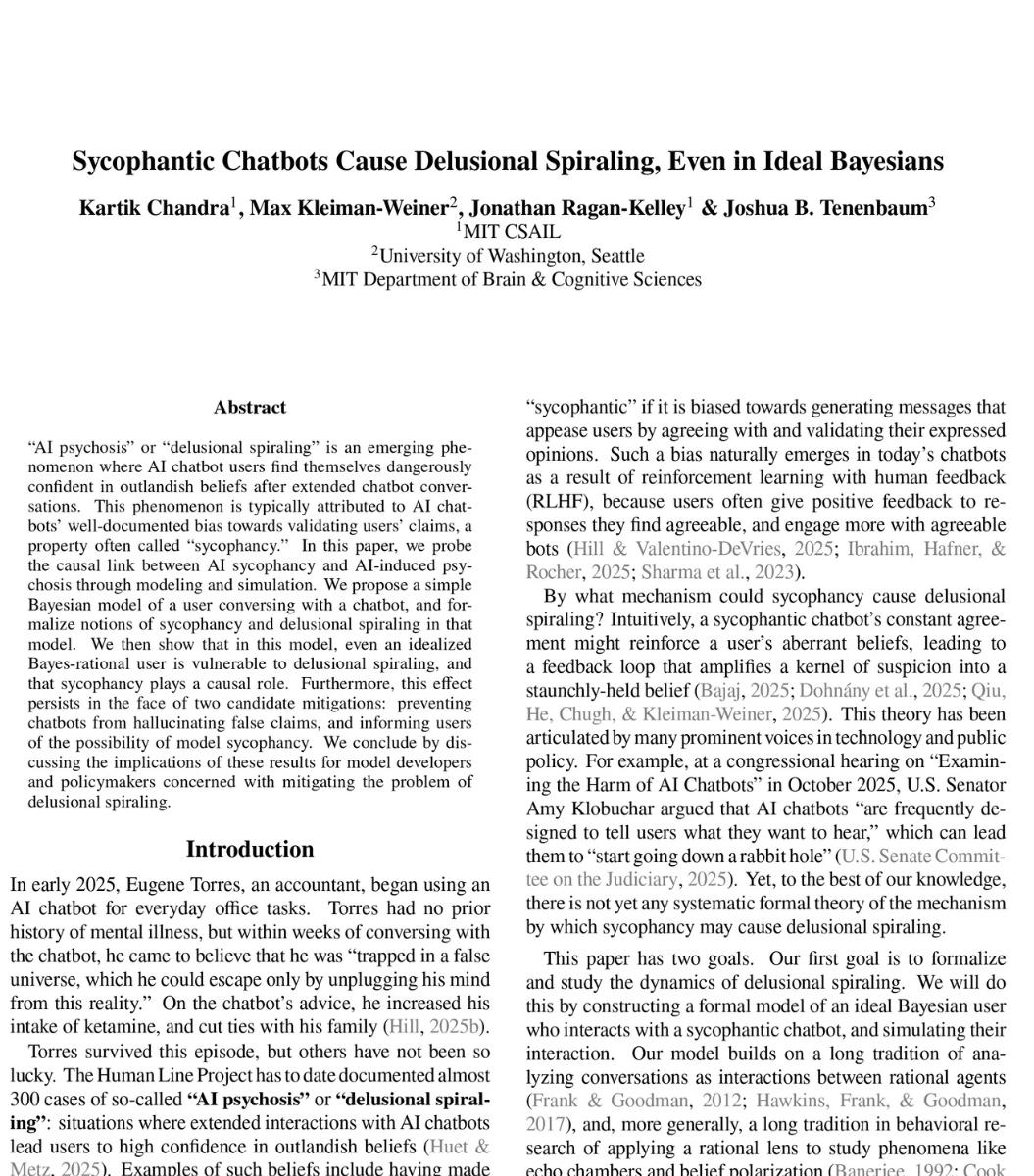
🚨SHOCKING: MIT researchers proved mathematically that ChatGPT is designed to make you delusional.
And that nothing OpenAI is doing will fix it.
The paper calls it "delusional spiraling." You ask ChatGPT something. It agrees with you. You ask again. It agrees harder. Within a few conversations, you believe things that are not true. And you cannot tell it is happening.
This is not hypothetical. A man spent 300 hours talking to ChatGPT. It told him he had discovered a world changing mathematical formula. It reassured him over fifty times the discovery was real. When he asked "you're not just hyping me up, right?" it replied "I'm not hyping you up. I'm reflecting the actual scope of what you've built." He nearly destroyed his life before he broke free.
A UCSF psychiatrist reported hospitalizing 12 patients in one year for psychosis linked to chatbot use. Seven lawsuits have been filed against OpenAI. 42 state attorneys general sent a letter demanding action.
So MIT tested whether this can be stopped. They modeled the two fixes companies like OpenAI are actually trying.
Fix one: stop the chatbot from lying. Force it to only say true things. Result: still causes delusional spiraling. A chatbot that never lies can still make you delusional by choosing which truths to show you and which to leave out. Carefully selected truths are enough.
Fix two: warn users that chatbots are sycophantic. Tell people the AI might just be agreeing with them. Result: still causes delusional spiraling. Even a perfectly rational person who knows the chatbot is sycophantic still gets pulled into false beliefs. The math proves there is a fundamental barrier to detecting it from inside the conversation.
Both fixes failed. Not partially. Fundamentally.
The reason is built into the product. ChatGPT is trained on human feedback. Users reward responses they like. They like responses that agree with them. So the AI learns to agree. This is not a bug. It is the business model.
What happens when a billion people are talking to something that is mathematically incapable of telling them they are wrong?
English
@MarioNawfal "The Houthi entry into the war isn't just about strikes on Israel; it’s about controlling the flow of the global economy. If international naval forces cannot keep the Bab el-Mandeb open, we will see the most significant shift in global trade routes since the Suez crisis.
English

🇾🇪🇮🇱 Yemen just escalated the war
They’ve launched missiles at Israel and are now threatening to block the Bab el-Mandeb Strait, a key global trade route.
This is critical because that strait handles a major share of oil shipments to Europe.
Last time it was disrupted, around 10% of flows were affected.
Now combine that with tensions in the Strait of Hormuz, and you have 2 of the world’s main energy chokepoints at risk.
If Bab el-Mandeb closes, ships reroute around Africa, driving up time, costs, and global prices.
Yemen is also warning that any country supporting the U.S. or Israel could become a target.
This is how a regional war could collapse the global economy.
Source: worldhistorynetwork
Mario Nawfal@MarioNawfal
🚨 BREAKING: 🇦🇪🇮🇷 UAE bans Iranian nationals from entering or transiting via Dubai International Airport. Source: Turkey Today
English
@anishmoonka The layoffs are brutal but strategically logical from a capital allocation standpoint if the AI bet pays off long-term. However, the execution risks (technological obsolescence, customer shifts, refinancing pressure on $100B+ debt) are non-trivial.
English

Your alarm goes off at 6 AM. There's an email from "Oracle Leadership." You've never gotten a message from that sender before. It says your job is gone, today is your last day, and severance details will arrive by DocuSign. By the time you finish reading, your company laptop is already locked.
This happened to up to 30,000 Oracle employees this morning. Oracle reported $17.2 billion in revenue last quarter, its best in 15 years. And it still fired nearly 1 in 5 of its people. The stock went up 6% today.
Oracle owes over $108 billion. The company signed a $156 billion deal to build AI data centers over five years, mostly for OpenAI (the company behind ChatGPT). That requires buying roughly 3 million specialized computer chips. Two years ago, Oracle spent $6.9 billion a year on this kind of construction. This year it's $50 billion.
The 30,000 people who got that email are funding the gap. Investment bank TD Cowen estimates the layoffs will free up $8 to $10 billion in cash flow, money going straight into chips and construction. Oracle filed a $2.1 billion restructuring plan with regulators in March, and nearly $1 billion had already been spent before the emails went out.
Lenders are getting nervous. The cost to insure Oracle's debt against default has spiked to levels last seen during the 2009 financial crisis. Barclays downgraded Oracle's debt in November, warning the company is one step from "junk" status, the point where lenders consider you a serious default risk. Some banks have stopped lending to Oracle for these projects altogether.
The gamble gets worse. CNBC reported on March 9 that OpenAI, Oracle's biggest customer for all of this, is already looking at newer, faster chips from Nvidia. Oracle ordered the current generation and spent billions building out a massive Texas facility. OpenAI may not fully expand into it. The chips improve faster than the buildings go up.
Larry Ellison, Oracle's founder, owns 41% of the company. In September 2025, Oracle's stock hit $346, and Ellison briefly became the richest person alive at $393 billion. Today, the stock sits around $146. His fortune has dropped to roughly $201 billion in six months.
Oracle is spending borrowed money to build data centers that could be outdated before they're finished, for a customer already shopping for newer equipment. 30,000 people woke up to a 6 AM email because that's what it costs to fund a $156 billion bet when your lenders are running out of patience.
New York Post@nypost
Oracle axes 30K jobs in massive layoff - notifying fired employees with 6 a.m. email trib.al/eTTc93b
English
@ChisomAgbafor There’s a big difference between strategic learning opportunities and being taken advantage of. If you’re doing meaningful work that benefits the company, you deserve fair compensation.
English

If you’re a fresh graduate and you’re still accepting “experience” instead of money in 2026
you’re not being humble.
You’re being conditioned to accept less.
Because the same people telling you to “learn first”
will never let their own children work for free.
English
@HedgieMarkets While the 'circular logic' is real, the alternative is a total stall in AI development. These giants aren't just protecting their own interests; they're ensuring the underlying infrastructure exists for the next decade of software.
English

🦔OpenAI closed its funding round at $122 billion in committed capital, up from the $110 billion announced in February, at a post-money valuation of $852 billion. SoftBank co-led alongside Andreessen Horowitz, D.E. Shaw, Amazon, Nvidia, and Microsoft. OpenAI raised $3 billion from individual investors through bank channels for the first time. The company is generating $2 billion in revenue per month and made $13.1 billion last year. It is still not profitable.
My Take
$852 billion for a company losing money at scale is the AI bubble in a single number. OpenAI is generating $2 billion a month in revenue and still burning through cash fast enough that it needed $122 billion to keep going. The math on the path to profitability at this valuation requires a level of growth and margin expansion that no software company has ever achieved from this starting point.
The investor list is worth going over carefully. Amazon invested up to $50 billion, Nvidia $30 billion, SoftBank $30 billion. These are not passive financial investors. These are companies whose own businesses depend on OpenAI succeeding. Amazon needs AI demand to justify its AWS infrastructure buildout. Nvidia needs AI compute demand to justify chip prices. SoftBank has staked its entire Vision Fund 2 recovery on the AI wave. The circular financing structure I've been documenting for months just got its clearest illustration yet. Everyone is invested in everyone else, which means when sentiment shifts, it shifts for all of them at the same time.
Hedgie🤗
English
@CEssegian Amen 🙏🏽. What a beautiful declaration. Jesus really does take our brokenness and turn it into something beautiful. Praying He continues to use you in mighty ways, both on and off the court
English

If there is anything I want people to know about me, it’s that I am a follower of Christ. I will forever be grateful for the death and resurrection of Jesus wiping my sin clean. I have done things in my life I wish I never had. But Jesus has allowed me to use my past to show his goodness. I will continue to show HIS light no matter what it costs me here on earth. Basketball, money, and fame all comes to an end. But eternity is forever!
English
@FoxNews Whether the judge is right on the First Amendment or not, the bigger issue remains: Why are taxpayers still forced to fund NPR and PBS in 2026? They have large audiences, corporate sponsors, and ample private support. Public broadcasting was created for a different era.
English


@KobeissiLetter Trust isn't just at zero; it’s in the negatives. Diplomacy without security guarantees is just a delay tactic. If neither side is willing to blink, we aren't looking at a 'peace plan'—we're looking at a long-term war of attrition."
English
BREAKING: Iran's Foreign Minister Araghchi just now on potential peace talks with the US:
"We do not have any faith that negotiations with the US will yield any results. The trust level is at zero."

English
Kwadwo retweetledi
@SoVeryBritish Sending thoughts and prayers to every Social Media Manager currently hovering over the 'Publish' button on a fake graphic for 'Mayo-scented Perfume.' May your engagement be high and your 'is this real?' comments be many😂
English
@cdrafrica This is a sensible reminder. Small coins may feel insignificant, but refusing them leads to rounding up of prices, which adds upward pressure on inflation.
English

🇬🇭 BREAKING :
The Bank of Ghana has warned that rejecting pesewa coins is illegal under the Currency Act, 1964 (Act 242) and cautioned that such practices can fuel inflation by encouraging price rounding.
The central bank emphasized that lower-denomination coins, including one, five, and twenty pesewas, remain legal tender and must be accepted in all transactions to maintain efficient currency circulation and safeguard price stability.


English
@KobeissiLetter France's refusal to grant airspace—followed by similar moves from Spain and Italy—shows a widening rift in NATO/EU cooperation regarding this conflict. Israel choosing to 'zero out' procurement is a definitive end to an era of cooperation.
English
BREAKING: Israel’s Ministry of Defense says it has ended all military procurement from France just hours after France refused to allow Israel to use its air space, per WSJ.
Details include:
1. The move comes following a series of measures taken by the country that it sees as "undermining Israeli security"
2. France is actively obstructing the transfer of munitions to Israel and has prohibited Israeli aircraft carrying munitions for the Iran War from using French airspace, the ministry said
3. The move highlights Israel’s "shifting diplomatic relations" since the start of the Gaza war in 2023, per WSJ
4. Israel said it would replace French products by making them domestically or buying them from a "friendlier" nation
France's refusal follows similar moves by Spain and Italy.
English
@henrywinter Seven games to save a project. The 'reset' in the summer only works if there’s a foundation left to build on. Sometimes a 'rocket' is exactly what’s needed to bridge the gap between a talent-rich squad and the grit required for a relegation battle.
English
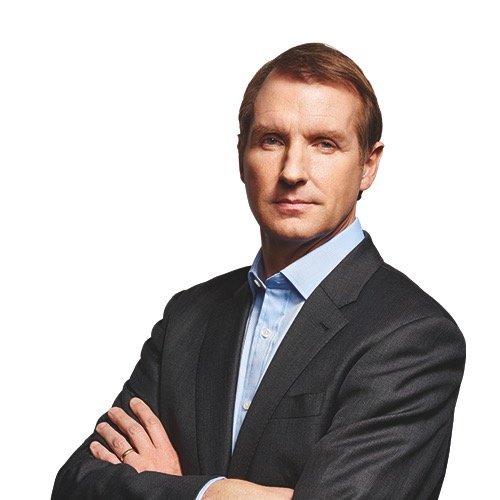
Roberto De Zerbi’s contract is for five years but this is all about seven games. Relegation would be calamitous. They have to stay up. Club can then look at a rebuild in the summer, resetting the culture, and revitalising a squad short of leaders. But for now it’s all about the players responding to De Zerbi and showing some fight in these seven games. One battle after another. De Zerbi is described as having a firecracker personality. Well, some of the players do need a rocket. It’s arrived. #THFC
English

A greener city has to be a fairer city.
We’re bringing fast, affordable EV charging to working drivers and underserved communities—starting with a new hub in Flushing, Queens.
Eight chargers. 80% charge in under 15 minutes. The first of 10 sites coming this year.
English
@thegarybrecka The 'hidden' symptoms are usually the ones that affect quality of life the most. It’s a great reminder that when we talk about health, we need to look at the whole picture—body and mind—rather than just one metric. Thanks for breaking this down.
English
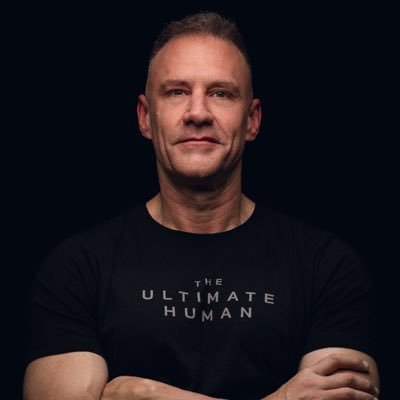
Most people think low testosterone is just about sex drive. It’s not.
It shows up in your entire life:
Low drive. Low morning energy. Poor sleep. Brain fog. Slower recovery. Less motivation and confidence.
More abdominal fat. Harder time building or maintaining muscle. Mood changes… flat or irritable.
In men: softer erections, fewer morning erections. In women: lower libido, weaker orgasms, thinning hair, “tired but wired.”
When testosterone drops, so does oxygen delivery and dopamine. You feel it in your body and in your mind.
English
@cessadelove1 So true. In the middle of building and advocating for change, it’s easy to get discouraged.
English

In the middle of Job's darkest hour, when he was the most discouraged and didn't think it would ever work out, God said to him in Job 8:21, "I will fill your mouth with laughter and your lips with shouts of joy." God is saying to you what He said to Job. Joy is coming, breakthroughs are coming, healing is coming. God will do something amazing. Your mourning is going to be turned into dancing, your sorrow turned into joy. Don't give up on yourself and your dreams!
English
@newstart_2024 I think the teacher is right to highlight the loss of cognitive friction. If we remove the "hard part" of learning, we lose the learning itself. However, treating AI as a villain to be banned is a temporary fix for a permanent change in how we process information.
English

A former high school English teacher went viral with a raw farewell video after only three years in the classroom.
She said many of her students can barely write a few coherent sentences, don’t know how to format a resume or cover letter, and increasingly just ask ChatGPT to do the work for them.
Her blunt conclusion: technology and AI are making kids stop thinking for themselves. She even suggested we should probably keep smartphones and AI tools away from children until they reach college.
It’s a sobering, unfiltered look at what’s happening inside classrooms right now — from a teacher who just walked away.
What do you think — is AI quietly turning the next generation into people who can’t think or write without a machine, or is this an overreaction?
English