Sabitlenmiş Tweet

@sonam_murarkar I have this:
alias ..='cd ..'
alias ...='cd ../..'
alias ....='cd ../../..'
alias .....='cd ../../../..'
English
Oliver Richers
2.1K posts

@OliverRichers
Self-employed Software Developer | Currently in Business Central/AL | 19Y of Prof. Experience | Teaching and Consulting Software Development and IT Management


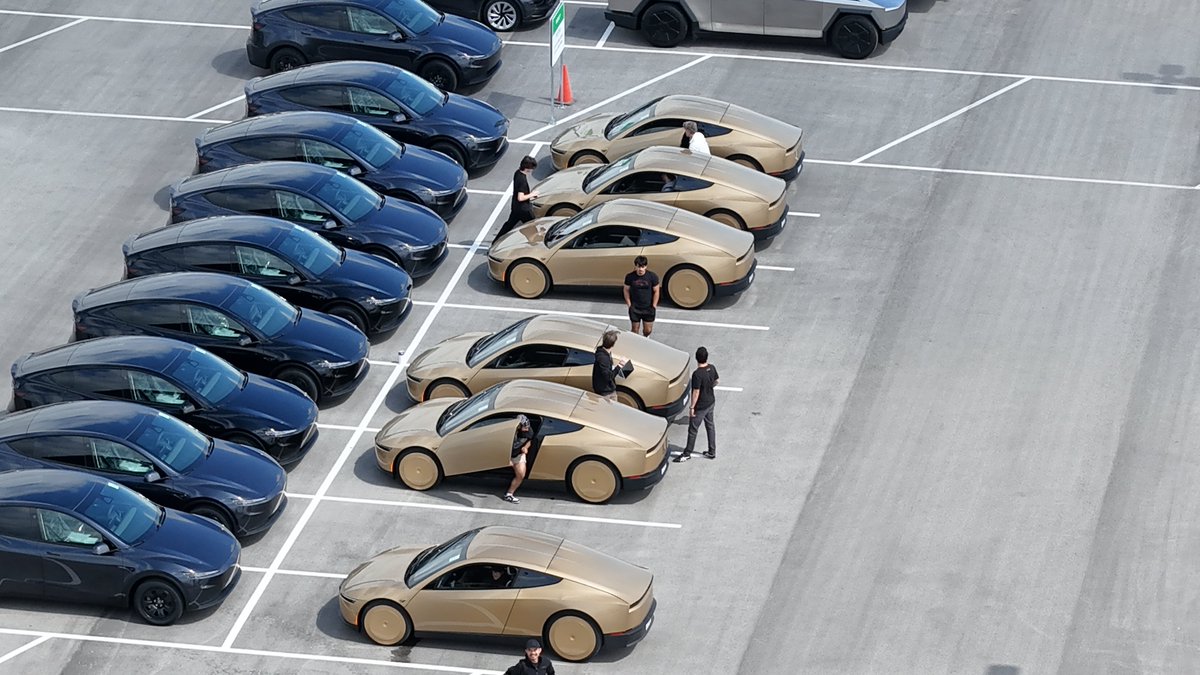
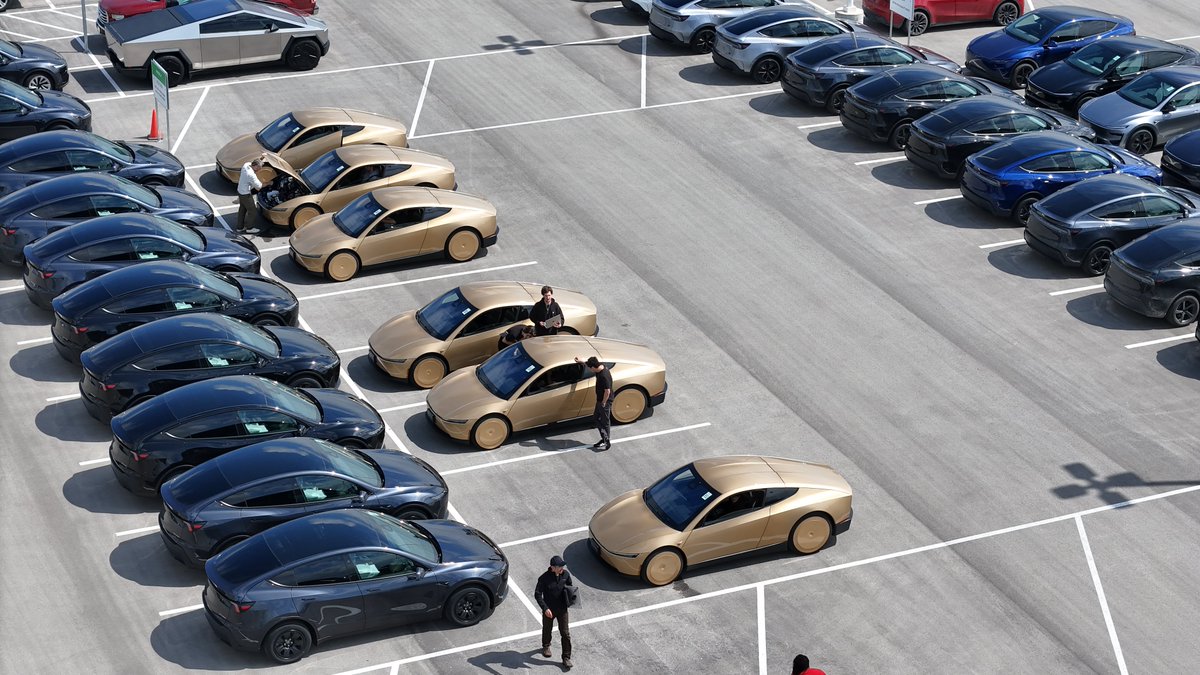
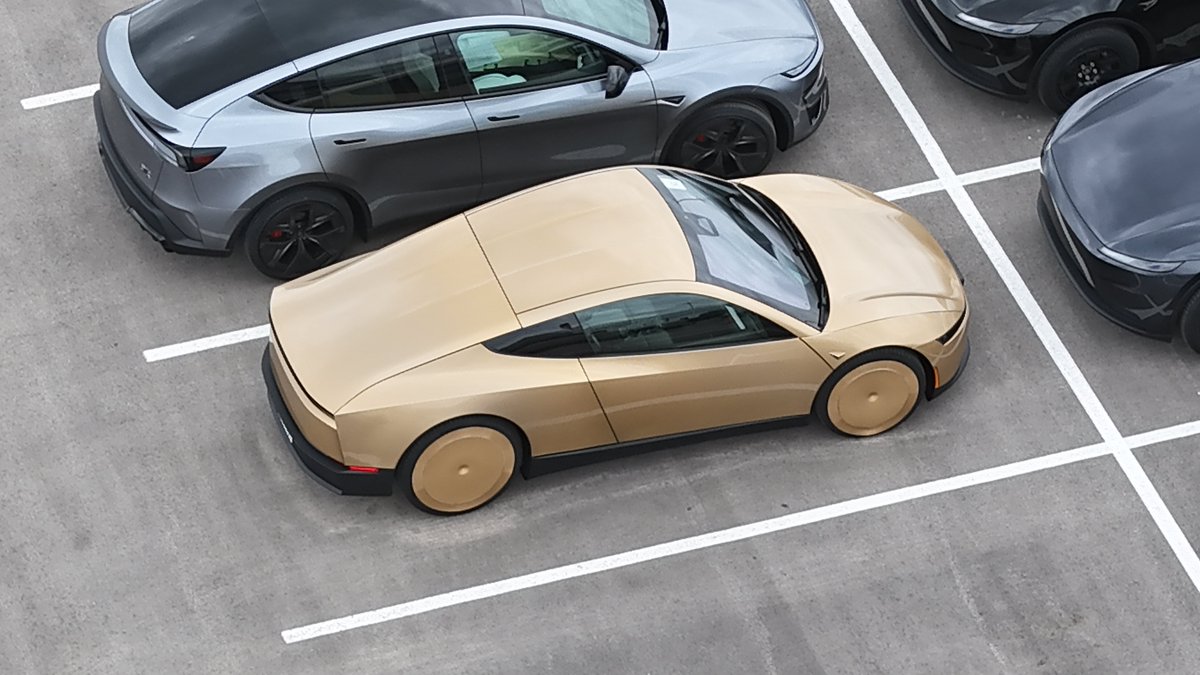




Unsupervised without chase tailing cars are truly here in Austin!!! 🙌 Ride 58 was my magic number, what a truly awesome experience. Made the whole week worth it & then some. Tesla Robotaxi Model Y flys under the radar, nobody knew I was in a self driving car. @robotaxi

I am in a robotaxi without safety monitor




GOOD NEWS 🚨 Published on December.4.2025, patent application US20250373083 A1 reveals the critical "secret sauce" behind Tesla's most ambitious gamble: the PORT-LESS CYBERCAB 💥 📜 Originally secured in May 2024, this breakthrough details a high-efficiency wireless charging system capable of handling wide voltage fluctuations, effectively serving as the key enabler for a fully autonomous Robotaxi fleet. By solving the thermal and efficiency challenges that previously plagued wireless power, this technology removes the final barrier to 24/7 autonomy, allowing Cybercabs to refuel themselves without a single human hand or robotic arm ever needing to intervene. ⚡ The "partial toggling" innovation ⚡ At the core of this innovation is a sophisticated method for controlling the power electronics within a wireless charging system—specifically the "H bridge" circuits found in both the ground pad and the vehicle's receiving pad. Traditionally, wireless charging circuits use a method called bipolar switching, where the circuit toggles all switches in a bridge simultaneously to transmit power. While effective, this standard approach is like pushing a pendulum aggressively from one extreme to the other; it creates a massive "voltage swing" across the resonant tank, causing significant electrical stress and energy loss. Tesla's solution introduces a "partial toggling" technique. Instead of switching every component in the circuit, the system's control unit selectively toggles one half of the bridge circuit while keeping the other half in a static state (either open or closed). By repeatedly switching between specific configurations—for example, toggling the left side of the bridge while holding the right side steady—the system works more like pushing a swing and then letting it coast. This changes the voltage transition significantly: instead of jumping from positive (+400V) to negative (-400V), the system transitions from +400V to 0V (a "freewheeling" state). The result is a dramatic reduction in the voltage swing. By toggling to zero rather than to the opposite polarity, the total voltage swing drops from 2v (e.g., 800V) to just 1v (e.g., 400V)—effectively cutting the electrical stress in half. This "softer" transition is crucial because it minimizes "deadtime loss," a common source of inefficiency in power electronics where switches are momentarily turned off to prevent short circuits. This efficiency gain brings wireless charging closer to the performance of wired connections, making it economically viable for mass adoption. 🚗 The "LCC-LCC" architecture: a suspension system for power 🚗 The patent also details the use of an "LCC-LCC" resonant circuit architecture. In simpler wireless systems, the circuit often uses a basic design that is efficient but very sensitive to distance and alignment. The LCC-LCC architecture adds extra inductors and capacitors to both the ground pad and the vehicle pad, creating a double-sided resonant network that acts like a complex filter. This architecture is effectively the "suspension system" for the charging process. Its primary superiority lies in its incredible tolerance for misalignment. In the real world, an autonomous Robotaxi might not park with millimeter-level precision every single time due to wet surfaces or sensor variance. In a standard system, a few inches of misalignment would cause the charging speed to plummet. However, the LCC-LCC topology maintains a constant current flow even if the magnetic coupling between the pads changes. This creates a much wider "sweet spot" for charging, allowing vehicles to park quickly and naturally without performing time-consuming maneuvers to achieve perfect alignment. 🤖 Universal compatibility and the Cybercab 🤖 The flexibility of this system is a major economic enabler for Tesla's Robotaxi fleet. The patent describes a control circuit that monitors real-time factors such as the load on the system and the current voltage of the vehicle's battery pack. By manipulating the duty cycles, the system can handle battery packs ranging from 200 Volts all the way up to 1000 Volts. This means a single, universal ground pad can service a diverse fleet—from a standard 400V Model 3 to an 800V Cybertruck or Cybercab—without requiring expensive, redundant hardware. This directly addresses the Cybercab's most radical design choice: the complete removal of a physical charge port. Skeptics questioned how a fleet vehicle, which needs to charge rapidly and frequently, could manage the thermal stress of wireless power transfer. This patent provides the answer. By utilizing "partial toggling" to drastically cut switching losses and heat generation, Tesla ensures the Cybercab can accept high-power wireless top-ups repeatedly throughout the day without overheating its receiver pad or degrading its battery. Furthermore, this technology solves the issue of hardware longevity. In a standard plug-in Supercharger network, physical connectors are the most frequent point of failure and would require complex robotic arms for a driverless fleet. By enabling highly efficient wireless charging, Tesla eliminates these mechanical failure points entirely. The reduced voltage swing means the internal electronics generate significantly less heat and stress, allowing the ground pads to operate for years with near-zero maintenance—a crucial requirement for a fleet that needs to run 24/7.