
Olivier Ezratty
9.6K posts
Olivier Ezratty
@olivez
Quantum techologies author ("Understanding Quantum Technologies").
Around Paris Katılım Şubat 2009
1K Takip Edilen24.6K Takipçiler

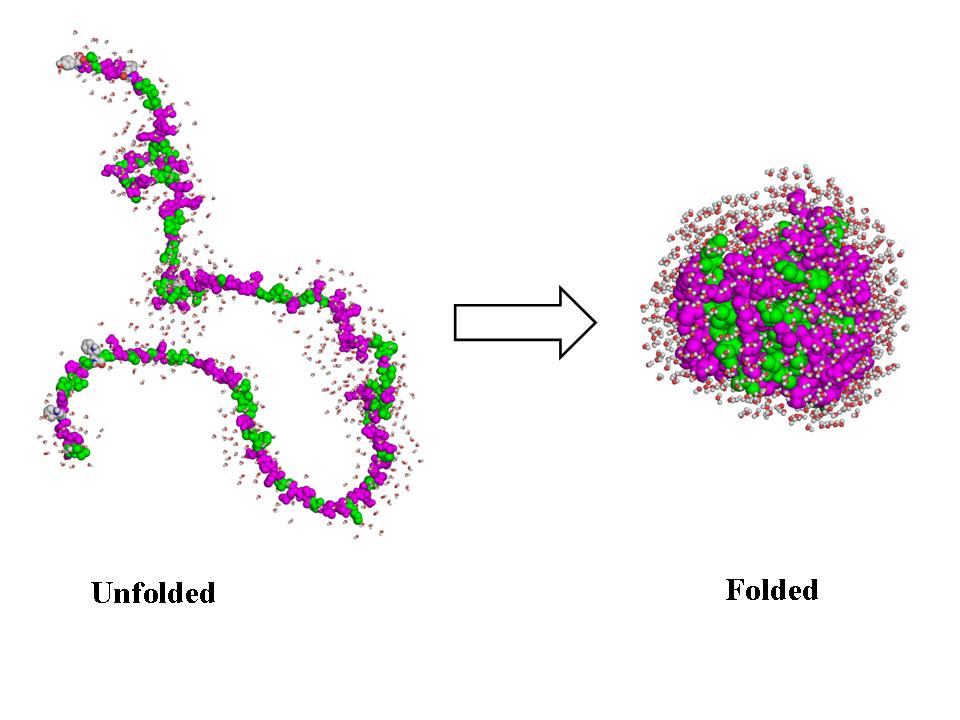
🚨 New paper from @KipuQuantum & @IonQ_Inc $IONQ
Largest trapped-ion protein folding demonstration to date
64-qubit Barium development system explicitly "similar to the forthcoming IonQ Tempo line"
This is the application story investors wanted to see
Here's the breakdown 🧵
English
@amarchenkova @projecteleven @apruden08 well if the threat is « store now decrypt later », PQC deployment should start now, not in 3, 5 or 7 years :)
English

Everyone's asking when Q-Day is. That's not the right question.
Everyone wants the Q-Day date so they can plan backwards. But can change your cryptography at all, and fast?
Some data from a recent Project Eleven (@projecteleven, @apruden08) presentation on Q-Day modeling:
- Pessimistic case: Q-Day 2042 (16 years out)
- Base case: 2033 (7 years)
- Optimistic case: 2029 (3 years)

English
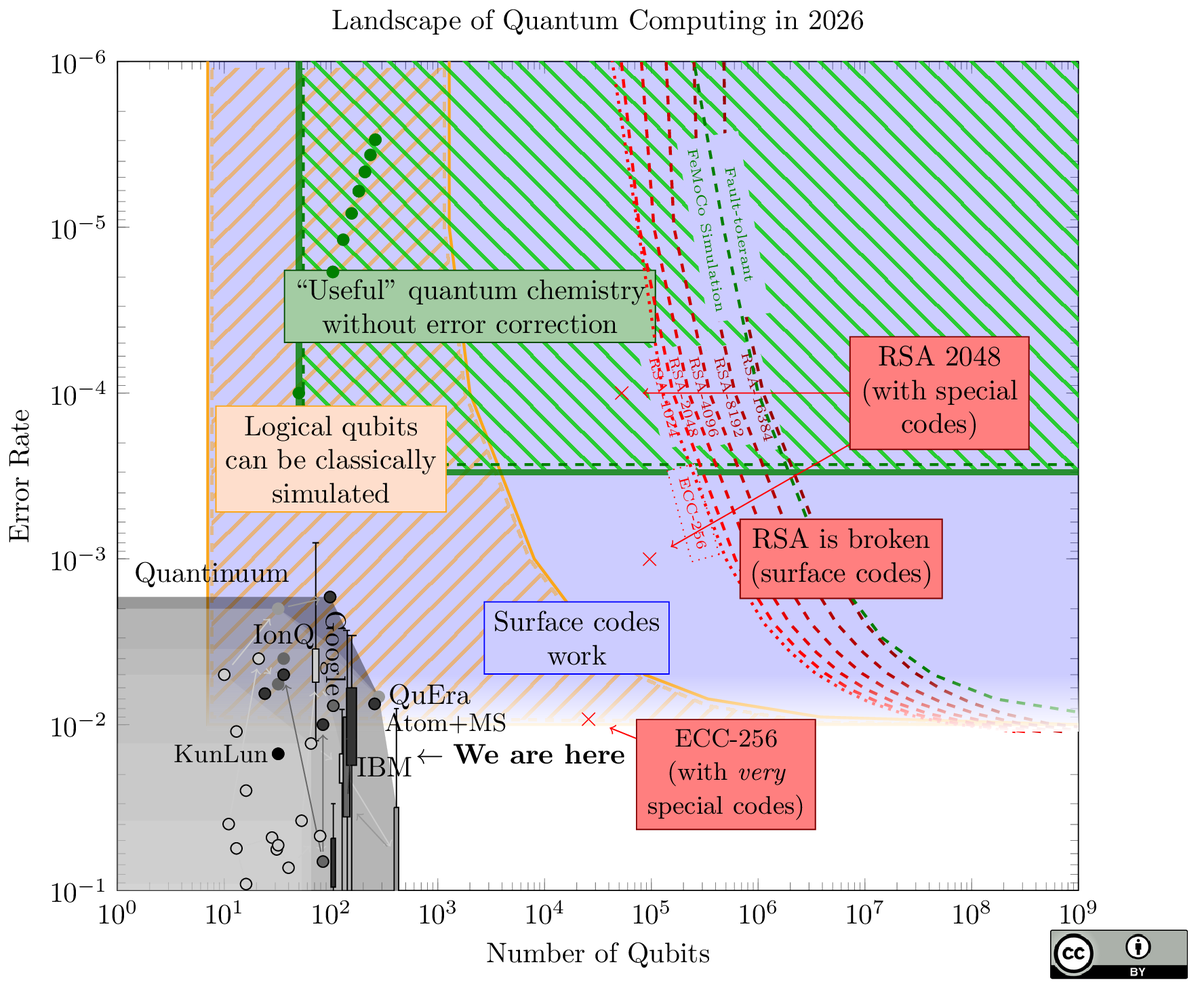
New Quantum Computing Landscape for 2026 from @sejaques: sam-jaques.appspot.com/quantum_landsc…
English
@preskill @RobertHuangHY Hello John, that’s some amazing work indeed! Is it also bringing some computational time advantage? Or rather is a particular space-time overhead trade-off technique circumventing the huge cost of a bucket brigade-based qRAM?
English
Our paper “Exponential Quantum Advantage in Processing Massive Classical Data” proves that quantum machines can solve common machine learning tasks using exponentially less memory than a classical machine would require.
Much further work will be needed to translate this theory into practice. But because modern AI is often hampered by insufficient memory, this finding bolsters our confidence that quantum AI can eventually have a broad impact on daily life.
This project was led by the remarkable Caltech student @haimengzhao and inspired by the vision of @RobertHuangHY, with essential contributions from all our collaborators. Here Haimeng tells the story.
quantumfrontiers.com/2026/04/09/unl…
English
@apruden08 the confusion is that these 6,100 atoms have been controlled in space with tweezers but I’ve not seen a trail of quantum gates being implemented with them. depending on how it’s done, it can be difficult to very hard.
English

@olivez That's a good point. The definition of qubits is a little bit fuzzy, and of course gate types are not homogeneous either.
However, the 6,100 atom array is not nothing, either
English
🧵A common claim about quantum computing (that has re-surfaced in light of last week's Oratomic/Google paper) is that there has been no real progress.
But evidence over the last 5 years shows that quantum computing has not only advanced, but that progress is accelerating.
0/
(note - I'll cite sources at the end of the thread, endnotes-style
English
@apruden08 you could compare functional systems with supported gates. the current 6,100 system has not yet been demonstrated with quantum gates. the record so far is below 300 atoms (QuEra).
English
14/ So, in summary:
Superconducting qubits: 10x growth in physical qubits over 5 years, error correction demonstrated up to d=7 surface codes
Neutral atom qubits: computation wasn't even possible on the first 256-atom array; we now have 6100 qubit arrays and error corrected operations running dozens (48) logical qubits.
Trapped Ion: 48 error-corrected logical qubits on a 98-ion qubit device; error correction hadn't been demonstrated in 2021
English
@apruden08 the reality is a growth of x2 (Google) and x3 (IBM). Condor didn’t work. Had over 2% error rates and no tunable couplers.
English
@kaepora well, we even don’t have 1,000-1,500 qubits with 99.9% fidelities. The record so far is 98 with Quantinuum (and with ma y limitations). no vendor has ever experimented over 1,000 qubits with even 99% errors.
English

I spent the evening looking into quantum computing timelines as a non-expert in quantum computing. Here is what I’ve learned:
We currently have machines with ~1,000–1,500 physical qubits at error rates around 10⁻³, and Google’s algorithm requires ~500,000 physical qubits operating coherently together with surface code error correction, yoked qubit storage, magic state cultivation producing ~500K T states per second, and reaction-limited execution at 10μs cycle times — none of which has been demonstrated beyond small-scale proof-of-concept experiments.
Scaling from where we are to where this needs to be isn’t a matter of incremental improvement along a Moore’s Law curve; it requires solving qualitatively new engineering problems in qubit fabrication yield, correlated error suppression across a massive chip (or multi-chip interconnects that don’t exist yet), cryogenic wiring and control electronics for half a million qubits, real-time classical decoding at the required throughput, and sustained coherence of a “primed” quantum state across minutes of wall-clock time — any one of which could prove to be a multi-year bottleneck, and all of which must be solved simultaneously.
Given the above, I just don’t see how we’re going to get to a cryptographically relevant quantum computer by 2030, especially given that we need a ~350× increase in physical qubit count with simultaneously tighter error correlations, an entirely new cryogenic control and wiring architecture to address half a million qubits, real-time decoding infrastructure that doesn’t exist yet, magic state distillation factories operating at industrial throughput, and multi-minute coherent idle times for primed states — and historically, solving even one of these at scale has taken the field the better part of a decade.
English
@apruden08 It is probably not impossible. It is very hard. The only way to know is to try. And this will take time.
English
@olivez Nobody's saying it's not hard. The question: is it impossible?
People can look at the evidence and judge for themselves. Me personally I'd rather not roll the dice on that.
English
Most folks are not looking at the physical qubits assumptions, which are 99.9% fidelities for all ops (including 2 qubits gate & readout) at scale. Nobody has done that with cold atoms even at small scale. So, with 20K or 100K atoms, they got some work on their plate for a while!
nic carter@nic_carter
Scott Aaronson on the Google and the Caltech papers: > When you put both [papers] together, Bitcoin signatures for example certainly look vulnerable to quantum attack earlier than was previously known! In particular, the Caltech group estimates that a mere 25,000 physical qubits might suffice for this, where a year ago the best estimates were in the millions. How much time will this save — maybe a year? Subtracting, of course, off a number of years that no one knows. > In any case, these results provide an even stronger impetus for people to upgrade now to quantum-resistant cryptography. They—meaning you, if relevant—should really get on that! Scott is probably the best-known quantum computing educator and academic and is historically a skeptic of aggressive quantum timelines. Maybe some of you should start to pay attention? scottaaronson.blog/?p=9665
English


@olivez @QuantumDom arxiv.org/abs/2603.15561
99.86(4)% 2Q gate recently demonstrated. Post-selected but a great result nonetheless. The trajectory of gate fidelity improvements for neutral atoms over the past 5 years is incredible.
English
@conordeegan The missing question in this story is: how far did we progress meanwhile with the number of operational physical qubits (with 99.9% operations fidelities which is the assumption in most of these papers)?
English

A year ago the best estimate for breaking ECC-256 with Shor's algorithm required about half a million physical qubits on a superconducting architecture.
Today Google puts that under 500,000 with a 10x improvement in spacetime volume at the logical level. Oratomic puts it under 25,000 on neutral atoms with high-rate codes.
In 2019 the number for RSA-2048 was 20 million.
In 2012 it was a billion.
The answer to the number one question I get asked, "when is Q-Day?" is a curve that has been moving in one direction for over a decade. We can now credibly say that the research suggests Q-Day is ~5 years away.
I expect this to drop again within the next 6 months.
English
@amarchenkova @American_Binary Anastasia, the 8 hours was for breaking RSA with Shor integer factoring, here the 9 minutes are for breaking elliptic curves with Shor dlog algorithm (with 500K sc qubits with 99.9% fidelities). these are different things.
English
Still a lot to build on the hardware side, but the last state of the art papers were stating about 8 hours to crack RSA, now it's 9 minutes. Lots of gates, lots of hardware, but we are seeing quite a bit of activity here recently.
I use a PQC VPN (@American_Binary) + closely tracking companies like @Cloudflare, who is doing a lot of work on PQC. Whatsapp, iMessage, have started implementing some layers of PQC to messaging apps.
Project Eleven@projecteleven
🚨 Google has sounded the quantum alarm 🚨 Today, they released groundbreaking progress towards breaking crypto using a quantum computer. TLDR - Existing cryptography is dead. Mempool attacks are real. We must migrate to post-quantum now. Thread 🧵
English
@nick_farina particularly in the USA, with 6 industry vendors now!
English

neutral atoms now a more crowded field than superconducting circuits
English
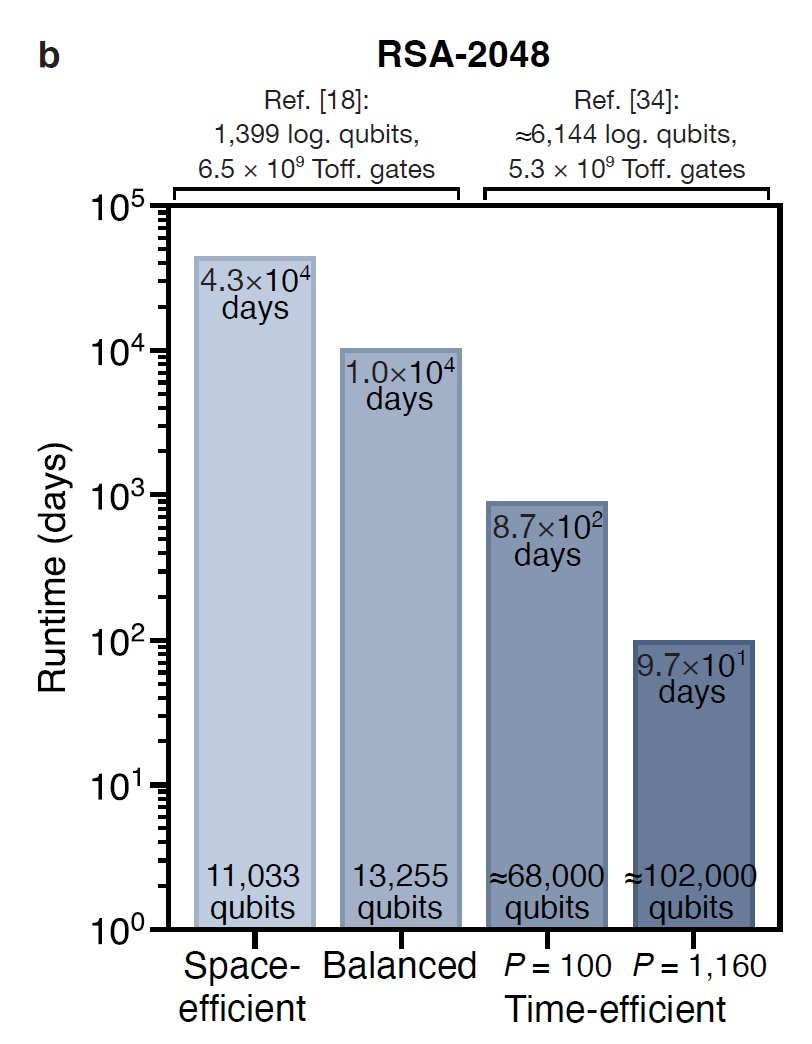
Now a quantum lesson.
The reason Oratomic gets to 10,000 qubits where previous estimates needed a million is not because of "faster" qubits or better gates.
They use a different approach to error correction. Surface codes, which are the current standard (used by Google), protect one logical qubit per code block. High-rate qLDPC codes protect over a thousand logical qubits in a single block at comparable distances. The encoding rate goes from about 3% to about 30% which is incredible.
This only works if your qubits can interact non-locally across the block, which is exactly what reconfigurable atom arrays do. You physically shuttle atoms around to create the connectivity the code requires. It is a different design philosophy and it changes the resource landscape by an order of magnitude.
English
@kparrish51 @BrainyScience cuts energy by 10,000 compared to what? other TWPAs?
English

Yes, this is a real development reported by Live Science in September 2025.
What the device actually is
Canadian startup Qubic Technologies developed a cryogenic traveling-wave parametric amplifier (TWPA) using specialized "quantum materials." In quantum computers (especially superconducting qubit systems), qubits must stay at temperatures near absolute zero (~10–20 millikelvin) to preserve their fragile quantum states.
Weak microwave signals from the qubits need amplification for readout, but traditional amplifiers generate heat—even tiny amounts—which adds thermal noise, requires extra cooling power, and limits how many qubits you can pack together.
Qubic's TWPA reportedly slashes that heat output by a factor of 10,000, bringing dissipation down to roughly 1–10 microwatts (practically negligible in the cryogenic environment). It also cuts overall power consumption by about 50%. The company received a grant to advance the technology and aims to bring a commercial version to market in 2026.
Why this matters (but with realistic caveats)
- Cooling is one of the biggest practical bottlenecks in scaling quantum computers. Every extra microwatt of heat forces more powerful (and expensive) dilution refrigerators, increases complexity, and raises operational costs. Reducing amplifier heat this dramatically could let engineers place more control/readout electronics closer to the qubit chip without destroying coherence.
- It helps push toward "utility-scale" systems—larger numbers of reliable qubits that can tackle real-world problems beyond what classical supercomputers handle efficiently.
- However, this is not a general "cooling device for the whole quantum computer." It's a targeted improvement to one specific component (the amplifier). Quantum systems still need massive cryogenic infrastructure overall.
Other recent cryogenic advances exist too—like low-power control chips or different cooling techniques—but this TWPA stands out for the claimed 10,000× heat reduction in amplification.
Is it "the key to a quantum revolution"?
It's a meaningful incremental step that removes one real engineering barrier, and 2026 commercialization would be fast for quantum hardware. But quantum computing still faces multiple huge challenges:
- Qubit error rates and stability (decoherence)
- Scaling to millions of physical qubits for useful error-corrected logical qubits
- Software/algorithm development
- Overall system integration and cost
No single component, even a great amplifier, "changes everything" overnight. Progress in the field is steady and multifaceted, with contributions from many teams worldwide. This could accelerate timelines for more practical machines, especially if it integrates well with existing superconducting platforms (used by IBM, Google, etc.).
The headline hype is typical for science journalism—exciting, but the real value lies in chipping away at the engineering stack. If Qubic delivers on the 2026 target, it will be worth watching closely as one piece of the puzzle making quantum systems more scalable and economical.
English

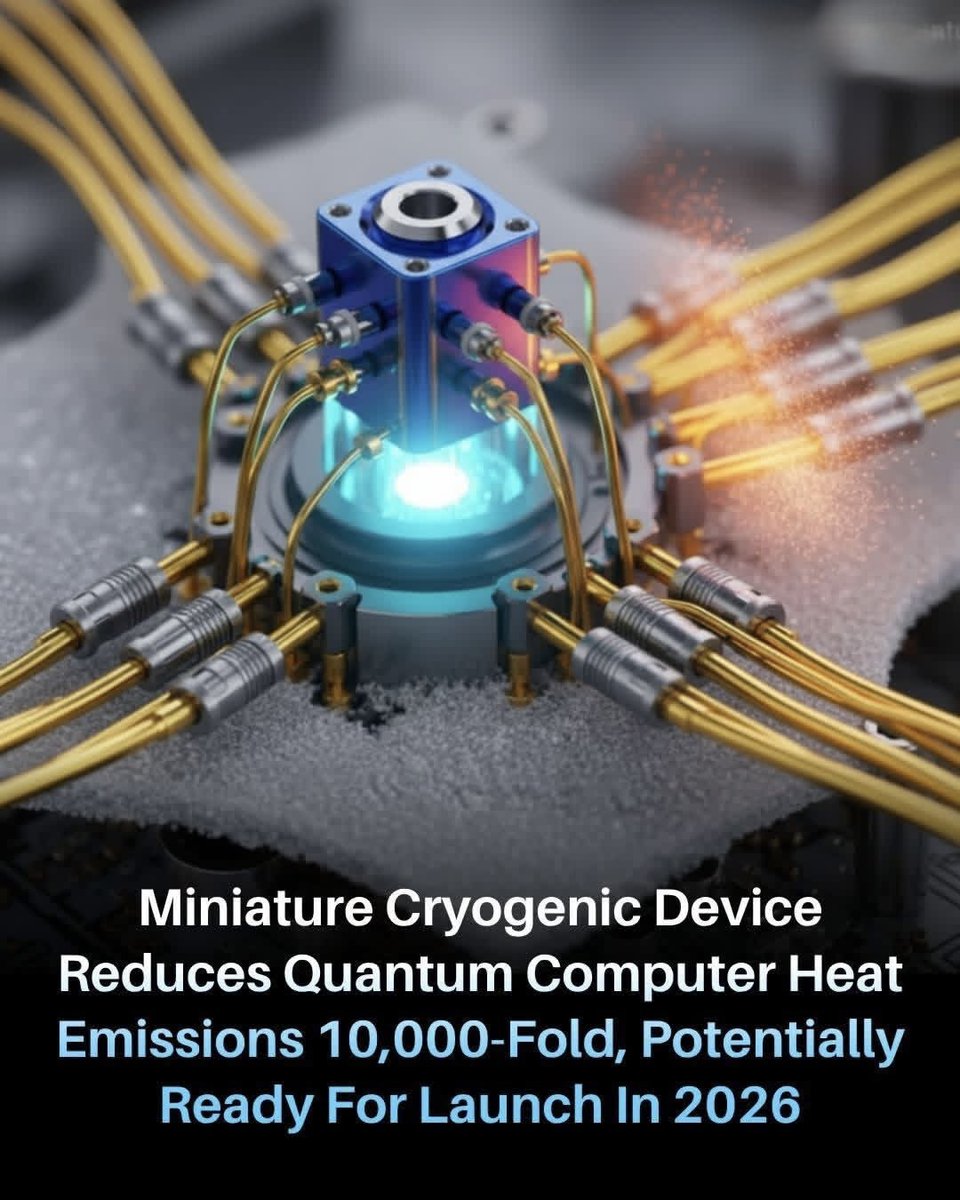
⚡ Scientists Unveil Quantum Device That Could Change Everything
Imagine a tiny machine that cools quantum computers 10,000 times better than anything before. Researchers have just built a mini cryogenic device that barely produces any heat, solving one of the biggest hurdles in quantum computing. This could make future quantum computers faster, more powerful, and closer to real-world use than anyone thought possible.
Some say it could even be ready to launch in 2026, but the exact timing is still a race against technology limits. Could this tiny invention be the key to a quantum revolution?
Source: Livescience. (2026, January 29). Tiny cryogenic device cuts quantum computer heat emissions by 10,000 times — and it could be launched in 2026
English
@amarchenkova for the 2026 edition :)! the circuit size is way above the largest estimates for industry grade FTQC applications (DARPA QBI, etc).
English
@olivez we need a chart in your book on this! Maybe it's there, haven't read that chapter yet hahah
English
Important new result for Q-Day:
This work reduces the logical qubit requirement for breaking 256-bit elliptic curve cryptography to ~1098 qubits, 2× improvement over prior estimates, bringing it below RSA-3072 requirements.
While it does have a higher gate count, the bottleneck becomes runtime and error correction overhead, versus qubit counts.
eprint.iacr.org/2026/280
English
@QuantumBullHQ "Superconducting qubits have already scaled to circuits with millions of gate and measurement cycles, where each cycle takes just a microsecond." Where did they do that?
Also, how about their 500-qubit chip and 99.9% fidelities, following up on Willow's 105 qubits (2024)?
English

“We are now increasingly confident that commercially relevant quantum computers based on superconducting technology will become available by the end of this decade.”
— Google Quantum AI
$GOOGL $IBM $RGTI
blog.google/innovation-and…


English
@babgi @Charles_Liebert Petit detail : les dimensions des transistors en 3 nm ou 1/2 nm sont fictives. Cela ne correspond pas à la densité réelle des puces. En 3 nm, un transistor a une taille de 48 nm. Et la finesse de la gravure EUV est actuellement de 8 nm (et la longueur d’onde associée de 13 nm).
Français
C'est exactement ça : Taiwan est un écosystème géant du semiconducteur. Autour des unités de gravure EUV, le CEO de TSMC rappelle qu'il y a entre 500 et 1000 fournisseurs ultra-spécialisés pour lesquels il n'est pas question d'aller s'installer dans le désert du Nevada. Donc en mettant une usine EUV là bas, la plus importante conséquence c'est un allongement immense de la chaîne logistique et un déplacement permanent d'ingénieurs dans le vol Taipei altanta Phoenix. De toute façon une loi taïwanaise interdit a TSMC de fournir la même génération de technologie qu'elle utilise aux pays étrangers donc même phoenix n'aura "que du 3nm quand Taiwan sera a 1/2 nm. C'est tout de même un rapport de performance d'un facteur 4 a 9.
BourseAsieFR@BourseAsieFR
Jensen Huang a lâché une bombe lundi. Pas sur les GPU. Pas sur l'IA. Sur Taiwan. Et ça vaut plus que n'importe quel earnings call cette année Le 17 mars, interrogé sur la géopolitique, le CEO de NVIDIA a été d'une clarté rare. "Je crois à 100% que pendant encore très longtemps, NVIDIA et le monde entier continueront de dépendre de Taiwan." Jensen a mis Taiwan et Israël sur le même pied. Deux régions à risque géopolitique élevé. Deux régions où NVIDIA est engagé à 100% sur le long terme sans condition. Des milliers d'employés dans chaque pays. Des centaines de fournisseurs critiques à Taiwan. Une supply chain mondiale dont Taiwan est le nœud central. Sur la demande américaine de rapatrier 40% de la production de semi-conducteurs taïwanais aux États-Unis, Jensen a été direct : c'est extrêmement difficile. TSMC construit bien en Arizona. Mais la demande mondiale en puces explose simultanément. Chaque nouvelle fab construite aux États-Unis ne fait que répondre à la croissance globale. Elle ne réduit pas la dépendance à Taiwan. Elle s'y ajoute. Ce que Jensen a dit entre les lignes est encore plus important. Taiwan n'est pas remplaçable parce que ce n'est pas une question d'usines. C'est une question d'écosystème. 68 ans de savoir-faire accumulé. Des centaines de fournisseurs spécialisés à 30 minutes les uns des autres. Des ingénieurs formés depuis l'enfance dans cette culture industrielle. Ça ne se délocalise pas avec un chèque et un permis de construire. Le CEO de la société la plus valorisée au monde vient de dire que Taiwan restera le centre du monde technologique pour une très longue période. C'est le meilleur argument d'investissement à long terme sur les actions taïwanaises que vous entendrez cette année.
Français