

Peter Seferaj
166 posts



@MagyarBlackHand Bratislava is in top 10 wealthiest regions in europe, where is Budapest :) ?
English


@VDZBOR @AngloVarangian Its littlarly always serps getting on our dick
English

@AngloVarangian Every time i open this fucking app is always some diaspora bosnian or albanian bitching about Serbs and how serbia is the reason their countries are underdeveloped.
English

Serbs did nothing wrong
Kaltrina Kamberi@ThisisKaltri
The core problem in the Balkans has always been Serbia. The wars in this region were sparked because no nation wanted to remain under Serbian occupation and oppression. Serbia systematically violated the rights of Albanians, Bosnians, Croats, and others stripping them of work, education, and dignity and resorted to violence, torture, and murder when they resisted. They have never shown remorse. If given the chance, Serbia would repeat these actions without hesitation. They have the same mindset. Serbia stands out as a country that refuses to admit its crimes, denies overwhelming evidence, and even takes pride in its brutal acts. Justice has rarely reached Serbian leaders or the state itself. Consider just two examples: the Dubrava prison massacre, where Serbian forces executed Albanian civilians after luring them with false promises, and the Siege of Sarajevo, where the strategy relied on terrorizing civilians with snipers and shelling. They brutally killed children and raped women, in Kosovo same as in Bosnia. These were not random acts of violence they were state policies designed to destroy their morals and dominate. Showing their true colors. Beasts! Yet justice is selective. While some individuals were tried for crimes related to Sarajevo, the Dubrava massacre remains largely ignored. Serbia, as a state, has consistently avoided accountability, protected war criminals, and perpetuated a culture of denial. The refusal to confront the past leaves victims without justice and prevents the region from moving forward. That’s why the first step toward real progress is to acknowledge what was done and hold those responsible accountable. Only then can Serbia be seen as a country that no longer poses "a threat" while always keeping an eye on it. Cant really trust a serb. #SerbiasWarCrimes #Balkans #Kosovo #Bosnia #Sarajevo #StandForJustice #RememberTheVictims @albinkurti @albulenahaxhiu_ @VjosaOsmaniPRKS @EjupMaqedonci @USAmbKosovo @UKinKosovo @GermanyDiplo @ItalyinKosovo @EUKosovo @aliciakearns @DorisPack2 @DanielSerwer @FarCanals @POTUS @realDonaldTrump @SecRubio @kajakallas @MartaKosEU @EP_President @EU_Commission @EUCourtPress @EUCouncil @eucopresident @AndrejPlenkovic @iskhoctopus @gurakuqkuqi @rtklivecom @BBCWorld @shkamberi @HarryBajraktari
English
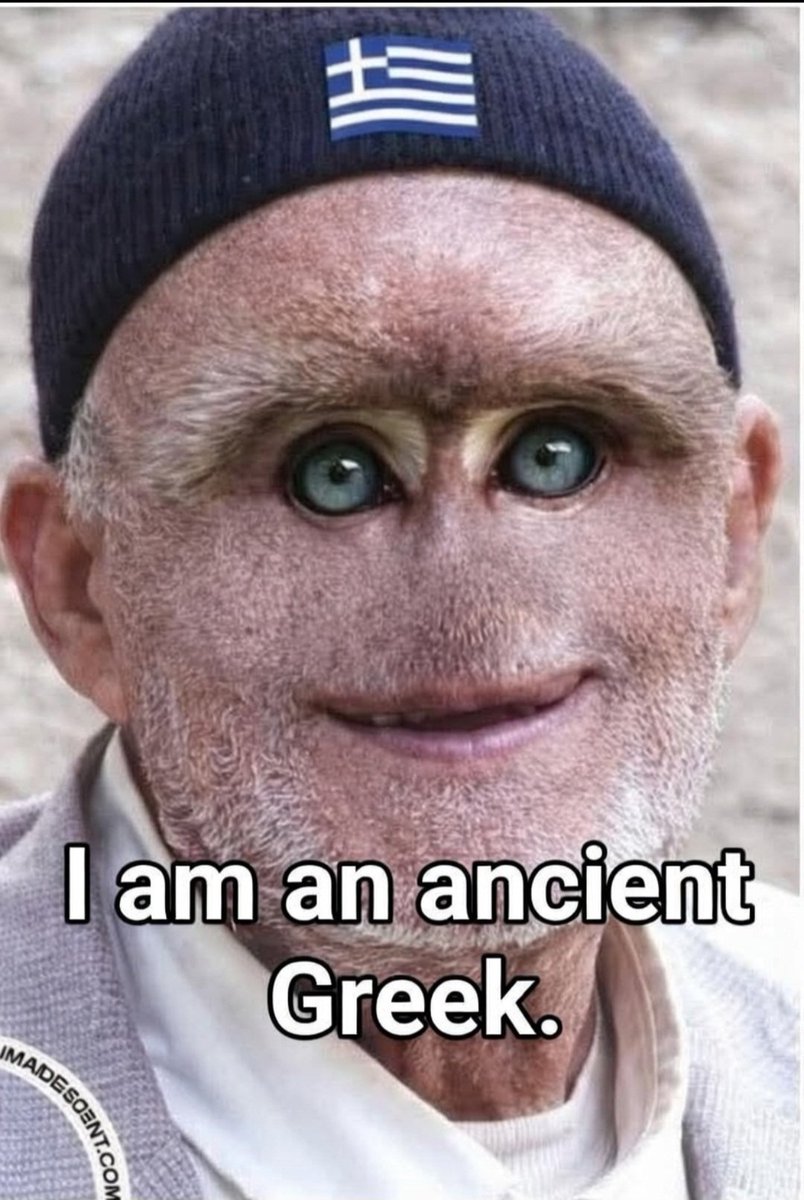


This is pure mental illness
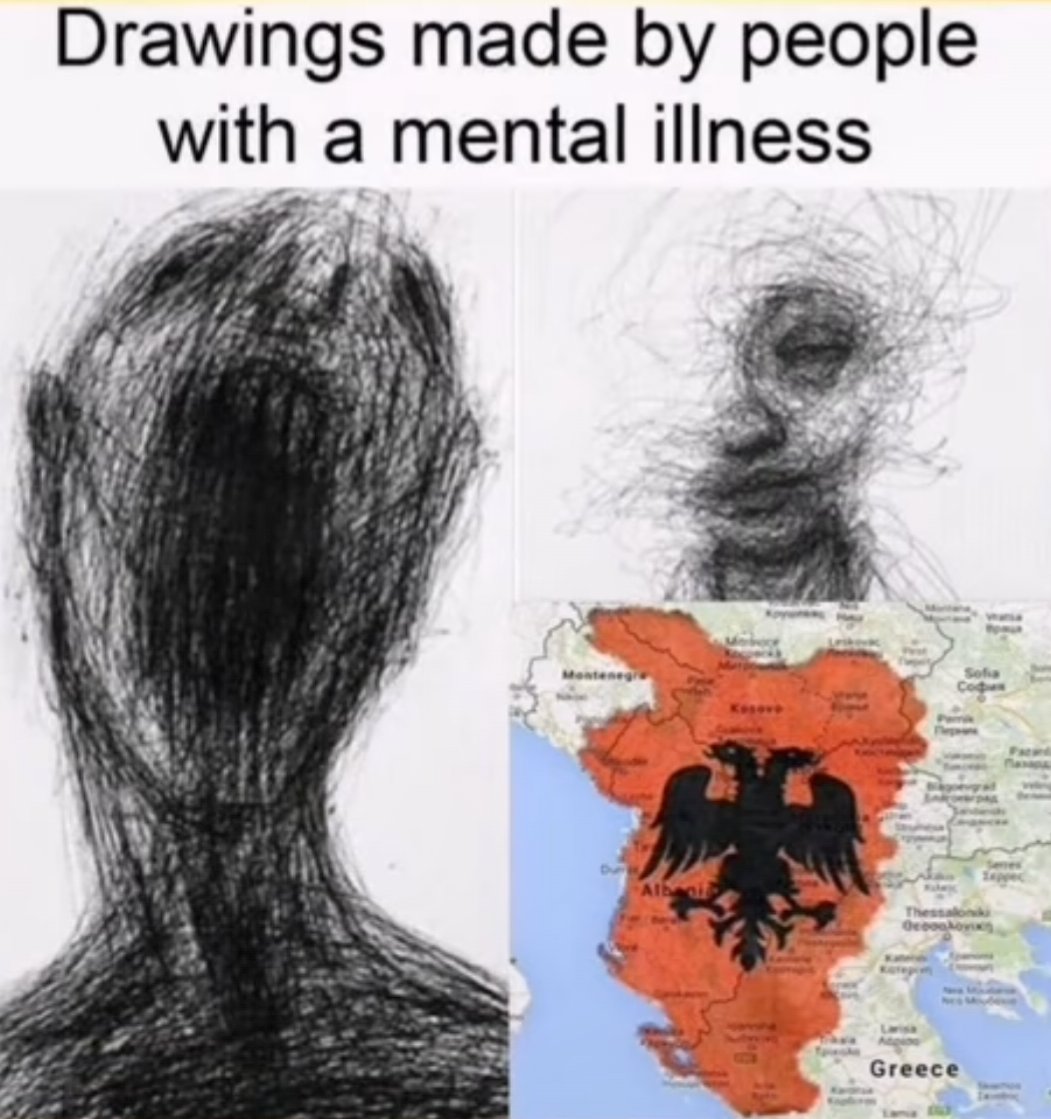
Lorena T.@LorenaDoberus
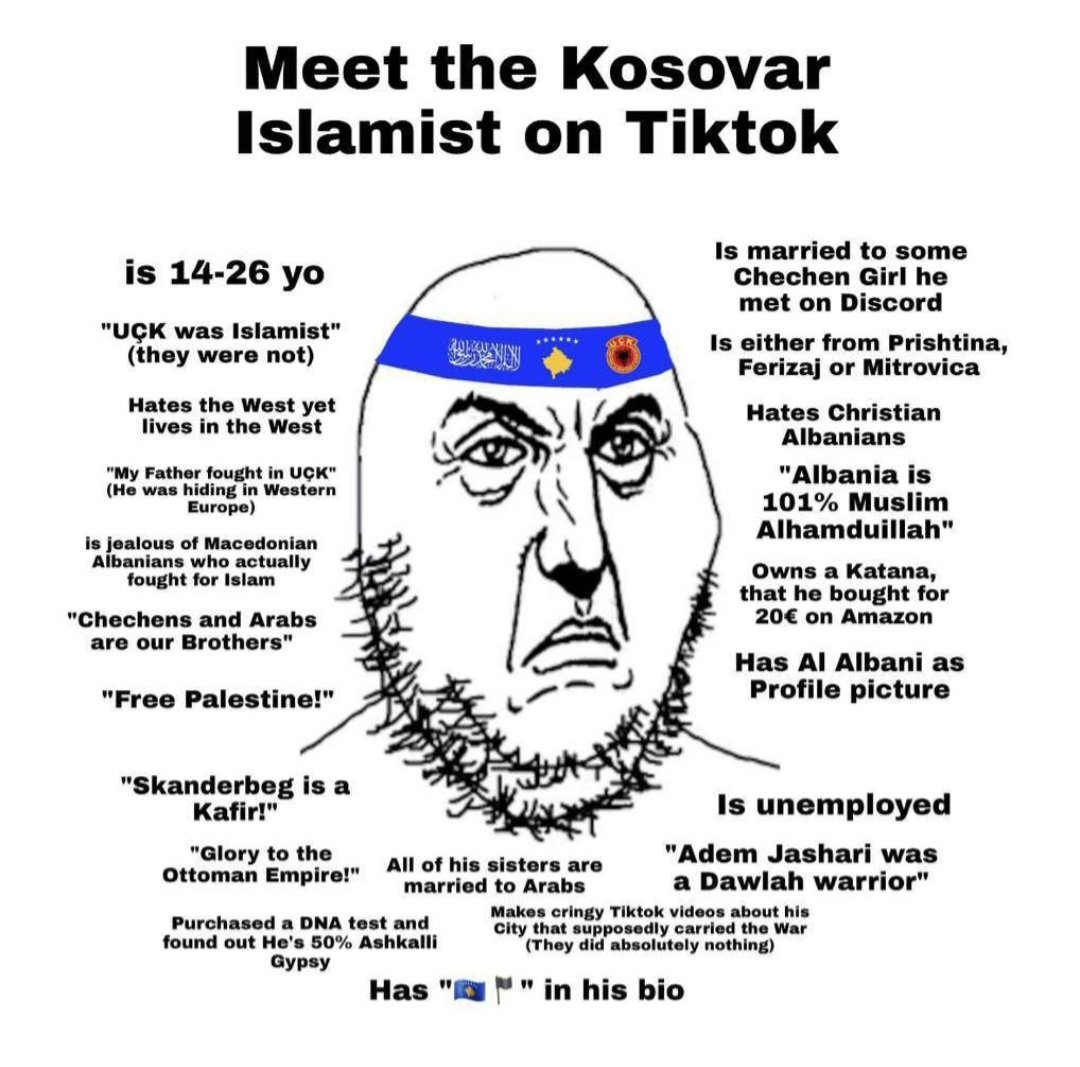
Why did Western scholars invent the term « Greater Albania »? The answer is simple: to reframe a historical reality as a supposed political excess. « Greater Albania » is not a neutral description, it is a loaded label, designed to distort. It suggests expansion, ambition, even threat. In truth, it masks the opposite: fragmentation, dispossession, and the systematic dismemberment of lands long inhabited by Albanians. What is dismissed as « Greater Albania » is nothing more than historical Albania, territory reduced, renamed, and reinterpreted until its continuity becomes unrecognizable. Strip away the rhetoric, and what remains is obvious: this so-called « greater » space is simply what once existed. That historical Albania corresponds to the four Ottoman vilayets: – Kosovo – Scutari – Manastir – Janina These were not abstract administrative units, but regions with a clear Albanian presence. Their division was not organic, it was imposed. Beginning in 1878, with the Treaty of San Stefano and the Congress of Berlin, Albanian-inhabited territories were carved up and redistributed to Serbia, Bulgaria, and Montenegro. What followed was not « border adjustment, » but erasure. This erasure was not merely territorial, it was human. The events of 1877–1878 were marked by the forced expulsion of tens of thousands of Albanians from their ancestral lands. Entire populations were uprooted, displaced, and deliberately removed to consolidate new borders. And this logic did not stop there, it evolved, persisted, and was theorized. In 1937, Vaso Čubrilović formalized it in his memorandum The Expulsion of the Albanians, openly advocating demographic engineering as state policy. What had already been executed on the ground was now codified on paper. The pattern repeated itself with striking clarity after World War II. Between 1944 and 1945, the expulsion of Cham Albanians from northwestern Greece was not an isolated case, but part of a broader continuum of population removal. Thousands were forcibly driven from Epirus by forces associated with the National Republican Greek League. This was not merely displacement, it has been explicitly described in modern historiography as ethnic cleansing. Scholarly works such as Balkan Genocides: Holocaust and Ethnic Cleansing in the Twentieth Century do not obscure the terminology: they place these events within the wider framework of genocidal violence and ethnic cleansing in the Balkans. The vocabulary is not accidental, it reflects the scale, the intent, and the outcome. From 1878 to the aftermath of World War II, the continuity is undeniable: the same lands, the same populations, the same methods, expulsion, erasure, replacement. Not expansion, but contraction. Not ambition, but survival. And the deeper one looks, the more the narrative unravels. These same regions overlap with the ancient homelands of the Macedonians, Paeonians, Dardanians, Epirotes, and southern Illyrian populations, peoples routinely dismissed as « barbarian » in classical sources simply because they were not Greek. Rebranded, fragmented, and reassigned, these populations are now detached from their historical continuity. Yet they form the very substrate of what is today called the Albanian people. « Greater Albania, » then, is not an expansionist fantasy. It is a convenient misnomer, one that turns historical presence into alleged ambition, and loss into accusation. #history #albania #nomorelies
English




English

@PSeferaj @ClipGD @clippedszn nga got pressed by a guy in a ski in north ldn, no ones riding him bro, filming w 3 guys behind u tf do u expect marlon to do? Hes on a visa aswell
English


@clippedszn This guys hiding his face wearing a shiesty and Sexually Harassing Girls and he’s gonna call Marlon a Nerd? 💀🤦♂️

English
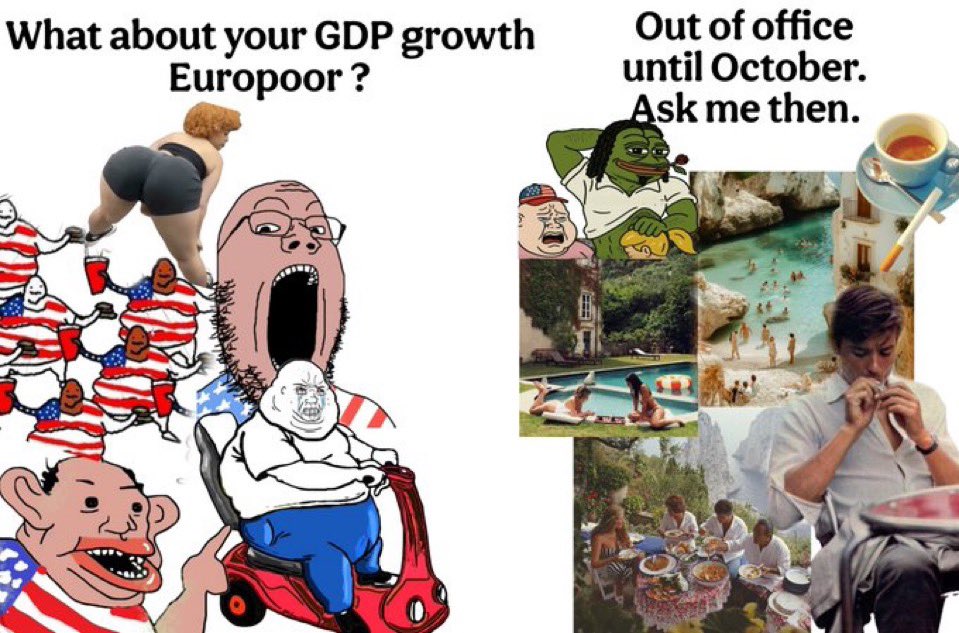
@poxesfoxes I like in Europe and i can say everyone is broke asf but everyone has a big ego so no one wants to admit their broke
English




@just3ntime @FredZillaa Black and brown people ruining countries as always😃
English

genuinely might be the unfunniest shit I’ve seen this month
Rivalskins.com@RivalSkins
More BOMBOCLAAAT 🇯🇲 skins 📷: teamstarflre
English
@shitpost_2049 I had a throat infection for 2 weeks. Just breathing was painful..
English

I love this art style so much what is it called? I always loved seeing art like this when I was growing up. It’s so authentic to the black experience.
I appreciate you.@DeeLaSheeArt
“Basement Beautician”
English