Rajan Palta

9.4K posts

Rajan Palta

Rajan Palta

@PaltaRajan

Army Veteran (INF): 60een! St Johnian. Good Tea 👌 Makes My Day👍 Def/Avn/Radio/This n That. Nature & Animal Lover 🙏 & Vice Versa ! 😎

3rd Rock Frm the Sun Bengaluru Katılım Haziran 2018
596 Takip Edilen161 Takipçiler
Parimal
Parimal@Fintech03·
Amidst all the SM noise, we did not celebrate Vimag labs enough. They built India’s 1st software-defined, magnet-free electric motor platform. Standard EVs rely heavily on Permanent Magnet Synchronous Motors. These require physical, rare-earth magnets embedded directly into the motor's rotor to create a magnetic field. Vimag Labs completely eliminated the physical magnets. This is a win for cheaper EV manufacturing, but the real, strategic importance of what they did goes far deeper into global geopolitics & structural engineering: - The global processing capacity & supply chain for rare-earth materials is overwhelmingly controlled by China. By engineering a completely magnet-free motor, Vimag Labs quietly handed automotive OEMs an escape hatch from a massive geopolitical supply chain vulnerability. - Vimag Labs designed this architecture to scale up into massive high-power systems ranging b/w 200 kW & 600 kW. This means the software-defined, magnet-free platform is directly targeted for critical, heavy backend sectors: defense applications, robotics & advanced cooling infra, allowing India to build high-performance military & industrial hardware entirely free from foreign mineral dependencies. - The breakthrough is the result of 87600+ (~10 person yrs) engineering hrs spent by co-founders Manish Seth, Rahul Krishnamurthy & their team. They built a massive IP pipeline (including 5 granted patents, 10 active applications & 15 trademarks) & signed a manufacturing MoU with Jendamark to scale the physical production of these motors right out of India. Vimag labs handed a rising nation the ultimate industrial escape hatch: a future where our engines run on Indian brainpower, while leaving the rest of the world fighting over the dirt. 🙏🙏
Parimal tweet media
English
54
470
1.5K
39.6K
Rajan Palta retweetledi
News Arena India
News Arena India@NewsArenaIndia·
Six generations, 83 members : Nagappa family in Andhra Pradesh keeps the joint family legacy alive. The Nagappas have lived together as a single joint family for generations. Though spread across four adjoining houses, the family functions as one household - sharing meals, income and responsibilities. But with numbers come challenges - different opinions, generations and perspectives. But as a family elder says, all disagreements are resolved before the day ends. As joint families become increasingly rare, the Nagappa family stands as a living example of shared dreams, hoping the younger generation will carry the tradition forward. As joint families become increasingly rare, the Nagappa family stands as a living example of shared dreams, hoping the younger generation will carry the tradition forward.
English
35
677
4.1K
430.5K
Rajan Palta retweetledi
Sann
Sann@san_x_m·
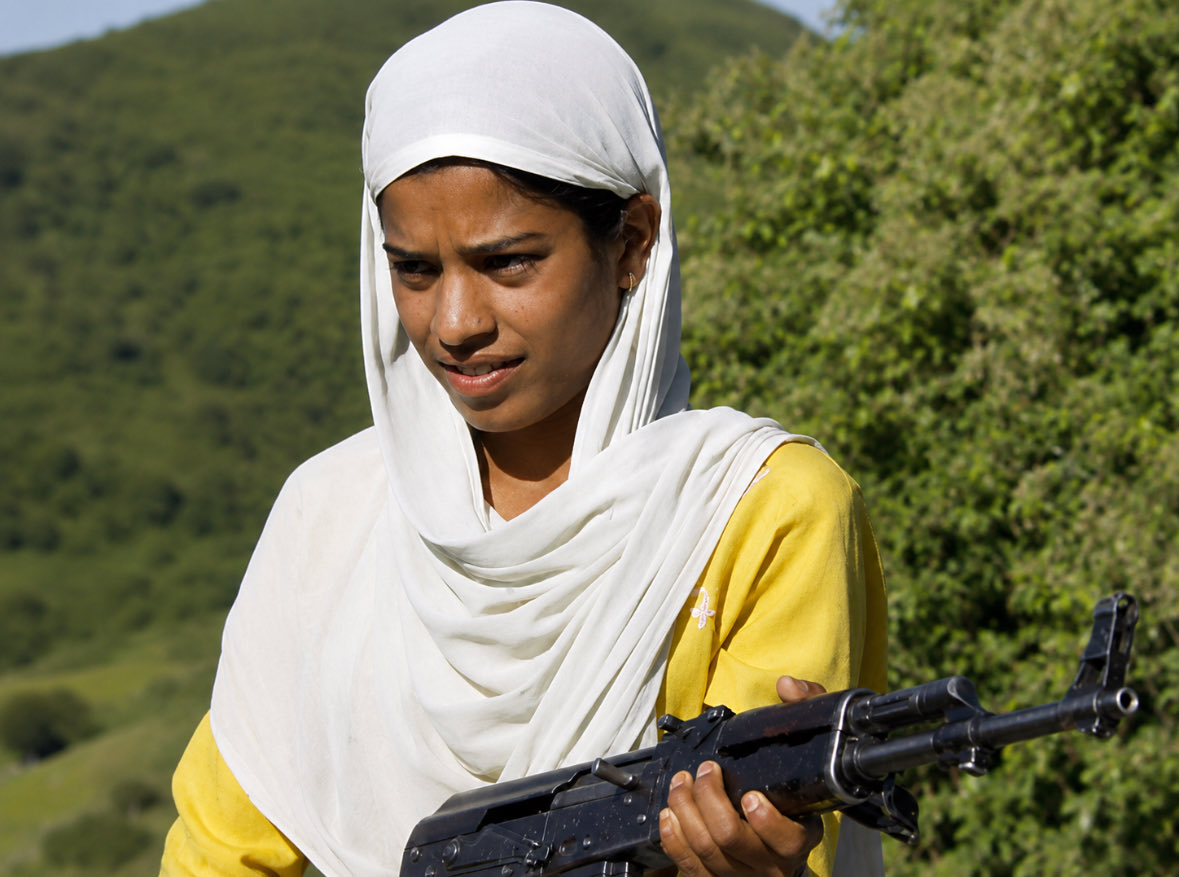
Her name is Rukhsana Kausar. She was twenty years old, a farmer's daughter in a small village in Kashmir who had left school after class ten. One night, armed terrorists broke into her home to drag her away. By morning their commander was dead, killed with his own rifle, by her. It was the night of 27 September 2009. Three militants of the Pakistani terror group Lashkar e Taiba came to her family's house in Rajouri. They forced their way in and demanded that the family hand Rukhsana over to them. Her father refused. So they began to beat him, and her mother, and her brother, with the butts of their guns. Rukhsana was hiding under a cot, listening to her family being battered in front of her. And something in her decided that she would not stay hidden while they were killed. There was an axe in the room. She picked it up, rushed out, and struck the terrorists' commander on the head. As he staggered, she pulled the rifle from his hands, turned it on him, and shot him dead. She grabbed a second weapon and threw it to her brother. Together they opened fire on the remaining two, who fled into the night. The man she killed was Abu Osama, a commander of Lashkar e Taiba, a name the security forces had been hunting for years. A twenty year old girl with no training, who had never held a gun in her life, had killed a wanted terrorist with his own weapon and saved her whole family. She was given the Kirti Chakra, one of the highest bravery awards India has. Later she put on a uniform of her own and became a police constable. They came to her home to make her disappear. She made sure it was their commander who never went home.
Sann tweet media
English
143
1.5K
5.6K
111.9K
Rajan Palta retweetledi
Snehesh Alex Philip
Snehesh Alex Philip@sneheshphilip·
So so many tweets attacking IFS officer Dr Satyanjal Pandey for his one hand in the pocket. When you see something odd, check for facts. I did not want to say this but Satyanjal sir has a deformed left hand and is handicapped. That hasn’t stopped him from being one of the most dynamic officers of his career age. He was India’s DHC in Colombo and now C’da in Islamabad. And yes, he always has kept that hand in his pocket.
ADG PI - INDIAN ARMY@adgpi

Dr Satyanjal Pandey, Chargé d'Affaires-designate of India to Pakistan, called on #GeneralDhirajSeth, #COAS, today. The interaction focused on the prevailing regional security environment, evolving geopolitical dynamics in West Asia, developments in India's western neighbourhood and other matters of strategic significance concerning India's national security. @MEAIndia @DefenceMinIndia @SpokespersonMoD

English
51
178
1.3K
113.1K
Rajan Palta retweetledi
Dalton (Analyze & Optimize)
Dalton (Analyze & Optimize)@Outdoctrination·
STOP focusing on cholesterol for heart disease. Your doctor doesn't realize it's only a small part of the process of developing heart disease. Here's a DEEP dive into how heart disease develops, what to do about it, & why focusing solely on cholesterol is a path to an early death:
English
18
93
486
1.1M
Rajan Palta retweetledi
Parimal
Parimal@Fintech03·
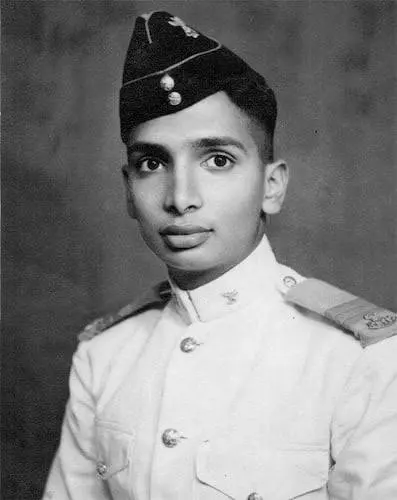
Next in who after the Ramanujan series? At a tender age of 16, a brilliant but completely unguided boy from Tamil Nadu joined the National Defence Academy & was commissioned into the Indian Navy's electrical branch . He did not have the luxury of a quiet university setting; he was trained in practical skills to maintain weapons systems on warships. But Arogyaswami Paulraj possessed an insatiable, self-taught obsession with the advanced mathematics of signal processing, control theory & information theory. He studied advanced matrices & random variables by lamplight on naval ships. By the late 1970s, India faced a serious strategic challenge. After the 1971 Indo-Pak War exposed weaknesses in imported sonars, the Navy needed an advanced anti-submarine warfare system but was blocked by international export restrictions. The Navy turned to Paulraj, then a rising officer with a PhD from IIT Delhi (earned while still in service). He was tasked with leading a major indigenous project to develop a world-class hull-mounted panoramic sonar from scratch. Operating under intense resource scarcity, Paulraj’s mathematical genius took over. He designed complex signal-processing algos that could filter the chaotic, deafening acoustic noise of the ocean to pinpoint enemy submarines. The resulting system, APSOH (Advanced Panoramic Sonar Hull), inducted in 1983, completely stunned global military observers. It did not just work, it outperformed contemporary Western systems. After setting up major defense labs in India, Paulraj retired from active naval service & arrived at Stanford University in 1991 as a research associate. This is where the story shifts from military history to modern legend. While working on signal separation experiments for airborne military reconnaissance, Paulraj noticed a strange, fleeting physical phenomenon. When a radio signal is transmitted in a crowded area (like a city with buildings), it bounces off walls & scatters into 1000s of chaotic, distorted paths. Engineers treated this scattering as a nightmare, multipath interference that corrupted data. Paulraj had a paradigm-shifting realization rooted in multi-variable calculus & spatial matrices: What if the scattering was not a bug, but a feature? He realized that if we used multiple antennas at the transmitter & multiple antennas at the receiver, we could use advanced matrix mathematics to isolate those scattered paths & stream parallel, independent channels of data over the exact same frequency, at the exact same time. He called it MIMO (Multiple Input, Multiple Output). When he 1st proposed it, the academic world mocked him. Prominent profs & industry skeptics told him it violated the laws of physics & information theory. They claimed it was mathematically impossible to multiply data speeds w/o expanding bandwidth. Paulraj did no back down. He built his own prototype, founded a startup & proved the mathematics in real-world silicon. He designed the microscopic architecture, the microchip algos that allowed small devices to execute these hyper-complex spatial matrix calculations in fractions of a microsecond. If we look at the device we are using to read this right now, look at the top corners of our screen. We cannot see them, but embedded inside the frame of our phone are multiple microscopic antennas operating on Paulraj’s exact MIMO-OFDMA mathematics. Every single modern 4G network, 5G network & high-speed Wi-Fi router on Earth is built entirely on the mathematical foundation invented by the self-taught Indian Navy officer who packed his bags for Stanford. He did not just solve a math problem; he built the invisible highway that carries nearly 100% of the world's mobile data traffic today.
Parimal tweet media
English
43
431
1.3K
63K
Rajan Palta retweetledi
Alpha Prime
Alpha Prime@Alpha_Prime__·
SAVE THIS WATER REMEDY. YOU MAY NEED THIS LATER!!! 1. If you drink moringa water for just 2 weeks, it will unclog fatty liver deposits and supercharge your detox enzymes. 2. If you drink cinnamon water for just 2 weeks, it will melt visceral belly fat by improving insulin sensitivity at the root. 3. If you drink ginger-lemon water every morning for 14 days, it will flush mucus from your gut and reset stomach acid. 4. If you drink cumin-seed water for 2 weeks, it will sweep out trapped gas pockets and shrink bloating dramatically. 5. If you drink clove-infused water daily for 10 days, it will paralyze hidden parasites and push them out naturally. 6. If you drink tulsi (holy basil) water for 2 weeks, it will clear inflammation from your lungs and boost oxygen flow. 7. If you drink fennel-seed water every night for 14 days, it will repair your gut lining and stop post-meal acidity. 8. If you drink fenugreek water for 2 weeks, it will dissolve sticky cholesterol sludge from your arteries.
English
64
1.6K
4.9K
214.1K
Rajan Palta
Rajan Palta@PaltaRajan·
@ChinarcorpsIA Fantastic Show...! By TAKDI PALTAN ! - [ Saadi ! ;) ] Wishing Many More Such Spectacular Busts..!! Bust Their Caches..! Bust Their Morale...!! Don't Let Them Rest...
English
0
0
1
145
Rajan Palta retweetledi
Chinar Corps🍁 - Indian Army
Chinar Corps🍁 - Indian Army@ChinarcorpsIA·
OP KERAN, Kupwara On 06 Jul 2026, based on specific intelligence input, a Search Operation was launched by #IndianArmy in the general area Keran Sector, Kupwara. During search, security forces busted a hideout and recovered five AK Series Rifles, nine AK magazines, one Hand Grenade, a huge cache of ammunition and other war-like stores. #Kashmir @adgpi @NorthernComd_IA @PRODefSrinagar
English
22
151
867
70.9K
Massimo
Massimo@Rainmaker1973·
A single bird has just accomplished one of the most extraordinary feats in the animal kingdom — flying nearly one-third of the way around the Earth without stopping to eat, drink, or rest. The record-breaker is a five-month-old Bar-tailed Godwit that flew nonstop from Alaska to Tasmania, Australia. Covering 8,425 miles in just over 11 days, it set a new record for the longest nonstop flight ever documented in any bird. What makes this journey even more astonishing is that it was the young godwit’s very first migration. The entire route took place over the open Pacific Ocean, with no chance to land. Despite that, the bird navigated thousands of miles of featureless water with pinpoint accuracy. This incredible endurance is made possible by remarkable physiological adaptations. Before takeoff, the godwit packs on enormous fat reserves — nearly half its body weight — to fuel the flight. At the same time, many of its internal organs, including parts of the digestive system, temporarily shrink to lighten the load and maximize energy efficiency. Unlike many seabirds that depend heavily on gliding, this godwit flapped continuously for the entire journey, battling shifting winds and weather systems the whole way. Researchers at the Pūkōroro Auckland Shorebird Centre say discoveries like this are transforming our understanding of migratory birds. Their astonishing endurance, navigation skills, and energy management demonstrate biological capabilities that can match — and in some ways surpass — even the most advanced human engineering.
Massimo tweet media
English
214
1.7K
5.8K
185.6K
Rajan Palta retweetledi
Zucker Doctor
Zucker Doctor@DoctorLFC·
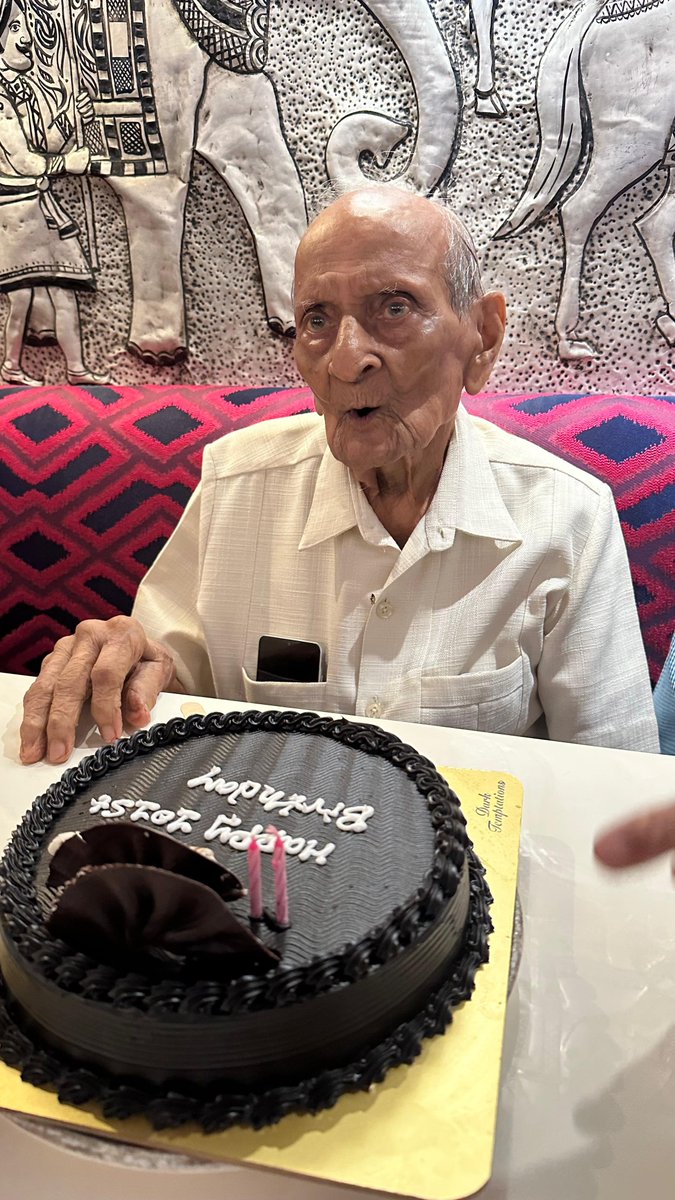
My grandad is now 101 not out. 🙏🏽
Zucker Doctor tweet mediaZucker Doctor tweet media
English
406
184
8.1K
1.3M
Rajan Palta
Rajan Palta@PaltaRajan·
@Normal_2610 I wish the US - 2 ShinMaywa Deal, would be Considered Afresh..
English
0
0
1
60
Normal Guy
Normal Guy@Normal_2610·
This handshake is no Co-Incidence, China blacklisted 80 Japanese defense firms this year and cut rare earth exports to Japan by 78% The two already signed joint development of UNICORN stealth antenna masts for Indian Navy warships in November 2024, with BEL producing them locally. What changed now is bigger. Japan scrapped its ban on exporting lethal weapons this April, so cooperation can cover full warships and missiles, not just antennas. Australia already booked 11 Mogami frigates worth 10bn dollars. India moving early matters since Japan will pick very few partners. Defence ties between India and Japan now run far ahead of trade ties. Two way trade is just 27bn dollars and India sells Japan barely 6bn of that, while India's trade with China sits near 128bn. Japan has promised 10 trillion yen of private investment in India this decade, and its record is decent since the earlier 5 trillion yen target got met in 3 years. Signing defence pacts is the easy part. Pulling Japanese factories into India at China scale is the real work. Timing of this summit explains its content. Days before Takaichi landed in Delhi, China put export controls on 40 Japanese firms including defence makers. Both countries also spent this year paying heavily for Hormuz disruption in costly oil and gas. The summit lined up an economic security declaration against coercion that names nobody, plus plans for shared emergency LNG reserves. Their record has gaps though. US 2 aircraft deal died after decade of talks over cost and technology transfer. Execution has failed here before :) Japan needs defense supply chain partners outside China. India needs to move away from Russian equipment. Aging workforce, weak supplier base, no export experience for sixty years. You cannot run competitive defense sector on domestic orders alone, unit costs stay too high. India gives Japan what it cannot find at home, a market large enough to bring production costs down. That is why 150 Japanese firms flew in with $12.5 billion in investment commitments.
Normal Guy tweet media
English
15
119
748
43.9K
Dr Sudhir Kumar MD DM
Dr Sudhir Kumar MD DM@hyderabaddoctor·
Medical Mystery A 46-year-old woman comes to your clinic. For the past 8 months, she has noticed: 🔸Tingling and numbness in her thumb, index and middle fingers. 🔸The symptoms are worst at night and often wake her from sleep. 🔸She instinctively shakes her hand, and the symptoms improve for a while. 🔸Recently, she has started dropping cups and has difficulty buttoning her clothes. What is the most likely diagnosis? A. Cervical spondylosis B. Peripheral neuropathy C. Carpal tunnel syndrome D. Vitamin B12 deficiency Reply with A, B, C or D, before scrolling down for the correct answer. 1/n (Image source: Internet)
Dr Sudhir Kumar MD DM tweet media
English
42
26
183
46.2K
Rajan Palta retweetledi
Manish Tewari
Manish Tewari@ManishTewari·
After Pearl Harbour on 7 th December 1941 the US persevered till they obtained the unconditional surrender of Japan in 1945. Post 9/11 the US chased the Al Qaeda and the Taliban to the gates of hell and back for twenty years including neutralising Osama bin Laden in Abbottabad in Pakistan in 2011 . From 2003 -13 the House of Saud fought a secret war inside Saudi Arabia against the Al Qaeda before driving the remnants to Yemen and other places in the Middle East . From 1999-2009 Russia fought a brutal campaign against Chechen separatists before finally triumphing. The fight against terror requires firmness and steadfastness and the national resolve to stay the course. How can people forget the Baisaran ( Pahalgam ) Massacre within 14 months ? And the countless similar atrocities perpetrated over the past four decades that were state sponsored by Pakistan. To some folks it seems that the misty eyed romanticism of a dialogue with Pakistan is far more important than the lives of innocent Indian Tourists who were identified on the basis of their faith and slaughtered in cold blood by terrorists who came from Pakistan. Which is that invisible hand that is incentivising the push for a pseudo normalisation with Pakistan without any verifiable guarantees that Pakistan will dismantle the Military- Jehadi Complex ( MJC) they have spawned over the past 55 years? indiatoday.in/amp/india/stor…
English
165
850
2.4K
116.6K
Rajan Palta retweetledi
Shashi Iyengar | Metabolic Health India®
The India Glucose Calendar. It's not just about the sugar you add to your tea. The total glucose your body sees throughout the day often comes from a combination of added sugars and carbohydrate-rich foods. Increasing proteins while lowering overall carbohydrates will benefit all. Awareness is the first step toward better metabolic health. Note: This poster illustrates the approximate glucose equivalent produced from commonly consumed carbohydrate-rich foods and added sugars. Actual values vary with portion size and preparation.
Shashi Iyengar | Metabolic Health India® tweet media
English
8
52
190
19.8K
Rajan Palta retweetledi
SANATAN
SANATAN@Eternaldharma_·
When the funeral procession of Chandrashekhar Azad set out, people across the city walked barefoot and bareheaded in mourning. Yet, many local Congress workers reportedly refused to join the procession. A British police superintendent, reflecting on Azad’s final battle, is said to have praised his extraordinary courage. According to the account, Azad was under fire from three directions, yet continued fighting with remarkable composure, reportedly incapacitating five British policemen. The officer is quoted as saying that Azad was an exceptional marksman, and had he not been wounded in the thigh at the very beginning of the encounter, perhaps not a single British policeman would have survived that day. Even his enemies acknowledged his valor. His devotion to the motherland was admired throughout India, and stories of his bravery were known to children across the country. Yet, it is said that many Congress leaders in Allahabad (now Prayagraj) refused to participate in the funeral procession of this legendary revolutionary. The encounter took place in Alfred Park (now Chandrashekhar Azad Park), where Azad fought from behind a jamun tree. After his death, people reportedly collected soil from around the tree and preserved it in their homes. Many even took its leaves as sacred keepsakes, holding them close to their hearts. The tree itself became a symbol of inspiration, and it is said that the British later had it cut down. But they could never erase the reverence people held for Chandrashekhar Azad. As crowds gathered in Allahabad to pay their final respects, thousands removed their turbans, took off their footwear, and walked barefoot in his funeral procession as a mark of mourning and respect. According to this account, local Congress leaders declared that since they followed the principle of non-violence, they would not participate in the funeral of a man they regarded as having embraced violent methods. Purushottam Das Tandon, himself a Congress leader and an admirer of Azad, reportedly urged them to reconsider. He argued that once a man had laid down his life for the nation, it was inappropriate to debate violence and non-violence over his mortal remains. He insisted that every Congressman should attend the funeral. Only after considerable persuasion—and after witnessing the overwhelming devotion of the public—did some Congress leaders and workers reportedly join the procession. Chandrashekhar Azad was martyred in 1931, but his mother, Jagrani Devi, lived until 1951. India became independent in 1947, yet even four years after independence she reportedly continued to endure immense hardship. She could never truly accept that her son was gone. Refusing to believe reports of his death, she tied her middle and ring fingers together with a thread, believing she would untie them only when her son returned. But that day never came. Azad had given his life in the service of the nation. Born into a poor Brahmin family, Azad had no inherited wealth. His father had died long before, and his only son had sacrificed his life fighting British rule. It is deeply painful to learn that, according to this account, even after independence his mother survived by cleaning wheat and washing utensils in neighboring homes just to earn enough to live. The narrative further alleges that no Congress leader came forward to care for her. Those who later rose to the highest offices of independent India, including leaders who had spent years in prison and authored books during the freedom struggle, are said not to have extended support to Chandrashekhar Azad’s mother. She was the mother of a son who embodied self-respect, and by all accounts she possessed the same spirit. She did not wish to live on charity. Her life raises a question that still resonates today: Did the nation fulfill its duty toward the mother of one of its greatest revolutionaries?
SANATAN tweet media
English
40
458
954
26.4K
Rajan Palta retweetledi
Raghav Wadhwa
Raghav Wadhwa@raghavwadhwa·
The US has spent three decades and billions trying to make enough artillery shells. It still can't. India quietly became the world's third-largest maker of 155mm shells, behind only Russia and China. And Germany's biggest arms company is now buying the charge from an Indian firm. The compounding story here is a boring metal tube, and not jets and missiles. 🔹 The US wanted 100,000 shells a month by end 2025. It is stuck near 40,000. The EU missed its 1 million shell target for Ukraine. Russia makes 250,000 a month. Three decades of Western neglect is India's opening. 🔹 Rheinmetall, Germany's largest arms maker, ordered 155mm propellant charge modules from Solar's Economic Explosives in Dec 2024. The explosive heart of the shell, now made in India. 🔹 India builds about 150 of the 175 ammunition types its Army uses. Imported ammo has fallen from a third to under 10%. India is now a net exporter, with order books running into FY28. Why it lasts: A 155mm shell is not a pipe with powder. It needs forged steel bodies, precision machining, TNT or RDX fills, propellant and fuzes. The West let that ecosystem wither. India kept it whole. Every gun deployed anywhere means decades of shell demand. The chain: 🔸 Explosives and propellant: Solar Industries, Premier Explosives 🔸 Forged shell bodies: Bharat Forge, Nibe, Balu Forge 🔸 Guided shells: Reliance Defence (Diehl JV), Munitions India with IIT Madras Educational purposes only, not a buy/sell recommendation
English
6
36
202
22K
Rajan Palta retweetledi
D Prasanth Nair
D Prasanth Nair@DPrasanthNair·
The Arabian Sea. About 220 kilometers off the coast of Mumbai. 30 August 2010. 6:55 a.m. A massive wave suddenly crashed over the Indian Navy submarine INS Shankush. In an instant, three sailors were thrown into the raging sea, drifting farther away with every passing second. Standing watch was Lieutenant Commander Firdaus Mogal, the submarine’s Executive Officer. He didn’t wait. After reporting the incident over the radio, he simply said, “There’s no time. I’m going after them.” Then he plunged into the turbulent waters. His first act was to rescue an injured sailor hanging alongside the submarine, hauling him to safety. Without hesitation, he then swam with two combat divers toward the three men being carried away by the waves. One by one, he ensured that everyone else had a chance to survive. Finally, the rescue rope reached them. Firdaus could have climbed aboard first. Instead, seeing that the two divers were exhausted and drifting away, he made an extraordinary decision. Using his own body as a bridge, he shouted through the crashing waves: “Climb over me! Get to the submarine!” The two divers obeyed, stepping over his shoulders to reach safety. Everyone made it back. Except him. Just as Firdaus began pulling himself aboard, the violent swell rolled the 1,800-ton submarine into him, striking his head with devastating force. He was airlifted to a naval hospital, but the injury proved fatal. That morning, Lieutenant Commander Firdaus Mogal saved the lives of six sailors. He lost his own. He was posthumously awarded the Shaurya Chakra, but perhaps his greatest legacy was not a medal. As his wife, Kerzin, later said, “If someone else had died and Firdaus had survived, he would never have forgiven himself.” Many people wear the rank of a leader. Very few choose to be the last one to reach safety. Jai Hind 🇮🇳 Let's salute our heroes @LestWeForgetIN
D Prasanth Nair tweet media
English
79
307
909
17.9K