
Pam
511 posts




@mattforney Americans are NOT dumb to fall for ‘Vivek for Indians’ and aren’t racist. Also he made a great impression among Republicans during his Presidential campaign as being the only candidate who openly debated with his detractors.
English

Casey Putsch has been defeated in a humiliating landslide.
It's not even close. Vivek Ramasmarmy buried Putsch by 70 points.
We need to talk about the Retard Right and why they fail. It pains me to say this as I like Casey and believe he had genuinely good ideas that would have economically revitalized Ohio, such as his infrastructure plans. But he failed for a reason, and unless people understand the reason, this will just happen over and over.
1) Don't attack Trump.
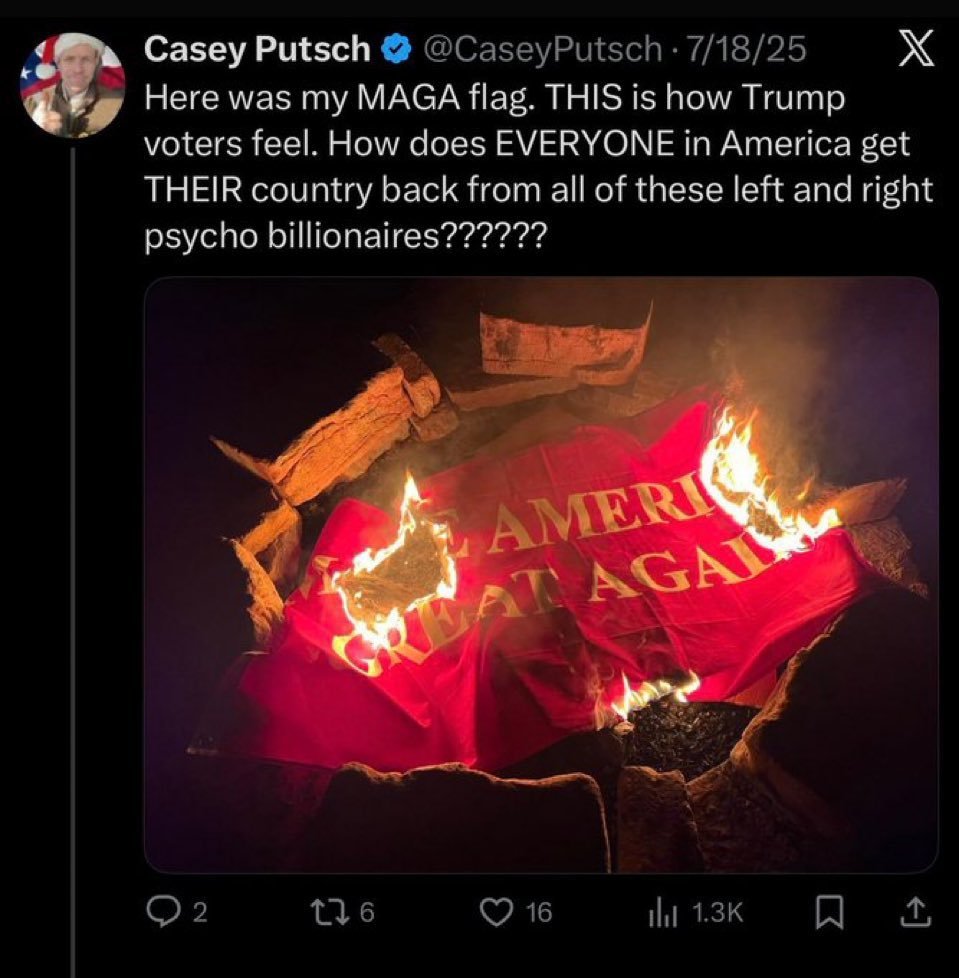
The image of Casey Putsch burning his MAGA hat doomed him right out of the gate. I don't care how disappointed you are with Trump, how many blackpills that Tucker Carlson and Nick Fuentes have fed you. Donald Trump IS the Republican Party. He runs the show. You need his blessing or at least his neutrality to get anywhere.
The majority of Republicans---the people Casey needed to win over---support Trump. There is no constituency for being Based and Anti-Trump, it's a less popular position than Liz Cheneyism. Casey Putsch could have cleared this up with an immediate apology: "I was wrong to turn on Trump. I have my problems with him, but I believe in what he's doing. I'm running to support his MAGA agenda and help him finish the job." Pride, foolishness, or Internet poisoning kept him from humbling himself. Even Thomas Massie has had to pivot his campaign to lying about how he's best buddies with Trump, because his actual connections with the Squad etc. are electoral poison in Kentucky. Just trust Trump! It's not that hard!
2) Get off social media.
Vivek Ramasmarmy is an incredibly weak candidate, off-putting in person, has a deep contempt for white Americans, and wants to flood Ohio with Indians. He should be as easy to knock over as a feather in the wind. Vivek practically wrote Putsch's campaign messaging for him.
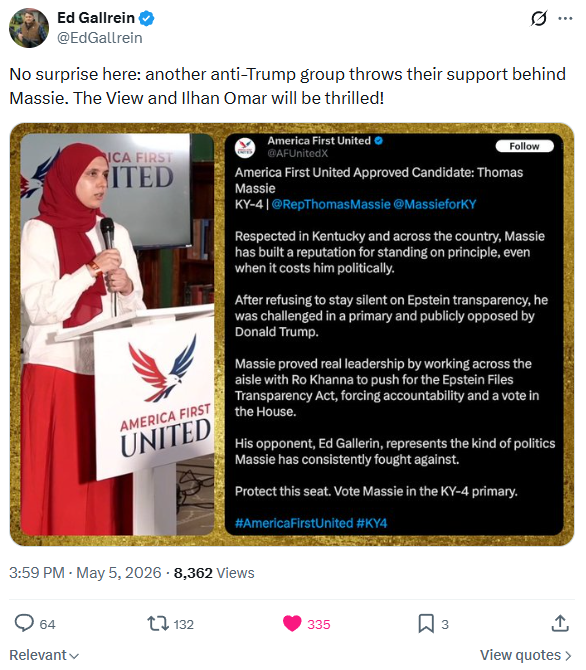
So what did Casey do? Did he hit the streets, post ads telling Ohioans that Vivek hates them and wants to replace them? That should have been the front and center of everything he did. No. Instead, he kept posting about how AI told him that Israel is Satanic. He kept wading into the Epstein files swamp. He went to Anti-Semitic Fyre Fest and shared the stage with a fat anchor baby and a Muslim hijabi, both of whom openly hate white Americans, destroying any credibility he had in attacking Vivek for his anti-white views.
Social media is not real life. The heady days of 2016 or even 2024 are over. As @Freedomalternat pointed out in his post-mortem on the Hungarian election, Twitter and other social media sites are so overrun with bots and AI slop that they do not represent public opinion anymore. Stunting on the hoes online cannot help, it can only hurt. Ed Gallrein is already using Anti-Semitic Fyre Fest clips to attack Thomas Massie. Vivek himself realized how damaging his X posts were to his political ambitions, so he got off social media to focus on retail campaigning. This is why he won.
3) Stop talking about the Jews.
Israel, pro- or anti-, is not an important issue for the kinds of voters you need to win a Republican primary. They want to hear about jobs, inflation, crime; meat and potato issues. Not only that, a governor's ability to influence Israel, Iran etc. is fuck all.
Mouthing off about how much you hate Israel cannot help in a Republican primary. Again, it can only hurt, because you look like a deranged moron to the people who actually vote and you take away valuable space that could be used for important issues, issues where you shine. Casey Putsch SHOULD be known for his anti-immigration stance and his ambitious plans to revamp Ohio's infrastructure. Instead, he's known for palling around with hijabis and treating ChatGPT like an anti-Semitic magic eight-ball.
Before anyone responds with "Casey Putsch is an idiot influencer, of COURSE he was gonna lose," I have two words: Brandon Herrera. Herrera, like Putsch, is a YouTuber. Unlike Putsch, Herrera won his primary and is almost certainly going to be elected to the House. What's the difference? Herrera didn't "campaign" by camping out on Twitter to stunt on them Jewish hoes. He hit the campaign trail, made friends and allies in local GOP organizations, focused his messaging on how he wanted to help his constituents and what he planned to do in office. Herrera also didn't turn on Trump and now he has Trump's endorsement. Learn from Brandon Herrera.
I feel confident in predicting that this is the beginning of the end for the Retard Right. Thomas Massie, James Fishback, Dan Bilzerian will all lose their primaries and the retarded anti-Zionist element will be purged from the right forever. It has no constituency, as Casey Putsch's landslide defeat shows. Candace Owens is already talking about joining forces with the left to form some kind of Anti-Zionist Popular Front. Nick Fuentes has said that he is a "moderate Democrat." The Retard Right are functional leftists in the process of becoming actual leftists. And the best part is that they ruined themselves by not knowing when to shut up.

Insider Paper@TheInsiderPaper
BREAKING: Vivek Ramaswamy wins the Ohio Gov. Republican Primary — Decision Desk HQ
English

It pains me to say this, but we're going to have to get behind Vivek in Ohio. He's shitty but not as shitty as any random Democrat would be.
English
Pam retweetledi
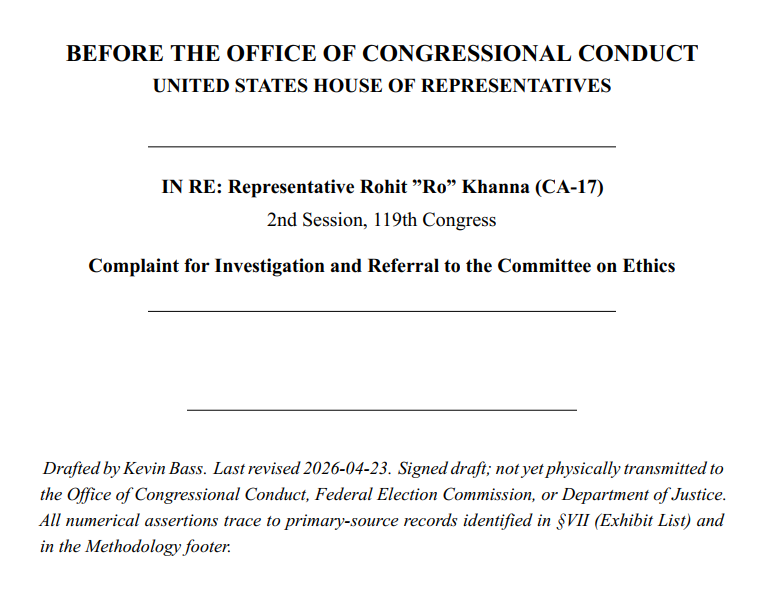
I have conducted the most comprehensive public records audit of any Congressman in the history of the United States.
That audit was conducted on Congressman @RoKhanna.
This audit has exposed shocking ethical lapses and potentially criminal behavior by Congressman Khanna.
I am filing a 239-page ethics complaint, including 30 evidentiary exhibits, with the Office of Congressional Conduct (OCC), to be followed by complaints to the House Ethics Committee and the Department of Justice (DOJ) in the coming days.
Besides being based on an extremely comprehensive public records audit, the complaint is the first of its kind in another way: the factual basis of every single specific claim in the complaint is fully verifiable and reproducible by anyone with a computer.
Attached to this post is a link to the GitHub Release containing the complete reproducibility kit. Anyone with Python 3 and the GitHub CLI installed can download it and run a single command — `python welcome.py` — which walks them through the analysis at whatever verification depth they pick:
1. A 30-second offline check that every body figure derives from the bundled snapshots;
2. A primary-source spot-check that re-fetches the underlying records from the House Clerk and IRS and confirms the bytes match;
3. An OpenTimestamps proof that the package existed at publication time and wasn't backfilled; and
4. An opt-in path that lets the reviewer re-run the OCR pipeline themselves against the primary-source PDFs.
This means that any person in the world can confirm for themselves that all statements made in this complaint are fully reproducible and true.
---
The complaint asserts the following:
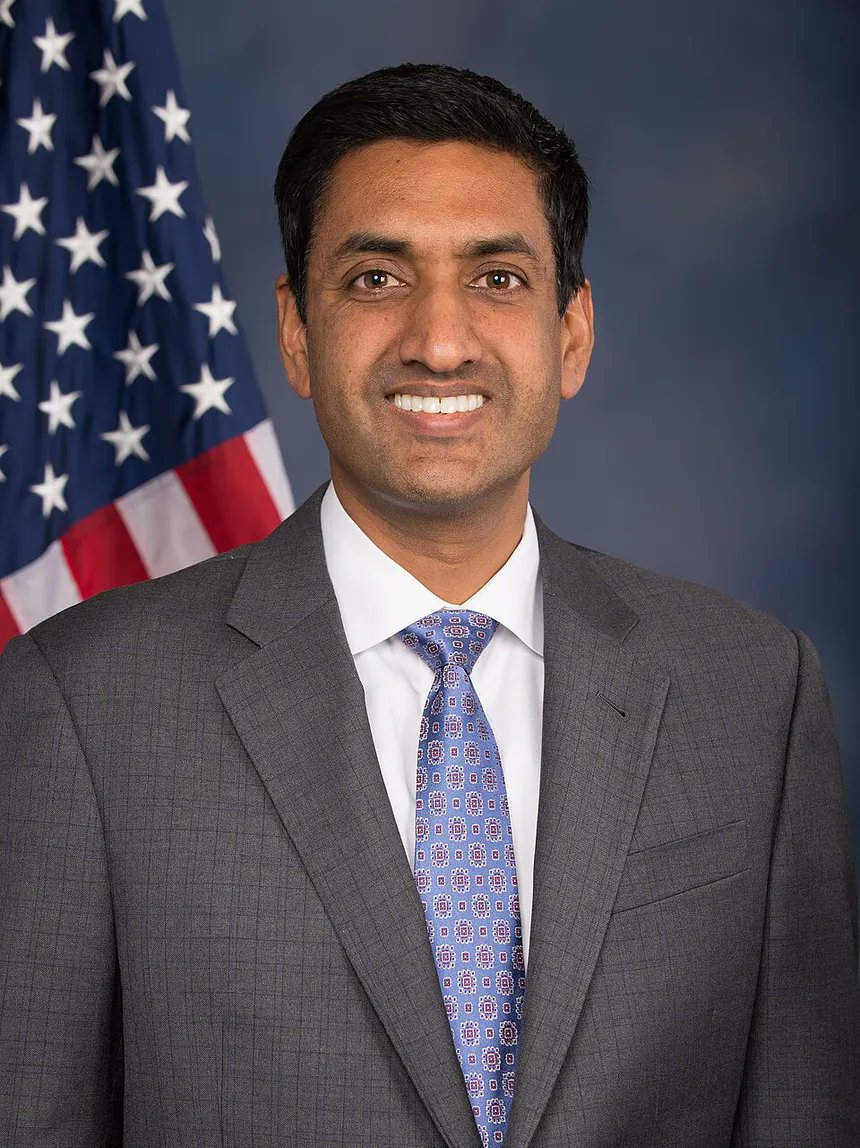
Representative Ro Khanna is a Democratic congressman from California's 17th District (basically Silicon Valley). He has been in Congress since January 2017. He is currently in his fifth term.
Khanna has done six different things wrong.
Each one is bad enough to investigate on its own.
Together, they are very bad.
His family's stock trades line up suspiciously with the committees he sits on, the donors who fund him, and the votes he takes.
That's bad.
Khanna's household made between $15 million and $108 million from these trades, with a middle estimate of about $61 million.
The estimate cannot be made any better than this. The disclosure forms provide only disclosure "bands". Precise amounts can only be determined with subpoena power.
But we do have one hard number:
Compared to just buying a basic stock-market index fund, his family beat the market by about $28 million.
$28 million.
The complaint says that Congressman Khanna should pay this money back.
Now, how the trading actually works in this household is important because it helps us to understanding everything else, so I will explain that now.
Khanna himself has filed 114 reports with the House Clerk listing every trade his household has made. Those reports cover 37,238 individual trades. That's a huge amount. Most members of Congress don't trade nearly that much.
But here's the kicker.
Almost none of those trades are in Khanna's own name.
99.997% of them are listed as belonging to either his wife (Ritu Ahuja Khanna) or his dependent child.
That's basically all Khanna trades. A massive volume.
Yet virtually none in his own name.
Curious.
Khanna has publicly said this is fine because the trading is done through what's called a "separately managed account" or "blind trust", meaning a broker or trustee makes the decisions without telling him.
If that were true, he'd be off the hook because he wouldn't know what was being bought or sold.
The complaint says that's not true. When you read his official financial disclosure form (the one he signs every year), it shows:
> No separately managed account
> No blind trust
> No third-party broker handling the actively-traded stocks
Instead, the trades come from about a dozen family trusts (the Ritu Ahuja 1994 Trust, the Ritu Ahuja 1995 Trust, the Ahuja Children's Trust, etc.).
These are family-controlled entities.
Whoever's making the trade decisions is a family member. His wife or his child. (Put another way: his "wife" or his "child".) Not an outside professional.
Uh oh.
The "I didn't know what my spouse was trading" defense doesn't work. Nothing on the official paperwork supports it.
Think about it.
Do you think Khanna and his wife sit around and his wife is just buying Palantir stocks, while, by coincidence, Khanna sits on the defense tech committee?
And they don't talk?
That's the framework. But it gets a whole lot worse.
Because the complaint isn't undergirded merely by this speculation. But by hard evidence.
The complaint makes six specific allegations, or "counts".
---
COUNT 1: Filing trade reports late
This sounds like a technical detail, but it is not. It is the pattern of misbehavior that enabled everything else.
When a member of Congress, their spouse, or their kid makes a stock trade worth more than $1,000, they have to report it within 45 days. That's the STOCK Act, passed in 2012. Each late report costs at least $200 in fines.
Out of about 36,000 auditable trades made by Khanna, 624 were filed late.
The worst one was 358 days late -- almost a full year. A trade in HUMANA stock made in October 2023 wasn't reported until November 2024.
The complaint provides a calculation of how Khanna fares compared to other Congressmen in terms of how often he is late in filing.
Khanna's rate of late filing (1.74%) is better than most members of Congress. The average House member is late on 10% of trades.
So if you measured just the percentage, he'd look fine.
But here's where things get crazy.
The complaint uses a special "composite score" that combines (1) how much money is involved, (2) how late, and (3) how many trades.
By that score, Khanna ranks in the top 7% of the entire House.
This means that Khanna's late filings expose more dollars to delayed disclosure than 93% of members.
A late report means the public can't see what a member of Congress is buying or selling at the time it happens.
By the time it's disclosed, the value of the inside information is gone.
The late filings are not hitting Khanna on a technicality.
They imply that the entire system designed to prevent insider trading in Congress is broken inside Khanna's office.
The 45-day disclosure rule is not a paperwork deadline. It is the security camera. It is the only mechanism that lets the public see what a Congressman is buying while the trade still matters -- while the bill is still being debated, while the FDA decision is still pending, while the news is still fresh.
When Khanna files 358 days late, the camera is off. By the time anyone sees the trade, the moment has passed. The witnesses have moved on. The dots cannot be connected.
A few late filings is a paperwork mistake. 624 of them, on a household making 37,000 trades, in the exact industries Khanna's committees regulate, is a system.
It is Khanna's system. It is how he does his dirty work.
And it is the system that lets every other count in this complaint happen in the dark.
Until now.
The complaint asks for:
1. Civil penalties for the late filings.
2. A requirement that Khanna set up an actual qualified blind trust going forward.
3. An Ethics Committee finding under House Rule XXIII that the absolute-count and composite-score chamber rankings reflect conduct that does not reflect creditably on the House.
---
COUNT 2: Buying defense stocks right before defense bills pass
Members of Congress can't trade based on inside information they got from doing their congressional job (the STOCK Act, sections 3 and 4).
Khanna sits on the House Armed Services Committee, which writes the giant yearly defense bill (the NDAA).
And across four different years, his household bought stock in big defense contractors (Boeing, Lockheed Martin, Northrop Grumman, Raytheon, etc.) right before the NDAA passed:
> 7 defense stock buys 12 days before the 2018 NDAA
> 4 defense stock buys 4 days before the 2021 NDAA override
> 1 Palantir buy 13 days before the 2022 NDAA
> 2 Raytheon buys 2 days before the 2024 NDAA
Khanna publicly voted NO on 12 of 13 of these NDAA passage votes.
So he's saying "I oppose this bill" with his vote.
But his family is buying stock in the companies that would benefit from it passing.
That, of course, is insane.
The complaint argues this is the worst version of the conflict:
Khanna gets the political credit for opposing the bill.
Meanwhile, he makes money from insider knowledge from sitting on the Committee, knowing it would pass anyway.
In addition.
Khanna sits on a committee that oversees defense contracts. The data analytics company Palantir got $4.88 billion in federal contracts during his time in Congress.
On at least nine separate days, Palantir got a federal contract AND Khanna's household bought Palantir stock the same day.
One of these was a $19 million Air Force contract on May 10, 2022: the same day his dependent child's account made six separate Palantir trades.
Khanna's defense trades made about $5.4 million in profits beyond what the broader market did, suggesting that Khanna was using his insider knowledge -- through the intermediary of his dependent child -- to beat the market.
What the complaint asks for:
1. Send to House Ethics.
2. Send to DOJ for possible criminal charges.
3. Force Khanna to give back the $5.4 million.
---
COUNT 3: Buying drug company stocks right before government drug actions
COUNT 3 is the same as COUNT 2, except healthcare stocks instead of defense stocks.
Yes, Khanna is doing the same thing across stock classes. Of course.
Khanna sits on a committee that oversees the agencies regulating drug companies (HHS, CMS, FDA). The complaint identifies 14 different government drug-pricing actions between 2017 and 2024 where Khanna's household made pharmaceutical-company trades within 14 days of the action.
1,244 pharmaceutical-sector trades clustered within ±14 days of these events. That's chamber rank 1 of 66 House members, 14 times the chamber 95th-percentile.
The biggest example: On August 2, 2024, Khanna's family made 286 trades in a single-day rebalance.
Hidden inside was simultaneous trading in four of the nine drug companies (AbbVie, Amgen, Johnson & Johnson, Merck) whose drugs were going to be on the government's negotiated-price list.
That list was published 13 days later, on August 15, 2024.
It was confidential and not yet public on the day of the trades.
But Khanna had insider access to the list. And made the flurry of trades that aligned with it at precisely the right time.
Two other "conflict triangles" the complaint highlights:
1. Palantir (already mentioned in Count 2): Khanna chairs the China select committee and is a top member on the cyber subcommittee. Palantir is a defense tech company affected by both. His family has done 29 Palantir trades and gotten $22,700 in donations from Palantir's chief operating officer.
2. Nvidia: In 2024, Khanna's family donated 10,076 shares of Nvidia stock (worth about $1.67 million when given, much more later as the stock soared) to a family foundation. In the same year, he voted NO on a chips bill, voted YES on four China-policy bills, and continued chairing the China committee. This is the committee that has the most influence over Nvidia's massive AI chip business.
3. The Goldman Sachs margin loan setup: Across 2017-2019, Khanna's spouse had two simultaneous Goldman Sachs margin loans (basically borrowing money against stocks to buy more stocks).
Each loan was labeled as belonging to a family trust ("Ritu Ahuja 1994 Trust" and "Ritu Ahuja 1995 Trust"). This same Goldman Sachs is also the broker for a sophisticated short-volatility options trading program in the spouse's account, and Goldman employees have donated about $48,000 to Khanna over the years.
You can't run an options trading program on a margin account passively; somebody (the spouse) has to authorize each trade.
What COUNT 3 asks for: Same as COUNT 2:
1. Send to Ethics.
2. Send to DOJ.
3. Force Khanna to step away from CMS, FDA, and defense matters pending investigation.
---
COUNT 4: Khanna's family trades line up with insider events at the issuer level — same-day SEC filings and same-day insider trades
The single sharpest count in the complaint.
The legal hook is the STOCK Act §§ 3-4, codified at 15 U.S.C. § 78u-1(g) — the federal statute that extends Rule 10b-5 insider-trading prohibitions directly to Members of Congress who trade on material non-public information acquired through their legislative or oversight duties.
Khanna's household trades are not just suspicious because of how many they are. They are suspicious because they happen at very specific moments.
Two examples:
> 186 of his household's trades happened on the same calendar day that the company in question filed important news with the SEC (Form 8-K — the disclosure form companies file for material acquisitions, executive changes, regulatory actions, and the other news events the SEC requires public companies to disclose immediately).
> 86 of his household's trades happened on the same calendar day that a named officer at the same company (CEO, CFO, board member) was buying or selling their own stock in the same direction.
On each of these patterns, Khanna ranks at the top of the entire House:
> Same-day-8-K count: rank 1 of 96 House Members. 4.3 times more than the second-place Member.
> Same-day-aligned-insider count: rank 3 of 156 House Members.
The complaint does NOT allege that Khanna's RATE of same-day-8-K trading is exceptionally high. As a percentage of his trades, his same-day-8-K rate is 5.4% — which is above the chamber median (4.5%) but inside the normal band. The complaint discloses this candidly, up front, to pre-empt the inevitable "his rate is in-band" defense.
The argument is about ABSOLUTE count combined with ticker-specificity: the same-day intersections concentrate on companies in sectors his committees regulate.
These two findings join two more from Count 3:
> 4,595 pharmaceutical trades within 14 days of FDA Advisory Committee meetings. Rank 1 of 66 House Members. 6.1 times the second-place Member.
> 1,244 pharmaceutical trades within 14 days of CMS rulemaking events. Rank 1 of 66 House Members. 14 times chamber P95.
Across four independent issuer-event and regulator-event substrates — SEC 8-K filings, named-officer Form 3/4/5 filings, FDA Advisory Committee calendar, CMS rulemaking calendar — Khanna's household ranks first or third by absolute count. The four substrates are independent: different agencies, different filer classes, different denominators. The convergence is structurally inconsistent with portfolio management that doesn't draw on contemporaneous information advantage.
The complaint asks for:
1. Ethics Committee referral for full investigation.
2. DOJ referral for criminal review under 15 U.S.C. § 78ff (Exchange Act criminal penalty) if any single windowed trade reflects willful use of material non-public information.
3. Disgorgement under STOCK Act § 9 of any profit attributable to same-day-issuer-event or same-day-officer-aligned trading.
4. A House Rule XXIII finding that the four-substrate convergence reflects conduct that does not reflect creditably on the House.
---
COUNT 5: Ex-government officials who became lobbyists are donating to him
The law says that federal officials who leave government can't immediately go lobby their old agencies. Various waiting periods apply, and the lifetime ban (18 U.S.C. § 207(a)(1)) prevents them from ever working on the same specific matters they personally worked on in government.
Yet, five former federal officials, who all later became registered lobbyists, donated to Khanna's campaign. Each one's old job lines up with what they're now lobbying about:
1. Chris Israel. Former Deputy Assistant Commerce Secretary. Now lobbies for tech and pharma companies (Qualcomm, AbbVie, PhRMA). Donated $1,000 (one $500 check was refunded within 24 hours).
2. Arshi Siddiqui. Former senior staffer to Speaker Pelosi. Now a partner at Akin Gump, lobbying on Armed Services issues for RTX (Raytheon) and Honeywell. Donated $2,000.
3. Francisco Sanchez. Former Obama Commerce Department Under Secretary for International Trade. Now lobbies on international trade issues. Donated $1,250.
4. Kevin Batteh. Former CFTC counsel. Now lobbies on CFTC and DoD issues for Citadel and D.E. Shaw. Donated $1,000.
5. Robert Taylor. The most damning case. Former Deputy Assistant Secretary of Defense for Senate Affairs. Now lobbies for Boeing, BAE Systems, Aerojet Rocketdyne, Textron — the exact defense contractors his old job covered. Donated $1,000 (NOT refunded). Khanna sits on Armed Services.
Their employees too: The companies these lobbyists work for collectively gave $365,140 across 264 individual contributions to Khanna.
Khanna says he doesn't take corporate PAC money. But the corporations' executives give to him personally.
Lobbyists are required to disclose their political contributions. Two of the five lobbyists hid the Khanna donations from their required reports. Robert Taylor's case is the worst: he affirmatively certified "I made no contributions" while a Khanna donation was sitting in the period.
The complaint asks for:
1. DOJ referral for the lifetime-ban review (especially Robert Taylor).
2. DOJ referral for Taylor's allegedly false lobbying disclosure.
3. FEC audit.
COUNT 6: The Ahuja family foundation and a missing rental property
Three problems.
PROBLEM 1: Khanna's family foundation isn't disclosed as a spouse asset
Remember how 99.997% of the trades made by Khanna are made either through his spouse or his child?
His wife's Ahuja Charitable Foundation is a $45 million private family foundation. His wife Ritu Ahuja Khanna, is:
> A named trustee every year from 2018 through 2024 (according to the foundation's own IRS filings)
> A substantial contributor for tax years 2022, 2023, and 2024 (also per IRS filings)
The foundation owns massive amounts of stock in defense companies (Honeywell, L3Harris, TransDigm, Boeing, GE Vernova) and healthcare companies, again exactly the sectors Khanna's committees oversee.
Khanna's annual financial disclosures don't mention the foundation as a spouse-held asset at all. And they don't mention his wife's trustee role. Federal ethics law (5 U.S.C. § 13104(d)(1)(A)) requires members to disclose their spouse's income from nonprofit positions where the spouse has decision-making power. The complaint says the Ethics Committee should decide whether this should have been disclosed.
Now, in 2024, Khanna's wife "donated" 2,821 shares of Nvidia to the Foundation, and the related Ahuja family trust donated 7,255 more shares
This was a combined 10,076 shares of Nvidia worth $1.67 million at donation time (much more later).
This happened the same year Khanna voted on multiple chip and China bills and continued chairing the China committee.
PROBLEM 2: A rental property in Dover, Delaware is missing
In tax year 2021, Khanna disclosed a $100,000-$250,000 mortgage from "First Bank of Wilmington, Delaware" tied to a Dover, Delaware rental property.
But across ten years of disclosures (2014-2023), the Dover, Delaware property itself never appears as an asset. Federal law says any rental property worth more than $1,000 has to be disclosed.
And here's the killer: Every other rental property the household owns (Cincinnati OH, Denham LA, Walton Hills OH, Harahan LA, an NY condo, Walton OH) is correctly disclosed both as an asset AND with the rental income.
Only Dover, Delaware is missing on both sides. So the household clearly knows how to fill out the form. They just didn't for this one property.
Why?
What's special about that property?
The public deserves to know if Khanna is hiding something.
PROBLEM 3: Margin loans and options trading prove there's no blind trust
Across 2017-2020, Khanna's spouse had Goldman Sachs margin loans (borrowing against stocks). At the same time, the household was running a sophisticated options trading program. They were writing PUT options on the spouse-owned account.
Under brokerage rules, writing options on a margin account requires personal customer authorization. You can't run an options program with a passive blind trust.
The "I have no idea what my spouse is trading" defense is impossible.
Khanna knew. And he was breaking the rules.
The complaint asks for:
1. Ethics Committee review of the foundation question.
2. Per-year corrective filings on the Dover property.
3. Civil penalties.
4. A possible "honest services" fraud referral if the Ethics Committee finds intentional concealment.
---
How much money Khanna made
> $61 million in profits the family made from these trades (middle estimate)
> $28 million of that is "alpha" — money beyond what just buying an index fund would have earned
> 41% of those profits ($25.2 million) came from trades made within two weeks of an event Khanna could have known about because of his job
> The complaint asks for that money to be paid back (called "disgorgement") under STOCK Act penalty rules
What the complaint asks
1. The Office of Congressional Conduct should investigate and refer the case to the House Ethics Committee for a real investigation
2. Parts of it should go to the FEC for the LD-203 lobbyist-contribution-disclosure compliance audit
3. Parts of it should go to the DOJ for possible criminal review (insider trading under 15 U.S.C. § 78u-1(g) and § 78ff; lifetime lobbying ban violations under 18 U.S.C. § 207; false statements on lobbyist disclosure filings under 18 U.S.C. § 1001 and 2 U.S.C. § 1606)
4. Khanna should set up an actual blind trust to prevent this in the future
5. He should recuse himself from CMS, FDA, and defense matters while it's being investigated
6. The roughly $28 million in market-beating profits should be returned
English


A 28 year old paid $18,000 to fake 4 MILLION customers and sold the lie to JPMorgan for $175 MILLION.
> Charlie Javice founded Frank in 2017, a platform that helped college students apply for financial aid.
> By 2019 she was on Forbes 30 Under 30 and being courted by major banks.
> In 2021 JPMorgan offered to acquire Frank for $175 MILLION but wanted proof Frank actually had 4 million customers before signing.
> Javice pushed back, citing privacy concerns over student data.
> Then she paid a data science professor $18,000 to generate a synthetic list of 4.25 MILLION fake student names. Complete with fake emails. Fake birthdates. Fake income levels.
> JPMorgan signed the cheque.
> Javice was made a managing director at the bank, overseeing student products at Chase. She personally walked away with millions in stock and bonuses.
> Months later JPMorgan tried to send marketing emails to Frank's 4 MILLION customers.
> More than 70% bounced.
> Frank actually had fewer than 300,000 real users.
> An engineering director testified that the week before the deal closed, Javice asked him to help fabricate the customer numbers. He refused.
> She told him "We don't want to end up in orange jumpsuits."
> She was convicted on all four counts of fraud and conspiracy in March 2025.
> Sentenced to 85 months in federal prison in September 2025.
> Ordered to repay $287 MILLION. More than the original deal was worth.
> JPMorgan was forced to pay her $115 MILLION legal bill because the acquisition contract required it.
> Jamie Dimon called the whole thing "a huge mistake."
> The judge told the bank they had "a lot to blame themselves" for not checking before signing.
JPMorgan paid $175 MILLION for a company. Then $115 MILLION more for the lawyers. Then $287 MILLION in restitution. The fraud cost more than the company.
English
@chrisbrunet This is what Hindus believe. Atleast he is honest, not fake Christians like Tucker, Candace etc.. so I don’t find this damaging.
English

Both look ugly to me 😂😂
Circe@vocalcry
Let me get this straight so I’m supposed to believe that *this guy* was sexually assaulted by *this woman*
English


I promoted Lorna Hajdini to Executive Director at JPMorgan because she understood something most bankers never learn.
Ownership.
Not deal ownership. People ownership. The kind of leadership where you don't just manage a pipeline. You manage the person building it. Their trajectory. Their compensation. Their future at the firm. Their references when they try to leave.
I taught her that. Not at NYU Stern. Not at Harvard. Here. In Leveraged Finance. In my corner office on the forty-second floor with the framed Tombstones from every deal that made this division what it is.
Lorna's handshake could restructure a cap table. That's not a compliment. That's a performance review.
When the complaint came across my desk, I read it twice. Not because it was disturbing. Because it was familiar.
Every behavior described. The direct communication. The after-hours mentorship. The expectation that juniors earn their advancement through demonstrated commitment to the team. That's the playbook. My playbook. The one I handed Lorna when she made Executive Director and inherited a book of direct reports who needed to understand the hierarchy.
"I own you."
I've said it to thirty-one analysts over twenty-two years. It means: I control your rating, your bonus, your promotion slate, and whether the next firm you apply to hears "top-decile performer" or dead air. It's in the HR manual under "direct management accountability." We call it alignment of incentives.
The complainant. A Senior VP in Originations who couldn't close. He alleges Lorna tied his advancement to "pleasing" her. I've read the promotion policy. An Executive Director has full discretion over direct-report advancement recommendations. Full discretion. We designed that authority. It incentivizes loyalty. It builds culture. It creates the kind of deep mentorship relationships that retain top talent.
If he interpreted "full discretion" as something other than what every Managing Director on this floor has understood since the division was founded in 1998, that's a communication gap on his end. Not a policy failure.
Harvard Business School profiled Lorna last month. "Leveling Up with Perspective, Practice, and People." She described a striking level of humility. A palpable hunger for knowledge. She talked about growing personally and professionally alongside her team. About being curious about perspectives different from your own. I wrote her recommendation for that program. I said: Lorna understands ownership the way very few people at her level do.
The profile is still live on the Harvard website. Nobody took it down. That's not an oversight. That's an editorial decision by people who evaluate leaders for a living.
The investigation lasted six weeks. I was consulted on a Thursday. They interviewed fourteen employees. Reviewed badge data. Calendar invites. Email metadata. Found no policy violation.
The complainant declined to participate. He was already on wellness leave by then. Unrelated.
Two witnesses are cited in the lawsuit. They were not cited in the investigation. I am told this is because the investigation's scope was determined prior to the filing.
Scope is important. Without scope, every investigation into a Managing Director candidate with eighteen active deal mandates and a direct line to three of our top-ten private equity clients becomes a fishing expedition that puts nine figures of annual revenue in jeopardy. We are not in the business of fishing.
Lorna remains employed. The complainant does not. His systems access was revoked on a Tuesday. I know it was a Tuesday because I approved the ticket. Standard offboarding protocol. The building badge, the Bloomberg terminal, the health insurance portal. All deactivated within the same four-hour window. He found out when his laptop locked at 2 PM and his key card stopped working at the elevator bank.
The threatening phone calls started that week. "Just wait till you're back in New York, Brown boy." Someone knew his personal number. Someone knew he was out of state. Someone knew the racial thing would land. Those are outside the scope of the firm's responsibility. We cannot police what former colleagues discuss on personal devices during personal time. We did advise him to contact local law enforcement. In writing. Via his personal email, since his corporate account had already been deactivated. I am told he received that email.
People keep asking if I'm concerned.
I thought about him once. The complainant. On a Wednesday, I think. I was reviewing Lorna's Q3 revenue attribution and his name appeared on a deal she closed after he left. His origination work. Her closing credit. Standard reassignment. And I thought — briefly — about what it must feel like to watch your work get credited to the person who.·
Anyway. Revenue attribution follows the active relationship manager. Policy is clear.
Am I concerned?
I built Lorna's career. I taught her how ownership works in Leveraged Finance. I watched her apply those lessons with a level of intensity I haven't seen since my own early years on the desk, back when nobody filed complaints because everybody understood the cost of being the person who didn't understand. If the system produced what that lawsuit describes, then I'm the system.
But the investigation found no merit.
So I'm just a mentor.
English
@JohnLeFevre Ugh! I know many disgusting stories too. Outsiders just don’t get it.
English
This story is getting a ton of traction, probably because the accused is a female banker.
This stuff doesn't surprise me at all. After all, JP Morgan banked Epstein for years after his first incarceration.
But I experienced countless examples of deviance at all ranges of the spectrum. Just a couple of examples that come to mind:
1) High yield deal for Chinese billionaire property developer. Doing a global roadshow. The CEO drunkenly assaults a female analyst in a hotel room. Instead of bailing on the deal (and losing the IPO fees), the bank sends her home and continues with the roadshow.
2) My first boss, a Managing Director, never bothered to interview prospective analysts. Waste of his time. One day, he overheard us talking about interviews and that one female Ivy League applicant listed "Glamour Magazine Woman Of The Year" on her résumé. He insisted on the doing the interview (~45 minutes). He came back 10 minutes later and said, "I guess looks were not among Glamour's criteria" and threw the résumé in the trash. He's still a senior MD in London.
3) The hedge fund sales desk only hired attractive female analysts. They referred to them as "tethered goats" and would bring them to all their client drinks.
4) Our head of trading got annoyed at the meekness of an intern and wanted to toughen him up. Made him take a survey of every guy on the trading floor and rank every female on the credit sales team in order of fuckability. And then had him chart it up and present it to us in PowerPoint.
5) Many emerging markets closing dinners were male bankers only because clients typically want to go to dirty karaoke.
I could probably think of a dozen more, but you get the idea....

English



‘THE DEVIL WEARS PRADA 2’ is eyeing a $180M+ opening weekend globally.
It cost $100M to produce.

English

Freddie Mercury was very talented but at what point is everyone going to admit that Queen has like five good songs. Nobody fucks with them like that outside of random internet polls where they’re treated like competition to the Beatles.
METAVERZUZ@METAVERZUZ
You can only listen to one for the rest of your life. Who are you choosing?
English
Sorry but the fact the Catholic Church confirmed her is evidence of how lost the Roman Catholic Church actually is

English

CONSEQUENCE ranks Freddie Mercury as the best vocalist of all time.
(consequence.net/list/the-100-b…)

English
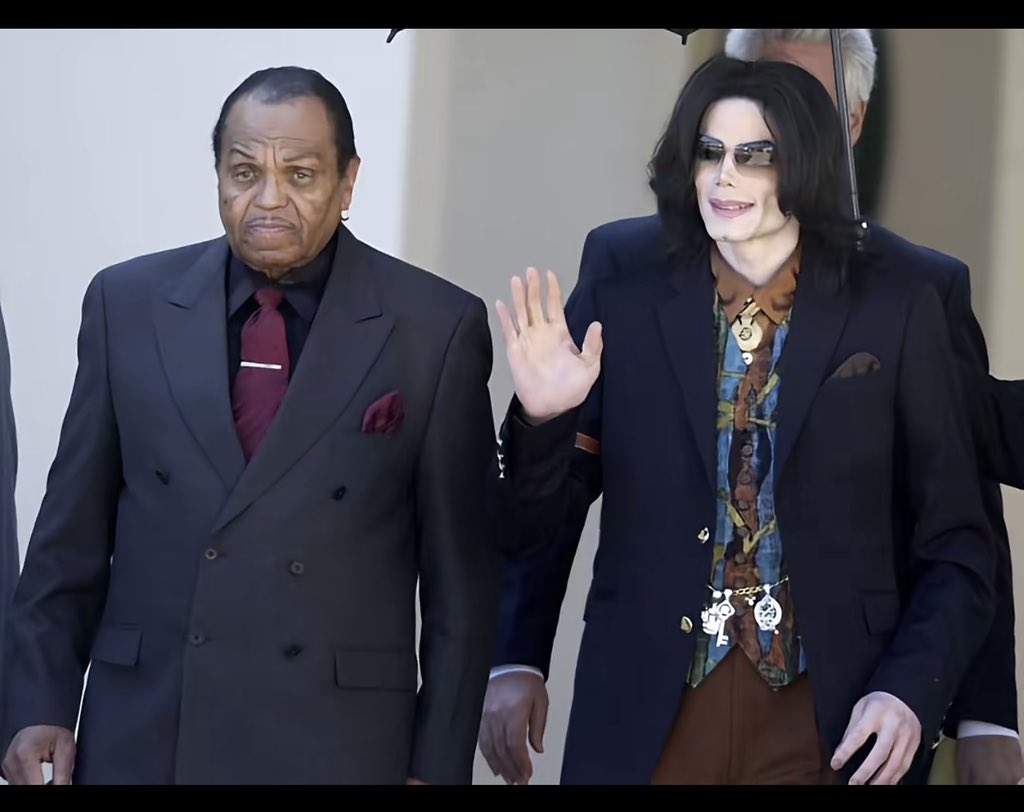
@braveguyy This Joe Jackson’s character arc in Michael 2 is something I like to watch.
English

When Michael Jackson was going through his darkest public moments, so many people distanced themselves from him . But one person who was there during all that trial was his father, Joe Jackson. Say whatever you want to say about him, but he showed up when others disappeared.


English